

P0301 on 1999-2004 Ford Mustang 3.8L V6: Cylinder 1 Misfire Causes and Fixes
P0301 on a 3.8L V6 Mustang almost always points to a bad spark plug, a worn spark plug wire, or a weak ignition coil pack. Start by inspecting the cylinder 1 spark plug wire for heat damage, as this is a common failure point. Check for a companion code P0316 (misfire on startup), which reinforces an ignition system fault. A full set of plugs and wires costs between $50 and $100.
- P0301 means cylinder 1 (passenger side, front) is misfiring.
- The most likely cause is a bad spark plug wire or spark plug. Inspect the wire for heat damage first.
- This engine uses a single coil pack for all cylinders; a weak spark on the #1 terminal is a common failure.
- Do not drive if the Check Engine Light is flashing to avoid damaging the catalytic converter.
- When replacing the coil pack or wires, double-check the connection order, as it is not fully sequential (4-6-5).
What's Unique About the 1999-2004 Ford Mustang
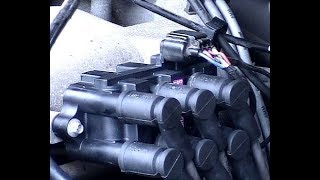
The 1999-2004 Mustang with the 3.8L V6 uses a 'waste-spark' ignition system, which has a single ignition coil pack that sends spark through six individual spark plug wires. This is different from many modern engines that have a separate coil for each spark plug (Coil-On-Plug). Because of the engine bay layout, the spark plug wires, particularly for the passenger-side cylinders, can be susceptible to heat damage from contact with the exhaust manifold, making wire inspection a critical first step. Furthermore, the coil pack itself is known to develop cracks in its housing over time due to heat cycles, allowing moisture in and causing misfires, a problem also seen on platform mates like the Ford Windstar.
Symptoms You May Notice
- Rough or shaking idle
- Engine hesitation or stumbling during acceleration
- Flashing or steady Check Engine Light
- Loss of power
- Strong fuel smell from the exhaust
- Replacing only the spark plug without inspecting the wire. The wire is a very common failure point on this engine due to heat exposure.
- Incorrectly connecting spark plug wires to the coil pack. The terminals for cylinders 4, 5, and 6 are in a '4-6-5' order, not sequential, which can cause new misfires if connected incorrectly after a repair.
Most Likely Causes
- Worn or Damaged Spark Plug Wire 🔴 High Probability → Shop Spark Plug The routing of the spark plug wires can bring them close to the hot exhaust manifold (header). Over time, the heat can break down the wire's insulation, causing the spark to weaken or arc to the engine block instead 🎬 Watch this walkthrough on fixing common Mustang V6 engine misfires. of firing the plug.
How to confirm: Visually inspect the entire length of the spark plug wire for cylinder 1. Look for any melted, brittle, or charred sections. At night, you may even see the spark arcing from the wire to a metal part of the engine.
Typical fix: Replace the spark plug wires as a complete set. It is best practice to replace all wires at once to ensure even performance.
Est. part cost: $30-$70 - Worn or Fouled Spark Plug 🔴 High Probability → Shop Spark Plug
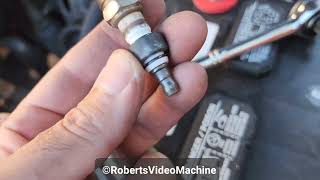
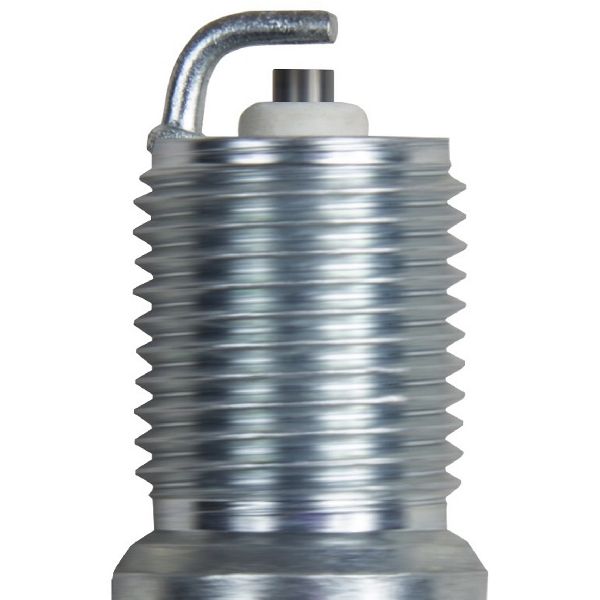
How to confirm: Remove the spark plug from cylinder 1. Inspect it for wear on the electrode, carbon buildup, or oil/coolant fouling. A worn plug will have a rounded center electrode and a large gap. A fouled plug can point to other issues like a leaking head gasket.
Typical fix: Replace the spark plug. It is highly recommended to replace all six spark plugs at the same time to maintain balanced engine performance. Forum members strongly recommend using Motorcraft-branded plugs. 🎬 Watch: Step-by-step guide to replacing your Mustang's spark plugs.
Est. part cost: $15-$40 (for a set of 6) - Failing Ignition Coil Pack 🟡 Medium Probability → Shop Ignition Coil The single coil pack is responsible for firing all six cylinders. Over time, the internal windings for a specific cylinder's terminal can weaken, or the plastic housing can develop cracks, allowing moisture to cause a short. This is a common failure on the 3.8L engine family.
How to confirm: Use an in-line spark tester to check the spark quality from the cylinder 1 terminal on the coil pack. Compare the brightness and consistency of the spark to a known good cylinder (e.g., cylinder 2). A dim, yellow, or inconsistent spark indicates a weak coil. A visual inspection of the coil pack's underside may reveal cracks.
Typical fix: Replace the entire ignition coil pack. Ensure the spark plug wires are reconnected to the correct terminals; the V6 Mustang coil has a 4-6-5 sequence on one side that can be easily mixed up.
Est. part cost: $50-$120 - Clogged or Faulty Fuel Injector ⚪ Low Probability → Shop Fuel Injector
How to confirm: Listen to the injector with a mechanic's stethoscope or a long screwdriver; you should hear a consistent clicking sound. You can also test the injector's electrical circuit with a 'noid light'. To definitively confirm, you can swap the cylinder 1 injector with another cylinder's injector and see if the misfire code follows (e.g., changes to P0302).
Typical fix: Replace the faulty fuel injector. It's often recommended to replace them as a set if they are original and high-mileage.
Est. part cost: $40-$90 (for one injector)
Rare But Worth Checking
- Low Engine Compression (Head Gasket Failure): The 3.8L Essex V6 engine family is infamous for head gasket failures. A leak between a coolant passage and cylinder 1 can cause coolant to foul the spark plug and reduce compression, leading to a persistent P0301. This is a major repair and should be investigated with a compression test and cooling system pressure test after ignition and fuel issues are ruled out.
- Vacuum or Coolant Leak at Intake Manifold: → Shop Engine Intake Manifold The plastic intake manifold gaskets are a known failure point. A leak localized near the cylinder 1 intake runner can lean out the air/fuel mixture and cause P0301. In some cases, the gasket fails in a way that allows coolant to leak into the intake port, fouling the spark plug and causing a misfire, similar to a head gasket failure.
- Stuck EGR Valve: → Shop Exhaust Gas Recirculation (EGR) Valve The Exhaust Gas Recirculation (EGR) valve can get stuck open due to carbon buildup, creating a vacuum leak at idle that can cause rough running and misfires. This usually affects multiple cylinders but is a known issue on this platform.
Diagnosis Steps
- Read the codes with an OBD-II scanner to confirm P0301 is the primary code. Note if P0316, P0171, or P0174 are also present.
- Locate Cylinder 1: It is the front-most cylinder on the passenger side.
- Inspect the Spark Plug Wire: Carefully check the wire running from the coil pack to cylinder 1. Look for any signs of melting, cracking, or contact with the exhaust manifold.
- Test the Ignition System: The easiest way to diagnose is by swapping components. Swap the spark plug wire from cylinder 1 with the wire from cylinder 2. Clear the codes and drive the car. If the code changes to P0302, the wire is bad. If not, swap the spark plugs between cylinders 1 and 2. If the code moves, the plug is bad.
- Test the Coil Pack: If the misfire remains on cylinder 1, use an in-line spark tester to observe the spark. Compare the spark from the #1 terminal to the spark from another terminal. A weak or absent spark points to a bad coil pack. Inspect the underside of the coil for cracks.
- Test the Fuel Injector: If the ignition system is confirmed to be working properly, check the fuel injector. Listen for a steady clicking sound. Use a noid light to confirm it's receiving a signal from the PCM. Consider swapping the injector with another cylinder to see if the code follows.
- Check for Mechanical Faults: If all else fails, perform a compression test and a cylinder leak-down test on cylinder 1 to check for internal engine problems like bad rings, a burnt valve, or a failed head gasket.
Parts You'll Likely Need
- Spark Plug Wire Set
(OEM #WR-5785)— The original wires are prone to heat damage due to their proximity to the exhaust manifold. This is a very common cause for a single-cylinder misfire on this engine.
Trusted brands: Motorcraft, NGK, Denso
OEM price range: $50-$80
Aftermarket price range: $30-$70 - Ignition Coil Pack
(OEM #DG-532)— This single pack fires all six cylinders and can fail for an individual cylinder or develop cracks in its housing, resulting in a weak or no-spark condition.
Trusted brands: Motorcraft, Standard Motor Products, Delphi
OEM price range: $80-$150
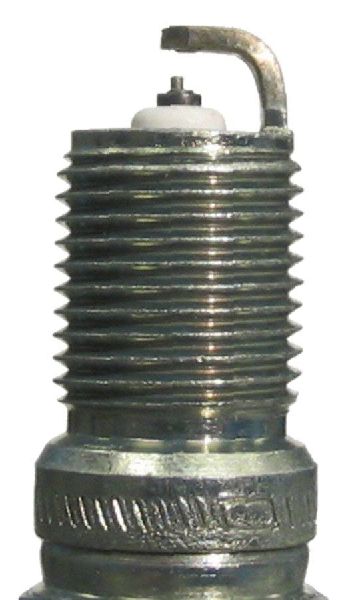
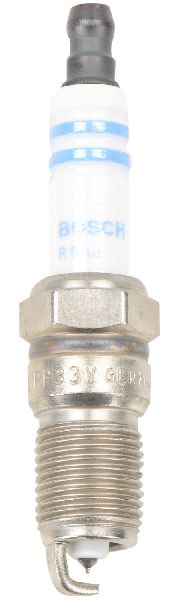
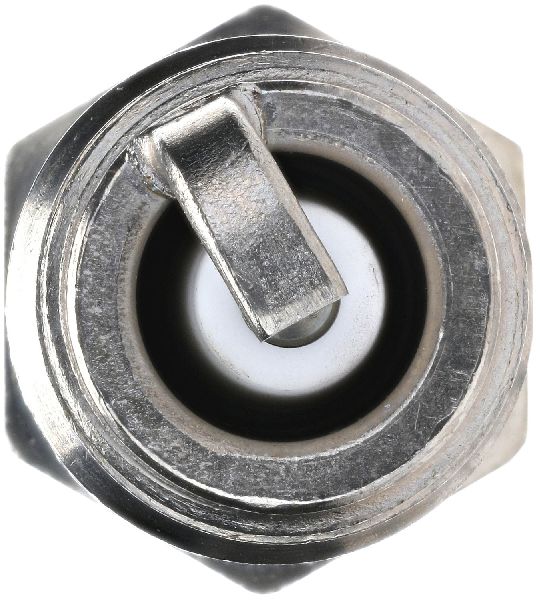
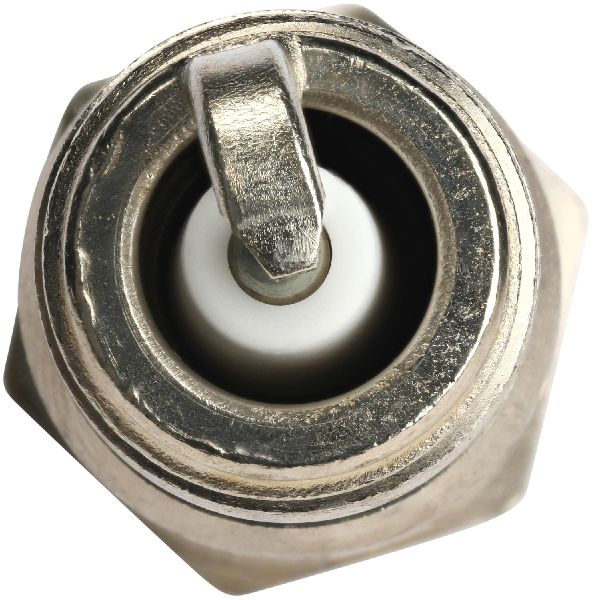
Aftermarket price range: $50-$120 - Spark Plugs (Set of 6) — Standard maintenance item. A worn or fouled spark plug is a simple and common cause of a misfire. Fouling can also indicate a more serious issue like a coolant leak.
Trusted brands: Motorcraft, Autolite, NGK
OEM price range: $20-$50
Aftermarket price range: $15-$40
Related Codes That Often Appear With This One
- P0316 — This code means 'Misfire Detected on Startup (First 1000 Revolutions)'. It frequently appears with a specific cylinder misfire code like P0301 and indicates a 'hard' fault that is present as soon as the engine starts, further pointing towards a bad plug, wire, coil, or mechanical issue.
- P0300 — If the cause of the misfire (like a major vacuum leak or failing coil pack) begins to affect other cylinders, a P0300 (Random Misfire) code may appear alongside P0301.
- P0171 or P0174 — If the misfire is caused by a vacuum leak from a failing intake manifold gasket, the engine will run lean, triggering a 'System Too Lean' code for Bank 1 (P0171) or Bank 2 (P0174).
Technical Service Bulletins (TSBs) & Recalls
- While no TSB is specifically for P0301 on this vehicle, related TSBs and known issues provide critical diagnostic context. TSBs were issued for head gasket failures on earlier 3.8L engines, a known catastrophic failure mode that can cause misfires.
- TSB 03-6-2 was issued for the V8 model for head gasket oil leaks, highlighting that gasket issues were a concern for this platform generation.
- Manufacturer Bulletin #TSB 22-2464 notes that some Mustang vehicles may exhibit an illuminated MIL with DTCs P0300 through P0308 due to various strategies within the PCM.
- Manufacturer Bulletin #SSM 53971 for other Ford models like the Bronco and Ranger notes that misfire conditions with P0301-P0304 may be due to the spark plugs and/or ignition coils.
Platform-Specific Known Issues
- Owner Experience: Chasing the Misfire: In a common scenario documented on forums, an owner will first replace the spark plug for cylinder 1. When the P0301 code returns, they replace the spark plug wire. If the code still persists, the final step is replacing the ignition coil pack, which often resolves the issue. This step-by-step replacement of the three main ignition components is the standard diagnostic path for most owners.
- Misdiagnosis leading to Deeper Problems: An owner on a forum reported replacing plugs, wires, and even the coil pack, but the P0301 misfire continued. Further investigation suggested a more serious issue, with other users pointing to the possibility of a cracked plastic intake manifold leaking coolant into the cylinder or a failing head gasket, both known (though less common) issues on this engine that require more intensive mechanical repair.
Mechanic-Grade Diagnostic Values
- Fuel Pressure (Key On, Engine Off) — expected: 35-45 PSI. Failure: Pressure below 30 PSI may indicate a weak fuel pump or clogged filter.
- Fuel Pressure at Idle — expected: 30-40 PSI. Failure: Pressure should be stable. If it drops significantly or fluctuates wildly, it could point to a faulty fuel pressure regulator or pump.
- Fuel Injector Resistance — expected: 12.0 - 14.5 Ohms. Failure: A reading far outside this range, especially an open circuit (infinite resistance), indicates a failed injector coil.
- Spark Plug Resistance — expected: ~5000 Ohms (for resistor plugs). Failure: An extremely high or infinite resistance reading indicates a faulty internal resistor in the spark plug.
Hidden / Shadow Codes Worth Checking
- Mode $06, TID $53, CID $01: This is not a typical DTC, but a specific monitor within the generic OBD-II data. It provides the raw misfire count for Cylinder 1 during the last driving cycle. This allows a technician to see if cylinder 1 is registering misfires even if the count isn't high enough to trigger a P0301 code and Check Engine Light. (see via Requires a scan tool capable of displaying Mode $06 data. The value is a raw count and must be compared against the manufacturer's threshold value, also displayed in Mode $06.)
Scan Tool Commands That Help
- Ford IDS (Integrated Diagnostic System) or equivalent professional scan tool (e.g., Snap-on): Power Balance Test — This is a powerful bidirectional test used to pinpoint a weak cylinder when the cause isn't obvious. The tool disables one cylinder at a time (by cutting fuel) and graphically displays the RPM drop for each. A cylinder that causes little or no RPM drop when disabled is not contributing power and is the source of the misfire. This can quickly differentiate between a fuel, spark, or compression issue without swapping parts.
Wiring & Ground Locations
- G105 — On the bottom of the engine, near the starter motor.. This is a major engine ground. Corrosion or a loose connection here can cause a weak return path for the entire ignition system, leading to weak spark and intermittent misfires.
- G201 — Located on the passenger side kick panel, near the PCM.. This is the primary ground for the Powertrain Control Module (PCM). A poor connection here can cause erratic PCM behavior, including faulty signals to the fuel injectors or ignition coil, potentially leading to misfire codes.
- Engine-to-Firewall Ground Strap — A braided strap typically running from the back of the intake manifold or cylinder head to the driver's side firewall.. This is the secondary power ground and provides the ground path for many engine accessories and sensors. If missing or corroded, it can cause electrical noise and sensor reading issues that may indirectly lead to misfires.
- Cylinder 1 Fuel Injector Wire — The wire for the cylinder 1 injector is part of the main engine harness that runs over the top of the engine. The PCM provides a ground pulse to fire the injector.. A break or short in this specific wire between the PCM and the injector will prevent cylinder 1 from getting fuel, causing a definitive P0301. A dealer technician once ran a jumper wire from the PCM directly to the injector to rule out a harness issue.
Real Owner Repair Stories
- MustangForums.com user (2002 Ford Mustang 3.8L V6) — Persistent P0301 misfire code and rough running.
❌ Tried (didn't work) Replaced spark plugs, Replaced spark plug wires, Replaced ignition coil pack
✅ What actually fixed it The problem was a faulty fuel injector on cylinder 1. After swapping the injector from cylinder 1 to cylinder 2, the code changed to P0302, confirming the injector was the cause. Replacing the single injector resolved the misfire. - StangNet Forums user (2000 Ford Mustang 3.8L V6) — P0301, P0304, P0306 (misfires on all passenger side cylinders) and running very rough.
❌ Tried (didn't work) Checked spark and fuel pressure, which were both good.
✅ What actually fixed it The cause was a catastrophic failure of the head gasket on Bank 1 (passenger side). A compression test confirmed very low compression on cylinders 1, 4, and 6. Replacing the head gaskets fixed the issue. - NHTSA ODI #11701911 — An owner reported misfire codes P0300, P0301, and P0316, which were associated with a coolant-intrusion defect causing loss of power and rough operation.
- NHTSA ODI #11685431 — A report describes a P0301 code accompanied by higher than normal engine temperature, low coolant, white smoke, and a rough idle at startup.
- NHTSA ODI #11683756 — An owner filed a complaint regarding a P0301 code where they could hear coolant sloshing around at startup and observed white exhaust, indicating coolant was leaking into the cylinder.
Model Year Variations Within This Range
- 1999-2000 vs 2001-2004: The 1999-2000 models use a split-port intake manifold with all runners constantly open. The 2001-2004 models added an Intake Manifold Runner Control (IMRC) system, which uses butterfly valves to change the intake runner length for better performance. The IMRC actuator rods and linkages can fail or become disconnected, causing a vacuum leak or spark knock that could be misdiagnosed.
- Late 2004 only: For the last part of the 2004 model year, Ford increased the engine's bore slightly, changing the displacement from 3.8L to 3.9L. While functionally very similar and still an Essex V6, some internal parts may not be interchangeable with the 3.8L.
Diagnostic Flowchart
Other Known Issues on This Vehicle
Issues unrelated to this code that are worth knowing about as an owner of this generation:
- Failing Camshaft Synchronizer ('Chirp of Death') 🔴 High → Shop Engine Camshaft — Very common. Often presents as a high-pitched 'chirping' or 'squealing' noise from the engine at idle. Failure can cause sudden stalling and no-start conditions. (Ref: No specific recall, but a widely documented failure. Often triggers codes P1336 and P0340.)
- Leaking Intake Manifold Gaskets 🟠 Medium → Shop Engine Intake Manifold — Common failure. The gaskets for the plastic intake manifold can degrade, causing vacuum leaks (leading to lean codes P0171/P0174) or internal coolant leaks that can cause misfires.
- Head Gasket Failure 🔴 High — The 3.8L Essex V6 family is notorious for head gasket failures, especially pre-1999 models. While improved on 1999+ engines, it can still occur, leading to compression loss, misfires, and coolant/oil mixing. (Ref: TSBs were issued for earlier models (e.g., pre-1998) but the issue remains a known weak point for the engine family.)
- Cracked Passenger-Side Exhaust Manifold Flange 🟡 Low — A common annoyance where the A/C drain drips water directly onto the hot exhaust manifold flange, causing it to crack from repeated thermal stress and creating an exhaust leak tick.
- Premature Water Pump Failure 🟠 Medium — These models are known for water pump failures which can lead to overheating if not addressed.
Used vs. New Parts: Buying Guide for This Vehicle
When a used part is the smart pick: For this repair, sourcing a used part is generally not recommended for the primary failure items. Ignition components (plugs, wires, coil) and gaskets are wear items and should always be purchased new. A used fuel injector from a low-mileage donor vehicle could be a cost-effective option if tested and cleaned before installation.
Donor-vehicle mileage cap: roughly under 80000 miles for the part to have meaningful remaining life.
What to inspect on the donor part:
- For a fuel injector, check for any cracks in the plastic body.
- Ensure the electrical connector pins are clean and not corroded.
- Ask for the mileage of the donor vehicle; lower is always better.
- Avoid parts from engines that show signs of heavy oil sludge or coolant contamination.
OEM-only on this vehicle (don't cheap out):
- Ignition Coil Pack: While many aftermarket options exist, owner forums frequently report higher reliability and better performance with the OEM Motorcraft coil pack.
- Head Gaskets: If performing a head gasket replacement, using OEM or a high-quality equivalent (like Fel-Pro) is critical to avoid repeat failures.
Aftermarket brands forum-validated for this vehicle:
- Spark Plugs: Motorcraft, NGK, Autolite
- Spark Plug Wires: Motorcraft, NGK
- Fuel Injectors: Bosch (often the OEM supplier)
Brands owners have reported issues with on this vehicle:
- Unbranded, 'white box' ignition coil packs and spark plug wires from online marketplaces are frequently cited as having high failure rates and causing persistent issues.
Real Owner Stories
Aggregated from forums and TSBs cited above. Mileages and costs reflect what owners reported in those sources.
2002 Mustang 3.8L V6
Symptoms: The vehicle was experiencing sluggish performance and a P0301 error code.
What fixed it: Replacing the spark plugs resolved the issue; the owner discovered a cracked plug was causing the misfire.
Source hint: StangNet Forums - 'P0301 Error Code 2002 Mustang 3.8L V6' (https://www.stangnet.com/mustang-forums/threads/p0301-error-code-2002-mustang-3-8l-v6.697418/)
2002 Mustang V6 — ~45000 miles
Symptoms: Owner reported P0301 and P0316 codes on a low-mileage engine.
What fixed it: The community recommended diagnosing by swapping wires and then coils to see if the code moved, emphasizing the use of Motorcraft parts.
Source hint: Reddit r/NewedgeMustang - 'P0301 misfire' (https://www.reddit.com/r/NewedgeMustang/comments/1bdf23c/p0301_misfire/)
1999-2004 Mustang 3.8L V6
Symptoms: A persistent P0301 misfire that continued even after replacing plugs, wires, and the coil pack.
What fixed it: The issue was identified as a more serious mechanical failure, such as a cracked plastic intake manifold leaking coolant into the cylinder or a failing head gasket.
Source hint: StangNet Forums - 'HELP - Cylinder 1 misfire P0301' (https://www.stangnet.com/mustang-forums/threads/help-cylinder-1-misfire-p0301.442998/)
2003 Ford Windstar (3.8L V6)
Symptoms: The owner chased P0171/P0174 codes to leaky intake gaskets, followed by a persistent P0301 misfire.
What fixed it: The problem was ultimately diagnosed as low compression in the cylinder.
Source hint: Reddit r/Cartalk - 'Low compression in cylinder on a 2003 Ford Windstar (3.8L V6)' (https://www.reddit.com/r/cartalk/comments/126h9b/low_compression_in_cylinder_on_a_2003_ford/)
Related OBD-II Codes
Frequently Asked Questions
Where is Cylinder 1 located on my 3.8L V6 Mustang?
Are there any specific spark plugs recommended for the 1999-2004 3.8L Mustang?
Why does my Mustang's coil pack keep failing and causing misfires like P0301?
Does TSB 03-6-2 apply to my 3.8L V6 Mustang?
Can a bad spark plug wire cause a P0301 code on this specific engine?
What is the '4-6-5' sequence I should be aware of when fixing a P0301?
Helpful Videos
Used OEM Parts in Stock
New Aftermarket Parts Available

The information in this article is provided for general reference and educational purposes only. Vehicle specifications, procedures, and part compatibility can vary by production date, trim level, and region. Always consult your vehicle's factory service manual and verify part numbers before purchasing or performing repairs. Safety-critical components such as airbags, seat belts, and braking systems should be installed by a qualified professional.
- Ford Mustang:
- 🧭 Diagnostic Flowchart
- 🎬 Helpful Videos
- 🛍️ Shop This Part
- What's Unique About the 1999-2004 Ford Mustang
- Symptoms You May Notice
- Most Likely Causes
- Rare But Worth Checking
- Diagnosis Steps
- Parts You'll Likely Need
- Related Codes That Often Appear With This One
- Technical Service Bulletins (TSBs) & Recalls
- Platform-Specific Known Issues
- Mechanic-Grade Diagnostic Values
- Hidden / Shadow Codes Worth Checking
- Scan Tool Commands That Help
- Wiring & Ground Locations
- Real Owner Repair Stories
- Model Year Variations Within This Range
- Other Known Issues on This Vehicle
- Used vs. New Parts: Buying Guide for This Vehicle
- Real Owner Stories
- 2002 Mustang 3.8L V6
- 2002 Mustang V6 — ~45000 miles
- 1999-2004 Mustang 3.8L V6
- 2003 Ford Windstar (3.8L V6)
- Related OBD-II Codes
- Frequently Asked Questions
- 🎟️ Get 5% Off