

P0301 on 2008-2015 GMC Yukon XL: Cylinder 1 Misfire Causes and Fixes
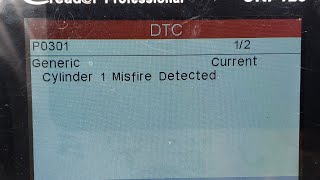
P0301 on a 2008-2015 GMC Yukon XL signifies a misfire in cylinder #1. The most common causes are a faulty spark plug, ignition coil, or spark plug wire. However, these engines are known for Active Fuel Management (AFM) lifter failures, which can also cause this code and represent a much more serious and expensive repair. A ticking noise accompanying the misfire is a strong indicator of this more severe issue.
- P0301 indicates a misfire on the front driver's side cylinder.
- Always start diagnosis with the simplest, most common causes: the spark plug, spark plug wire, and ignition coil for cylinder #1.
- A quick and effective diagnostic step is to swap the ignition coil from cylinder #1 to another cylinder to see if the misfire code follows.
- Be aware that a failed Active Fuel Management (AFM) lifter is a common and serious cause of P0301 on these specific engines, often requiring a major repair.
- Do not ignore a flashing Check Engine Light, as this signals a severe misfire that can cause expensive damage to the catalytic converter.
What's Unique About the 2008-2015 Gmc YUKON XL
While ignition component failures are common on any vehicle, the V8 engines in the Yukon XL have a specific known weakness. The Active Fuel Management (AFM) system, designed to save fuel by deactivating cylinders, puts extra stress on the valve lifters. A P0301 code can be an early symptom of a failing AFM lifter in cylinder #1, which is a significant mechanical repair often costing thousands of dollars. This failure is so common that GM has issued multiple Technical Service Bulletins (TSBs) like #15-06-01-002A, which address engine misfires (P0300) and ticking noises caused by mechanically collapsed or stuck AFM lifters. Additionally, TSBs confirm these engines can suffer from oil consumption that fouls spark plugs, directly causing a misfire.
Diagnostic Flowchart
Tap your situation to follow the diagnostic path that matches what you're seeing on this vehicle.
Generation note: The 2008-2015 year range covers two generations: the GMT900 (2008-2014) and the K2XX (2015). The 2015 models introduced new direct-injected 'EcoTec3' engines. While the root causes of a P0301 misfire are similar (spark, fuel, compression), the 2015 models have a different fuel injection system and updated engine architecture. However, the AFM lifter failure issue persists and is well-documented in the K2XX generation as well, as noted in TSBs like #15-06-01-002K which covers 2015-2020 models.
Symptoms You May Notice
- Rough or shaking idle
- Hesitation or stumbling during acceleration
- Reduced engine power
- Poor fuel economy
- Flashing or solid Check Engine Light
- Smell of unburnt fuel from the exhaust
- Ticking or tapping noise from the engine, especially on startup
- Replacing oxygen (O2) sensors. An O2 sensor might report an issue due to the misfire, but it is almost never the root cause of a single-cylinder misfire code like P0301.
- Assuming a simple tune-up will fix it without investigating further. While plugs and wires are common culprits, the high probability of AFM lifter failure on these engines means a deeper diagnosis is warranted, especially if a ticking noise is present.
Most Likely Causes
- Worn or Fouled Spark Plug 🔴 High Probability → Shop Spark Plug TSB #PIP4525D directly links oil consumption to fouled spark plugs on these engines, especially on AFM cylinders like #1. A class-action lawsuit also alleges that defective piston rings in the 5.3L engine lead to excessive oil consumption, which fouls spark plugs and causes misfires.
How to confirm: Remove the spark plug from cylinder #1 and inspect it for wear, heavy carbon buildup, or oil fouling. An oil-soaked plug is a major red flag.
Typical fix: Replace the spark plug. It is best practice to replace all 8 spark plugs at the same time. Use a quality Iridium plug like the recommended ACDelco.
Est. part cost: $8-$25 per plug - Defective Spark Plug Wire 🔴 High Probability → Shop Spark Plug TSB #PIP4819A specifically mentions inspecting and replacing loose spark plug wires as a remedy for P030x misfire codes on these vehicles. Heat and vibration cause the connections to loosen or the wire to degrade over time.
How to confirm: Inspect the wire for cylinder #1 for any visible damage, cracks, or loose connections at the coil and the spark plug. Ensure it is seated firmly with a distinct 'click'. You can also test its resistance with a multimeter.
Typical fix: Replace the faulty spark plug wire. It is often recommended to replace the full set with a quality brand like ACDelco.
Est. part cost: $40-$90 for a set - Faulty Ignition Coil 🟡 Medium Probability → Shop Ignition Coil Coil-on-plug ignition coils are a common failure point on most modern vehicles as they age from heat and vibration. They are mounted directly to the valve covers on the LS engines.
How to confirm: Swap the ignition coil from cylinder #1 with another cylinder (e.g., cylinder #3). Clear the codes and drive. If the code changes to P0303, the coil is bad. This is a widely accepted and effective diagnostic step.
Typical fix: Replace the faulty ignition coil. It is advisable to use a reputable OEM or equivalent brand.
Est. part cost: $35-$75 - Clogged or Faulty Fuel Injector ⚪ Low Probability → Shop Fuel Injector While less common than ignition or AFM issues, fuel injectors can fail. For 2015 models with direct injection, carbon buildup on the injector tip can be more of a problem.
How to confirm: Listen to the injector with a mechanic's stethoscope for a consistent clicking sound. For a more definitive test, you can swap the injector with another cylinder, but this is more labor-intensive, especially on direct-injected models.
Typical fix: Replace the faulty fuel injector. Sometimes a professional fuel system cleaning can resolve a clog, but replacement is often necessary for a failed injector.
Est. part cost: $70-$180
Rare But Worth Checking
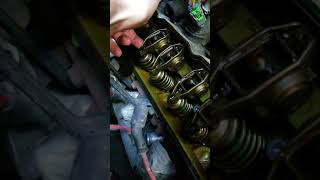
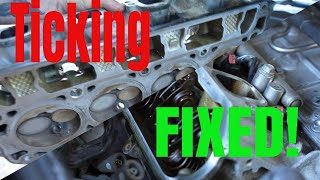
- Failed AFM/DOD Lifter: → Shop Engine Valve Lifter This is the most common major failure on this platform. The Active Fuel Management (AFM) lifters can collapse or get stuck, causing a persistent misfire. This is often accompanied by a ticking noise from the engine. The repair is labor-intensive, requiring removal of the cylinder head, 🎬 Watch: Full walkthrough on removing the head and replacing AFM lifters. and often costs between $3,000 and $6,000 at a shop. If the lifter fails, it can damage the camshaft, necessitating its replacement as well.
- Intake Manifold Gasket Leak: → Shop Engine Intake Manifold A vacuum leak from a failed intake manifold gasket near the cylinder #1 runner can lean out the air-fuel mixture and cause a misfire. This may cause a hissing sound or a rough idle that improves with higher RPMs.
- Low Cylinder Compression: Internal engine damage, such as from a failed lifter damaging the camshaft, a bad valve, or worn piston rings, can cause a loss of compression and a misfire. A collapsed AFM lifter that is stuck will prevent the valve from opening, resulting in near-zero compression for that cylinder. This requires a mechanical compression test to diagnose.
Diagnosis Steps
- Read the code with an OBD-II scanner to confirm P0301 is present. Note if the Check Engine Light is flashing, which indicates a severe misfire.
- Listen for a ticking or tapping noise from the engine bay. A distinct tick from the driver's side valve cover area is a strong clue for a potential lifter issue.
- Locate cylinder #1, which is the front-most cylinder on the driver's side.
- Inspect the spark plug wire for cylinder #1. Ensure it is securely connected and not damaged, as per TSB #PIP4819A.
- Swap the ignition coil from cylinder #1 with the coil from cylinder #3 (the next one back on the same side). Clear the codes and run the engine. If the code returns as P0303, the ignition coil is faulty.
- If the code remains P0301, remove and inspect the spark plug. Look for heavy carbon deposits, oil fouling, or a cracked insulator, as noted in TSB #PIP4525D. An oil-drenched plug is a significant finding.
- If ignition components appear to be in good condition, perform a cylinder compression test on cylinder #1. A very low or zero reading strongly suggests a mechanical problem like a stuck/collapsed AFM lifter or a damaged valve.
- If compression is good, listen to the fuel injector with a stethoscope to ensure it is clicking.
- If a mechanical issue is suspected, remove the driver's side valve cover to inspect the valve train for cylinder #1. Look for a loose rocker arm or bent pushrod, which are clear signs of a collapsed lifter.
Parts You'll Likely Need
- Spark Plug
(OEM #12621258 (superseded by ACDelco 41-162))— Spark plugs are a primary wear item and are frequently the cause of a single-cylinder misfire. Oil fouling is also a known issue on these engines per TSB #PIP4525D. The ACDelco 41-162 Iridium plug is the recommended replacement.
Trusted brands: ACDelco, NGK
OEM price range: $15-$25
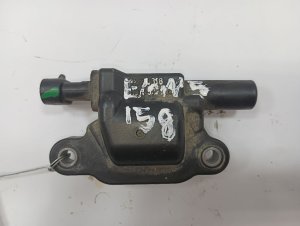
Aftermarket price range: $8-$18 - Ignition Coil
(OEM #12611424)— The coil provides the high voltage for the spark. It is a common failure point that is easily diagnosed by swapping it with another cylinder.
Trusted brands: ACDelco, Standard Motor Products, Delphi
OEM price range: $50-$75
Aftermarket price range: $35-$60
Related Codes That Often Appear With This One
- P0300 — If the condition causing the P0301 is intermittent or beginning to affect other cylinders, a P0300 (Random/Multiple Cylinder Misfire) code may also be stored. TSBs regarding AFM lifter failure often reference P0300 as the primary code.
- P0521 — A P0521 (Engine Oil Pressure Sensor/Switch Range/Performance) code can sometimes appear alongside a misfire code. This can point to oiling system issues that are a root cause of AFM lifter failure.
Technical Service Bulletins (TSBs) & Recalls
- PIP4819A: Notes that misfire codes (including P0301) can be caused by loose spark plug wires and advises inspection and replacement.
- PIP4525D: Links engine misfires (P0300, P0301) and oil consumption to oil-fouled or cracked spark plugs.
- 15-06-01-002A/B/C/M: A series of bulletins addressing engine misfires (P0300) and ticking noises caused by mechanically collapsed or stuck AFM lifters. It details the cause as potential internal lifter damage and provides part numbers for replacement lifters, gaskets, and manifolds.
Platform-Specific Known Issues
- Active Fuel Management (AFM) Lifter Failure: The most significant and notorious issue for these engines. The lifters for AFM cylinders (1, 4, 6, and 7) are prone to collapsing or sticking due to internal pin damage or oiling issues. This causes a dead misfire and can destroy the camshaft if not addressed. Multiple TSBs (e.g., 15-06-01-002 series) have been issued by GM for this exact problem.
- Oil Consumption and Fouled Plugs: TSB #PIP4525D directly connects engine misfires like P0301 to oil consumption that fouls the spark plugs, preventing a proper spark. Other TSBs like #10-06-01-008H address oil consumption from the PCV system or an AFM oil pressure relief valve, which GM later addressed with an updated valve cover design.
Mechanic-Grade Diagnostic Values
- Fuel Pressure (Key On, Engine Off) — expected: 55-62 PSI for non-Flex Fuel engines (LY5, LMG, LC9, 6.2L); 48-54 PSI for Flex Fuel engines (VIN Z).. Failure: Pressure significantly below the specified range suggests a weak fuel pump or clogged filter.
- Fuel Injector Coil Resistance — expected: 11-14 ohms when the engine coolant temperature is between 10-32°C (50-90°F).. Failure: A reading outside this range, or one that is significantly different from the other injectors, indicates a faulty injector.
- Ignition Coil Primary Resistance — expected: 0.4 - 2.0 ohms is a general range, with more specific documents suggesting 0.49—0.57 ohms.. Failure: A reading outside of the specified range indicates a faulty primary winding.
- Ignition Coil Secondary Resistance — expected: 6,000 - 10,000 ohms is a general range, with more specific documents suggesting 9,500—11,100 ohms.. Failure: A reading outside of this range indicates a faulty secondary winding.
Hidden / Shadow Codes Worth Checking
- Mode 6, Test ID $A2-$AB: Mode 6 data tracks misfire counts for each cylinder during the current and previous 10 driving cycles. This can reveal an intermittent misfire on cylinder 1 even if the count is not yet high enough to set a P0301 code and illuminate the check engine light. (see via A professional scan tool with Mode 6 capability is required. The specific Test ID for misfire counts can vary by year and model, but is often in the $A2 (Cylinder 1) to $AB (Cylinder 8) range.)
Scan Tool Commands That Help
- GM CH-47976 (AFIT): Active Fuel Injector Test — This is a dealer-level bidirectional tool that automates the testing of fuel injectors. It can perform balance tests and check for electrical faults in the injector coil, helping to definitively rule the injector in or out as the cause after ignition issues are eliminated.
- Tech2 / GDS2: Injector Balance Test — This function allows a technician to fire each injector for a set period and measure the corresponding drop in fuel pressure. An injector that causes a smaller or larger drop than the others is faulty. This is used to diagnose a suspected fueling issue when a coil swap doesn't isolate the problem.
Wiring & Ground Locations
- G102 — Located at the left rear of the engine.. This is the primary ground point for all 8 ignition coils. A loose or corroded connection here can cause weak spark and misfires on any cylinder, including cylinder 1.
- G104 — Located on a stud at the rear of the passenger's side cylinder head, near the firewall.. This ground serves multiple functions for the Vehicle Control Module (VCM/ECM) and fuel pump relay trigger. A poor connection can cause erratic ECM behavior, leading to misdiagnosed misfires.
- ECM/PCM Main Ground — Part of the main negative battery cable harness, bolted to the left front of the engine block.. This is the main ground for the engine computer itself. A compromised connection here can lead to a host of phantom issues, including misfire codes.
Real Owner Repair Stories
- Tahoe Yukon Forum user (2011 Yukon XL Denali 6.2L) — Engine ticking noise, Check Engine Light on, 'Service Stabilitrak' and 'Service Traction Control' messages displayed. Codes P0301 and P0300 were present.
❌ Tried (didn't work) Swapping ignition coil from cylinder 1 to another cylinder (misfire did not move)., Swapping spark plug from cylinder 1 to another cylinder (misfire did not move).
✅ What actually fixed it The vehicle was taken to a dealer who diagnosed a collapsed AFM lifter on cylinder 1. The repair involved replacing all lifters on the driver's side bank and replacing the camshaft, which had developed a groove from the failed lifter.
"I Checked Everything" — The Actual Cause
- A common diagnostic path for a misfire code is to perform a smoke test to check for vacuum leaks at the intake manifold gasket. On the 2008-2015 Yukon XL, it is frequent for this test to pass (show no leaks), yet the P0301 code persists. In these cases, the root cause is often not unmetered air, but a mechanical failure such as a collapsed AFM lifter, which a smoke test cannot detect. This leads technicians to chase non-existent vacuum leaks when the problem is internal to the engine.
When the Usual Fixes Don't Work
- While a P0301 code is frequently resolved with a simple ignition system repair like a spark plug or coil, a significant number of owners have found this to be insufficient. Many repair stories for the 2008-2015 Yukon XL show owners first replacing plugs, wires, and coils with no resolution. The persistent misfire, often accompanied by a ticking noise, is ultimately traced to a collapsed AFM lifter and, in many cases, a damaged camshaft. This pattern serves as strong counter-evidence to the assumption that P0301 is always a simple 'tune-up' fix on these specific GM V8 engines.
OEM Part Supersession History
HL-7011 (Elgin Aftermarket for AFM)→HL-7025 (Elgin Aftermarket for DFM)— The newer HL-7025 lifter designed for Dynamic Fuel Management (DFM) engines is backward compatible with older Active Fuel Management (AFM) engines.
Heads up: The new DFM lifter (HL-7025) WILL work in older AFM applications. However, the original AFM lifter (HL-7011) will NOT work in newer DFM engines (2019+).
Model Year Variations Within This Range
- 2015: The 2015 model year marked the introduction of the K2XX platform and the 'EcoTec3' V8 engines (5.3L L83 and 6.2L L86). These engines feature Direct Injection, a higher compression ratio, and continuously variable valve timing, which is a significant change from the port-injected GMT900 engines. While they still suffer from AFM lifter failures, diagnosing a fuel-related P0301 requires checking high-pressure fuel system components not present on 2008-2014 models.
Helpful Videos

We Have This Part in Stock

The information in this article is provided for general reference and educational purposes only. Vehicle specifications, procedures, and part compatibility can vary by production date, trim level, and region. Always consult your vehicle's factory service manual and verify part numbers before purchasing or performing repairs. Safety-critical components such as airbags, seat belts, and braking systems should be installed by a qualified professional.
- Gmc YUKON XL:
- 🧭 Diagnostic Flowchart
- 🎬 Helpful Videos
- 🛍️ Shop This Part
- What's Unique About the 2008-2015 Gmc YUKON XL
- Symptoms You May Notice
- Most Likely Causes
- Rare But Worth Checking
- Diagnosis Steps
- Parts You'll Likely Need
- Related Codes That Often Appear With This One
- Technical Service Bulletins (TSBs) & Recalls
- Platform-Specific Known Issues
- Mechanic-Grade Diagnostic Values
- Hidden / Shadow Codes Worth Checking
- Scan Tool Commands That Help
- Wiring & Ground Locations
- Real Owner Repair Stories
- "I Checked Everything" — The Actual Cause
- When the Usual Fixes Don't Work
- OEM Part Supersession History
- Model Year Variations Within This Range
- 🎟️ Get 5% Off