

P0301 on 2015-2018 Honda FIT: Cylinder 1 Misfire Causes and Fixes
On a 2015-2018 Honda Fit, P0301 is most often caused by a faulty fuel injector. Honda has an extended warranty (TSB 22-002) for this issue on 2015-2016 models. If not the injector, check the ignition coil and spark plug for cylinder 1. Carbon buildup on intake valves is another known, but less common, cause.
- For a 2015-2018 Honda Fit, P0301 strongly points to a faulty fuel injector, especially on 2015-2016 models.
- Before paying for repairs, check with a Honda dealer if your VIN is covered by the fuel injector warranty extension (10 years/150,000 miles).
- If the injector is not the cause, the next steps are to check the cylinder 1 spark plug and ignition coil.
- Do not ignore a flashing Check Engine Light, as it can lead to expensive catalytic converter damage.
- Cylinder 1 is located on the passenger side of the engine bay, closest to the belts.
What's Unique About the 2015-2018 Honda FIT

The 2015-2018 Honda Fit uses a 1.5L direct-injection (GDI) engine. This generation, particularly the 2015-2016 model years, is known for premature fuel injector failure. The issue became so widespread that Honda issued Service Bulletin 22-002, extending the warranty on the fuel injectors to 10 years or 150,000 miles for affected vehicles. The original injectors were prone to internal wear and clogging. This makes a faulty fuel injector a much higher probability for a P0301 code on this car compared to the usual suspects like spark plugs or coils on other vehicles.
Diagnostic Flowchart

Tap your situation to follow the diagnostic path that matches what you're seeing on this vehicle.
Symptoms You May Notice

- Rough or shaky idle
- Hesitation or stumbling during acceleration
- Noticeable loss of engine power
- Flashing or solid Check Engine Light
- Smell of gasoline from the exhaust
- Decreased fuel economy
- Engine stalling, especially when stopped
- Replacing only the spark plug when the underlying cause is a failing fuel injector.
- Replacing the catalytic converter for a P0420 code when the root cause is a faulty fuel injector dumping unburnt fuel, which is a known issue on these cars.
Most Likely Causes

- Faulty Fuel Injector 🔴 High Probability → Shop Fuel Injector Widespread, documented issues with the original fuel injectors on 2015-2016 models led to multiple TSBs and a warranty extension (TSB 22-002). The original design was susceptible to internal wear and clogging. Owner complaints confirm dealers often replace all four injectors even for a single-cylinder misfire. [ODI #11306708, ODI #11714664]
How to confirm: After ruling out spark and ignition, the fuel injector is the next suspect. A technician can perform a fuel injector balance test or an A/F imbalance test with a Honda HDS scanner. For DIY, if the spark plug and ignition coil are good, the injector is the most likely cause. Check VIN eligibility for the warranty extension with a Honda dealer.
Typical fix: Replace the fuel injectors as a complete set of four, using the updated part number. The warranty extension may cover this cost for eligible 2015-2016 models. The fuel joint pipe is a single-use part and should also be replaced.
Est. part cost: $400-$650 for a set of 4 OEM injectors - Faulty Ignition Coil 🟡 Medium Probability → Shop Ignition Coil
How to confirm: Swap the ignition coil from cylinder 1 with another cylinder (e.g., cylinder 2). This requires only a 10mm socket. 🎬 Watch: How to diagnose and replace a faulty ignition coil Clear the codes and drive the vehicle. If the code changes to P0302, the ignition coil is faulty.
Typical fix: Replace the failed ignition coil. Many owners choose to replace all four at the same time as preventative maintenance, along with spark plugs.
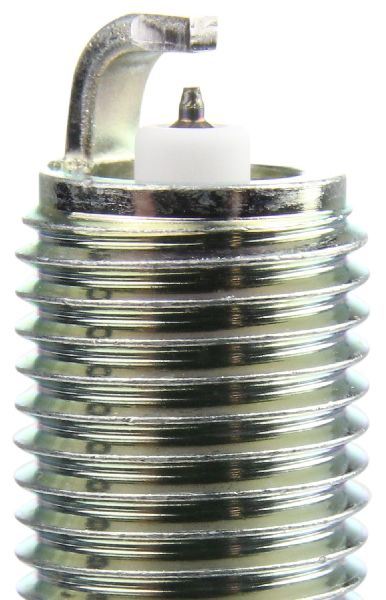
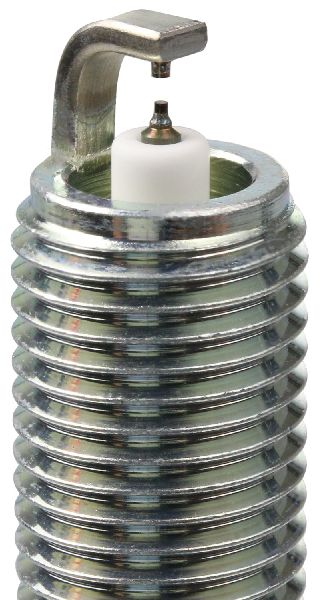
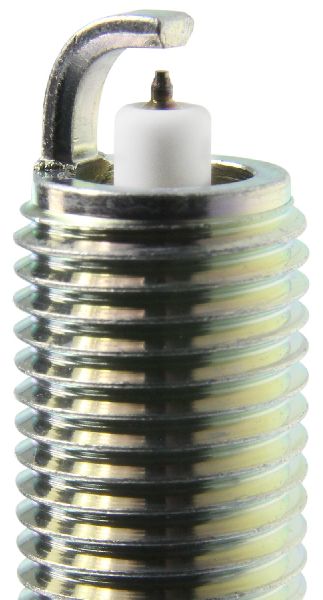
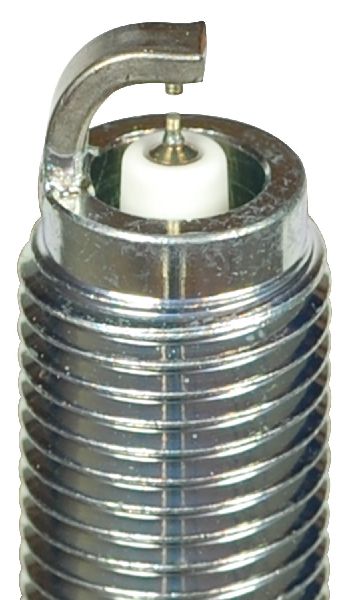
Est. part cost: $50-$90 per coil for a quality brand - Worn or Fouled Spark Plug 🟡 Medium Probability → Shop Spark Plug Spark plugs are a normal wear item. The service interval is around 100,000 miles, but they can fail earlier.
How to confirm: Remove the spark plug from cylinder 1 and inspect it. Look for heavy carbon buildup, oil fouling, or a worn/damaged electrode. Compare it to a plug from another cylinder.
Typical fix: Replace the spark plugs. It is strongly recommended to replace all four at once with the correct OEM-spec plugs (NGK or Denso Iridium). 🎬 See this DIY walkthrough for changing your Honda Fit spark plugs
Est. part cost: $60-$100 for a set of 4 OEM-spec plugs - Intake Valve Carbon Buildup ⚪ Low Probability As a direct-injection (GDI) engine, fuel is sprayed directly into the cylinder, so it doesn't wash over the intake valves. This allows oil vapor from the PCV system to bake onto the hot valves, forming carbon deposits that can restrict airflow and cause misfires. Honda has issued TSB A21-007 regarding this issue.
How to confirm: Requires removing the intake manifold and visually inspecting the intake valves, often with a borescope. This is typically done after ruling out ignition and fuel injector issues.
Typical fix: Perform a walnut shell blasting service to clean the intake valves and ports. This is a labor-intensive job. TSB 21-007 also includes a software update for some model years to help mitigate future buildup.
Est. part cost: $0 (service cost is labor, typically $500-$800)
Rare But Worth Checking
- Defective VTC Actuator: Honda issued TSB #16-088 for a rattling noise at cold start-up on 2015-16 Fits due to a defective VTC actuator. While this primarily causes noise, a severely malfunctioning variable timing system can contribute to combustion instability and misfires, though it's less likely to isolate to a single cylinder.
- Injector Circuit Fault: A user on Reddit with a 2015 Fit reported a P0301 accompanied by a P0201 (Cylinder 1 Injector "A" Circuit). This points to a wiring or PCM driver issue rather than the injector itself. This is rare but important to check if a new injector doesn't solve the problem.
Diagnosis Steps
- Read the code with an OBD-II scanner to confirm P0301 and check for any other codes, especially P0420, P219A, or P0201.
- For 2015-2016 models, immediately check your vehicle's VIN with a Honda dealer for eligibility under the fuel injector warranty extension (Service Bulletin 22-002). This could result in a free repair.
- Inspect the spark plug in cylinder 1. If it is worn, fouled, or damaged, replace all four spark plugs with OEM-spec Iridium plugs (NGK or Denso).
- If the spark plug is okay, swap the ignition coil from cylinder 1 with another cylinder (e.g., cylinder 2). This is a simple procedure requiring a 10mm socket. Clear the codes and drive. If the code returns as P0302, the coil is bad and needs replacement.
- If the misfire remains on cylinder 1 after swapping the coil and plug, the fuel injector is the most likely culprit. Proceed with replacement, especially on 2015-2018 models.
- If injectors have been replaced and the issue persists, investigate the possibility of carbon buildup on the intake valves, as noted in TSB 21-007. This requires removing the intake manifold for inspection.
Parts You'll Likely Need
- Fuel Injector Kit
(OEM #06160-5R1-305 (Old), 16010-5R1-315 (Newer Kit), 06160-5R1-000 (Kit mentioned in TSB))— This is the most common cause of P0301 on this vehicle, especially 2015-2016 models, due to a known manufacturing defect. Always replace as a set of 4.
Trusted brands: Honda (OEM)
OEM price range: $500-$650 (for a set of 4)
Aftermarket price range: $250-$450 (for a set of 4, quality varies) - Ignition Coil
(OEM #30520-5R0-013)— A common failure point for ignition systems. Easy to diagnose by swapping between cylinders.
Trusted brands: Honda (OEM), Hitachi (IGC0079), Denso, NGK
OEM price range: $70-$105
Aftermarket price range: $40-$80 - Spark Plug
(OEM #NGK DILZKAR7C11S (Honda PN: 12290-5R0-003) or Denso DXE22HCR11S)— A standard maintenance item and a common cause of misfires. Should be checked or replaced first due to low cost.
Trusted brands: NGK, Denso
OEM price range: $15-$25 per plug
Aftermarket price range: $10-$20 per plug
Related Codes That Often Appear With This One
- P0300 — This is a 'Random Misfire' code. It often appears alongside P0301 if the misfire is severe, intermittent, or beginning to affect other cylinders.
- P0302, P0303, P0304 — If multiple injector or coil issues are present, you may see misfire codes for other specific cylinders. This is common when the injectors are failing as a set.
- P0420 — Catalyst System Efficiency Below Threshold. A persistent misfire from P0301 can dump unburnt fuel into the exhaust, damaging the catalytic converter and triggering a P0420 code. Honda TSB A22-002 explicitly lists P0420 as a potential companion code to injector-related misfires.
- P219A — Bank 1 Air-Fuel Ratio Imbalance. This code is specifically mentioned in Honda's TSB 22-002 as being caused by a faulty fuel injector creating an improper air/fuel mixture in one or more cylinders.
- P0201 — Cylinder 1 Injector Circuit Malfunction. This code indicates an electrical problem with the injector's circuit, such as a bad wire, poor connection, or faulty PCM driver. It can appear with P0301 if the issue is electrical rather than a clogged injector.
Technical Service Bulletins (TSBs) & Recalls
- A22-002: Warranty Extension for 2015-2016 models regarding misfires (P0300-P0304) and other codes (P219A, P0420) caused by faulty fuel injectors. Supersedes TSB 16-034.
- A21-007: Addresses misfire codes (P0300-P0304) that can be caused by carbon buildup on the intake valves and includes a procedure for cleaning.
Platform-Specific Known Issues
- Fuel Injector Warranty Extension: Honda extended the warranty on fuel injectors for 2015-2016 Fit models to 10 years or 150,000 miles. Service Bulletin 22-002 addresses this, noting that improperly installed injectors could lead to internal wear and misfires. Owners have successfully had injectors replaced under this program.
- Carbon Buildup: TSB A21-007 notes that carbon buildup on intake valves can cause misfires across all 2015-2020 Fit models. The corrective action varies by year, with 2018-2020 models designated for a software update as part of the repair.
Mechanic-Grade Diagnostic Values
- Ignition Coil Primary Resistance — expected: 0.4 to 2.0 Ohms. Failure: A reading outside this range, or significantly different from the other coils, indicates a fault.
- Ignition Coil Secondary Resistance — expected: 8,000 to 15,000 Ohms (8k-15k Ω). Failure: A reading of 'OL' (over-limit/infinite) or a value far outside the expected range points to a failed coil.
- Fuel Injector Resistance (High Impedance) — expected: 10 to 16 Ohms. Failure: A reading of 0.0 (shorted) or 'OL' (open circuit) indicates a failed injector. All injectors should have readings within ~0.5 Ohms of each other.
- Live Misfire Count (Per Cylinder) — expected: 0, or very few counts at idle.. Failure: On a professional scan tool, watching the live data for cylinder 1 will show a rapidly increasing count during the misfire event, while other cylinders remain at or near zero.
Hidden / Shadow Codes Worth Checking
- Mode $06 Misfire Data: While not a 'shadow code,' Mode $06 contains raw data from the PCM's self-tests, including misfire counts for each cylinder for the current and last 10 driving cycles. A high count for cylinder 1 can confirm the P0301 before the check engine light becomes constant. (see via Advanced OBD-II scanner with Mode $06 capability or a professional tool like the Honda HDS.)
Scan Tool Commands That Help
- Honda HDS (or equivalent pro scanner): CKP Pattern Clear / CKP Pattern Learn — This procedure MUST be performed after any repair for a misfire code or after replacing the crankshaft position (CKP) sensor. It erases the old crankshaft rotational data and forces the PCM to relearn the new pattern, preventing false misfire detection after a fix.
- Honda HDS (or equivalent pro scanner): Misfire Data Stream — Used to watch live misfire counts for each cylinder simultaneously. This is the fastest way to confirm the misfire is isolated to cylinder 1 and to verify if a repair (like swapping a coil) has moved the problem to another cylinder.
- Honda HDS: PCM Reset — This is a deeper reset than a generic code clear. It erases all learned values and adaptations except the CKP pattern. It's used to force the system to relearn fuel trims and other parameters from a clean slate after a repair.
Real Owner Repair Stories
- FitFreak.net user (2015 Fit EX MT, 130,000 miles) — P0300, P0301, P0303 misfire codes.
❌ Tried (didn't work) Replacing spark plugs, Replacing ignition coils, Performing a valve adjustment, Cleaning intake valves
✅ What actually fixed it Replacing all four fuel injectors, as described in Honda TSB 16-034, finally solved the misfire codes. - Reddit user /r/hondafit (2015 Fit EX-L, 156,000 miles) — Intermittent stutter/hesitation, limp mode, with codes P0301 and P0201 (Cylinder 1 Injector 'A' Circuit).
❌ Tried (didn't work) Replacing spark plugs, Swapping ignition coils between cylinders 1 and 3 (misfire stayed on cylinder 1)
✅ What actually fixed it The user's mechanic diagnosed a faulty fuel injector, even though the injectors had been replaced only 11,000 miles prior. The story highlights that even new parts can fail and that a P0201 code strongly points to an injector or its circuit. - YouTube channel 'Handy Doctor' (Honda Fit (year not specified, but GK generation)) — P0301, flashing check engine light on highway.
❌ Tried (didn't work) The owner was advised by a parts store to replace the coil, plug, and battery.
✅ What actually fixed it The misfire was resolved by simply swapping the ignition coils between cylinder 1 and 2 and then swapping them back. The code did not return, leading to the conclusion that the issue was a poor electrical connection at the coil connector that was inadvertently fixed by unplugging and replugging it.
OEM Part Supersession History
06160-5R1-000 / 06160-5R1-305→16010-5R1-315 (Kit)— Updated design to address the premature failure and clogging issues found in the injectors used on 2015-2016 models.
Heads up: Be cautious of part numbers like 06160-5PA-305; this is for the 1.5L TURBO engine in Civics/CR-Vs and is not compatible with the naturally aspirated Fit engine.
Model Year Variations Within This Range
- 2018-2020: According to TSB A21-007 for carbon buildup, 2018-2020 models should receive a software update as part of the initial repair procedure, whereas 2016-2017 models only get the update if the misfire returns after the initial cleaning.
- 2015-2016: These model years are specifically covered by the fuel injector warranty extension (TSB 22-002), indicating the original injector design was most problematic in these early production years of the GK5 generation.
Helpful Videos
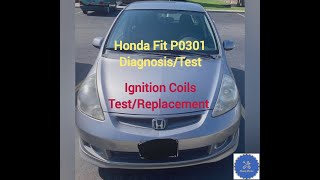
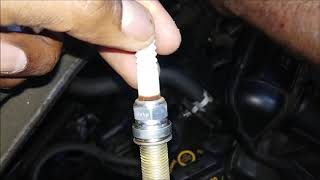
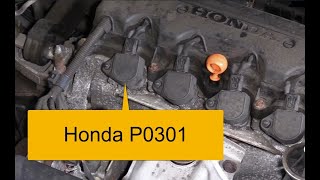
We Have This Part in Stock
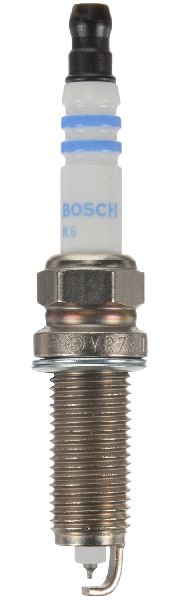


The information in this article is provided for general reference and educational purposes only. Vehicle specifications, procedures, and part compatibility can vary by production date, trim level, and region. Always consult your vehicle's factory service manual and verify part numbers before purchasing or performing repairs. Safety-critical components such as airbags, seat belts, and braking systems should be installed by a qualified professional.
- Honda FIT:
- 🧭 Diagnostic Flowchart
- 🎬 Helpful Videos
- 🛍️ Shop This Part
- What's Unique About the 2015-2018 Honda FIT
- Symptoms You May Notice
- Most Likely Causes
- Rare But Worth Checking
- Diagnosis Steps
- Parts You'll Likely Need
- Related Codes That Often Appear With This One
- Technical Service Bulletins (TSBs) & Recalls
- Platform-Specific Known Issues
- Mechanic-Grade Diagnostic Values
- Hidden / Shadow Codes Worth Checking
- Scan Tool Commands That Help
- Real Owner Repair Stories
- OEM Part Supersession History
- Model Year Variations Within This Range
- 🎟️ Get 5% Off