

P0301 on 2010-2014 Jaguar XJ: Cylinder 1 Misfire Causes and Fixes
P0301 on a Jaguar XJ most often points to a failed ignition coil or a worn spark plug on cylinder 1. These are relatively easy to diagnose by swapping parts between cylinders and are affordable DIY fixes. However, on the 5.0L V8 and 3.0L V6 engines, a failing fuel injector is also a very common cause that should not be overlooked.
- P0301 is a misfire on cylinder 1, the front-most cylinder on the passenger side.
- The most likely cause is a bad ignition coil or spark plug.
- Diagnose the issue for free by swapping the coil, and then the spark plug, with an adjacent cylinder to see if the fault code 'moves'.
- If the misfire persists on cylinder 1 after swapping parts, suspect a more complex issue like a fuel injector, which is a known issue on these engines.
- Do not drive with a flashing check engine light to avoid costly damage to the catalytic converter.
What's Unique About the 2010-2014 Jaguar XJ
The 2010-2014 Jaguar XJ (X351 generation) uses high-performance, direct-injection engines (AJ133 5.0L V8 and AJ126 3.0L V6). These engines are sensitive to ignition and fuel system integrity. While ignition coils and spark plugs are the most common culprits for a P0301, these specific engines have a known susceptibility to fuel injector issues, which can cause a single-cylinder misfire or affect an entire bank. Furthermore, a Jaguar Technical Service Bulletin (SSM-63697) explicitly notes that poor fuel quality can be a cause for misfires on these vehicles, often leading to injector problems.
Diagnostic Flowchart
Tap your situation to follow the diagnostic path that matches what you're seeing on this vehicle.
Symptoms You May Notice
- Rough or vibrating idle
- Engine stumbling or hesitating during acceleration
- Noticeable loss of power
- Check Engine Light is on solid or flashing
- Smell of gasoline from the exhaust
- Occasional hissing sound from the exhaust on the affected bank
- Replacing only spark plugs and ignition coils when the root cause is a faulty fuel injector.
- Replacing the catalytic converter because of misfire-related codes, when the misfire itself is the root cause and has not yet damaged the converter.
- Assuming a vacuum leak is the cause without performing a smoke test for confirmation.
Most Likely Causes
- Faulty Ignition Coil 🔴 High Probability → Shop Ignition Coil Coil-on-plug ignition systems are common failure points on many modern engines. Heat and vibration in the engine bay lead to eventual failure.
How to confirm: The easiest way to confirm a bad coil is to swap the ignition coil from cylinder 1 with another cylinder (e.g., cylinder 3 on the same bank). Clear the codes and drive the car. If the code changes to P0303, the coil is faulty. Cylinder 1 is the front-most cylinder on the right (passenger side in US) bank for both V6 and V8 engines.
Typical fix: Replace the faulty ignition coil. Many owners choose to replace all coils on that bank, or all coils on the engine if they are over 60,000 miles old, as a preventative measure.
Est. part cost: $50-$120 - Worn or Fouled Spark Plug 🔴 High Probability → Shop Spark Plug Spark plugs are a regular maintenance item with a finite lifespan. The direct injection nature of these engines can lead to fouling over time, and high-performance engines are less tolerant of worn plugs.
How to confirm: After ruling out the ignition coil, swap the spark plug from cylinder 1 with another cylinder. If the misfire code follows the plug, the plug is the issue. Visually inspect the old plug for wear, oil, or black, sooty carbon fouling.
Typical fix: Replace the spark plug. It is best practice to replace all spark plugs at the same time to ensure consistent performance. 🎬 See this walkthrough for replacing spark plugs and ignition coils. The recommended service interval is typically around 60,000-100,000 miles, but can be shorter.
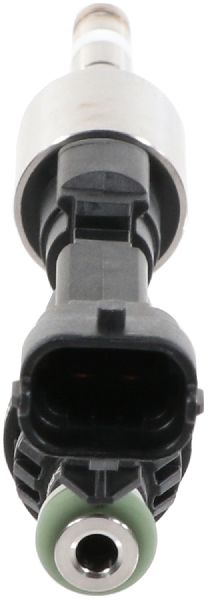
Est. part cost: $15-$30 per plug - Clogged or Faulty Fuel Injector 🟡 Medium Probability → Shop Fuel Injector The direct-injection 5.0L and 3.0L engines are known to have issues with fuel injectors. They can become clogged, leak, or fail electronically. Forum discussions are filled with owner experiences where a P0301 was ultimately traced back to a bad injector after coils and plugs were replaced. Sometimes a failing injector can cause the entire fuel rail's pressure to drop, affecting other cylinders on the same bank.
How to confirm: This is more difficult for a DIYer. After swapping the coil and plug fails to move the misfire, the injector is the next logical suspect. A professional can perform a fuel injector balance test. You can also use a scanner to monitor fuel trims per bank; an injector issue may cause trims to be significantly different. In some cases, a bad injector will have a very different resistance reading when tested with a multimeter; a healthy injector should read between 12-15 ohms, while a faulty one might be over 100 ohms or show an open circuit.
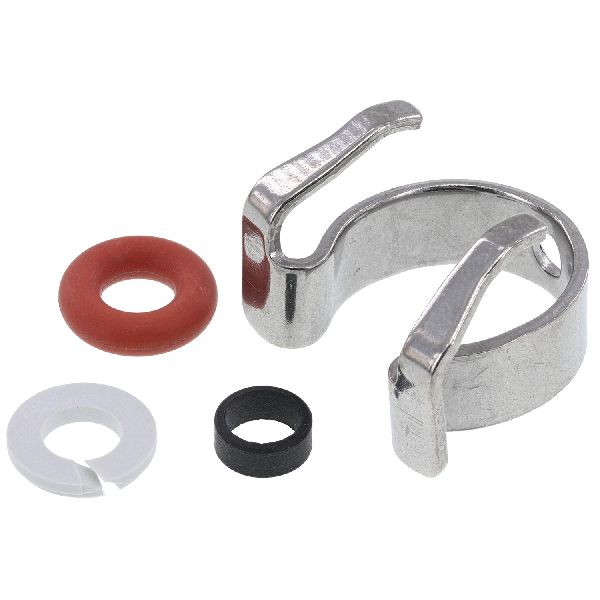
Typical fix: Replace the faulty fuel injector. This is a more involved job as it requires removing the fuel rail. It's often recommended to replace all injectors on the same bank, or all eight, especially on higher mileage vehicles. Special tools may be required to pull the injector. 🎬 Watch: How to fix a misfire on the 5.0 AJ133 engine.
Est. part cost: $80-$250 per injector
Rare But Worth Checking
- Leaking Supercharger Intercooler: → Shop Turbocharger On supercharged 5.0L V8 and 3.0L V6 models, the internal intercooler (charge air cooler) located in the engine valley can leak coolant directly into the intake. This fouls spark plugs and causes misfires, often accompanied by mysterious coolant loss with no external drips and sometimes white smoke from the exhaust on startup. This is a major repair requiring removal of the supercharger.
- Low Engine Compression: Mechanical issues like a worn piston ring, a burnt valve, or a leaking head gasket can cause a loss of compression and a misfire. This is less common but requires a compression test to diagnose.
- Vacuum Leak: A vacuum leak near the intake manifold runner for cylinder 1 could cause a lean condition and trigger a misfire. However, vacuum leaks more commonly cause random misfire codes (P0300) or affect multiple cylinders. A smoke test is the best way to diagnose a vacuum leak.
- Intake Valve Carbon Buildup: Like many direct-injection (DI) engines, the AJ133 and AJ126 are susceptible to carbon buildup on the back of the intake valves. Since fuel is injected directly into the cylinder, it never washes over the valves. This buildup can disrupt airflow into the cylinder, leading to a misfire. This is more common on higher-mileage engines and can sometimes be cleaned via walnut blasting.
Diagnosis Steps
- Read the code with an OBD-II scanner and confirm P0301 is present. Note any other codes, like P0316 or other cylinder misfires.
- Identify cylinder 1. On Jaguar V-engines (both V8 and V6), it is the front-most cylinder on the right (passenger side in the US) bank. The right bank cylinders are 1, 3, 5, 7 and the left bank are 2, 4, 6, 8.
- Swap the ignition coil from cylinder 1 with the coil from cylinder 3 (the next one back on the same bank).
- Clear the codes and start the engine. Let it run until the check engine light reappears or drive until the code resets.
- Scan for codes again. If the code is now P0303, the ignition coil is bad and needs replacement.
- If the code remains P0301, swap the spark plug from cylinder 1 with the spark plug from cylinder 3.
- Clear codes and re-test. If the code is now P0303, the spark plug was the issue.
- If the code remains P0301, the problem is likely with the fuel injector, wiring, or a mechanical issue. At this point, further diagnosis of the fuel injector is the most logical step. 🎬 Watch: A professional diagnosis and fix for Jaguar XJ misfires.
- For supercharged models, check the supercharger coolant reservoir for unexplained coolant loss, which could point to a leaking intercooler.
Parts You'll Likely Need
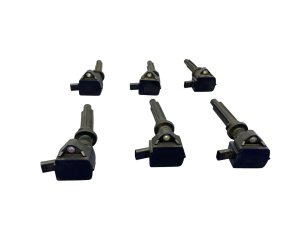
- Ignition Coil
(OEM #C2Z18619)— This is the most common failure part for a single-cylinder misfire. It's responsible for generating the high voltage for the spark plug. This part number appears to be common across both the 3.0L and 5.0L engines in this generation.
Trusted brands: Bosch, Delphi, NGK, Genuine Jaguar
OEM price range: $90-$115
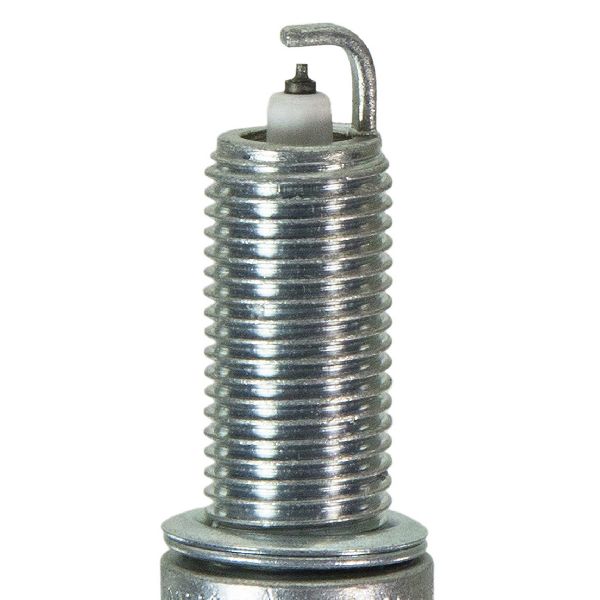
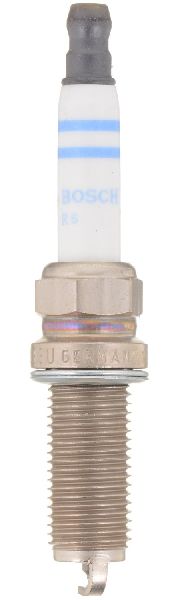
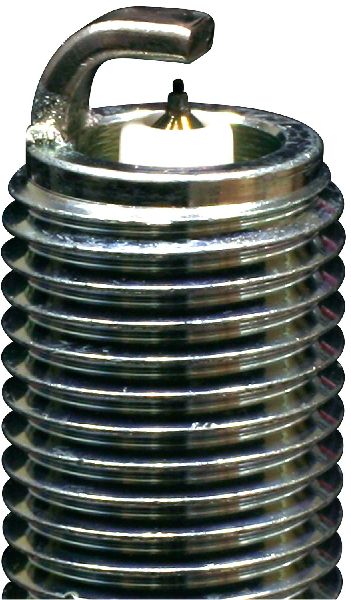
Aftermarket price range: $50-$80 - Spark Plug
(OEM #C2P23089 (for 5.0L V8), C2Z28434 (for 3.0L V6))— As a routine wear item, a worn or fouled spark plug is a very common cause of a misfire. Part number C2P23089 is specified for the 5.0L engine. The V6 uses a different plug.
Trusted brands: NGK, Denso, Bosch, Champion
OEM price range: $20-$35
Aftermarket price range: $15-$25 - Fuel Injector
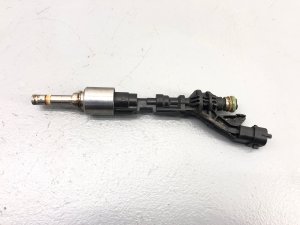
(OEM #C2D55183 or 8W93-9F593-AD (for 5.0L V8))— A very common cause of P0301 on these engines after coils and plugs have been ruled out. C2D55183 is a common OEM part number for the 5.0L V8.
Trusted brands: Bosch, Genuine Jaguar
OEM price range: $150-$250
Aftermarket price range: $80-$160
Related Codes That Often Appear With This One
- P0316 — This code means 'Misfire Detected on Startup (First 1000 Revolutions)'. Jaguar TSB #JTB00533NAS1 explicitly links this code with the P030x series, indicating the misfire is present from the moment the engine starts.
- P0300 — This code for 'Random/Multiple Cylinder Misfire' may appear if the underlying issue (like a vacuum leak, major fuel delivery problem, or leaking intercooler) starts to affect other cylinders.
- P0302, P0303, P0304, etc. — If the cause is systemic (e.g., poor fuel quality, a failing injector affecting the whole bank), misfires may eventually develop in other cylinders as well.
Technical Service Bulletins (TSBs) & Recalls
- JTB00533NAS1: Notes that MIL illumination may occur with P0316 and one or more misfire codes from P0300-P0308.
- SSM-63697: States that customer symptoms may include a check engine light and misfire codes (P0301-P0308, P0316) due to poor fuel quality.
Platform-Specific Known Issues
- TSB SSM-63697 indicates that poor fuel quality can be a direct cause of misfire codes (including P0301) on these models.
- Forum discussions among Jaguar technicians and owners frequently point to failing fuel injectors as a common problem on the 5.0L V8 engine, which can cause a P0301 code. One owner on JaguarForums.com resolved their P0301 code by replacing a faulty fuel injector after initially suspecting the coil.
- On supercharged models, a slow internal coolant leak from the charge air cooler (intercooler) is a known issue that can cause persistent, hard-to-diagnose misfires.
Mechanic-Grade Diagnostic Values
- Fuel Injector Resistance — expected: 12 to 15 Ohms. Failure: A reading of over 100 Ohms or an open circuit ('1' or 'OL' on a multimeter) indicates a failed injector.
- High-Pressure Fuel Rail Pressure (Direct Injection) — expected: Around 2000-2900 PSI at startup and under load. Can drop to 500-600 PSI at idle.. Failure: Pressure dropping significantly below 2000 PSI under wide-open throttle can trigger a P0087 code and cause misfires.
- Low-Pressure Fuel Pump Pressure (In-tank) — expected: 40 - 75 PSI. Failure: Pressure significantly below 40 PSI can starve the high-pressure pumps, leading to misfires under load.
- Mass Airflow (MAF) Sensor Reading (at idle) — expected: 8,000-10,000 grams/hour (8-10 kg/h) per sensor at idle for the 5.0L engine.. Failure: Significantly different readings between Bank 1 and Bank 2 sensors, or values far outside this range, can indicate a sensor or intake leak issue.
Hidden / Shadow Codes Worth Checking
- Mode $06 Misfire Counters: This is not a specific code but a diagnostic function. Mode $06 data allows a technician to view misfire counts for each individual cylinder in the current and last ten drive cycles, even if the count is not high enough to trigger a Check Engine Light. This is invaluable for diagnosing intermittent misfires. (see via A professional-grade OBD-II scanner with Mode $06 capability is required.)
Scan Tool Commands That Help
- Jaguar SDD (Symptom Driven Diagnostics): Fuel Injector Balance Test — To electronically measure the pressure drop contributed by each injector, identifying a weak or clogged injector without removing it from the engine.
- Jaguar SDD (Symptom Driven Diagnostics): Reset Adaptations — After replacing a major component like a fuel injector or cleaning carbon buildup, fuel trim and other engine adaptations should be reset to allow the PCM to relearn values with the new/clean parts.
Wiring & Ground Locations
- G1D124AL / G1D124AR — Located on the right side of the engine compartment.. These are primary engine grounds. A poor ground connection at these points can cause erratic behavior in sensors, ignition coils, and injectors, leading to misfires.
- ECM (Engine Control Module) — Located on the right side of the engine compartment.. This is the source of the command signals for the ignition coil and fuel injector for cylinder 1. Knowing its location is critical for any wiring continuity tests between the ECM and the components.
- Cylinder 1 Injector/Coil Harness — Cylinder 1 is the front-most cylinder on the right (passenger side in US) bank. The wiring runs from the main engine harness to the injector and coil.. Damage or corrosion to the specific wires or connector for cylinder 1 can cause a P0301. Tracing these wires from the component back to the main harness is a key step if the components themselves test good.
Real Owner Repair Stories
- Jaguar Forums user (2004 Jaguar XJ8 (X350, similar AJ-V8 engine architecture)) — Limp mode, P0207 (Injector Circuit Malfunction on cylinder 7).
❌ Tried (didn't work) Replacing the ignition coil and spark plug on the affected cylinder.
✅ What actually fixed it The owner removed and tested the resistance of all four injectors on that bank. Good injectors read ~14.7 ohms. The injector on the faulty cylinder read 108.5 ohms, and another injector on the same bank read as an open circuit. Replacing the two faulty injectors resolved the issue. - Jaguar Forums user (Jaguar Technician) (2011 Jaguar XJ 5.0L Supercharged (X351)) — Misfire codes.
✅ What actually fixed it The technician stated that fuel quality is a primary suspect for misfires on the 5.0L direct injection engine and that they had just fixed a similar car by replacing three fuel injectors.
"I Checked Everything" — The Actual Cause
- If a smoke test is performed and shows no vacuum leaks, the cause of P0301 is almost certainly isolated to the ignition system (coil, plug), the fuel system (injector), or a mechanical engine problem (compression). On the 2010-2014 XJ, the next most probable cause after a clean smoke test is a faulty fuel injector, which is a known issue on these direct-injection engines.
OEM Part Supersession History
C2P16489, C2D24386, C2D45732→C2D55183— Part revision and consolidation by the manufacturer for the 5.0L V8 fuel injector.C2P13996→C2P21119— Part revision by the manufacturer for the VVT Solenoid applicable to both 3.0L and 5.0L engines.
Model Year Variations Within This Range
- 2013-2014: The 3.0L Supercharged V6 engine was introduced as a new option for the 2013 model year.
- 2013-2014: An 8-speed automatic transmission replaced the previous 6-speed automatic across all engine options, improving fuel economy.
- 2014: An Intelligent Stop/Start system was added to all V6 and V8 petrol engines. This adds complexity to the electrical and engine management systems.
- 2014: All-Wheel Drive (AWD) became an available option for the 3.0L V6 model.
Helpful Videos
Used OEM Parts in Stock
New Aftermarket Parts Available

The information in this article is provided for general reference and educational purposes only. Vehicle specifications, procedures, and part compatibility can vary by production date, trim level, and region. Always consult your vehicle's factory service manual and verify part numbers before purchasing or performing repairs. Safety-critical components such as airbags, seat belts, and braking systems should be installed by a qualified professional.
- Jaguar XJ:
- 🧭 Diagnostic Flowchart
- 🎬 Helpful Videos
- 🛍️ Shop This Part
- What's Unique About the 2010-2014 Jaguar XJ
- Symptoms You May Notice
- Most Likely Causes
- Rare But Worth Checking
- Diagnosis Steps
- Parts You'll Likely Need
- Related Codes That Often Appear With This One
- Technical Service Bulletins (TSBs) & Recalls
- Platform-Specific Known Issues
- Mechanic-Grade Diagnostic Values
- Hidden / Shadow Codes Worth Checking
- Scan Tool Commands That Help
- Wiring & Ground Locations
- Real Owner Repair Stories
- "I Checked Everything" — The Actual Cause
- OEM Part Supersession History
- Model Year Variations Within This Range
- 🎟️ Get 5% Off