

P0301 on 2017-2024 Jeep Compass: Cylinder 1 Misfire Causes and Fixes
P0301 on a Jeep Compass most often means a bad spark plug or ignition coil on cylinder 1. This is a common maintenance item and a relatively inexpensive DIY fix, typically costing $50-$150 for parts. On the 2.4L engine, this is frequently caused by a leaking valve cover gasket that allows oil to foul the spark plug.
- P0301 specifically points to a misfire in cylinder 1, the one closest to the engine belts.
- The most likely culprits are a simple-to-replace spark plug or ignition coil.
- A common diagnostic step is to swap the ignition coil from cylinder 1 to another cylinder to see if the misfire code follows it.
- Do not ignore a flashing check engine light, as this signals a severe misfire that can quickly destroy your catalytic converter.
- While ignition parts are the most common fix, be aware that Jeep TSBs link this code to potential fuel pressure problems, which may require further diagnosis if new plugs and coils don't solve the issue.
What's Unique About the 2017-2024 Jeep COMPASS
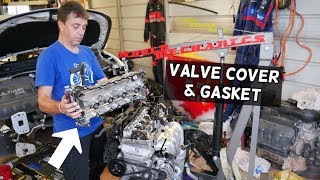
The 2017-2024 Jeep Compass spans two main engines: the 2.4L Tigershark (2017-2022) and the 2.0L Turbo (2023-2024). While standard ignition components are frequent culprits, the 2.4L Tigershark engine is particularly known for a leaking valve cover gasket which allows oil to pool in the spark plug tubes, fouling the plug and coil, directly causing a P0301 misfire. 🎬 Watch: How to replace the valve cover gasket and seals. Additionally, Jeep has issued several Technical Service Bulletins (TSBs) that link misfire codes to low fuel pressure issues (P0087) and recommend software updates or replacing ignition coil boots to resolve persistent misfires (TSB 08-027-20).
Diagnostic Flowchart
Tap your situation to follow the diagnostic path that matches what you're seeing on this vehicle.
Symptoms You May Notice
- Rough or shaking idle.
- Hesitation or stumbling during acceleration.
- Flashing or solid Check Engine Light.
- Reduced engine power.
- Worse than normal fuel economy.
- Difficulty starting the engine.
- Smell of gasoline from the exhaust.
- Replacing oxygen (O2) sensors. While a faulty O2 sensor can cause performance issues, it will typically set its own specific codes and is not a primary cause for a single-cylinder misfire.
- Replacing the catalytic converter. A misfire can damage a catalytic converter, but a bad converter does not cause a P0301 code.
Most Likely Causes
- Leaking Valve Cover Gasket (2.4L Engine) Very High Probability → Shop Engine Valve Cover This is a widely documented, extremely common failure on the 2.4L Tigershark engine. The gasket's integrated spark plug tube seals harden and fail, allowing engine oil to fill the spark plug wells. This oil soaks the ignition coil boot and spark plug, causing a short and leading to a misfire.
How to confirm: Remove the ignition coil from cylinder 1. If the coil boot is wet with engine oil, a leaking valve cover gasket is the cause.
Typical fix: Replace the valve cover gasket, which includes the spark plug tube seals. It is critical to also replace the oil-fouled spark plug and the ignition coil for cylinder 1 at the same time, as the oil can permanently damage them. Torque the new valve cover bolts to specification (approx. 89-90 in-lbs) in a sequence starting from the center and working outwards.
Est. part cost: $40-$90 for a valve cover gasket set - Worn or Fouled Spark Plug 🔴 High Probability → Shop Spark Plug Spark plugs are a regular maintenance item. On the 2.4L engine, they are often fouled by oil from a leaking valve cover gasket. Some 2.4L Tigershark engines also suffer from excessive oil consumption, which can cause carbon fouling on the plugs even without an external leak.
How to confirm: Remove the spark plug from cylinder 1 and inspect it. Look for a worn electrode, incorrect gap, heavy carbon buildup, or contamination with oil.
Typical fix: Replace the spark plug. It is best practice to replace all four spark plugs at the same time to ensure even performance. Ensure the correct gap (0.044" for 2.4L Champion plugs).
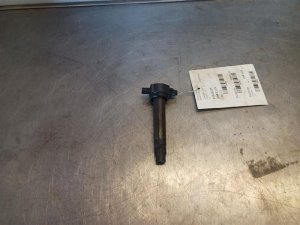
Est. part cost: $20-$80 for a set of four - Failed Ignition Coil 🔴 High Probability → Shop Ignition Coil Ignition coils are subjected to high heat and vibration, leading to eventual failure. On the 2.4L, they are often damaged by oil from a leaking valve cover gasket.
How to confirm: Swap the ignition coil from cylinder 1 with another cylinder (e.g., cylinder 2). Clear the codes and drive the vehicle. If the code changes to P0302, the coil is bad.
Typical fix: Replace the faulty ignition coil. If the failure was caused by an oil leak, the leak must be fixed first. While some owners replace all four as a preventative measure, it's only necessary to replace the failed one.
Est. part cost: $40-$120 per coil - Clogged or Faulty Fuel Injector 🟡 Medium Probability → Shop Fuel Injector
How to confirm: Listen to the injector with a mechanic's stethoscope or a long screwdriver; it should make a consistent clicking sound. You can also swap injectors between cylinders (more involved) to see if the misfire code follows the injector. Forum users have reported fixing cold-start misfires by replacing an injector.
Typical fix: Replace the faulty fuel injector. Sometimes a professional fuel system cleaning can resolve a clog.
Est. part cost: $60-$180 per injector
Rare But Worth Checking
- Low Engine Compression: This indicates a more serious internal engine problem, such as worn piston rings, a bad valve, or a blown head gasket. A compression test is needed to diagnose this. The 2.4L Tigershark is known for oil consumption issues which can sometimes lead to more severe internal wear. This is an expensive, professional repair.
- PCM Software Issue / Faulty Coil Boots: TSB 08-027-20 was issued for 2017-2020 models with the 2.4L engine for misfire codes, including P0301. The fix involves replacing all four ignition coil insulating boots, suggesting the original boots may have been defective. In some cases, a PCM software update is required to improve misfire detection and prevent false codes.
- Low Fuel Pressure: As noted in TSBs 14-009-25 REV. D and 09-016-25, misfire codes can be set along with P0087 (Fuel Rail Pressure Too Low). This points to a systemic fuel delivery problem, like a weak fuel pump, rather than an issue with a single cylinder's components. A fuel pressure test is required for diagnosis.
- Vacuum Leak: A vacuum leak from a cracked hose or failed intake manifold gasket can lean out the air-fuel mixture and cause misfires. A smoke test is the most effective way to locate a leak. While this usually causes multiple or random misfires (P0300), a leak localized near the cylinder 1 intake runner could cause P0301.
Diagnosis Steps
- Read the trouble codes with an OBD-II scanner and note any other codes present, especially P0300 or P0087.
- Identify cylinder 1 (front-most cylinder on the passenger side).
- Remove the ignition coil from cylinder 1. Check the coil boot and the spark plug tube for any signs of engine oil. If oil is present, the valve cover gasket has failed and is the root cause.
- If no oil is present, swap the ignition coil from cylinder 1 with the coil from cylinder 2. Clear the codes and run the engine. If the code changes to P0302, the ignition coil is bad.
- If the code remains P0301, inspect the spark plug in cylinder 1. Look for wear, damage, or fouling from oil or carbon. Replace if necessary.
- If the plug and coil are good, listen to the fuel injector on cylinder 1 with a stethoscope or long screwdriver. It should have a steady clicking sound.
- Inspect for vacuum leaks by listening for hissing sounds or performing a smoke test.
- If other misfire codes or a P0087 code are present, perform a fuel pressure test.
- If all else fails, perform an engine compression test to check for mechanical engine problems.
Parts You'll Likely Need
- Ignition Coil
(OEM #2.4L Tigershark: 68242286AB; 2.0L Turbo: 68211953AA)— This is one of the most common failure points for a single-cylinder misfire. On the 2.4L, it is often damaged by leaking oil.
Trusted brands: Mopar, NGK, Denso, Delphi
OEM price range: $80-$150
Aftermarket price range: $40-$90 - Spark Plug
(OEM #2.4L Tigershark: SP148183AD (Champion); 2.0L Turbo: 68292346AA (Mopar/NGK))— Spark plugs are a routine wear item. A worn or fouled plug cannot create a strong enough spark. On the 2.4L, they are frequently fouled by oil.
Trusted brands: Mopar, NGK, Champion
OEM price range: $15-$25 per plug
Aftermarket price range: $5-$15 per plug - Valve Cover Gasket Kit (2.4L) — A very common failure on the 2.4L engine that directly causes P0301 by allowing oil to leak into the spark plug well. The kit should include the main gasket and spark plug tube seals.
Trusted brands: Mopar, Fel-Pro, Mahle
OEM price range: $60-$100
Aftermarket price range: $40-$70 - Fuel Injector
(OEM #2.4L: 04593986AA)— An injector can become clogged with deposits or fail electronically, preventing the correct amount of fuel from reaching the cylinder.
Trusted brands: Mopar, Bosch, Standard Motor Products (SMP)
OEM price range: $100-$200
Aftermarket price range: $60-$180
Related Codes That Often Appear With This One
- P0300 — If the misfire is intermittent or affects other cylinders, a P0300 (Random/Multiple Cylinder Misfire) may be stored alongside P0301.
- P0302, P0303, P0304 — These codes indicate misfires in other cylinders. Seeing them together can point to a common cause like a bad batch of fuel, low fuel pressure, a large vacuum leak, or oil fouling multiple plugs on the 2.4L engine.
- P0087 — As cited in manufacturer TSBs, this code for "Fuel Rail Pressure Too Low" can appear with misfire codes, indicating a fuel delivery problem is the root cause.
Technical Service Bulletins (TSBs) & Recalls
- Bulletin #14-009-25 REV. D: Links P0301 and other misfire codes to P0087 (Fuel Line Pressure Sensor - Pressure Below Limit).
- Bulletin #09-016-25: Also links misfire codes with P0087 (Fuel Rail Pressure Too Low).
- Bulletin #08-027-20: For 2.4L engines, addresses rough running and misfire codes (P0300-P0304) by replacing all four ignition coil insulating boots.
Platform-Specific Known Issues
- 2.4L Tigershark Oil Leaks: The most significant vehicle-specific issue is the failure of the valve cover gasket, leading to oil filling the spark plug tubes and causing misfires. This should be the first suspicion for a P0301 code on a 2.4L engine.
- 2.4L Tigershark Oil Consumption: Separate from the external leak, these engines are also known for consuming oil, which can foul plugs and eventually lead to engine damage. Owners should check oil levels frequently.
- TSB for Ignition Coil Boots: TSB 08-027-20 specifically targets misfire codes on the 2.4L engine by having technicians replace the ignition coil boots, indicating a known issue with the original parts.
- TSBs for Fuel Pressure: Multiple TSBs (14-009-25 REV. D, 09-016-25) connect misfire codes with a low fuel pressure code (P0087), suggesting fuel pump or sensor issues can be a root cause on this platform.
Mechanic-Grade Diagnostic Values
- Ignition Coil Primary Resistance (2.4L Engine) — expected: 0.56 - 0.68 ohms. Failure: A reading outside this range, or an open circuit (infinite resistance), indicates a faulty coil.
- Ignition Coil Secondary Resistance (2.4L Engine) — expected: 7.8 - 9.6 Kilo-ohms (KΩ). Failure: A reading significantly outside this range suggests a failure in the secondary windings.
- Fuel Injector Resistance (2.4L Engine) — expected: ~12 ohms. Failure: A significantly different reading, or an open/shorted circuit. All injectors should have very similar resistance values.
- Fuel Injector Flow Rate (2.4L Engine, 2018-2019) — expected: 294 cc/min or 28 lb/hr @ 3 Bar (43.5 PSI). Failure: This value requires specialized equipment to test and is not a typical DIY step. A clogged injector will have a lower flow rate.
- Valve Cover Bolt Torque (2.4L Engine) — expected: Two-step process: First, tighten all bolts to 3.0 N·m (27 in-lbs). Then, in the same sequence, tighten to 5.5 N·m (49 in-lbs).. Failure: Incorrect torque can lead to a cracked valve cover or a failed gasket seal, causing repeat oil leaks.
Scan Tool Commands That Help
- wiTECH (or equivalent professional scanner): Misfire Monitor / Live Misfire Counts — Use this to confirm if the misfire is actively occurring on cylinder 1 in real-time. Navigate the PCM/ECM data to find 'Which cylinder is misfiring' or individual cylinder misfire counters. This is crucial for diagnosing intermittent misfires and verifying a fix without waiting for the PCM to set a code again.
- wiTECH: Flash: Powertrain Control Module (PCM) Updates — If a TSB for your vehicle's year and engine indicates a software update is available to address MIL illumination or misfire detection logic, this function is used to reprogram the PCM. This should be considered after ruling out physical component failures.
Wiring & Ground Locations
- Engine Harness Chafe Point — General area around the Powertrain Control Module (PCM) and its mounting bracket.. A TSB for a similar model (2024-2025 Diesel) noted that the engine wiring harness could rub against the PCM bracket, causing wire damage and a no-start condition. While for a different engine, this highlights the possibility of a wiring issue from vibration and chafing, which could potentially affect the ignition coil or injector circuit for cylinder 1, causing an intermittent misfire.
Real Owner Repair Stories
- Jeep Wrangler Forum (2018 Jeep Wrangler JLU (Similar engine family, demonstrates common failure pattern)) — Check engine light with P0301 and multiple misfire codes.
❌ Tried (didn't work) Dealer swapped spark plug from cylinder 1 to cylinder 2, but the P0301 code remained.
✅ What actually fixed it The owner took it to an independent mechanic who found oil was leaking from the valve cover onto an O2 sensor, causing the code. The underlying fix was the valve cover gasket. - Reddit r/MechanicAdvice (Vehicle not specified, but a high-mileage engine with P0301) — Persistent P0301 misfire.
❌ Tried (didn't work) Replacing spark plugs., Swapping ignition coils (misfire did not move to another cylinder).
✅ What actually fixed it The fuel injector for cylinder 1 was failing. Replacing the fuel injector resolved the misfire. - Reddit r/MechanicAdvice (Vehicle not specified, user chasing a misfire.) — Persistent misfire, fouled spark plugs.
❌ Tried (didn't work) Replacing spark plugs and coils.
✅ What actually fixed it The EVAP canister purge solenoid was broken and stuck partially open, causing a vacuum leak near one cylinder and fouling the spark plug.
"I Checked Everything" — The Actual Cause
- A faulty EVAP purge valve solenoid can cause a misfire on the cylinder closest to its vacuum port on the intake manifold. The solenoid may be stuck open or electrically failed, creating a vacuum leak that a smoke test might not easily reveal if the leak is internal to the solenoid itself. This can lean out the mixture on just one cylinder and cause a code like P0301.
Model Year Variations Within This Range
- 2017-2022 vs 2023-2024: The primary engine offering changed from the 2.4L I4 Tigershark (port-injected) to the 2.0L I4 Turbo (direct-injected) in 2023. While the P0301 code is fundamentally the same, the specific part numbers for ignition coils, spark plugs, and fuel injectors are completely different and not interchangeable. Diagnostic approaches for the 2.0L Turbo may also need to consider direct-injection specific issues like high-pressure fuel pump faults or carbon buildup on intake valves.
Helpful Videos
We Have This Part in Stock

The information in this article is provided for general reference and educational purposes only. Vehicle specifications, procedures, and part compatibility can vary by production date, trim level, and region. Always consult your vehicle's factory service manual and verify part numbers before purchasing or performing repairs. Safety-critical components such as airbags, seat belts, and braking systems should be installed by a qualified professional.
- Jeep COMPASS:
- 🧭 Diagnostic Flowchart
- 🎬 Helpful Videos
- 🛍️ Shop This Part
- What's Unique About the 2017-2024 Jeep COMPASS
- Symptoms You May Notice
- Most Likely Causes
- Rare But Worth Checking
- Diagnosis Steps
- Parts You'll Likely Need
- Related Codes That Often Appear With This One
- Technical Service Bulletins (TSBs) & Recalls
- Platform-Specific Known Issues
- Mechanic-Grade Diagnostic Values
- Scan Tool Commands That Help
- Wiring & Ground Locations
- Real Owner Repair Stories
- "I Checked Everything" — The Actual Cause
- Model Year Variations Within This Range
- 🎟️ Get 5% Off