

P0301 on 2016-2020 Kia Sorento 3.3L V6: Cylinder 1 Misfire Causes and Fixes
P0301 on a 2016-2020 Sorento 3.3L V6 most often means a bad ignition coil or a worn spark plug on cylinder 1. Cylinder 1 is on the difficult-to-access rear bank against the firewall. A DIY diagnosis involves swapping the coil with another cylinder to see if the code follows. Expect to pay $30-$70 for an aftermarket coil and $10-$25 for a spark plug.
- P0301 on the 3.3L Sorento is a misfire on cylinder 1, which is in the rear bank against the firewall and is labor-intensive to access.
- The most likely cause is a failed ignition coil or a worn spark plug.
- Due to the difficulty of accessing the rear bank, it is highly recommended to replace all three rear ignition coils, all six spark plugs, and the intake manifold gaskets at the same time.
- If new ignition parts don't solve the problem, suspect GDI-specific issues like a clogged fuel injector or significant carbon buildup on the intake valves.
- Owners of 2016-2017 models should be aware of a warranty extension for head gasket leaks, which can also cause this code.
What's Unique About the 2016-2020 Kia Sorento
The Lambda II 3.3L is a Gasoline Direct Injection (GDI) engine. This design makes it susceptible to issues not as common in port-injected engines, such as carbon buildup on intake valves which can restrict airflow and cause misfires. Additionally, 2016-2017 models have a known issue with head bolt thread design that can lead to head gasket leaks, allowing coolant to enter a cylinder and cause a misfire. This was addressed by a warranty extension (WTY035).
Symptoms You May Notice
- Rough or shaky idle
- Engine hesitation or stumbling during acceleration
- Noticeable loss of engine power
- Flashing or solid Check Engine Light
- Decreased fuel economy
- A smell of gasoline from the exhaust
- Replacing only the spark plug when the ignition coil is also bad.
- Replacing fuel system components before confirming the ignition system is working correctly.
- Assuming a simple tune-up will fix the issue when significant carbon buildup is the real cause.
Most Likely Causes
- Faulty Ignition Coil 🔴 High Probability → Shop Ignition Coil Ignition coils are a common wear item that can fail from heat and electrical stress over time. This is the most frequent cause of a single-cylinder misfire on this engine.
How to confirm: Swap the ignition coil from cylinder 1 with another cylinder (e.g., cylinder 2, which is in the more accessible front bank). Clear the codes and drive the vehicle. If the code changes to P0302, the ignition coil is faulty.
Typical fix: Replace the failed ignition coil. Since cylinder 1 is in the difficult-to-access rear bank, it is highly recommended to replace all three rear coils and all six spark plugs at the same time to save on future labor costs.
Est. part cost: $30-$70 per aftermarket coil - Worn or Fouled Spark Plug 🔴 High Probability → Shop Spark Plug
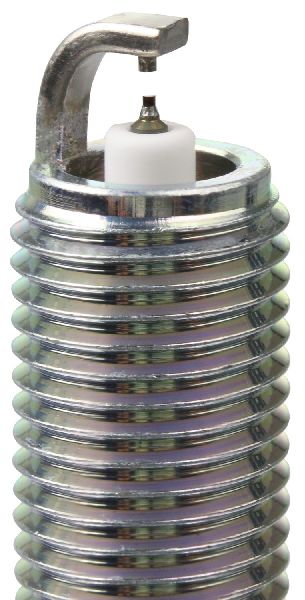
How to confirm: After removing the ignition coil, remove the spark plug from cylinder 1. Inspect it for a worn electrode, heavy carbon deposits, or oil/fuel fouling. A fouled plug can indicate other engine issues like oil consumption or a leaking injector.
Typical fix: Replace the spark plug. It is best practice to replace all six spark plugs at the same time, especially when accessing the rear bank.
Est. part cost: $10-$25 per iridium plug - Clogged or Faulty Fuel Injector 🟡 Medium Probability → Shop Fuel Injector GDI injectors operate under high pressure and can become clogged or fail. A stuck-open injector can flood the cylinder with fuel, causing a misfire and potentially washing oil from the cylinder walls.
How to confirm: If new coils and plugs do not resolve the misfire, the injector is a likely culprit. A professional can perform a fuel injector balance test to confirm. A strong smell of gasoline on the oil dipstick can also point to a leaking injector.
Typical fix: Replace the faulty fuel injector. This is a labor-intensive job that requires removing the intake manifold and fuel rail.
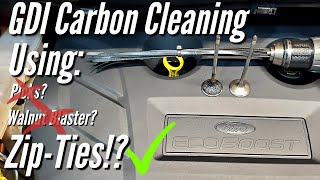
Est. part cost: $70-$150 - Intake Valve Carbon Buildup 🟡 Medium Probability Because this is a GDI engine, fuel is injected directly into the cylinder, so gasoline detergents don't wash over the intake valves. Over time, oil vapor from the PCV system can bake onto the valves, restricting airflow and causing misfires, typically becoming a problem after 60,000-80,000 miles.
How to confirm: This requires visual inspection of the intake valves with a borescope, which can be done when the intake manifold is removed for other diagnostics (like replacing a rear coil or injector).
Typical fix: A professional 'walnut blasting' service is required to clean the carbon deposits from the valves.
Est. part cost: $400-$800 for the service
Rare But Worth Checking
- Leaking Head Gasket: For 2016-2017 models specifically, Kia issued a warranty extension (WTY035) for head gasket coolant leaks. The root cause is often damaged head bolt threads in the engine block. A leak can allow coolant into the cylinder, fouling the spark plug and causing a misfire. Check for signs of coolant loss or white exhaust smoke.
- Vacuum Leak: A leak from a failed or improperly seated intake manifold gasket can lean out the air/fuel mixture and cause a misfire. This should be checked any time the intake manifold is removed and reinstalled.
- Internal Engine Damage: In some cases, a P0301 can be caused by mechanical failure. NHTSA ODI #11685959 describes a dealer-diagnosed engine failure due to piston ring damage at approximately 111,500 miles involving codes P0301 and P0304. Additionally, NHTSA ODI #11455353 reports a case with no compression on a cylinder alongside codes P0300, P0301, and P0303.
Diagnosis Steps
- Read the trouble codes with an OBD-II scanner to confirm P0301 is present and check for any other codes.
- Identify cylinder 1. On the 3.3L V6 Sorento, the engine is mounted transversely. Bank 1 (cylinders 1, 3, 5) is against the firewall, and Bank 2 (cylinders 2, 4, 6) is at the front. Cylinder 1 is on the firewall side, towards the passenger side of the vehicle.
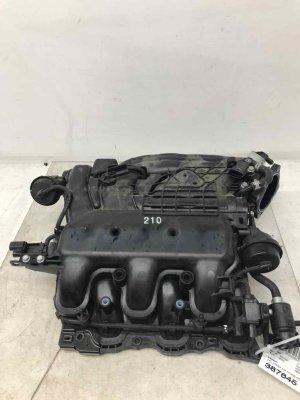
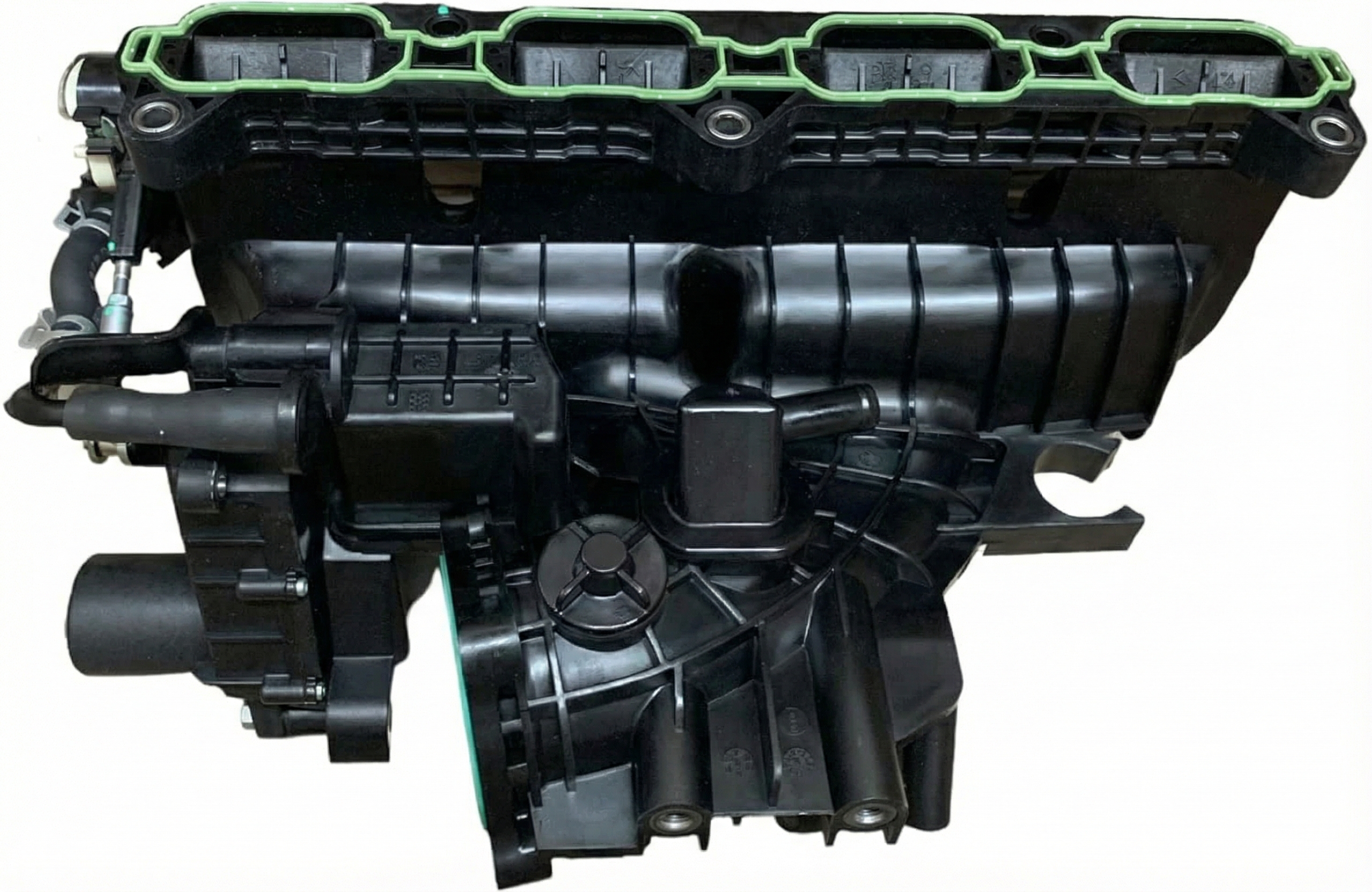
- To diagnose, you must remove the upper intake manifold to access the rear ignition coils. This is a moderately difficult job.
- Swap the ignition coil from cylinder 1 (rear bank) with the coil from cylinder 2 (front bank). This makes it easy to see if the problem follows the coil.
- Clear the codes, start the engine, and let it run until the check engine light reappears.
- Re-scan for codes. If the code has changed to P0302, the ignition coil is the confirmed problem.
- If the code remains P0301, the issue is likely the spark plug, fuel injector, or a mechanical problem.
- While the intake manifold is off, inspect the spark plug for wear or fouling. It is highly recommended to replace all six spark plugs and the three rear ignition coils at this time due to the labor involved.
- If new ignition and spark components do not fix the issue, further diagnosis of the fuel injector or a compression test is needed to check for mechanical engine problems.
Parts You'll Likely Need
- Ignition Coil
(OEM #27301-3C000)— This is the most common failure point for a single-cylinder misfire on the Lambda II V6 engine.
Trusted brands: Kia/Hyundai (OEM), Denso, NGK, Delphi
OEM price range: $60-$100
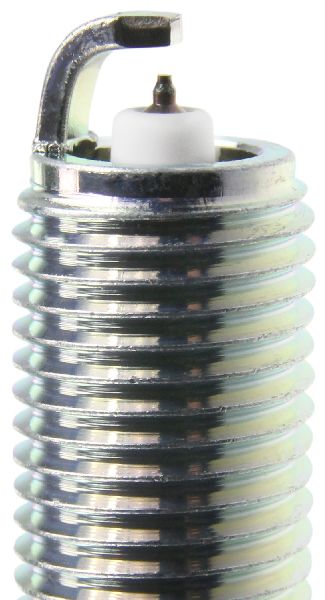
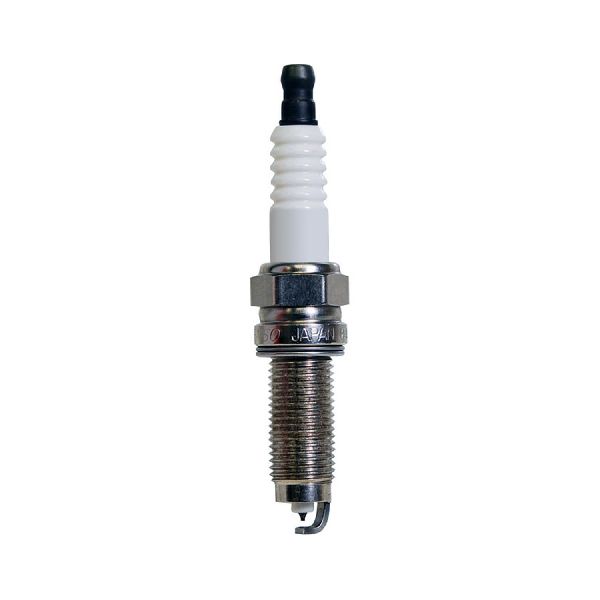
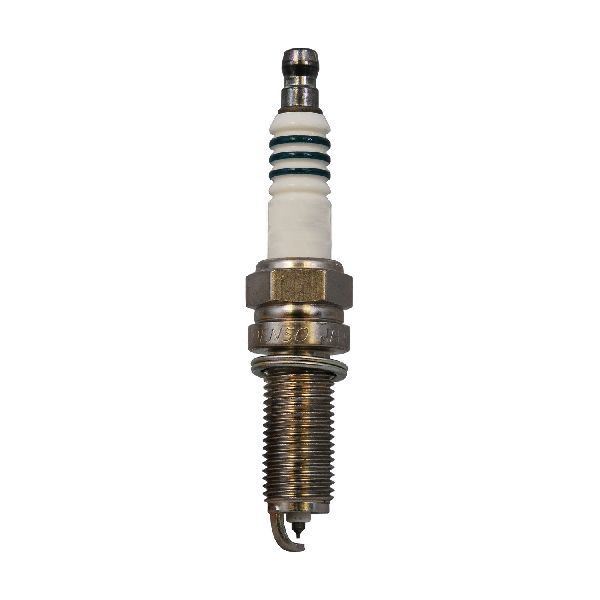
Aftermarket price range: $30-$70 - Iridium Spark Plug
(OEM #18846-11070)— Spark plugs are a primary maintenance item and a frequent cause of misfires. The OEM plug is typically an NGK SILZKR7B11.
Trusted brands: NGK, Denso
OEM price range: $15-$25
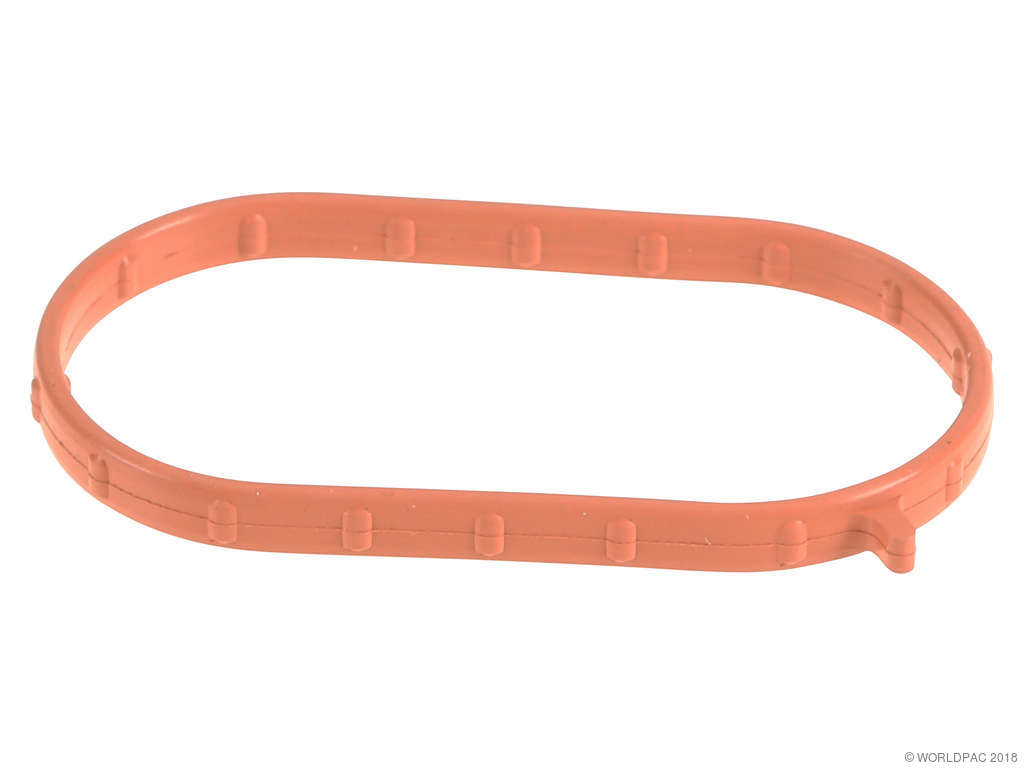
Aftermarket price range: $10-$20 - Upper Intake Manifold Gasket Set
(OEM #29215-3CFA1)— This gasket must be replaced anytime the intake manifold is removed to access the rear coils and plugs, in order to prevent vacuum leaks.
Trusted brands: Kia (OEM), Fel-Pro
OEM price range: $25-$40
Aftermarket price range: $15-$30
Related Codes That Often Appear With This One
- P0300 — If the condition causing the misfire on cylinder 1 is intermittent or affects other cylinders, a P0300 (Random/Multiple Cylinder Misfire) code may also be stored.
- P0303, P0305 — These codes indicate misfires on other cylinders in the same bank (Bank 1, the rear bank). If a systemic issue like a leaking fuel injector rail, carbon buildup, or a fuel delivery problem is present, multiple cylinders on the same bank may misfire.
- P0088 — This code for 'Fuel Rail Pressure Too High' can appear if the misfire is related to a failing high-pressure fuel pump (HPFP), a known issue on these vehicles.
- P0087 — An owner reported codes P0087 and P0506 appearing alongside P0301 through P0306 during highway driving (NHTSA ODI #11499800).
Technical Service Bulletins (TSBs) & Recalls
- TSB ENG253 (WTY035): Addresses a warranty extension for head gasket coolant leaks on 2016-2017 models, which can cause misfires.
- TSB ENG222: Provides diagnostic procedures for excessive oil consumption, which can lead to fouled spark plugs and misfires.
Platform-Specific Known Issues
- Head Gasket Warranty Extension (2016-2017 models): Kia extended the warranty to 15 years / 180,000 miles under TSB ENG253 (WTY035) for potential head gasket coolant leaks. A misfire, especially if accompanied by coolant loss, should be investigated by a dealer under this program. The issue stems from damaged head bolt hole threads in the engine block.
- Carbon Buildup on Intake Valves: As a GDI engine, the Sorento's 3.3L V6 is prone to carbon deposits on the intake valves, which do not get cleaned by fuel spray. This buildup can restrict airflow and cause misfires, typically after 60,000 miles.
Mechanic-Grade Diagnostic Values
- Fuel Injector Resistance — expected: 12.5 - 13.5 Ohms. Failure: A reading of infinite resistance (open circuit) or significantly outside the expected range indicates a failed injector coil.
- High-Pressure Fuel Rail Pressure (GDI) — expected: 2,000 - 2,800 PSI under load. Failure: Pressure significantly below this range can indicate a failing High-Pressure Fuel Pump (HPFP). Excessively high pressure can also indicate a faulty HPFP or regulator.
- Engine Compression — expected: 100 - 150 PSI, with less than 15-20% variation between cylinders.. Failure: Significantly lower compression in cylinder 1 points to a mechanical engine issue like a burnt valve, worn piston rings, or a leaking head gasket.
- Mode 6 Misfire Counts (Cylinder 1) — expected: Value should be at or near zero.. Failure: A high or continuously incrementing count for cylinder 1 confirms the misfire is actively occurring, even if the check engine light is not flashing. The Test ID for misfire data is often $53.
Scan Tool Commands That Help
- Kia GDS (Global Diagnostic System): Cylinder Power Balance Test / Misfire Data Analysis — This dealer-level function provides a real-time graph or data display of each cylinder's contribution to engine speed. It is used to confirm which cylinder is misfiring and to see if the misfire is constant or intermittent under different load conditions.
- Kia GDS (Global Diagnostic System): Flight Record (Trigger Module) — This function is used to capture data during a drive cycle to diagnose intermittent misfires that don't occur at idle. The technician can set triggers (e.g., specific RPM, engine load) to start recording data, which can then be analyzed back at the shop to pinpoint the conditions causing the P0301 code.
- Kia GDS (Global Diagnostic System): Reset Adaptive Values — After replacing a component like a fuel injector or cleaning significant carbon buildup, resetting the engine's adaptive learning values can help the PCM relearn fuel trims and idle control more quickly, ensuring a smooth idle post-repair.
Wiring & Ground Locations
- Engine Ground Wiring Assembly (PN 91860-C6020) — This ground strap connects the engine block to the chassis, typically near the engine mount on the passenger side.. A corroded or loose main engine ground can cause a weak spark from the ignition coils, leading to intermittent and hard-to-diagnose misfires across multiple cylinders, including P0301.
- Engine Wiring Harness Chafe Point — The section of the main engine wiring harness that routes near the throttle body and across the top of the intake manifold.. Vibrations can cause this harness to rub through its protective loom, potentially shorting or breaking the control wires for the cylinder 1 ignition coil or fuel injector, leading to a persistent P0301 code that isn't resolved by replacing parts.
Real Owner Repair Stories
- Kia-Forums.com user (2017 Kia Sorento V6) — Flashing check engine light, P0301, P0303, P0305 (misfires on all rear bank cylinders), and P0300.
❌ Tried (didn't work) Replaced all 6 spark plugs, Replaced all 6 ignition coils
✅ What actually fixed it The catalytic converter for Bank 1 (the rear bank) was found to be clogged. The excessive backpressure from the clogged converter caused misfires on all the cylinders in that bank. Replacing the Bank 1 catalytic converter resolved all misfire codes. - Reddit r/MechanicAdvice user (2017 Kia Sorento) — P0301 cylinder 1 misfire, car died in driveway and would only start for a second before turning off.
❌ Tried (didn't work) Initial diagnosis pointed to coil or fuel filter.
✅ What actually fixed it The user did not post a final confirmed fix, but the symptoms of stalling immediately after starting can be indicative of a severely clogged catalytic converter or a major fuel delivery issue, such as a failed high-pressure fuel pump. - NHTSA ODI #11610947 — An owner reported that after multiple visits to the dealer, a P0301 and P0304 misfire issue remained unresolved despite the replacement of spark plugs and ignition coils.
- NHTSA ODI #11513767 — One owner described an "incredible situation" where a wide array of codes including P0301, P0302, P0303, P0304, P0305, and P0306 appeared along with fuel system codes P0087 and P2096.
OEM Part Supersession History
27301-3C000→27301-3C010— Internal design and material improvements for durability and heat resistance.
Heads up: Both parts are generally interchangeable, but it is highly recommended to use the newer 27301-3C010 part number for replacement. Do not mix old and new part numbers on the same engine bank.
Model Year Variations Within This Range
- 2016-2018: These models were equipped with a six-speed automatic transmission.
- 2019-2020: As part of a mid-cycle refresh, the 3.3L V6 was paired with a new eight-speed automatic transmission. While this doesn't directly affect the cause of a P0301, the diagnostic approach for related transmission codes could differ.
Diagnostic Flowchart
Other Known Issues on This Vehicle
Issues unrelated to this code that are worth knowing about as an owner of this generation:
- Excessive Oil Consumption 🔴 High — Can begin as early as 60,000-80,000 miles. Many owners report consuming 1 quart of oil every 1,000-1,500 miles. (Ref: TSB ENG222 discusses diagnosing excessive oil consumption.)
- Head Gasket Coolant Leak (2016-2017 models) 🔴 High — Affects 2016-2017 models due to insufficient head bolt thread engagement in the engine block, leading to loss of clamping force. (Ref: Warranty Extension WTY035 (TSB ENG253) extends coverage to 15 years / 180,000 miles.)
- High-Pressure Fuel Pump (HPFP) Failure 🟠 Medium — A known issue, particularly on 2019-2020 models, where the internal fuel control valve plunger can stick, causing a P0088 code. (Ref: Warranty Extension WTY034 (FUE067) covers this for some 2019-2020 3.3L models.)
- Intake Valve Carbon Buildup 🟠 Medium — Common on all GDI engines after 60,000-80,000 miles. Leads to rough idle, hesitation, and misfires as airflow is restricted.
Used vs. New Parts: Buying Guide for This Vehicle
When a used part is the smart pick: For this repair, used parts are generally not recommended for the primary failure items. The labor to access the rear bank is significant, making it unwise to install a used ignition coil or spark plug with an unknown lifespan. A used intake manifold is a viable option if the original is cracked or damaged during removal.
Donor-vehicle mileage cap: roughly under 60000 miles for the part to have meaningful remaining life.
What to inspect on the donor part:
- For an intake manifold, check for cracks, especially around mounting points.
- Ensure all threaded inserts are intact.
- Verify the donor vehicle was not in a front-end collision that could have damaged the manifold.
OEM-only on this vehicle (don't cheap out):
- High-Pressure Fuel Pump (HPFP): Aftermarket HPFPs for GDI engines have a poor reputation for reliability. Given the labor to replace, OEM is the safest choice.
- Fuel Injectors: While some aftermarket brands exist, OEM injectors are recommended for proper flow rates and longevity. Remanufactured OEM injectors from a reputable source are a possible cost-saving alternative.
Aftermarket brands forum-validated for this vehicle:
- Ignition Coils: Denso, NGK, Delphi, Mando (often the OE supplier).
- Spark Plugs: NGK, Denso (use the specific Iridium plug listed for the vehicle).
- Gaskets: Fel-Pro is a well-regarded aftermarket brand for intake manifold gaskets.
Brands owners have reported issues with on this vehicle:
- Unbranded, 'white box' ignition coils and sensors from online marketplaces. These often have a high failure rate and may not perform to OE specifications, causing persistent issues.
Real Owner Stories
Aggregated from forums and TSBs cited above. Mileages and costs reflect what owners reported in those sources.
2016-2020 Kia Sorento 3.3L GDI V6
Symptoms: A user experienced a P0301 code with classic symptoms including a rough idle and flashing check engine light.
What fixed it: The community advised a diagnostic swap of coils and plugs to isolate the faulty component; the standard fix for a confirmed P0301 is replacing the failed ignition coil or spark plug.
Source hint: Reddit r/kia thread titled 'Kia P0301'
2016-2020 Kia Sorento 3.3L GDI V6
Symptoms: The car was misfiring with code P0301. The owner changed the spark plug, which improved the condition but did not fully resolve the misfire.
What fixed it: The situation highlighted that the issue could be the coil or that multiple components (plug and coil) can fail together.
Source hint: Reddit r/MechanicAdvice thread titled 'car was misfiring code p0301 i changed the spark...'
2016-2017 Kia Sorento 3.3L V6 — ~100000 miles
Symptoms: Misfire accompanied by coolant loss and potential engine overheating.
What fixed it: Investigation by a dealer under the 15-year/180,000-mile warranty extension for head gasket leaks caused by damaged head bolt hole threads.
Source hint: TSB ENG253 (WTY035)
2019-2020 Kia Sorento 3.3L V6
Symptoms: Internal fuel control valve plunger sticking, leading to fuel pressure issues and misfires.
What fixed it: Replacement of the High-Pressure Fuel Pump (HPFP) under Warranty Extension WTY034.
Source hint: Warranty Extension WTY034 (FUE067)
Related OBD-II Codes
Frequently Asked Questions
Does the head gasket warranty extension (TSB ENG253) apply to my 2016 Kia Sorento 3.3L?
Why is it recommended to replace all three rear ignition coils if only cylinder 1 is misfiring?
My 2019 Sorento has a P0301 and a P0088 code; are these related?
Can carbon buildup cause a P0301 on my Sorento even if my spark plugs are new?
Is there a TSB for the oil consumption issue that might be fouling my cylinder 1 spark plug?
Where is cylinder 1 located on the 3.3L V6 Sorento?
Helpful Videos
Used OEM Parts in Stock
New Aftermarket Parts Available


The information in this article is provided for general reference and educational purposes only. Vehicle specifications, procedures, and part compatibility can vary by production date, trim level, and region. Always consult your vehicle's factory service manual and verify part numbers before purchasing or performing repairs. Safety-critical components such as airbags, seat belts, and braking systems should be installed by a qualified professional.
- Kia Sorento:
- 🧭 Diagnostic Flowchart
- 🎬 Helpful Videos
- 🛍️ Shop This Part
- What's Unique About the 2016-2020 Kia Sorento
- Symptoms You May Notice
- Most Likely Causes
- Rare But Worth Checking
- Diagnosis Steps
- Parts You'll Likely Need
- Related Codes That Often Appear With This One
- Technical Service Bulletins (TSBs) & Recalls
- Platform-Specific Known Issues
- Mechanic-Grade Diagnostic Values
- Scan Tool Commands That Help
- Wiring & Ground Locations
- Real Owner Repair Stories
- OEM Part Supersession History
- Model Year Variations Within This Range
- Other Known Issues on This Vehicle
- Used vs. New Parts: Buying Guide for This Vehicle
- Real Owner Stories
- 2016-2020 Kia Sorento 3.3L GDI V6
- 2016-2020 Kia Sorento 3.3L GDI V6
- 2016-2017 Kia Sorento 3.3L V6 — ~100000 miles
- 2019-2020 Kia Sorento 3.3L V6
- Related OBD-II Codes
- Frequently Asked Questions
- 🎟️ Get 5% Off