

P0301 on 2018-2023 Kia Stinger 3.3T: Cylinder 1 Misfire Causes and Fixes
P0301 on the Stinger 3.3T is a misfire on cylinder 1, located on the difficult-to-access rear bank. The most likely cause is a bad ignition coil or spark plug. Due to the 3-4 hours of labor to remove the intake manifold for access, it is highly recommended to replace all three rear coils, all six spark plugs, and the intake gaskets at the same time.
- P0301 on this engine is a serious issue primarily because cylinder 1 is very difficult to access.
- The most likely culprits are a bad ignition coil or a worn spark plug.
- Due to the 3-4 hours of labor to remove the intake manifold, it is financially prudent to replace all three rear coils and all six spark plugs at the same time.
- A flashing check engine light means stop driving immediately to prevent expensive catalytic converter damage.
- DIY repair is not recommended for novices due to the complexity of removing the intake manifold.
What's Unique About the 2018-2023 Kia Stinger
The defining challenge with a P0301 code on the Kia Stinger's 3.3L Twin-Turbo V6 is the physical location of cylinder 1. It is positioned on the rear bank (driver's side) against the firewall, completely covered by the upper intake manifold. This makes a simple diagnostic step, like swapping an ignition coil, a labor-intensive job requiring 3-4 hours just to gain access. This location and the associated labor cost heavily influence the recommended repair strategy, which is far more comprehensive than for a misfire on an easily accessible cylinder. This issue is identical on its platform-mate, the Genesis G70 3.3T.
Symptoms You May Notice
- Rough or shaky idle
- Engine hesitation or stumbling during acceleration
- Noticeable loss of power, especially under boost
- Vehicle entering 'limp mode' with severely restricted power
- Solid or flashing Check Engine Light
- Smell of unburned fuel from the exhaust
- Decreased fuel economy
- Replacing only the single spark plug or ignition coil for cylinder 1. While this fixes the immediate problem, it is not cost-effective as the labor to remove the intake manifold will likely be needed again when another rear bank coil or plug fails.
- Not replacing the intake manifold gaskets after the repair. This is a critical error that can introduce a vacuum leak, leading to a rough idle and new lean or misfire codes (P0171, P0174, P0300).
Most Likely Causes
- Faulty Ignition Coil 🔴 High Probability → Shop Ignition Coil Owner forums for the Stinger and its platform-mate, the Genesis G70, show numerous examples of ignition coil failure, sometimes at relatively low mileage (e.g., 19k, 46k, 55k miles). The high heat environment at the rear of the engine bay, near the turbochargers and against the firewall, contributes to premature failure of the rear bank coils.
How to confirm: After removing the intake manifold, swap the ignition coil from cylinder 1 with another cylinder on the same bank (e.g., cylinder 3). If the trouble code changes to P0303, the ignition coil is confirmed to be faulty.
Typical fix: Replace the faulty ignition coil. However, the strong recommendation from both mechanics and owners is to replace all three rear bank coils (cylinders 1, 3, 5) at the same time due to the high labor cost of access.
Est. part cost: $45-$75 per coil - Worn or Fouled Spark Plug 🔴 High Probability → Shop Spark Plug Spark plugs are a routine maintenance item with a recommended replacement interval of 42,000 miles on the 3.3T engine. Misfires, especially under high load (hard acceleration), are a common symptom of plugs nearing the end of their service life. A failing coil can also quickly foul a new spark plug.
How to confirm: After removing the intake manifold and the ignition coil, inspect the spark plug for signs of wear, carbon fouling, oil deposits, or a cracked insulator. If the plug is original and near or past its 42,000-mile service interval, it is a highly likely cause.
Typical fix: Replace the spark plug in cylinder 1. The universal recommendation is to replace all six spark plugs while the intake manifold is removed. This is known as the 'while you're in there' (WYAIT) approach. 🎬 Watch: The best way to change and gap your spark plugs.
Est. part cost: $15-$25 per plug - Clogged or Faulty Fuel Injector ⚪ Low Probability → Shop Fuel Injector As a Gasoline Direct Injection (GDI) engine, the fuel injectors operate under very high pressure and can become clogged or fail over time, although this is less common than ignition component failure for a single-cylinder misfire. A strong smell of gasoline on the oil dipstick can be a critical symptom of a leaking GDI injector.
How to confirm: This requires professional diagnosis. After ruling out the ignition system, a technician can perform tests to check the fuel injector's flow rate and spray pattern, or check for fuel trim anomalies with a scan tool.
Typical fix: Replace the faulty fuel injector for cylinder 1. Similar to the ignition components, replacing all injectors on the rear bank may be recommended due to access labor.
Est. part cost: $100-$200 per injector
Rare But Worth Checking
- Intake Valve Carbon Buildup: All GDI engines, including the Lambda II 3.3T, are prone to carbon buildup on the intake valves over time, which can restrict airflow and cause misfires. While this usually causes random misfires (P0300), it can manifest in a single cylinder if the buildup is particularly bad on one valve. This typically requires a manual cleaning service (e.g., walnut blasting) and is more common on engines with over 60,000 miles.
- Low Cylinder Compression: A mechanical engine issue, such as a worn piston ring, a burnt exhaust valve, or a problem with a valve seat, can cause a loss of compression and a persistent misfire. This is a worst-case scenario and should be investigated with a compression test after all ignition and fuel system issues have been ruled out. NHTSA ODI #11685959 describes a case where a dealer diagnosed P0301 and P0304 and confirmed the engine required full replacement due to piston ring damage.
- High-Pressure Fuel Pump (HPFP) Failure: A failing HPFP can cause a range of issues, including misfires across multiple cylinders, hesitation, and loss of power. A recall was issued for 2018-2021 models for a sticking plunger in the pump. While it often presents with multiple misfire codes, it can begin with a single cylinder.
Diagnosis Steps
- Confirm the presence of the P0301 code using an OBD-II scanner.
- Acknowledge that cylinder 1 is on the rear bank (driver's side) and requires removal of the upper intake manifold for access.
- Disconnect the battery.
- Carefully remove the upper intake manifold (surge tank). It is critical to purchase a new set of intake manifold gaskets for reassembly to prevent vacuum leaks.
- Once the rear bank is exposed, locate cylinder 1 (rearmost cylinder on the driver's side).
- Swap the ignition coil from cylinder 1 with the coil from cylinder 3 (the middle cylinder on the same bank).
- Temporarily refit the intake manifold and reconnect sensors to run the engine briefly.
- Scan for codes again. If the code has changed to P0303, the ignition coil is the faulty part.
- If the code remains P0301, the issue is likely the spark plug or, less commonly, the fuel injector or a mechanical problem.
- At this stage, due to the labor involved, the recommended procedure is to replace all three ignition coils on the rear bank, all six spark plugs (both banks), and the intake manifold gaskets before reassembling completely.
- Pro-Tip: Some advanced DIY mechanics have successfully replaced the rear bank coils and plugs *without* fully removing the intake manifold by using a specific combination of long extensions and wobble sockets. This is extremely difficult and not recommended for beginners, 🎬 Watch: How to replace plugs without removing the intake manifold. but it can save significant time if successful.
Parts You'll Likely Need
- Ignition Coil (Rear Bank)
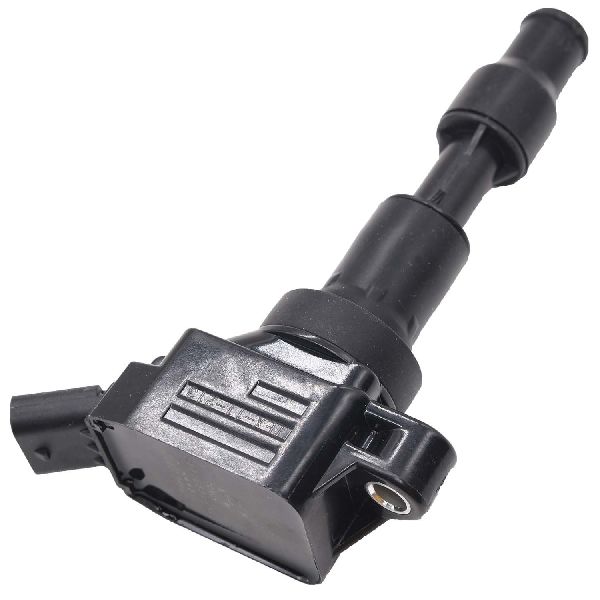
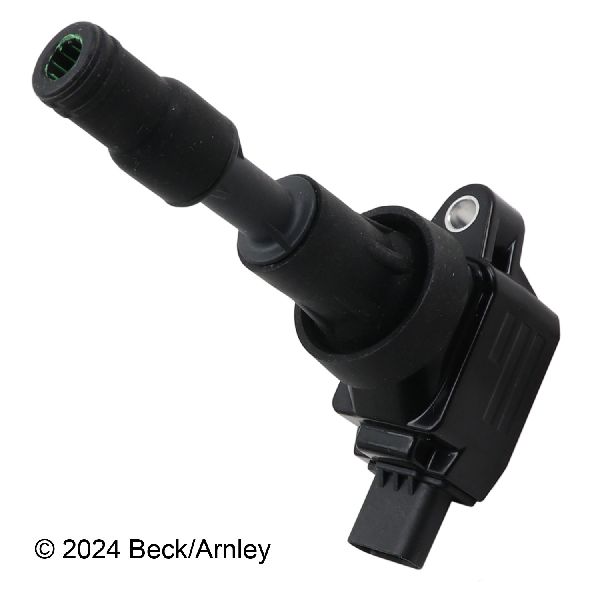
(OEM #27310-3L000)— This is the most common failure item for a P0301 code. The rear bank coils are subjected to significant heat and are a frequent point of failure noted in owner communities. Note: The front bank uses a different coil (P/N 27310-3L030) and they are not interchangeable.
Trusted brands: Kia/Hyundai Genuine, Mando, Denso
OEM price range: $60-$80
Aftermarket price range: $45-$65 - Spark Plug
(OEM #18875-09085 (or 18852-09070))— Spark plugs are a maintenance item with a 42,000-mile service interval. A worn plug is a primary cause of misfires, especially under load.
Trusted brands: Kia/Hyundai Genuine, NGK
OEM price range: $20-$27
Aftermarket price range: $15-$22 - Upper Intake Manifold Gasket Set
(OEM #28411-3L100)— These gaskets are considered single-use and MUST be replaced any time the intake manifold is removed to prevent performance-robbing vacuum leaks.
Trusted brands: Kia/Hyundai Genuine, Reinz
OEM price range: $40-$60
Aftermarket price range: $25-$40
Related Codes That Often Appear With This One
- P0300 — If the misfire becomes more widespread due to multiple failing coils, a systemic issue like carbon buildup, or a fuel delivery problem, a P0300 (Random/Multiple Cylinder Misfire) code may appear.
- P0303, P0305 — These codes for other rear-bank cylinders may appear alongside P0301 if multiple ignition components are failing due to age and heat exposure. They will also appear during a diagnostic 'swap test' if a technician moves the faulty cylinder 1 coil to cylinder 3 or 5.
Technical Service Bulletins (TSBs) & Recalls
- Recall SC200 /
- TSB Bulletin #TSBENG181_R1: While issued for other Kia models, this manufacturer bulletin outlines a service action for replacing ignition coils or coil RFI springs to resolve codes P0300 through P0304.
Platform-Specific Known Issues
- A recall was issued for 2018-2023 Stinger 3.3L models concerning the left turbocharger oil feed pipe (Recall SC200), which could deteriorate and leak oil. While not a direct cause of a misfire, a significant oil leak in the hot engine bay could potentially contaminate and accelerate the degradation of ignition components over time.
Documented NHTSA Reports
- NHTSA ODI #11610947: An owner reported a persistent P0301 and P0304 misfire that was not resolved despite the dealership replacing both spark plugs and ignition coils.
- NHTSA ODI #11717327: A report describes misfires on cylinders 1, 3, 4, and 5 (Codes P0300, P0301, P0303, P0304, P0305) caused by fouled spark plugs resulting from excessive oil consumption, likely due to piston ring issues.
- NHTSA ODI #11717855: An owner experienced an engine shaking with a P0301 code; a technician found signs of burning oil and cylinder damage across all cylinders.
Mechanic-Grade Diagnostic Values
- Ignition Coil Primary Resistance — expected: 0.3 to 1.5 Ohms. Failure: A reading outside this range, especially an open circuit (infinite resistance), indicates a faulty coil.
- Ignition Coil Secondary Resistance — expected: 5,000 to 15,000 Ohms (5kΩ - 15kΩ). Failure: A reading significantly outside this range points to a failure in the secondary windings.
- Low-Pressure Fuel Pump (LPFP) Pressure — expected: Approx. 40-75 PSI. Failure: Pressure below this range would likely cause multiple/random misfires (P0300) or a P0087 code, not just a single cylinder misfire.
- High-Pressure Fuel Pump (HPFP) Pressure (at rail) — expected: Up to 2,900 PSI (200 bar). Failure: While a failing HPFP usually throws P0087/P0088 codes, intermittent pressure drops can initially manifest as a single cylinder misfire under load.
Wiring & Ground Locations
- 27310-3L000 — Ignition coil for the rear bank of cylinders (1, 3, 5). Cylinder 1 is the rearmost cylinder on the driver's side.. This is the specific part number for the coil on the affected cylinder. It is located under the intake manifold.
- 27310-3L030 — Ignition coil for the front bank of cylinders (2, 4, 6).. This is the part number for the front bank and is NOT interchangeable with the rear bank coil (27310-3L000). Using the wrong part will cause issues.
- 91860J5010 — Engine Ground Wiring Assembly.. A poor engine ground can cause a weak spark and lead to intermittent misfires. This specific harness provides the ground path for various engine components. While not a primary suspect, it's a potential cause if ignition components test good.
Real Owner Repair Stories
- Reddit user in r/StingerGT (2021 Stinger GT, 44k miles) — Car drives fine in normal modes. When accelerating hard in Sport mode, the Check Engine Light for P0301 comes on and the car becomes sluggish (limp mode). After restarting the car, the light is gone and it drives normally.
❌ Tried (didn't work) The user had not yet attempted a repair but was seeking advice.
✅ What actually fixed it Multiple other users in the thread confirmed that these exact symptoms (misfire only under high load) were resolved by replacing the spark plugs. One user stated, 'I second this. Had the same code and it was a bad plug.' - Stinger Forum user (2022 Stinger GT-Line, 17k miles (Certified Pre-Owned)) — Check engine light with code P0301 appeared less than two weeks after purchase.
❌ Tried (didn't work) The dealership replaced the spark plugs, but the P0301 code returned the next day.
✅ What actually fixed it The resolution was extreme and likely due to warranty process rather than a simple diagnosis. After the spark plug replacement failed to fix the issue, Kia corporate authorized a complete engine replacement under warranty. This suggests a deeper, potentially mechanical issue was suspected by the manufacturer that was not easily diagnosed at the dealer level.
Model Year Variations Within This Range
- 2022-2023: For the 2022 model year facelift, the 3.3L V6 engine received a new variable exhaust system which resulted in a minor power increase of 3 horsepower, to 368 hp. While this change doesn't directly affect the cause of a P0301, the ECU software and some exhaust components are different from the 2018-2021 models.
- 2018: First model year (2018) GT2 trims lacked some features that became standard in 2019, such as the 360-degree camera, heated rear seats, and wireless charger. Mechanically, the engine and transmission are considered identical to later pre-facelift models with no significant changes affecting reliability for this code.
Diagnostic Flowchart
Other Known Issues on This Vehicle
Issues unrelated to this code that are worth knowing about as an owner of this generation:
- Left Turbocharger Oil Feed Pipe Leak 🔴 High → Shop Turbocharger — Common enough to trigger a recall. The pipe and hose assembly can deteriorate from heat, leaking oil onto hot exhaust components, creating a significant fire risk. (Ref: Kia Recall SC200 / NHTSA 22V702000)
- Intake Valve Carbon Buildup 🟠 Medium — A universal issue for all GDI engines. Becomes noticeable between 40,000-80,000 miles, causing rough idle, hesitation, and eventual misfires (often random P0300). Requires manual cleaning (walnut blasting).
- HECU (Brake) Module Fire Risk 🔴 High — An electrical short could occur in the Hydraulic Electronic Control Unit (HECU), potentially causing an engine compartment fire, even when the car is off. (Ref: NHTSA Recall 20V518000)
- High-Pressure Fuel Pump (HPFP) Failure 🔴 High — The fuel control valve plunger may stick, causing over-pressurization, loss of drive power, and stalling. (Ref: NHTSA Recall 21V162000 (covers 2018-2021 models))
- Driveshaft Vibration 🟡 Low — Some owners report a distinct vibration or shudder, often between 30-35 mph, that may require driveshaft re-balancing or replacement to resolve. Not a safety issue but a common NVH complaint.
- Interior Rattles 🟡 Low — A widespread quality-of-life complaint. Rattles from the dashboard, A-pillars, and sunroof area are common due to plastic trim clips and panels.
Used vs. New Parts: Buying Guide for This Vehicle
When a used part is the smart pick: For a P0301 repair, using used parts is generally not recommended for the primary failure components. The only exception might be a major structural part like a used (but verified crack-free) intake manifold if the original was damaged during service, but this is highly unlikely. All wear items should be new.
Donor-vehicle mileage cap: roughly under 80000 miles for the part to have meaningful remaining life.
What to inspect on the donor part:
- For any electronic component or harness, check for brittle plastic connectors.
- Inspect wiring for any signs of previous repair, cuts, or heat damage.
- Avoid parts from vehicles with signs of major impact or fire, even if the part itself looks okay.
OEM-only on this vehicle (don't cheap out):
- Upper Intake Manifold Gasket Set (28411-3L100): The cost savings on aftermarket gaskets are minimal, and the risk of a vacuum leak after a 4-hour job is not worth it. Always use genuine OEM gaskets.
- Fuel Injectors: Due to the high pressures of the GDI system, OEM injectors are strongly recommended for reliability and correct flow rates.
Aftermarket brands forum-validated for this vehicle:
- Spark Plugs: NGK (often the OEM supplier).
- Ignition Coils: Denso, Mando (often the OEM supplier), or performance-oriented brands like Worms Racing if the vehicle is modified.
Brands owners have reported issues with on this vehicle:
- Unbranded, no-name ignition coils from online marketplaces. Forum discussions frequently highlight that these cheaper coils have a significantly higher failure rate, sometimes within months, forcing a repeat of the entire labor-intensive repair.
Real Owner Stories
Aggregated from forums and TSBs cited above. Mileages and costs reflect what owners reported in those sources.
2019 Kia Stinger GT 3.3T — ~40000 miles
Symptoms: Loss of power, jerking, and a rough idle accompanied by a check engine light.
What fixed it: The dealer replaced all six ignition coils.
Source hint: stingerforum.org thread titled 'check-engine-light-gear-skip-and-idle-issue.10288/'
2019-2025 Genesis G70 3.3T — 46000 miles
Symptoms: Multiple misfire codes including P0301; symptoms specifically appeared on cold starts while under load.
What fixed it: Potential fuel system issue identified (investigation ongoing in source).
Source hint: Reddit r/GenesisG70 thread 'engine_troubles_help_from_the_boys/'
Related OBD-II Codes
Frequently Asked Questions
Is there a recall for the 3.3L Twin-Turbo V6 that could be related to my P0301 misfire?
Why is it recommended to replace all rear bank coils if only cylinder 1 is misfiring?
What is the recommended spark plug replacement interval for my 2018-2023 Stinger 3.3T?
Can I replace the cylinder 1 ignition coil without removing the intake manifold?
Could a fuel issue be causing my P0301 code on the Stinger?
Is there a fire risk associated with the engine compartment of my 3.3T Stinger?
Helpful Videos
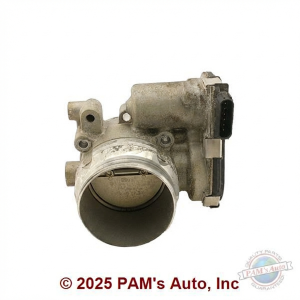
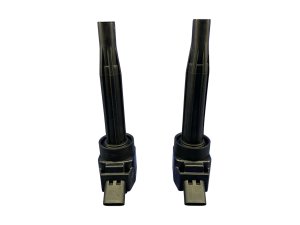
Used OEM Parts in Stock
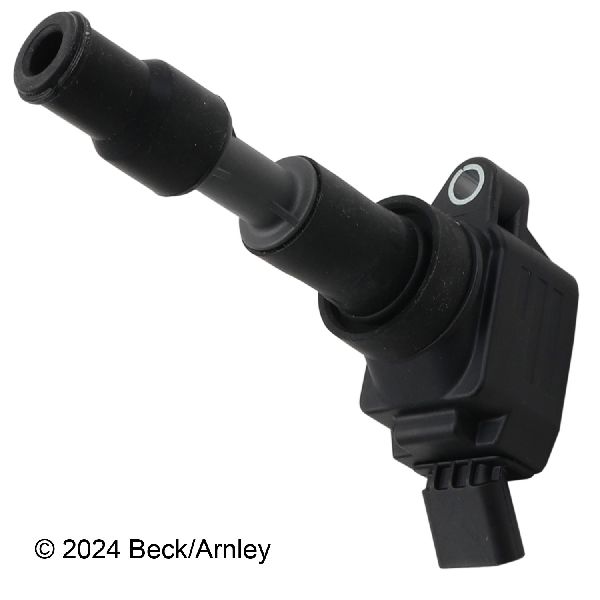
New Aftermarket Parts Available


The information in this article is provided for general reference and educational purposes only. Vehicle specifications, procedures, and part compatibility can vary by production date, trim level, and region. Always consult your vehicle's factory service manual and verify part numbers before purchasing or performing repairs. Safety-critical components such as airbags, seat belts, and braking systems should be installed by a qualified professional.
- Kia Stinger:
- 🧭 Diagnostic Flowchart
- 🎬 Helpful Videos
- 🛍️ Shop This Part
- What's Unique About the 2018-2023 Kia Stinger
- Symptoms You May Notice
- Most Likely Causes
- Rare But Worth Checking
- Diagnosis Steps
- Parts You'll Likely Need
- Related Codes That Often Appear With This One
- Technical Service Bulletins (TSBs) & Recalls
- Platform-Specific Known Issues
- Documented NHTSA Reports
- Mechanic-Grade Diagnostic Values
- Wiring & Ground Locations
- Real Owner Repair Stories
- Model Year Variations Within This Range
- Other Known Issues on This Vehicle
- Used vs. New Parts: Buying Guide for This Vehicle
- Real Owner Stories
- 2019 Kia Stinger GT 3.3T — ~40000 miles
- 2019-2025 Genesis G70 3.3T — 46000 miles
- Related OBD-II Codes
- Frequently Asked Questions
- 🎟️ Get 5% Off