

P0301 on 2020-2025 Kia Telluride: Cylinder 1 Misfire Causes and Fixes
P0301 indicates a misfire in cylinder 1. On the Telluride's 3.8L V6, this is most often caused by a faulty ignition coil or spark plug. However, because cylinder 1 is on the rear bank against the firewall, replacement requires removing the upper intake manifold, making it a complex job. A software update under TSB ENG228 may also be required for some 2020 models to fix overly sensitive misfire detection on cold starts.
- P0301 on a Telluride means cylinder 1 is misfiring, which is located on the difficult-to-access rear bank against the firewall.
- The most likely causes are a bad ignition coil or a worn spark plug.
- Due to the high labor cost of removing the intake manifold, it is strongly recommended to replace all three rear coils and all six spark plugs at the same time.
- For 2020 models, check if TSB ENG228 applies to your vehicle, as a simple software update could fix the problem if it only occurs on cold starts.
- Driving with a flashing check engine light can quickly damage your catalytic converter, leading to a much more expensive repair.
What's Unique About the 2020-2025 Kia Telluride
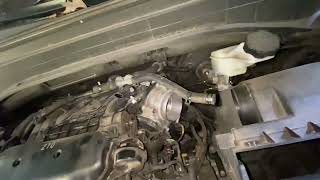
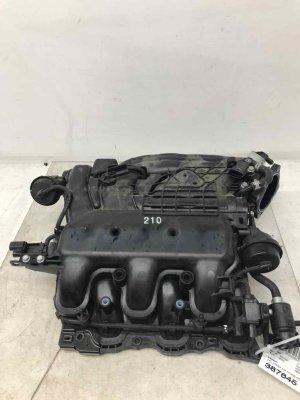
The key challenge with a P0301 on the Telluride is the location of cylinder 1. Unlike the easily accessible front cylinders (2, 4, 6), cylinder 1 is on the rear bank, and accessing its spark plug, ignition coil, or fuel injector requires the complete removal of the upper intake manifold—a significant job 🎬 Watch this detailed walkthrough of the intake manifold removal process. confirmed in multiple DIY videos and forum posts. Additionally, early 2020 models (produced Jan 9, 2019 - May 19, 2020) are prone to setting this code on a cold start due to overly sensitive computer logic, which Kia addressed with a specific software update (TSB ENG228). As a Gasoline Direct Injection (GDI) engine, it is also susceptible to carbon buildup on intake valves over time, which can be a root cause of misfires, a common topic of discussion on owner forums.
Symptoms You May Notice
- Flashing or solid Check Engine Light
- Rough or shaking idle
- Engine hesitation or stumbling during acceleration
- Noticeable loss of power
- Reduced fuel economy
- Smell of raw fuel from the exhaust
- Replacing only the front bank spark plugs and coils when the code is for a rear bank cylinder.
- Replacing the catalytic converter when it has been damaged by a persistent misfire, without fixing the root cause of the misfire first.
Most Likely Causes
- Faulty Ignition Coil 🔴 High Probability → Shop Ignition Coil Ignition coils are a common failure item on many modern engines. Heat and vibration eventually lead to failure of the internal windings. This is a frequent topic in owner forums for misfire codes.
How to confirm: The most definitive DIY method is to swap the cylinder 1 ignition coil with another rear bank coil (e.g., cylinder 3). If the trouble code changes to P0303, the ignition coil is confirmed to be faulty. This requires removing the intake manifold for access.
Typical fix: Replace the failed ignition coil. Since accessing the rear bank is labor-intensive, many owners and shops choose to replace all three rear ignition coils and all six spark plugs at the same time to avoid future repeat labor costs.
Est. part cost: $40-$75 per coil - Worn or Fouled Spark Plug 🔴 High Probability → Shop Spark Plug Spark plugs are a regular maintenance item. The service interval is typically around 100,000 miles, but they can fail earlier, especially if there are other issues like oil consumption or poor fuel quality. A Reddit user noted their spark plugs were coated in white ash at 80k miles, indicating potential lean running or oil consumption.
How to confirm: After ruling out the ignition coil, inspect the spark plug from cylinder 1. Look for a cracked insulator, heavy carbon fouling, oil contamination, or a worn electrode. Compare it to a plug from another cylinder.
Typical fix: Replace the spark plug in cylinder 1. It is highly recommended to replace all six spark plugs at once, as the labor to access the rear bank is the same.
Est. part cost: $15-$25 per plug - ECU Misfire Detection Logic 🟡 Medium Probability Specifically affects 2020 Telluride models produced from Jan 9, 2019, to May 19, 2020. The original ECU software was overly sensitive and could incorrectly detect a misfire during a cold start. This is corroborated by Hyundai Palisade owners experiencing similar cold-start misfire codes that disappear after a restart.
How to confirm: A Kia dealership can check your vehicle's VIN against TSB ENG228. If the software update has not been performed and your vehicle falls within the production dates, this is a likely cause, especially if the misfire happens primarily on cold starts and doesn't recur after the engine is warm.
Typical fix: A Kia dealer needs to apply the ECM software update as described in TSB ENG228.
Est. part cost: $0 (if under warranty), otherwise dealer labor charge for flashing. - Clogged or Faulty Fuel Injector ⚪ Low Probability → Shop Fuel Injector As a GDI engine, the injector tip is inside the combustion chamber and is exposed to extreme heat and pressure, making it susceptible to carbon buildup over time. A user on a Carly forum with a 2020 Telluride at 103,000 km reported a rough cold start and misfiring that was ultimately diagnosed as a faulty cold start injector.
How to confirm: This is difficult to diagnose without professional tools. A technician can perform a fuel injector balance test. Swapping injectors is possible but is an extremely labor-intensive diagnostic step.
Typical fix: Replace the fuel injector for cylinder 1. This also requires intake manifold removal and special care for the high-pressure fuel system.
Est. part cost: $80-$150 per injector - Intake Valve Carbon Buildup ⚪ Low Probability All GDI engines lack the cleaning effect of fuel spraying on the intake valves. Over many miles (typically 80,000+), oil vapors from the PCV system can bake onto the valves, restricting airflow and causing misfires. A Telluride owner on Reddit shared photos of significant valve buildup at 80k miles.
How to confirm: Requires a borescope inspection of the intake valves, which involves removing the intake manifold. Symptoms like a rough idle and misfires that persist after ignition and fuel system checks point towards this cause.
Typical fix: Perform a manual intake valve cleaning service, often called 'walnut blasting'. This process uses crushed walnut shells to safely blast the carbon off the valves.
Est. part cost: N/A (This is a labor-based service)
Rare But Worth Checking
- Low Compression: Could be caused by a worn piston ring or a problem with a valve (e.g., a broken valve spring, which was subject to a recall for some 2024 models). A compression or leak-down test is needed to confirm. This is an engine-internal mechanical failure and is rare on a well-maintained engine.
- Vacuum Leak: A leak in the intake manifold gasket could cause a misfire on a single cylinder, but it more commonly affects multiple cylinders or sets lean codes (P0171/P0174).
Diagnosis Steps
- Read the code with an OBD-II scanner and confirm P0301 is present. Note any other codes.
- If you have a 2020 model produced before May 19, 2020, check with a Kia dealer if TSB ENG228 (ECU update for cold start misfire) applies to your VIN and has been performed.
- Due to the labor involved, it's often more practical to plan on replacing all three rear ignition coils, all six spark plugs, and the intake manifold gaskets at once. A YouTube guide for this job on a 2020 Telluride provides a detailed walkthrough.
- For pure diagnosis after removing the intake manifold: Swap the ignition coil from cylinder 1 with the coil from cylinder 3 (middle cylinder, rear bank). Reassemble, clear codes, and drive. If the code changes to P0303, the ignition coil is the culprit.
- If the code remains P0301, swap the spark plug from cylinder 1 with the plug from cylinder 5 (driver's side, rear bank). Reassemble, clear codes, and drive. If the code changes to P0305, the spark plug was the issue.
- If the code remains P0301, the problem is likely a fuel injector, carbon buildup on the intake valves, or a mechanical compression issue.
- At this stage, professional diagnosis is recommended. A technician can perform a fuel injector balance test, a borescope inspection of the valves, and a compression/leak-down test to pinpoint the exact cause.
Parts You'll Likely Need
- Ignition Coil
(OEM #27310-3L000)— This is one of the most common causes of a single-cylinder misfire. Part number 27310-3L000 is listed for the Telluride.
Trusted brands: Kia (Genuine), Mando, NGK, Denso
OEM price range: $70-$100
Aftermarket price range: $40-$75 - Spark Plug
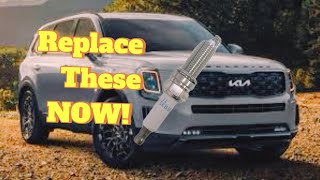
(OEM #18849-11070)— A common wear item and the second most likely cause. It is highly recommended to replace all 6 while the intake is 🎬 Watch: Step-by-step guide to replacing your Telluride spark plugs. off. Part number 18849-11070 is specified for the 3.8L V6.
Trusted brands: Kia (Genuine), NGK, Denso, Champion
OEM price range: $20-$30
Aftermarket price range: $15-$25 - Intake Manifold Gasket Set
(OEM #28411-3L000 (Upper), 28313-3L000 (Lower))— These are single-use gaskets that must be replaced any time the intake manifold is removed for service on the rear bank cylinders.
Related Codes That Often Appear With This One
- P0300 — If the misfire is intermittent or affects other cylinders, a P0300 (Random/Multiple Cylinder Misfire) may be stored alongside P0301. TSB ENG228 addresses P0300 in addition to single-cylinder codes.
- P0303, P0305 — If a problem like a vacuum leak or carbon buildup affects the entire rear bank, you may see misfire codes for other cylinders on that bank.
Technical Service Bulletins (TSBs) & Recalls
- number: ENG228 | title: 3.8L GDI Misfire DTC Judgment Logic Improvement | date: January 2021 | summary: Provides an ECM software update for 2020 Tellurides (produced Jan 9, 2019 - May 19, 2020) that may exhibit a MIL-on with misfire codes (P0300-P0306) during a cold start due to overly sensitive detection logic.
Platform-Specific Known Issues
- TSB ENG228: Some 2020 models may require an ECM software update to correct false misfire detection on cold starts.
- Carbon Buildup: The Lambda II GDI engine, like other GDI engines, can develop carbon deposits on the intake valves over time, leading to airflow issues and misfires.
Mechanic-Grade Diagnostic Values
- High-Pressure Fuel System Pressure — expected: Up to 150 Bar (2,175 PSI) under load.. Failure: Significantly lower pressure readings under load could indicate a failing high-pressure fuel pump (HPFP).
- Long Term and Short Term Fuel Trims — expected: Within -5% to +5% at idle and under steady load.. Failure: Consistently high positive fuel trims (e.g., > +10%) on one bank could indicate a vacuum leak affecting that bank, while trims affecting only cylinder 1 would require a dealer-level scan tool to view.
Scan Tool Commands That Help
- Kia GDS (Global Diagnostic System): Cylinder Misfire Count Analysis — To view real-time and historical misfire counts for each specific cylinder, which is more detailed than a generic P0301 code. This helps differentiate between a hard, consistent fault and an intermittent one.
- Kia GDS (Global Diagnostic System): Trigger Module / Flight Record — For diagnosing intermittent misfires that don't occur on demand. The function allows the tech to record sensor data during a drive cycle, which can be reviewed later to find the exact moment and conditions under which the misfire occurred.
- Kia GDS (Global Diagnostic System): Injector Actuation Test — To individually command each fuel injector to open and close, allowing a technician to listen for the audible click and confirm the injector's electrical circuit is functioning. This is a key step before performing the labor-intensive task of physically removing the injector.
Wiring & Ground Locations
- Engine Ground Strap — Typically located between the engine block/cylinder head and the chassis frame rail in the engine bay. Specific diagrams are needed for exact placement.. A corroded or loose main engine ground can cause a weak spark on all cylinders, but can sometimes manifest as a misfire on a single, sensitive cylinder first. Verifying grounds are clean and tight is a foundational step.
- Ignition Coil Connector (Cylinder 1) — On the rear bank (firewall side), passenger side. Access requires removal of the upper intake manifold. The connector has 4 pins.. This is the direct electrical connection for the failing cylinder's ignition coil. Technicians test for 12V power, ground, and the trigger signal from the ECU at this connector's pins to rule out a wiring harness issue before replacing the coil.
Real Owner Repair Stories
- Reddit user /u/BuckCompton45 (Kia (model not specified, but general P0301 diagnosis)) — Hard start, rough idle, lack of power.
❌ Tried (didn't work) Initial diagnosis considered spark plugs, injectors, coil, or intake gasket.
✅ What actually fixed it The owner reported a final update that replacing all four ignition coils resolved the P0301 code and associated symptoms. - Reddit user /u/Platinumboba (2012 Kia Soul (different vehicle, but illustrates a common diagnostic pattern)) — Check engine light came on after 10-15 minutes of driving in hot weather.
❌ Tried (didn't work) Replaced all 4 spark plugs and the coil for cylinder 2 (original code was P0302)., Swapped the new coil from cylinder 2 to cylinder 1 to test it.
✅ What actually fixed it The code followed the new Duralast-brand coil, changing from P0302 to P0301, indicating the new aftermarket coil was faulty or incompatible, especially when hot. This highlights the risk of using certain aftermarket parts.
Model Year Variations Within This Range
- 2023-2025: The 2023 model year introduced a significant facelift with revised exterior styling (grille, headlights, bumpers), and a new interior featuring dual 12.3-inch screens and a redesigned dashboard. However, the core powertrain, the 3.8L V6 engine and 8-speed automatic transmission, remained unchanged from the 2020-2022 models. Therefore, the causes and repair procedures for a P0301 code are identical across the entire 2020-2025 range.
Diagnostic Flowchart
Other Known Issues on This Vehicle
Issues unrelated to this code that are worth knowing about as an owner of this generation:
- Spontaneously Cracking Windshields 🟠 Medium — Widespread enough to trigger a 'goodwill' replacement program from Kia for 2020 models and a class-action lawsuit covering 2020-2023 models. (Ref: Customer Satisfaction Initiative (not a formal TSB/recall))
- Tow Hitch Harness Fire Risk 🔴 High — Affects 2020-2022 models equipped with the 4-pin tow hitch harness. Moisture and debris can cause a short circuit, leading to a fire risk even when parked. (Ref: Recall SC247 / NHTSA 22V-626)
- Power Seat Motor Fire Risk 🔴 High — Affects 2020-2024 models. A stuck power seat slide knob can cause the motor to overheat, posing a fire risk. (Ref: Recall SC316)
- Daytime Running Light (DRL) Failure 🟡 Low — Common complaint on forums for 2020-2021 models where the DRL fails to illuminate but still functions as a turn signal. TSB ELE242 addresses a potential fix by checking internal headlamp connections. (Ref: TSB ELE242)
- Faulty Engine Valve Springs 🔴 High — Affects a specific batch of 2024 models (built Oct 1, 2023 - Dec 6, 2023). Can lead to loss of power and catastrophic engine failure. (Ref: Recall for affected 2024 models)
Used vs. New Parts: Buying Guide for This Vehicle
When a used part is the smart pick: For major components like a complete engine or transmission assembly, a quality used OEM part from a low-mileage donor vehicle can offer significant savings over a new unit. Body parts, wheels, and interior components are also excellent candidates for used OEM parts.
Donor-vehicle mileage cap: roughly under 70000 miles for the part to have meaningful remaining life.
What to inspect on the donor part:
- Check the VIN of the donor vehicle to verify its year and trim.
- For engine components, look for sellers who provide compression test numbers or video of the engine running.
- Inspect electrical connectors for any signs of corrosion, melting, or damage.
- Ask for a warranty; reputable sellers like Benzeen Auto Parts offer a 1-year warranty on used parts.
OEM-only on this vehicle (don't cheap out):
- Engine Control Module (ECM) - Requires specific programming (VIN, immobilizer) that can be difficult or impossible with a used unit without dealer tools.
- High-Pressure Fuel Pump (HPFP) - Due to the high pressures and criticality to engine function, a new OEM part is recommended to ensure reliability and avoid catastrophic failure.
Aftermarket brands forum-validated for this vehicle:
- Ignition Coils: Denso, NGK, Mando (often the OEM supplier)
- Spark Plugs: NGK, Denso (are specified OEM suppliers for many Korean vehicles)
Brands owners have reported issues with on this vehicle:
- Unbranded, no-name ignition coils from online marketplaces. A Reddit user's experience showed a new Duralast coil was faulty out of the box, indicating that even known store brands can sometimes have quality control issues compared to OEM or OEM-supplier brands.
Real Owner Stories
Aggregated from forums and TSBs cited above. Mileages and costs reflect what owners reported in those sources.
2020 Kia Telluride 3.8L GDI V6 — ~64000 miles
Symptoms: Rough cold start and misfiring.
What fixed it: Diagnosis and replacement of a faulty cold start injector.
Source hint: Carly forum user with a 2020 Telluride at 103,000 km
2020 Kia Telluride 3.8L GDI V6 — 80000 miles
Symptoms: Misfire codes; spark plugs found coated in white ash and significant carbon buildup on the intake valves.
What fixed it: Manual intake valve cleaning (walnut blasting).
Source hint: Reddit r/KiaTelluride thread titled 'valve build up'
2023 Hyundai Palisade 3.8L GDI V6 — ~15000 miles
Symptoms: Check engine light P0301; sometimes linked to using remote start.
What fixed it: ECM software update for sensitive misfire detection logic (similar to TSB ENG228).
Source hint: Reddit r/HyundaiPalisade '2023 hyundai palisade check engine light on p0301'
Related OBD-II Codes
Frequently Asked Questions
Does TSB ENG228 apply to my 2020 Kia Telluride?
Why is it recommended to replace all six spark plugs if only cylinder 1 is misfiring?
Can carbon buildup cause a P0301 code on my Telluride?
Is there a software fix for the P0301 code on the Telluride?
How can I confirm if my P0301 is a faulty ignition coil without buying parts?
Are there any fire risks associated with the 2020-2025 Telluride I should be aware of while fixing this code?
Helpful Videos

We Have This Part in Stock

The information in this article is provided for general reference and educational purposes only. Vehicle specifications, procedures, and part compatibility can vary by production date, trim level, and region. Always consult your vehicle's factory service manual and verify part numbers before purchasing or performing repairs. Safety-critical components such as airbags, seat belts, and braking systems should be installed by a qualified professional.
- Kia Telluride:
- 🧭 Diagnostic Flowchart
- 🎬 Helpful Videos
- 🛍️ Shop This Part
- What's Unique About the 2020-2025 Kia Telluride
- Symptoms You May Notice
- Most Likely Causes
- Rare But Worth Checking
- Diagnosis Steps
- Parts You'll Likely Need
- Related Codes That Often Appear With This One
- Technical Service Bulletins (TSBs) & Recalls
- Platform-Specific Known Issues
- Mechanic-Grade Diagnostic Values
- Scan Tool Commands That Help
- Wiring & Ground Locations
- Real Owner Repair Stories
- Model Year Variations Within This Range
- Other Known Issues on This Vehicle
- Used vs. New Parts: Buying Guide for This Vehicle
- Real Owner Stories
- 2020 Kia Telluride 3.8L GDI V6 — ~64000 miles
- 2020 Kia Telluride 3.8L GDI V6 — 80000 miles
- 2023 Hyundai Palisade 3.8L GDI V6 — ~15000 miles
- Related OBD-II Codes
- Frequently Asked Questions
- 🎟️ Get 5% Off