

P0301 on 2002-2005 Land Rover Freelander: Cylinder 1 Misfire Causes and Fixes
P0301 on a 2002-2005 Freelander is a misfire on cylinder 1. The most common cause is a failed ignition coil or a worn spark plug. Swapping the coil from cylinder 1 to another cylinder is the fastest way to diagnose the problem. Expect to pay $40-$80 for a new coil. Be aware that the rear bank of cylinders is significantly harder to access than the front.
- P0301 means cylinder #1 is misfiring. On your Freelander, this is the cylinder in the front bank, closest to the passenger side.
- The most likely cause is a bad ignition coil. Swap it with another cylinder's coil to confirm before buying a new one.
- If the coil isn't the problem, check the spark plug next.
- Do not ignore a flashing check engine light, as this can quickly destroy your catalytic converter, a much more expensive repair.
- Be aware that vacuum leaks from the intake manifold are a known issue on this engine and can also cause this code, often with P0171/P0174.
What's Unique About the 2002-2005 Land Rover FREELANDER
The 2002-2005 Freelander uses the 2.5L Rover KV6 engine. A key complexity is its ignition system: the front bank (cylinders 1, 3, 5) uses three remote coils with spark plug wires, while the rear bank (cylinders 2, 4, 6) uses three individual coil-on-plug units. This means a P0301 fault could be a coil, wire, or plug. Furthermore, this platform has known issues with its plastic intake manifold and Variable Intake System (VIS) motors. A Land Rover Technical Service Bulletin (SWA09013) directly links P0301 with lean codes (P0171, P0174) and symptoms like stumbling or stalling, strongly suggesting that vacuum leaks from intake gaskets are a common underlying cause, not just a simple bad coil or plug.
Diagnostic Flowchart
Tap your situation to follow the diagnostic path that matches what you're seeing on this vehicle.
Symptoms You May Notice
- Check Engine Light is on or flashing.
- Engine stumbling, hesitation, or shaking, especially under load or during acceleration.
- Rough or unstable idle.
- Noticeable loss of engine power.
- Difficulty starting the engine.
- Engine may stall or cut out, especially when coming to a stop. [TSB SWA09013] 🎬 Watch: Diagnosing a rough running engine and common fault codes.
- Smell of unburned gasoline from the exhaust.
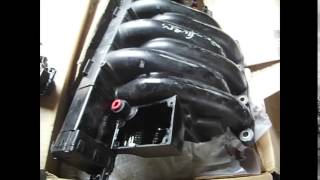
- Rattling noise from the intake manifold area, which could indicate a VIS motor issue. 🎬 Listen to the specific rattling sound of a failing intake manifold.
- Replacing only the spark plug when the ignition coil or plug wire was the actual failure.
- Replacing ignition components repeatedly when a vacuum leak from the intake manifold gaskets is the true cause, especially if lean codes P0171/P0174 are also present.
Most Likely Causes
- Faulty Ignition Coil or Spark Plug Wire 🔴 High Probability → Shop Ignition Coil Coil packs and wires are common wear items. On the KV6, cylinder 1 is on the front bank, which uses a remote coil and a spark plug wire, adding an extra failure point compared to the coil-on-plug rear bank.
How to confirm: Swap the ignition coil from cylinder #1 with another cylinder on the front bank (e.g., cylinder #3). Clear the codes and drive. If the code changes to P0303, the coil is bad. If the code remains P0301, swap the spark plug wire between the same two cylinders. If the code then moves to P0303, the wire is bad.
Typical fix: Replace the failed ignition coil or wire. It is often recommended to replace the spark plug at the same time.
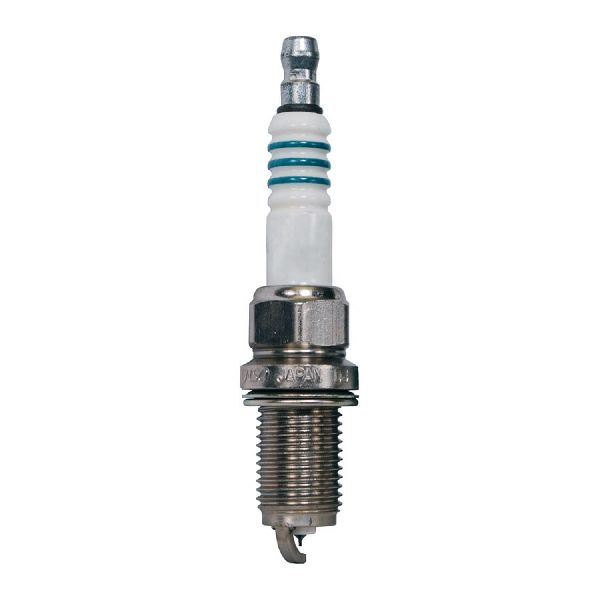
Est. part cost: $40-$80 for a coil, $20-$40 for a wire set - Worn or Fouled Spark Plug 🔴 High Probability → Shop Spark Plug Spark plugs have a finite service life (approx. 60,000 miles) and can become worn or fouled by carbon or oil deposits, leading to a weak or inconsistent spark. NGK is the original equipment manufacturer.
How to confirm: After ruling out the coil and wire, remove the spark plug from cylinder #1. Inspect it for wear (worn electrode), damage to the porcelain, or heavy deposits. You can also swap it with another cylinder's plug to see if the misfire follows.
Typical fix: Replace the spark plug. It's best practice to replace all six spark plugs at the same time for even performance, though the rear three are very difficult to access.
Est. part cost: $8-$20 per plug - Clogged or Faulty Fuel Injector 🟡 Medium Probability → Shop Fuel Injector Fuel injectors can become clogged with deposits over time or fail electronically.
How to confirm: After confirming spark is good, the fuel injector is the next suspect. You can listen to it with a mechanic's stethoscope (it should make a consistent clicking sound). A definitive test is to swap the injector with another cylinder, but this is labor-intensive as it requires removing the fuel rail. A resistance test can also be performed with a multimeter.
Typical fix: Replace the faulty fuel injector. It's wise to replace the O-rings and seals on any injectors that are removed.
Est. part cost: $50-$150 - Intake Manifold Gasket Leak (Vacuum Leak) 🟡 Medium Probability → Shop Engine Intake Manifold The KV6 engine's plastic intake manifold and its gaskets are known to degrade from heat and age, causing unmetered air to enter the engine. TSB SWA09013 links misfire codes with lean codes (P0171/P0174), which strongly suggests vacuum leaks as a root cause.
How to confirm: A mechanic can perform a smoke test, which involves feeding pressurized smoke into the intake system to see where it leaks out. Sometimes a hissing sound can be heard near the intake manifold at idle. A failing gasket can also cause coolant loss or overheating.
Typical fix: Replace the upper and lower intake manifold gaskets. This is a labor-intensive job.
Est. part cost: $60-$120 for a gasket set
Rare But Worth Checking
- Low Fuel Pressure: While this usually causes multiple or random misfires (P0300), a failing fuel pump or clogged filter could potentially affect cylinder 1. Check fuel pressure at the rail if ignition components and injectors are confirmed good.
- Low Engine Compression: This is a mechanical engine problem, such as a worn piston ring, a burnt valve, or a leaking head gasket. This is the least likely cause and should be investigated last with a compression test.
- Faulty VIS (Variable Intake System) Motors: The KV6 has two VIS motors on the intake manifold that control butterfly valves to optimize airflow. These plastic motors can fail or get contaminated with oil, causing a rattling sound and performance issues that could potentially contribute to misfires or be misdiagnosed as such. Codes like P1472 or P1477 often accompany this failure.
Diagnosis Steps
- Read the code with an OBD-II scanner to confirm P0301 and check for any other codes (e.g., P0171, P0174).
- Identify cylinder #1. On the 2.5L KV6, the front bank (closest to the radiator) contains cylinders 1, 3, and 5, from left to right (passenger to driver side in the US).
- Swap the ignition coil from cylinder #1 with the coil from cylinder #3. Clear codes and drive. If the code returns as P0303, you have a bad coil.
- If the code remains P0301, move the coil back and swap the spark plug wire from cylinder #1 with cylinder #3. If the code changes to P0303, the wire is faulty.
- If the code is still P0301, inspect the spark plug in cylinder #1 for wear, fouling, or damage. Replace if necessary. It's recommended to replace all six, but be aware of the difficulty of the rear bank. 🎬 See this walkthrough for changing spark plugs on the KV6.
- Inspect the wiring and connector going to the coil and fuel injector on cylinder #1 for any damage, corrosion, or loose connections.
- If spark components are good, listen to the fuel injector on cylinder #1 with a mechanic's stethoscope. It should have a steady, audible click. Compare its sound to the other injectors.
- If a fuel injector is suspected, the next step is swapping it, which is an advanced job. Before that, consider a professional smoke test to check for vacuum leaks, especially if lean codes are present.
- As a final resort for persistent issues, perform a compression test on cylinder #1 to rule out mechanical engine problems.
Parts You'll Likely Need
- Ignition Coil
(OEM #NEC101000L)— This is a very frequent failure point for a single-cylinder misfire. Cylinder 1 uses a remote coil on the front bank.
Trusted brands: Genuine Land Rover, Bosch, Delphi, Standard Motor Products
OEM price range: $70-$120
Aftermarket price range: $40-$80 - Spark Plug
(OEM #NLP100290L)— A worn or fouled spark plug is the second most common cause and is a routine maintenance item. The OEM plug is made by NGK.
Trusted brands: NGK (BKR6EIX-11 is a popular Iridium upgrade), Denso, Champion
OEM price range: $18-$25
Aftermarket price range: $8-$15 - Intake Manifold Gasket Set
(OEM #LKJ100992L (Upper Set))— Vacuum leaks from failed intake gaskets are a known issue on this engine and can cause misfires, often accompanied by lean codes (P0171/P0174).
Trusted brands: Victor Reinz, Mahle
OEM price range: $80-$130
Aftermarket price range: $60-$120
Related Codes That Often Appear With This One
- P0300 — If the cause (like a vacuum leak or low fuel pressure) is systemic, the misfire may not stay on one cylinder, leading to a random misfire code.
- P0302, P0303, P0304, P0305, P0306 — If multiple ignition components are failing or a systemic issue like a large vacuum leak exists, other specific cylinder misfire codes may appear.
- P0171, P0174 — These 'System Too Lean' codes often appear when a vacuum leak is the root cause of the misfire, as unmetered air is entering the engine. This is a very common pairing on the KV6 engine. [TSB SWA09013, 46]
- P0313 — Indicates a misfire was detected with low fuel. This can point towards a fuel delivery issue like a weak pump or clogged filter.
Technical Service Bulletins (TSBs) & Recalls
- SWA09013: Mentions that MIL illumination with DTCs P0301-P0306, P0171, P0174, and P0316 can be caused by issues leading to engine stumble, hesitation, or stalling on 2002 models.
Platform-Specific Known Issues
- The plastic intake manifold and its associated gaskets are a known weak point on the 2.5L KV6 engine, frequently leading to vacuum leaks that cause misfires and lean running conditions.
- Accessing the rear bank of cylinders (2, 4, 6) for spark plug or coil replacement is notoriously difficult. It requires working blind or removing the upper intake manifold, significantly increasing labor time and complexity compared to the easily accessible front bank.
- The Variable Intake System (VIS) motors are made of plastic and are prone to failure, which can cause rattling noises and affect engine performance across the rev range.
Mechanic-Grade Diagnostic Values
- Fuel Pressure (at idle, non-US models) — expected: 3.4 bar. Failure: Significantly lower pressure indicates a potential issue with the fuel pump, filter, or regulator.
- Fuel Injector Resistance — expected: ~12-14 Ohms. Failure: A reading that is significantly higher (open circuit) or lower (short circuit) than other injectors indicates a faulty injector coil.
Hidden / Shadow Codes Worth Checking
- Mode $06 Misfire Data: Advanced scan tools can access Mode $06 data, which contains raw misfire counts for each individual cylinder. This allows a technician to see if cylinder 1 is registering misfires even if the count is not yet high enough to set a P0301 code and turn on the Check Engine Light. (see via Use an OBD-II scanner with Mode $06 capability. The specific Monitor ID (OBDMID) and Test ID (TID) for Land Rover misfire counts may vary, but the function is to monitor misfire events per cylinder.)
Wiring & Ground Locations
- Engine Control Module (ECM) — Located inside the 'e-box' (electronics box) in the engine compartment.. The ECM sends the command signal to the ignition coil for cylinder 1. A poor connection at the ECM could interrupt this signal.
- Ground Point C0558 — Located behind the left kick panel, near the base of the A-pillar.. This is a major ground distribution point for the passenger compartment. Poor grounding here can cause a variety of difficult-to-diagnose electrical issues, potentially affecting ECM or sensor performance.
- Ground Point C0017 — Located at the lower left front of the engine compartment.. This is a primary engine bay ground point. Corrosion or a loose connection here can affect any sensor or component grounded in this area, including those related to the ignition system.
Model Year Variations Within This Range
- 2002-2005: No significant variations related to the KV6 engine management system or the diagnosis of P0301 are commonly documented within this model year range.
Helpful Videos



We Have This Part in Stock



The information in this article is provided for general reference and educational purposes only. Vehicle specifications, procedures, and part compatibility can vary by production date, trim level, and region. Always consult your vehicle's factory service manual and verify part numbers before purchasing or performing repairs. Safety-critical components such as airbags, seat belts, and braking systems should be installed by a qualified professional.
- Land Rover FREELANDER:
- 🧭 Diagnostic Flowchart
- 🎬 Helpful Videos
- 🛍️ Shop This Part
- What's Unique About the 2002-2005 Land Rover FREELANDER
- Symptoms You May Notice
- Most Likely Causes
- Rare But Worth Checking
- Diagnosis Steps
- Parts You'll Likely Need
- Related Codes That Often Appear With This One
- Technical Service Bulletins (TSBs) & Recalls
- Platform-Specific Known Issues
- Mechanic-Grade Diagnostic Values
- Hidden / Shadow Codes Worth Checking
- Wiring & Ground Locations
- Model Year Variations Within This Range
- 🎟️ Get 5% Off