

P0301 on 2013-2015 Land Rover LR2: Cylinder 1 Misfire Causes and Fixes
P0301 on a 2013-2015 LR2 indicates a misfire in cylinder 1. The most common causes are a bad ignition coil or a worn spark plug. However, failing fuel injectors are a well-documented issue for this specific Ford-sourced EcoBoost engine and should be considered a primary suspect if ignition parts are not the culprit, as noted in Land Rover TSBs.
- P0301 on a 2013-2015 LR2 is a misfire on cylinder 1, the cylinder closest to the engine's drive belts.
- The easiest and most common fix is a faulty ignition coil or spark plug. Always start your diagnosis by swapping the ignition coil from cylinder 1 to another cylinder to see if the fault follows.
- This specific Land Rover model has TSBs pointing to fuel injectors and the high-pressure fuel pump as known causes for misfires. If ignition parts don't solve the problem, the fuel system is the next logical place to investigate.
- Do not ignore a flashing check engine light. Driving with a persistent misfire can cause expensive damage to the catalytic converter.
What's Unique About the 2013-2015 Land Rover LR2
The 2013-2015 Land Rover LR2 uses a 2.0L turbocharged direct-injection engine sourced from Ford, commonly known as the 2.0L EcoBoost. While ignition components are common failure points for any gasoline engine, this specific platform has well-documented issues with the fuel system. Land Rover issued Technical Service Bulletins (TSBs), such as SSM71894, specifically to investigate a high rate of fuel injector failures causing misfires. [SSM71894] Another TSB, LTB00730NAS1, links misfire codes directly to internal faults in the high-pressure fuel pump. This makes a thorough fuel system diagnosis more critical on the LR2 and its platform mates (like the Range Rover Evoque) than on many other vehicles presenting with a P0301 code.
🎬 Watch: A quick guide to fixing P0301 misfire codes.Diagnostic Flowchart
Tap your situation to follow the diagnostic path that matches what you're seeing on this vehicle.
Symptoms You May Notice
- Rough or shaking idle.
- Hesitation or stumbling during acceleration, especially under load.
- Flashing or solid Check Engine Light.
- Reduced engine power and performance.
- Poor fuel economy.
- Difficulty starting the engine. [LTB01101NAS4, LTB01101NAS2, LTB01101NAS3, 29]
- Smell of unburnt fuel from the exhaust.
- Engine noise may change, becoming rougher or developing a rhythmic 'chugging' sound.
- Replacing oxygen (O2) sensors. A faulty O2 sensor typically causes multiple or random misfires (P0300) or lean/rich codes (P0171/P0172) rather than a single-cylinder misfire like P0301.
- Replacing the Mass Airflow (MAF) sensor. A faulty MAF sensor will usually affect all cylinders and trigger other codes alongside a misfire.
- Assuming the problem is always the spark plug or coil. Due to the known fuel injector issues on this platform, it's a common mistake to repeatedly replace ignition parts when the injector is the actual culprit.
Most Likely Causes
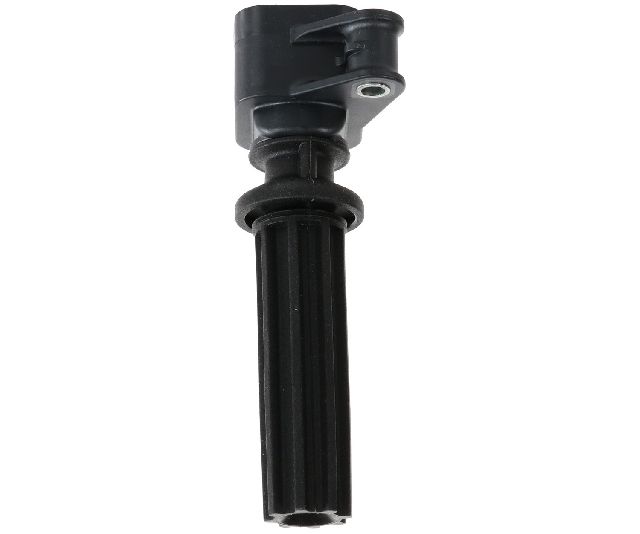
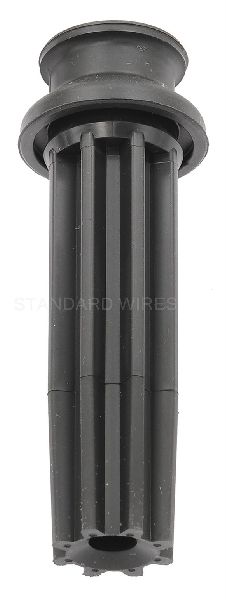
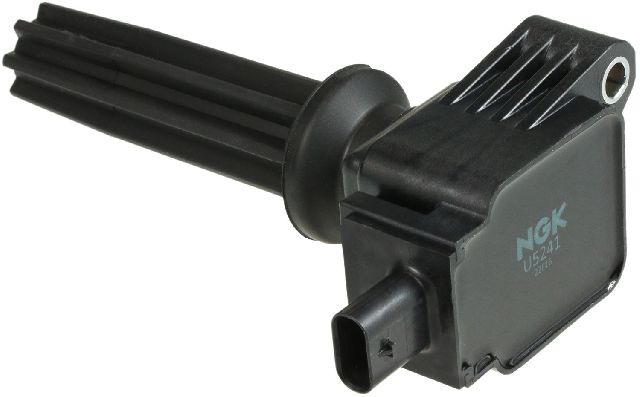
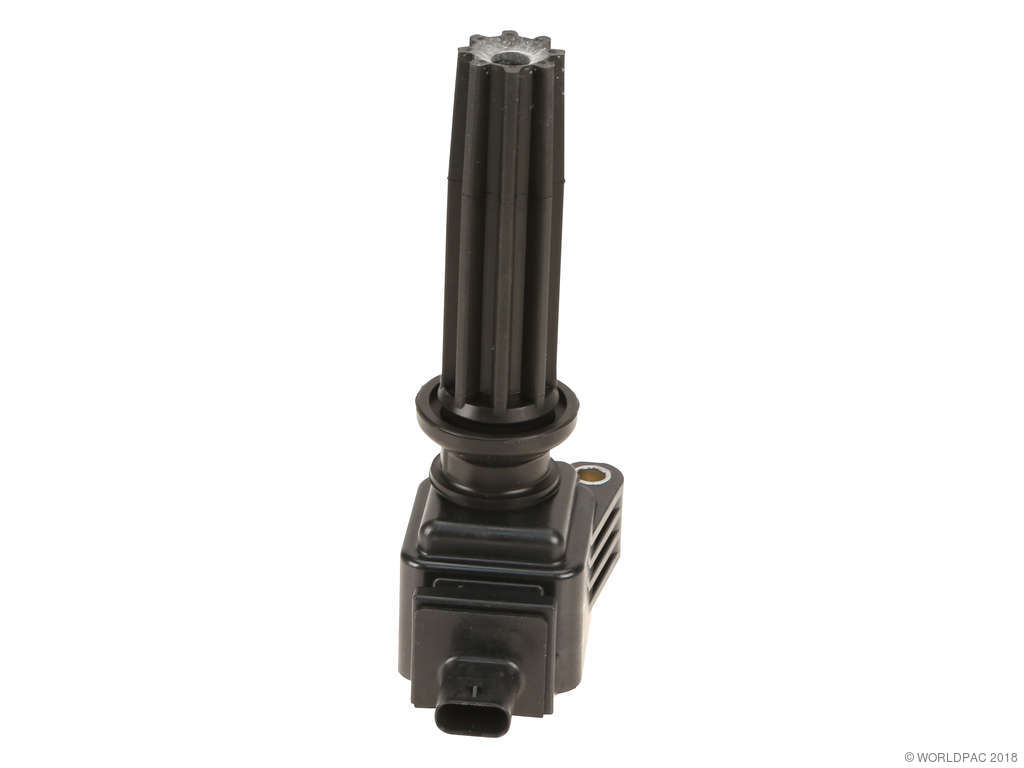
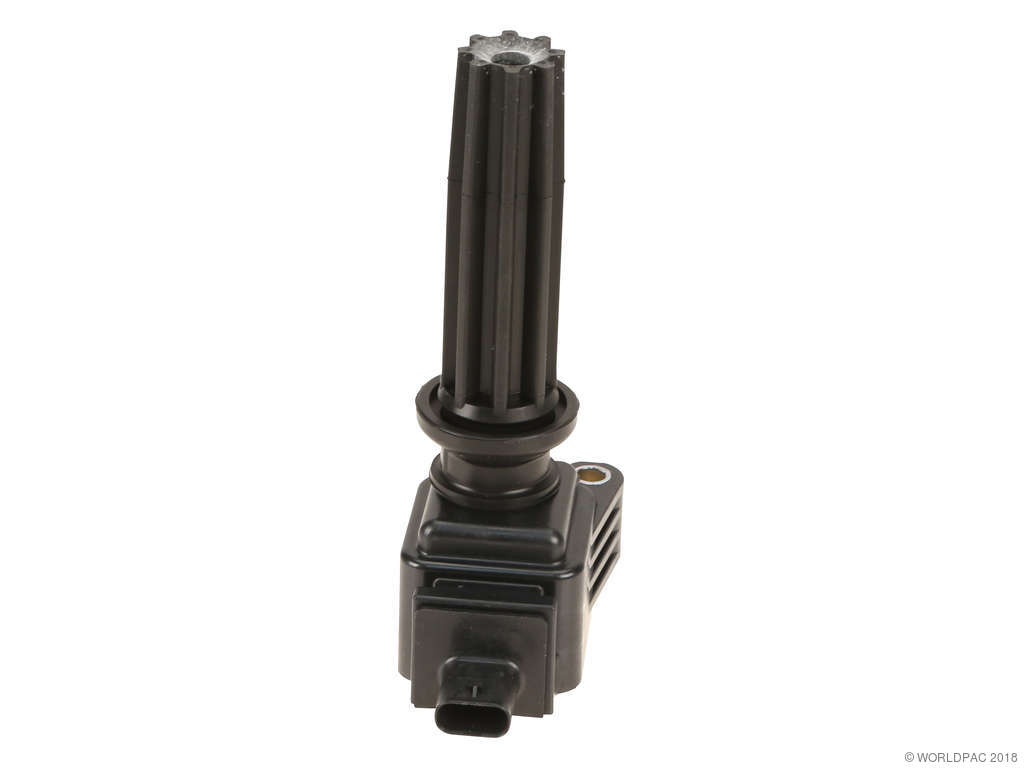
- Ignition Coil Failure 🔴 High Probability → Shop Ignition Coil Coil-on-plug ignition systems are common failure points due to constant exposure to high heat and vibration. The coils on the 2.0L EcoBoost engine are located under a cover, which can trap heat and shorten their lifespan. Failures can be intermittent at first before becoming constant.
How to confirm: Swap the ignition coil from cylinder 1 with the coil from another cylinder (e.g., cylinder 2). Clear the codes and drive the vehicle. If the code changes to P0302, the ignition coil is faulty. Cylinder 1 is the cylinder closest to the accessory belts on the passenger side of the engine.
Typical fix: Replace the faulty ignition coil. It is often recommended to replace all four coils and spark plugs at the same time for preventative maintenance, especially on higher mileage vehicles.
Est. part cost: $40-$80 per coil - Worn or Fouled Spark Plug 🔴 High Probability → Shop Spark Plug Spark plugs are a regular wear item. The 2.0L turbocharged engine requires specific iridium plugs for optimal performance and longevity. The service interval is typically around 60,000 miles, but turbocharging can lead to faster wear. An incorrect plug gap or carbon/oil fouling can prevent a strong spark.
How to confirm: After confirming the coil is good, remove the spark plug from cylinder 1. Inspect it for wear (rounded electrode), damage (cracked porcelain), or deposits (black carbon, white ash, or oil). The recommended gap is approximately 0.032 inches.
Typical fix: Replace the spark plug in cylinder 1. It is best practice to replace all four spark plugs as a set with the correct OEM-spec plugs (e.g., NGK ILTR6G8G) to ensure even performance.
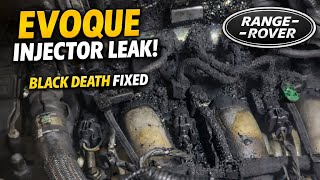
Est. part cost: $15-$30 per plug - Faulty Fuel Injector 🟡 Medium Probability → Shop Fuel Injector This is a significant known issue. Land Rover issued TSB #SSM71894 specifically to investigate fuel injector failures on this 2.0L GTDI engine, which cause misfires at cold start and rough running. [SSM71894] Owners on forums frequently discuss chasing a P0301 code, only to find the fuel injector was the root cause after replacing ignition components.
How to confirm: If ignition components are confirmed good and the misfire remains on cylinder 1, the injector is a likely suspect. A professional can perform a fuel injector balance test. A DIY method is to swap the injector with another cylinder (e.g., cylinder 2). If the code moves to P0302, the injector is bad. This is an involved job on a direct-injection engine requiring care with the high-pressure fuel system.
Typical fix: Replace the faulty fuel injector and its associated seals. Due to the known issues, some owners elect to replace all four injectors as a preventative measure.
Est. part cost: $70-$150 per injector
Rare But Worth Checking
- High-Pressure Fuel Pump Fault: TSB #LTB00730NAS1 notes that an internal fault in the high-pressure fuel pump's metering valve can cause rough running and misfire codes, including P0301. This would typically be accompanied by other fuel pressure codes like P00C6 or P228D-00 and may cause a metallic clicking or rasping noise from the engine.
- Low Engine Compression: A mechanical issue like a worn piston ring, a burnt valve, or a leaking head gasket can cause a lack of compression in cylinder 1, leading to a persistent misfire. This is less common but more serious. A compression test can diagnose this; healthy cylinders on this engine should show consistent readings (e.g., around 150 PSI) with little variation between them.
- Carbon Buildup on Intake Valves: Like many direct-injection (GDI) engines, the 2.0L EcoBoost is prone to carbon accumulation on the back of the intake valves over time. Since fuel is injected directly into the cylinder, it doesn't wash over the valves to clean them. Severe buildup on the port for cylinder 1 can restrict airflow, disrupt the air-fuel mixture, and cause a misfire.
- Vacuum Leak: A leak in a vacuum hose or intake manifold gasket near the runner for cylinder 1 can introduce unmetered air, causing a lean misfire. While often causing multiple misfires, a localized leak can primarily affect a single cylinder.
Diagnosis Steps
- Read the code with an OBD-II scanner and note any other codes present, paying close attention to fuel system or injector circuit codes (P0201, P00C6, etc.).
- Check freeze frame data to understand the engine conditions (speed, load, temperature) when the misfire occurred.
- To test the ignition coil, swap the coil from cylinder 1 with the coil from cylinder 2. Clear the codes, run the engine, and see if the code returns as P0302. If it does, the coil is bad. Cylinder 1 is closest to the belts.
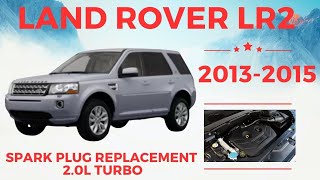
- If the misfire stays on cylinder 1, inspect the spark plug. Remove it and check for wear, carbon buildup, or damage. Ensure it's the correct type (Iridium) and gapped properly (~0.032"). Replace if in doubt, preferably as a set. 🎬 See this walkthrough for replacing spark plugs on your LR2.
- If ignition components are good, inspect the wiring and connector for the cylinder 1 ignition coil and fuel injector for any damage, corrosion, or loose connections.
- Given the TSBs for this engine, the fuel injector is now a strong suspect. Consider using a quality fuel system cleaner designed for GDI engines as a first, low-cost step. For definitive diagnosis, swapping the injector to another cylinder is the best DIY method, though it is more complex than a coil swap.
- If the misfire persists, check for vacuum leaks near the cylinder 1 intake runner using a smoke machine or by carefully spraying brake cleaner and listening for changes in engine idle.
- If all else fails, perform a compression test on cylinder 1 to rule out mechanical engine problems like bad valves or piston rings. A leak-down test can provide further detail on the source of a compression loss. 🎬 Watch: How to diagnose a misfiring engine with P0301.
Parts You'll Likely Need
- Ignition Coil
(OEM #LR078715)— This is one of the most common causes of a single-cylinder misfire and is relatively easy to replace. The original part number may be superseded by LR084889.
Trusted brands: Bosch, Delphi, NGK
OEM price range: $80-$120
Related Codes That Often Appear With This One
- P0300 — If the misfire is intermittent or begins to affect other cylinders, a P0300 (Random/Multiple Cylinder Misfire) code may appear alongside P0301.
- P0302, P0303, P0304 — These codes indicate misfires in other cylinders. Their presence suggests a systemic problem like a fuel delivery issue (e.g., HPFP fault), a major vacuum leak, or a failing coil pack in a wasted spark system (not applicable here). [LTB01101NAS4]
- P1315 — This is a manufacturer-specific code that is often stored with the P030x series codes on this vehicle, as noted in multiple TSBs. [SSM71894, LTB00730NAS1] It indicates a persistent misfire severe enough to potentially damage the catalytic converter.
- P0201 — This code indicates a fault in the fuel injector circuit for cylinder 1 (e.g., an open or short). If you see P0201 alongside P0301, it strongly points to a bad injector or a wiring problem to that injector.
Technical Service Bulletins (TSBs) & Recalls
- SSM71894: Injector faults on 2.0GTDI engine
- LTB00730NAS1: Engine MIL Illuminated With DTC P00C6 and P228D-00 or P228C-77 Stored (and related misfire codes)
- LTB01101NAS4 / LTB01101NAS3 / LTB01101NAS2: Engine runs rough, poor starting, and MIL illuminated with misfire DTCs
Platform-Specific Known Issues
- TSB #SSM71894 was issued because Land Rover Engineering wanted to investigate a high volume of fuel injector failures on the 2.0L GTDI engine causing misfires. [SSM71894]
- TSB #LTB00730NAS1 identifies that a fault in the high-pressure fuel pump can lead to rough running, hard starting, and misfire codes P0300-P0304.
- Multiple TSBs (#LTB01101NAS2, #LTB01101NAS3, #LTB01101NAS4) address conditions of rough running and poor starting that can log P0301 among other misfire codes.
Mechanic-Grade Diagnostic Values
- GDI Fuel Injector Resistance — expected: 12.5–13.5 ohms. Failure: A reading significantly higher or lower than this range suggests a faulty injector coil.
- Low Pressure Fuel Sensor Voltage at Idle — expected: ~2.3V. Failure: A significantly lower voltage, such as 1.9V, could indicate low fuel pressure from the in-tank pump or a failing sensor.
Hidden / Shadow Codes Worth Checking
- Mode $06 Misfire Counters: The onboard diagnostic system tracks misfire events for each cylinder even before they are frequent enough to set a P0301 code. Accessing Mode $06 data with an advanced scanner can show these raw counts, helping to confirm which cylinder is misfiring intermittently. (see via An advanced OBD-II scanner with Mode $06 capability. Some Ford-specific scan tools may also display this data.)
Scan Tool Commands That Help
- JLR SDD (Symptom Driven Diagnostics): Read DTCs / Live Data Monitoring — The official dealer software can provide more detailed fault descriptions and access manufacturer-specific live data PIDs (Parameter IDs) not available on generic scanners. This is useful for viewing fuel trims, injector pulse widths, and commanded vs. actual cam timing to narrow down the cause.
- JLR SDD (Symptom Driven Diagnostics): Injector Programming — If a fuel injector is replaced, the new injector's 10-digit calibration code must be programmed into the Engine Control Module (ECM) for the corresponding cylinder. Failure to do so can result in improper fueling and persistent running issues.
Wiring & Ground Locations
- Engine Ground Strap — Goes from the chassis rail located under the battery tray to a mounting point on the gearbox.. A poor engine ground can cause a variety of electrical issues, including weak spark or erratic sensor readings, which can lead to misfires. While not a primary cause, ensuring this connection is clean and tight is a crucial step in diagnosing any electrical fault.
- Battery Negative Ground — The main battery negative cable connects directly to the body chassis, near the battery itself.. This is the primary ground point for the entire vehicle's electrical system. Corrosion or a loose connection here can cause widespread, hard-to-diagnose issues, including those that might trigger a misfire code.
OEM Part Supersession History
BB5E-9F593-AA, LR024998→BB5E-9F593-BA, LR072564, BB5Z-9F593-B— Likely an internal revision to improve reliability due to the high failure rate noted in TSBs like SSM71894.
Heads up: The newer revisions are generally backward-compatible and recommended over the original part numbers.LR025599→LR030860— Supersession for the high-pressure fuel pump.
Helpful Videos
We Have This Part in Stock


The information in this article is provided for general reference and educational purposes only. Vehicle specifications, procedures, and part compatibility can vary by production date, trim level, and region. Always consult your vehicle's factory service manual and verify part numbers before purchasing or performing repairs. Safety-critical components such as airbags, seat belts, and braking systems should be installed by a qualified professional.
- Land Rover LR2:
- 🧭 Diagnostic Flowchart
- 🎬 Helpful Videos
- 🛍️ Shop This Part
- What's Unique About the 2013-2015 Land Rover LR2
- Symptoms You May Notice
- Most Likely Causes
- Rare But Worth Checking
- Diagnosis Steps
- Parts You'll Likely Need
- Related Codes That Often Appear With This One
- Technical Service Bulletins (TSBs) & Recalls
- Platform-Specific Known Issues
- Mechanic-Grade Diagnostic Values
- Hidden / Shadow Codes Worth Checking
- Scan Tool Commands That Help
- Wiring & Ground Locations
- OEM Part Supersession History
- 🎟️ Get 5% Off