

P0301 on 2010-2013 Land Rover LR4: Cylinder 1 Misfire Causes and Fixes
On a 2010-2013 Land Rover LR4 with the 5.0L V8, code P0301 is most often caused by a failed ignition coil or a worn spark plug in cylinder 1. A faulty fuel injector is the next most likely culprit. In some cases, it can be an early warning sign of a failing timing chain. Expect to pay around $50-$70 for a single OEM-quality coil and $15-$25 for a spark plug.
- P0301 is a misfire in cylinder 1, which is the front-most cylinder on the passenger side of the engine.
- The most likely cause is a bad ignition coil. Use the 'swap test' by moving the coil to another cylinder to confirm before buying parts.
- If the check engine light is flashing, pull over as soon as it is safe to do so to prevent expensive damage to the catalytic converter.
- If a new coil and spark plug don't fix the issue, the next most probable cause on this specific engine is a faulty fuel injector.
- Use only high-quality premium fuel, as Land Rover has noted that poor fuel quality can cause misfires on this engine.
What's Unique About the 2010-2013 Land Rover LR4
The 2010-2013 LR4 is equipped with the 5.0L V8 (AJ133) direct-injection engine. While this code commonly points to universal issues like ignition coils and spark plugs, this specific engine is also known for fuel injector failures that can cause the same P0301 code. Furthermore, a Land Rover Technical Service Bulletin (LTB00409NAS3) explicitly states that poor fuel quality can lead to misfires, including P0301, on these vehicles. The timing chain tensioners and guides on these early 5.0L engines are a known major failure point; a rattling noise on startup accompanied by misfire codes can be a symptom of a stretched timing chain. Lastly, as a direct-injection engine, carbon buildup on the intake valves can restrict airflow to a specific cylinder, leading to a misfire over time.
Diagnostic Flowchart
Tap your situation to follow the diagnostic path that matches what you're seeing on this vehicle.
Symptoms You May Notice
- Rough or vibrating idle, especially on cold start
- Engine hesitation or stumbling during acceleration
- Flashing Check Engine Light
- Reduced engine power and "Restricted Performance" message on the dash
- Noticeable loss of power
- Increased fuel consumption
- Smell of gasoline from the exhaust
- Replacing all ignition coils and spark plugs when only one coil was faulty. The 'swap test' is crucial to save money.
- Replacing oxygen sensors. A misfire can cause an O2 sensor code, but the O2 sensor is rarely the root cause of the misfire itself.
Most Likely Causes
- Faulty Ignition Coil 🔴 High Probability → Shop Ignition Coil Ignition coils are a common wear item on the 5.0L V8 due to high heat cycles under the engine cover. Aftermarket coils have been reported by owners to fail prematurely, making OEM or OEM-supplier parts the recommended choice.
How to confirm: Swap the ignition coil from cylinder #1 with another cylinder (e.g., cylinder #3, the next one back on the same bank). Clear the codes and run the engine. If the code changes to P0303, the coil is faulty.
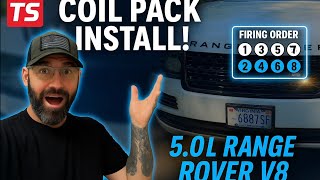
Typical fix: Replace the faulty ignition coil. It is best practice to replace the spark plug at the same time. 🎬 Watch: Step-by-step guide for replacing coils and spark plugs. Many owners recommend using genuine OEM (FoMoCo insignia) or OEM-supplier (e.g., Denso) coils for longevity.
Est. part cost: $50-$130 - Worn or Fouled Spark Plug 🔴 High Probability → Shop Spark Plug
How to confirm: After ruling out the coil, swap the spark plug from cylinder #1 with another cylinder. If the misfire code follows the plug, the plug is bad. Visually inspect the plug for wear, oil, or carbon fouling. Oil on the plug threads could indicate a leaking valve cover gasket.
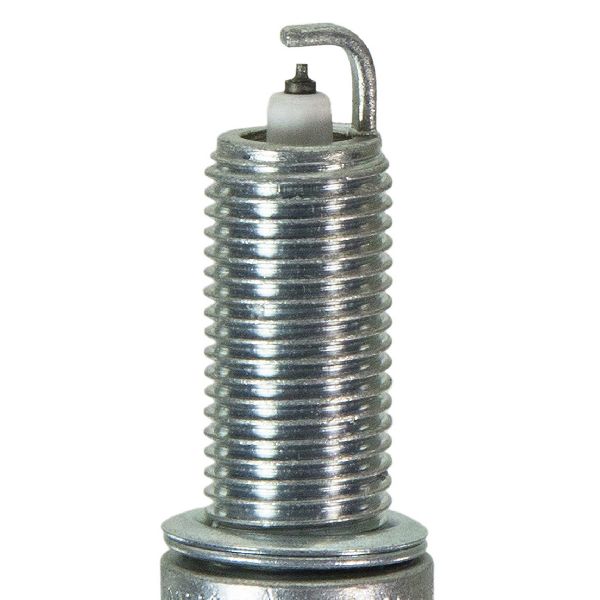
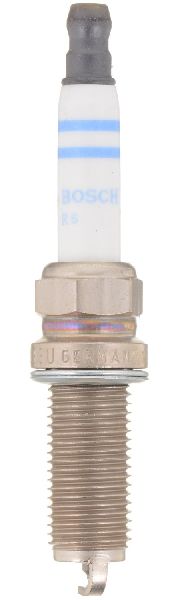
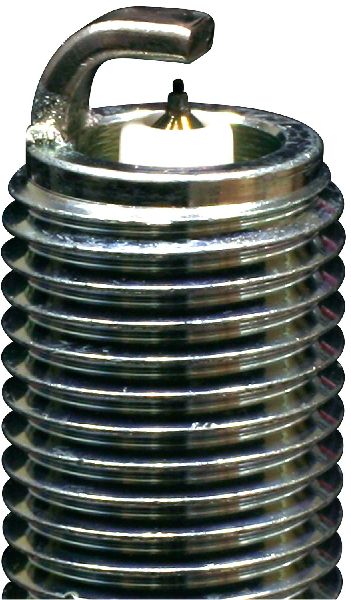
Typical fix: Replace the spark plug. Land Rover specifies a 105,000-mile interval, but plugs can fail earlier. The OEM plugs are typically NGK Laser Iridium. It is recommended to replace all 8 spark plugs as a set if they are near the end of their service life.
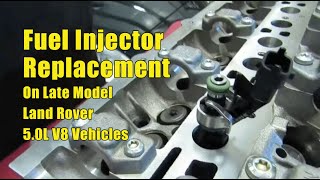
Est. part cost: $15-$25 per plug - Clogged or Faulty Fuel Injector 🟡 Medium Probability → Shop Fuel Injector The direct injection (GDI) fuel injectors on the 5.0L V8 are a known failure point. They can become clogged from fuel contaminants or fail electronically, leading to a misfire. One owner noted that a mechanic suggested improper injector seal replacement during other service could cause a leak into the cylinder, causing a misfire on cold starts.
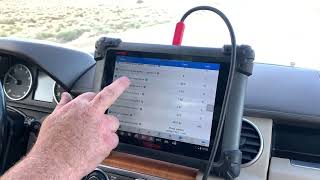
How to confirm: If swapping the coil and plug does not resolve the P0301 code, the injector is a strong suspect. A professional can 🎬 See how to diagnose a failing fuel injector misfire. perform an injector balance test. A DIY method involves using a mechanic's stethoscope to listen for a consistent 'clicking' from the injector. Removal for cleaning or testing is difficult as they can become seized in the cylinder head.
Typical fix: Replace the fuel injector for cylinder #1. This is an involved job that requires special tools, including a specific slide hammer for removal. Due to the difficulty, some owners elect to replace all 4 injectors on the same bank at once. New seals must be properly sized and installed. The new injector's calibration code must be programmed into the ECM using Land Rover's diagnostic software.
Est. part cost: $70-$180 - Poor Fuel Quality ⚪ Low Probability Land Rover issued TSB #LTB00409NAS3 specifically mentioning that poor fuel quality can cause misfire codes on this engine. This was a particular concern for owners who may have used fuel from cans in dusty environments.
How to confirm: This is difficult to confirm directly but can be suspected if misfires appear after refueling at a questionable station. Trying a different brand of premium fuel and adding a reputable fuel system cleaner like BG 44K or Techron is a good first step.
Typical fix: Use a bottle of high-quality fuel system cleaner and fill the tank with premium, top-tier gasoline.
Est. part cost: $20-$30
Rare But Worth Checking
- Worn Timing Chain Components: The timing chains on 2010-2013 5.0L V8s are a known weak point, specifically the tensioner guides which wear down. This can cause the timing to jump, leading to misfires. A key symptom is a metallic rattling sound from the front of the engine for a few seconds on a cold startup. If you hear this, stop driving the vehicle and have it inspected immediately to prevent catastrophic engine failure.
- Vacuum Leak: A leak in the intake manifold gasket or a vacuum hose near cylinder #1 can lean out the mixture and cause a misfire. This would typically be accompanied by other codes (like P0171 - System Too Lean Bank 1) or affect multiple cylinders on the same bank.
- Low Engine Compression: This is a more serious mechanical issue, such as a worn piston ring, a burnt valve, or a leaking head gasket. A compression test is needed to diagnose this. This is an unlikely cause for a single-cylinder misfire without other symptoms like smoke from the exhaust or coolant loss.
- Intake Valve Carbon Buildup: As a direct injection engine, fuel does not spray over the intake valves to clean them. Over time, oil vapor from the PCV system can bake onto the valves, restricting airflow and causing a misfire. This is more likely on higher-mileage engines and may require walnut shell blasting to clean.
Diagnosis Steps
- Read the codes with an OBD-II scanner. Note any other codes present, especially P0300, P0316, or P0171.
- Identify Cylinder #1: On the 5.0L V8, this is the front-most cylinder on the passenger side.
- Perform the 'Swap Test' for the ignition coil: Swap the coil from cylinder #1 with the coil from cylinder #3 (the next one back on the same bank).
- Clear the codes, start the engine, and drive briefly. Re-scan for codes.
- If the code is now P0303, the ignition coil is bad. Replace it.
- If the code remains P0301, the coil is likely good. Proceed to swap the spark plug from cylinder #1 with cylinder #3.
- Clear codes and test again. If the code moves to P0303, the spark plug was the issue. Replace it.
- If the code remains P0301 after swapping both the coil and plug, the issue is likely not in the ignition system.
- Listen for a rattling noise from the front of the engine on cold startup. If present, investigate the timing chain immediately. 🎬 Watch: Identifying timing chain guide wear and rattle issues.
- Inspect the wiring and connector for the ignition coil and fuel injector on cylinder #1 for damage or corrosion.
- If ignition parts are ruled out, the next most likely cause is the fuel injector. Consider using a high-quality fuel system cleaner first.
- If the problem persists, the fuel injector may need to be replaced. This is an advanced DIY job requiring special tools and subsequent programming of the new injector into the ECM.
- If all else fails, a professional diagnosis is needed to check for vacuum leaks (smoke test) or perform a compression test to rule out mechanical engine problems.
Parts You'll Likely Need
- Ignition Coil
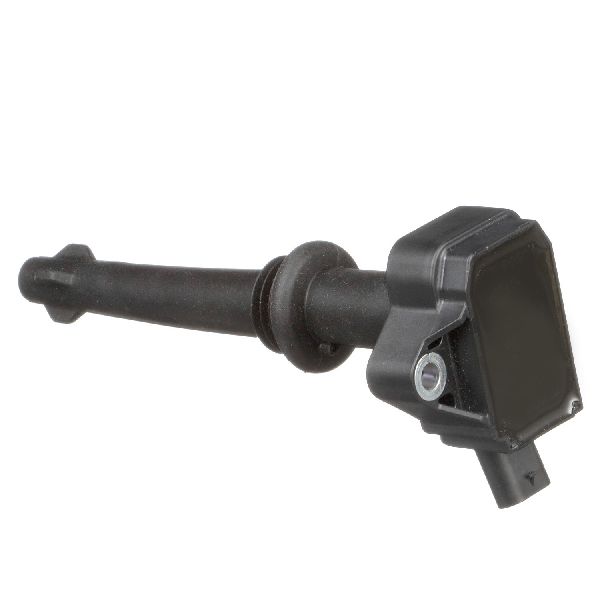
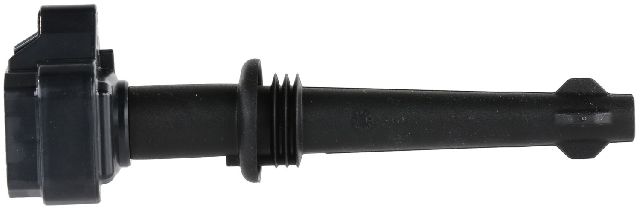
(OEM #LR010687)— This is the most common failure item for a single-cylinder misfire on the LR4 5.0L V8.
Trusted brands: Land Rover (Genuine), Denso, Bosch
OEM price range: $70-$130
Aftermarket price range: $40-$80 - Spark Plug
(OEM #LR025606)— Spark plugs are a routine maintenance item and can cause misfires when worn or fouled. The original part is often an NGK Iridium plug.
Trusted brands: NGK, Bosch
OEM price range: $20-$30
Aftermarket price range: $15-$25
Related Codes That Often Appear With This One
- P0300 — If the misfire is intermittent or starts to affect other cylinders, a P0300 (Random/Multiple Cylinder Misfire) code may appear alongside P0301.
- P0316 — Indicates a misfire was detected within the first 1,000 engine revolutions. This is often seen with other P030x codes and is mentioned in TSB LTB00409NAS3.
- P0303, P0305, P0307 — Misfire codes for other cylinders on the same bank (Bank 1, passenger side). If seen together, this could point to a more systemic issue like a vacuum leak on that bank or a clogged catalytic converter.
- P0171 — System Too Lean (Bank 1). A vacuum leak near cylinder #1 or a severely clogged fuel injector on that cylinder can cause this code to appear with P0301.
Technical Service Bulletins (TSBs) & Recalls
- LTB00409NAS3
Platform-Specific Known Issues
- A Technical Service Bulletin (LTB00409NAS3) was issued by Land Rover for potential misfire codes (P0301-P0308) caused by poor fuel quality. The bulletin suggests this can cause rough idle and MIL illumination.
Mechanic-Grade Diagnostic Values
- High-Pressure Fuel Rail Pressure (Live Data) — expected: Should be no lower than 2,000 PSI on cold start, stabilizing around 500 PSI at warm idle. Should rise back toward 2,000 PSI when held at 3,000 RPM.. Failure: Significantly lower pressure than commanded, or pressure that does not increase with RPM, may indicate a failing High-Pressure Fuel Pump (HPFP).
- Low-Pressure Fuel System Pressure (Live Data) — expected: Should be around 105 PSI during cranking/high idle, dropping to a stable 79 PSI once the engine is warm.. Failure: Pressure below 65 PSI when warm indicates a potential issue with the in-tank low-pressure fuel pump.
- High-Pressure Fuel Rail Sensor Voltage — expected: Approximately 3.0-5.0 Volts on a cold engine, dropping to around 2.3 Volts when hot.. Failure: A reading of 4.0 Volts or higher on a warm engine can indicate an internally shorted sensor.
Hidden / Shadow Codes Worth Checking
- Mode $06, Test ID $A2-$AF: This is not a specific code but a diagnostic mode. Test IDs $A2 through $AF correspond to misfire counters for cylinders 1 through 8. A technician can view these counters to see if misfires are occurring even if they aren't frequent enough to trigger a P0301 code. (see via Requires an advanced OBD-II scanner capable of displaying Mode $06 data.)
Scan Tool Commands That Help
- JLR SDD (Symptom Driven Diagnostics): Injector Programming / Calibration — This function is mandatory after replacing a fuel injector. The 10-digit calibration code from the new injector must be programmed into the Engine Control Module (ECM) to ensure correct fuel delivery.
- JLR SDD (Symptom Driven Diagnostics): Power Balance Test — A power balance test can be used to identify which cylinder is contributing least to the engine's operation, helping to confirm the location of the misfire without having to swap components physically. It measures the drop in RPM when each cylinder's fuel injector is disabled one by one.
Wiring & Ground Locations
- Main Engine Ground Strap — Runs from the vehicle's firewall to the back of the engine block.. A corroded or loose main engine ground can cause a host of erratic electrical issues, including weak spark or incorrect sensor readings, which can lead to misfire codes. Ensuring this connection is clean and tight is a crucial step in diagnosing any electrical fault.
- Transfer Case Ground Strap — A smaller ground strap connected to the transfer case.. While less likely to cause a specific cylinder misfire, a faulty secondary ground can contribute to overall electrical noise and instability in the vehicle's systems. It has been noted by owners as a point of potential failure.
Real Owner Repair Stories
- Land Rover and Range Rover Forums (2012 Land Rover LR4 5.0L V8) — Rough idle on cold startup, hesitation under load, flashing check engine light, and 'Restricted Performance' mode with code P0301.
❌ Tried (didn't work) Replacing the spark plug on cylinder 1.
✅ What actually fixed it Replacing the ignition coil on cylinder 1. The owner noted the failed coil was an aftermarket part less than a year old and recommended using OEM (FoMoCo insignia) coils for reliability. - YouTube User 'Fix it Angel' (2011 Land Rover LR4 5.0L V8) — Multiple misfire codes on bank 2 (P0302, P0304, P0306) after reassembling the engine.
❌ Tried (didn't work) Replacing all spark plugs., Swapping ignition coils between cylinders, which did not change the misfire location.
✅ What actually fixed it Replacing all four fuel injectors on bank 2. The owner confirmed that after replacement, the misfire codes were resolved. - Land Rover and Range Rover Forums (2011 Land Rover LR4 5.0L V8) — After a DIY timing chain replacement, the engine had misfires on all cylinders on bank 2 and camshaft correlation codes.
❌ Tried (didn't work) Re-doing the timing job to correct a one-tooth error on the exhaust cam., Checking all electrical connections and vacuum lines.
✅ What actually fixed it A compression test revealed zero compression on bank 2. The cylinder head was removed and a machine shop confirmed all 16 valves on that bank were bent from the initial timing failure. Replacing the valves and rebuilding the head resolved the issue.
OEM Part Supersession History
LR079542→LR105439— Part update/revision by the manufacturer.
Heads up: LR105439 is the current OEM replacement fuel injector by Bosch for the 5.0L V8 engine.
Model Year Variations Within This Range
- 2010-2013: The AJ133 engines in this range were fitted with earlier-design timing chain tensioner guides made of aluminum. The steel plunger of the tensioner could wear a groove into the aluminum guide over time, leading to slack in the chain and potential timing jump. Later versions of the engine used an updated guide with a steel insert to prevent this wear. While the P0301 code isn't different, the underlying risk of timing failure is higher on these earlier models.
Helpful Videos
We Have This Part in Stock

The information in this article is provided for general reference and educational purposes only. Vehicle specifications, procedures, and part compatibility can vary by production date, trim level, and region. Always consult your vehicle's factory service manual and verify part numbers before purchasing or performing repairs. Safety-critical components such as airbags, seat belts, and braking systems should be installed by a qualified professional.
- Land Rover LR4:
- 🧭 Diagnostic Flowchart
- 🎬 Helpful Videos
- 🛍️ Shop This Part
- What's Unique About the 2010-2013 Land Rover LR4
- Symptoms You May Notice
- Most Likely Causes
- Rare But Worth Checking
- Diagnosis Steps
- Parts You'll Likely Need
- Related Codes That Often Appear With This One
- Technical Service Bulletins (TSBs) & Recalls
- Platform-Specific Known Issues
- Mechanic-Grade Diagnostic Values
- Hidden / Shadow Codes Worth Checking
- Scan Tool Commands That Help
- Wiring & Ground Locations
- Real Owner Repair Stories
- OEM Part Supersession History
- Model Year Variations Within This Range
- 🎟️ Get 5% Off