

P0301 on 2007-2012 Lexus ES 350: Cylinder 1 Misfire Causes and Fixes
P0301 on a 2007-2012 ES 350 almost always points to a bad ignition coil or a worn spark plug on Cylinder 1. The most effective diagnostic is to swap the coil from Cylinder 1 with one from the front bank (e.g., Cylinder 2) to see if the code follows. Cylinder 1 is on the rear bank against the firewall, making access difficult. Expect to pay around $60-$90 for a quality Denso ignition coil.
- P0301 specifically points to a misfire in Cylinder 1.
- The most likely cause is a bad ignition coil, followed by a worn spark plug.
- Always perform the 'coil swap test' before buying parts. Swap the Cylinder 1 coil with the Cylinder 2 coil to see if the code moves to P0302.
- Cylinder 1 is on the rear bank against the firewall, making access difficult. Plan for extra time or labor costs if the spark plug or injector needs service.
- If the check engine light is flashing, stop driving as soon as safely possible to prevent expensive catalytic converter damage.
What's Unique About the 2007-2012 Lexus ES 350
On the 2GR-FE engine in your ES 350, the cylinders are arranged in two banks. Cylinder 1 is part of the rear bank (Bank 1), which is positioned against the firewall. This location makes accessing the ignition coil and spark plug for Cylinder 1 significantly more difficult than for the front cylinders (2, 4, and 6), often requiring the removal of the upper intake plenum for service. This accessibility issue is the primary challenge when diagnosing and fixing a P0301 code on this vehicle and adds several hours of labor to the repair if the issue is not a front-bank component that can be easily swapped.
Symptoms You May Notice
- Rough or shaky idle
- Hesitation or stumbling during acceleration
- Noticeable loss of engine power
- Check Engine Light is on and steady
- Check Engine Light is flashing (under load or acceleration)
- VSC (Vehicle Stability Control) light is on
- Decreased fuel economy
- Smell of unburned gasoline from the exhaust
- Replacing all six spark plugs and coils without first confirming the cause of the misfire. The 'swap test' is a crucial first step to avoid unnecessary expense and effort, as it can isolate a bad coil without removing the intake plenum.
- Assuming a bad fuel injector before thoroughly testing the ignition system (coil and plug), which are far more common failure points.
Most Likely Causes
- Failed Ignition Coil 🔴 High Probability → Shop Ignition Coil Ignition coils are a common wear item on most modern engines, and the 2GR-FE is no exception. Heat cycles eventually cause the internal windings to fail, leading to a weak or no-spark condition. This is the most frequent cause of single-cylinder misfires on this platform.
How to confirm: The most reliable method is the 'swap test.' Swap the ignition coil from Cylinder 1 with the coil from an easily accessible front cylinder (like Cylinder 2). Clear the codes and drive. If the code changes to P0302, the ignition coil is faulty. This confirms the coil is the problem without requiring plenum removal for initial diagnosis.
Typical fix: Replace the failed ignition coil. It is often recommended to replace the corresponding spark plug at the same time, especially if access is difficult.
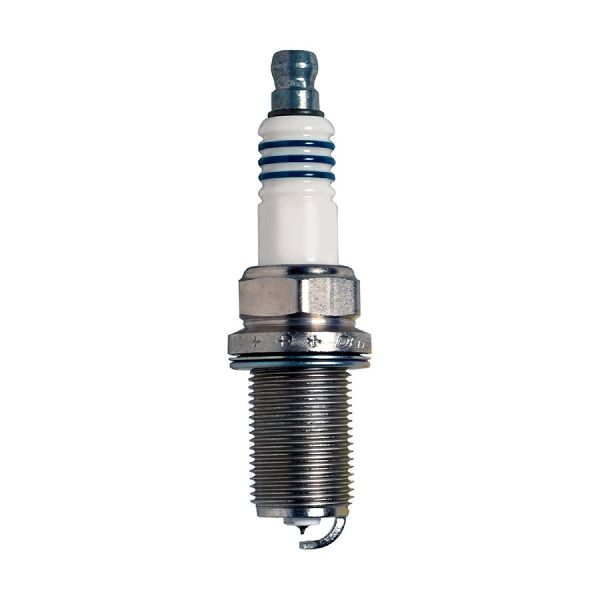
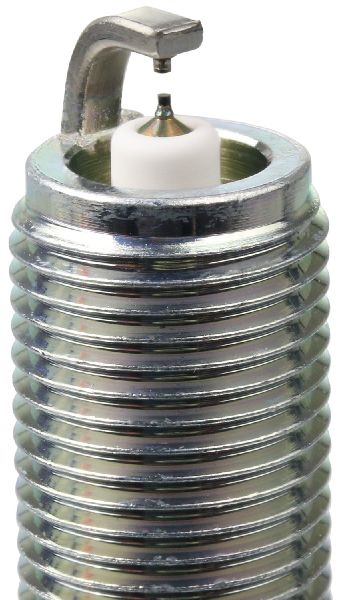
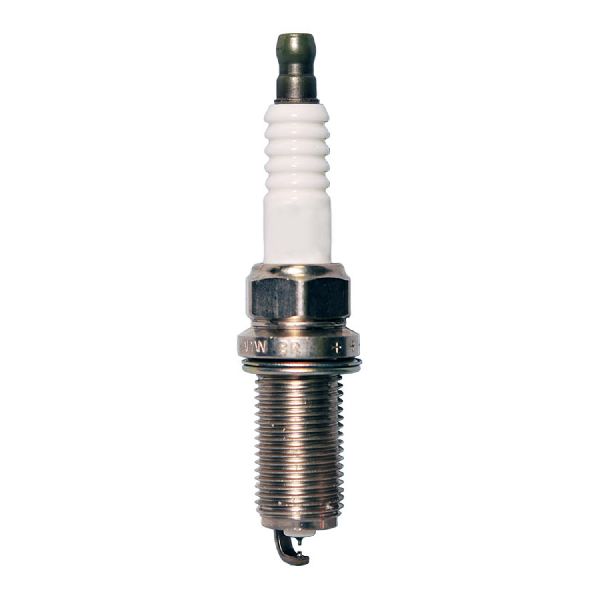
Est. part cost: $60-$90 - Worn or Fouled Spark Plug 🟡 Medium Probability → Shop Spark Plug Spark plugs have a finite service life, typically around 100,000-120,000 miles for the OEM Iridium type. If the vehicle is past this interval, the original plugs are likely worn. An oil leak from the valve cover gasket can also foul the plug, causing a misfire. In some cases, plugs can fail prematurely.
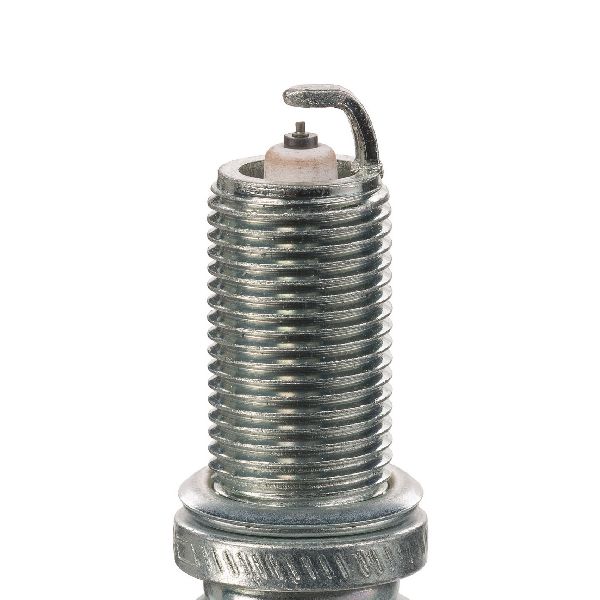
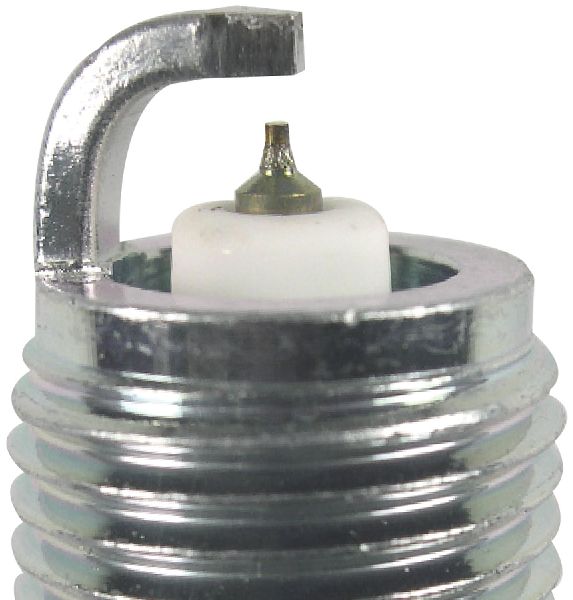
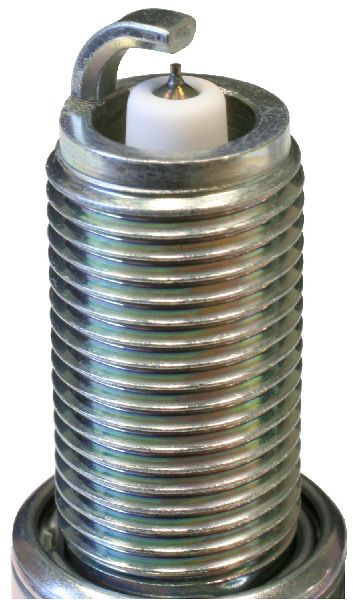
How to confirm: After confirming the coil is good via the swap test, the spark plug is the next suspect. This requires removing the intake plenum to access Cylinder 1. Inspect the plug for a worn electrode, heavy carbon buildup, or oil fouling. Compare it to a new plug.
Typical fix: Replace the spark plug. Since accessing the rear bank is labor-intensive, it is highly recommended to replace all three rear spark plugs (1, 3, 5) and their intake gaskets at the same time to avoid future repeat labor.
Est. part cost: $10-$20 per plug - Clogged or Faulty Fuel Injector ⚪ Low Probability → Shop Fuel Injector While less common than ignition issues, fuel injectors can become clogged with deposits over time, leading to an improper fuel spray pattern and a lean misfire. This can sometimes happen after using a fuel system cleaner that dislodges debris.
How to confirm: A mechanic can perform a fuel injector balance test. A DIY method is to listen to the injector with a mechanic's stethoscope; it should have a consistent, sharp clicking sound, similar to the other injectors. You can also swap injectors between cylinders, but this is a labor-intensive task.
Typical fix: Replace the faulty fuel injector. This is an involved job, especially on the rear bank, requiring plenum removal.
Est. part cost: $80-$150
Rare But Worth Checking
- Intake Manifold Gasket Leak: → Shop Engine Intake Manifold A vacuum leak near the intake runner for Cylinder 1 can lean out the air/fuel mixture enough to cause a misfire. This is best diagnosed with a smoke test after the primary causes are ruled out.
- Low Engine Compression: This is a serious mechanical issue (e.g., a bad valve, worn piston rings, or head gasket failure). If ignition and fuel systems check out, a compression test is the next step to rule this out. A blown head gasket is a known, though not frequent, issue on some 2007 models.
- Broken wire in ignition coil harness: → Shop Ignition Coil In some high-mileage cases, the wiring leading to the ignition coil connector can break internally, causing an intermittent connection and misfire. One owner on ClubLexus reported this as the final solution after replacing plugs and coils.
Diagnosis Steps
- Read the code with an OBD-II scanner to confirm P0301 and check for any other codes.
- Note if the Check Engine Light is flashing and if the VSC light is on. If flashing, avoid heavy acceleration to protect the catalytic converter.
- Identify Cylinder 1. On the ES 350's transverse 2GR-FE engine, the rear bank (against the firewall) contains cylinders 1, 3, and 5, from passenger side to driver's side. The front bank (near the radiator) contains 2, 4, and 6.
- Perform the 'Ignition Coil Swap Test'. Swap the ignition coil from Cylinder 1 (rear bank) with the coil from Cylinder 2 (front bank). This requires removing the engine cover and is the most critical diagnostic step.
- Clear the codes with the scanner, then start the engine and drive until the Check Engine Light returns.
- Re-scan the codes. If the code is now P0302, the ignition coil you moved is faulty and needs replacement. You have successfully diagnosed the problem.
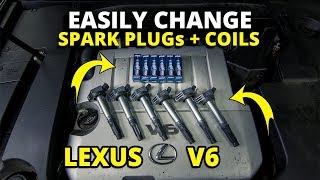
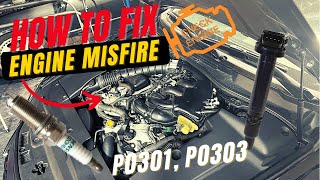
- If the code remains P0301, the coil is likely good. The next most probable cause is the spark plug. This will require removing the upper intake plenum 🎬 Watch this walkthrough to replace coils and plugs in under an hour. to access the rear bank.
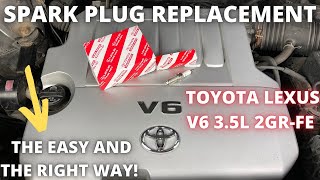
- Once the plenum is removed, inspect the Cylinder 1 spark plug for wear, fouling, or damage. If it looks bad, replace it. It is highly advisable to replace all three rear plugs (1, 3, 5) and the plenum gaskets at this time 🎬 Watch a detailed guide on changing spark plugs on the 2GR-FE. to avoid repeat labor.
- If the plug and coil are confirmed good but the P0301 persists, the issue may be the fuel injector, a wiring fault, or a mechanical problem. Further diagnostics like a fuel injector balance test, checking for wiring continuity, or an engine compression test are required.
Parts You'll Likely Need
- Ignition Coil
(OEM #90919-A2007 (supersedes 90919-02250, 90919-02251, 90919-02255))— This is the most frequent cause of a P0301 misfire on the 2GR-FE engine. The part number has been updated several times.
Trusted brands: Denso (OEM), NGK, Yec Flamma
OEM price range: $80-$110
Aftermarket price range: $50-$80 - Iridium Spark Plug
(OEM #90919-01247 (Denso FK20HR11))— A worn or fouled spark plug is the second most common cause. Always use high-quality Iridium plugs as specified by the manufacturer for longevity and performance.
Trusted brands: Denso (OEM), NGK
OEM price range: $15-$25
Aftermarket price range: $10-$18 - Intake Plenum Gasket Set
(OEM #17176-0P021 (or kit FEL-PRO MS 96996))— This is required if you need to remove the upper intake plenum to access the rear bank of cylinders for spark plug, coil, or injector replacement. These are one-time use gaskets.
Trusted brands: Fel-Pro, Mahle, Toyota OEM
OEM price range: $30-$50
Aftermarket price range: $15-$30
Related Codes That Often Appear With This One
- P0300 — If the misfire is intermittent or affects multiple cylinders, a P0300 (Random/Multiple Cylinder Misfire) may be stored alongside the P0301.
- P0303, P0305 — If the cause is related to something affecting the entire rear bank (like a vacuum leak from the intake plenum or a failing Bank 1 VVT-i component), you may see misfire codes for the other rear cylinders as well.
- P0351 — This code specifically indicates a malfunction in the ignition coil primary/secondary circuit for Cylinder 1. If you see this code along with P0301, it strongly points to a bad ignition coil or a wiring issue to that coil.
Technical Service Bulletins (TSBs) & Recalls
- L-SB-0044-19: While for newer models (2016-2019 RX450h), this TSB addresses misfire codes P0301-P0306 and involves replacing an ignition coil and reprogramming the ECM, showing that Toyota/Lexus continues to address misfire logic.
- Limited Service Campaign (LSC) for VVT-i Oil Line: Not directly a cause of P0301, but a critical issue for this engine. A rubber oil line was prone to rupturing, causing catastrophic oil loss. The fix was to replace it with an all-metal line (P/N 15772-31030). Owners should verify this has been done.
Platform-Specific Known Issues
- The primary vehicle-specific issue is the difficult access to the rear cylinder bank (1, 3, 5) where Cylinder 1 is located. Servicing these cylinders requires removal of the upper intake manifold, which adds significant time and complexity to the repair compared to the easily accessible front bank.
- A ClubLexus forum member noted that even after replacing plugs and coils, the misfire persisted until a broken wire in the harness leading to the cylinder 1 coil was found and repaired, indicating that wiring can be a failure point on higher mileage examples.
Mechanic-Grade Diagnostic Values
- Fuel Pressure at Idle — expected: 304 to 343 kPa (44 to 50 psi). Failure: Pressure below 44 psi can indicate a weak fuel pump, clogged filter, or faulty pressure regulator.
- Fuel Injector Resistance — expected: 11.6 to 12.4 Ω at 20°C (68°F). Failure: Resistance outside this range indicates a faulty injector.
- Ignition Coil Primary Resistance — expected: ~0.5 Ω ± 0.1Ω. Failure: A reading significantly outside this range suggests a faulty primary winding.
- Ignition Coil Secondary Resistance — expected: ~9.5 to 12 kΩ. Failure: A reading outside this range suggests a faulty secondary winding.
- ECM Terminals for Cylinder 1 Ignition Coil — expected: IGT1 (Ignition Timing) signal from ECM to igniter. IGF1 (Ignition Confirmation) signal from igniter back to ECM.. Failure: Absence of a pulse signal on the IGT1 wire during cranking points to an ECM or wiring issue. Absence of an IGF1 signal with a good coil and IGT signal points to a wiring or igniter fault.
Hidden / Shadow Codes Worth Checking
- Mode $06 Misfire Counts: While not a hidden code, advanced scanners and Techstream can access Mode $06 data, which includes raw misfire counts for each cylinder before they are high enough to trigger a P030x code. This is invaluable for detecting intermittent or developing misfires. (see via Use an OBD-II scanner with Mode $06 capability or Toyota's Techstream software and navigate to the misfire monitor data.)
Scan Tool Commands That Help
- Techstream: Active Test: Control the Fuel Pump / Speed — This command allows you to turn on the fuel pump without starting the engine. It is used to verify fuel pump operation and to pressurize the system for a fuel pressure test, helping to rule out fuel delivery issues as a cause for the misfire.
- Techstream: Active Test: Cylinder Cut Test — This function allows the technician to disable individual fuel injectors one by one. When Cylinder 1's injector is disabled, if there is no change in engine RPM or smoothness, it confirms that Cylinder 1 was not contributing, pinpointing the misfire without swapping parts.
Wiring & Ground Locations
- IGT1 — This is the ignition trigger signal wire for Cylinder 1, running from the ECM to the ignition coil's built-in igniter.. A break or short in this wire will prevent the ECM's command from reaching the coil, causing a no-spark condition on Cylinder 1. Probing this wire for a pulse signal during cranking is a definitive way to check if the ECM is commanding the coil to fire.
- Engine Ground Points — Multiple ground points are located on the engine block and cylinder heads. For the 2GR-FE, key grounds are often located near the cylinder heads and on the intake manifold studs.. A loose or corroded ground connection for the ignition coil harness can cause a weak or intermittent spark, leading to a misfire. When diagnosing an elusive P0301, especially if other electrical issues are present, checking and cleaning the main engine grounds is a crucial step.
- Cylinder 1 Injector Connector — On the fuel rail, connected to the fuel injector for Cylinder 1 (rear bank, passenger side).. The wiring and connector for the fuel injector can be damaged by rodents, as it is often made with soy-based wire insulation. This damage can cause an open or short in the injector circuit, leading to a fuel-related misfire on that specific cylinder.
Real Owner Repair Stories
- YouTube user 'Check engine VSC light' (2008 Lexus ES 350) — Check engine light and VSC light on, rough running.
❌ Tried (didn't work) Swapped ignition coil from cylinder #4 to #6 (misfire was on #4 in this case, but the principle is identical)., Replaced the spark plug in cylinder #4.
✅ What actually fixed it The user discovered that the wires on the fuel injector connector for the misfiring cylinder had been chewed by rodents. Replacing the damaged connector resolved the P0304 code. - BobIsTheOilGuy forum user (2023 Lexus ES350) — Multiple warning lights on the dash, including check engine light. Dealer scan revealed multiple misfire codes.
❌ Tried (didn't work) Owner suspected rodent damage or sensor failure.
✅ What actually fixed it The dealer determined the root cause was a recent fill-up with bad gasoline. The knock sensor values were extremely low. The issue was resolved after the bad fuel was consumed and the tank was refilled with known good fuel.
OEM Part Supersession History
90919-02251, 90919-02255→90919-A2007, which is further superseded by 90919-A2013— Part revisions by the manufacturer to improve reliability or change suppliers.
Heads up: The newer part numbers (e.g., 90919-A2007, 90919-A2013) are direct replacements for the older numbers on this vehicle. There are no known incompatibility issues when using the latest OEM revision.
Diagnostic Flowchart
Other Known Issues on This Vehicle
Issues unrelated to this code that are worth knowing about as an owner of this generation:
- VVT-i Oil Line Rupture 🔴 High — Common on 2007-2009 models not yet serviced. Failure can occur at any time, leading to rapid oil loss and catastrophic engine failure. (Ref: Toyota/Lexus Limited Service Campaign (LSC) 90K.)
- Melting/Sticky Dashboard 🟡 Low — Very common on 2007-2008 models, especially in hot climates. The dash surface becomes sticky, shiny, and may crack. (Ref: Lexus Warranty Enhancement Program ZLD (expired May 2017).)
- Transmission Shift Flare/Hesitation 🟠 Medium — Reported by some owners, especially on early 2007 models. Can manifest as a hesitation or RPM flare during the 2-3 or 3-4 shift, particularly when cold. (Ref: A TCM software update was available from dealers, but effectiveness varies. Not a formal recall.)
- Water Pump Failure 🟠 Medium — The water pump is a known wear item on the 2GR-FE, often failing between 80,000 and 120,000 miles. Symptoms include coolant leaks from the weep hole, overheating, or a grinding noise.
Used vs. New Parts: Buying Guide for This Vehicle
When a used part is the smart pick: For this repair, a used ignition coil from a reputable auto recycler can be a cost-effective option, especially for DIY diagnosis. If a coil swap confirms the fault, replacing it with a known-good used coil is a reasonable short-term fix. However, given the high labor to access the rear bank, installing a new part is often wiser for long-term reliability.
Donor-vehicle mileage cap: roughly under 80000 miles for the part to have meaningful remaining life.
What to inspect on the donor part:
- Check for cracks or damage to the plastic housing of the ignition coil.
- Ensure the electrical connector pins are clean and free of corrosion.
- Ask for the mileage of the donor vehicle; lower is always better.
- Avoid parts from vehicles that show signs of major engine damage or fire.
OEM-only on this vehicle (don't cheap out):
- Spark Plugs: The cost savings on aftermarket plugs are minimal, and OEM Denso or NGK Iridium plugs are proven to last the intended 100k+ mile service interval. The high labor cost for replacement makes using a top-tier part essential.
- Fuel Injectors: While less common to fail, if an injector is needed, a new OEM or Denso part is recommended over a used one due to the risk of unseen internal clogging or wear on the used part.
Aftermarket brands forum-validated for this vehicle:
- Denso (OEM for Toyota/Lexus)
- NGK
Brands owners have reported issues with on this vehicle:
- Unnamed or 'white-box' ignition coils and spark plugs from online marketplaces. While cheap, their failure rate is significantly higher, and a premature failure on a rear bank cylinder would require repeating a very labor-intensive job.
Real Owner Stories
Aggregated from forums and TSBs cited above. Mileages and costs reflect what owners reported in those sources.
2013 Lexus ES 350 2GR-FE
Symptoms: Recurring cylinder #1 misfire.
What fixed it: Replacing the spark plug in cylinder 1 (though the plug appeared to fail without an obvious root cause).
Source hint: ClubLexus.com - 'cyclinder #1 misfiring.'
2007 Lexus ES 350 2GR-FE
Symptoms: Error codes and misfire; advised that access is difficult due to the intake plenum.
What fixed it: Ignition coil replacement.
Source hint: ClubLexus.com - 'Error codes on my 2007 ES350'
2008 Lexus IS 350 2GR-FSE — 190000 miles
Symptoms: Misfire on cylinder 1; found oil in the spark plug tube.
What fixed it: Repaired a broken wire in the ignition coil harness.
Source hint: ClubLexus.com - 'Cylinder 1 P0301 misfire 2008 is350. Need help'
Related OBD-II Codes
Frequently Asked Questions
Where is Cylinder 1 located on my 2007-2012 Lexus ES 350?
Why is the repair for P0301 more expensive than a misfire on the front cylinders?
Does TSB L-SB-0044-19 apply to my 2007-2012 ES 350?
Should I replace all the spark plugs if only Cylinder 1 is misfiring?
My VSC light came on at the same time as the P0301 code; is my stability control broken?
Is there a specific oil line I should check while fixing this misfire?
Helpful Videos
We Have This Part in Stock

The information in this article is provided for general reference and educational purposes only. Vehicle specifications, procedures, and part compatibility can vary by production date, trim level, and region. Always consult your vehicle's factory service manual and verify part numbers before purchasing or performing repairs. Safety-critical components such as airbags, seat belts, and braking systems should be installed by a qualified professional.
- Lexus ES 350:
- 🧭 Diagnostic Flowchart
- 🎬 Helpful Videos
- 🛍️ Shop This Part
- What's Unique About the 2007-2012 Lexus ES 350
- Symptoms You May Notice
- Most Likely Causes
- Rare But Worth Checking
- Diagnosis Steps
- Parts You'll Likely Need
- Related Codes That Often Appear With This One
- Technical Service Bulletins (TSBs) & Recalls
- Platform-Specific Known Issues
- Mechanic-Grade Diagnostic Values
- Hidden / Shadow Codes Worth Checking
- Scan Tool Commands That Help
- Wiring & Ground Locations
- Real Owner Repair Stories
- OEM Part Supersession History
- Other Known Issues on This Vehicle
- Used vs. New Parts: Buying Guide for This Vehicle
- Real Owner Stories
- 2013 Lexus ES 350 2GR-FE
- 2007 Lexus ES 350 2GR-FE
- 2008 Lexus IS 350 2GR-FSE — 190000 miles
- Related OBD-II Codes
- Frequently Asked Questions
- 🎟️ Get 5% Off