

P0301 on 2017 Lincoln Continental: Cylinder 1 Misfire Causes and Fixes
P0301 indicates a misfire on cylinder 1. The most common causes are a faulty ignition coil or a worn spark plug. However, on 2.7L and 3.0L EcoBoost engines built between April 2016 and January 2017, this code is a critical warning for a potential cylinder head failure due to defective valve guides, as outlined in Ford TSB 19-2243. This issue often presents with excessive oil consumption.
- P0301 signifies a misfire in cylinder 1. Start your diagnosis with the easiest and most common fixes: the ignition coil and spark plug.
- A flashing check engine light is a critical warning. Stop driving immediately to prevent expensive damage to your catalytic converter.
- If your Continental has a 2.7L or 3.0L EcoBoost engine and is consuming a lot of oil, be aware that this misfire code could be a symptom of a serious internal engine problem identified in a manufacturer TSB.
- Always use high-quality, correctly gapped spark plugs and OEM-spec ignition coils for the best performance and longevity, especially on EcoBoost engines.
What's Unique About the 2017-2017 Lincoln CONTINENTAL
For the 2017 Lincoln Continental, particularly those with the 2.7L and 3.0L EcoBoost engines built between April 1, 2016, and January 1, 2017, a P0301 code must be taken very seriously. While common ignition part failures are frequent, Lincoln has issued Technical Service Bulletin (TSB) 19-2243 that directly links misfire codes to excessive oil consumption (1 quart in under 3,000 miles) and potential cylinder head failure. The root cause is defective valve guides that develop an 'hourglass' wear pattern, allowing oil to leak into the combustion chamber. This elevates a simple misfire code to a potential indicator of a significant and costly internal engine problem that requires immediate and specific diagnostic attention.
Diagnostic Flowchart
Tap your situation to follow the diagnostic path that matches what you're seeing on this vehicle.
Symptoms You May Notice
- Rough or shaking idle
- Hesitation or stumbling during acceleration
- Reduced engine power
- Solid or flashing Check Engine Light
- Decreased fuel economy
- Exhaust smells of unburnt fuel
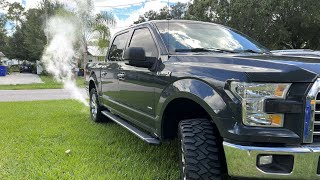
- White or blue smoke from the exhaust, especially after a hot restart 🎬 See how to identify and fix blue smoke on startup. (a key symptom for the EcoBoost TSB issue)
- Excessive oil consumption, potentially 1 quart in less than 3,000 miles
- Replacing oxygen (O2) sensors. O2 sensors may report issues due to the rich or lean condition caused by a misfire, but they are rarely the cause of a single-cylinder misfire code.
- Attributing symptoms on an affected EcoBoost engine to simple tune-up parts without first investigating the possibility of the TSB-related cylinder head issue, leading to repeated failed repairs.
Most Likely Causes
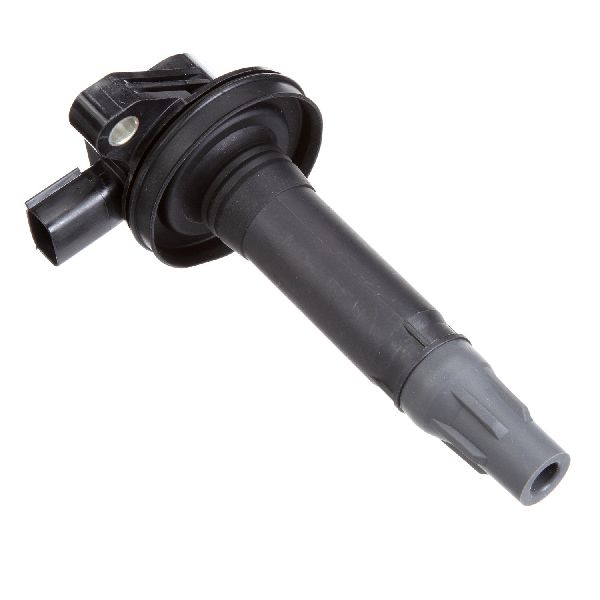
- Faulty Ignition Coil 🔴 High Probability → Shop Ignition Coil Coil-on-plug systems are common failure points on many modern engines. Oil leaks from the valve cover gasket can also pool in the spark plug wells and damage the coil boots, leading to premature failure.
How to confirm: Swap the ignition coil from cylinder 1 with another cylinder (e.g., cylinder 2). Clear the codes and drive. If the code changes to P0302, the ignition coil is bad.
Typical fix: Replace the faulty ignition coil. It is often recommended to replace all six coils and spark plugs at the same time for preventative maintenance.
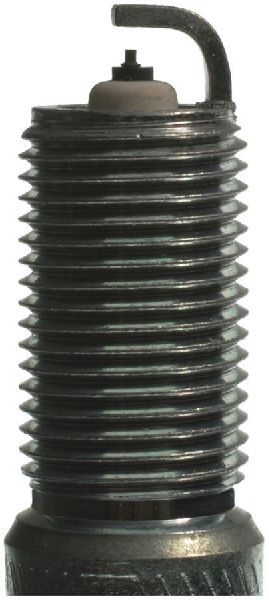
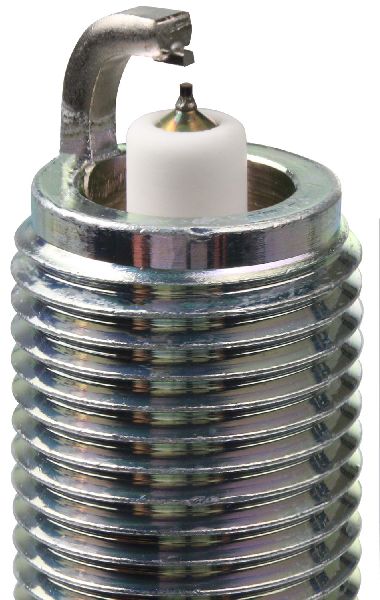
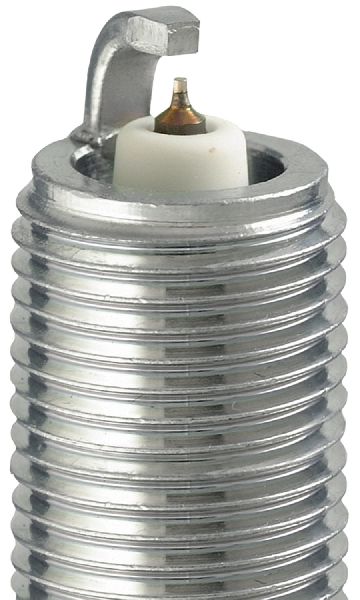
Est. part cost: $50 - $150 - Worn or Fouled Spark Plug 🔴 High Probability → Shop Spark Plug Spark plugs are a regular maintenance item. The direct-injected EcoBoost engines can be hard on plugs, and they can become fouled by carbon, oil, or coolant (in the case of a more severe issue).
How to confirm: After confirming the coil is good, inspect the spark plug from cylinder 1. Look for wear, damage, or deposits. A 'steam-cleaned' or white, crystalline appearance strongly suggests a coolant leak, while black, oily residue points to oil consumption.
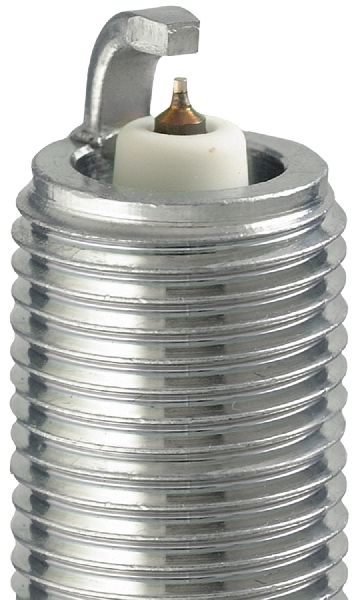
Typical fix: Replace the spark plug. It is best practice to replace all six spark plugs as a set with high-quality Iridium plugs gapped to the correct specification. 🎬 Watch this walkthrough on changing spark plugs in a Ford V6.
Est. part cost: $10 - $30 per plug - Cylinder Head Failure (2.7L/3.0L EcoBoost) 🟡 Medium Probability → Shop Engine Cylinder Head TSB 19-2243 specifically targets 2017 Continentals with 2.7L/3.0L engines built between April 1, 2016, and January 1, 2017. The issue is caused by defective valve guides that allow oil to enter the combustion chamber, leading to oil consumption, fouled plugs, and misfires.
How to confirm: This is diagnosed after ruling out ignition and fuel issues. Key symptoms are excessive oil consumption (1 quart in <3,000 miles), blue/white exhaust smoke after hot restarts, and the presence of codes like P0524 or P06DD. A cylinder compression and leak-down test are required for definitive confirmation.
Typical fix: The official Ford-mandated fix is to replace both cylinder head assemblies. This is a major repair, with Ford allocating over 25 labor hours for an AWD Continental.
Est. part cost: $2000 - $5000+ - Clogged or Faulty Fuel Injector ⚪ Low Probability → Shop Fuel Injector Direct injection (DI) systems on the EcoBoost engines operate under high pressure and can be sensitive to fuel quality. Over time, injectors can become clogged or fail electronically.
How to confirm: After ruling out ignition issues, a technician can use a scan tool to perform a fuel injector balance test. Another method is to swap the fuel injector from cylinder 1 with another cylinder to see if the misfire code follows.
Typical fix: Replace the faulty fuel injector. It's often recommended to replace all injectors on the same bank at the same time.
Est. part cost: $70 - $250 - Intake Valve Carbon Buildup (2.7L/3.0L EcoBoost) ⚪ Low Probability As direct-injection engines, the EcoBoost V6s do not have fuel washing over the intake valves. This allows oil vapor from the PCV system to bake onto the valves, restricting airflow and potentially causing misfires, especially at idle.
How to confirm: This requires visual inspection by removing the intake manifold and using a borescope to view the back of the intake valves.
Typical fix: The valves must be physically cleaned, typically through a process called walnut blasting.
Est. part cost: $0 (if DIY cleaning) - $600+ (for professional service)
Rare But Worth Checking
- Vacuum Leak: A vacuum leak is more likely to cause multiple or random misfires (P0300), but a leak isolated to the intake runner for cylinder 1 could cause P0301.
- Low Engine Compression: Caused by worn piston rings, a damaged piston, or a leaking valve. This is a serious mechanical issue confirmed with a compression test after ruling out more common causes.
- Internal Water Pump Failure (3.7L Ti-VCT): The 3.7L engine features an internal, timing-chain-driven water pump. When it fails, it can leak coolant directly into the crankcase, contaminating the oil and potentially leading to catastrophic engine failure. While not a direct cause of a single-cylinder misfire, the resulting engine damage could be.
Diagnosis Steps
- Read the trouble codes with an OBD-II scanner and note any other codes present. Check the freeze frame data to see the conditions under which the misfire occurred.
- For 2.7L/3.0L engines, check the engine build date (located on a sticker on the valve cover or door jamb). If it falls between April 2016 and January 2017, be highly suspicious of the TSB issue.
- Check the engine oil level and for signs of excessive consumption. Also check for white or blue exhaust smoke, especially on a warm restart.
- Locate cylinder 1. On the transverse-mounted V6 in the Continental, Bank 1 (rear, by firewall) contains cylinders 1-2-3 from passenger to driver side. Cylinder 1 is on the passenger side, closest to the firewall.
- Swap the ignition coil from cylinder 1 to an adjacent cylinder (e.g., cylinder 2). Clear the codes and run the engine. If the code changes to P0302, the ignition coil is faulty and needs replacement.
- If the misfire remains on cylinder 1, swap the spark plug from cylinder 1 to a different cylinder. If the code follows the spark plug, the plug is bad.
- While the spark plug is out, inspect it closely. A very clean, white, or 'steam-cleaned' appearance is a strong indicator of a coolant leak into the cylinder.
- If ignition components are confirmed to be good, perform an engine compression test on cylinder 1. Low compression indicates a mechanical problem.
- If compression is low, a cylinder leak-down test can pinpoint whether the issue is with piston rings, valves, or the head gasket.
- If diagnosing a 2.7L/3.0L EcoBoost with high oil consumption and a relevant build date, refer to TSB 19-2243 for the specific cylinder head diagnostic procedure.
Parts You'll Likely Need
- Ignition Coil
(OEM #FT4Z-12029-A)— This is one of the most common failure items for a single-cylinder misfire. The part number is applicable to both the 2.7L and 3.0L EcoBoost engines.
Trusted brands: Motorcraft
OEM price range: $75 - $105
Aftermarket price range: $40 - $80 - Spark Plug
(OEM #SP-578)— Spark plugs are a maintenance item that wear out over time, leading to a weak spark and misfires. This is a common part number for many EcoBoost applications, though it has been superseded in some cases.
Trusted brands: Motorcraft
OEM price range: $15 - $25
Aftermarket price range: $10 - $20
Related Codes That Often Appear With This One
- P0300 — If the misfire is intermittent or begins to affect other cylinders, a P0300 (Random/Multiple Cylinder Misfire) code may also be stored.
- P0316 — This code indicates a misfire was detected within the first 1,000 engine revolutions on startup, which often accompanies a persistent cylinder misfire.
- P0524, P06DD — According to TSB 19-2243, these oil pressure codes can appear alongside misfire codes in 2.7L/3.0L engines, pointing towards the more serious internal engine problem related to oil consumption and cylinder head failure.
Technical Service Bulletins (TSBs) & Recalls
- TSB 19-2243: The primary TSB for this issue. Covers 2017 Continental/MKZ and 2016-2017 Edge/MKX/Fusion with 2.7L/3.0L engines built from April 2016 to Jan 2017. Details symptoms of oil consumption, smoke, and misfire codes due to faulty valve guides, and mandates cylinder head replacement as the fix.
- TSB 19-2384: A related TSB for the 2016-2017 F-150 with the 2.7L EcoBoost engine, describing the exact same valve guide issue and repair procedure, corroborating the problem across platforms.
- SSM 46364: An early service message from Feb 2017 for 2017 Continental/MKZ/Fusion with 2.7L/3.0L engines, noting rough idle, smoke, and misfire codes, and suggesting to suspect the cylinder heads as the cause.
- SSM 54504: A later service message that reiterates the symptoms of rough idle, misfires (P0301-P0306), and oil pressure codes (P0524/P06DD) associated with excessive oil consumption.
Platform-Specific Known Issues
- EcoBoost Valve Guide Defect (2017 Models): The most critical issue for the 2017 Continental with a 2.7L or 3.0L engine is the potential for cylinder head failure due to faulty valve guides, affecting models built from April 2016 to January 2017. This is not a standard wear-and-tear item but a specific manufacturing defect covered by TSB 19-2243. Diagnosis must rule this in or out before extensive other repairs are attempted.
- 3.7L Ti-VCT Internal Water Pump: For the base 3.7L V6 engine, a known long-term failure point is the internal water pump. While not directly causing a P0301 code, its failure can lead to coolant mixing with engine oil, which can cause widespread engine damage and eventual misfires. This is a very costly repair due to its location behind the timing cover.
- Later Model EcoBoost Valve Recall (Context): While not applicable to the 2017 model year, it's notable that Ford issued a major recall (NHTSA 24V-558) for 2021-2022 models with 2.7L and 3.0L EcoBoost engines due to brittle intake valves that could fracture and cause catastrophic engine failure. This highlights a history of valvetrain issues with this engine family.
Mechanic-Grade Diagnostic Values
- High-Pressure Fuel System (EcoBoost Engines) — expected: Up to 2,175 psi (150 bar) or higher.. Failure: A significant drop in pressure, especially under load, often triggers code P0087 and can cause misfires.
- Low-Pressure Fuel System (In-Tank Pump) — expected: Approximately 40-75 PSI.. Failure: Low pressure from the in-tank pump will starve the high-pressure pump, leading to misfires.
- Ignition Coil Primary Winding Resistance — expected: Generally between 0.4 and 2.0 ohms.. Failure: A reading outside this range (either an open circuit or a short) indicates a faulty coil.
- Ignition Coil Secondary Winding Resistance — expected: Generally between 6,000 and 10,000 ohms (6k-10k Ω).. Failure: A reading significantly outside this range suggests the internal windings are compromised.
Hidden / Shadow Codes Worth Checking
- Mode 6, TID $A2, CID $0C: Represents the misfire counts for the last/current driving cycle for cylinder 1. A non-zero value here can confirm misfires are occurring even if a P0301 code is not yet set. (see via A professional scan tool or an advanced OBD-II app (like Torque) that can display Mode 6 test results.)
- Mode 6, TID $A2, CID $0B: Shows the Exponentially Weighted Moving Average (EWMA) of misfire counts over the last 10 drive cycles for cylinder 1. This helps identify intermittent misfires that may not be obvious in a single drive. (see via A professional scan tool or an advanced OBD-II app capable of reading Mode 6 data.)
Scan Tool Commands That Help
- Ford IDS (Integrated Diagnostic System) or equivalent professional scanner: Power Balance Test — This is a critical diagnostic step to confirm a misfire. The tool graphically displays the power contribution of each cylinder, making it easy to see if cylinder 1 is underperforming compared to the others.
Wiring & Ground Locations
- Passenger Compartment Fuse Panel — Located under the instrument panel to the left of the steering column.. This panel contains fuses for various modules that control the ignition and fuel systems, such as the PCM, Instrument Cluster, and various control modules. Checking relevant fuses is a basic step in electrical diagnosis.
- Engine Compartment Power Distribution Box — Located in the engine compartment, typically on the driver's side.. This box contains main fuses and relays for the entire powertrain, including the run/start relay and power for the fuel injectors and ignition coils.
OEM Part Supersession History
SP-578→SP-594— SP-594 is often cited as the superseding part number. Forum discussions suggest it may be a slightly colder plug or made with different materials (Ruthenium vs. Iridium) for improved durability in EcoBoost engines.
Heads up: While SP-594 is the official replacement, some users have reported running issues and have sought out new-old-stock SP-578 plugs. It is critical to verify the correct, most current plug for the specific engine.SP-542→SP-578 / SP-594— SP-542 was an earlier specified plug for some EcoBoost engines. It was superseded by plugs with a different heat range, likely to better combat misfiring or fouling under various operating conditions.
Model Year Variations Within This Range
- 2017: For the 2.7L and 3.0L EcoBoost engines, the build date is a critical variation. Engines built between April 1, 2016, and January 1, 2017, are subject to TSB 19-2243 for potential cylinder head failure due to faulty valve guides. Vehicles built after this date have revised cylinder heads and are not prone to this specific issue.
Helpful Videos
![How to Fix P0301 Engine Code in 3 Minutes [2 DIY Methods / Only $4.22]](https://img.youtube.com/vi/3R-0J38Phfc/mqdefault.jpg)

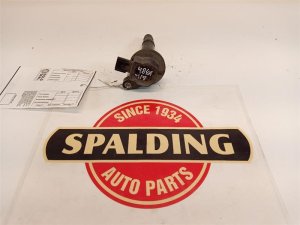
Used OEM Parts in Stock
New Aftermarket Parts Available
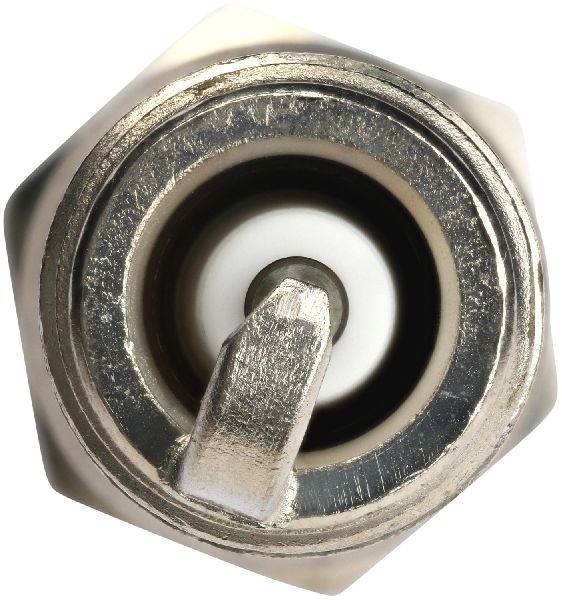

The information in this article is provided for general reference and educational purposes only. Vehicle specifications, procedures, and part compatibility can vary by production date, trim level, and region. Always consult your vehicle's factory service manual and verify part numbers before purchasing or performing repairs. Safety-critical components such as airbags, seat belts, and braking systems should be installed by a qualified professional.
- Lincoln CONTINENTAL:
- 🧭 Diagnostic Flowchart
- 🎬 Helpful Videos
- 🛍️ Shop This Part
- What's Unique About the 2017-2017 Lincoln CONTINENTAL
- Symptoms You May Notice
- Most Likely Causes
- Rare But Worth Checking
- Diagnosis Steps
- Parts You'll Likely Need
- Related Codes That Often Appear With This One
- Technical Service Bulletins (TSBs) & Recalls
- Platform-Specific Known Issues
- Mechanic-Grade Diagnostic Values
- Hidden / Shadow Codes Worth Checking
- Scan Tool Commands That Help
- Wiring & Ground Locations
- OEM Part Supersession History
- Model Year Variations Within This Range
- 🎟️ Get 5% Off