

P0301 on 2015-2019 Lincoln MKZ: Cylinder 1 Misfire Causes and Fixes
P0301 indicates a misfire in cylinder 1. On 2.0L EcoBoost models, this is a serious warning for potential coolant intrusion requiring engine repair, per multiple TSBs. For all engines, it can also be caused by a bad ignition coil or spark plug, which are simpler fixes costing $75-$250.
- P0301 is a cylinder 1 misfire. On a 2015-2019 Lincoln MKZ with the 2.0L EcoBoost engine, this code must be taken very seriously.
- The most critical potential cause for 2.0L models is a known coolant intrusion issue that requires major engine repair, as documented in multiple TSBs.
- Always check for coolant loss when diagnosing a P0301 on a 2.0L EcoBoost.
- Simpler causes like a bad ignition coil or spark plug are still common across all engine types and should be the first components checked.
- Ignoring a flashing check engine light can lead to costly catalytic converter damage or complete engine failure.
What's Unique About the 2015-2019 Lincoln MKZ
For the 2015-2019 Lincoln MKZ, a P0301 code can be more than a simple tune-up issue, especially on models with the 2.0L EcoBoost engine. Ford/Lincoln has issued multiple Technical Service Bulletins (TSBs) acknowledging a design flaw where the engine block casting allows coolant to leak directly into the cylinders, causing misfires. The issue stems from an open-deck block design with a thin passage or 'slit' between cylinders that can fail, allowing coolant to seep into the combustion chamber. This makes diagnosis critical, as what seems like a bad spark plug could be an indicator of a much more severe internal engine problem requiring a long block replacement.
Diagnostic Flowchart
Tap your situation to follow the diagnostic path that matches what you're seeing on this vehicle.
Symptoms You May Notice
- Rough or shaking idle
- Hesitation or stumbling during acceleration
- Flashing Check Engine Light
- Loss of power
- Reduced fuel economy
- White smoke from the exhaust, especially on startup
- Noticeable loss of coolant with no visible external leaks
- Strong smell of coolant from the exhaust
- Replacing only the spark plug and/or ignition coil on a 2.0L EcoBoost. If the root cause is coolant intrusion, the new parts will quickly be fouled by coolant, and the misfire will return, often within a few days. 🎬 Watch: Why a simple spark plug swap won't fix everything.
Most Likely Causes
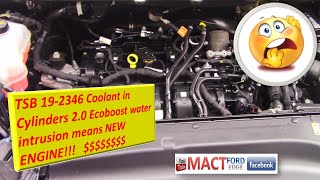
- Coolant Intrusion into Cylinder (2.0L EcoBoost Engine) 🔴 High Probability Multiple TSBs (most recently TSB 22-2229) confirm a known engine block design defect. Coolant seeps into the cylinders through a flawed casting design between the cylinder walls, leading to misfires and eventual engine failure. This issue is the subject of class-action lawsuits. 🎬 Watch: A deep dive into the 2.0 EcoBoost design flaw.
How to confirm: Perform a coolant system pressure test to see if it holds pressure; TSB 19-2208 specifies checking for a drop of more than 4 psi over 5 hours. Use a borescope camera through the spark plug hole to look for evidence of coolant (a clean, steam-cleaned piston top or visible liquid) inside the cylinder. A noticeable drop in the coolant reservoir level without any visible external leaks is a strong indicator.
Typical fix: This is a major repair. The official TSB-recommended fix is the replacement of the engine long block assembly with a revised part. Out-of-warranty replacement at a dealer can cost $8,000-$11,000, while independent shops may charge $7,000+.
Est. part cost: $3000-$7000+ - Failed Ignition Coil 🟡 Medium Probability → Shop Ignition Coil Oil leaks from the valve cover gasket are a common cause of premature ignition coil failure on these engines, as the oil pools in the spark plug wells and damages the coil boot. Coils are also a standard wear item.
How to confirm: Swap the ignition coil from cylinder 1 with another cylinder (e.g., cylinder 2). Clear the codes and drive the vehicle. If the code changes to P0302, the ignition coil is faulty.
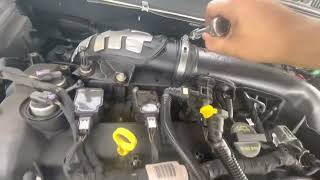
Typical fix: Replace the failed ignition coil. 🎬 See this walkthrough for replacing your spark plugs and coils. It is recommended to replace the corresponding spark plug at the same time. If oil is found in the spark plug well, the valve cover gasket must also be replaced.
Est. part cost: $40-$100 - Worn or Fouled Spark Plug 🟡 Medium Probability → Shop Spark Plug
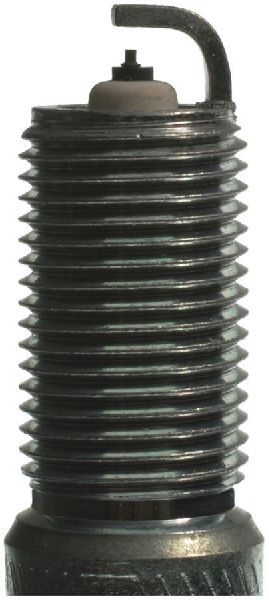
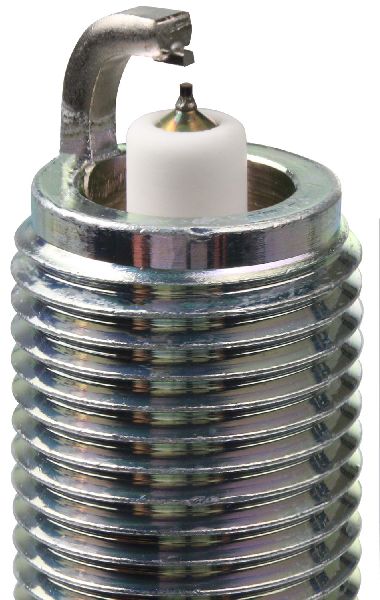
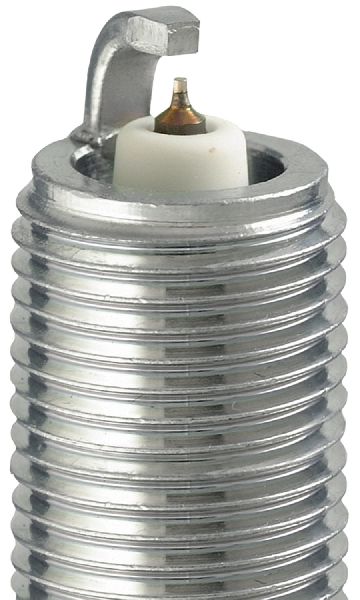
How to confirm: Remove the spark plug from cylinder 1 and inspect it. Look for a worn electrode, heavy carbon buildup, or signs of oil or coolant fouling. A coolant-fouled plug will often look steam-cleaned or have a white/greenish residue. Compare it to a new spark plug.
Typical fix: Replace the spark plug. It is best practice to replace all spark plugs as a set if they are near the end of their service life (up to 100,000 miles for iridium plugs).
Est. part cost: $10-$25 - Faulty Fuel Injector ⚪ Low Probability → Shop Fuel Injector
How to confirm: This is more difficult to diagnose. A professional can perform a fuel injector balance test. Swapping the injector with another cylinder can isolate the problem, but this is labor-intensive, especially on GDI engines.
Typical fix: Replace the faulty fuel injector. For GDI engines (2.0L and 3.0L EcoBoost), injector replacement may require special tools and programming the new injector's flow rate into the PCM.
Est. part cost: $70-$200
Rare But Worth Checking
- Internal PCM Failure: In some cases, a shorted ignition coil can damage the driver circuit within the Powertrain Control Module (PCM), causing a persistent misfire code even after the coil is replaced. This requires advanced diagnostics to confirm.
- Low Compression: Mechanical engine issues like a burnt valve, worn piston rings, or cylinder head problems can cause a loss of compression, leading to a misfire. A compression test and leak-down test would be needed to diagnose this. This can also be a symptom of the coolant intrusion issue damaging cylinder components.
Diagnosis Steps
- Read the code with an OBD-II scanner to confirm P0301 and check for any other codes.
- If the vehicle has a 2.0L EcoBoost engine, immediately check the coolant level in the reservoir. Significant coolant loss with no visible external leaks is a major red flag for internal leakage.
- Inspect the spark plug and ignition coil for cylinder 1. Look for obvious damage, wear, or fouling. A steam-cleaned appearance on the spark plug suggests coolant.
- Swap the ignition coil from cylinder 1 to cylinder 2. Clear the codes and see if the misfire moves to cylinder 2 (code P0302). If it does, the coil is bad.
- If the misfire does not move, swap the spark plug from cylinder 1 to cylinder 3. See if the misfire moves to cylinder 3 (code P0303). If it does, the spark plug was the issue.
- If the misfire remains on cylinder 1 after swapping the coil and plug, and the engine is a 2.0L EcoBoost, proceed with coolant intrusion diagnostics.
- Perform a coolant system pressure test. If the system cannot hold pressure (losing more than 4psi in 5 hours), it confirms a leak. Use a borescope to inspect inside cylinder 1 for coolant.
- If no coolant is found, check the fuel injector on cylinder 1. Listen for a consistent clicking sound or have it professionally tested.
- If all else fails, perform an engine compression test and a leak-down test on cylinder 1 to check for mechanical engine problems.
Parts You'll Likely Need
- Engine Long Block Assembly
(OEM #Varies by VIN, e.g., J2GZ6006E (updated design))— This is the official fix for the coolant intrusion issue on 2.0L EcoBoost engines, as outlined in manufacturer TSBs. Out-of-warranty costs are high, ranging from $7,000 to $11,000 installed.
Trusted brands: Motorcraft
OEM price range: $3000-$5000
Aftermarket price range: $2500-$4000 - Ignition Coil
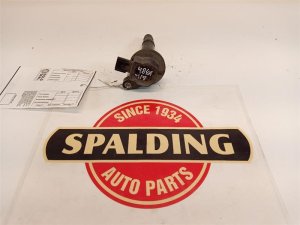
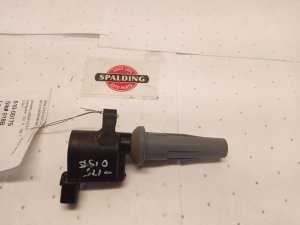
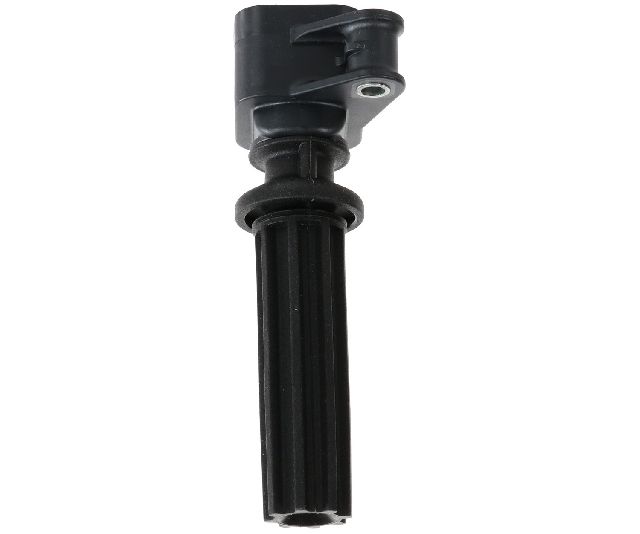
(OEM #Motorcraft DG-549 (or CM5E-12A366-CA))— A common failure point for misfires on all engines. Often fails due to age or oil contamination from a leaking valve cover gasket.
Trusted brands: Motorcraft, Denso, NGK, Bosch
OEM price range: $70-$120
Aftermarket price range: $40-$80 - Spark Plug
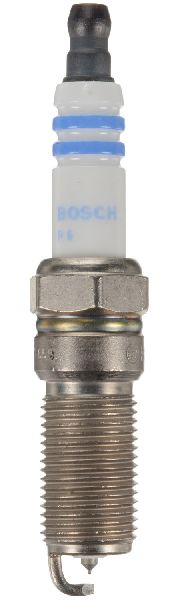
(OEM #Motorcraft SP-537 (Iridium) for 2.0L EcoBoost)— A standard maintenance item and a frequent cause of a single-cylinder misfire. Coolant fouling is a key diagnostic clue on 2.0L engines.
Trusted brands: Motorcraft, NGK, Bosch
OEM price range: $15-$30
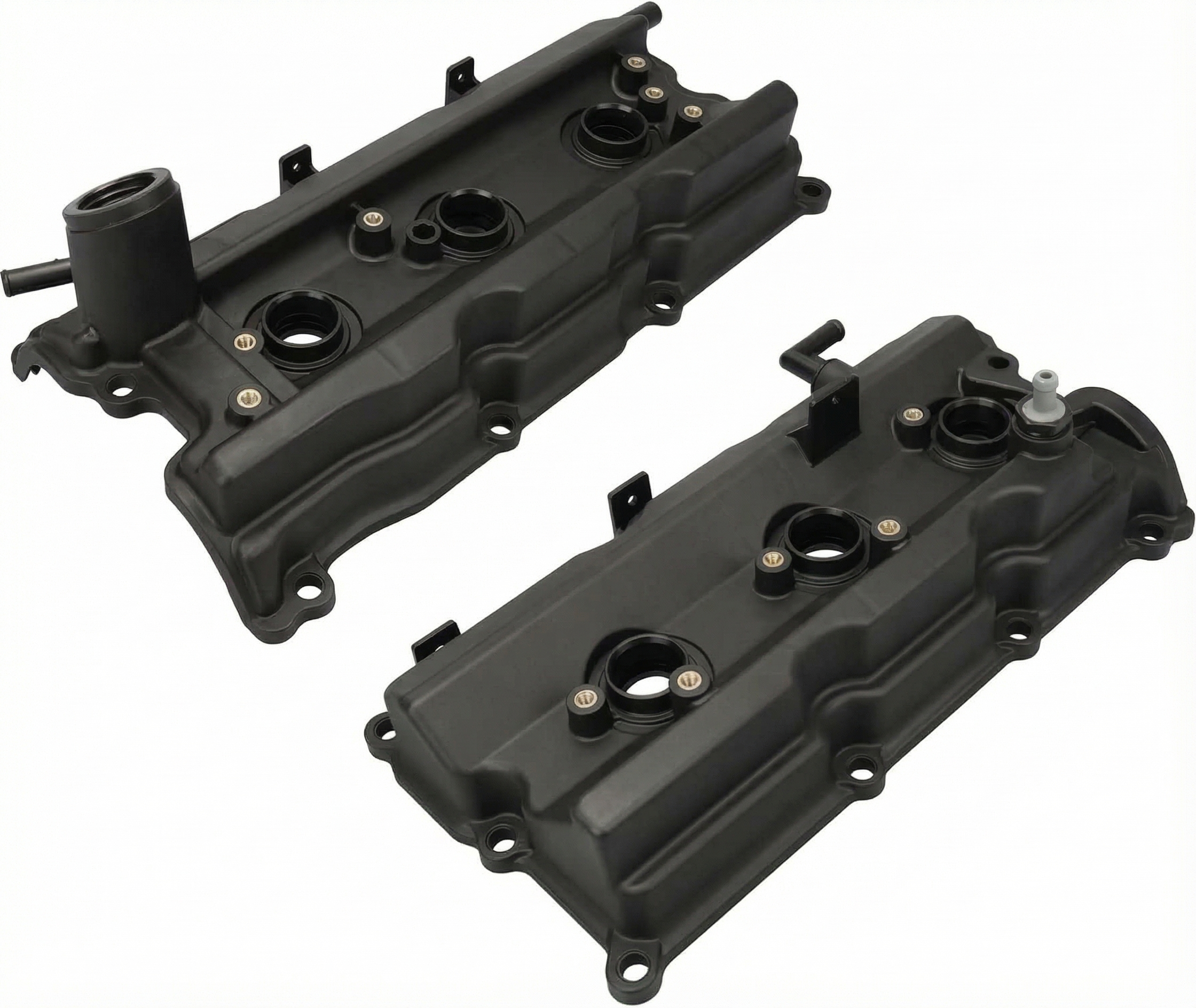
Aftermarket price range: $8-$20 - Valve Cover Gasket Kit — Required if oil is found in the spark plug wells, as this is a primary cause of ignition coil failure.
Trusted brands: Motorcraft, Fel-Pro
OEM price range: $80-$150
Aftermarket price range: $50-$100
Related Codes That Often Appear With This One
- P0300 — If the underlying issue, like a vacuum leak or major coolant intrusion, begins to affect other cylinders, a P0300 (Random/Multiple Cylinder Misfire) code may appear alongside P0301.
- P0316 — This code means 'Misfire Detected on Startup (First 1000 Revolutions)' and is frequently cited along with P0301 in TSBs related to the coolant intrusion issue.
- P0302, P0303, P0304 — If the coolant intrusion issue is present, it's common for the misfire to move to or also appear in adjacent cylinders as the problem worsens.
- P0217, P1285, P1299 — These codes relate to engine overheat conditions and are mentioned in TSB 22-2229 as potentially appearing with misfire codes when coolant intrusion is the cause.
Technical Service Bulletins (TSBs) & Recalls
- TSB 22-2229: Supersedes previous TSBs. Outlines diagnosis and long block replacement for 2.0L EcoBoost coolant intrusion.
- SSM 47204: An earlier bulletin also addressing the 2.0L EcoBoost coolant intrusion due to block corrosion.
- TSB 19-2346: Another bulletin related to the 2.0L EcoBoost coolant intrusion issue, eventually superseded by TSB 22-2229.
- Customer Satisfaction Program 21N12: For certain 1.5L EcoBoost engines but describes a similar coolant intrusion issue and repair process, showing a pattern of this problem across EcoBoost engine families.
Platform-Specific Known Issues
- Real-World Coolant Intrusion Experience: An owner of a 2017 Ford Fusion (which shares the MKZ's 2.0L engine) reported a P0301 code and low coolant. After replacing spark plugs and swapping coils didn't solve the issue, a dealership diagnosed the known coolant intrusion problem. The final repair cost under warranty was significant, highlighting that this issue often requires a full engine replacement as specified in Ford's TSBs.
Mechanic-Grade Diagnostic Values
- Ignition Coil Secondary Resistance — expected: ~5,000 ohms (5.0 kOhms). Failure: A reading significantly higher or lower than the specification, or an open circuit (infinite resistance), indicates a failed coil.
Hidden / Shadow Codes Worth Checking
- Mode $06, TID $A2-$AB: This is not a 'code' but a diagnostic function. Mode $06 data allows viewing of misfire counts for each individual cylinder (e.g., TID $A2 for Cylinder 1, $A3 for Cylinder 2, etc.). A technician can monitor these counts in real-time to see if a cylinder is misfiring occasionally, even if the count isn't high enough to trigger a P0301 code and turn on the check engine light. (see via A professional scan tool or an advanced DIY tool/app (like FORScan) that can access Mode $06 data.)
Scan Tool Commands That Help
- Ford IDS, FORScan, or other professional scanners: Power Balance Test — This test is used to confirm a misfire and isolate the problematic cylinder. The tool sequentially disables the fuel injector to each cylinder and measures the drop in RPMs. A cylinder that shows little or no RPM drop when disabled is the one that is not contributing power, confirming the misfire location.
Wiring & Ground Locations
- G104 — On the right side of the engine compartment.. This is a primary engine ground. A loose or corroded G104 ground can cause erratic behavior in the ignition system, including weak spark or inconsistent ignition coil performance, leading to misfire codes like P0301.
Real Owner Repair Stories
- Reddit user in r/AskAMechanic (2017 Lincoln MKZ 2.0T, ~145,000 miles) — Check engine light with codes P0301 and P0316 (misfire on cylinder 1 and on startup).
❌ Tried (didn't work) Replaced all spark plugs., Swapped ignition coil from cylinder 1 to cylinder 2.
✅ What actually fixed it The misfire code returned after trying the common fixes. A mechanic diagnosed a blown head gasket, a direct consequence of the known coolant intrusion issue. The quoted fix was an engine replacement for $8,700. - YouTube channel 'Saul's Automotive' (Lincoln MKZ (year not specified, but relevant to modern coil-on-plug designs)) — Misfire on cylinder 2.
❌ Tried (didn't work) A less experienced shop might have just replaced the ignition coil and spark plug.
✅ What actually fixed it The root cause was a shorted ignition coil that sent voltage backward, destroying the 5-volt driver circuit inside the Engine Control Unit (ECU/PCM). The correct fix required replacing the ECU, the wiring to the coil, and the ignition coil and spark plug for the affected cylinder.
OEM Part Supersession History
Engine blocks for 2.0L EcoBoost built before mid-2019→Engine blocks for 2.0L EcoBoost built from mid-2019 onward— The original block design featured a small coolant channel, or 'slit', between the cylinder walls. This created a narrow sealing surface for the head gasket that was prone to failure, allowing coolant to leak into the cylinders. The revised block eliminates this slit and uses a more robust cross-drilled passage design for cooling.
Heads up: When replacing an engine due to coolant intrusion, it is critical to use a long block built after mid-2019 (i.e., from a 2020 or newer model year vehicle) to ensure the updated block design is installed. Simply replacing the head gasket on the old block design is not a permanent fix.
Model Year Variations Within This Range
- 2015-2019 (2.0L EcoBoost): The engine block design was revised mid-2019 to correct the coolant intrusion flaw. According to TSB 19-2208, affected MKZ models were those built on or before April 8, 2019. Vehicles produced after this date are more likely to have the updated engine block that is not prone to this specific failure.
- 2017: For the 2017 model year, the previously standard 3.7L V6 was discontinued and replaced with an optional 3.0L twin-turbo V6. The 2.0L EcoBoost I4 remained the standard engine. This changes the potential causes of P0301, as the V6 engines are not affected by the coolant intrusion issue specific to the 2.0L EcoBoost.
Helpful Videos


Used OEM Parts in Stock
New Aftermarket Parts Available

The information in this article is provided for general reference and educational purposes only. Vehicle specifications, procedures, and part compatibility can vary by production date, trim level, and region. Always consult your vehicle's factory service manual and verify part numbers before purchasing or performing repairs. Safety-critical components such as airbags, seat belts, and braking systems should be installed by a qualified professional.
- Lincoln MKZ:
- 🧭 Diagnostic Flowchart
- 🎬 Helpful Videos
- 🛍️ Shop This Part
- What's Unique About the 2015-2019 Lincoln MKZ
- Symptoms You May Notice
- Most Likely Causes
- Rare But Worth Checking
- Diagnosis Steps
- Parts You'll Likely Need
- Related Codes That Often Appear With This One
- Technical Service Bulletins (TSBs) & Recalls
- Platform-Specific Known Issues
- Mechanic-Grade Diagnostic Values
- Hidden / Shadow Codes Worth Checking
- Scan Tool Commands That Help
- Wiring & Ground Locations
- Real Owner Repair Stories
- OEM Part Supersession History
- Model Year Variations Within This Range
- 🎟️ Get 5% Off