

P0301 on 2010-2013 Mazda 3: Cylinder 1 Misfire Causes and Fixes
On a 2010-2013 Mazda 3, code P0301 is most frequently caused by a failed ignition coil on cylinder 1. A simple swap test with another cylinder can confirm the issue. Replacing the faulty coil and the spark plug is the most common fix, with parts costing between $40 and $120.
- P0301 means cylinder 1 is misfiring.
- The most likely cause on your Mazda 3 is a bad ignition coil, followed by a worn spark plug.
- Use the 'swap test' to diagnose the ignition coil for free before buying parts. Simply move the coil from cylinder 1 to cylinder 2 and see if the code follows.
- Always replace the spark plug in the affected cylinder when you replace an ignition coil.
- Do not drive if the check engine light is flashing, as this can cause expensive damage to your catalytic converter.
What's Unique About the 2010-2013 Mazda 3
For this generation of Mazda 3 with MZR engines, ignition coils are a known weak point, exhibiting a high failure rate over time. While Mazda issued a specific Technical Service Bulletin (TSB #01-014/16) for premature ignition coil failure on the later 2012-2013 SKYACTIV models, owners of the MZR-powered cars report the exact same issue. This makes the ignition coil the first and most important component to check when a P0301 code appears.
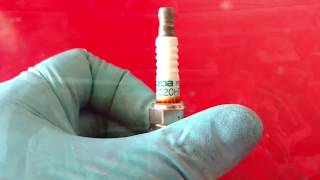
🎬 See this breakdown of common P0301 causes and fixes.Symptoms You May Notice
- Rough or shaking engine idle
- Hesitation or stumbling during acceleration
- Noticeable loss of engine power
- Solid or flashing Check Engine Light
- Reduced fuel economy
- Smell of gasoline from the exhaust
- Engine jerking or sputtering while driving
- Replacing only the spark plug without testing the ignition coil. Given the high failure rate of coils on this platform, the coil should always be tested first via the swap method.
- Assuming a vacuum leak is present without performing a smoke test. On direct-injection Skyactiv engines, carbon buildup can cause similar symptoms without creating a detectable vacuum leak.
Most Likely Causes
- Faulty Ignition Coil 🔴 High Probability → Shop Ignition Coil Ignition coils are a documented weak point on this platform. While a TSB (01-014/16) was issued for SKYACTIV models, the MZR engines are also highly susceptible to coil failure.
How to confirm: Swap the ignition coil from cylinder 1 with the coil from another cylinder (e.g., cylinder 2). Clear the codes and drive the vehicle. If the code changes to P0302, the ignition coil is faulty. This is the universally recommended first step.
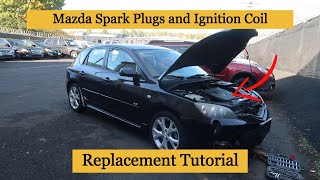
Typical fix: Replace the failed ignition coil. It is highly recommended to replace the corresponding spark plug at the same time. 🎬 Watch: Step-by-step guide to replacing your coils and plugs.
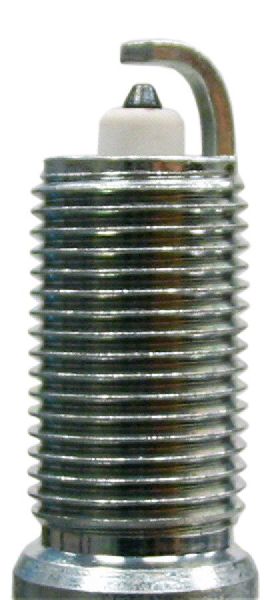
Est. part cost: $35-$180 - Worn or Fouled Spark Plug 🟡 Medium Probability → Shop Spark Plug Spark plugs are a standard maintenance item. If they are past their service life (typically 75,000 miles for Iridium plugs), they can fail to produce a strong enough spark, leading to a misfire.
How to confirm: After ruling out the ignition coil, remove the spark plug from cylinder 1. Inspect it for wear (worn electrode), fouling (black, sooty, or wet deposits), or an incorrect gap. A plug wet with oil can also indicate a leaking valve cover gasket.
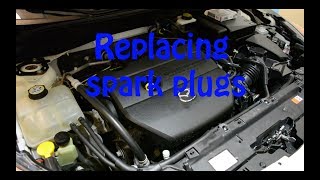
Typical fix: Replace the spark plug in cylinder 1. It is best practice to replace all four spark plugs at the same time to ensure even performance. 🎬 Watch: How to replace spark plugs on the 2.5L engine.
Est. part cost: $10-$25 per plug - Clogged or Faulty Fuel Injector ⚪ Low Probability → Shop Fuel Injector
How to confirm: If ignition components are good, the fuel injector is the next suspect. A DIY method is to swap the injector from cylinder 1 with another cylinder (e.g., cylinder 2) and see if the misfire code follows. Alternatively, a mechanic can perform a fuel injector balance test. One owner on Reddit reported fixing a persistent P0301 on a high-mileage car by using a quality fuel system cleaner after noticing a dirty injector with a borescope.
Typical fix: First, try a quality fuel system cleaner like Techron. If that fails, the injector may need professional cleaning or replacement.
Est. part cost: $50-$150 per injector - Vacuum Leak ⚪ Low Probability
How to confirm: Inspect all vacuum hoses connected to the intake manifold for cracks or loose connections. A smoke test is the most effective way to find a leak. Alternatively, you can carefully spray carburetor cleaner around the intake manifold gasket and vacuum lines with the engine running; a change in engine idle indicates a leak.
Typical fix: Replace the cracked hose or leaking gasket.
Est. part cost: $10-$100
Rare But Worth Checking
- Low Engine Compression: This is a serious mechanical issue. If ignition and fuel systems check out, a compression test should be performed to rule out problems like worn piston rings, leaking valves, or a bad head gasket.
- Leaking Valve Cover Gasket: → Shop Engine Valve Cover If the spark plug tube seal fails, oil can leak into the spark plug well, fouling the plug and damaging the ignition coil boot, leading to a misfire. This is a common finding during spark plug inspection.
- Faulty Powertrain Control Module (PCM): In very rare cases, the PCM itself can fail, specifically the driver circuit for the cylinder 1 ignition coil or fuel injector. This should only be considered after all other possibilities have been exhaustively ruled out.
Diagnosis Steps
- Read the code with an OBD-II scanner to confirm P0301 and check for any other pending or active codes.
- Ignition Coil Swap Test: Label and swap the ignition coil from cylinder 1 (passenger side) with the coil from cylinder 2.
- Clear the codes using the scanner, start the engine, and go for a short drive.
- Re-scan for codes. If the code is now P0302, the ignition coil from cylinder 1 is faulty and must be replaced.
- If the code remains P0301, the coil is likely good. Proceed to the next step.
- Spark Plug Inspection: Remove the spark plug from cylinder 1. While it's out, inspect the spark plug well for oil, which indicates a leaking valve cover gasket. Check the plug itself for signs of wear, damage, or fouling (oil, fuel, or carbon). Replace if necessary.
- If the spark plug and coil are good, the issue may be fuel-related. Inspect the fuel injector wiring for damage. Consider running a bottle of high-quality fuel injector cleaner through the system.
- Check for vacuum leaks around the intake manifold and vacuum lines using a smoke machine. This is the most reliable method.
- If all else fails, perform an engine compression test to check for mechanical engine problems like bad valves or piston rings.
Parts You'll Likely Need
- Ignition Coil
(OEM #LF2L-18-100A (For 2.0L & 2.5L MZR))— This is the most common failure part for a P0301 code on this vehicle, with widespread reports of premature failure.
Trusted brands: NGK, Denso, Hitachi, Bosch, Delphi
OEM price range: $140-$180
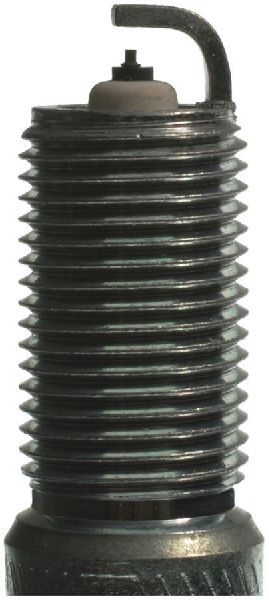
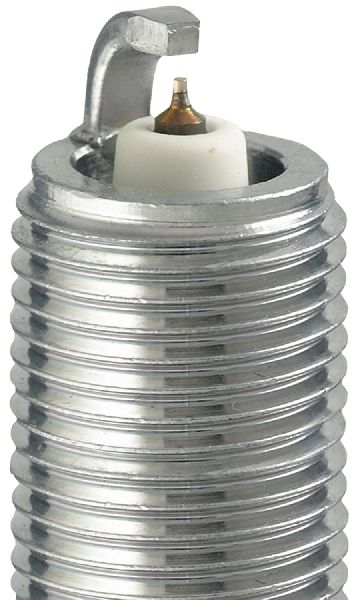
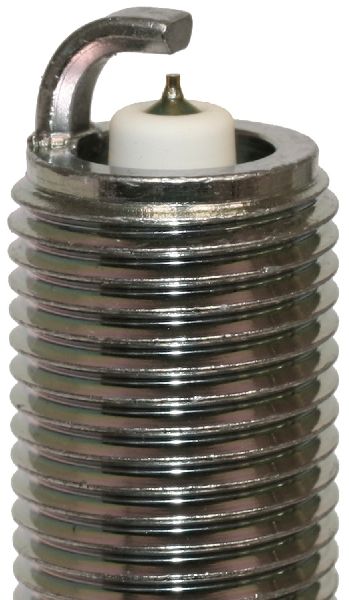
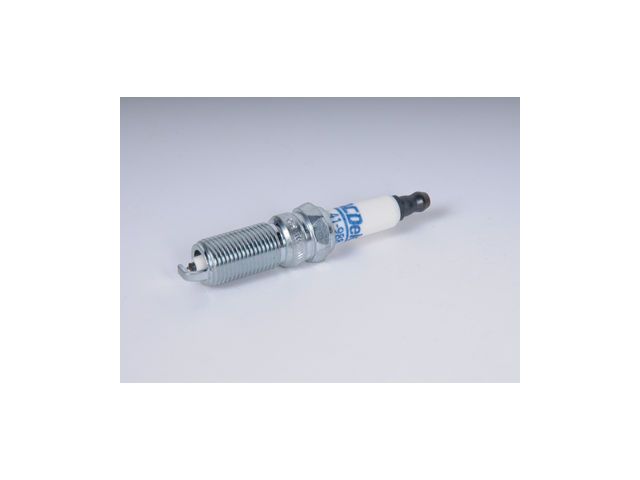
Aftermarket price range: $35-$100 - Iridium Spark Plug
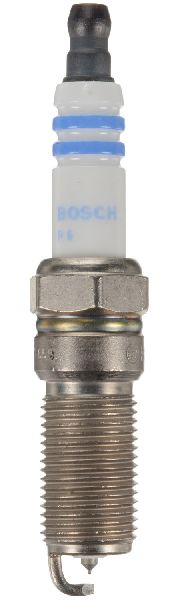
(OEM #ILTR5A-13G (NGK Laser Iridium - For 2.0L & 2.5L MZR))— A worn or fouled spark plug is the second most likely cause. It is standard practice to replace the plug when replacing the coil.
Trusted brands: NGK, Denso
OEM price range: $20-$30
Aftermarket price range: $10-$20
Related Codes That Often Appear With This One
- P0300 — If the misfire is intermittent or affects multiple cylinders, a P0300 (Random Misfire Detected) code may appear alongside P0301.
- P0302, P0303, P0304 — If multiple ignition coils or spark plugs are failing, you may see misfire codes for other cylinders as well. A P0302 appearing after swapping the cylinder 1 coil to cylinder 2 is a definitive diagnosis of a bad coil.
Technical Service Bulletins (TSBs) & Recalls
- 01-014/16 - Notes that certain ignition coils (specifically 'YUMEBISHI' brand) could fail prematurely, causing misfire codes on 2012-2013 models with SKYACTIV engines and other 2013-2016 Mazda vehicles.
- Bulletin #01-012-19-3612 - Notes that some vehicles may experience the Check Engine Light ON with DTC P0301:00 (Cylinder No.1 misfire detected) and other misfire codes stored in memory.
- Bulletin #01-007-19-3541 - A cross-model manufacturer bulletin for the CX-5 notes that vehicles may exhibit a rough idle and/or the check engine light on with P0301 stored in memory.
- Bulletin #01-001-23a - A manufacturer bulletin for the CX-9 notes that some customers may complain about poor acceleration and rough idling or the CHECK ENGINE light ON with DTC P0301:00, specifically applicable to turbo engines.
Platform-Specific Known Issues
- While TSB #01-014/16 was officially for 2012-2013 SKYACTIV models regarding premature 'YUMEBISHI' brand ignition coil failure, the MZR engines in the 2010-2013 models experience a very similar high rate of coil failure, making it the primary suspect for any P030x code.
- Models with the SKYACTIV engine (introduced in 2012) can also suffer from carbon buildup on intake valves, which can cause misfires, though this is less common than ignition component failure on the MZR engines.
Mechanic-Grade Diagnostic Values
- Fuel Injector Resistance — expected: 12.3 - 12.9 ohms (cold). Failure: A reading of 0 ohms or infinite resistance indicates a failed injector coil. Readings should be consistent across all injectors.
- Ignition Coil Secondary Resistance — expected: 9.5 - 11.1 kOhms. Failure: A reading significantly outside this range points to an internal failure of the coil's secondary winding.
- Mode 6 Misfire Count (Cylinder 1) — expected: 0, or a very low number during a drive cycle.. Failure: A continuously incrementing count for cylinder 1 (Test ID $A2, Component ID $01 on generic OBD-II) confirms the PCM is actively detecting misfire events, even if the CEL is not flashing.
Scan Tool Commands That Help
- FORScan: Mode 6 Test - Misfire Monitor — To view live and historical misfire counts for each specific cylinder (e.g., 'MISFIRE_COUNT_CYL1'). This is extremely useful for confirming an intermittent misfire that isn't severe enough to keep the CEL on, or to verify that a repair has been successful by watching for new counts.
- Mazda M-MDS / FORScan: Power Balance / Injector Cut-Off Test — After ruling out ignition components, this bidirectional test allows a technician to disable one injector at a time. When the cylinder 1 injector is disabled, if there is no change in engine RPM or sound, it confirms that cylinder wasn't contributing in the first place, pointing strongly to a fuel injector or compression issue.
Wiring & Ground Locations
- Engine Ground Strap (Main) — Typically runs from the engine block or transmission case to the chassis frame rail or firewall.. A corroded or loose main ground can cause a weak spark and erratic sensor readings, leading to misfires. While not specific to cylinder 1, it's a foundational check. Forum users often add or upgrade grounds to the throttle body, alternator, and transmission housing to improve electrical stability.
- Cylinder Head Ground — A smaller ground wire is often attached from the wiring harness to a bolt on the valve cover or cylinder head.. This ground is critical for the ignition coils. A poor connection here can cause a weak or inconsistent spark, leading to a misfire on one or more cylinders. One user noted grounding to a VVT cover bolt.
- PCM Ground — The Powertrain Control Module (PCM) has multiple ground pins in its main connectors, which are grounded to the chassis at specific points (e.g., near the left headlight, G01).. A faulty PCM ground can cause a wide array of bizarre electrical issues, including phantom misfire codes. This is an advanced check after all other common causes are ruled out.
Real Owner Repair Stories
- Reddit user on r/AskMechanics (2012 Mazda 3 2.0L with 198,000 miles) — P0301 code, slight loss of power, slightly longer crank time to start.
❌ Tried (didn't work) Replaced all four spark plugs. The code returned after one week.
✅ What actually fixed it The owner noted the spark plug from cylinder 1 was wet with gas. This indicates the cylinder was getting fuel but not igniting it. The community correctly advised that the next step was to swap the ignition coil from cylinder 1 to another cylinder to see if the code followed, confirming a bad coil, which is the most probable cause after replacing the plug. The user had already ordered new coils to complete the repair. - Car Talk Community forum user (2007 Mazda 3 with ~85,000 miles) — Sudden P0301 code with rough idle and acceleration, which disappeared when the engine fully warmed up.
✅ What actually fixed it Upon removing the cylinder 1 ignition coil, the owner found oil had leaked into the spark plug well from a failed valve cover tube seal. The coil boot was described as 'white & crusty,' a sign of high-voltage arcing. The final fix was replacing the valve cover gasket set, the fouled spark plug, and the damaged ignition coil.
Documented NHTSA Reports
- NHTSA ODI #10695229 describes an instance where a vehicle experienced a cylinder 1 misfire issue twice in a row, resulting in the engine light staying on with code P0301.
- An owner reported in NHTSA ODI #11675874 that after scanning their vehicle, codes P0301 (Cylinder 1 Misfire Detected) and P0506 (IAC system RPM Low) appeared.
OEM Part Supersession History
LF2L-18-100→LF2L-18-100A— Standard part revision, likely for improved reliability or manufacturing process.
Heads up: LF2L-18-100A is the correct and current part number for the MZR engines in this range and is backward compatible.
Model Year Variations Within This Range
- 2012-2013: In 2012, Mazda introduced the 2.0L Skyactiv-G engine as an option alongside the existing 2.0L MZR and 2.5L MZR engines. The Skyactiv engine uses different ignition coils (e.g., Part No. PE20-18-100A) and is more prone to carbon buildup on intake valves as a cause for misfires. It is critical to identify which 2.0L engine the car has before ordering parts.
Diagnostic Flowchart
Other Known Issues on This Vehicle
Issues unrelated to this code that are worth knowing about as an owner of this generation:
- Melting/Sticky Dashboard 🟠 Medium — Very common, especially in warmer climates. Can cause dangerous windshield glare. (Ref: Mazda issued a warranty extension program (SSP 97) for this issue, covering repairs for up to 10 years from the original sale date.)
- Premature Manual Transmission Clutch Failure 🔴 High — Widespread complaints of clutch failure at unusually low mileage (as low as 12,000-40,000 miles), often blamed on driver error by dealers but was the subject of a class-action lawsuit. (Ref: A reimbursement program (CSP09) was offered, but no formal recall was issued. The issue was attributed by some to master/slave cylinder problems.)
- Failing Electric Power Steering Pump 🔴 High — Numerous owner complaints of intermittent or total power steering failure, making the vehicle very difficult to steer. The pump is an expensive part to replace. (Ref: No recall, but a known common failure point. A previous recall existed for 2007-2009 models with a similar issue.)
- Engine Cranks But Won't Start in Cold Weather 🟠 Medium — Affects some 2010-2013 models with both 2.0L and 2.5L engines, particularly in winter. (Ref: TSB #01-005/13 identifies this as an issue with the PCM control logic and advises a PCM software update to correct it.)
Used vs. New Parts: Buying Guide for This Vehicle
When a used part is the smart pick: For this repair, using used parts is generally not recommended. The primary failure items are ignition coils and spark plugs, which are wear items with a finite lifespan. A used fuel injector from a verified low-mileage (<60,000 miles) donor vehicle could be a cost-effective option if the part is tested or comes with a warranty.
Donor-vehicle mileage cap: roughly under 60000 miles for the part to have meaningful remaining life.
What to inspect on the donor part:
- For a fuel injector, inspect the nozzle for any signs of physical damage or heavy carbon deposits.
- Ensure the electrical connector is not cracked or damaged.
- Ask for the VIN of the donor car to verify low mileage and compatibility.
OEM-only on this vehicle (don't cheap out):
- While not a common cause, if the PCM is diagnosed as faulty, it is highly recommended to use an OEM replacement or a specialized remanufacturing service due to programming and compatibility requirements.
Aftermarket brands forum-validated for this vehicle:
- Ignition Coils: NGK, Denso, Delphi, Bosch are reputable brands with a history of providing OEM-quality parts.
- Spark Plugs: NGK (Laser Iridium) and Denso are the OEM suppliers and the most recommended choice.
- Fuel Injectors: Bosch is a reliable OEM supplier for many fuel system components.
Brands owners have reported issues with on this vehicle:
- Unnamed, no-brand ignition coils and injectors from online marketplaces. These often have high failure rates, inconsistent performance, and can cause further diagnostic confusion.
Real Owner Stories
Aggregated from forums and TSBs cited above. Mileages and costs reflect what owners reported in those sources.
2013 Mazda 3 SKYACTIV — 166000 miles
Symptoms: Misfire on cylinder 1; owner replaced the spark plug and swapped coils but the P0301 code persisted.
What fixed it: The owner used a borescope to identify a dirty injector and resolved the issue by using a high-quality fuel system cleaner.
Source hint: Reddit (r/mazda3) - Thread '2013 skyactiv misfire cylinder 1'
2012 Mazda 3
Symptoms: Persistent P0301 misfire code that would not go away after initial troubleshooting.
What fixed it: Confirmed a bad ignition coil by swapping it to another cylinder, which caused the code to follow and become a P0303.
Source hint: Mazdas247.com - Thread 'P0301 Misfire Code that won't go away'
2013 Mazda 3
Symptoms: Cylinder 1 misfire (P0301); owner performed a coil swap with no change in the code.
What fixed it: The diagnostic flow moved to replacing spark plugs and then checking fuel injectors or mechanical engine integrity.
Source hint: Mazdas247.com - Thread 'P0301 Cyl 1 Misfire Problem'
Related OBD-II Codes
Frequently Asked Questions
Does TSB 01-014/16 regarding faulty ignition coils apply to my 2010-2013 Mazda 3 with the MZR engine?
I have a 2012 Mazda 3 with the SKYACTIV engine; could carbon buildup be causing my P0301 code?
What is the recommended first diagnostic step for a P0301 on the Mazda 3 MZR platform?
How often should I replace the spark plugs on my 2.0L or 2.5L Mazda 3 to prevent misfires?
Can a leaking valve cover gasket cause a P0301 misfire on this vehicle?
Is there a specific brand of ignition coil mentioned in Mazda service bulletins that I should look out for?
Helpful Videos

We Have This Part in Stock

The information in this article is provided for general reference and educational purposes only. Vehicle specifications, procedures, and part compatibility can vary by production date, trim level, and region. Always consult your vehicle's factory service manual and verify part numbers before purchasing or performing repairs. Safety-critical components such as airbags, seat belts, and braking systems should be installed by a qualified professional.
- Mazda 3:
- 🧭 Diagnostic Flowchart
- 🎬 Helpful Videos
- 🛍️ Shop This Part
- What's Unique About the 2010-2013 Mazda 3
- Symptoms You May Notice
- Most Likely Causes
- Rare But Worth Checking
- Diagnosis Steps
- Parts You'll Likely Need
- Related Codes That Often Appear With This One
- Technical Service Bulletins (TSBs) & Recalls
- Platform-Specific Known Issues
- Mechanic-Grade Diagnostic Values
- Scan Tool Commands That Help
- Wiring & Ground Locations
- Real Owner Repair Stories
- Documented NHTSA Reports
- OEM Part Supersession History
- Model Year Variations Within This Range
- Other Known Issues on This Vehicle
- Used vs. New Parts: Buying Guide for This Vehicle
- Real Owner Stories
- 2013 Mazda 3 SKYACTIV — 166000 miles
- 2012 Mazda 3
- 2013 Mazda 3
- Related OBD-II Codes
- Frequently Asked Questions
- 🎟️ Get 5% Off