

P0301 on 2014-2018 Mazda 3: Cylinder 1 Misfire Causes and Fixes
On a 2014-2018 Mazda 3, code P0301 is most often caused by a failed ignition coil or a worn spark plug in cylinder 1. A faulty ignition coil is a known issue addressed by TSB #01-014/16 for 2014-2016 models. Start by swapping the cylinder 1 coil with another cylinder to see if the code follows. Expect to pay $20-$60 for a set of spark plugs and $40-$100 for a single aftermarket ignition coil.
- P0301 on a 2014-2018 Mazda 3 means cylinder 1 is misfiring.
- The most likely cause is a bad ignition coil or a worn spark plug. A TSB exists for faulty ignition coils on 2014-2016 models.
- Use the 'swap test' to diagnose the coil and spark plug for free before buying parts.
- If ignition parts are good, the next most likely cause is carbon buildup on the intake valves, a known issue with Skyactiv direct-injection engines.
- Avoid driving if the check engine light is flashing to prevent expensive damage to the catalytic converter.
What's Unique About the 2014-2018 Mazda 3
The 2014-2018 Mazda 3 is part of the third generation (BM/BN), which heavily features the Skyactiv-G engine. While reliable, these engines have two specific quirks related to the P0301 code. First, a Technical Service Bulletin (TSB #01-014/16) was issued for ignition coils on 2014-2016 models that could fail prematurely, particularly those made by 'YUMEBISHI'. Second, as a direct-injection (GDI) engine, the intake valves are prone to carbon buildup over time because fuel is injected directly into the cylinder and doesn't wash the valves clean. This buildup can restrict airflow and cause misfires, especially on cold starts. Additionally, manufacturer service bulletins such as Bulletin #01-012-19-3612 have been issued to address instances where the Check Engine Light illuminates with DTC P0301:00 stored in memory.
Symptoms You May Notice
- Rough or shaky idle.
- Engine hesitation or stumbling during acceleration.
- Noticeable loss of power.
- Flashing or solid Check Engine Light.
- Reduced fuel economy.
- Strong smell of raw fuel from the exhaust.
- Other warning lights (e.g., traction control, Smart Brake Malfunction) may illuminate as a secondary effect due to the erratic engine data.
- Replacing only the spark plug when the ignition coil is the actual point of failure (or vice-versa). The 'swap test' is crucial to avoid this.
- Replacing fuel system components before performing the simple ignition coil and spark plug swap tests.
- Assuming carbon buildup is the cause on a low-mileage vehicle before ruling out the more common ignition system faults.
Most Likely Causes
- Faulty Ignition Coil 🔴 High Probability → Shop Ignition Coil Mazda issued TSB #01-014/16 for 2014-2016 models due to internal ignition coil failures, particularly in climates with large temperature swings. Coils made by 'YUMEBISHI' before lot number 6328 (March 28, 2016) are most susceptible, while 'MITSUBISHI' coils are considered reliable.
How to confirm: Swap the ignition coil from cylinder 1 with another cylinder (e.g., cylinder 2). Clear the codes and drive. If the code changes to P0302, the coil is bad. Visually inspect the coil boot for oil contamination or cracks.
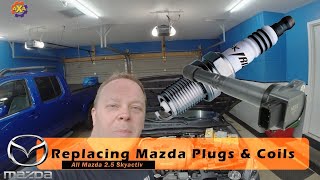
Typical fix: Replace the faulty ignition coil. It is often recommended to replace the corresponding spark plug at the same time. Some owners choose to replace all four coils if they are original 🎬 Watch: Step-by-step guide to installing new spark plugs and coils., as they tend to fail around the same age.
Est. part cost: $40 - $100 (aftermarket), $130 - $180 (OEM). - Worn or Fouled Spark Plug 🔴 High Probability → Shop Spark Plug Spark plugs are a standard wear item with a 75,000-mile replacement interval. An oil leak from a failing valve cover gasket can seep into the spark plug tube and foul the plug, causing a misfire.
How to confirm: After confirming the coil is good, swap the spark plug from cylinder 1 with another cylinder. If the code moves with the plug (e.g., to P0303), the plug is the issue. Visually inspect for wear, oil, carbon tracking, or a cracked porcelain insulator.
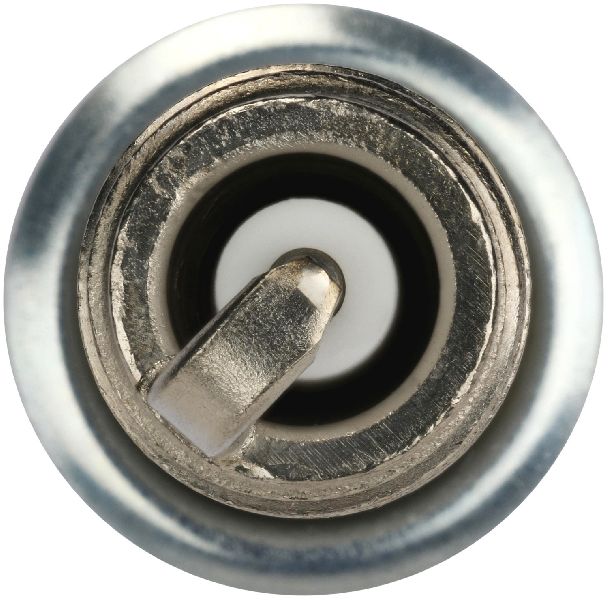
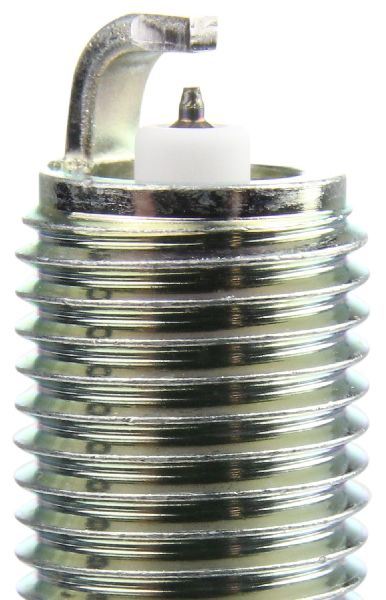
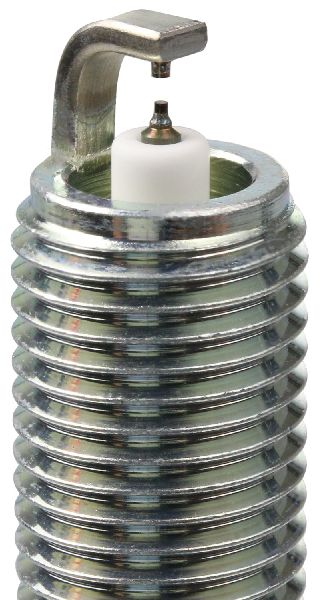
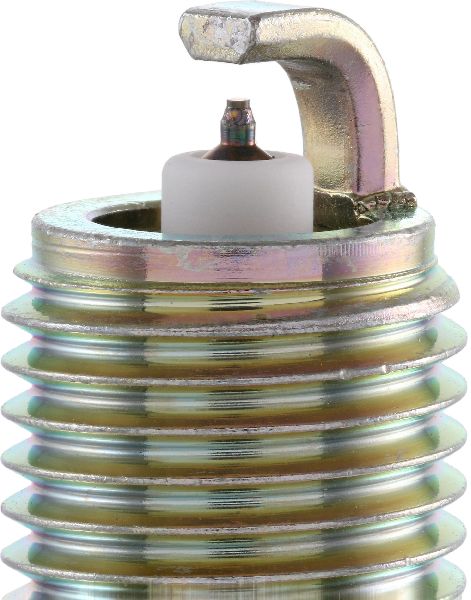
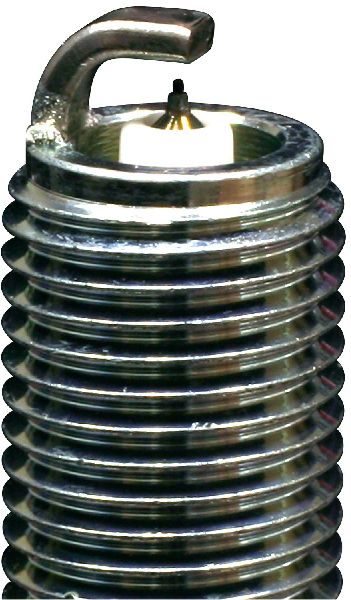
Typical fix: Replace the spark plug. It is best practice to replace all spark plugs as a set with high-quality Iridium plugs (e.g., NGK, Denso) to ensure even performance.
Est. part cost: $20 - $60 (for a set of four) - Carbon Buildup on Intake Valves 🟡 Medium Probability Skyactiv-G engines use direct injection, so gasoline doesn't clean the intake valves. Over time, oil vapors from the PCV system can bake onto the valves, restricting airflow and causing misfires, often during cold starts or at idle.
How to confirm: This is harder to confirm without tools. A mechanic can use a borescope to visually inspect the intake valves for deposits. This is often suspected after spark plugs and ignition coils have been ruled out, especially on vehicles with over 80,000 miles.
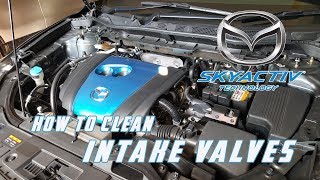
Typical fix: The intake manifold must be removed for a professional cleaning service, such as walnut shell blasting or manual scraping of the valves. 🎬 See how to perform a DIY intake valve carbon cleaning. A chemical cleaning service may also be an option.
Est. part cost: $0 (service cost is labor, typically $400-$900) - Clogged or Faulty Fuel Injector ⚪ Low Probability → Shop Fuel Injector Direct injection systems operate at high pressures and can be sensitive to fuel quality. An injector can become clogged with deposits or fail electronically, disrupting the fuel spray pattern.
How to confirm: Listen to the injector with a mechanic's stethoscope for a consistent clicking sound. You can also test its resistance with a multimeter or perform a swap test if accessible, though this is more involved than a coil/plug swap. A professional may perform a flow test.
Typical fix: Replace the faulty fuel injector. It is often recommended to replace them as a set to ensure balanced performance.
Est. part cost: $70 - $200
Rare But Worth Checking
- Leaking Valve Cover Gasket / Spark Plug Tube Seal: → Shop Engine Valve Cover If the seal around the spark plug tube for cylinder 1 fails, oil can leak in, fouling the plug and damaging the ignition coil boot, leading to a persistent misfire.
- Vacuum Leak: A leak from a cracked vacuum hose or a bad intake manifold gasket near cylinder 1 can lean out the air/fuel mixture and cause a misfire. Bulletin #01-007-19-3541 notes that some vehicles may exhibit a rough idle and the check engine light with DTC P0301 stored.
- Low Engine Compression: This is a serious mechanical issue, such as a worn piston ring, a leaking valve, or a problem with the cylinder head. It requires a compression test and a leak-down test to diagnose and is the least likely cause on a well-maintained engine.
Diagnosis Steps
- Check for any other stored trouble codes to get more context. An owner reported in NHTSA ODI #11675874 that P0301 appeared alongside P0506 (Idle Air Control system RPM Low).
- Start with the 'swap test'. Swap the ignition coil from cylinder 1 (passenger side) to cylinder 2.
- Clear the codes with a scanner, start the engine, and drive until the check engine light returns.
- If the code is now P0302, the ignition coil is faulty and must be replaced.
- If the code is still P0301, the coil is likely good. Put it back and move the spark plug from cylinder 1 to cylinder 3.
- Clear codes and drive again. If the code changes to P0303, the spark plug is bad.
- If the P0301 code persists after swapping both the coil and plug, inspect the ignition coil connector and wiring for damage or corrosion. Check for oil in the spark plug well, which indicates a leaking valve cover gasket.
- Listen to the fuel injector for cylinder 1 with a stethoscope; it should have a steady clicking sound.
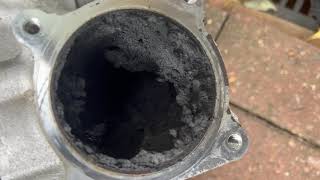
- If the above steps don't identify the issue, especially on a higher mileage (>80k miles) vehicle, consider more advanced causes like carbon buildup (requires a borescope inspection 🎬 Watch: See the dramatic results of a Skyactiv carbon cleaning.) or a fuel injector problem.
- As a last resort for persistent issues, perform an engine compression test to rule out mechanical problems.
Parts You'll Likely Need
- Ignition Coil
(OEM #PE20-18-100A)— This is a very common failure point on this engine, as documented by Mazda's own service bulletin for the 2014-2016 model years. This part number supersedes several previous versions including PE20-18-100 and PE01-18-100A.
Trusted brands: Mazda (OEM), NGK, Denso, Delphi
OEM price range: $130 - $180
Aftermarket price range: $40 - $100 - Iridium Spark Plug
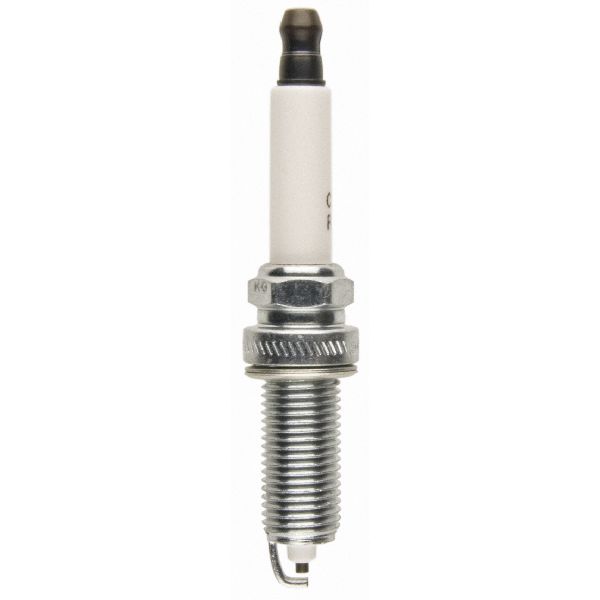
(OEM #PE5R-18-110)— Spark plugs are a routine maintenance item and the direct cause of many misfires. It's recommended to replace them when replacing a coil. The OEM plug is typically a re-branded NGK or Denso Iridium plug.
Trusted brands: NGK (ILKAR7L11), Denso
OEM price range: $15 - $25 (per plug)
Aftermarket price range: $10 - $18 (per plug)
Related Codes That Often Appear With This One
- P0300 — If the condition causing the misfire in cylinder 1 starts to affect other cylinders, or if the cause is systemic (like bad fuel or a vacuum leak), a P0300 (Random/Multiple Cylinder Misfire) code may appear as well.
- P0302, P0303, P0304 — If you perform a 'swap test' with a faulty component from cylinder 1, the code will move to the new cylinder (e.g., P0302 if you move a bad coil to cylinder 2).
- P0201 — This code for 'Fuel Injector Circuit/Open Cylinder 1' can appear alongside P0301 if the misfire is caused by a faulty fuel injector or its wiring.
Technical Service Bulletins (TSBs) & Recalls
- 01-014/16 (also 01-014-16-3208A / NHTSA #10085446): Addresses misfire DTCs (P0300-P0304) caused by internal failure of specif
- Bulletin #01-001-23a: Notes that customers may complain of poor acceleration and rough idling with DTC P0301:00, though this specifically applies to turbo engines.
- Bulletin #01-012-19-3612: Documents instances where vehicles experience the Check Engine Light ON with DTC P0301:00 stored in memory.
Platform-Specific Known Issues
- TSB #01-014/16 documents a known issue with failing ignition coils on 2014-2016 Mazda 3 vehicles, causing misfire codes like P0301. It specifically calls out coils from the supplier 'YUMEBISHI' as faulty and advises checking the lot number.
- The Skyactiv-G direct injection engine design is inherently susceptible to carbon buildup on intake valves, which is a common cause of misfires that are not related to the ignition system, particularly at higher mileage.
Mechanic-Grade Diagnostic Values
- High-Pressure Fuel System Pressure (at idle) — expected: 3.0 MPa (435 psi) or higher. Failure: Pressure significantly below 435 psi at idle can indicate a failing high-pressure fuel pump (HPFP) or a faulty pressure relief valve.
- Low-Pressure Fuel System Pressure (Key On, Engine Off) — expected: 56-66 psi. Failure: Pressure below this range suggests a weak in-tank fuel pump or a clogged fuel filter.
- Ignition Coil Primary Winding Resistance — expected: Approximately 0.49 - 0.57 ohms. Failure: A reading of OL (open loop/infinity) or significantly outside this range indicates a failed coil winding.
- Fuel Injector Resistance (High Impedance) — expected: 11.0 - 16.0 ohms (A known good new injector measured at 12.8 ohms). Failure: A reading of OL (open) or a value far outside the typical range points to an electrical failure within the injector coil.
Hidden / Shadow Codes Worth Checking
- Mode 6, Test ID $A2-$AB: This is not a 'code' but a data stream in OBD-II Mode 6 that tracks the misfire count for each cylinder (Cylinder 1 is Component ID $01). A high count for cylinder 1, even before the check engine light is on, can confirm the misfire is isolated to that cylinder. (see via Advanced OBD-II scanner that can display Mode 6 data, or software like FORScan which provides a user-friendly interface for these counters (e.g., PID 'MISFIRE_COUNT_CYL1').)
Scan Tool Commands That Help
- Mazda M-MDS, FORScan: Injector Cut-Off Test / Power Balance Test — After ruling out spark plugs and coils, this bidirectional command allows you to disable the fuel injector for cylinder 1 while the engine is idling. If disabling the injector causes no change in engine RPM, but disabling other injectors does, it confirms cylinder 1 was not contributing, pointing to a fuel, spark, or compression issue specific to that cylinder.
Real Owner Repair Stories
- MazdaSpeeds Forum User (Mazda 3 Skyactiv (year not specified)) — Pronounced engine miss while driving, P0301 code.
❌ Tried (didn't work) Replacing all four ignition coils, Replacing the valve cover gasket, Replacing the spark plug in cylinder 1
✅ What actually fixed it The user monitored fuel pressure with FORScan and noticed it was low. The final fix was replacing the Pressure Relief Valve (PRV) on the high-pressure fuel pump, which was found to be very dirty. - Car Talk Community User (2007 Mazda 3, 85k miles) — Sudden engine stuttering/hesitation, incredibly rough idle, P0301 code.
❌ Tried (didn't work) Initially just inspecting the spark plug.
✅ What actually fixed it The user found oil dripping from the cylinder 1 ignition coil upon removal. The final, successful repair involved replacing the faulty ignition coil, all four spark plugs, and the valve cover gasket set (including the spark plug tube seals) which had been leaking oil into the spark plug well and caused the coil to fail. - NHTSA ODI #10695229 — An owner reported that their vehicle experienced the engine light staying on with a P0301 code, describing it as a cylinder 1 misfire issue that required the vehicle to be kept for service for nearly three weeks.
"I Checked Everything" — The Actual Cause
- In cases where ignition components are confirmed good and a smoke test reveals no vacuum leaks, the misfire can be caused by a fuel delivery issue that isn't an injector. One owner chased a P0301 after replacing coils and plugs to no avail. The actual cause was a faulty Pressure Relief Valve (PRV) on the high-pressure fuel pump, which caused low fuel rail pressure under load. This would not be found with a smoke test.
OEM Part Supersession History
PE01-18-100, PE01-18-100A→PE20-18-100A— Improved design to address premature failures noted in TSB 01-014/16. The original 'YUMEBISHI' supplied coils were prone to failure, while the superseding parts are typically from 'MITSUBISHI'.
Model Year Variations Within This Range
- 2014-2016: These model years are specifically called out in TSB #01-014/16 for having potentially faulty 'YUMEBISHI' ignition coils, making a coil failure the most likely cause for P0301.
- 2017-2018: These facelift models introduced G-Vectoring Control (GVC), which adds a layer of software that adjusts engine torque based on steering inputs to improve handling. While not a direct cause of P0301, it represents a difference in the PCM's control logic compared to earlier models.
Diagnostic Flowchart
Real Owner Stories
Aggregated from forums and TSBs cited above. Mileages and costs reflect what owners reported in those sources.
2018 Mazda 3 2.5L
Symptoms: P0301 cylinder 1 misfire accompanied by an oil leak into the spark plug well.
What fixed it: Replaced the valve cover gasket, ignition coil, and spark plug for cylinder 1 (though the misfire persisted, prompting further diagnostic suggestions like a fuel injector swap and compression test).
Source hint: Reddit r/Cartalk - '2018 Mazda 3 2.5l P0301 cylinder 1 misfire, what should I do next'
2014 Mazda CX-5 2.0L Skyactiv
Symptoms: Engine misfire triggering P0300, P0301, P0302, P0303, and P0304 codes.
What fixed it: Swapping the spark plug confirmed a bad plug was the cause, even though it looked fine visually. Replaced the faulty spark plug.
Source hint: YouTube - 'Mazda CX-5 Misfire Fixed 2.0L - P0300 P0301 P0302 P0303 P0304' by NoNonsenseKnowHow
Mazda 3
Symptoms: P0301 code accompanied by Smart Brake Malfunction and Front Radar Malfunction warnings on the dashboard.
What fixed it: Community diagnosis pointed to ignition coils, spark plugs, and intake valve carbon buildup as the primary targets for repair.
Source hint: Reddit r/mazda - 'P0301 Cylinder 1 Misfire- Smart Brake Malfunction - Front Radar Malfunction'
Related OBD-II Codes
Frequently Asked Questions
Does TSB #01-014/16 apply to my Mazda 3?
Are there specific ignition coil brands I should avoid or use on my 2014-2018 Mazda 3?
Why did my Smart Brake Malfunction or traction control light come on with the P0301 code?
Can carbon buildup cause a P0301 on my Skyactiv-G engine?
How do I know if my valve cover gasket is causing the P0301 code?
What is the recommended spark plug replacement interval for the 2.0L/2.5L Skyactiv-G?
Helpful Videos
We Have This Part in Stock

The information in this article is provided for general reference and educational purposes only. Vehicle specifications, procedures, and part compatibility can vary by production date, trim level, and region. Always consult your vehicle's factory service manual and verify part numbers before purchasing or performing repairs. Safety-critical components such as airbags, seat belts, and braking systems should be installed by a qualified professional.
- Mazda 3:
- 🧭 Diagnostic Flowchart
- 🎬 Helpful Videos
- 🛍️ Shop This Part
- What's Unique About the 2014-2018 Mazda 3
- Symptoms You May Notice
- Most Likely Causes
- Rare But Worth Checking
- Diagnosis Steps
- Parts You'll Likely Need
- Related Codes That Often Appear With This One
- Technical Service Bulletins (TSBs) & Recalls
- Platform-Specific Known Issues
- Mechanic-Grade Diagnostic Values
- Hidden / Shadow Codes Worth Checking
- Scan Tool Commands That Help
- Real Owner Repair Stories
- "I Checked Everything" — The Actual Cause
- OEM Part Supersession History
- Model Year Variations Within This Range
- Real Owner Stories
- 2018 Mazda 3 2.5L
- 2014 Mazda CX-5 2.0L Skyactiv
- Mazda 3
- Related OBD-II Codes
- Frequently Asked Questions
- 🎟️ Get 5% Off