

P0301 on 2014-2017 Mazda 6: Cylinder 1 Misfire Causes and Fixes
For a P0301 code on a 2014-2017 Mazda 6, the most likely cause is a failed ignition coil on cylinder 1. A Mazda Technical Service Bulletin (TSB 01-014/16) identified a batch of faulty 'YUMEBISHI' coils on models built before April 2016. A simple coil swap is the first diagnostic step. A new OEM-grade coil costs around $60-$90, while a spark plug is $15-$25.
- P0301 on a 2014-2017 Mazda 6 is most likely a bad ignition coil on cylinder 1, especially on 2014-2016 models covered by TSB 01-014/16.
- The easiest and cheapest first step is to swap the ignition coil from cylinder 1 to cylinder 2 and see if the code follows it (changing to P0302).
- Do not ignore a flashing check engine light. This signals a severe misfire that can quickly destroy your catalytic converter, a very expensive repair.
- If replacing the coil and spark plug doesn't fix the issue, consider less common causes like a vacuum leak, a leaking valve cover gasket, or carbon buildup on the intake valves.
What's Unique About the 2014-2017 Mazda 6
The 2014-2017 Mazda 6 with the 2.5L Skyactiv-G engine is specifically prone to ignition coil failures that cause a P0301 code. Mazda issued a Technical Service Bulletin (TSB 01-014/16) for 2014-2016 models due to internal failures in 'YUMEBISHI' brand ignition coils. These coils can fail when exposed to significant temperature changes. The TSB instructs technicians to replace not only the failed coil but also any other YUMEBISHI coils with a lot number produced before '6328' (March 28, 2016). While spark plugs are a common cause for misfires on any vehicle, this specific, documented coil issue makes it the highest probability cause for this particular car and year range.
Symptoms You May Notice
- Rough idle
- Hesitation or stumbling during acceleration
- Lack of engine power
- Flashing Check Engine Light
- Engine stalling
- Smell of gasoline from the exhaust
- Engine vibration felt in the cabin
- Replacing the catalytic converter. A misfire can damage the converter, but it is a symptom, not the cause. The misfire must be fixed first.
- Replacing oxygen (O2) sensors. While a misfire can affect O2 sensor readings, the sensors are rarely the root cause of a single-cylinder misfire code.
Most Likely Causes
- Faulty Ignition Coil 🔴 High Probability → Shop Ignition Coil Mazda TSB #01-014/16 specifically identifies 'YUMEBISHI'-brand coils on 2014-2016 models for internal failures. These are identified by the absence of a 'MITSUBISHI' logo and a 4-digit lot number on the coil itself.
How to confirm: Swap the ignition coil from cylinder #1 with the coil from cylinder #2. Clear the codes and run the engine. If the code changes to P0302, the ignition coil is faulty.
Typical fix: Replace the faulty ignition coil with the updated 'MITSUBISHI' part (PE20-18-100A). Per the TSB, it's recommended to inspect and replace any other 'YUMEBISHI' coils with lot numbers before 6328 to prevent future failures. It is also best practice to replace the corresponding spark plug.
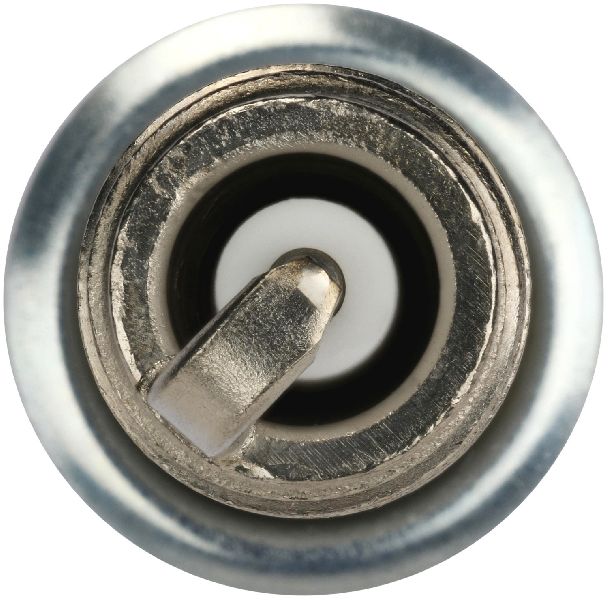
Est. part cost: $30-$75 (Aftermarket), $60-$90 (OEM) - Worn or Fouled Spark Plug 🟡 Medium Probability → Shop Spark Plug The recommended service interval for spark plugs on the 2.5L Skyactiv-G engine is 75,000 miles. Exceeding this interval or using non-OEM spec plugs can cause misfires. The engine is sensitive to correct plug heat range and gap.
How to confirm: After confirming the ignition coil is good, move the spark plug from cylinder #1 to cylinder #3. Clear codes and run the engine. If the code changes to P0303, the spark plug is faulty. Visually inspect the plug for wear, carbon fouling, or oil.
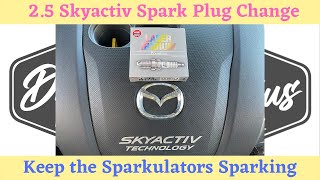
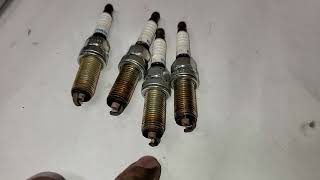
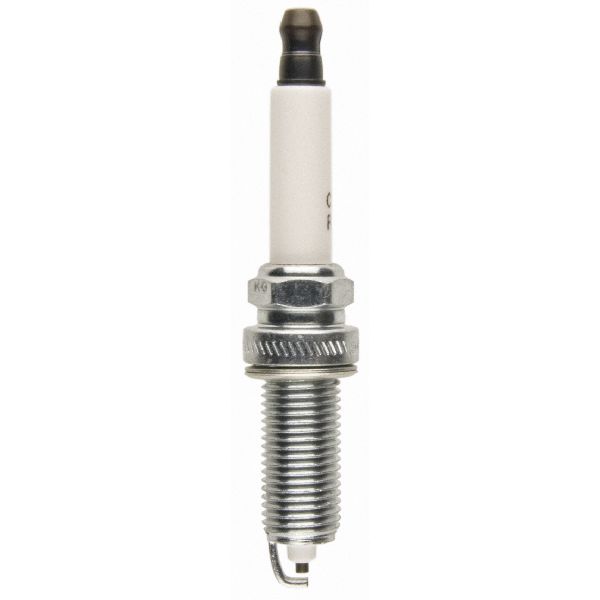
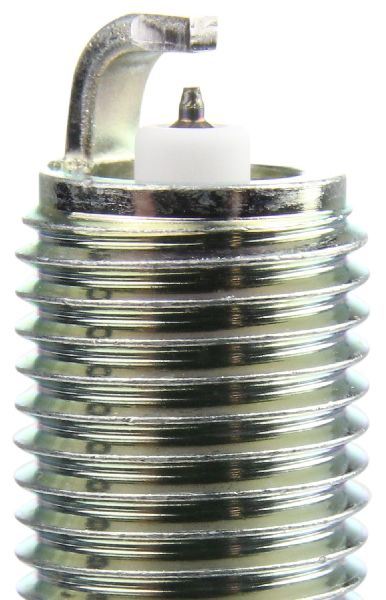
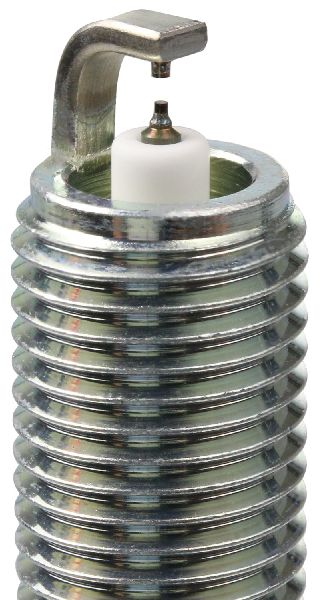
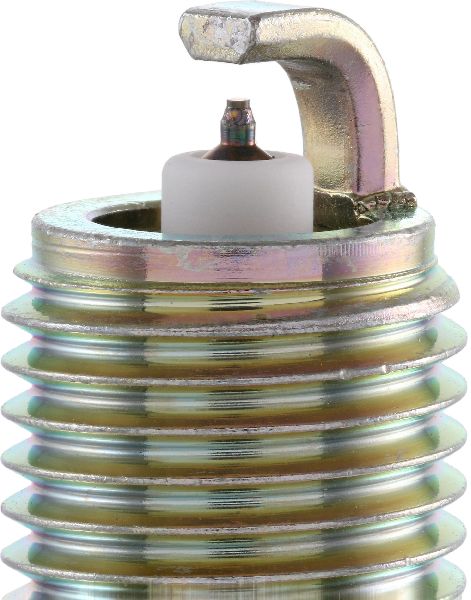
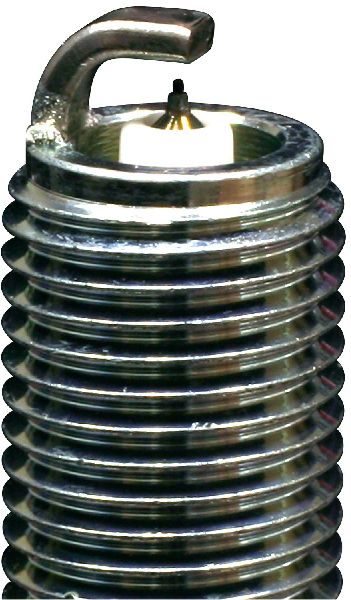
Typical fix: Replace all four spark plugs with OEM-spec Iridium plugs. The OEM part is PE5R-18-110, which is an NGK ILKAR7L11 (stock #94124). 🎬 See this step-by-step guide for replacing your spark plugs.
Est. part cost: $15-$25 per plug - Carbon Buildup on Intake Valves ⚪ Low Probability As a direct-injection (GDI) engine, fuel is sprayed directly into the cylinder, so it doesn't wash over and clean the intake valves. Over time, oil vapor from the PCV system can bake onto the valves, restricting airflow and causing misfires, especially on higher-mileage vehicles (over 80,000 miles).
How to confirm: This requires visual inspection of the intake valves using a borescope, which involves removing the intake manifold.
Typical fix: Intake valve cleaning, often performed via walnut blasting. This is a professional service with costs ranging from $400-$800, though some dealership quotes can be higher.
Est. part cost: $0 (service cost)
Rare But Worth Checking
- Leaking Valve Cover Gasket: → Shop Engine Valve Cover The gasket set includes seals for the spark plug tubes. If the seal for cylinder 1 fails, oil can leak into the tube, fouling the spark plug and damaging the ignition coil, leading to a misfire. If you find oil in the spark plug well when removing the coil, this is the cause.
- Clogged or Faulty Fuel Injector: → Shop Fuel Injector Less common than ignition issues, but a fuel injector can become clogged or fail electrically, preventing the correct amount of fuel from reaching cylinder 1. This may sometimes be accompanied by a fuel-soaked spark plug.
- Low Engine Compression: This indicates a more serious mechanical issue like worn piston rings, a bad valve, or a head gasket leak. This should only be investigated after ruling out all ignition and fuel system causes. A compression test is the diagnostic step.
- Frozen Water in Muffler: In extremely cold climates, TSB 01-007-19-3541 notes that water can accumulate and freeze in the muffler, creating an exhaust restriction that can cause a rough idle and misfire codes upon cold start. The fix is a modified muffler with drain holes.
Diagnosis Steps
- Read the trouble codes with an OBD-II scanner and confirm P0301 is present. Note any other codes.
- Identify cylinder #1. On the 2.5L Skyactiv-G engine, it is the cylinder closest to the passenger side (belt side).
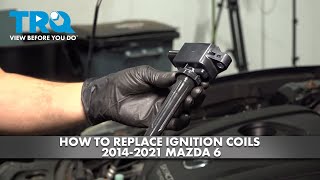
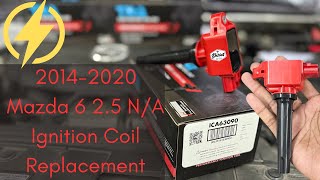
- Swap the ignition coil from cylinder #1 to cylinder #2. Use an 8mm socket to remove the coil bolt. 🎬 Watch: A quick walkthrough of the ignition coil replacement process.
- Clear the codes, start the engine, and let it run or drive it briefly to see if the check engine light returns.
- Scan for codes again. If the code is now P0302, the ignition coil from cylinder #1 is faulty and must be replaced.
- If the code remains P0301, the coil is likely not the issue. Put the coils back in their original positions.
- Remove the ignition coil and spark plug from cylinder #1. Inspect the spark plug well for oil, which would indicate a leaking valve cover gasket.
- Inspect the spark plug for wear, damage, or fouling. If it looks worn or is past its 75,000-mile service interval, replace all four plugs with the correct OEM-spec part (NGK ILKAR7L11).
- If the plug looks okay, you can swap the spark plug from cylinder #1 to cylinder #3 to definitively confirm if it's the cause.
- If the code remains P0301 after swapping the coil and plug, the issue may be with the fuel injector, wiring, or a mechanical problem like low compression, which may require professional diagnosis.
Parts You'll Likely Need
- Ignition Coil
(OEM #PE20-18-100A)— This is the most common failure point for a P0301 code on this vehicle, as documented by Mazda TSB 01-014/16. This is the updated 'MITSUBISHI' part number.
Trusted brands: Mazda (Mitsubishi-made replacement), NGK, Denso, Bosch
OEM price range: $60-$90
Aftermarket price range: $30-$75 - Iridium Spark Plug
(OEM #PE5R-18-110)— Spark plugs are a regular maintenance item and a common cause of misfires if worn or fouled. The Skyactiv engine is sensitive to plug quality. The OEM equivalent is NGK ILKAR7L11 / stock #94124.
Trusted brands: NGK (ILKAR7L11), Denso (ZC20HPR11)
OEM price range: $20-$30
Aftermarket price range: $15-$25
Related Codes That Often Appear With This One
- P0300 — If the misfire is intermittent or affects multiple cylinders, a P0300 (Random/Multiple Cylinder Misfire Detected) may be stored alongside P0301, especially if multiple 'YUMEBISHI' coils are failing.
- P0302, P0303, P0304 — If other cylinders are also misfiring due to common issues like old spark plugs or bad fuel, their respective codes may appear. These codes are also essential for diagnosis when swapping components between cylinders.
Technical Service Bulletins (TSBs) & Recalls
- 01-014/16: MULTI-MODEL - CHECK ENGINE LIGHT ON WITH DTC P0300-P0304. This TSB confirms a known issue with faulty ignition coils from a specific supplier ('YUMEBISHI') on 2014-2016 models, causing misfires.
- 01-007-19-3541: ROUGH IDLE AND/OR CHECK ENGINE LIGHT ON IN COLD CONDITIONS. This TSB addresses misfire codes that can occur on cold starts in freezing temperatures due to a restricted exhaust from a frozen muffler.
- Bulletin #01-012-19-3612: This bulletin for the Mazda3 (same make, different model) notes that vehicles may experience the Check Engine Light ON with DTC P0301:00 stored in memory.
- Bulletin #01-001-23a: For the CX-9 (same make, different model), this bulletin notes that customers may complain about poor acceleration and rough idling or the CHECK ENGINE light ON with DTC P0301:00, specifically for turbo engines.
Platform-Specific Known Issues
- Mazda Technical Service Bulletin (TSB) 01-014/16 was issued for 2014-2016 Mazda 6 models with VINs lower than JM1GJ**480633 (produced before April 7, 2016) for misfire codes P0300-P0304. The cause is an internal failure of the 'YUMEBISHI' brand ignition coils. The fix is to replace them with updated 'MITSUBISHI' brand coils (part PE20-18-100A).
Mechanic-Grade Diagnostic Values
- Ignition Coil Primary Winding Resistance — expected: 0.49 - 0.57 Ohms at 20°C (68°F). Failure: A reading outside this range indicates a faulty coil.
- Ignition Coil Secondary Winding Resistance — expected: 9.5 - 11.1 kOhms. Failure: A reading outside this range indicates a faulty coil.
- Fuel Injector Resistance — expected: 1.74 - 2.04 Ohms at 20°C (68°F). Failure: A reading of 0 (short) or OL (open) on a multimeter indicates a faulty injector.
- High-Pressure Fuel System (Live Data at Idle) — expected: 3.0 MPa (435 psi) or more. Failure: A reading consistently below 3.0 MPa at idle suggests a problem with the high-pressure fuel pump or its circuit.
- High-Pressure Fuel System (Live Data at WOT) — expected: 1600 - 1850 psi. Failure: Pressure that does not rise significantly under load or exceeds 1900 psi may indicate a pump or regulator issue.
Hidden / Shadow Codes Worth Checking
- Mode $06, TID $A2: Misfire count for Cylinder 1. This is not a separate trouble code, but rather raw data from the PCM's misfire monitor. It allows a technician to see the exact number of misfire events the computer has detected, which can be useful for diagnosing intermittent issues before they are severe enough to set a P0301 code. (see via An advanced OBD-II scanner or software (like FORScan) that can display Mode $06 test results.)
Scan Tool Commands That Help
- Mazda M-MDS / FORScan: Misfire Counter PID Monitoring — To watch for misfires in real-time on a specific cylinder during a test drive under various load conditions. This helps confirm if the misfire is related to engine speed, load, or temperature.
- Mazda M-MDS / FORScan: Fuel Injector Balance Test — This function allows the technician to individually disable fuel injectors one by one while monitoring engine RPM drop. If disabling the cylinder 1 injector causes little or no change in RPM, it confirms that the injector was not contributing properly.
Wiring & Ground Locations
- Engine Ground (Passenger Side) — Ground strap connected to the passenger side motor mount.. A poor ground at this location can affect the ignition system, including the ignition coils, potentially causing erratic behavior and misfires. It is a primary ground point for the engine block.
- Ignition Coil Ground — The ground path for the ignition coils is often tied to a ground point on or near the High Pressure Fuel Pump (HPFP).. Specific ground for the ignition system. Corrosion or a loose connection here can directly cause weak spark and misfires, which might be mistaken for a failed coil.
- Main Body Ground (Driver Side) — A multi-wire ground point located on the frame underneath the driver-side headlight, near the fuse box.. This is a critical chassis ground. While less direct, a poor connection here can introduce electrical noise and voltage issues to the entire engine management system, including the PCM and its control over ignition and fuel.
- Ignition Coil Connector — The 3-pin connector on top of each ignition coil.. The pins can be tested for power, ground, and the trigger signal from the PCM. A damaged connector, spread pins, or corroded terminals can interrupt the signal to the coil, causing a misfire on that cylinder. The connector is held on by an 8mm bolt.
Real Owner Repair Stories
- Reddit user /u/Fragout_Rambo (2015 Mazda 6 Touring 2.5L with 85k miles) — Persistent P0301 code, light backfires on cold starts, hissing sound on acceleration. Car otherwise ran fine with good mileage.
❌ Tried (didn't work) Replacing spark plugs, Replacing coil packs, Replacing PCV valve/hose, Using fuel system cleaner
✅ What actually fixed it The user did not post a final resolution, but the symptoms of a hissing sound on acceleration strongly point towards a vacuum leak, likely from a cracked intake hose or a leaking intake manifold gasket near cylinder 1, which was the next logical diagnostic step. - Mazda-Forum.com user story (2013 Mazda CX-5 (same PY-VPS engine)) — Stubborn P0301 code that would not clear.
❌ Tried (didn't work) Replacing ignition coil, Replacing spark plug, Replacing air filter, Replacing battery
✅ What actually fixed it The root cause was a failing high-pressure fuel pump (HPFP). Though a fuel pressure issue would typically affect all cylinders, it can initially manifest as a single-cylinder misfire. - NHTSA ODI #10695229: An owner of a CX-5 (same make, different model) reported that the engine light stayed on with code P0301, which is a cylinder 1 misfire issue, and the dealership kept the car for almost 3 weeks to diagnose.
- NHTSA ODI #11675874: An owner of a CX-5 (same make, different model) reported that after a belt and tensioner replacement, a scan revealed codes P0301 and P0506 (IAC system RPM Low).
OEM Part Supersession History
PE01-18-100, PE01-18-100A→PE20-18-100A— The original 'YUMEBISHI' brand coils (identified by a 4-digit lot number and no 'MITSUBISHI' logo) were prone to internal failure as noted in TSB 01-014/16. The updated part PE20-18-100A is the more robust 'MITSUBISHI' replacement.
Heads up: The older part numbers PE01-18-100 and P51B-18-100 are also superseded by PE20-18-100A. While they will physically fit, installing an old-stock 'YUMEBISHI' coil is not recommended due to the known failure rate.
Model Year Variations Within This Range
- 2014-2015: These model years are most likely to have the failure-prone 'YUMEBISHI' ignition coils from the factory. The TSB for this issue covers models produced before April 2016.
- 2016-2017: The Mazda 6 received a significant interior and minor exterior refresh for the 2016 model year, including a new dashboard, a 7-inch freestanding display, and an electronic parking brake. However, the 2.5L PY-VPS engine and its core components related to a P0301 code remained unchanged. Models built after April 2016 should have the updated 'MITSUBISHI' ignition coils from the factory, making coil failure slightly less probable than on earlier models.
Diagnostic Flowchart
Other Known Issues on This Vehicle
Issues unrelated to this code that are worth knowing about as an owner of this generation:
- Infotainment System Glitches 🟡 Low — Common across many early-generation Mazda Connect systems. Issues include slow response, random reboots, and Bluetooth connectivity problems. (Ref: Firmware updates were issued to address some problems.)
- Premature Wheel Bearing Failure 🟠 Medium — A notable number of owners report humming or grinding noises from the wheels, typically starting around 50,000-80,000 miles, requiring wheel hub assembly replacement.
- Rattling Door Speakers (Bose System) 🟡 Low — The adhesive on the speaker cones of the optional Bose sound system can fail, causing a rattling or distorted sound.
- Sticking Transmission Shifter Switch 🟡 Low — In early models, a faulty switch in the shifter assembly can prevent the car from fully shutting off, leaving it in accessory mode and draining the battery.
- Water Ingress in Rear Brake Calipers 🟠 Medium — Affects 2014-2015 models. Water can enter the brake caliper, causing the parking brake actuator shaft to corrode and potentially bind. (Ref: Recall 9916H.)
Used vs. New Parts: Buying Guide for This Vehicle
When a used part is the smart pick: A used ignition coil can be a cost-effective diagnostic tool. If you suspect a bad coil, purchasing a single used coil from a reputable salvage yard to confirm the diagnosis is a reasonable step before buying a new set.
Donor-vehicle mileage cap: roughly under 80000 miles for the part to have meaningful remaining life.
What to inspect on the donor part:
- For ignition coils, look for the 'MITSUBISHI' logo on the part itself. Avoid any coils that only have a 4-digit lot number, as these are the failure-prone 'YUMEBISHI' units.
- Inspect the plastic housing for cracks and the connector pins for corrosion.
- Ask the salvage yard for the VIN of the donor car to verify it's from a post-2016 model if possible, as these are more likely to be the updated part.
OEM-only on this vehicle (don't cheap out):
- High-Pressure Fuel Pump (HPFP): Due to the precision required for the direct injection system, aftermarket HPFPs have a poor reputation for reliability. Stick with an OEM part for this component.
- PCV Valve: This is an inexpensive but critical emissions component. An OEM valve is recommended to ensure correct crankcase pressure regulation, as poorly calibrated aftermarket versions can cause oil consumption issues.
Aftermarket brands forum-validated for this vehicle:
- Ignition Coils: NGK, Denso, Bosch
- Spark Plugs: NGK (ILKAR7L11), Denso (ZC20HPR11)
Brands owners have reported issues with on this vehicle:
- Unbranded, 'white-box' ignition coils and sensors from online marketplaces. While cheap, they have a very high failure rate and can cause persistent diagnostic headaches.
Real Owner Stories
Aggregated from forums and TSBs cited above. Mileages and costs reflect what owners reported in those sources.
2015 Mazda 6 2.5L
Symptoms: Misfires / hesitation under load only. Idles and rev's free.
What fixed it: Replaced the ignition coil in the misfiring cylinder and replaced all 4 spark plugs.
Source hint: mazdas247.com
2014-2016 Mazda 6
Symptoms: Check engine light on with DTC P0300-P0304 due to internal failure of ignition coils.
What fixed it: Replacement of faulty 'YUMEBISHI' coils with updated 'MITSUBISHI' brand coils (part PE20-18-100A).
Source hint: TSB 01-014/16
Related OBD-II Codes
Frequently Asked Questions
Does TSB 01-014/16 apply to my 2015 Mazda 6?
How can I tell if my Mazda 6 has the faulty 'YUMEBISHI' ignition coils mentioned in the TSB?
What is the correct replacement spark plug for the 2.5L Skyactiv-G engine?
Where is cylinder #1 located on the 2014-2017 Mazda 6 2.5L engine?
Can a frozen muffler cause a P0301 code on my Mazda 6?
Is carbon buildup a common cause for misfires on the Skyactiv-G engine?
Helpful Videos
We Have This Part in Stock

The information in this article is provided for general reference and educational purposes only. Vehicle specifications, procedures, and part compatibility can vary by production date, trim level, and region. Always consult your vehicle's factory service manual and verify part numbers before purchasing or performing repairs. Safety-critical components such as airbags, seat belts, and braking systems should be installed by a qualified professional.
- Mazda 6:
- 🧭 Diagnostic Flowchart
- 🎬 Helpful Videos
- 🛍️ Shop This Part
- What's Unique About the 2014-2017 Mazda 6
- Symptoms You May Notice
- Most Likely Causes
- Rare But Worth Checking
- Diagnosis Steps
- Parts You'll Likely Need
- Related Codes That Often Appear With This One
- Technical Service Bulletins (TSBs) & Recalls
- Platform-Specific Known Issues
- Mechanic-Grade Diagnostic Values
- Hidden / Shadow Codes Worth Checking
- Scan Tool Commands That Help
- Wiring & Ground Locations
- Real Owner Repair Stories
- OEM Part Supersession History
- Model Year Variations Within This Range
- Other Known Issues on This Vehicle
- Used vs. New Parts: Buying Guide for This Vehicle
- Real Owner Stories
- 2015 Mazda 6 2.5L
- 2014-2016 Mazda 6
- Related OBD-II Codes
- Frequently Asked Questions
- 🎟️ Get 5% Off