

P0301 on 2016-2022 Mazda CX-3: Cylinder 1 Misfire Causes and Fixes
P0301 on a Mazda CX-3 most often means a bad ignition coil or a worn-out spark plug in cylinder 1. This is a beginner-friendly DIY fix, typically costing $25-$100 for a spark plug and coil. The 'swap test' is the easiest diagnostic. If that doesn't solve it, carbon buildup on the intake valves is the next likely cause, a known issue for Skyactiv-G engines.
- P0301 on your CX-3 means cylinder 1 is misfiring. Start your diagnosis with the easiest and cheapest parts: the ignition coil and spark plug.
- Use the 'swap test': move the coil from cylinder 1 to cylinder 2. If the code changes to P0302, you've found the problem for free.
- Do not ignore a flashing check engine light. This indicates a severe misfire that can destroy your catalytic converter, turning a small repair into a very expensive one.
- Because this is a direct-injection (Skyactiv-G) engine, persistent misfires not solved by ignition parts are often caused by carbon buildup on the intake valves.
What's Unique About the 2016-2022 Mazda CX-3
The 2.0L Skyactiv-G is a direct-injection (GDI) engine. This design is efficient but means fuel is injected directly into the cylinder, so it doesn't wash over and clean the intake valves. Over time, oil vapors from the PCV system can bake onto the valves, causing carbon buildup that restricts airflow and can lead to misfires, a known issue for this engine family. While ignition parts are the most common cause, persistent P0301 codes on this engine, especially after 80,000 miles, often point towards the need for an intake valve cleaning.
Symptoms You May Notice
- Rough or shaking idle
- Solid or flashing Check Engine Light
- Hesitation or stumbling during acceleration
- Reduced engine power and poor fuel economy
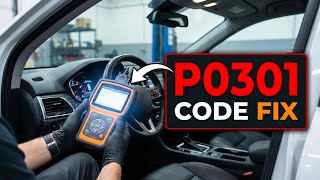
- Smell of unburned gasoline from the exhaust 🎬 Watch: A breakdown of P0301 causes and repair steps.
- In some cases, other warning lights like 'Smart Brake Malfunction' may appear as the engine's erratic data causes the vehicle's computer to disable other systems.
- Replacing only the spark plug when the ignition coil is also bad (or vice-versa). It's best to diagnose by swapping components first to isolate the faulty part.
- Replacing oxygen sensors or mass airflow sensors, which are less likely to cause a single-cylinder misfire compared to ignition components. A problem with these sensors would more likely trigger a P0300 random misfire code.
- Assuming a new spark plug or coil is good. There are reports of bad batches of aftermarket parts causing diagnosis headaches.
Most Likely Causes
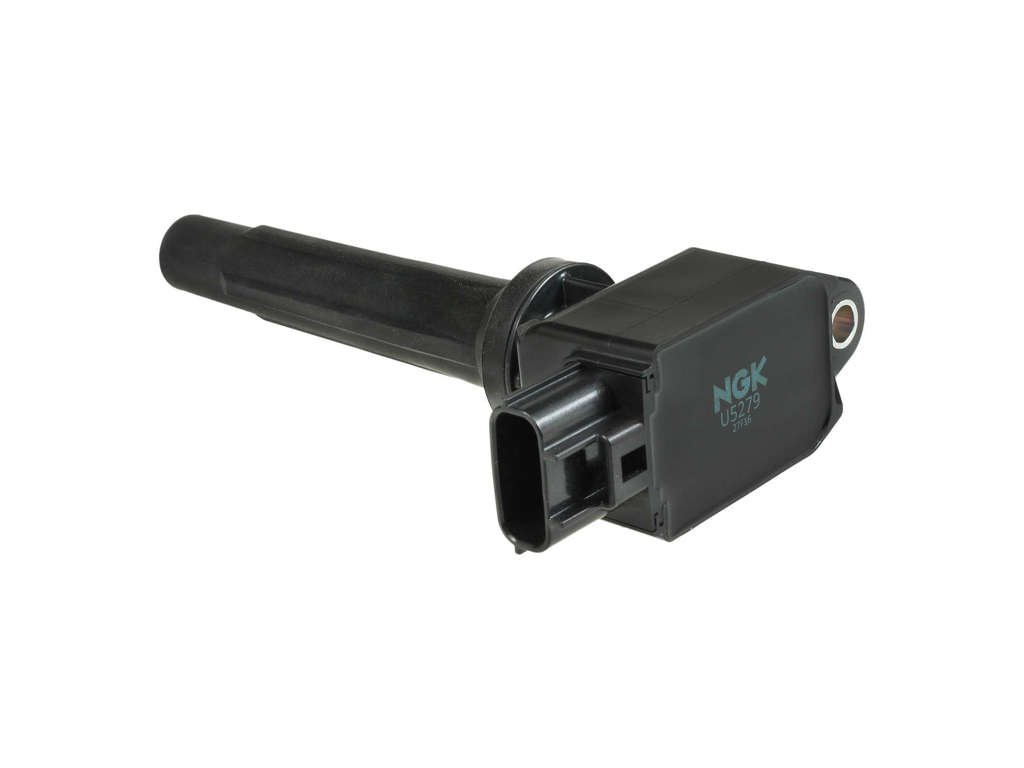
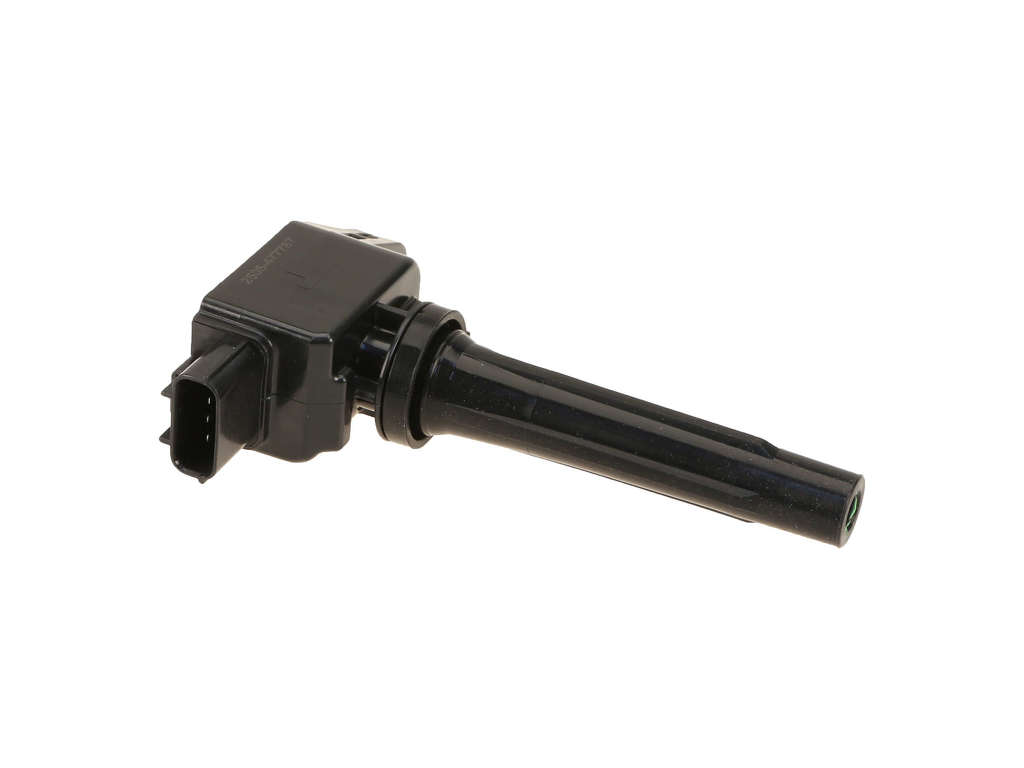
- Faulty Ignition Coil 🔴 High Probability → Shop Ignition Coil Ignition coils are a common wear item on modern coil-on-plug engines due to constant heat and vibration. It's common for one to fail, and owners on forums often report another failing a few months later.
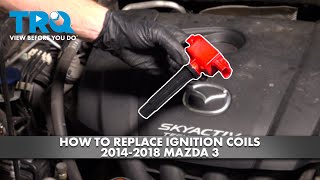
How to confirm: Swap the ignition coil from cylinder 1 with another cylinder (e.g., cylinder 2). Clear the codes and drive. If the code changes to P0302, the ignition coil is faulty. This is the most common and effective first diagnostic step. 🎬 See this walkthrough on how to replace ignition coils.
Typical fix: Replace the failed ignition coil. It's wise to replace the spark plug in the same cylinder at the same time. Many owners choose to replace all four coils if they are original and high-mileage to prevent future failures.
Est. part cost: $40-$150 - Worn or Fouled Spark Plug 🔴 High Probability → Shop Spark Plug
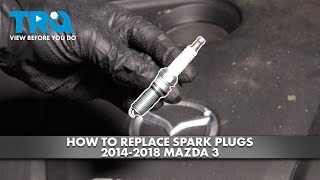
How to confirm: After ruling out the coil, inspect the spark plug from cylinder 1. You will need a 14mm thin-wall spark plug socket. Look for wear on the electrode, carbon fouling, or oil contamination. Even if it looks okay, it could be the cause. You can swap it with another cylinder's plug (e.g., cylinder 3) to see if the misfire follows (code changes to P0303).
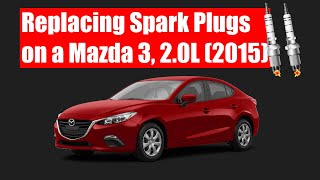
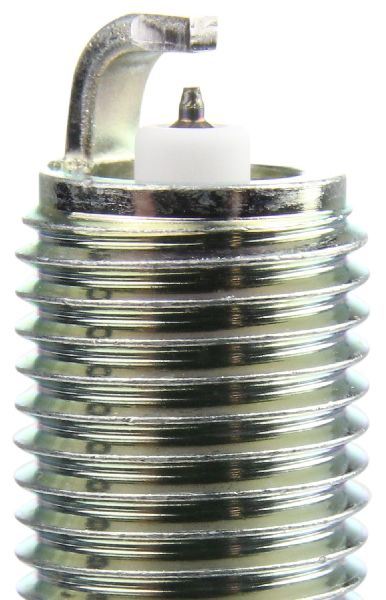
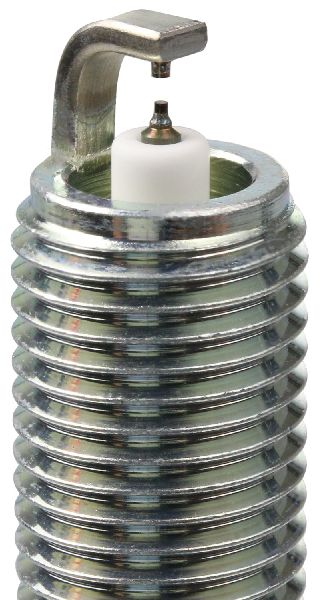
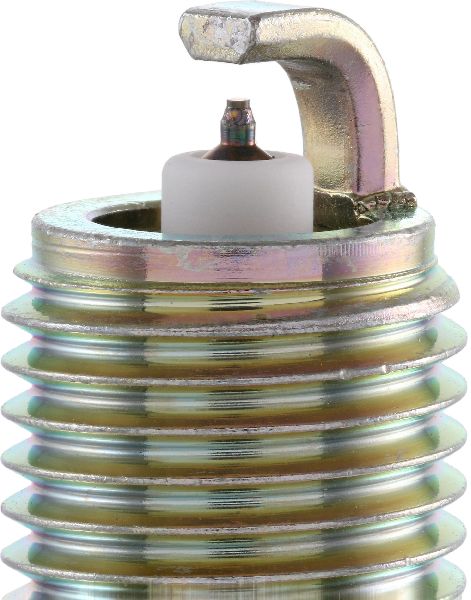
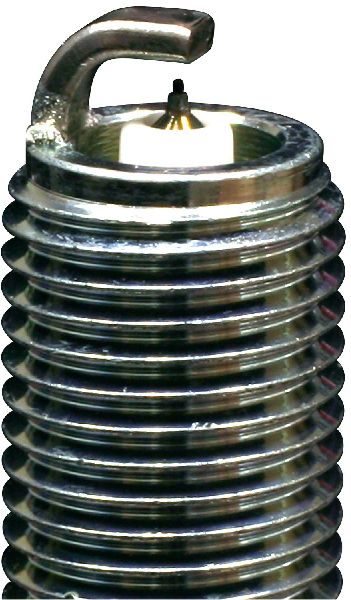
Typical fix: Replace the spark plug. Mazda recommends replacing all four at the same time for balanced performance. The OEM-spec plug is typically an NGK Iridium Laser plug. Torque to 16 ft-lbs.
Est. part cost: $15-$30 per plug - Carbon Buildup on Intake Valves 🟡 Medium Probability As a direct-injection (GDI) engine, the Skyactiv-G is inherently susceptible to carbon deposits on intake valves because fuel doesn't wash them clean. This disrupts airflow and is a well-documented cause of misfires, particularly on cold starts or at idle on engines with over 80,000 miles.
How to confirm: This is difficult to confirm without a borescope camera inserted into the intake manifold to visually inspect the valves. A rough idle and persistent misfire after replacing plugs and coils are strong indicators. A technician can perform this inspection.
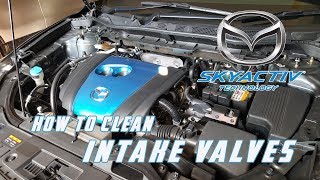
Typical fix: The intake valves need to be cleaned. The most effective method is walnut blasting, a process where crushed walnut shells are used to safely blast away deposits. Chemical cleaning methods (aerosol sprays into the intake) are also available as a less-expensive, but often less-effective, alternative. 🎬 Watch: How to clean carbon from Skyactiv intake valves.
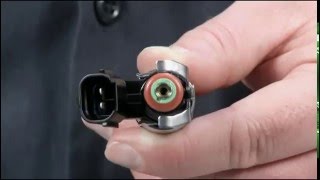
Est. part cost: $50-$100 for DIY chemical kits, $400-$800 for professional walnut blasting - Faulty Fuel Injector ⚪ Low Probability → Shop Fuel Injector While less common than ignition parts, fuel injectors can become clogged or fail electronically. Mazda has issued TSBs for other models with this engine family that link misfire codes to fuel injector circuit issues. Poor quality gasoline can contribute to premature injector failure.
How to confirm: A professional can perform a fuel injector balance test. A DIY method is to listen to the injector with a mechanic's stethoscope; it should be making a steady, rhythmic clicking sound. You can also check the injector's resistance, which should be around 12-13 Ohms.
Typical fix: Replace the faulty fuel injector for cylinder 1. This is more involved than a plug or coil change.
Est. part cost: $100-$250
Rare But Worth Checking
- Leaking Valve Cover Gasket: → Shop Engine Valve Cover The valve cover gasket set includes seals for the spark plug tubes. If the seal for cylinder 1 fails, oil can leak into the tube, fouling the spark plug and damaging the ignition coil, leading to a persistent misfire. If you see oil when you pull the ignition coil, this is the likely cause.
- Vacuum Leak: A crack in a vacuum hose or a failed intake manifold gasket near cylinder 1 can introduce unmetered air, creating a lean mixture and causing a misfire. This would typically cause a rough idle.
- Low Engine Compression: This indicates a more serious mechanical problem like worn piston rings, a leaking valve, or a head gasket issue. A compression test is required for diagnosis and should be performed if all other causes are ruled out.
Diagnosis Steps
- Read the code with an OBD-II scanner and check for any other stored codes. Note the freeze frame data to understand engine conditions when the misfire occurred.
- Swap the ignition coil from cylinder 1 with cylinder 2. Clear the codes and drive the vehicle. If the code changes to P0302, the ignition coil is the culprit.
- If the code remains P0301, move the spark plug from cylinder 1 to cylinder 3. Clear codes and drive. If the code changes to P0303, the spark plug is bad.
- If the code is still P0301, visually inspect the spark plug well for oil when you have the coil removed. Oil presence suggests a leaking valve cover gasket/tube seal.
- If ignition components are confirmed good, listen to the cylinder 1 fuel injector with a mechanic's stethoscope; it should have a regular clicking sound compared to the others.
- Inspect for vacuum leaks, particularly around the intake manifold near cylinder 1. Listen for hissing sounds with the engine running.
- For higher mileage vehicles (>80k miles), if all else fails, the primary suspect becomes carbon buildup on the intake valves. This can be confirmed with a borescope inspection.
- As a final step for a persistent misfire, perform a compression test on cylinder 1 to rule out mechanical engine damage.
Parts You'll Likely Need
- Ignition Coil
(OEM #PE20-18-100A)— This is the most common failure point for a P0301 code. Heat and vibration cause the coil to fail over time. This part number supersedes previous versions.
Trusted brands: Mazda (OEM), NGK, Denso, Bosch
OEM price range: $130-$180
Aftermarket price range: $40-$100 - Iridium Spark Plug
(OEM #PE5R-18-110 (NGK ILKAR7L11))— Spark plugs are a routine maintenance item and a frequent cause of misfires. It's recommended to replace them when replacing a coil.
Trusted brands: NGK, Denso
OEM price range: $20-$30
Aftermarket price range: $15-$25 - Fuel Injector
(OEM #PE01-13-250C)— A less common but documented failure point for this platform that can cause a persistent P0301 code when ignition components are good.
Trusted brands: Mazda (OEM)
OEM price range: $150-$250
Aftermarket price range: $80-$150
Related Codes That Often Appear With This One
- P0300 — If multiple cylinders are misfiring, you'll see P0300 (Random/Multiple Misfire) alongside P0301. This points to a shared problem like a vacuum leak, low fuel pressure, or significant carbon buildup affecting all cylinders.
- P0302, P0303, P0304 — If you see other cylinder-specific misfire codes, it could indicate a bad batch of fuel or that multiple ignition components are failing around the same time. These codes are also intentionally triggered during the 'swap test' diagnostic procedure.
- P0201 — This code for 'Cylinder 1 Injector Circuit Malfunction' points directly to an issue with the fuel injector or its wiring, confirming the fuel system as the source of the P0301 misfire. TSB 01-004-17-3317a specifically notes that these codes can appear together.
Technical Service Bulletins (TSBs) & Recalls
- 01-007-19-3541: Acknowledges P0301 with rough idle in cold weather (below 32°F/0°C) due to frozen condensation in the exhaust system. The fix involves inspecting for water and potentially replacing the main silencer.
- 01-004-17-3317a: Links P0301 with fuel injector circuit codes (P0201), sometimes caused by an internal failure of the DENSO-produced Powertrain Control Module (PCM) on early production 2016-2017 models.
Platform-Specific Known Issues
- Mazda has issued TSB #01-007-19-3541 for 2016-2019 CX-3 models, which notes that a rough idle with misfire codes (P0300-P0304) in freezing weather can be caused by ice buildup in the main silencer (muffler) restricting exhaust flow.
- Another TSB, #01-004-17-3317a, links misfire codes with fuel injector circuit codes (like P0201) and notes this can sometimes be caused by an internal PCM failure on some 2016-2017 models with VINs lower than JM1DK**146490.
Mechanic-Grade Diagnostic Values
- Fuel Injector Resistance — expected: 1.6-2.52 Ohms (Official Mazda Spec). Note: Forum users often report real-world readings closer to 12-13 Ohms on similar engines.. Failure: A reading of 0 Ohms (short) or infinite resistance (open circuit). The key is comparing the reading from cylinder 1 to a known-good cylinder.
- Low-Pressure Fuel Pump Pressure (In-tank pump) — expected: 62-68 PSI. Failure: Pressure below the minimum of 62 PSI indicates a weak in-tank fuel pump, which could starve the high-pressure system.
- High-Pressure Fuel Pump Pressure (Direct Injection) — expected: Around 400 PSI at idle, rising to 1600-1850 PSI at wide-open throttle.. Failure: Failure to build pressure under load can indicate a failing High-Pressure Fuel Pump (HPFP), though this would typically affect all cylinders.
- Mode $06 Misfire Count for Cylinder 1 — expected: A value at or near zero.. Failure: A count significantly higher than other cylinders indicates an intermittent misfire on cylinder 1, even if it's not frequent enough to set a P0301 code yet. This is visible with an advanced scan tool.
Hidden / Shadow Codes Worth Checking
- Mode $06, Test ID $53, Component ID $01: This is not a 'code' but a specific data location in the generic OBD-II diagnostics. It provides the raw misfire count for Cylinder 1 for the current and last driving cycles. This allows a technician to see if cylinder 1 is misfiring intermittently even when the rate is too low to trigger the check engine light. (see via An advanced OBD-II scan tool or software (like FORScan) that can display Mode $06 data. The tool may translate this automatically or require manual selection of the Test and Component ID.)
Scan Tool Commands That Help
- FORScan, M-MDS (Mazda Modular Diagnostic System): Power Balance Test — This function graphically displays the contribution of each cylinder to the engine's speed. It's a powerful visual tool to confirm that cylinder 1 is indeed the one underperforming, helping to verify the P0301 code before swapping parts.
- FORScan, M-MDS: Clear All Adaptations / Reset KAM (Keep Alive Memory) — After replacing a component like a fuel injector or cleaning carbon buildup, resetting the engine's learned fuel trims can help the PCM adapt to the new conditions faster and resolve any lingering rough running issues.
Wiring & Ground Locations
- Engine Room Ground Point — There are multiple engine grounds. A key one is often located on the passenger side of the engine bay, near the strut tower or connecting the engine block to the chassis.. A corroded or loose engine ground can cause erratic voltage signals for all engine sensors, including the ignition coils and injectors, potentially leading to misfires that are difficult to trace. Ensuring a clean, tight connection is a crucial step in complex electrical diagnosis.
- Ignition Coil Connector (C1) — The electrical connector on top of the ignition coil for cylinder 1.. Wiring diagrams are needed to test for proper voltage and ground at the connector. A damaged wire or corroded pin in this specific connector can prevent the coil from firing correctly, mimicking a failed coil.
Real Owner Repair Stories
- Reddit user on r/mazda (2018 Mazda CX-5, 125,000 miles) — Check engine light, Smart Brake and Front Radar Malfunction errors, car entered 'sputter mode' and wouldn't accelerate past 35 mph.
❌ Tried (didn't work) A P0302 (Cylinder 2 Misfire) had occurred two months prior. The mechanic replaced all spark plugs and the ignition coil for cylinder 2 only.
✅ What actually fixed it The new code was P0301. The story strongly implies a sequential failure of ignition coils, where the original coil on cylinder 1 failed just two months after the original coil on cylinder 2. The fix is to replace the ignition coil on cylinder 1.
OEM Part Supersession History
PE01-18-100, PE01-18-100A, P51B-18-100→PE20-18-100A— Standard part evolution for improved reliability or manufacturing changes.
Heads up: All previous part numbers are superseded by PE20-18-100A. While older versions may fit, using the latest revision is recommended for longevity.PE01-13-250B, PEAR-13-250→PE01-13-250C, which was then superseded by PE01-13-250D— Likely minor revisions to improve performance or address manufacturing issues.
Heads up: The current recommended OEM part is PE01-13-250D. When replacing, ensure you are getting the latest revision.
Model Year Variations Within This Range
- 2019-2022: For the 2019 model year refresh, the 2.0L Skyactiv-G engine received minor updates, increasing output from 146 hp/146 lb-ft to 148 hp/148 lb-ft. Mazda also claimed improved torque distribution and fuel economy. While the core components related to a P0301 code remained the same, these minor internal tweaks and software changes could subtly affect diagnostic behavior.
Diagnostic Flowchart
Other Known Issues on This Vehicle
Issues unrelated to this code that are worth knowing about as an owner of this generation:
- Infotainment System Glitches ('Ghost Touch', Freezing, Reboots) 🟡 Low — Very common across 2016-2020 models. Issues include unresponsive screens, random inputs ('ghost touch'), and system reboots. Often software-related, but can also be hardware (screen delamination).
- Premature Brake Wear 🟠 Medium — Owners frequently report needing to replace brake pads and rotors sooner than expected, sometimes under 30,000 miles. This is not covered by a specific TSB but is a widely discussed owner complaint.
- Electrical System Faults (2016 Model Year) 🟠 Medium — The 2016 model year, being the first, has a high number of complaints and TSBs related to the electrical system, including battery drain, alternator issues, and various sensor malfunctions. (Ref: Numerous TSBs exist, but no single recall covers all issues.)
- Engine Oil Consumption 🟡 Low — The Skyactiv-G engine is known to consume some oil between changes, which Mazda considers normal up to 0.8L per 1,000 km. While not typically a sign of a defect unless excessive, it requires owners to monitor oil levels regularly.
Used vs. New Parts: Buying Guide for This Vehicle
When a used part is the smart pick: For this repair, buying used parts is generally not recommended. The primary culprits (ignition coils, spark plugs) are wear items. A used ignition coil from a junkyard has unknown life left and may fail soon after installation, restarting your diagnostic headache. A used fuel injector is also risky due to potential clogging and internal wear.
Donor-vehicle mileage cap: roughly under 50000 miles for the part to have meaningful remaining life.
What to inspect on the donor part:
- If considering a used ignition coil, look for one from a low-mileage, late-model year donor vehicle.
- Inspect the plastic housing for any cracks or signs of heat stress.
- Ensure the electrical connector pins are clean and free of corrosion.
OEM-only on this vehicle (don't cheap out):
- While not strictly 'OEM-only', using OEM or high-quality OEM-supplier (NGK, Denso) ignition coils is strongly recommended. Cheap, unbranded aftermarket coils have a high failure rate and can cause diagnostic confusion.
Aftermarket brands forum-validated for this vehicle:
- NGK (for both spark plugs and ignition coils)
- Denso (for both spark plugs and ignition coils)
- Bosch (for ignition coils)
Brands owners have reported issues with on this vehicle:
- Unbranded, no-name ignition coils from online marketplaces. Owners frequently report these failing within weeks or months, or even being dead-on-arrival.
Real Owner Stories
Aggregated from forums and TSBs cited above. Mileages and costs reflect what owners reported in those sources.
2018 Mazda CX-5 2.0L Skyactiv-G — ~100000 miles
Symptoms: P0301 Cylinder 1 Misfire accompanied by a 'Smart Brake Malfunction' warning light.
What fixed it: After addressing plugs and coils, the community identified leaking valve cover gaskets and severe carbon buildup as the likely culprits for high-mileage failures.
Source hint: Reddit r/mazda: P0301 Cylinder 1 Misfire- Smart Brake Malfunction
2016 Mazda CX-3 2.0L Skyactiv-G
Symptoms: Rough idle and misfire codes occurring specifically in freezing weather (below 32°F/0°C).
What fixed it: Inspection for water and replacement of the main silencer (muffler) due to frozen condensation restricting exhaust flow.
Source hint: TSB 01-007-19-3541
2016-2017 Mazda CX-3 2.0L Skyactiv-G
Symptoms: P0301 misfire code appearing simultaneously with fuel injector circuit code P0201.
What fixed it: Replacement of the DENSO-produced Powertrain Control Module (PCM) due to internal failure.
Source hint: TSB 01-004-17-3317a
Mazda CX-3 2.0L Skyactiv-G
Symptoms: Persistent P0301 misfire; upon inspection, the #1 spark plug was found to be black with soot.
What fixed it: Diagnostic steps included confirming cylinder location and testing the injector by swapping it to another cylinder.
Source hint: Mazdas247 Forum: P0301 Cyl 1 Misfire Problem
Related OBD-II Codes
Frequently Asked Questions
My 2017 CX-3 is misfiring and showing a 'Smart Brake Malfunction' light. Are these related?
Does TSB #01-007-19-3541 apply to my 2018 CX-3 if it only misfires when it's freezing outside?
I have a 2016 CX-3 with a P0301 and a P0201 code. Could this be a computer failure?
What specific spark plugs should I use for my Skyactiv-G 2.0L engine?
Is carbon buildup a common issue on the CX-3 2.0L engine?
Where is Cylinder 1 located on my Mazda CX-3?
Helpful Videos

We Have This Part in Stock

The information in this article is provided for general reference and educational purposes only. Vehicle specifications, procedures, and part compatibility can vary by production date, trim level, and region. Always consult your vehicle's factory service manual and verify part numbers before purchasing or performing repairs. Safety-critical components such as airbags, seat belts, and braking systems should be installed by a qualified professional.
- Mazda CX-3:
- 🧭 Diagnostic Flowchart
- 🎬 Helpful Videos
- 🛍️ Shop This Part
- What's Unique About the 2016-2022 Mazda CX-3
- Symptoms You May Notice
- Most Likely Causes
- Rare But Worth Checking
- Diagnosis Steps
- Parts You'll Likely Need
- Related Codes That Often Appear With This One
- Technical Service Bulletins (TSBs) & Recalls
- Platform-Specific Known Issues
- Mechanic-Grade Diagnostic Values
- Hidden / Shadow Codes Worth Checking
- Scan Tool Commands That Help
- Wiring & Ground Locations
- Real Owner Repair Stories
- OEM Part Supersession History
- Model Year Variations Within This Range
- Other Known Issues on This Vehicle
- Used vs. New Parts: Buying Guide for This Vehicle
- Real Owner Stories
- 2018 Mazda CX-5 2.0L Skyactiv-G — ~100000 miles
- 2016 Mazda CX-3 2.0L Skyactiv-G
- 2016-2017 Mazda CX-3 2.0L Skyactiv-G
- Mazda CX-3 2.0L Skyactiv-G
- Related OBD-II Codes
- Frequently Asked Questions
- 🎟️ Get 5% Off