

P0301 on 2016-2023 Mazda CX-9: Cylinder 1 Misfire Causes and Fixes
P0301 on a 2016-2023 Mazda CX-9 with the 2.5L Turbo engine most often indicates a failed ignition coil or a worn spark plug in cylinder 1. A simple 'swap test' of the ignition coil can quickly confirm the problem. A new ignition coil costs approximately $65-$95. However, be aware of serious platform-specific issues like cracked cylinder heads (TSB 01-013/21) and seized exhaust manifold valves (TSB 01-001/23) if basic fixes fail.
- P0301 means cylinder 1 (passenger side) is misfiring.
- The most likely cause is a bad ignition coil or a worn spark plug. Always perform the 'coil swap test' first to diagnose.
- Do not ignore a flashing check engine light, as this can quickly damage your catalytic converter, turning a simple fix into an expensive one.
- Spark plugs on the 2.5L Turbo engine should be replaced every 40,000 miles. If you're near or over this mileage, replace them.
- If new coils and plugs don't solve the problem, be aware of Mazda TSBs related to more serious engine issues like seized exhaust valves or cracked cylinder heads.
What's Unique About the 2016-2023 Mazda CX-9
The 2.5L Skyactiv-G Turbo engine is a direct-injection design. While this provides good power and efficiency, it can make the engine susceptible to certain issues. The most common causes for a P0301 are simple ignition system failures, but owners should be aware of two more complex, platform-specific issues. Mazda has issued a Technical Service Bulletin (TSB 01-001/23) for misfires caused by a seizing variable valve in the exhaust manifold, which can lead to compression loss. Additionally, like many direct-injection engines, carbon buildup on the intake valves can occur over time, potentially leading to misfires that are hard to diagnose with simple tests. This happens because fuel is injected directly into the cylinder, so it doesn't wash over and clean the intake valves.
Symptoms You May Notice
- Flashing or solid check engine light
- Rough or shaky idle
- Engine hesitation or stumbling during acceleration
- Noticeable loss of power
- Reduced fuel economy
- Smell of gasoline from the exhaust
- Bubbling or gurgling sounds from the dashboard area (can indicate coolant leak/cylinder head issue)
- Replacing all four ignition coils and spark plugs when only one has failed. The 'swap test' saves money by isolating the single faulty component.
- Assuming a vacuum leak is the cause. While possible, a vacuum leak typically affects multiple cylinders and would more likely trigger a P0300 (random misfire) code or a lean code (P0171).
- Repeatedly replacing coils and plugs when the root cause is mechanical. One owner on Reddit reported multiple shops replaced coils and plugs before the dealer identified a more serious wiring harness issue.
Most Likely Causes
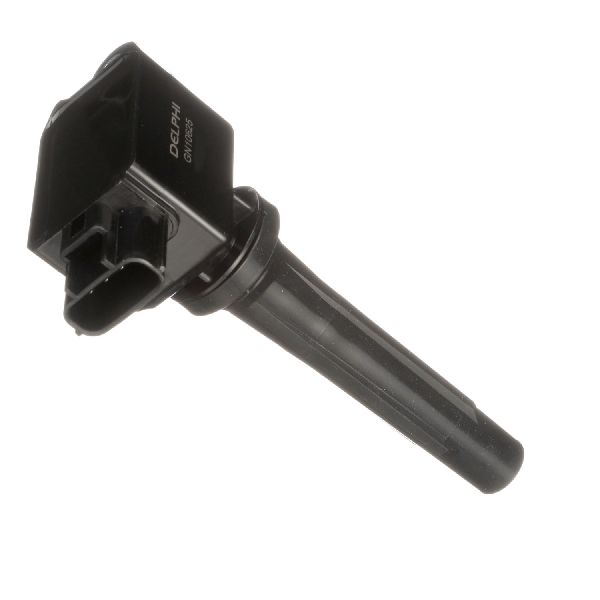
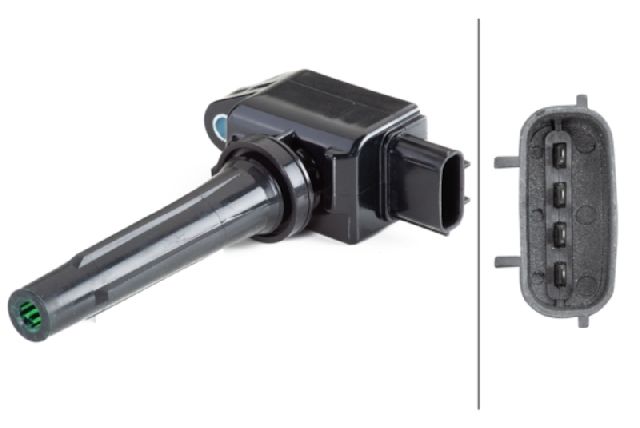
- Faulty Ignition Coil 🔴 High Probability → Shop Ignition Coil Coil-on-plug ignition systems are common failure points on most modern engines due to constant exposure to heat and vibration. Some owners report one coil failing, followed by another a few months later.
How to confirm: Perform a 'swap test'. Move the ignition coil from cylinder 1 to another cylinder (e.g., cylinder 2). Clear the codes and drive the vehicle. If the code changes to P0302, the ignition coil is confirmed to be faulty. This is the universally recommended first diagnostic step in owner forums.
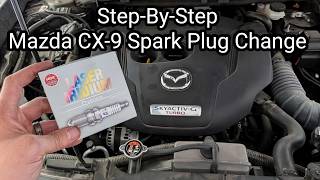
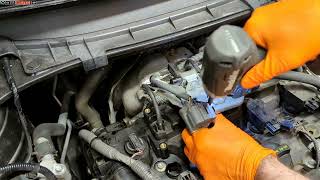
Typical fix: Replace the faulty ignition coil. It is often recommended to replace the corresponding spark plug at the same time. Accessing coils 2 and 3 requires removing a metal bracket over the engine. 🎬 Watch: Step-by-step guide to replacing coils and spark plugs.
Est. part cost: $65-$95 - Worn or Fouled Spark Plug 🟡 Medium Probability → Shop Spark Plug The 2.5L Turbo engine has a recommended spark plug replacement interval of 40,000 miles. Misfires are common if this interval is exceeded. The plugs are a long-reach, 14mm design, which can be difficult to find and require a specific socket.
How to confirm: After ruling out the ignition coil, remove the spark plug from cylinder 1. Inspect it for wear (worn electrode), damage (cracked porcelain), or fouling (black soot, oil, or white deposits). A plug fouled with black soot can indicate a rich condition or weak spark. Compare it to a new plug.
Typical fix: Replace the spark plug in cylinder 1. It is best practice to replace all four spark plugs at the same time to ensure even performance. Ensure new plugs are gapped correctly and torqued to spec (approx. 13 ft-lbs).
Est. part cost: $60-$120 for a set of four - Clogged or Faulty Fuel Injector ⚪ Low Probability → Shop Fuel Injector Direct injectors operate under high pressure and can become clogged or fail electronically over time. Bad fuel quality can accelerate this process.
How to confirm: This is more difficult to diagnose. A professional may need to perform a fuel injector balance test or check the injector's electrical resistance. A healthy injector should have a resistance of approximately 12.0 - 13.0 Ohms. Swapping injectors between cylinders is possible but is a much more involved job than swapping coils.
Typical fix: Replace the faulty fuel injector. This requires removing the intake manifold for access. Sometimes running a quality fuel system cleaner can resolve minor clogging.
Est. part cost: $100-$200 per injector
Rare But Worth Checking
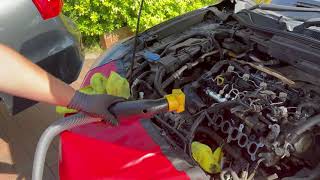
- Carbon Buildup on Intake Valves: As a direct-injection engine, fuel does not wash over the intake valves. This can lead to carbon accumulation over 40,000-50,000 miles, especially with short-trip driving, restricting airflow to a specific cylinder and causing a misfire. This is often diagnosed after ignition and fuel system components have been ruled out. Professional cleaning via walnut blasting can cost $600-$1200, while chemical cleaning is less effective. 🎬 Watch: How to perform a DIY walnut blasting carbon clean.
- Cracked Cylinder Head: → Shop Engine Cylinder Head Mazda TSB 01-013/21 (and subsequent revisions like 01-002/23) addresses cracks forming in the cylinder head, typically near the exhaust manifold on 2016-2020 models. This allows coolant to leak into a cylinder, causing a misfire, overheating, and a gurgling sound in the dash. 🎬 See details on Mazda's extended warranty for coolant leaks. Mazda has extended the warranty for this specific issue on many affected vehicles. The repair involves replacing the cylinder head with an updated part.
- Seized Exhaust Manifold Variable Valve: Mazda TSB 01-001/23 addresses a serious issue where a variable valve in the exhaust manifold seizes. This causes extreme heat, leading to uneven wear on the exhaust valve seats and a resulting loss of compression, which triggers misfire codes. The fix requires replacement of the cylinder head and the redesigned exhaust manifold.
- Leaking Valve Cover Gasket: → Shop Engine Valve Cover If the spark plug tube seal for cylinder 1 fails, oil can leak into the spark plug well. This oil will saturate the ignition coil boot and foul the spark plug, leading to a misfire. When replacing the coil or plug, the presence of liquid oil in the tube is a clear sign of this problem.
Diagnosis Steps
- Verify the code P0301 with an OBD-II scanner. Check for any other pending or stored codes.
- Note the freeze frame data to understand the engine conditions (RPM, load, temperature) when the misfire occurred.
- Perform an ignition coil 'swap test'. Label and swap the ignition coil from cylinder 1 with the coil from cylinder 2. Accessing the middle two coils requires removing a metal bracket held by 8mm and 10mm bolts.
- Clear the codes and drive the vehicle until the check engine light returns. If the code is now P0302, the ignition coil from cylinder 1 is faulty and must be replaced.
- If the code remains P0301, the coil is likely good. Proceed to inspect the spark plug.
- Remove the spark plug from cylinder 1. This requires a specific 14mm long-reach spark plug socket. Check for excessive wear, carbon fouling, oil contamination, or damage. If the plug is worn, dirty, or past its 40,000-mile service life, replace it. It's recommended to replace all four plugs.
- If the plug was fouled with oil, inspect the valve cover gasket and spark plug tube seal for leaks.
- If the coil and plug are good but P0301 persists, the issue may be with the fuel injector or a mechanical problem.
- Listen for a gurgling/bubbling noise in the dash or check for low coolant levels, which could point to the cracked cylinder head issue.
- Further diagnosis may require checking the fuel injector circuit, performing a compression test to check for mechanical engine damage (like from TSB 01-001/23), or using a borescope to inspect the intake valves for carbon buildup. These steps may require a professional mechanic.
Parts You'll Likely Need
- Ignition Coil
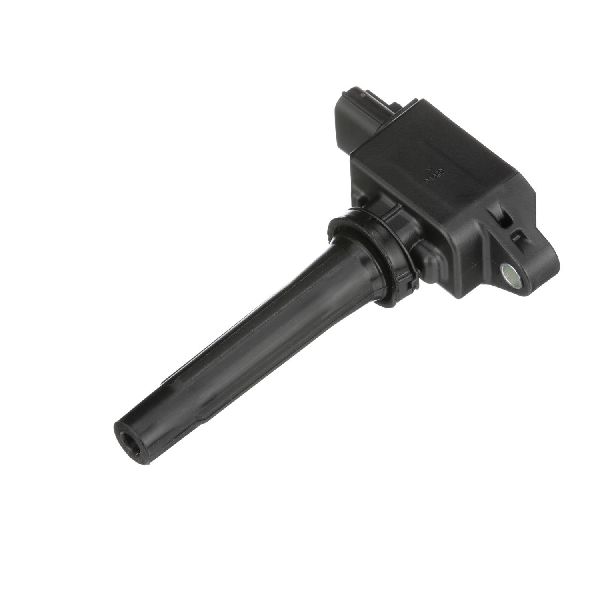
(OEM #PE2L-18-100A)— This is the most common cause of a single-cylinder misfire on this engine. It is a wear-and-tear component that fails from heat and vibration.
Trusted brands: Mazda OE, NGK, Denso, Bosch
OEM price range: $80-$110
Aftermarket price range: $50-$80 - Spark Plug
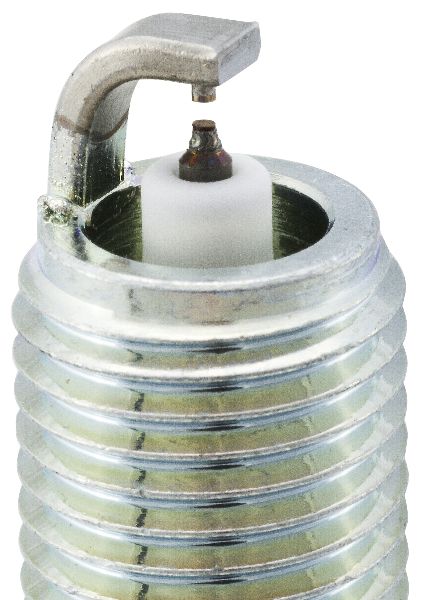
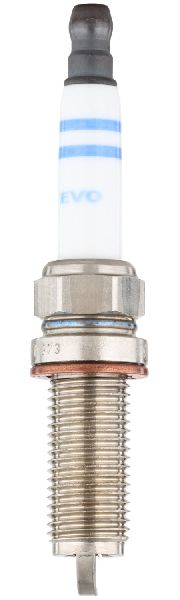
(OEM #PE5S-18-110)— Spark plugs are a routine maintenance item with a 40,000-mile replacement interval on this engine. A worn plug cannot create a strong enough spark to ignite the fuel mixture reliably. The OEM plug is an NGK DILKAR7M8, which is an Iridium/Platinum plug.
Trusted brands: NGK, Denso
OEM price range: $25-$35 per plug
Aftermarket price range: $15-$25 per plug
Related Codes That Often Appear With This One
- P0300 — If the misfire is intermittent or begins to affect other cylinders, a P0300 (Random/Multiple Cylinder Misfire Detected) code may appear alongside P0301.
- P0302, P0303, P0304 — If you perform a 'swap test' on the ignition coil from cylinder 1 to cylinder 2, the code will change to P0302, confirming the coil is the faulty part. If other codes appear without swapping parts, it may indicate a systemic issue like bad fuel.
- P250F — This code for 'Engine Oil Level Too Low' may appear in conjunction with misfires if the root cause is related to a known oil consumption issue, such as the one detailed in TSB 01-003-23 for faulty valve stem seals on some 2021 models.
Technical Service Bulletins (TSBs) & Recalls
- 01-001/23 - Poor acceleration and rough idle with DTC P0301-P0304 due to seized exhaust manifold valve.
- 01-013/21 & 01-002/23 - Coolant leak at cylinder head around exhaust manifold due to cracks.
- TSB Bulletin #01-001-23a - Notes that customers may complain of poor acceleration, rough idling, or the Check Engine light being on with DTC P0301:00, specifically for turbo engines.
Platform-Specific Known Issues
- TSB 01-001/23: Addresses misfire codes (P0301-P0304) caused by a seized variable valve in the exhaust manifold, leading to compression loss from unevenly worn exhaust valve seats. This is a major mechanical failure requiring cylinder head and exhaust manifold replacement.
- TSB 01-013/21 (superseded by 01-002/23): Details an issue with cylinder head cracks near the exhaust manifold on 2016-2020 models (CX-9 VINs lower than JM3TC**422801). This can cause coolant to leak into a cylinder and trigger a misfire. Mazda extended the warranty for this specific failure.
Mechanic-Grade Diagnostic Values
- High-Pressure Fuel System Pressure (at idle) — expected: Approx. 3.0 MPa (435 psi). Failure: Pressure significantly below 3.0 MPa suggests a weak high-pressure fuel pump.
- Fuel Injector Coil Resistance (engine cold) — expected: Approx. 12.0 - 13.0 Ohms. Failure: A reading of 'OL' (Open Loop/infinite resistance) or 0.0 Ohms indicates a failed injector. A reading that varies significantly from other cylinders also suggests a problem.
- Engine Compression — expected: The lowest reading cylinder must be within 75% of the highest reading cylinder.. Failure: A cylinder reading below the 75% threshold indicates a mechanical engine issue (e.g., rings, valves, head gasket).
Scan Tool Commands That Help
- Mazda M-MDS (or advanced aftermarket scanner): Fuel Injector Active Test / Power Balance — After ruling out ignition components, use this bidirectional command to disable the cylinder 1 fuel injector. If there is no change in engine idle roughness, it confirms the injector or cylinder is not contributing, pointing to a fuel or mechanical issue.
Wiring & Ground Locations
- Engine Ground Points — Various points on the engine block, chassis near the battery, and firewall. Specific diagrams are available from sources like AutoRepairDiagram.. A corroded or loose ground for the ignition coil or fuel injector circuits can cause a weak spark or erratic injector function, leading to a misfire. The PCM and its sensors also rely on clean grounds for accurate readings.
- Ignition Coil Connector (Cylinder 1) — Plugged directly into the top of the ignition coil for cylinder 1, the cylinder closest to the drive belts.. This is the primary point for testing voltage and signal to the coil. Pin 1 (Green wire) should have +12V with key on, Pin 2 (Black wire) is ground, and Pin 3 (Brown wire) receives the pulse signal from the PCM. Damage to this connector or its wiring is a direct cause of P0301.
Real Owner Repair Stories
- Reddit user on r/MazdaCX9 (2018 Mazda CX-9 Sport, 45,000 miles) — Intermittent Check Engine Light for P0301.
❌ Tried (didn't work) Replaced spark plugs and coils (by first mechanic), Replaced spark plugs and coils again (by second mechanic), Replaced a coil a third time under the assumption it was faulty
✅ What actually fixed it The dealership diagnosed a faulty wiring harness, a $2,000 repair. While the owner was initially skeptical, this was the final diagnosis after multiple shops failed to fix the issue by replacing common parts. - Reddit user on r/MazdaCX9 (2021 CX-9 Touring AWD, 28,000 miles) — Low oil light came on one month after an oil change, leading to further diagnosis.
❌ Tried (didn't work) Initial assumption was simple oil consumption.
✅ What actually fixed it Dealer diagnosis under warranty led to the replacement of the cylinder head per TSB 01-002/23, indicating the oil consumption was a symptom of the larger cylinder head issue.
OEM Part Supersession History
PE01-18-100, PE01-18-100A, P51B-18-100→PE20-18-100A— Standard part evolution for improved reliability or manufacturing process changes.
Heads up: The listed part numbers are generally interchangeable for this application, but it is always best practice to use the latest revision (PE20-18-100A) when replacing a coil.Unknown original cylinder head P/N→PYY1-10-SJ0C— Redesigned to address cracking issues detailed in TSB 01-002/23.
Heads up: This is the updated part number specified to fix the coolant leak/cracking issue. When replacing a cylinder head on a 2016-2020 model for this issue, ensure this updated part is used.
Model Year Variations Within This Range
- 2016-2020: These model years are primarily affected by the cracked cylinder head issue as described in TSB 01-013/21 and 01-002/23. While later models use the same engine, the cylinder head was reportedly redesigned around 2021 to mitigate this problem.
- 2021: Some 2021 models are subject to TSB 01-003-23 for excessive oil consumption due to faulty valve stem seals, which can lead to oil fouling of spark plugs and cause misfires.
Diagnostic Flowchart
Other Known Issues on This Vehicle
Issues unrelated to this code that are worth knowing about as an owner of this generation:
- Cracked Cylinder Head 🔴 High → Shop Engine Cylinder Head — Common enough on 2016-2020 models to warrant a warranty extension. Typically occurs between 60k-100k miles. (Ref: TSB 01-013/21 (and revisions))
- Seized Exhaust Manifold Valve 🔴 High — Affects turbo models, leading to loss of compression. Less common than the head crack but a catastrophic failure. (Ref: TSB 01-001/23)
- Excessive Oil Consumption (2021 models) 🟠 Medium — Affects some 2021 models due to faulty valve stem seals. Can lead to low oil levels and associated engine problems. (Ref: TSB 01-003-23)
- Intake Valve Carbon Buildup 🟠 Medium — A common issue for all direct-injection engines. Becomes a potential problem after 40,000-50,000 miles, especially with city driving.
- Internal Water Pump Failure 🔴 High — While not as widely documented as the cylinder head crack for this specific engine, internal water pump failures are a known major issue on other Skyactiv engines and can lead to coolant mixing with oil, causing catastrophic engine damage.
Used vs. New Parts: Buying Guide for This Vehicle
When a used part is the smart pick: For this repair, a used ignition coil is a reasonable choice, especially for diagnosis. Swapping a known-good used coil from a junkyard can be a cost-effective way to confirm a bad coil before buying a new one. Other simple mechanical components like mounting brackets are also fine to source used.
Donor-vehicle mileage cap: roughly under 80000 miles for the part to have meaningful remaining life.
What to inspect on the donor part:
- For ignition coils, check for cracks in the plastic housing or corrosion on the electrical pins.
- Avoid parts from vehicles that show signs of major engine fire, flood damage, or a severe front-end collision.
- If possible, check the donor vehicle's VIN to see if it falls outside the range of major TSBs (like the cylinder head issue).
- Look for a light brown, not black or oily, residue inside the exhaust tip of the donor car, which can indicate a healthier running engine.
OEM-only on this vehicle (don't cheap out):
- Cylinder Head: Due to the specific design flaw and subsequent update (TSB 01-002/23), only a new, updated OEM cylinder head (P/N PYY1-10-SJ0C or later) should be used. A used head from a 2016-2020 donor is highly likely to have the same defect.
- Fuel Injectors: Direct injectors are sensitive, high-precision components. While some aftermarket options exist, OEM injectors are recommended for reliability and correct flow rates.
Aftermarket brands forum-validated for this vehicle:
- NGK and Denso are the OEM suppliers for Mazda's ignition system. Using their branded ignition coils and spark plugs is equivalent to buying the genuine Mazda part, often at a lower cost.
Brands owners have reported issues with on this vehicle:
- Avoid no-name, unbranded ignition coils from online marketplaces. Forum discussions frequently mention these parts failing prematurely, sometimes within weeks, causing the misfire to return.
Real Owner Stories
Aggregated from forums and TSBs cited above. Mileages and costs reflect what owners reported in those sources.
2021 Mazda CX-9 2.5L Turbo
Symptoms: Engine misfire specifically on cylinder 3.
What fixed it: The dealer identified a cracked cylinder head, a known platform issue, and performed a replacement.
Source hint: Reddit thread '2021 Cracked Cylinder Head' at https://www.reddit.com/r/MazdaCX9/comments/18z0bb2/2021_cracked_cylinder_head/
2018 Mazda CX-9 2.5L Turbo
Symptoms: Check engine light pops on intermittently; recurring P0301 code that persisted despite multiple coil and spark plug changes by different mechanics.
What fixed it: The source highlights this as a case where standard plug/coil fixes failed, suggesting deeper causes like those found in TSBs (e.g., cylinder head or manifold issues).
Source hint: Reddit thread 'Check engine light pops on intermittently' at https://www.reddit.com/r/MazdaCX9/comments/181d11n/check_engine_light_pops_on_intermittently/
2016-2020 Mazda CX-9 2.5L Turbo — ~80000 miles
Symptoms: Coolant leaking into the cylinder and triggering a misfire; gurgling noises from the dash.
What fixed it: Replacement of the cylinder head under the extended warranty program for cracked heads.
Source hint: TSB 01-013/21 & 01-002/23
Related OBD-II Codes
Frequently Asked Questions
Does TSB 01-013/21 apply to my 2016-2020 Mazda CX-9?
Is there a warranty extension for the cracked cylinder head issue on the 2.5L Turbo engine?
How often should I replace the spark plugs on my CX-9 2.5L Turbo to avoid misfires?
What is the 'swap test' recommended for diagnosing a P0301 on this vehicle?
I hear a gurgling sound from my dashboard along with the P0301 code; what does this mean?
What is TSB 01-001/23 and how does it relate to my engine misfire?
Diagnostic Flowchart
Helpful Videos


We Have This Part in Stock


The information in this article is provided for general reference and educational purposes only. Vehicle specifications, procedures, and part compatibility can vary by production date, trim level, and region. Always consult your vehicle's factory service manual and verify part numbers before purchasing or performing repairs. Safety-critical components such as airbags, seat belts, and braking systems should be installed by a qualified professional.
- Mazda CX-9:
- 🧭 Diagnostic Flowchart
- 🎬 Helpful Videos
- 🛍️ Shop This Part
- What's Unique About the 2016-2023 Mazda CX-9
- Symptoms You May Notice
- Most Likely Causes
- Rare But Worth Checking
- Diagnosis Steps
- Parts You'll Likely Need
- Related Codes That Often Appear With This One
- Technical Service Bulletins (TSBs) & Recalls
- Platform-Specific Known Issues
- Mechanic-Grade Diagnostic Values
- Scan Tool Commands That Help
- Wiring & Ground Locations
- Real Owner Repair Stories
- OEM Part Supersession History
- Model Year Variations Within This Range
- Other Known Issues on This Vehicle
- Used vs. New Parts: Buying Guide for This Vehicle
- Real Owner Stories
- 2021 Mazda CX-9 2.5L Turbo
- 2018 Mazda CX-9 2.5L Turbo
- 2016-2020 Mazda CX-9 2.5L Turbo — ~80000 miles
- Related OBD-II Codes
- Frequently Asked Questions
- 🎟️ Get 5% Off