

P0301 on 2005-2019 Nissan Frontier 4.0L V6: Cylinder 1 Misfire Causes and Fixes
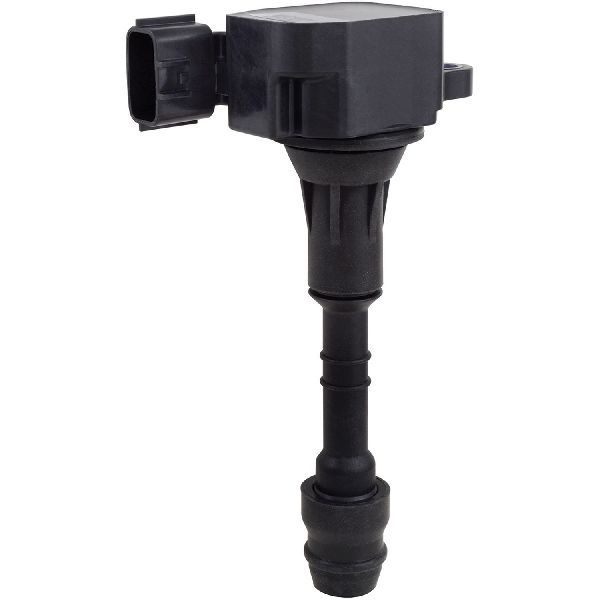
P0301 on a Nissan Frontier 4.0L V6 means cylinder 1 is misfiring. This is most commonly caused by a failed ignition coil (Hitachi is the OEM supplier, part IGC0007) or a worn spark plug (NGK PLFR5A-11). A secondary common cause is an oil leak from the valve cover's integrated spark plug tube seal, which saturates and destroys the coil. Expect to pay $40-$80 for a quality aftermarket coil and around $15 for a spark plug. The repair is DIY-friendly, but cylinder 1 (front passenger side) is notorio
- P0301 on your Frontier almost always points to a bad ignition coil or spark plug in the front cylinder on the passenger side.
- The most reliable diagnostic step is to swap the cylinder 1 ignition coil with another cylinder's coil to see if the misfire code follows it.
- Cylinder 1 is difficult to access. While it's possible to change the coil/plug without removing the intake manifold, it requires specific tools and patience.
- If you find oil in the spark plug tube, the valve cover and its integrated gasket must be replaced to prevent future coil failures.
- If the check engine light is flashing, pull over as soon as it is safe. Driving with a flashing CEL can cause rapid and expensive damage to your catalytic converter.
What's Unique About the 2005-2019 Nissan Frontier
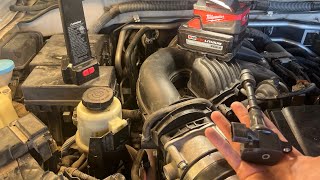
The 2005-2019 Nissan Frontier uses the D40 platform, which it shares with the Xterra and Pathfinder of the same era, all equipped with the VQ40DE 4.0L V6. For this engine, cylinder 1 is located at the front of the engine on the passenger side. Its location is notoriously difficult to access because it's tucked under the intake manifold plenum. While the factory service manual calls for removing the intake, many owners have successfully changed the coil and plug without doing so. This requires a specific tool combination, often a 1/4" drive 10mm socket with a swivel and a long extension, along with significant patience. One YouTube user documented the process, showing it is possible but requires working in a very tight space 🎬 Watch: How to replace the cylinder one spark plug without removing the intake. with limited visibility.
Symptoms You May Notice
- Rough or shaky idle, especially on a cold start
- Hesitation or stumbling during acceleration
- Noticeable loss of engine power
- Solid or flashing Check Engine Light
- Decreased fuel economy
- Smell of raw fuel from the exhaust
- Replacing only the spark plug when the ignition coil is the actual cause, or vice-versa.
- Replacing ignition components without addressing an underlying oil leak from the valve cover tube seal, leading to repeat failure.
- Replacing fuel system components before properly diagnosing the ignition system, which is the more common point of failure.
Most Likely Causes
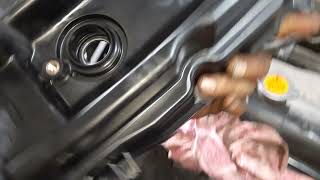
- Faulty Ignition Coil 🔴 High Probability → Shop Ignition Coil Ignition coils are a common wear item. More specifically on the VQ40DE, oil leaks from the valve cover gasket's integrated spark plug tube seals can saturate and destroy the coil. This is a very well-documented issue requiring the entire valve cover to be replaced for a permanent fix. 🎬 See this walkthrough on replacing valve covers to fix oil leak misfires.
How to confirm: Swap the ignition coil from cylinder 1 with another cylinder (e.g., cylinder 2 on the driver's side, which is easily accessible). Clear the codes and drive. If the code changes to P0302, the coil is faulty. When you remove the coil, check the boot for swelling or signs of oil saturation.
Typical fix: Replace the faulty ignition coil. The OEM supplier is Hitachi. It is best practice to replace all six coils and spark plugs at the same time, especially since accessing the passenger side bank (1, 3, 5) is labor-intensive.
Est. part cost: $40-$100 per coil - Worn or Fouled Spark Plug 🔴 High Probability → Shop Spark Plug
How to confirm: After moving the coil and confirming the misfire did not follow it, remove the spark plug from cylinder 1. Inspect it for wear, carbon buildup, oil fouling (a key sign of a leaking valve cover seal), or damage to the electrode. In some Nissan models, owners have reported finding the spark plug in a "closed position" upon removal, as noted in NHTSA ODI #10458757.
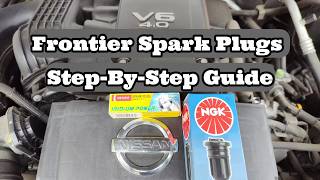
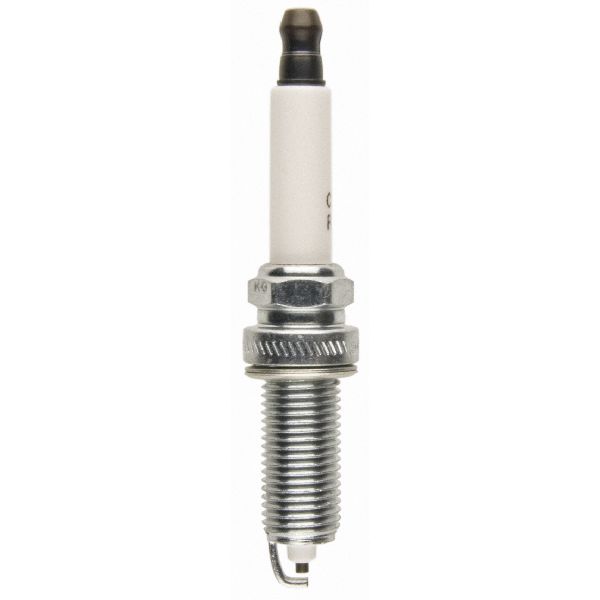
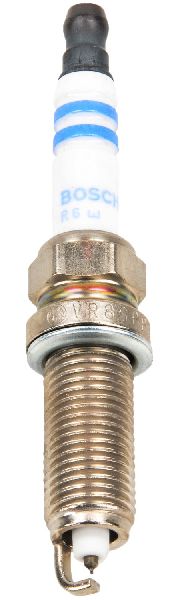
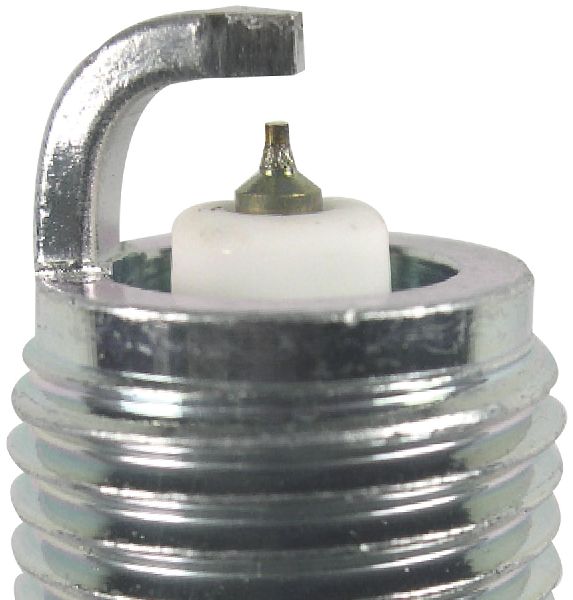
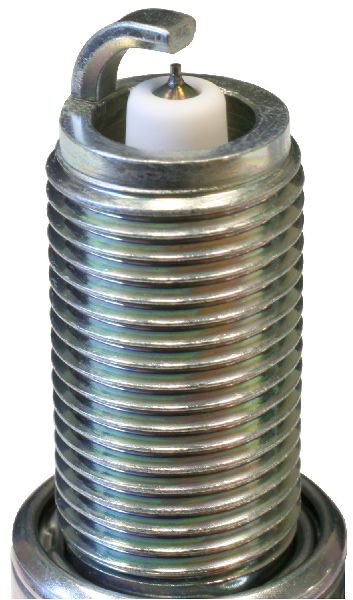
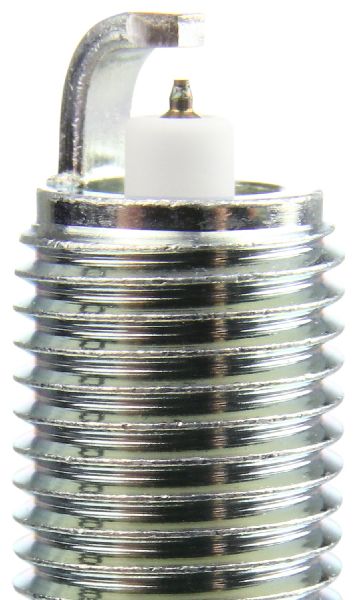
Typical fix: Replace the spark plug. NGK Laser Platinum plugs (PLFR5A-11) are the typical OEM choice. It is highly recommended to replace all six spark plugs at the same time. If oil was present, the valve cover must be replaced to prevent the new plug and coil from failing.
Est. part cost: $12-$20 per plug - Leaking Valve Cover / Spark Plug Tube Seal 🔴 High Probability → Shop Engine Valve Cover The VQ40DE's plastic valve covers have spark plug tube seals that are molded into the cover and are not sold separately by Nissan. Over time, engine heat makes these seals hard and brittle, causing oil to leak into the spark plug wells. This oil shorts out the ignition coil and fouls the spark plug, directly causing a misfire.
How to confirm: When you remove the ignition coil for cylinder 1, inspect the coil boot and the spark plug well for the presence of liquid engine oil. If oil is present, the seal has failed.
Typical fix: Replace the entire valve cover assembly for the affected bank (Passenger side for cylinder 1 is part #13264-EA210). This is a labor-intensive job as the upper intake manifold must be removed for access. It is strongly recommended to replace spark plugs, ignition coils, and the intake manifold gaskets at the same time.
Est. part cost: $70-$150 for an OEM valve cover - Faulty Fuel Injector 🟡 Medium Probability → Shop Fuel Injector
How to confirm: This is more difficult to diagnose. A professional can perform a fuel injector balance test. A DIY method involves using a multimeter to check the resistance of the injector and comparing it to the others. You can also listen to the injector with a mechanic's stethoscope to ensure it's clicking.
Typical fix: Replace the faulty fuel injector. This is an involved job as it requires removing the fuel rail.
Est. part cost: $50-$150 per injector - Vacuum Leak ⚪ Low Probability The upper or lower intake manifold gaskets can become brittle and fail over time, causing unmetered air to enter the engine and create a lean condition that can lead to a misfire.
How to confirm: With the engine running, spray brake cleaner or a propane torch (unlit) around the intake manifold gasket area for cylinder 1. If the engine idle changes, a leak is present. A professional smoke test is the most definitive method.
Typical fix: Replace the upper and lower intake manifold gaskets. This is often done concurrently with a valve cover or spark plug job on the passenger side since the manifold must be removed anyway.
Est. part cost: $40-$80 for a gasket set
Rare But Worth Checking
- Low Cylinder Compression: This indicates a more serious internal engine problem, such as a worn piston ring, a leaking valve, or a blown head gasket. A compression test is needed to confirm this.
- Faulty Camshaft or Crankshaft Position Sensor: → Shop Engine Crankshaft Position Sensor While these sensors can cause misfires, they typically affect multiple cylinders (often resulting in a P0300 code) and would likely trigger other specific sensor codes in addition to P0301.
- Transmission Issues: While rare, some Nissan platforms have seen P0301 codes associated with drivetrain failures. NHTSA ODI #11515886 describes a case where a rough idle and P0301 code were eventually diagnosed as a faulty transmission requiring replacement.
Diagnosis Steps
- Confirm the P0301 code using an OBD-II scanner. 🎬 Watch: A simple guide to diagnosing and fixing the P0301 code. Note if the check engine light is solid or flashing. Manufacturer Bulletin #NTB22-001 notes that P0301 may be stored specifically during a cold start.
- To test the ignition coil, swap the coil from cylinder 1 (front, passenger side) with the coil from cylinder 2 or 4 (driver's side). Cylinder 2/4 is much easier to access.
- Clear the DTCs with the scanner and drive the vehicle until the check engine light returns.
- If the code is now P0302 or P0304, the ignition coil is bad and needs to be replaced.
- If the code remains P0301, the coil is likely good. Proceed to inspect the spark plug and the spark plug well.
- Remove the coil from cylinder 1 again and look inside the tube with a flashlight for any standing oil. If oil is present, the valve cover tube seal has failed and the entire valve cover needs replacement.
- If no oil is present, remove the spark plug from cylinder 1. Check for excessive wear, fouling (black, wet, or white deposits), or incorrect gap. Replace if necessary.
- If the plug and coil are good and there are no leaks, the next most likely cause is the fuel injector. This may require professional diagnosis.
- Check for vacuum leaks around the intake manifold near cylinder 1 using a smoke machine or cautiously with a flammable spray.
- If all else fails, perform a cylinder compression test to check for mechanical engine problems like worn rings or a bad valve.
Parts You'll Likely Need
- Ignition Coil
(OEM #22448-EA000)— This is the most frequent cause of a single-cylinder misfire on the VQ40DE engine, often due to wear or oil contamination.
Trusted brands: Hitachi (OEM Supplier, P/N: IGC0007), NGK, Denso, Bosch
OEM price range: $90-$130
Aftermarket price range: $40-$80 - Spark Plug
(OEM #PLFR5A-11)— Spark plugs are a routine maintenance item and a primary cause of misfires as they wear out or become fouled by oil.
Trusted brands: NGK (OEM), Denso
OEM price range: $18-$25
Aftermarket price range: $12-$18 - Valve Cover (Passenger Side)
(OEM #13264-EA210)— Required if oil is found in the spark plug well, as the integrated tube seals are not serviceable separately. This is a very common root cause.
Trusted brands: Nissan (OEM)
OEM price range: $70-$150
Aftermarket price range: $50-$100
Related Codes That Often Appear With This One
- P0300 — If the misfire becomes more widespread or intermittent across multiple cylinders, a P0300 (Random Misfire) code may appear alongside P0301.
- P0303, P0305 — Misfires on other cylinders on the same bank (passenger side) can occur if there is a common underlying issue like a vacuum leak from the intake manifold gasket on that side, or if the valve cover is leaking oil into multiple spark plug tubes.
- P0420 / P0217 — NHTSA ODI #10326699 describes a scenario where a P0301 misfire occurred alongside a catalyst system code (P0420) and an engine over-temperature condition (P0217).
Technical Service Bulletins (TSBs) & Recalls
- NTB09-128: While not directly for a P0301 code, this TSB addresses the widely known issue of premature timing chain tensioner guide wear on 2005-2010 VQ40DE engines. The resulting high-pitched whine is a major platform-specific problem owners should be aware of.
- PC068 / NTB10-137: This was a voluntary safety recall to replace the ECM relay in the IPDM E/R (Intelligent Power Distribution Module Engine Room). A faulty relay could cause stalling at low speeds or a no-start condition, which could potentially be misdiagnosed.
- Bulletin #NTB22-001: This bulletin confirms that DTC P0301 may be stored in the ECM specifically during a cold start condition.
- Bulletin #NTB12096: A manufacturer bulletin for other Nissan models notes that the MIL may be ON with a misfire DTC (P0301) even when there are no noticeable drivability issues.
Platform-Specific Known Issues
- Access to the cylinder 1 ignition coil and spark plug is notoriously difficult due to its location under the edge of the upper intake manifold. While removal of the manifold is the 'by the book' method, many owners have developed techniques to perform the replacement without removing it, using a combination of a 1/4" drive 10mm socket, swivels, extensions, and patience. A Reddit user confirmed their P0301 was a bad coil, but advised, 'Pro tip it's way easier to take off the intake and do the plugs properly than to fart around trying to do it without taking off the intake.'
- The original plastic valve covers have integrated spark plug tube seals that can harden and leak oil into the spark plug wells. This oil saturation will destroy the ignition coil and cause a misfire. If you find oil on the spark plug boot when you remove the coil, the valve cover will need to be replaced to permanently fix the issue. This is a very common failure pattern on the VQ40DE engine across the Frontier, Xterra, and Pathfinder platforms.
Mechanic-Grade Diagnostic Values
- Ignition Coil Primary Winding Resistance — expected: 0.49 - 0.57 Ohms. Failure: A reading outside this range indicates a faulty coil.
- Ignition Coil Secondary Winding Resistance — expected: 9.5 - 11.1 kOhms. Failure: A reading outside this range indicates a faulty coil.
- Fuel Pressure at Idling — expected: Approximately 350 kPa (51 psi). Failure: Significantly lower pressure could indicate a weak fuel pump or clogged filter, causing a lean misfire.
- Short-Term Fuel Trim (STFT) at Idle — expected: Between -10% and +10%. Failure: Consistently high positive values (e.g., > +15%) suggest the engine is compensating for a lean condition (like a vacuum leak or weak injector), while high negative values indicate a rich condition.
- Long-Term Fuel Trim (LTFT) at Idle — expected: Close to 0%, ideally within +/- 5%. Failure: High positive or negative values that don't correct with RPM changes point to a persistent fuel delivery or unmetered air issue.
Hidden / Shadow Codes Worth Checking
- Mode $06, Test ID $53: This function on advanced OBD-II scanners monitors misfire counts for each specific cylinder. While not a 'hidden code,' it provides the raw data the ECM uses to trigger P0301. A technician can watch the misfire counter for cylinder 1 increment in real-time to confirm the misfire without waiting for the check engine light. (see via An OBD-II scan tool with Mode $06 functionality.)
Scan Tool Commands That Help
- Nissan CONSULT-II / CONSULT-III (or compatible high-end aftermarket scanner): Power Balance Test — This function allows a technician to individually disable the fuel injector to each cylinder one by one. When cylinder 1's injector is disabled, if there is little to no change in engine RPM drop compared to other cylinders, it confirms that cylinder 1 was not contributing properly to begin with. This is a fast way to verify a non-contributing cylinder without swapping parts.
Wiring & Ground Locations
- F10 and F16 — Located on the left front of the VQ40DE engine.. According to wiring diagrams, these are the primary ground points for the ignition coil assemblies. A corroded or loose connection at these grounds can cause intermittent or weak spark to one or more coils, including cylinder 1, leading to a misfire that is difficult to diagnose as the coil itself may test good.
- ECM Pin 24 (Cylinder 1 Ignition Signal) — At the main Engine Control Module (ECM) connector.. This is the specific pin on the ECM that sends the trigger signal to the ignition coil for cylinder 1. A technician can use a lab scope to back-probe this pin and verify the ECM is sending a proper square wave signal. If the signal is weak, erratic, or absent, it points to a rare but possible ECM driver failure.
Real Owner Repair Stories
- Reddit user in r/nissanfrontier (2005 Nissan Frontier VQ40DE) — Rough idle when warm, oil pressure gauge dropping at idle, P0301 code.
❌ Tried (didn't work) Initial diagnosis pointed to ignition coil.
✅ What actually fixed it Replacing the ignition coil and all spark plugs resolved the misfire. The user noted it was much easier to remove the intake manifold to perform the repair than to try and work around it. - Reddit user in r/nissanfrontier (Nissan Frontier with VQ40DE engine) — Persistent P0301 misfire on cylinder 1.
❌ Tried (didn't work) Replaced ignition coil (Car Quest brand), Replaced spark plug, Cleaned throttle body, Replaced Mass Airflow Sensor (MAF), Replaced air filter, A mechanic swapped the new coil and plug with another cylinder, but the P0301 code remained on cylinder 1.
✅ What actually fixed it The user was advised by Nissan that the ECM was the likely cause. The final resolution was not posted, but the story highlights a scenario where all common parts were replaced without fixing the issue, pointing towards a control module or wiring problem. - NHTSA ODI #10458757 — An owner reported the car shut off and triggered a P0301 code; upon inspection, the spark plug was found in a "closed position."
OEM Part Supersession History
22448-EA000→This part number appears to be stable for the VQ40DE application across the model years, but is also listed for the 2.5L engine in some databases, which can cause confusion. Always verify fitment with VIN.— N/A
Heads up: Some parts catalogs incorrectly list 22448-EA000 for the 2.5L 4-cylinder engine. While it may be the correct part, it's critical to confirm via VIN as coil specifications can differ.
Model Year Variations Within This Range
- 2005-2010: Early VQ40DE engines were known to have issues with the secondary timing chain tensioners and guides wearing prematurely. This could cause chain slack, leading to incorrect timing and potentially causing misfire codes, though usually this would present as a P0300 random misfire or with timing-specific codes.
- 2009 (Facelift): The Frontier received a facelift for the 2009 model year with a new dashboard and some styling updates. However, the VQ40DE engine and its ignition system remained unchanged, so the causes and fixes for P0301 are identical to earlier years.
Diagnostic Flowchart
Other Known Issues on This Vehicle
Issues unrelated to this code that are worth knowing about as an owner of this generation:
- Radiator/Transmission Cooler Failure (SMOD) 🔴 High — Common on 2005-2010 models with automatic transmissions. The internal radiator transmission cooler can rupture, mixing coolant and transmission fluid, leading to catastrophic transmission failure. (Ref: Nissan extended the warranty to 8 years/80,000 miles for this issue, but this has since expired for most vehicles.)
- Secondary Timing Chain Tensioner Wear 🔴 High — Affects most 2005-2010 models, causing a distinct whining noise at startup or during operation as the chain eats through the plastic tensioner guides. If ignored, can lead to catastrophic engine damage. (Ref: NTB09-128)
- IPDM ECM Relay Failure 🟠 Medium — The ECM relay within the Intelligent Power Distribution Module (IPDM) can fail due to oxidation, causing intermittent no-start or stalling conditions. (Ref: PC068 (Voluntary Safety Recall))
- Cracked Exhaust Manifolds 🟠 Medium — The factory tubular exhaust manifolds are prone to cracking over time, causing an exhaust leak tick, especially when cold.
Used vs. New Parts: Buying Guide for This Vehicle
When a used part is the smart pick: For this specific repair, used parts are generally not recommended. The most common failure items (ignition coils, spark plugs, valve covers) are wear items or have known design flaws that make a used part a significant gamble. A used intake manifold could be a viable option if the original is damaged during removal, but this is rare.
Donor-vehicle mileage cap: roughly under 80000 miles for the part to have meaningful remaining life.
What to inspect on the donor part:
- For a valve cover: Inspect the plastic for any signs of cracking or extreme brittleness. Look closely at the integrated tube seals to ensure they are not flattened or cracked, though this is hard to see.
- For an ignition coil: Avoid. There is no reliable way to know the remaining life of a used coil.
- For a fuel injector: Avoid unless professionally cleaned and flow-tested.
OEM-only on this vehicle (don't cheap out):
- Valve Cover: While aftermarket valve covers exist, the quality of the integrated seals can be questionable. Given the labor involved to replace it, using an OEM Nissan part (13264-EA210) is highly recommended to ensure longevity and prevent a repeat failure.
Aftermarket brands forum-validated for this vehicle:
- Ignition Coils: Hitachi (IGC0007) is the OEM supplier. NGK and Denso are also highly reputable brands for ignition components.
- Spark Plugs: NGK (PLFR5A-11) is the OEM plug and is the recommended choice.
Brands owners have reported issues with on this vehicle:
- Unbranded 'eBay special' or generic parts store ignition coils and valve covers. While cheap, forum users frequently report premature failure of these parts, leading to the same P0301 code returning within months and requiring the difficult labor to be performed again.
Real Owner Stories
Aggregated from forums and TSBs cited above. Mileages and costs reflect what owners reported in those sources.
2005 Nissan Frontier VQ40DE
Symptoms: Check engine light for P0301 misfire.
What fixed it: Replaced the ignition coil and all spark plugs. The owner noted it is easier to remove the intake manifold to do the job properly.
Source hint: r/nissanfrontier on Reddit: A user with a 2005 Frontier and P0301 confirmed their fix: 'Update for anyone who cares. It was the ignition coil. Swapped it out and all the the plugs and it runs great.'
2006 Nissan Xterra VQ40DE
Symptoms: Recurring P0301 code; discovered a swollen connector gasket was preventing the coil from seating properly.
What fixed it: Removed the intake plenum for access to diagnose and properly seat the coil.
Source hint: XterraNation.org: A detailed thread from a 2006 Xterra owner battling a recurring P0301.
2005-2019 Nissan Frontier VQ40DE
Symptoms: Misfire on cylinder 1.
What fixed it: Successfully replaced the cylinder 1 ignition coil without removing the intake manifold using a 10mm socket and needle-nose pliers.
Source hint: YouTube - 'How To Fix P0301 Code Easily On Nissan Frontier 2005-2019'
Related OBD-II Codes
Frequently Asked Questions
Is there a recall for the ECM relay that might cause issues on my 2005-2019 Nissan Frontier?
Can I replace the spark plug tube seals on my VQ40DE valve covers separately?
Which spark plugs should I use for my Frontier 4.0L V6 to fix a P0301?
Do I have to remove the intake manifold to reach the cylinder 1 ignition coil?
Who is the original equipment manufacturer (OEM) for the ignition coils on this vehicle?
Does the timing chain issue on 2005-2010 models cause the P0301 code?
Helpful Videos
Used OEM Parts in Stock

New Aftermarket Parts Available

The information in this article is provided for general reference and educational purposes only. Vehicle specifications, procedures, and part compatibility can vary by production date, trim level, and region. Always consult your vehicle's factory service manual and verify part numbers before purchasing or performing repairs. Safety-critical components such as airbags, seat belts, and braking systems should be installed by a qualified professional.
- Nissan Frontier:
- 🧭 Diagnostic Flowchart
- 🎬 Helpful Videos
- 🛍️ Shop This Part
- What's Unique About the 2005-2019 Nissan Frontier
- Symptoms You May Notice
- Most Likely Causes
- Rare But Worth Checking
- Diagnosis Steps
- Parts You'll Likely Need
- Related Codes That Often Appear With This One
- Technical Service Bulletins (TSBs) & Recalls
- Platform-Specific Known Issues
- Mechanic-Grade Diagnostic Values
- Hidden / Shadow Codes Worth Checking
- Scan Tool Commands That Help
- Wiring & Ground Locations
- Real Owner Repair Stories
- OEM Part Supersession History
- Model Year Variations Within This Range
- Other Known Issues on This Vehicle
- Used vs. New Parts: Buying Guide for This Vehicle
- Real Owner Stories
- 2005 Nissan Frontier VQ40DE
- 2006 Nissan Xterra VQ40DE
- 2005-2019 Nissan Frontier VQ40DE
- Related OBD-II Codes
- Frequently Asked Questions
- 🎟️ Get 5% Off