

P0301 on 2006-2010 Pontiac G6: Cylinder 1 Misfire Causes and Fixes
P0301 means cylinder 1 is misfiring. On a Pontiac G6, this is most often caused by a worn-out spark plug or a bad ignition coil. A flashing check engine light indicates a severe misfire that can damage the catalytic converter. Expect to pay $10-$20 for a quality spark plug and $50-$100 for an ignition coil for a straightforward DIY repair.
- P0301 on a Pontiac G6 means cylinder 1 is misfiring, most likely due to a bad spark plug or ignition coil.
- The diagnostic procedure is different for the 4-cylinder and V6 engines due to their different ignition system designs.
- Always identify the correct location of cylinder 1 before starting repairs: passenger side for the 2.4L I4, and firewall-side/passenger-side for the V6 engines.
- If the Check Engine Light is flashing, stop driving immediately to prevent expensive damage to the catalytic converter.
- This is a very common DIY repair that can be done with basic hand tools.
What's Unique About the 2006-2010 Pontiac G6
The Pontiac G6 was offered with multiple engines, and the ignition system for the 4-cylinder is different from the V6 models. The 2.4L I4 Ecotec engine uses a single ignition coil module (often called a cassette or coil pack) that covers all four spark plugs. In contrast, the 3.5L, 3.6L, and 3.9L V6 engines use an individual "Coil-on-Plug" (COP) for each cylinder. This is a critical difference for diagnosis, as a single coil failure on a V6 is replaced individually, while a failure in the 2.4L's module requires replacing the entire unit.
Diagnostic Flowchart
Tap your situation to follow the diagnostic path that matches what you're seeing on this vehicle.
Symptoms You May Notice
- Rough or shaky idle
- Hesitation or stumbling during acceleration
- Noticeable loss of engine power
- Solid or flashing Check Engine Light
- Decreased fuel economy
- Smell of unburned gasoline from the exhaust
- Engine jerking or sputtering
- Difficulty starting the engine
- Replacing oxygen (O2) sensors before diagnosing the ignition or fuel system. A misfire will often cause an O2 sensor code, but the sensor is reporting the problem, not causing it.
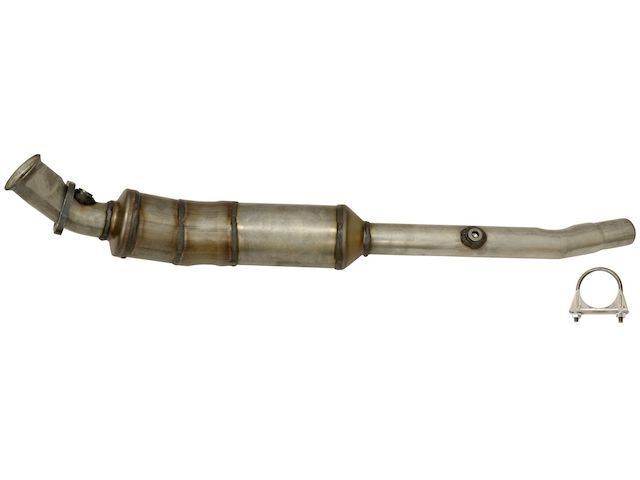
- Replacing the catalytic converter. A misfire will destroy a catalytic converter over time, but the converter itself is not the cause of the P0301 code. 🎬 Watch: Top 10 causes and fixes for the P0301 code
Most Likely Causes
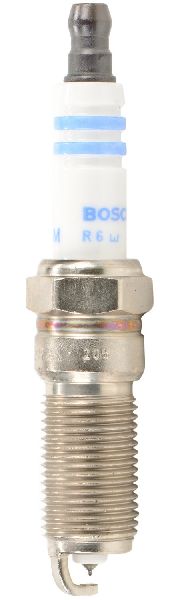
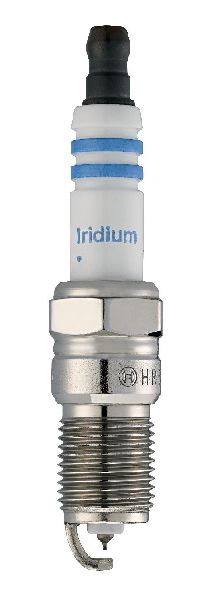
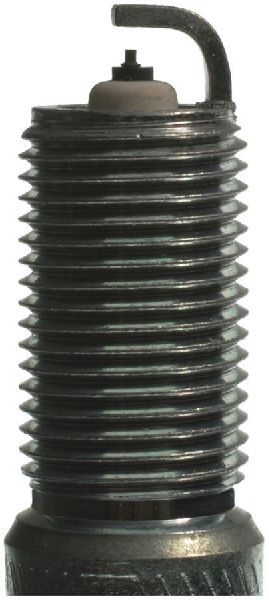
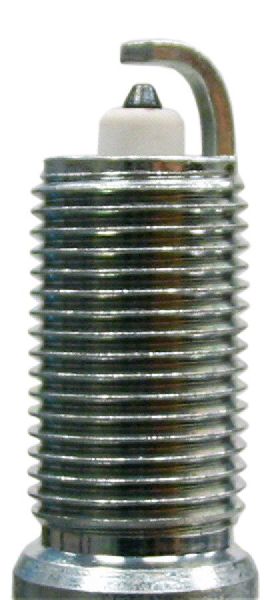
- Worn or Fouled Spark Plug 🔴 High Probability → Shop Spark Plug Spark plugs are a regular maintenance item and a common failure point on any gasoline engine. A known issue on many GM engines, including those in the G6, is the valve cover gasket and spark plug tube seals degrading over time, allowing oil to leak into the spark plug wells. This oil can foul the spark plug and interfere with the ignition coil's connection, causing a misfire.
How to confirm: Remove the ignition coil and spark plug from cylinder 1. Inspect the spark plug for a worn electrode, heavy carbon buildup, or oil/fuel fouling. Check inside the spark plug tube for the presence of engine oil. Compare it to a plug from another cylinder.
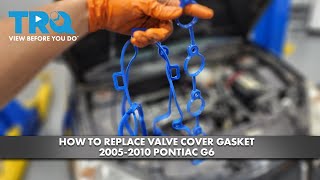
Typical fix: Replace the spark plug. If oil is present, the valve cover gasket and tube seals must be replaced to prevent a recurring misfire. It is recommended 🎬 See this walkthrough on replacing the valve cover gasket to replace all spark plugs at the same time for even performance.
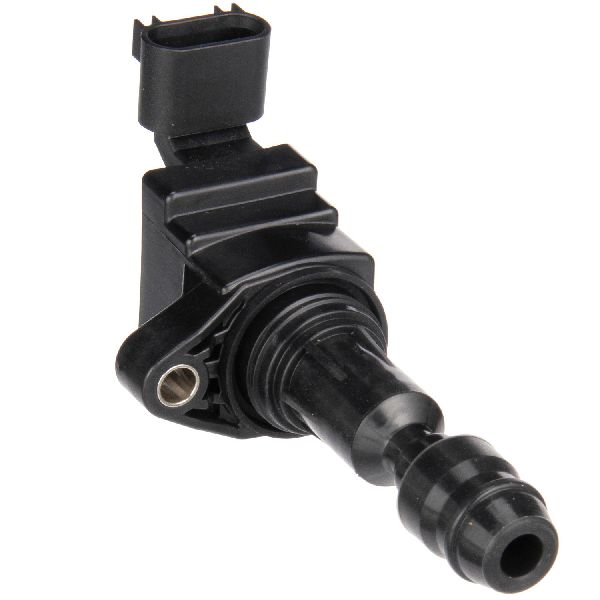
Est. part cost: $8-$20 per plug for Iridium plugs; $50-$100 for a valve cover gasket set. - Failed Ignition Coil or Ignition Module 🔴 High Probability → Shop Ignition Coil Ignition coils are a common failure item after 100,000 miles due to constant exposure to high heat and vibration. The diagnostic process differs by engine.
How to confirm: For V6 engines, swap the ignition coil from cylinder 1 with another cylinder (e.g., cylinder 3). Clear the codes and run the engine. If the code changes to P0303, the coil is faulty. For the 2.4L I4 engine, this test is not possible as it uses a single module; diagnosis involves testing for spark at the cylinder 1 boot or replacing the module as a unit if the plug is good.
Typical fix: On V6 engines, replace the single faulty Coil-on-Plug unit. On the 2.4L I4 engine, replace the entire ignition coil module assembly.
Est. part cost: $50-$100 for a single V6 coil, $100-$200 for a 2.4L coil module - Clogged or Faulty Fuel Injector 🟡 Medium Probability → Shop Fuel Injector Fuel injectors can become clogged with carbon deposits over time, preventing them from delivering the correct amount of fuel. Ethanol in gasoline can also contribute to injector deposits or failure.
How to confirm: Listen to the injector with a mechanic's stethoscope; it should make a consistent clicking sound. For a more definitive test, you can swap the fuel injector from cylinder 1 with another cylinder (e.g., cylinder 3) and see if the misfire code follows to P0303. This is more labor-intensive than swapping a coil.
Typical fix: Replace the faulty fuel injector. It's often recommended to replace the full set if they are original and high-mileage.
Est. part cost: $40-$90 per injector - Vacuum Leak ⚪ Low Probability Aging rubber hoses and plastic intake manifold gaskets can crack and leak, allowing unmetered air into the engine and disrupting the air-fuel ratio, causing a lean misfire. The PCV hose and intake manifold gaskets are common culprits.
How to confirm: With the engine running, spray short bursts of brake cleaner or starter fluid around the intake manifold gaskets and vacuum lines. If the engine RPM changes or stumbles, a leak is present where you sprayed.
Typical fix: Replace the leaking vacuum hose or intake manifold gasket.
Est. part cost: $5-$50 for hoses, $50-$150 for intake gaskets
Rare But Worth Checking
- Low Engine Compression: This is a serious mechanical issue. If spark and fuel systems check out, a compression test is the next step. Low compression can be caused by a worn piston ring, a bad valve, a leaking head gasket, or even a worn camshaft lobe.
- Wiring Harness Issues: The wiring or connector to the ignition coil or fuel injector for cylinder 1 could be damaged, corroded, or have a loose connection, causing an intermittent signal and misfire.
Diagnosis Steps
- Confirm the code P0301 is present using an OBD-II scanner.
- Identify the location of cylinder 1. On the 2.4L I4, it is the cylinder on the far left when facing the engine from the front of the car (passenger side). On the transversely mounted V6 engines (3.5L, 3.6L, 3.9L), the bank against the firewall is Bank 1 (odd-numbered cylinders 1-3-5) and the bank near the radiator is Bank 2 (even-numbered cylinders 2-4-6). Cylinder 1 is on the firewall side, closest to the passenger side of the vehicle.
- If you have a V6 engine, swap the ignition coil from cylinder 1 with an adjacent cylinder on the same bank (e.g., cylinder 3). Clear the codes, start the engine, and see if the misfire code moves to the other cylinder (e.g., P0303). If it does, the ignition coil is bad.
- If the misfire remains on cylinder 1 (or if you have the 2.4L engine), remove the ignition coil/boot and inspect the spark plug tube for oil. If oil is present, the valve cover gasket and tube seals need replacement.
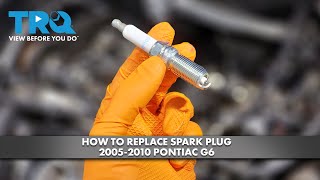
- Remove the spark plug from cylinder 1. Inspect it for wear, damage, or fouling. Replace if necessary. It's best practice to replace all plugs at once with OEM-spec (ACDelco Iridium) plugs. 🎬 Watch: How to replace spark plugs on your Pontiac G6
- If the spark plug and coil are good, inspect the wiring and connector for the ignition coil and fuel injector on cylinder 1 for any damage, corrosion, or loose pins.
- Check the fuel injector on cylinder 1. You can listen for a steady clicking with a stethoscope or swap it with another cylinder's injector to see if the code moves (this is more labor-intensive).
- If all ignition and fuel components for cylinder 1 are confirmed to be working, check for a vacuum leak near cylinder 1's intake runner using starter fluid or a smoke machine.
- As a final step for persistent issues, perform an engine compression test on cylinder 1 to check for mechanical engine problems like bad valves, piston rings, or head gasket leaks.
Parts You'll Likely Need
- Spark Plug
(OEM #ACDelco 41-103 (Iridium - for 2.4L/3.5L/3.9L))— This is the most common cause of a single-cylinder misfire and is a routine maintenance item. Oil fouling from a leaking valve cover gasket is a frequent underlying issue.
Trusted brands: ACDelco, NGK
OEM price range: $10-$15
Aftermarket price range: $6-$12 - Ignition Coil (V6 Engines)
(OEM #ACDelco D522C (replaces D515C, fits 3.5L/3.9L) or 12632479 (fits 3.6L))— A common failure point that directly causes a misfire on a specific cylinder. The 3.5L/3.9L and 3.6L V6 engines use different coils.
Trusted brands: ACDelco, Delphi, NGK
OEM price range: $80-$100
Aftermarket price range: $48-$70 - Ignition Coil Module (2.4L I4 Engine)
(OEM #ACDelco D593A / GM 12638824 (replaces 12578224))— The all-in-one design for the 2.4L engine means if the circuit for cylinder 1 fails, the entire module must be replaced.
Trusted brands: ACDelco, Delphi
OEM price range: $150-$200
Aftermarket price range: $90-$140 - Valve Cover Gasket Set (with Tube Seals) — Often the root cause of a spark plug fouling, leading to a P0301. If oil is found in the spark plug well, this is a necessary part of the repair.
Trusted brands: Fel-Pro, Mahle, ACDelco
OEM price range: $60-$90
Aftermarket price range: $30-$55
Related Codes That Often Appear With This One
- P0300 — If the misfire is intermittent or starting to affect other cylinders, a P0300 (Random/Multiple Cylinder Misfire) code may appear alongside P0301.
- P0171 or P0174 — If the misfire is caused by a vacuum leak, a 'System Too Lean' code for Bank 1 (P0171) or Bank 2 (P0174) might also be present.
Technical Service Bulletins (TSBs) & Recalls
- PIP3333C: Notes that intermittent engine misfires, including P0301, may be found and require following service information diagnostics if the cause is not immediately isolated.
- 19-NA-187: Provides diagnostic tips for identifying a misfiring cylinder using scan tool data, particularly when the misfire is subtle. It notes that an injector power balance test can help confirm which cylinder is weak.
Platform-Specific Known Issues
- A Technical Service Bulletin (TSB #PIP3333C) was issued for some 2006 models that could experience intermittent misfires (including P0301) related to the fuel system, indicating that diagnosis should not stop at the ignition system if the cause is not obvious.
- On 2.4L Ecotec engines, the integrated ignition coil module can develop cracks in the housing, allowing moisture intrusion and causing premature failure of one or more coils.
- For V6 engines, especially the 3.6L, a worn or stretched timing chain can alter cam timing enough to cause misfire codes, although this would typically be accompanied by other codes (like P0008, P0017) and rattling noises.
Mechanic-Grade Diagnostic Values
- Fuel Pressure (Key On, Engine Off) — expected: 50-60 PSI for all engines (2.4L, 3.5L, 3.6L, 3.9L). Failure: Pressure below 50 PSI can indicate a weak fuel pump or clogged filter, potentially causing a lean misfire.
- Ignition Coil Primary Resistance (V6 Engines) — expected: 0.4 - 2.0 ohms (typical). Failure: A reading of infinity (OL) indicates an open coil. A reading outside the typical range suggests a failing coil, though resistance tests are not always conclusive for modern coils.
- Fuel Injector Resistance — expected: 11-14 ohms (typical for high-impedance injectors used in these engines). Failure: A reading significantly outside this range, or showing as open (OL), indicates a failed injector coil.
- Scan Tool Live Data: Misfire Counts (Mode $06) — expected: 0 counts on all cylinders during normal operation.. Failure: A continuously incrementing counter for Cylinder 1 (Test ID $A2, Component ID $01 on many GM vehicles) confirms the misfire in real-time, even before a code is set.
Hidden / Shadow Codes Worth Checking
- Mode $06, Test ID $A2-$A7: This is not a DTC, but a specific monitor within the OBD-II system that tracks misfire counts per cylinder. For GM vehicles of this era, Test ID $A2 typically corresponds to Cylinder 1, $A3 to Cylinder 2, and so on. Viewing this data with an advanced scan tool can show misfires happening in the current or previous drive cycles, even if they aren't severe enough to set a P0301 code yet. (see via A professional scan tool or advanced DIY scanner with Mode $06 capability.)
Scan Tool Commands That Help
- Tech2 / GDS2 (or equivalent professional scanner): Cylinder Power Balance Test — This function graphically displays the power contribution of each cylinder. A cylinder with a misfire will show a significant drop compared to the others. It's a quick way to visually confirm the misfire is on cylinder 1 without swapping parts.
- Tech2 / GDS2 (or equivalent professional scanner): Fuel Injector Balance Test — This test allows the technician to fire each injector for a set amount of time and measure the corresponding drop in fuel pressure. If the pressure drop for cylinder 1 is significantly different from the others, it indicates a clogged or faulty injector. This is a definitive test to use when an injector is suspected after ignition issues are ruled out.
Wiring & Ground Locations
- G103 — On the left side of the engine compartment, on top of the left strut tower.. This is a primary ground point for multiple engine components. Corrosion or a loose connection here can cause erratic behavior in the engine control systems, potentially leading to misfires.
- G110 (2.4L Engine) — On the top left front side of the engine block.. This is a critical ground for the ignition module and fuel injectors on the 2.4L engine. A poor connection at G110 can directly cause misfires on one or more cylinders.
- G105 (V6 Engines) — On a transmission stud, located under the throttle body.. This ground is shared by the Engine Control Module (ECM), Transmission Control Module (TCM), and various sensors. A fault at this specific ground is known to cause a host of issues, including no-start conditions and misfires, due to providing a faulty reference voltage to the ECM.
- Cylinder 1 Injector/Coil Connector — On the V6 engines, Cylinder 1 is on the firewall-side bank, closest to the passenger side. On the 2.4L, it's the first cylinder from the passenger side. The ECM provides a ground pulse to fire the coil and injector.. The wiring harness to cylinder 1, especially on the 2.4L engine, can chafe against the alternator or upper radiator hose, causing a short or open in the injector control circuit, leading directly to a P0301 code.
Real Owner Repair Stories
- GM Preliminary Information Bulletin (2005-2010 Pontiac G6 with 2.4L Engine) — Random misfire code P0300, often accompanied by a specific P0301.
❌ Tried (didn't work) Spark plug replacement, Ignition module replacement
✅ What actually fixed it The fuel injector wiring harness for cylinder #1 was found to be chafing against the upper radiator hose clamp or the alternator. Repairing the damaged wire and securing the harness away from the contact point resolved the misfire. - YouTube video by 'Steve's Autocare' (2006 Pontiac G6 with 3.5L V6) — Misfire on cylinder #2 (P0302), but diagnostic process is identical for P0301.
❌ Tried (didn't work) Visual inspection showed no obvious faults.
✅ What actually fixed it Using a lab scope, the technician determined there was no ground pulse from the ECM to the fuel injector. The ECM was faulty and not commanding the injector to fire. Replacing the ECM fixed the misfire. This is a rare cause, but demonstrates that if the coil, plug, and injector wiring all test good, the ECM itself can be the culprit.
When the Usual Fixes Don't Work
- While spark plugs and ignition coils are the most frequent culprits for P0301, a significant number of owners, particularly those with the 3.6L V6, have chased this code only to find the root cause was a stretched timing chain. In these cases, replacing ignition components provides no relief, and the misfire persists until the expensive timing chain service is performed. Similarly, on the 2.4L engine, a persistent P0301 that isn't resolved by a new plug and ignition module should lead to a careful inspection of the injector wiring harness for chafing before suspecting more complex issues.
OEM Part Supersession History
ACDelco D515C→ACDelco D522C— Updated design for improved durability and performance. The D522C is the current recommended replacement for the original D515C coil used on 3.5L and 3.9L V6 engines.
Model Year Variations Within This Range
- 2007-2010: The 3.6L DOHC V6 (LY7) engine was introduced in 2007. Unlike the other engines, it uses gasoline direct injection (GDI) and is highly prone to carbon buildup on intake valves, which can cause a P0301 misfire. It is also infamous for premature timing chain stretch, which can cause misfires along with timing correlation codes like P0008 or P0017.
- 2009-2010: Some 2.4L, 3.5L, and 3.6L engines in these years were available with a Flex Fuel (E85) option (VIN 'K' for 3.5L). While the fundamental causes of P0301 are the same, prolonged use of E85 can sometimes accelerate wear on fuel system components if they are not maintained properly.
Helpful Videos

Used OEM Parts in Stock
New Aftermarket Parts Available

The information in this article is provided for general reference and educational purposes only. Vehicle specifications, procedures, and part compatibility can vary by production date, trim level, and region. Always consult your vehicle's factory service manual and verify part numbers before purchasing or performing repairs. Safety-critical components such as airbags, seat belts, and braking systems should be installed by a qualified professional.
- Pontiac G6:
- 🧭 Diagnostic Flowchart
- 🎬 Helpful Videos
- 🛍️ Shop This Part
- What's Unique About the 2006-2010 Pontiac G6
- Symptoms You May Notice
- Most Likely Causes
- Rare But Worth Checking
- Diagnosis Steps
- Parts You'll Likely Need
- Related Codes That Often Appear With This One
- Technical Service Bulletins (TSBs) & Recalls
- Platform-Specific Known Issues
- Mechanic-Grade Diagnostic Values
- Hidden / Shadow Codes Worth Checking
- Scan Tool Commands That Help
- Wiring & Ground Locations
- Real Owner Repair Stories
- When the Usual Fixes Don't Work
- OEM Part Supersession History
- Model Year Variations Within This Range
- 🎟️ Get 5% Off