

P0301 on 2005-2008 Porsche 911 (M96/M97): Cylinder 1 Misfire Causes and Fixes
On a 2005-2008 Porsche 911 with the M96/M97 engine, code P0301 is most often caused by a cracked or failed ignition coil on cylinder 1. This is a common and relatively simple DIY fix, with a replacement coil costing between $50 and $90. While the fix is often easy, this code should be diagnosed promptly because it can occasionally be an early symptom of a more serious engine problem like cylinder bore scoring.
- P0301 on a 2005-2008 Porsche 911 means cylinder 1 is misfiring.
- The most likely cause is a bad ignition coil, which is a straightforward DIY replacement.
- Always diagnose by swapping the coil and then the spark plug to an adjacent cylinder to confirm the faulty part.
- Do not ignore this code. While likely a simple fix, it can be an early symptom of catastrophic engine bore scoring, a known issue with these engines.
- If the check engine light is flashing, pull over and shut off the engine as soon as it is safe to do so to prevent catalytic converter damage.
What's Unique About the 2005-2012 Porsche 911
For the M96/M97 engine, a P0301 code carries a wider range of possibilities than on a typical car. While the most common cause is a simple ignition coil failure due to heat and age, this code can also be an early symptom of cylinder bore scoring, a serious and well-documented issue with these engines. This makes a thorough and prompt diagnosis critical. Unlike many cars, a misfire on this platform shouldn't be ignored, as the potential for a minor issue to be masking a major one is significantly higher. Bore scoring is known to be more prevalent on Bank 2 (cylinders 4-6), but can occur on any cylinder, so a misfire on Cylinder 1 should still be investigated properly.
Generation note: The 2005-2012 model years cover the entire Porsche 997 generation. However, this guide is specific to the 2005-2008 models (997.1) equipped with the M96 or M97 engine. The 2009-2012 models (997.2) use a different, direct-injected 9A1 engine which does not have an IMS bearing and has redesigned cylinder liners, making it less prone to the same types of bore scoring.
Symptoms You May Notice
- Rough or shaky engine idle.
- Hesitation or stumbling during acceleration.
- Flashing or solid Check Engine Light.
- Reduced engine power.
- Noticeable smell of unburnt fuel from the exhaust.
- Increased fuel consumption.
- Difficulty starting the engine.
- Replacing the Mass Airflow (MAF) sensor. While a faulty MAF can cause general running issues, it typically results in random/multiple misfire codes (P0300) or codes for an entire bank, not a single cylinder misfire like P0301.
Most Likely Causes
- Failed Ignition Coil 🔴 High Probability → Shop Ignition Coil The coil-on-plug units on the M96/M97 engine are exposed to significant heat, causing their plastic housings to become brittle and crack over time. This allows spark to escape, leading to a misfire, especially in damp conditions or after washing the car. The rubber boots can also deteriorate, causing a poor seal on the spark plug.
How to confirm: Swap the ignition coil from cylinder 1 with the coil from an adjacent cylinder (e.g., cylinder 2). Clear the codes and drive the car. If the code changes to P0302, the ignition coil is faulty. Visual inspection may reveal fine cracks in the plastic housing.
Typical fix: Replace the failed ignition coil. It is often recommended to replace all six coils and spark plugs at the same time, especially if they are original or their age is unknown, as the others are likely near the end of their service life.
Est. part cost: $45-$90 per coil - Worn or Fouled Spark Plug 🟡 Medium Probability → Shop Spark Plug Spark plugs are a standard maintenance item with a finite lifespan. If they are past their service interval or if another issue (like a leaking injector, failing AOS, or early bore scoring) is causing oil or fuel to foul the plug, a misfire will occur.
How to confirm: After confirming the coil is good, remove the spark plug from cylinder 1. Inspect it for wear (worn electrode), carbon buildup, or oil/fuel fouling. Compare it to a new plug. You can also swap it with another cylinder's plug to see if the fault moves.
Typical fix: Replace the spark plug in cylinder 1. It is best practice to replace all six spark plugs at the same time to ensure consistent performance and avoid repeated labor.
Est. part cost: $10-$25 per plug - Vacuum Leak ⚪ Low Probability Hoses and gaskets can become brittle with age. A common failure point on these engines is the Air-Oil Separator (AOS), which can crack or its internal diaphragm can fail, creating a significant vacuum leak, leading to misfires and other codes. Other sources include a cracked oil filler cap or brittle spark plug tubes (on early M96 engines).
How to confirm: A smoke test is the most effective way to find a vacuum leak. A technician will fill the intake system with smoke and look for where it escapes. A failing AOS may also cause a strong vacuum at the oil filler cap (making it hard to remove with the engine running), a loud whistling or sucking sound, or large amounts of blue-white smoke from the exhaust.
Typical fix: Replace the cracked hose, gasket, or failed component (like the AOS). When replacing the AOS, it's recommended to use a genuine Porsche part and also replace the associated hoses.
Est. part cost: $50-$400 depending on the source of the leak (AOS replacement is more expensive)
Rare But Worth Checking
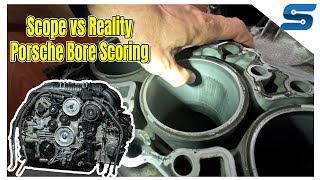
- Cylinder Bore Scoring: This is a severe and engine-destroying issue known to affect M96/M97 engines, particularly the larger 3.8L 'S' versions. 🎬 See a detailed explanation of M97 bore scoring issues. A P0301 code can be an early symptom, caused by oil fouling the spark plug or loss of compression. Other signs include a rhythmic ticking noise from the engine (piston slap) that is loudest when cold, increased oil consumption, and a sooty tailpipe on one side of the car. Diagnosis requires a borescope inspection of the cylinder walls, ideally from the sump with the piston at the bottom of its stroke.
- Clogged or Failed Fuel Injector: → Shop Fuel Injector Less common than ignition issues, but a fuel injector can become clogged with deposits or fail electronically, preventing the correct amount of fuel from reaching cylinder 1. This can be diagnosed by swapping the injector with another cylinder to see if the misfire code follows, or by observing fuel trim data with an advanced scanner.
- Low Compression: Beyond bore scoring, a misfire can be caused by other mechanical issues like a burnt valve, a failing head gasket, or worn piston rings leading to a loss of compression in the cylinder. A compression test and a leak-down test are required to diagnose this after ignition and fuel systems have been ruled out.
- Variable Valve Timing (VVT) Solenoid Failure: A failing VVT solenoid (Variocam) on Bank 1 can cause misfires across all three cylinders on that bank (P0301, P0302, P0303), but can sometimes manifest as a single cylinder misfire initially. This issue is sometimes seen on cars with dirty oil or that sit for long periods.
- Fuel System Pressure Issues: In some cases, a P0301 misfire may be accompanied by fuel system faults. For instance, NHTSA ODI #11443174 describes a scenario where P0301, P0302, and P0303 occurred alongside code P0087, indicating the fuel rail system pressure was too low.
Diagnosis Steps
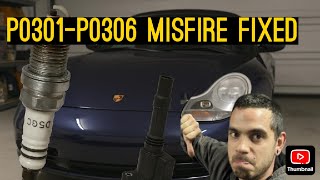
- Read the fault codes with an OBD-II scanner to confirm P0301 and check for any other codes. Note if the Check Engine Light is solid or flashing. 🎬 Watch: Step-by-step guide to diagnosing Porsche misfire codes.
- Swap the ignition coil from cylinder 1 with the coil from cylinder 2. Clear the codes and run the engine. If the code returns as P0302, the coil is bad.
- If the code remains P0301, swap the spark plug from cylinder 1 with cylinder 2. Clear codes and run the engine. If the code becomes P0302, the spark plug is bad.
- If the code remains P0301, inspect the wiring and connector for the cylinder 1 ignition coil and fuel injector for any damage, corrosion, or looseness.
- Perform a fuel injector test. This can involve listening for a clicking sound from the injector, checking its resistance, or swapping the injector from cylinder 1 to cylinder 2 to see if the fault moves.
- Check for vacuum leaks. Perform a smoke test on the intake system. Pay close attention to the Air-Oil Separator (AOS) and all connected hoses. Check for excessive vacuum at the oil fill cap when the engine is running.
- If ignition and fuel components are ruled out, perform a compression and leak-down test on cylinder 1 to check for mechanical engine problems.
- If compression is low or other symptoms (ticking, high oil consumption) are present, perform a borescope inspection of cylinder 1 to check for cylinder wall scoring.
Parts You'll Likely Need
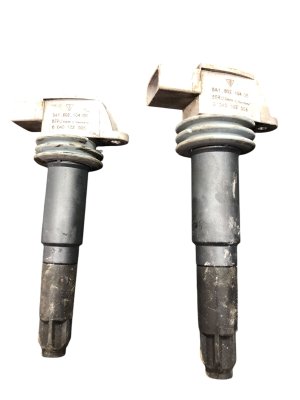
- Ignition Coil
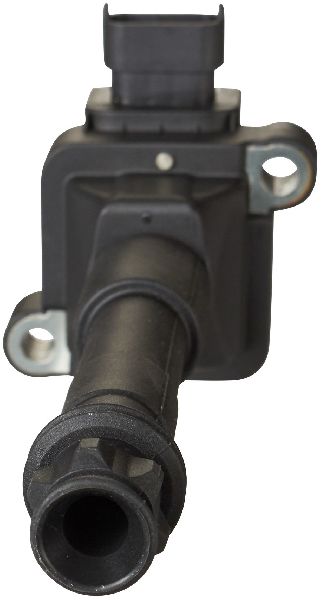
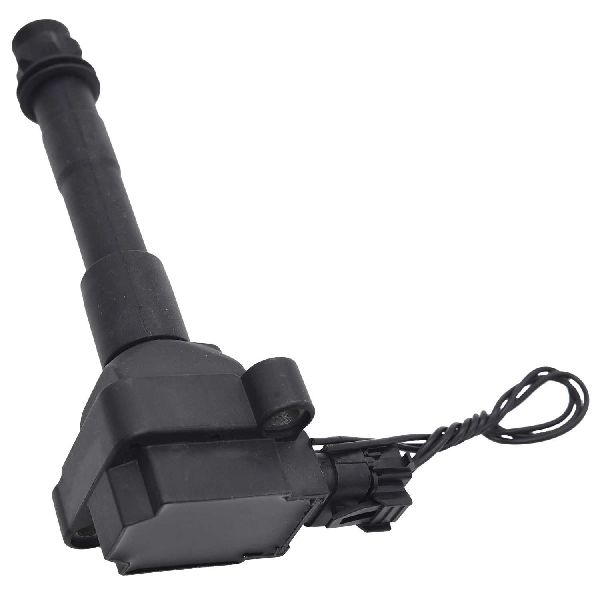
(OEM #997-602-104-02)— This is the most frequent cause of a single-cylinder misfire on the M96/M97 engine due to their tendency to crack from heat exposure. The part number has been revised over the years; 997-602-104-02 is a common replacement.
Trusted brands: Beru, Bosch
OEM price range: $70-$90
Aftermarket price range: $45-$70 - Spark Plug
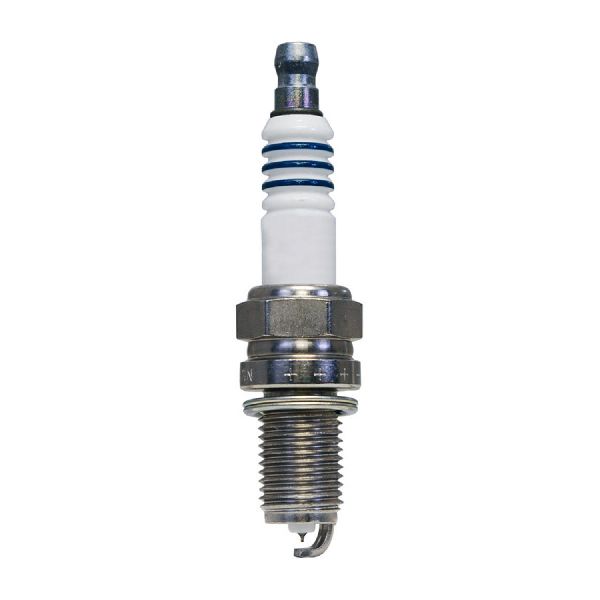
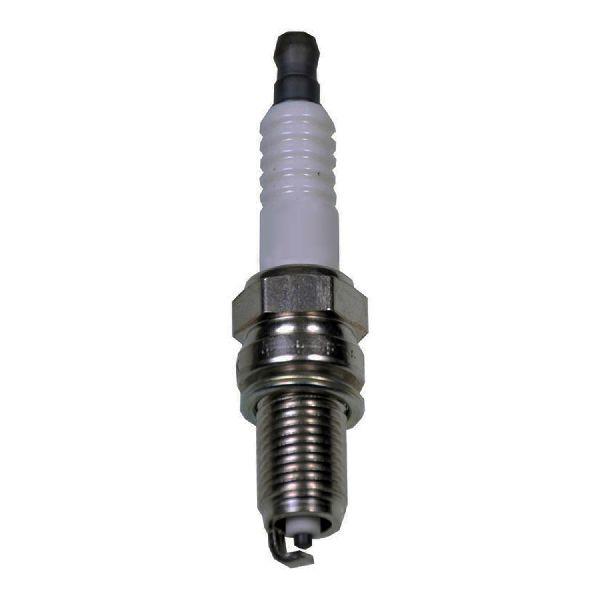
(OEM #999-170-224-90)— A standard wear item that can cause a misfire if worn, damaged, or fouled. It's often replaced along with the ignition coils as a set.
Trusted brands: Bosch, NGK
OEM price range: $20-$25
Aftermarket price range: $10-$20
Related Codes That Often Appear With This One
- P0300 — If the misfire is intermittent or begins to affect other cylinders, a P0300 (Random/Multiple Cylinder Misfire) code may appear alongside P0301.
- P0302, P0303 — If the cause is a component affecting the entire engine bank (like a major vacuum leak on Bank 1 or a failing VVT solenoid), you may see misfire codes for other cylinders on the same side.
- P1094, P2196, P2198 — Codes related to air-fuel mixture (lean/rich conditions) or oxygen sensors can accompany a misfire code, especially if the root cause is a vacuum leak, exhaust leak, or a failing Air-Oil Separator.
Platform-Specific Known Issues
- The M96 and M97 engines are susceptible to cylinder bore scoring, a condition where the piston scratches the cylinder wall, leading to compression loss, oil consumption, and eventually engine failure. A persistent P0301 code, especially when accompanied by a ticking noise when cold, can be an early warning sign of this catastrophic failure. While Bank 2 (cylinders 4-6) is more commonly affected due to engine design and cooling characteristics, scoring can happen on any cylinder.
- A failing Air-Oil Separator (AOS) is another common issue. When it fails, it can cause a massive vacuum leak and ingest large amounts of oil into the intake, leading to misfires, heavy smoke, and potentially even engine hydrolock in severe cases.
Mechanic-Grade Diagnostic Values
- Long-Term Fuel Trim Adaptation at Idle (RKAT) — expected: Around 0%. Values from -6.0% to +6.0% are generally acceptable.. Failure: A large positive value (e.g., > +6%) indicates the ECU is adding significant fuel to compensate for a lean condition (like a vacuum leak). A large negative value indicates a rich condition.
- Long-Term Fuel Trim Adaptation at Cruise/Load (FRA) — expected: Around 1.0. Values between 0.75 and 1.25 are generally acceptable.. Failure: A value significantly above 1.0 (e.g., 1.25) indicates a lean condition under load. A value significantly below 1.0 (e.g., 0.75) indicates a rich condition.
- Mass Airflow (MAF) at Idle — expected: Approximately 17 kg/h for a 3.6L/3.8L 997 engine at normal operating temperature.. Failure: Values significantly lower or higher can indicate a faulty MAF sensor or a large vacuum leak.
- Variocam Solenoid Resistance — expected: Approximately 10-14 Ohms.. Failure: A reading outside of this range, or an open/short circuit, indicates a failed solenoid.
Hidden / Shadow Codes Worth Checking
- Mode $06 Misfire Counters: The ECU tracks misfire events per cylinder over the current and last 10 driving cycles, even if they aren't frequent enough to set a P0301 code. This data can reveal intermittent misfires on cylinder 1 or other cylinders that haven't yet triggered a CEL. (see via An advanced OBD-II scanner with Mode $06 functionality or Porsche-specific tools like Durametric or PIWIS.)
- PIWIS Misfire Counter for All Ignitions: The Porsche PIWIS dealer tool can display a lifetime running total of misfires for the engine, as well as counters over specific revolution spans (e.g., 1000 or 2000 revolutions). This helps quantify the severity and history of the misfire issue. (see via Porsche PIWIS diagnostic system.)
Scan Tool Commands That Help
- Durametric or PIWIS: Actual Values / Live Data — Use this to monitor misfire counters for each cylinder in real-time while the engine is running. This can confirm the misfire is isolated to cylinder 1 and see if it occurs at idle, under load, or when cold/hot.
- Durametric or PIWIS: Activations / Drive Links — This function allows a technician to command specific components to turn on or off. For a P0301, you can activate the fuel injector for cylinder 1 to listen for a click, or activate the Variocam solenoid for Bank 1 to see if it responds, helping to isolate a faulty component without disassembly.
Wiring & Ground Locations
- GP11 (Ground Point 11) — Located at the left rear of the engine compartment.. This is the specific ground point for the ignition coils on Bank 1 (cylinders 1, 2, and 3). A loose or corroded connection here can cause a weak spark and intermittent misfires on any or all of these cylinders, including P0301.
- Main Engine-to-Chassis Ground Strap — Typically runs from the engine block (often on the passenger side/Bank 2 on 997.1) to the frame rail.. A corroded or damaged main engine ground can cause a host of electrical issues, including weak spark across all cylinders. While it would usually cause multiple misfires (P0300), it can sometimes manifest as a single-cylinder misfire initially.
- Cylinder 1 Ignition Coil Connector — Directly on top of the ignition coil for cylinder 1 (Bank 1, front-most cylinder).. The plastic connector can become brittle from heat and break, leading to a poor connection. The wiring harness itself can also chafe. Checking for voltage and ground at this connector is a key diagnostic step.
Real Owner Repair Stories
- 6SpeedOnline forum user (Porsche 996 Turbo (similar M96-derived engine architecture)) — Misfire/stuttering at high boost, P0301 code.
❌ Tried (didn't work) Swapping the ignition coil with a known-good unit., Replacing the spark plug with a new one., Replacing the MAF sensor., Replacing all O2 sensors.
✅ What actually fixed it The fuel injector for cylinder 1 was faulty and had to be replaced. After swapping the injector, the misfire was resolved. - PFF.de forum user (2005 Porsche 997S Cabriolet) — Flashing check engine light (P0301) only during hard acceleration in 3rd or 4th gear.
❌ Tried (didn't work) Replacing all ignition coils., Replacing the spark plug for cylinder 1., Swapping fuel injectors between cylinder 1 and 2 (code did not move)., Compression and leak-down tests (both showed very good results).
✅ What actually fixed it The final diagnosis pointed to a stuck hydraulic valve lifter (hydro ram) on cylinder 1. The issue was only apparent when the engine was running under high load, not during static compression tests.
OEM Part Supersession History
996-602-104-00→997-602-104-00, 997-602-104-02, 997-602-104-04, and later revisions.— Improved design for better heat resistance and durability to prevent cracking.
Heads up: When upgrading from the early coil design (e.g., 99760210400) to the newer, taller design (e.g., 99760210402 or later), longer mounting bolts (PN 900-385-025-01) are required.
Model Year Variations Within This Range
- 2005: Base Carrera models from 2005 used the 3.6L M96 engine, carried over from the 996 generation.
- 2005-2008: Carrera S models used the larger 3.8L M97 engine. While architecturally similar to the M96, the M97 has a larger bore, different oiling system components, and eliminated the physical dipstick in favor of an electronic oil level sensor. Both engines are susceptible to the same primary causes for P0301.
- 2009-2012: These 997.2 models use the completely different 9A1 direct-injection engine. Ignition coils for the 9A1 engine have a different part number (starting with 9A1) and are not interchangeable with M96/M97 coils.
Diagnostic Flowchart
Other Known Issues on This Vehicle
Issues unrelated to this code that are worth knowing about as an owner of this generation:
- Cylinder Bore Scoring 🔴 High — Affects a notable percentage of M96/M97 engines, especially 3.4L, 3.6L, and 3.8L versions. Risk increases with short trips, poor maintenance, and in colder climates. Can occur from 30k-80k miles but is possible at any mileage.
- Intermediate Shaft (IMS) Bearing Failure 🔴 High — A well-known catastrophic failure point. The 2005 models have a smaller, less robust single-row bearing that is serviceable. The 2006-2008 models have a larger, more robust but non-serviceable (without engine disassembly) bearing, which has a much lower failure rate. Failure can spread debris throughout the engine, causing secondary damage like bore scoring. (Ref: Subject of a class-action lawsuit, but no official recall.)
- Air-Oil Separator (AOS) Failure 🟠 Medium — A common maintenance item that fails due to a torn internal diaphragm. Recommended for preventative replacement every 6-7 years or 75,000 miles. Failure can cause significant smoking, lean running conditions, and in worst-case scenarios, engine hydrolock.
- Coolant Pipe Fitting Failure (GT1-block cars) 🔴 High — This primarily affects the Mezger engines in Turbo, GT2, and GT3 models, not the standard Carrera M96/M97. The coolant pipes are bonded to the engine and can come loose, causing a sudden and massive loss of coolant. The fix is to pin or weld the fittings.
Used vs. New Parts: Buying Guide for This Vehicle
When a used part is the smart pick: Used parts are generally not recommended for the primary causes of P0301. Ignition coils and spark plugs are wear items and should be purchased new. A used wiring harness connector or a mounting bracket could be a sensible choice if the original is physically damaged.
Donor-vehicle mileage cap: roughly under 40000 miles for the part to have meaningful remaining life.
What to inspect on the donor part:
- For a wiring connector, ensure the plastic is not brittle and the locking tab is intact.
- Inspect the donor vehicle for signs of oil leaks or extreme heat, which could have degraded rubber and plastic components.
- Verify the part number on the used component matches the required part for your vehicle, paying attention to supersessions.
OEM-only on this vehicle (don't cheap out):
- Air-Oil Separator (AOS) - Aftermarket versions are known to have high failure rates, leading to repeat repairs.
- Variocam Solenoids/Actuators - These are precision components critical to engine timing; using OEM parts ensures correct function and longevity.
Aftermarket brands forum-validated for this vehicle:
- Beru for ignition coils (they are the Original Equipment Manufacturer).
- Bosch or NGK for spark plugs.
Brands owners have reported issues with on this vehicle:
- Unbranded, no-name ignition coils from online marketplaces. These often have a very high infant mortality rate and may not perform to OEM specification, causing persistent or new misfires.
Real Owner Stories
Aggregated from forums and TSBs cited above. Mileages and costs reflect what owners reported in those sources.
2006 Porsche Cayman S M97
Symptoms: Intermittent P0301 code that would occasionally clear itself.
What fixed it: Replacement of the ignition coil pack; the original had a crack that caused a temporary short when moisture was present, which resolved as the engine heat dried it out.
Source hint: Reddit r/Porsche_Cayman - '987.1 Misfire P0301'
2005-2008 Porsche 911 (997)
Symptoms: Smoke on high-RPM downshifts.
What fixed it: Replacing a failed AOS with a genuine part after an aftermarket unit failed to fix the issue.
Source hint: Rennlist - 'AOS Issue' (https://rennlist.com/forums/997-forum/1382404-aos-issue.html)
Porsche Owner Report
Symptoms: Multiple misfire codes including P0301, P0302, and P0303 occurring simultaneously.
What fixed it: Diagnosis revealed these misfires were linked to a fuel rail system pressure issue. NHTSA ODI #11443174 notes that these codes appeared alongside P0087, indicating a short to plus or low pressure in the fuel system.
Source hint: NHTSA ODI #11443174
Related OBD-II Codes
Frequently Asked Questions
Why does my 911 misfire more frequently after I wash the car or when it's damp outside?
I have a P0301 and a ticking noise when the engine is cold; how serious is this?
Should I use aftermarket parts for my Air-Oil Separator (AOS) to save money?
Is it necessary to replace all six coils if only cylinder 1 is failing?
Can a failing AOS cause my engine to lock up?
How can I tell if my P0301 is caused by the AOS rather than a coil?
Helpful Videos

Used OEM Parts in Stock
New Aftermarket Parts Available



The information in this article is provided for general reference and educational purposes only. Vehicle specifications, procedures, and part compatibility can vary by production date, trim level, and region. Always consult your vehicle's factory service manual and verify part numbers before purchasing or performing repairs. Safety-critical components such as airbags, seat belts, and braking systems should be installed by a qualified professional.
- Porsche 911:
- 🧭 Diagnostic Flowchart
- 🎬 Helpful Videos
- 🛍️ Shop This Part
- What's Unique About the 2005-2012 Porsche 911
- Symptoms You May Notice
- Most Likely Causes
- Rare But Worth Checking
- Diagnosis Steps
- Parts You'll Likely Need
- Related Codes That Often Appear With This One
- Platform-Specific Known Issues
- Mechanic-Grade Diagnostic Values
- Hidden / Shadow Codes Worth Checking
- Scan Tool Commands That Help
- Wiring & Ground Locations
- Real Owner Repair Stories
- OEM Part Supersession History
- Model Year Variations Within This Range
- Other Known Issues on This Vehicle
- Used vs. New Parts: Buying Guide for This Vehicle
- Real Owner Stories
- 2006 Porsche Cayman S M97
- 2005-2008 Porsche 911 (997)
- Porsche Owner Report
- Related OBD-II Codes
- Frequently Asked Questions
- 🎟️ Get 5% Off