

P0301 on 2003-2012 Saab 9-3 2.0T: Cylinder 1 Misfire Causes and Fixes
P0301 on a Saab 9-3 B207 engine is most often caused by a failed ignition coil or a worn spark plug in cylinder 1. Replacing all four spark plugs with OEM-spec NGK plugs and swapping the cylinder 1 coil with another is the first diagnostic step. A set of four OEM-spec NGK spark plugs costs around $40, and a single OEM-quality ignition coil is about $50-$70. On 2007-2011 models, a persistent cold-start misfire is a strong indicator of a known intake valve wear issue.
- P0301 means cylinder 1 is misfiring. Do not ignore it, especially if the check engine light is flashing, to avoid catalytic converter damage.
- The most likely culprits are a bad ignition coil or a worn/incorrect spark plug. Always use NGK PFR6T-10G spark plugs.
- A simple diagnostic test is to swap the ignition coil from cylinder 1 to cylinder 2 and see if the fault code moves to P0302.
- Check for oil in the spark plug well, which points to a leaking valve cover gasket, a common issue.
- Be aware of the known intake valve wear issue on 2007-2011 models, which causes low compression and misfires, especially when cold.
What's Unique About the 2003-2012 Saab 9-3
The 2003-2012 Saab 9-3 uses the B207 engine, which features a modern 'coil-on-plug' ignition system with individual ignition coils for each cylinder. This is a departure from the single Direct Ignition Cassette (DIC) used on older Saabs. The B207's Trionic T8 engine management system is unique because it does not use a conventional knock sensor. Instead, it uses the spark plugs themselves for ion-sensing; after the spark fires, the ECU applies a voltage and measures the electrical current flowing through the ionized gases in the combustion chamber. This data is used to detect knocking and verify complete combustion. Because the spark plug is an active sensor in this system, using the exact OEM-specification NGK spark plugs is absolutely critical for proper performance and to avoid misdiagnosed misfires.
Symptoms You May Notice
- Rough or shaky idle
- Engine hesitation or stumbling during acceleration
- Noticeable loss of power
- Flashing Check Engine Light (if the misfire is severe)
- Solid Check Engine Light
- Reduced fuel economy
- Misfire primarily on cold starts, which disappears as the engine warms up (strong symptom of intake valve wear).
- Replacing only the spark plug without checking the ignition coil. It's crucial to swap the coil to isolate the problem.
- Replacing ignition components when the true cause is a vacuum leak. A smoke test can help identify hard-to-find leaks.
- Chasing ignition or fuel faults on a 2007-2011 model when the engine has low compression due to the known intake valve issue. If the misfire only happens on cold starts, this should be the primary suspicion.
Most Likely Causes
- Faulty Ignition Coil 🔴 High Probability → Shop Ignition Coil Early B207 models (approx. 2003-2006) were often fitted with less reliable 'yellow top' coils that were prone to failure. The updated and more robust 'black top' coil, OEM part number 12787707 (Mitsubishi H6T60271), is the standard replacement but can still fail with age and heat exposure.
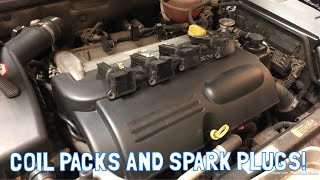
How to confirm: Swap the ignition coil from cylinder 1 (the front-most cylinder) with the coil from cylinder 2. Clear the codes and drive the vehicle. If the code changes to P0302 (Cylinder 2 Misfire), the ignition coil is confirmed to be faulty. This is the most definitive DIY diagnostic step. 🎬 Watch: A step-by-step guide to diagnosing your Saab misfire.
Typical fix: Replace the faulty ignition coil with a new OEM or high-quality aftermarket unit (part #12787707). It is best practice to replace all four coils if they are original, especially if they are the older yellow top style or if the vehicle has over 100,000 miles.
Est. part cost: $50-$90 per coil - Worn or Incorrect Spark Plug 🔴 High Probability → Shop Spark Plug The Trionic T8 engine management system is highly sensitive and designed specifically for NGK PFR6T-10G platinum spark plugs due to its ion-sensing knock detection system. Using other brands, incorrect heat ranges, or an improper gap can easily cause misfires, even if the plugs are new.
How to confirm: Remove the spark plug from cylinder 1. Inspect it for heavy carbon fouling, oil contamination, or a worn electrode. Crucially, verify that the installed plug is the correct NGK PFR6T-10G model. Even if it looks okay, it may be the cause if it's not the correct type or is past its service life.
Typical fix: Replace all four spark plugs with new, correctly gapped NGK PFR6T-10G plugs. This should be done as a matter of course if their age is unknown. The service interval is typically 60,000 miles.
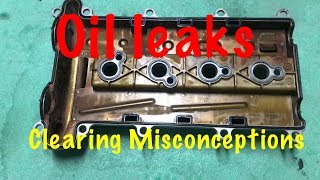
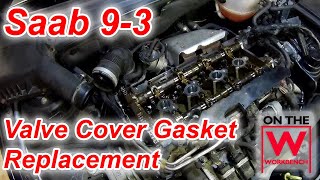
Est. part cost: $40-$60 for a set of four - Leaking Valve Cover or Spark Plug Tube Seals 🟡 Medium Probability → Shop Engine Valve Cover The rubber valve cover gasket and integrated spark plug tube seals become hard and brittle over time due to engine heat cycles, allowing oil to leak into the spark plug wells. This oil can short out the ignition coil and foul the spark plug, causing a misfire. A burning oil smell from the engine bay is also a common symptom if oil drips onto the hot exhaust manifold. 🎬 See this walkthrough on replacing your leaking valve cover gasket.
How to confirm: When you remove the ignition coil from cylinder 1, inspect the coil boot and the spark plug well for the presence of liquid engine oil. If oil is present, the seals have failed.
Typical fix: Replace the valve cover gasket set (e.g., Mahle VS50629), which includes the main gasket and the four spark plug tube seals. Thoroughly clean all oil out of the spark plug well and off the ignition coil boot before reinstallation.
Est. part cost: $40-$80 - Faulty Fuel Injector ⚪ Low Probability → Shop Fuel Injector
How to confirm: After ruling out ignition issues, the fuel injector can be tested. A professional can test flow rates, but a DIY method is to swap the fuel injector from cylinder 1 with another cylinder (e.g., cylinder 2). If the misfire code moves to P0302, the injector is faulty. This is more involved than a coil swap as it requires depressurizing the fuel system and removing the fuel rail.
Typical fix: Replace the faulty fuel injector. It's recommended to replace the O-rings and seals on the other injectors at the same time. Some owners choose to have all injectors professionally cleaned and balanced as a set.
Est. part cost: $60-$120 per injector (remanufactured), $200+ (new)
Rare But Worth Checking
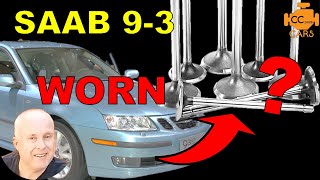
- Premature Intake Valve Wear: A significant and well-documented issue, primarily affecting 2007-2011 models as outlined in Saab TSB 253-2442. The material of the intake valves was found to be too soft, causing the valve face to wear prematurely. This prevents the valve from sealing properly, resulting in a loss of compression. The key symptom is a misfire (P0301, P0300, etc.) that occurs only on a cold engine and disappears once the engine warms up and the metal parts expand to create a temporary seal. A standard 'hot' compression test will often show normal readings, masking the problem. A 'cold' compression test, performed after the car has sat overnight, is required for accurate diagnosis and will reveal the low compression in the affected cylinder(s). The only permanent fix is to replace the cylinder head or have the valves replaced with the updated, harder material.
- Low Engine Compression: Beyond the specific intake valve issue, misfires can be caused by other mechanical problems like worn piston rings, a damaged piston, or a leaking head gasket, leading to a loss of compression in cylinder 1. A compression test is the primary diagnostic step for any persistent misfire that isn't resolved by ignition or fuel component replacement.
- Faulty Engine Control Unit (ECU): In very rare cases, the driver circuits within the Trionic T8 ECU can fail, causing a persistent misfire code on one cylinder that cannot be resolved by replacing ignition or fuel components. This often happens after a faulty ignition coil shorts and damages the ECU. This typically requires sending the ECU for specialized testing and repair.
- Vacuum Leak: While a vacuum leak typically causes a random misfire code (P0300) or affects multiple cylinders, a leak localized to the intake manifold runner for cylinder 1 could potentially cause a P0301. This can be caused by a faulty intake manifold gasket. A smoke test is the most effective way to diagnose a vacuum leak.
Diagnosis Steps
- Read the trouble codes with an OBD-II scanner. Note if P0301 is alone or present with other codes like P0300.
- Note the conditions when the misfire occurs. Does it happen only on cold starts and go away when warm? If so, suspect the intake valve issue on 2007-2011 models.
- Remove the plastic engine cover (T30 Torx) and the coil cover (also T30 Torx).
- Remove the 10mm bolt holding the ignition coil for cylinder 1 (front-most cylinder). Pull the coil out and inspect it and the spark plug well for oil contamination. Oil indicates a leaking valve cover gasket.
- Swap the ignition coil from cylinder 1 with the coil from cylinder 2.
- Clear the diagnostic codes, start the engine, and drive it until the check engine light returns.
- Re-scan the codes. If the code is now P0302, the ignition coil is bad and needs replacement. If the code remains P0301, the coil is likely good.
- If the misfire stayed on cylinder 1, the next step is to inspect and replace the spark plugs. Remove the old plug from cylinder 1 and inspect it. Replace all four plugs with NGK PFR6T-10G, ensuring they are correctly gapped.
- If the misfire persists on cylinder 1 after replacing plugs and confirming the coil is good, the issue may be with the fuel injector or a mechanical problem.
- For advanced diagnosis, especially with cold-start symptoms, perform a cold engine compression test to check for the known intake valve wear issue.
Parts You'll Likely Need
- Ignition Coil
(OEM #12787707)— This is one of the most common failure points for a single-cylinder misfire on the B207 engine. This is the updated 'black top' part number.
Trusted brands: Saab (Genuine OE), Mitsubishi (OEM - Part #H6T60271), NGK, Bosch
OEM price range: $70-$90
Aftermarket price range: $45-$65 - Spark Plugs (Set of 4)
(OEM #PFR6T-10G)— The B207 engine is very sensitive to spark plug type due to the Trionic ion-sensing system. Worn or incorrect plugs are a frequent cause of misfires. Saab cross-references this to part number 12787099.
Trusted brands: NGK
OEM price range: $40-$60 (set of 4) - Valve Cover Gasket Kit
(OEM #12789933)— A common source of oil leaks into the spark plug wells, which causes ignition components to fail. The kit should include the main gasket and four spark plug tube seals.
Trusted brands: Saab (Genuine OE), Elring, Mahle (VS50629)
OEM price range: $60-$80
Aftermarket price range: $30-$50
Related Codes That Often Appear With This One
- P0300 — If multiple cylinders are misfiring intermittently, or if the cause is systemic (like a large vacuum leak or the intake valve issue), a P0300 (Random/Multiple Cylinder Misfire) may be stored along with P0301.
- P0302, P0303, P0304 — These codes indicate misfires in other cylinders. Seeing them together can point to a systemic issue like a large vacuum leak, low fuel pressure, or the intake valve wear problem affecting multiple cylinders.
Technical Service Bulletins (TSBs) & Recalls
- TSB 253-2442: This technical service bulletin addresses a known issue on 2007-2011 Saab 9-3 (B207) and 2011 9-5 (A20NFT) models. It describes a condition of worn intake valves causing significant compression loss when the engine is cold, leading to misfire DTCs (P0300, P0301, etc.). The bulletin confirms that the issue may not be apparent when the engine is hot and specifies that a cold compression and leak-down test is the correct diagnostic procedure.
Platform-Specific Known Issues
- A Technical Service Bulletin (TSB) was issued for 2007-2011 models regarding premature intake valve wear, which causes low compression when cold and can set misfire codes. The fix requires cylinder head removal and valve replacement.
- Early production B207 engines (approx. 2003-2006) were equipped with 'yellow top' ignition coils that had a higher failure rate than the later 'black top' coils.
Mechanic-Grade Diagnostic Values
- Fuel Injector Resistance — expected: Approx. 10-15 Ohms (High Impedance). Failure: A reading of 0 Ohms indicates a short, while an infinite (OL) reading indicates an open circuit. All injectors should have similar resistance.
- Low-Side Fuel Pressure (Key On, Engine Off) — expected: Approx. 3 bar (43.5 PSI). Failure: Significantly lower pressure could indicate a weak in-tank fuel pump or a leak.
- Low-Side Fuel Pressure (At Idle) — expected: Approx. 2.5 bar (36 PSI). Failure: Fluctuating or low pressure at idle can point to a failing fuel pressure regulator or pump.
- Scan Tool Misfire Counters (Live Data) — expected: Zero or very few counts on all cylinders on a healthy, warm engine.. Failure: A rapidly accumulating number of misfires on a specific cylinder (e.g., Cylinder 1) confirms the misfire location in real-time, even without a set CEL.
Hidden / Shadow Codes Worth Checking
- Cylinder-Specific Misfire Counters: The Trionic T8 ECU maintains a running count of misfire events for each individual cylinder. These counters can increment significantly before a P030x code is officially stored and the Check Engine Light is activated. This data is crucial for diagnosing intermittent misfires. (see via A Saab-specific scan tool like a Tech 2 is required. The data is typically found under Engine Live Data or a similar menu for misfire analysis.)
Scan Tool Commands That Help
- Saab Tech 2: Reset Misfire and Knock Counters — This function should be used after a diagnostic step (like swapping a coil) to get a clean slate. It resets only the misfire/knock data without clearing long-term fuel adaptations, allowing a technician to see if the misfire reoccurs immediately under specific load or temperature conditions.
Wiring & Ground Locations
- G7 — On the engine, located above or on the upper right-hand attachment lug of the engine control module (ECU/Trionic 8).. This is a critical engine sensor ground. On the B207, it serves as the ground point for the Mass Air Flow (MAF) sensor, among others. A corroded or loose G7 ground can cause erratic sensor readings, leading the ECU to make incorrect fuel and timing calculations, which can result in misfires.
- G2 — On the side of the left-hand chassis structural member, near the battery and connector bracket.. This is a primary battery-to-chassis ground. High resistance here can cause a wide range of electrical issues, including weak spark and improper ECU operation, potentially contributing to misfire codes.
- Ignition Coil Harness — Runs across the top of the valve cover, connecting to each of the four ignition coils.. The wiring harness itself can become brittle from heat. The Saab Workshop Information System (WIS) specifically notes to ensure cables are not pinched during installation, indicating a risk of chafing or shorting the wires for the cylinder 1 coil, which could cause a P0301.
Real Owner Repair Stories
- SaabCentral Forums user (2008 Saab 9-3 2.0T) — Misfire codes, particularly when the engine was cold.
❌ Tried (didn't work) Replacing spark plugs with non-OEM spec plugs.
✅ What actually fixed it The problem was identified as the well-known premature intake valve wear issue common on 2007-2011 models. The user was advised that the only fix is cylinder head work to replace the valves, and that a cold compression test is required for diagnosis. - Reddit user /r/saab (2006 Saab 9-3 2.0T) — P0301 (Cylinder 1 Misfire), P2187 (System Too Lean), and P0455 (EVAP Leak). Car was jerking at a stop and had a strong fuel smell with the A/C on.
❌ Tried (didn't work) Initial diagnosis focused on individual components for each code.
✅ What actually fixed it The user found a large, visibly split vacuum hose under the hood. Replacing the cracked hose resolved the issues. This is a classic case where a significant vacuum leak presented initially as a single cylinder misfire. - NHTSA ODI #11073052 — An owner reported experiencing hard starting or no starting when the engine was cold, accompanied by engine misfires and trouble codes P0300, P0301, P0302, P0303, or P0304. The report noted that the vehicle would start and run normally once the engine was hot.
"I Checked Everything" — The Actual Cause
- The most common scenario fitting this pattern for a B207 engine is the premature intake valve wear issue on 2007-2011 models. A technician may perform a smoke test which comes back clean, and swap ignition and fuel components with no change. The actual cause, low compression in the affected cylinder, is often missed because a standard 'hot' compression test performed on a warm engine will show normal readings. The problem is only revealed with a 'cold' compression test after the vehicle has sat overnight.
OEM Part Supersession History
N/A ('Yellow Top' Coils)→12787707 (Mitsubishi H6T60271 'Black Top')— The original 'yellow top' ignition coils used on early B207 engines were known for high failure rates, often due to the epoxy cracking.
Heads up: While not a direct supersession, it's critical to avoid generic aftermarket coils. Many do not have the correct internal electronics for the Trionic T8's ion-sensing system and can cause persistent misfires or prevent the system from detecting knock, even if the part physically fits.
Model Year Variations Within This Range
- 2007-2011: These models are known to be susceptible to premature intake valve wear due to a batch of soft valve material used during manufacturing. This leads to a loss of compression, causing a misfire (P0300, P0301, etc.) that is most prominent on a cold start and may disappear when the engine warms up.
- 2003-2006: These earlier models were more likely to be equipped with the less reliable 'yellow top' ignition coils from the factory. They also use a different fuel pressure regulator than later models.
Diagnostic Flowchart
Real Owner Stories
Aggregated from forums and TSBs cited above. Mileages and costs reflect what owners reported in those sources.
2008 Saab 9-3
Symptoms: Persistent P0301 cylinder 1 misfire code.
What fixed it: Community advised verifying the installation of correct NGK spark plugs and investigating the known 2007+ intake valve issue.
Source hint: Reddit: [X-Post /r/MechanicAdvice] '08 Saab 9-3 - Cylinder 1 Misfire
2008 Saab 9-3
Symptoms: Rough idle and misfires occurring only on cold starts.
What fixed it: Diagnosed as a likely symptom of the 2007+ intake valve problem; members recommended performing a cold compression test to confirm.
Source hint: Saab Tech Talk: Cold start misfire / rough idle
2009 Saab 9-3
Symptoms: Misfire only on cold starts that goes away when warm, persisting even after replacing the ignition coil and spark plug.
What fixed it: Identified as the textbook intake valve wear problem, which requires cylinder head removal and valve replacement per TSB 253-2442.
Source hint: Reddit: How to fix misfiring on cold start?
Related OBD-II Codes
Frequently Asked Questions
Does TSB 253-2442 apply to my 2008 Saab 9-3 2.0T?
Do I really need to use the exact NGK PFR6T-10G spark plugs for my Saab?
My 2004 Saab 9-3 has 'yellow top' ignition coils. Are these prone to causing a P0301?
Why does my Saab 9-3 only misfire on cold starts and run fine when it warms up?
I found oil on my cylinder 1 ignition coil boot. What does this mean?
How can I easily test if my cylinder 1 ignition coil is bad?
Helpful Videos
We Have This Part in Stock

The information in this article is provided for general reference and educational purposes only. Vehicle specifications, procedures, and part compatibility can vary by production date, trim level, and region. Always consult your vehicle's factory service manual and verify part numbers before purchasing or performing repairs. Safety-critical components such as airbags, seat belts, and braking systems should be installed by a qualified professional.
- Saab 9-3:
- 🧭 Diagnostic Flowchart
- 🎬 Helpful Videos
- 🛍️ Shop This Part
- What's Unique About the 2003-2012 Saab 9-3
- Symptoms You May Notice
- Most Likely Causes
- Rare But Worth Checking
- Diagnosis Steps
- Parts You'll Likely Need
- Related Codes That Often Appear With This One
- Technical Service Bulletins (TSBs) & Recalls
- Platform-Specific Known Issues
- Mechanic-Grade Diagnostic Values
- Hidden / Shadow Codes Worth Checking
- Scan Tool Commands That Help
- Wiring & Ground Locations
- Real Owner Repair Stories
- "I Checked Everything" — The Actual Cause
- OEM Part Supersession History
- Model Year Variations Within This Range
- Real Owner Stories
- 2008 Saab 9-3
- 2008 Saab 9-3
- 2009 Saab 9-3
- Related OBD-II Codes
- Frequently Asked Questions
- 🎟️ Get 5% Off