

P0301 on 2011-2013 Subaru Forester: Cylinder 1 Misfire Causes & Fixes
P0301 on a 2011-2013 Forester indicates a misfire in cylinder 1. The most common culprits are a worn spark plug or a failing ignition coil. Swapping the coil from cylinder 1 to another cylinder is a quick way to diagnose the problem. Less common but notable causes for this specific engine include oil-fouled plugs from consumption issues or a broken valve spring. Expect to pay $15-$40 for a set of spark plugs and $50-$120 for a single ignition coil.
- P0301 on your Forester means cylinder 1 is misfiring. This is the front cylinder on the passenger side.
- The most likely cause is a bad ignition coil or a worn spark plug. Swapping the coil with another cylinder's coil is the easiest way to diagnose this.
- Do not drive if the Check Engine Light is flashing, as this can quickly damage your catalytic converter.
- Be aware of Subaru-specific TSBs. In some cases, a simple software update at the dealership is the correct fix, not replacing parts.
- Always replace spark plugs as a full set to ensure even performance.
What's Unique About the 2011-2013 Subaru FORESTER
The 2011-2013 Forester uses the FB25B engine, which replaced the older EJ series. While generally reliable, this engine can be prone to specific issues. Early production FB25B engines were known for potential oil consumption issues which can foul spark plugs, leading to misfires. Subaru also issued Technical Service Bulletins (TSBs) indicating that P0301 can sometimes be triggered by overly sensitive ECM logic requiring a software update (TSB #11-116-12R) or be related to camshaft position sensor clearance issues (TSB #11-130-13R), not just common ignition parts. Most seriously, early FB engines were known for potential valve spring failures, which can cause a persistent misfire and catastrophic engine damage if ignored.
Diagnostic Flowchart
Tap your situation to follow the diagnostic path that matches what you're seeing on this vehicle.
Symptoms You May Notice
- Rough or shaky idle
- Engine hesitation or stumbling during acceleration
- Flashing or solid Check Engine Light
- Reduced power and poor acceleration
- Decreased fuel economy
- Smell of unburned fuel from the exhaust
- Engine ticking or tapping noise (could indicate a serious valve spring issue)
- Replacing only the spark plug when the ignition coil was the actual point of failure, or when the spark plug tube seal leak was the root cause.
- Replacing fuel injectors before thoroughly testing the ignition system (spark plugs and coils), which is a far more common and easier-to-diagnose failure.
- Performing expensive mechanical repairs without first checking if a simple ECM software update (per TSB #11-116-12R) could resolve a phantom misfire code.
Most Likely Causes
- Worn or Fouled Spark Plug 🔴 High Probability → Shop Spark Plug Spark plugs are a regular maintenance item. On the FB25B engine, they can become fouled by oil due to known oil consumption issues or leaking spark plug tube seals, leading to a P0301 code. The boxer engine design can also make them slightly more difficult to access, potentially leading to deferred maintenance.
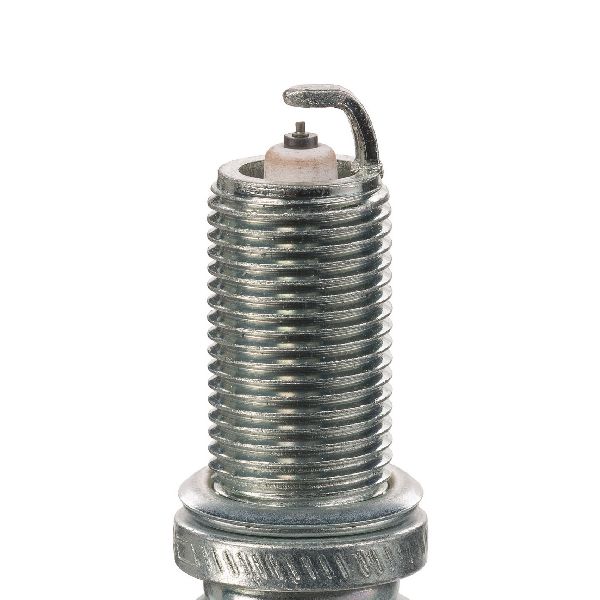
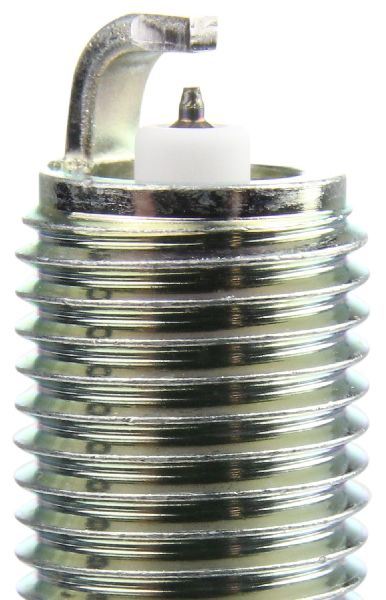
How to confirm: Visually inspect the spark plug from cylinder 1 for wear, oil fouling, or carbon buildup. Compare it to a new plug. The most definitive test is to swap the spark plug from cylinder 1 with one from another cylinder (e.g., cylinder 3). If the code changes to P0303, the spark plug is the culprit.
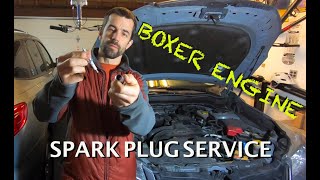
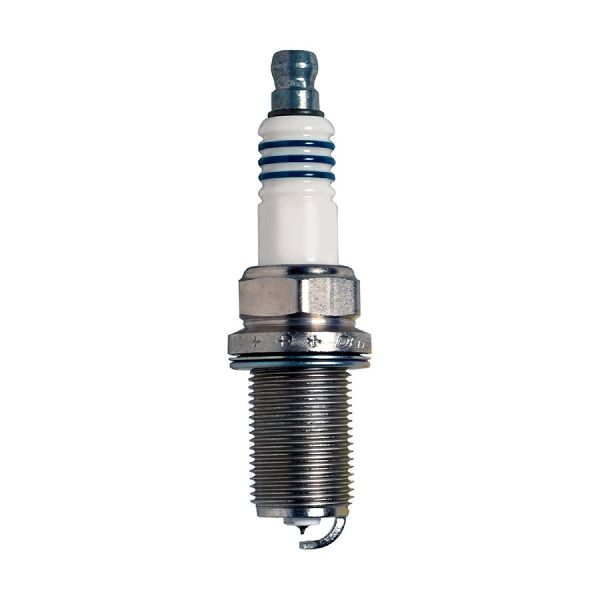
Typical fix: Replace all four spark plugs. 🎬 Watch: Step-by-step spark plug and ignition coil replacement guide. It is recommended to replace them as a set with the specified OEM NGK or Denso Iridium plugs.
Est. part cost: $15-$40 - Failing Ignition Coil 🔴 High Probability → Shop Ignition Coil
How to confirm: Swap the ignition coil from cylinder 1 with the coil from cylinder 3 (the other cylinder on the passenger side). Clear the codes and drive the vehicle. If the code returns as P0303, the ignition coil is faulty. Also inspect the spark plug tube for oil, as a leaking tube seal can damage the coil boot.
Typical fix: Replace the faulty ignition coil. These are individual coil-on-plug units. The OEM part number is 22433AA642 or the preceding number 22433AA630.
Est. part cost: $50-$120 - ECM Software Update Needed 🟡 Medium Probability Subaru released TSB #11-116-12R specifically for this issue, where misfire codes P0301-P0304 can be set without any actual drivability problems. This indicates a sensitivity in the original ECM logic that can falsely trigger the code.
How to confirm: If ignition components are confirmed to be good and there are no other mechanical issues or drivability symptoms, a Subaru dealership or a qualified shop with Subaru-specific scan tools can check the current ECM software version against the one specified in the TSB.
Typical fix: Reprogram the Engine Control Module (ECM) with the updated software file. This must be done by a dealer or a properly equipped independent shop.
Est. part cost: $0 (if under warranty) - $150 - Clogged or Faulty Fuel Injector ⚪ Low Probability → Shop Fuel Injector
How to confirm: A professional can perform a fuel injector balance test. A DIY method is to listen to the injector with a mechanic's stethoscope; it should have a consistent clicking sound. You can also swap injectors between cylinders, but this is more labor-intensive than swapping coils or plugs.
Typical fix: Clean or replace the faulty fuel injector.
Est. part cost: $70-$200 - Camshaft Position Sensor Issue ⚪ Low Probability → Shop Engine Camshaft Position Sensor TSB #11-130-13R and #11-100-11R link various misfire codes, including P0301, with camshaft position sensor-related DTCs. The bulletin states the sensor clearance may be out of specification, causing a rough idle and setting misfire codes.
How to confirm: Check for other stored codes, specifically P0340, P0341, P0345, P0346, P0365, P0366, P0390, or P0391. The TSB outlines a procedure to check sensor waveforms with an oscilloscope and measure the physical clearance.
Typical fix: Follow the diagnostic procedure in the TSB, which may involve inspecting wiring, measuring sensor clearance and adding shims, or replacing the affected camshaft position sensor.
Est. part cost: $40-$90
Rare But Worth Checking
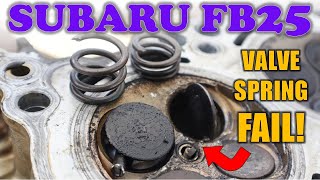
- Broken Valve Spring: Early FB engines were known for this issue. A broken valve spring will cause a persistent misfire and a distinct ticking or tapping noise from the affected cylinder head. A YouTube teardown of a 2013 Forester FB25 shows this exact failure. 🎬 Watch this engine teardown to see the valve spring failure. If suspected, stop the engine immediately to prevent catastrophic damage like a dropped valve hitting the piston.
- Low Engine Compression: This indicates a serious internal engine problem, such as worn piston rings, a leaking head gasket, or a burnt/bent valve (potentially from a valve spring failure). A compression test is needed to confirm this. Normal compression for a healthy engine is around 180 PSI.
- Vacuum Leak: A vacuum leak from a cracked hose or a bad intake manifold gasket can lean out the air-fuel mixture and cause a misfire. Usually, this would affect multiple cylinders and might trigger a P0300 (random misfire) code as well.
Diagnosis Steps
- Read the code with an OBD-II scanner and confirm P0301 is present. Note any other codes.
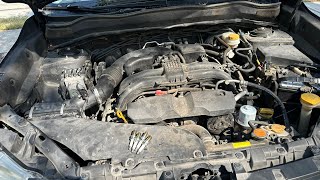
- Identify Cylinder 1. On a Subaru boxer engine, cylinders 1 and 3 are on the passenger side (right side), and cylinders 2 and 4 are on the driver side (left side). Cylinder 1 is the front-most cylinder on the passenger side, closest to the radiator.
- Swap the ignition coil from cylinder 1 with the coil from cylinder 3. Clear the codes and run the engine. If the code changes to P0303, the ignition coil is bad and needs replacement.
- While the coil is out, inspect the spark plug tube for any standing oil. Oil in the tube indicates a failed spark plug tube seal (part of the valve cover gasket 🎬 See how to replace valve cover gaskets and spark plugs.) which must be replaced.
- If the code remains P0301, swap the spark plug from cylinder 1 with the one from cylinder 3. Clear the codes and run the engine. If the code changes to P0303, the spark plug is bad.
- If the code is still P0301, inspect the ignition coil connector and wiring for any damage or corrosion.
- Listen to the fuel injector for cylinder 1 with a mechanic's stethoscope. It should have a steady, rhythmic clicking. Compare its sound to the other injectors.
- Check for vacuum leaks by inspecting all vacuum hoses and the intake manifold gasket area. A smoke test is the most effective way to find leaks.
- If the above steps do not reveal the cause, consider the possibility of a software issue (TSB #11-116-12R) or a more complex mechanical problem like low compression or a valve spring issue, which may require professional diagnosis.
Parts You'll Likely Need
- Ignition Coil
(OEM #22433AA642 (replaces 22433AA630))— Ignition coils are a very common failure item that directly causes a misfire in a single cylinder. Oil leaks from valve cover gaskets can also damage them.
Trusted brands: Subaru (Genuine), Denso, NGK
OEM price range: $90-$120
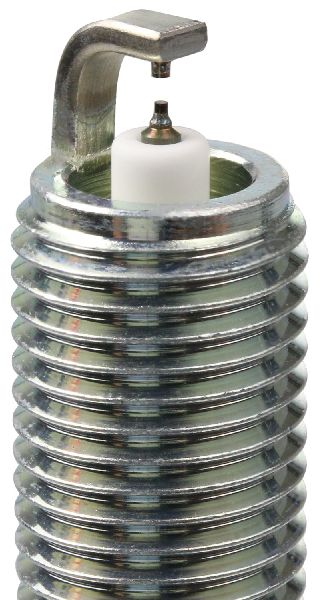
Aftermarket price range: $50-$80 - Spark Plug
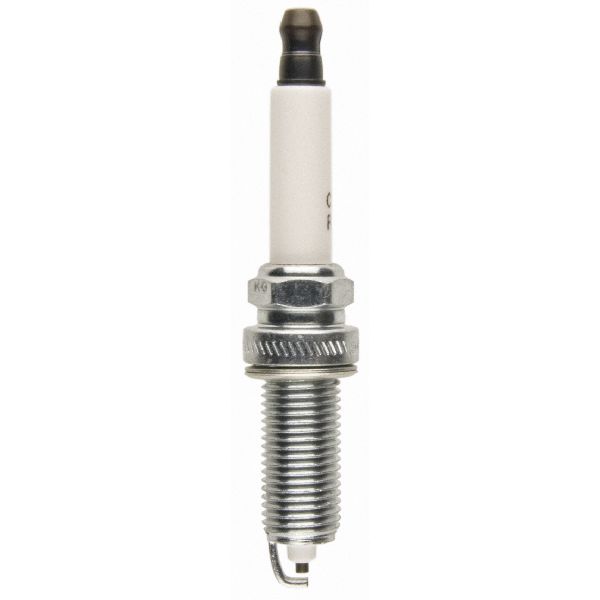
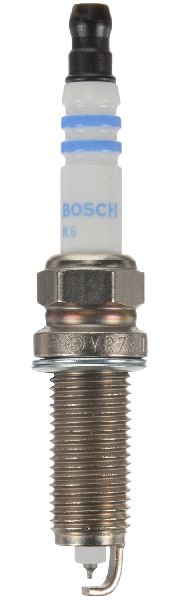
(OEM #22401AA781)— Spark plugs are a standard maintenance item and can become worn or fouled, especially if the engine consumes oil.
Trusted brands: NGK (SILFR6A), Denso, Subaru (Genuine)
OEM price range: $20-$30
Aftermarket price range: $10-$20
Related Codes That Often Appear With This One
- P0300 — If the cause of the misfire (like a large vacuum leak or low fuel pressure) affects all cylinders, a P0300 (Random/Multiple Cylinder Misfire) may appear alongside P0301.
- P0303 — Cylinders 1 and 3 are on the same side (passenger side) of the boxer engine. A problem affecting that entire cylinder bank, like a leaking valve cover gasket fouling the spark plug tubes, could potentially cause misfires on both cylinders.
- P0340, P0341, P0365 — As noted in Subaru TSB #11-130-13R, camshaft position sensor codes are often linked with misfire codes on this engine. The ECM uses cam sensor data to time spark and fuel injection, so a fault here can directly cause a misfire.
Technical Service Bulletins (TSBs) & Recalls
- 11-130-13R: Links misfire DTCs P0301-P0304 with various camshaft position sensor codes.
- 11-116-12R: Announces an ECM reprogramming file to address misfire codes P0301-P0304 that occur without an actual drivability problem.
- 11-100-11R: Connects rough idle and misfire codes P0301-P0304 with camshaft position sensor codes.
Platform-Specific Known Issues
- Oil Consumption Fouling Spark Plugs: → Shop Spark Plug Early FB25B engines are known for higher-than-average oil consumption, sometimes due to issues with the piston rings. This oil can find its way into the combustion chamber, fouling the spark plugs and leading directly to misfire codes like P0301. When inspecting the spark plug for cylinder 1, heavy oil deposits are a strong indicator of this underlying issue.
- Valve Cover & Spark Plug Tube Seal Leaks: → Shop Engine Valve Cover A common source of ignition issues on the boxer engine is a leaking valve cover gasket or, more specifically, the integrated spark plug tube seals. Oil leaks past these seals and fills the spark plug tube, saturating the ignition coil boot and spark plug, causing a misfire. A Reddit user with a 2013 model confirmed this was the cause of their P0301 code. When removing the ignition coil, the presence of liquid oil is a dead giveaway.
Mechanic-Grade Diagnostic Values
- Fuel Injector Resistance — expected: 5 to 20 Ohms. Failure: A reading outside of this range, or a reading that is significantly different from the other injectors, indicates a faulty injector.
Hidden / Shadow Codes Worth Checking
- Past Faults / History Codes: The dealer-level Subaru Select Monitor can distinguish between DTCs that are currently active ('Present Faults') and codes that were stored in memory from previous driving cycles ('Past Faults'). This helps a technician understand if the fault is intermittent or persistent, which a basic scanner might not show. (see via Subaru Select Monitor (SSM) III or newer professional scan tool.)
Scan Tool Commands That Help
- Subaru Select Monitor (SSM): Misfire Monitoring / Current Data Display — To view detailed, real-time data parameters beyond standard OBD-II, such as individual misfire counts per cylinder, A/F sensor currents, and injector pulse widths. This allows for a much deeper diagnosis to see if the misfire correlates with other sensor anomalies.
Wiring & Ground Locations
- Main Engine Ground — The main engine-to-chassis ground strap connects to the engine block via the top starter motor mounting bolt.. A corroded or loose main ground can cause erratic behavior in the ignition and fuel systems, leading to intermittent misfires that are difficult to diagnose. Technicians may chase individual components like coils and injectors when the root cause is poor electrical grounding for the entire engine management system.
- Chassis Ground Straps — Braided ground straps are located on both the driver's and passenger's side, connecting the engine/subframe to the chassis.. These straps are exposed to the elements and can corrode, especially in salt-belt regions. A corroded strap can cause a rough idle and various electrical gremlins that may be misinterpreted as a single-cylinder misfire.
Real Owner Repair Stories
- YouTube channel 'Fix It All' (2013 Subaru Impreza 2.0L (FB engine family)) — Check Engine Light with code P0301.
❌ Tried (didn't work) Spark plugs were replaced a year prior, which fixed the P0301 code temporarily, but the code returned.
✅ What actually fixed it Replacing the ignition coil for cylinder 1 resolved the code permanently. The logic was that since new plugs offered a temporary fix, the next weakest link in the ignition system was the coil pack. - YouTube channel 'T-Ten's Auto' (2009 Subaru Forester 2.5L (EJ engine, but demonstrates a common failure mode applicable to FB engines)) — Shuddering under load, flashing Check Engine Light, P0301 stored.
✅ What actually fixed it The spark plug gap had worn to over double its specification (0.095" vs 0.043"). This high resistance caused the spark to burn a hole through the spark plug wire boot, grounding out on the cylinder head. Replacing the worn spark plugs and damaged spark plug wires fixed the misfire.
OEM Part Supersession History
22433AA630→22433AA642— Standard part revision/update by the manufacturer.
Model Year Variations Within This Range
- 2011-2013 (Early Production FB25): Engines in this early period, particularly 2011-2012, had a higher incidence of significant oil consumption due to the design of the piston rings. This is a direct contributor to P0301, as the consumed oil can foul spark plugs, leading to misfires. Subaru later revised the piston rings to correct the issue.
Helpful Videos

We Have This Part in Stock

The information in this article is provided for general reference and educational purposes only. Vehicle specifications, procedures, and part compatibility can vary by production date, trim level, and region. Always consult your vehicle's factory service manual and verify part numbers before purchasing or performing repairs. Safety-critical components such as airbags, seat belts, and braking systems should be installed by a qualified professional.
- Subaru FORESTER:
- 🧭 Diagnostic Flowchart
- 🎬 Helpful Videos
- 🛍️ Shop This Part
- What's Unique About the 2011-2013 Subaru FORESTER
- Symptoms You May Notice
- Most Likely Causes
- Rare But Worth Checking
- Diagnosis Steps
- Parts You'll Likely Need
- Related Codes That Often Appear With This One
- Technical Service Bulletins (TSBs) & Recalls
- Platform-Specific Known Issues
- Mechanic-Grade Diagnostic Values
- Hidden / Shadow Codes Worth Checking
- Scan Tool Commands That Help
- Wiring & Ground Locations
- Real Owner Repair Stories
- OEM Part Supersession History
- Model Year Variations Within This Range
- 🎟️ Get 5% Off