

P0301 on 1993-2001 Subaru Impreza 2.5L: Cylinder 1 Misfire Causes and Fixes
P0301 means cylinder 1 is misfiring. On the EJ25D engine, this is most often caused by a bad spark plug, wire, or ignition coil pack, costing $50-$150 for a DIY fix. However, this specific engine is known for head gasket failures, which can also cause this code and lead to a much more expensive repair.
- P0301 is a misfire on the front passenger-side cylinder.
- Always start diagnosis with the simple, cheap parts: spark plugs and wires are the most likely culprits.
- Be highly suspicious of a head gasket failure on the EJ25D engine. Look for coolant loss or bubbling in the overflow tank.
- Do not drive if the check engine light is flashing to avoid damaging your catalytic converter.
- This guide specifically applies to the 1998-1999 Impreza 2.5 RS, which used the EJ25D engine.
What's Unique About the 1993-2001 Subaru Impreza
The specified vehicle range covers the first-generation (GC) Impreza, but the EJ25D engine was only used in the 2.5 RS models from 1998-1999. This DOHC engine is infamous for premature head gasket failure, which is a highly probable cause of a misfire, unlike on many other vehicles. An internal coolant leak from a bad head gasket can foul the spark plug in cylinder 1, leading to a persistent P0301 code that typical ignition part replacements won't fix.
Generation note: The 1993-2001 range covers the first generation (GC/GF/GM) Impreza. However, the specified EJ25D DOHC engine was only equipped in the Impreza 2.5 RS model for the 1998 model year. For 1999, the 2.5 RS switched to a SOHC EJ251 engine which has different characteristics. Earlier and later models in this range used other engines (like the EJ18, EJ22) which have different designs.
Symptoms You May Notice
- Rough or shaky idle.
- Hesitation or stumbling during acceleration.
- Noticeable loss of engine power.
- Solid or flashing Check Engine Light.
- Smell of raw fuel from the exhaust.
- Shuddering or shaking under load, especially when going uphill.
- Misfire that only occurs in wet or humid weather, suggesting an ignition component is cracked and arcing.
- Replacing the catalytic converter for a P0420 code without first fixing the P0301 misfire that caused it.
- Replacing the front oxygen (O2) sensor, assuming it's a fuel mixture problem, when the root cause is ignition or mechanical.
- Assuming a rough idle is a vacuum leak when it is actually a consistent single-cylinder misfire.
Most Likely Causes
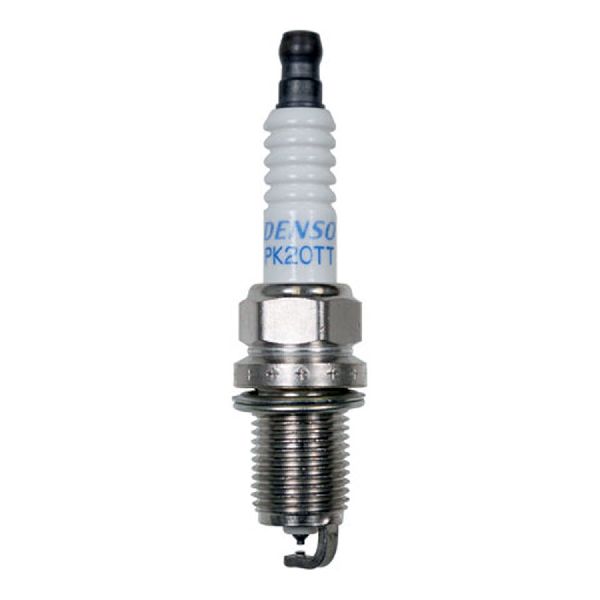
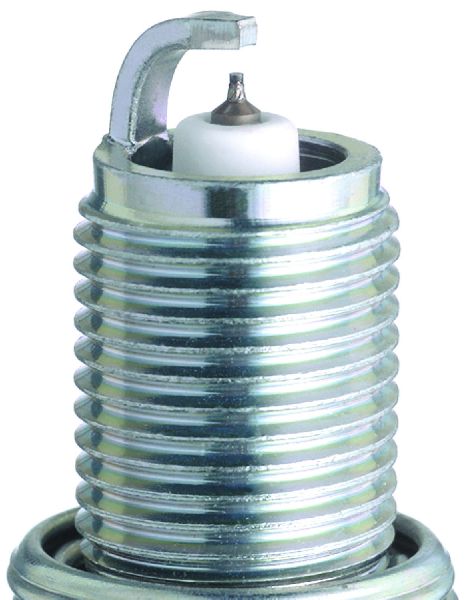
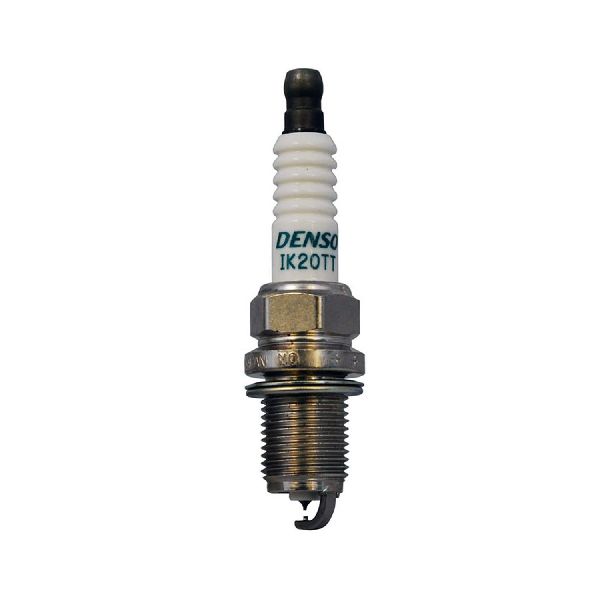
- Worn or Fouled Spark Plug 🔴 High Probability → Shop Spark Plug Spark plugs are regular wear items. A very large plug gap from wear can cause the ignition system to work harder, potentially causing spark to arc through the wire boot instead of at the electrode. Oil from a leaking valve cover gasket or coolant from a failing head gasket can also foul the plug, causing a misfire.
How to confirm: Visually inspect the spark plug for cylinder 1. Look for a worn electrode, heavy carbon buildup, oil, or a white/greenish residue indicating coolant. Check the spark plug gap; a gap over 0.090 inches is a clear sign of failure when the spec is closer to 0.043 inches. You can also swap the spark plug from cylinder 1 with cylinder 3 (the rear passenger-side cylinder). If the code changes to P0303, the spark plug is bad.
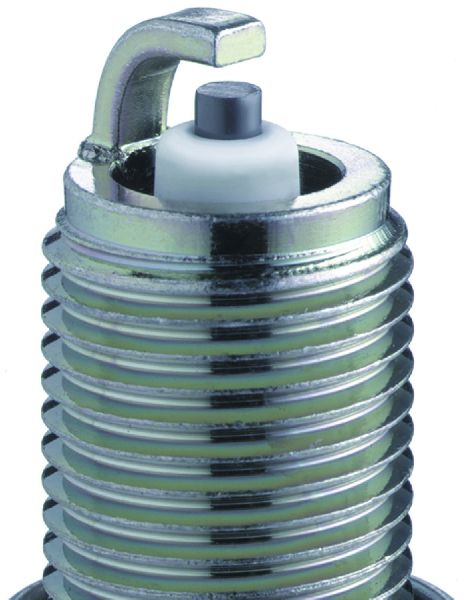
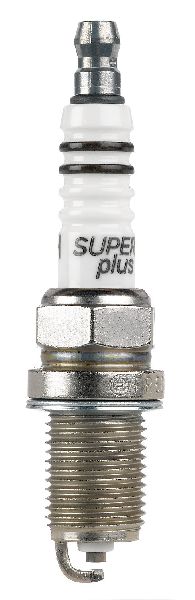
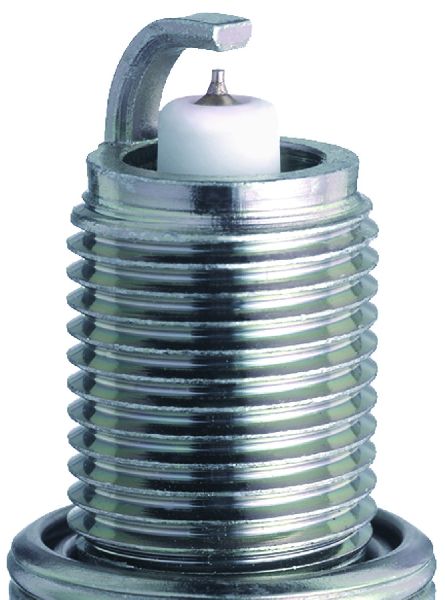
Typical fix: Replace all four spark plugs as a set. Use high-quality plugs like those from NGK, which is often the original equipment manufacturer. The OEM-recommended plug is often NGK BKR6E-11. 🎬 See this walkthrough for replacing your spark plugs and wires.
Est. part cost: $20-$50 - Bad Spark Plug Wire 🔴 High Probability → Shop Spark Plug The EJ25D uses long spark plug wires that run from a central coil pack. Over time, the insulation can break down, causing the spark to arc to the engine block or spark plug tube instead of reaching the plug. This is a very common failure point.
How to confirm: With the engine running, you can sometimes see or hear the spark arcing. A definitive test is to swap the spark plug wire from cylinder 1 with cylinder 3. If the misfire code moves to P0303, the wire is faulty. You can also test the wire's resistance with a multimeter; a good wire for cylinder 1 should have resistance between 5-12.1 kOhms. A reading of infinite resistance (open circuit) confirms a bad wire.
Typical fix: Replace the spark plug wires as a complete set. Using genuine Subaru wires is often recommended, as some aftermarket sets can cause issues. The OEM set part number is often cited as SOA430Q122 or 22451AA650.
Est. part cost: $40-$80 - Failed Ignition Coil Pack 🟡 Medium Probability → Shop Ignition Coil The engine uses a waste-spark system with a single coil pack that fires two cylinders at once (1 & 2, and 3 & 4). Hairline cracks can develop in the coil housing, allowing moisture in and causing spark to arc, especially in damp weather.
How to confirm: Check for cracks or carbon tracking on the coil tower for cylinder 1. Resistance can be tested with a multimeter. The primary resistance should be ~0.49-0.57 Ohms and secondary resistance should be ~9.5-11.1 kOhms. If the misfire is intermittent and weather-related, the coil is a strong suspect.
Typical fix: Replace the ignition coil pack. The OEM part number is 22433AA370 (which supersedes 22433AA240).
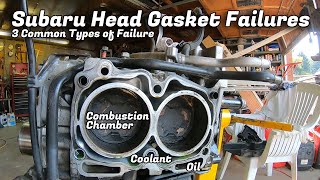
Est. part cost: $70-$150 - Failing Head Gasket 🟡 Medium Probability The Phase I EJ25D DOHC engine is notorious for internal head gasket failures, where coolant leaks into the combustion chamber. This fouls the spark plug and disrupts combustion, causing a misfire. This is a well-documented factory design flaw for this specific engine. 🎬 Watch: An expert explanation of how these head gaskets fail.
How to confirm: Check for other symptoms: unexplained coolant loss, white sweet-smelling smoke from the exhaust, bubbling in the coolant overflow tank, or milky/foamy engine oil. A chemical block tester (which checks for exhaust gases in the coolant) or a cylinder leak-down/cooling system pressure test can confirm the failure.
Typical fix: This is a major repair that involves removing the cylinder heads and replacing the head gaskets with an updated multi-layered steel (MLS) version, such as those from Six Star (part #11044AA633). It is critical to have the cylinder heads resurfaced by a machine shop during this job.
Est. part cost: $200-$500 for a complete gasket kit and bolts - Clogged or Failed Fuel Injector ⚪ Low Probability → Shop Fuel Injector
How to confirm: Swap the fuel injector from cylinder 1 with cylinder 3. If the code changes to P0303, the injector is the problem. You can also listen to the injector with a mechanic's stethoscope to hear if it's clicking like the others.
Typical fix: Replace the faulty fuel injector. It is often recommended to replace them as a set if they are original and high-mileage.
Est. part cost: $50-$120 per injector
Rare But Worth Checking
- Low Compression: If all ignition and fuel components check out, a mechanical issue could be the cause. This could be from a burnt valve or worn piston rings. A compression test is needed to diagnose this.
- Vacuum Leak: A leak in the intake manifold gasket near the cylinder 1 runner can lean out the air/fuel mixture and cause a misfire. This is less common for a single-cylinder misfire but can be found by spraying brake cleaner near the gasket with the engine running and listening for a change in idle speed.
- Jumped Timing Belt: A timing belt that has jumped a tooth, possibly due to a failed tensioner or debris, can cause low compression on one bank of cylinders and trigger misfire codes for cylinders 1 and 3. This would be accompanied by a significant loss of power.
Diagnosis Steps
- Confirm code P0301 with an OBD-II scanner. 🎬 Watch: A real-world diagnosis of P0301 and P0302 codes. Note if the Check Engine Light is flashing and if other codes are present.
- Identify Cylinder 1: It is the front cylinder on the passenger side of the engine. The coil pack is often marked.
- Inspect Spark Plug and Wire: Pull the spark plug wire and spark plug from cylinder 1. Look for wear, damage, oil, coolant fouling, or carbon tracking on the plug's ceramic. Measure the spark plug gap.
- Swap Ignition Components: Swap the spark plug wire from cylinder 1 with cylinder 3 (rear passenger side). Clear codes and drive. If P0303 appears, the wire is bad. If P0301 returns, swap the spark plugs between 1 and 3. If P0303 appears, the plug is bad.
- Inspect Ignition Coil: If the misfire remains on cylinder 1, inspect the ignition coil pack for cracks or signs of arcing. Test resistance with a multimeter against specs (Primary: ~0.49-0.57 Ω, Secondary: ~9.5-11.1 kΩ).
- Check for Head Gasket Failure: This is a high-probability cause on the EJ25D. Look for classic signs like white exhaust smoke, bubbling in the coolant reservoir, or milky oil. Use a block tester to check for exhaust gases in the coolant.
- Test Fuel Injector: Swap the fuel injector from cylinder 1 with cylinder 3. If the code moves to P0303, the injector is faulty.
- Perform Compression and Leak-Down Tests: If all else fails, a compression test will reveal internal mechanical issues like worn piston rings, a burnt valve, or confirm a head gasket leak. A leak-down test can pinpoint the source of the compression loss.
Parts You'll Likely Need
- Spark Plugs
(OEM #NGK BKR6E-11)— This is the most common wear item and the first logical part to replace for a misfire.
Trusted brands: NGK, Denso
Related Codes That Often Appear With This One
- P0300 — If the misfire is intermittent or affects multiple cylinders, a P0300 (Random Misfire) may be stored alongside P0301.
- P0302 — Because cylinders 1 and 2 share a coil in the waste-spark system, a failing coil pack can sometimes cause misfires in both cylinders, triggering P0301 and P0302.
- P0303 — If a timing belt jumps on the passenger side bank, it can affect both cylinders 1 and 3, potentially causing both P0301 and P0303 codes.
- P0420 — Catalyst System Efficiency Below Threshold. This code is a common consequence of a long-term misfire. Unburned fuel from cylinder 1 enters the exhaust and overheats the catalytic converter, damaging it.
Platform-Specific Known Issues
- The Phase I EJ25D (1998) is particularly known for internal head gasket leaks (coolant into the combustion chamber), causing misfires and eventual overheating.
- Leaking spark plug tube seals, which are part of the valve cover gasket, can cause oil to fill the spark plug well, fouling the plug and causing a misfire.
Technical Service Bulletins (TSBs) & Recalls
- TSB Bulletin #11-130-13R: Provides inspection and repair procedures for engine misfire DTCs including P0301, P0302, P0303, or P0304, often associated with difficulty starting or rough idle.
- TSB Bulletin #11-124-12R: Notes that misfire codes P0301 through P0304 may be accompanied by difficulty starting, rough idle, or camshaft position sensor codes.
- TSB Bulletin #11-125-12: Specifically addresses misfire DTCs P0301, P0302, P0303, and P0304 in conjunction with camshaft-related codes.
Mechanic-Grade Diagnostic Values
- Ignition Coil Primary Resistance — expected: 0.49 - 0.57 Ohms. Failure: A reading outside this range, especially an open circuit (infinite resistance).
- Ignition Coil Secondary Resistance — expected: 9.5 - 11.1 kOhms. Failure: A reading significantly outside this range.
- Spark Plug Wire Resistance (Cylinder 1) — expected: 5.0 - 12.1 kOhms. Failure: An open circuit (infinite resistance) or a value far outside the expected range.
- Fuel Injector Resistance (High Impedance) — expected: ~11.5 - 12.5 Ohms. Failure: A reading significantly lower or higher, or an open/short circuit.
- Fuel Pressure (Vacuum Hose Disconnected) — expected: ~3.0 BAR (~43.5 PSI). Failure: Significantly lower pressure indicates a weak fuel pump or clogged filter.
- Fuel Pressure at Idle — expected: ~2.5 - 2.6 BAR (~36 - 38 PSI). Failure: Pressure that doesn't hold steady or is too low.
Hidden / Shadow Codes Worth Checking
- Roughness Monitor Count: This is not a DTC but a live data parameter showing the number of misfire events the ECU has detected for each individual cylinder. It allows a technician to see small or intermittent misfires before they are frequent enough to set a P0301 code. (see via A dealer-level scan tool like the Subaru Select Monitor (SSM) or some advanced aftermarket scanners with Subaru-specific software packs.)
Scan Tool Commands That Help
- Subaru Select Monitor (SSM): Data Display / Live Data for Engine — Use this to view the 'Roughness Monitor' count for each cylinder. If cylinder 1 has a rapidly increasing count while others are stable, it confirms the misfire is isolated to that cylinder, even if the check engine light is not flashing.
Wiring & Ground Locations
- Intake Manifold Ground — The top of the intake manifold, where grounding wires connect to the manifold itself.. The ECU gets its primary ground reference from the intake manifold. A poor or corroded ground here can cause a host of bizarre electrical issues, including weak spark or erratic sensor readings that could lead to a misfire. This is especially important if TGV deletes or phenolic spacers have been installed, which can interrupt the ground path.
- Main Chassis Ground — The point on the chassis (usually the strut tower or inner fender) where the negative battery cable is bolted.. This is the master ground point for the entire vehicle's electrical system. Corrosion or looseness here can create resistance, affecting the performance of all electrical components, including the ignition system.
- Alternator Ground — The alternator bracket/housing.. The alternator grounds through its mounting bracket. A poor ground here can affect charging system performance and introduce electrical noise, which can interfere with sensitive ECU operations and potentially contribute to misfire detection issues.
Real Owner Repair Stories
- YouTube channel 'bozodoesit' (2006 Subaru Forester (with EJ25 engine, similar ignition system)) — Engine would misfire, shudder, and hesitate, but only when it was wet and humid outside. The problem would disappear when the weather was dry or the engine was fully warm.
❌ Tried (didn't work) The owner had been fighting the issue for some time, implying other diagnostics or simple checks did not resolve it.
✅ What actually fixed it Replacing the ignition coil pack. The theory was that a hairline crack in the old coil pack was allowing moisture in during damp weather, causing the spark to arc to ground instead of going to the cylinders. A new coil pack completely resolved the weather-dependent misfire. - NHTSA ODI #10546323: An owner reported that the check engine light came on with rough idling; upon having the code read, P0301 for a cylinder 1 misfire was found.
- NHTSA ODI #10082304: An owner reported being told by a dealership that a P0301 code was a "false code" for a 1st cylinder misfire, but the check engine light continued to recur, eventually leading to the removal of the ECM.
OEM Part Supersession History
22433AA240→22433AA370— Standard revision and update by the manufacturer.
Heads up: None, 22433AA370 is the correct replacement part for vehicles that originally used 22433AA240.
Model Year Variations Within This Range
- 1998: The Impreza 2.5 RS used the DOHC EJ25D engine. This engine is infamous for internal head gasket failures between the cylinder and coolant passages.
- 1999: The Impreza 2.5 RS switched to the new Phase II SOHC EJ251 engine. While still susceptible to head gasket issues, the failure mode is more often an external oil or coolant leak rather than the internal leak common on the DOHC EJ25D. The diagnostic and repair process can differ slightly.
Diagnostic Flowchart
Other Known Issues on This Vehicle
Issues unrelated to this code that are worth knowing about as an owner of this generation:
- Head Gasket Failure (Internal & External) 🔴 High — Extremely common, often occurs between 80,000 and 150,000 miles. Affects nearly all EJ25D engines. (Ref: Subaru issued TSB WWP-99 to address the issue, but it was more of a service campaign than a full recall.)
- Oil Separator Plate Leak 🟠 Medium — Very common. The original plastic plate becomes brittle and leaks oil from the rear of the engine, often mistaken for a rear main seal leak. (Ref: Subaru later provided an updated metal plate to fix this issue.)
- Piston Slap When Cold 🟡 Low — Common on many EJ series engines. A knocking sound is heard for the first few minutes after a cold start, which typically goes away as the engine warms up. Generally considered benign if it disappears when warm.
- Oil Consumption 🟠 Medium — Many EJ25 engines are known to consume oil between changes, which can lead to low oil levels and engine damage if not monitored.
Used vs. New Parts: Buying Guide for This Vehicle
When a used part is the smart pick: For this repair, used parts are generally not recommended for the core failure items. A used fuel injector could be a viable option if it comes from a known-running, low-mileage vehicle and is tested or cleaned before installation. Simple mechanical components like brackets or connectors, if damaged during the repair, are fine to source from a junkyard.
Donor-vehicle mileage cap: roughly under 80000 miles for the part to have meaningful remaining life.
What to inspect on the donor part:
- For a fuel injector, look for no visible cracks in the plastic body.
- Check for rust or corrosion on electrical terminals.
- Ask the seller if the part was from a running vehicle and what the mileage was.
- Avoid parts from cars that show signs of sitting for a long time (e.g., heavy dirt, water lines in the engine bay).
OEM-only on this vehicle (don't cheap out):
- Head Gaskets: Always use a high-quality, updated Multi-Layer Steel (MLS) gasket, not a cheap composite or a used one.
- Ignition Coil Pack: Strongly recommended to use OEM (Diamond is the manufacturer) or a reputable Japanese-made equivalent. Some aftermarket coils have been reported to cause issues like longer cranking times.
- Spark Plug Wires: OEM/Genuine Subaru wires are highly recommended to ensure proper fit, length, and resistance.
Aftermarket brands forum-validated for this vehicle:
- NGK or Denso for spark plugs (NGK is often OEM).
- Six Star or Fel-Pro for updated MLS head gasket sets.
- DeatschWerks for performance-oriented fuel injectors, if upgrading.
Brands owners have reported issues with on this vehicle:
- Unbranded, 'no-name' ignition coils and spark plug wires from online marketplaces. These often have incorrect resistance, poor insulation, and short lifespans.
Real Owner Stories
Aggregated from forums and TSBs cited above. Mileages and costs reflect what owners reported in those sources.
Subaru EJ25 engine
Symptoms: The owner used a multimeter to test the spark plug wire for cylinder 1 and found it had an open circuit.
What fixed it: Replacement of the faulty spark plug wire.
Source hint: YouTube: Subaru P0301 - misfire on cylinder 1 by Auto Resource
Subaru Impreza/Forester EJ25
Symptoms: The engine experienced a misfire that only occurred in wet or humid conditions.
What fixed it: Replacing the cracked ignition coil pack.
Source hint: YouTube: How to fix Misfiring Engine/Replace Coilpack in Subaru by BoziDoesIt
Subaru Forester EJ25
Symptoms: Intermittent P0301 misfire occurring twice about two months apart.
What fixed it: Diagnosis pointed toward common ignition component failure (plugs, wires, or coil) as the primary step.
Source hint: Subaru Forester has thrown a P0301 (Misfire cylinder 1) twice, about two months apart. - Reddit r/AskMechanics
Related OBD-II Codes
Frequently Asked Questions
Which spark plugs should I use for my EJ25D engine to avoid P0301?
My 1998 Impreza 2.5L misfires only when it rains. Is there a specific part prone to this?
Is there a specific spark plug wire set recommended for the 1993-2001 Impreza?
I found oil on my spark plug when diagnosing P0301. What causes this on the EJ25D?
If I have a head gasket failure causing my misfire, is there an updated part to prevent it from happening again?
Where exactly is Cylinder 1 located on my Subaru 2.5L engine?
Helpful Videos
We Have This Part in Stock

The information in this article is provided for general reference and educational purposes only. Vehicle specifications, procedures, and part compatibility can vary by production date, trim level, and region. Always consult your vehicle's factory service manual and verify part numbers before purchasing or performing repairs. Safety-critical components such as airbags, seat belts, and braking systems should be installed by a qualified professional.
- Subaru Impreza:
- 🧭 Diagnostic Flowchart
- 🎬 Helpful Videos
- 🛍️ Shop This Part
- What's Unique About the 1993-2001 Subaru Impreza
- Symptoms You May Notice
- Most Likely Causes
- Rare But Worth Checking
- Diagnosis Steps
- Parts You'll Likely Need
- Related Codes That Often Appear With This One
- Platform-Specific Known Issues
- Technical Service Bulletins (TSBs) & Recalls
- Mechanic-Grade Diagnostic Values
- Hidden / Shadow Codes Worth Checking
- Scan Tool Commands That Help
- Wiring & Ground Locations
- Real Owner Repair Stories
- OEM Part Supersession History
- Model Year Variations Within This Range
- Other Known Issues on This Vehicle
- Used vs. New Parts: Buying Guide for This Vehicle
- Real Owner Stories
- Subaru EJ25 engine
- Subaru Impreza/Forester EJ25
- Subaru Forester EJ25
- Related OBD-II Codes
- Frequently Asked Questions
- 🎟️ Get 5% Off