

P0301 on 2012-2016 Subaru Impreza: Cylinder 1 Misfire Causes and Fixes
P0301 on a 2012-2016 Impreza indicates a misfire in cylinder 1. The most common causes are a faulty ignition coil or a worn-out spark plug. A simple DIY test is to swap the ignition coil from cylinder 1 with another cylinder to see if the code changes. Given the known issues with this engine, oil fouling on the spark plug and the status of the valve spring recall (WTY-84) should also be investigated early.
- P0301 is a misfire on cylinder 1 (front, passenger side).
- The most likely cause is a bad ignition coil or spark plug.
- Always perform the 'coil swap test' before buying any parts; it's a free and effective diagnostic step.
- If the check engine light is flashing, pull over and minimize driving to avoid destroying your catalytic converter.
- Be aware of the serious valve spring recall (WTY-84) on 2012-2014 models, as a misfire can be a symptom of this defect.
What's Unique About the 2012-2016 Subaru Impreza
For the 2012-2016 Impreza with the FB20 engine, a P0301 code can be more than just a simple spark plug issue. This engine generation was subject to a significant recall for defective valve springs that could fracture, causing misfires and potentially catastrophic engine damage (NHTSA #18V-772). Additionally, Subaru issued Technical Service Bulletins (TSBs) linking misfire codes to issues with camshaft position sensors, sometimes requiring a software update or sensor adjustment, not just part replacement. Lastly, these engines are known for excessive oil consumption, which can foul the spark plug in cylinder 1, leading to a persistent P0301 code.
Symptoms You May Notice
- Rough or shaky idle
- Hesitation or stumbling during acceleration
- Flashing or solid Check Engine Light
- Reduced engine power
- Poor fuel economy
- Smell of unburned fuel from the exhaust
- Unusual engine noise or vibration
- Replacing only the spark plug without testing the ignition coil first. The coil swap is a free and definitive test that should be performed before buying parts.
- Ignoring the possibility of oil fouling. If the old spark plug is black and wet with oil, simply replacing it will not be a permanent fix. The root cause of the oil consumption must be addressed.
Most Likely Causes
- Faulty Ignition Coil 🔴 High Probability → Shop Ignition Coil Coil-on-plug ignition systems are a common failure point on modern engines as they age from heat and vibration. There was also a recall (WRE-21) for certain model years that involved replacing all four ignition coils, indicating a known weakness.
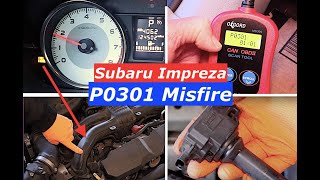
How to confirm: Swap the ignition coil from cylinder 1 (front, passenger side) with the coil from cylinder 3 (rear, passenger side). Clear the codes and drive. If the code changes to P0303, the coil is faulty. Also inspect the coil's electrical connector for damage or corrosion, as broken connector tabs are common. 🎬 Watch: How to fix a misfire with one simple tool.
Typical fix: Replace the faulty ignition coil. It is often recommended to replace all four at the same time for preventative maintenance.
Est. part cost: $50-$120 - Worn or Fouled Spark Plug 🔴 High Probability → Shop Spark Plug Spark plugs are a routine maintenance item. More importantly, early FB20 engines were known for significant oil consumption issues due to piston ring design, which can foul spark plugs with oil and cause persistent misfires. A valve cover gasket leak can also cause oil to pool in the spark plug tube and foul the plug.
How to confirm: After confirming the ignition coil is good, remove the spark plug from cylinder 1. Inspect it for wear (worn electrode), carbon fouling (black, sooty), or oil fouling (wet, black). Blue smoke from the exhaust on startup is another strong indicator of oil consumption fouling the plugs.
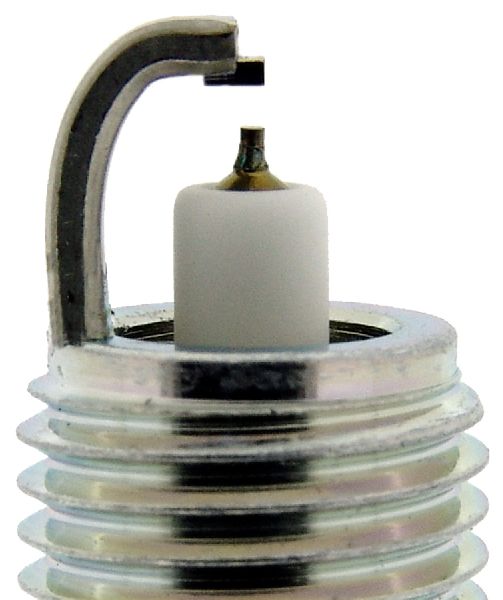
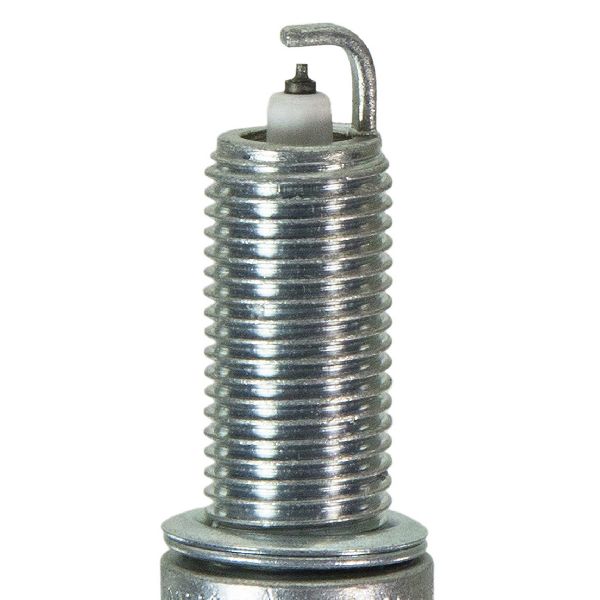
Typical fix: Replace the spark plug. It is best practice to replace all four spark plugs as a set to ensure even performance. Use the correct OEM-spec Iridium plugs.
Est. part cost: $15-$30 per plug - Camshaft Position Sensor Issue 🟡 Medium Probability → Shop Engine Camshaft Position Sensor Subaru has issued TSBs (e.g., #11-130-13R) for this engine family, indicating that misfire codes can be triggered by issues with the camshaft position sensor's air gap, sometimes requiring shims for adjustment or a software update. This can cause rough idle and starting issues in addition to the misfire code. Manufacturer Bulletin #11-124-12R also links P0301 specifically to difficulty starting and rough idle conditions.
How to confirm: This is best diagnosed by a professional with access to Subaru's technical bulletins and an oscilloscope to check the sensor's wave pattern. The issue is often accompanied by other codes like P034x, P036x, or P039x.
Typical fix: May involve a software update, installing a shim to correct the sensor's air gap, or replacing the sensor itself.
Est. part cost: $60-$150 - Clogged or Defective Fuel Injector ⚪ Low Probability → Shop Fuel Injector
How to confirm: A mechanic can perform a fuel injector balance test to compare flow rates. A simpler DIY method is to listen to the injector with a mechanic's stethoscope; it should have a consistent, rhythmic clicking sound. You can also swap the injector with another cylinder to see if the misfire follows, though this is more labor-intensive.
Typical fix: Clean or replace the fuel injector for cylinder 1.
Est. part cost: $100-$200
Rare But Worth Checking
- Fractured Engine Valve Spring: Subaru issued recall WTY-84 (NHTSA #18V-772) for 2012-2014 Imprezas due to valve springs that could break. A fracture can cause a persistent misfire, unusual engine noise, stalling, and potentially severe engine damage. 🎬 See this breakdown of the valve spring recall issue. It is critical to verify if this recall service has been performed on the vehicle, as the repair involves engine removal.
- Low Engine Compression: This indicates a serious internal engine problem, such as worn piston rings (a known oil consumption issue on some FB engines), a leaking head gasket, or a burnt valve. A compression test is required to diagnose this. This is a worst-case scenario after all other ignition and fuel-related causes have been ruled out.
Diagnosis Steps
- Read the code with an OBD-II scanner and check for any other stored codes, especially camshaft sensor codes (P034x, P036x, etc.).
- If the check engine light is flashing, minimize driving to prevent catalytic converter damage.
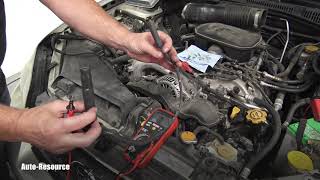
- Identify cylinder 1 (front, passenger side). You will likely need to remove the engine airbox for access. 🎬 Watch: Step-by-step guide to fixing Impreza misfire codes.
- Swap the ignition coil from cylinder 1 with the coil from cylinder 3 (rear, passenger side).
- Clear the codes, start the engine, and drive until the check engine light returns.
- If the code is now P0303, the ignition coil is the problem and needs to be replaced.
- If the code remains P0301, the coil is likely good. Proceed to inspect the spark plug.
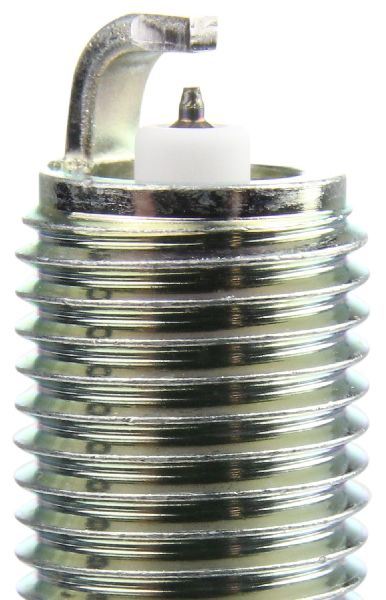
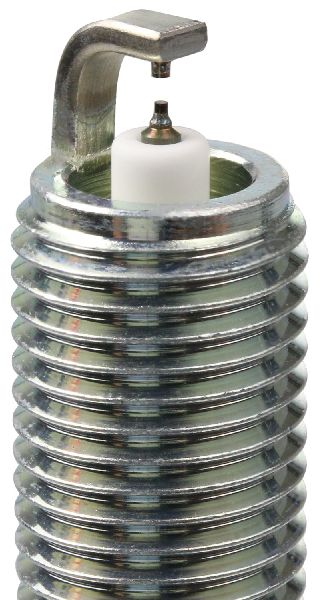
- Remove and inspect the spark plug from cylinder 1 for signs of wear, damage, or fouling (black soot or oil). If the plug is oil-fouled, this strongly suggests an oil consumption problem. Replace if necessary.
- If the plug and coil are good, check the VIN on Subaru's or NHTSA's website for open recalls, specifically WTY-84 (valve springs for 2012-2014 models).
- If the problem persists, more advanced diagnostics are needed, such as checking the fuel injector, testing for vacuum leaks, or performing an engine compression test.
- If camshaft codes are present, refer to TSB #11-130-13R for the procedure to check sensor air gaps.
Parts You'll Likely Need
- Ignition Coil
(OEM #22433AA642)— This is one of the most common failure items for a P0301 code. A simple swap test can confirm the failure.
Trusted brands: Denso, NGK, Diamond (OEM)
OEM price range: $90-$120
Aftermarket price range: $50-$80 - Spark Plug
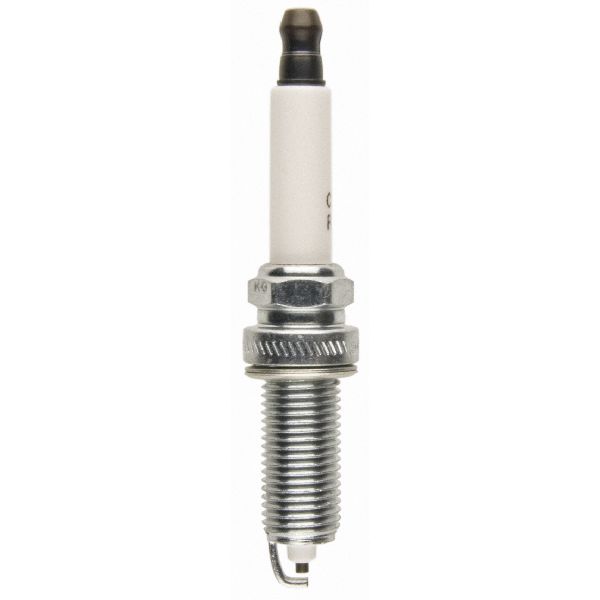
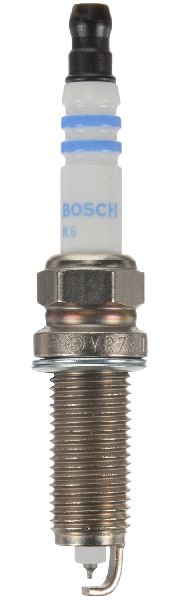
(OEM #22401AA781)— Spark plugs are a standard maintenance part and can become worn or fouled, leading to a misfire. They are often replaced alongside a faulty coil. Oil fouling is a specific concern on this engine.
Trusted brands: NGK (SILZKAR7B11), Denso
OEM price range: $20-$30
Aftermarket price range: $15-$25
Related Codes That Often Appear With This One
- P0300 — This is a 'Random/Multiple Cylinder Misfire' code. It can appear with P0301 if the misfire is intermittent or affecting other cylinders as well.
- P0302, P0303, P0304 — These codes indicate misfires in other cylinders. Seeing them together can point towards a common problem like a vacuum leak, fuel delivery issue, or a major mechanical problem.
- P0420 — This code for 'Catalyst System Efficiency Below Threshold' can be triggered after a prolonged misfire, as unburned fuel damages the catalytic converter.
- P0340, P0345, P0365, P0390 — These are camshaft position sensor codes. TSB #11-130-13R specifically links these codes with misfire codes on the FB20 engine, pointing to a sensor air gap or signal issue.
Technical Service Bulletins (TSBs) & Recalls
- TSB #11-130-13R: Links misfire codes with camshaft position sensor clearance issues, requiring inspection and possible shimming.
- TSB #11-116-12R: Mentions that sensitive ECM logic could trigger misfire codes, requiring a software update.
- TSB 02-157 Series: Addresses oil consumption issues, which are a root cause of spark plug fouling leading to P0301.
- Bulletin #11-125-12: Provides technical guidance for addressing misfire codes P0301 through P0304 when found in conjunction with camshaft position sensor codes P0365, P0366, P0390, and P0391.
- Bulletin #11-124-12R: Outlines inspection and repair procedures for engine misfire codes P0301-P0304 and camshaft position codes P0340-P0346, specifically noting symptoms of difficulty starting and rough idle.
Platform-Specific Known Issues
- Recall WTY-84 (NHTSA #18V-772) was issued for potential valve spring fractures on 2012-2014 models, which can cause this code. The repair is invasive, requiring engine removal.
- A class-action lawsuit was filed over excessive oil consumption in early FB20 engines, often caused by faulty piston rings. This consumption fouls spark plugs, causing misfires like P0301.
- TSB #11-130-13R details a known issue where an incorrect air gap on the camshaft position sensor can cause misfire codes, requiring a specific shimming procedure to correct.
Mechanic-Grade Diagnostic Values
- Long Term + Short Term Fuel Trims (LTFT + STFT) — expected: Combined value should not exceed ±10% at idle or steady RPM.. Failure: A sustained value greater than +10% indicates a lean condition (e.g., vacuum leak). A sustained value less than -10% indicates a rich condition (e.g., leaking injector). Subaru's maximum adjustment is reportedly around 27.5% before maxing out.
- Camshaft Position Sensor Voltage (3-wire Hall Effect type) — expected: With key on, engine off: one wire should have ~5V reference from the ECU, one should have a good ground (<0.1V), and the signal wire should also show ~5V.. Failure: When a ferrous metal object is passed over the sensor tip, the signal wire voltage should drop to near 0V. If the voltage doesn't switch, the sensor is likely faulty.
- Ignition Coil Primary Winding Resistance — expected: Approximately 0.7 to 1.5 ohms, but this can vary. Comparison between coils is more effective than relying on a generic spec.. Failure: A reading that is significantly different from the other known-good coils on the engine, or an open circuit (infinite resistance).
Hidden / Shadow Codes Worth Checking
- Mode $06 Misfire Counters: This is not a formal DTC, but a function within the OBD-II standard that displays the raw count of misfire events per cylinder. This is extremely useful for seeing if a misfire is occurring even if it hasn't reached the threshold to trigger a Check Engine Light. For example, you might see Cylinder 1 has 50 misfire events while all others have 0. (see via An advanced DIY scan tool with Mode $06 capabilities or a professional tool like the Subaru Select Monitor (SSM), where it may be labeled 'IGN Counter'.)
Scan Tool Commands That Help
- Subaru Select Monitor (SSM) or equivalent: Misfire Monitoring / IGN Counter — Use this to view the live or stored misfire counts for each individual cylinder. This helps confirm the misfire is isolated to cylinder 1 and isn't happening randomly on other cylinders at a lower, non-code-triggering rate.
- Subaru Select Monitor (SSM) or equivalent: Freeze Frame Data — When a P0301 is stored, the ECM also captures a snapshot of all sensor data at the moment the fault occurred. This is critical for diagnosis, as it shows engine speed, load, temperature, and fuel trims when the misfire happened, helping to replicate the condition.
Wiring & Ground Locations
- Main Engine Ground — The primary engine-to-chassis ground strap attaches to the engine block via the top starter motor mounting bolt.. A loose or corroded main ground can cause unstable voltage for the entire ignition system, leading to a weak spark and misfires that can be difficult to trace.
- ECM Ground Plane — The Engine Control Module (ECM) and its sensors often receive their primary ground reference from mounting points on the intake manifold.. If the intake manifold has a poor ground connection to the engine block, the ECM's sensor readings can be skewed, leading to incorrect ignition timing or fuel calculations and causing misfires.
- Ignition Coil Connector — The 3-pin connector on top of the ignition coil for cylinder 1.. The wiring harness in this area can become brittle from heat. Inspect the connector for broken locking tabs and the wires for chafing or damage, which could interrupt the signal or power to the coil.
Real Owner Repair Stories
- Reddit user on r/subaruimpreza (2017 Impreza (similar FB20 engine)) — Oil found on the threads and ceramic part of the spark plug when changing them.
❌ Tried (didn't work) Initially just replacing the spark plug.
✅ What actually fixed it The root cause was a leaking spark plug tube seal, which is part of the valve cover gasket assembly. Replacing the valve cover gasket set, which included new tube seals, resolved the oil leak and prevented future fouling of the spark plug. - YouTube video by 'Honest Brant' (2013 Subaru Impreza, 110,000+ miles) — P0301 code returned one year after replacing spark plugs for the same code.
❌ Tried (didn't work) Replacing all spark plugs (this worked for about a year before the code returned).
✅ What actually fixed it Replacing the ignition coil on cylinder 1. The owner reasonably assumed that since the plugs were new, the next logical failure point was the original coil.
Model Year Variations Within This Range
- 2012-2015 vs 2016: There are reports from owners and parts suppliers that some engine gaskets and seals may differ for the 2016 model year FB20 engine compared to the 2012-2015 models. While the core engine is the same (FB20B), subtle changes may have been made. This is important when ordering parts like a full engine gasket kit.
- 2012-2014: These model years were subject to the WTY-84 valve spring recall. A P0301 on one of these vehicles should be treated with higher urgency, as a broken valve spring is a distinct possibility if the recall work has not been completed.
Diagnostic Flowchart
Other Known Issues on This Vehicle
Issues unrelated to this code that are worth knowing about as an owner of this generation:
- Excessive Oil Consumption 🔴 High — Very common on 2012-2014 models, less so on later years. Can start as early as 20k-30k miles. Often requires adding 1 quart of oil every 1,200-2,000 miles. (Ref: TSB 02-157-14R; Subject of a class-action lawsuit.)
- CVT Transmission Failure/Shudder 🔴 High — Common across 2012-2017 models, typically appearing between 60k-100k miles. Symptoms include shuddering, hesitation, stalling, and growling noises. (Ref: Subaru extended the CVT warranty to 10 years/100,000 miles for many affected vehicles.)
- Valve Spring Fracture 🔴 High — Affects 2012-2014 Impreza/XV models produced between Jan 2012 and May 2013. Failure can happen at any mileage. (Ref: Recall WTY-84 / NHTSA #18V-772)
- Failing Rear Wheel Bearings 🟠 Medium — Commonly reported failure, often starting as a humming or grinding noise from the rear of the vehicle that changes with speed. Typically occurs after 60,000 miles.
- Camshaft Position Sensor Air Gap Fault 🟡 Low → Shop Engine Camshaft Position Sensor — Can occur on early FB engines, causing rough idle, hard starting, and misfire codes. (Ref: TSB 11-130-13R)
Used vs. New Parts: Buying Guide for This Vehicle
When a used part is the smart pick: A used ignition coil from a low-mileage donor vehicle is a reasonable choice, especially if it's an OEM part (e.g., Diamond, Denso) and you can test it or have a return policy. Other simple mechanical components like the airbox assembly are also fine to source used.
Donor-vehicle mileage cap: roughly under 70000 miles for the part to have meaningful remaining life.
What to inspect on the donor part:
- For an ignition coil, check for cracks in the plastic housing and ensure the rubber boot is pliable and not torn.
- Check the electrical connector for any signs of corrosion, melting, or broken locking tabs.
- Ask for the VIN of the donor car to verify its mileage and check for any reported issues.
OEM-only on this vehicle (don't cheap out):
- Camshaft Position Sensor: Aftermarket cam sensors are notoriously unreliable for many Subaru models. Stick with OEM or a trusted OEM supplier like Denso to avoid chasing phantom codes.
- Valve Springs: If performing the valve spring recall repair, only use the official, updated OEM parts specified by Subaru.
Aftermarket brands forum-validated for this vehicle:
- NGK and Denso for spark plugs and ignition coils (as they are often the original equipment manufacturer).
- Beck/Arnley often provides quality re-packaged OEM parts.
Brands owners have reported issues with on this vehicle:
- Unbranded, 'no-name' ignition coils and sensors from online marketplaces are frequently reported to fail prematurely or be dead-on-arrival. While the low price is tempting, they often lead to repeated repairs.
Real Owner Stories
Aggregated from forums and TSBs cited above. Mileages and costs reflect what owners reported in those sources.
2012 Subaru Impreza 2.0L FB20
Symptoms: Battling excessive oil consumption; misfire codes appearing when oil levels get low or plugs become fouled.
What fixed it: Dealers performed oil consumption tests and in some cases replaced the short block under warranty.
Source hint: CarComplaints.com entries for the 2012 Impreza
2014 Subaru Impreza 2.0L FB20
Symptoms: P0301 code triggered; discussion focused on standard diagnostic steps of swapping components.
What fixed it: Swapping ignition coils to identify a failure or replacing spark plugs.
Source hint: r/subaru Reddit thread regarding P0301 on a 2014 model
2012-2016 Subaru Impreza 2.0L FB20
Symptoms: P0301 code; spark plug failed due to oil passing the piston rings.
What fixed it: Starting with swapping coils to see if the code moves, then inspecting/replacing spark plugs.
Source hint: r/subaruimpreza Reddit thread 'Got a P0301 Code'
Related OBD-II Codes
Frequently Asked Questions
Could my P0301 code be related to the Subaru valve spring recall?
I heard there is a TSB for camshaft sensors causing misfires on the FB20 engine. Which one is it?
My 2012 Impreza is burning a lot of oil and now has a P0301 code. Are these connected?
Is there a specific ignition coil recall for the 2012-2016 Impreza?
Which spark plugs should I use to fix a P0301 on my FB20B engine?
Where is cylinder 1 located on my Subaru Impreza 2.0L?
Helpful Videos
We Have This Part in Stock

The information in this article is provided for general reference and educational purposes only. Vehicle specifications, procedures, and part compatibility can vary by production date, trim level, and region. Always consult your vehicle's factory service manual and verify part numbers before purchasing or performing repairs. Safety-critical components such as airbags, seat belts, and braking systems should be installed by a qualified professional.
- Subaru Impreza:
- 🧭 Diagnostic Flowchart
- 🎬 Helpful Videos
- 🛍️ Shop This Part
- What's Unique About the 2012-2016 Subaru Impreza
- Symptoms You May Notice
- Most Likely Causes
- Rare But Worth Checking
- Diagnosis Steps
- Parts You'll Likely Need
- Related Codes That Often Appear With This One
- Technical Service Bulletins (TSBs) & Recalls
- Platform-Specific Known Issues
- Mechanic-Grade Diagnostic Values
- Hidden / Shadow Codes Worth Checking
- Scan Tool Commands That Help
- Wiring & Ground Locations
- Real Owner Repair Stories
- Model Year Variations Within This Range
- Other Known Issues on This Vehicle
- Used vs. New Parts: Buying Guide for This Vehicle
- Real Owner Stories
- 2012 Subaru Impreza 2.0L FB20
- 2014 Subaru Impreza 2.0L FB20
- 2012-2016 Subaru Impreza 2.0L FB20
- Related OBD-II Codes
- Frequently Asked Questions
- 🎟️ Get 5% Off