

P0301 on 2007-2011 Toyota Camry 2.4L: Cylinder 1 Misfire Causes and Fixes
P0301 on a 2007-2011 Camry 2.4L most often means a bad ignition coil or a worn, oil-fouled spark plug in cylinder 1. Due to a known engine issue, check your oil level first; low oil is a major red flag. A DIY fix is often possible by swapping the coil from cylinder 1 to another cylinder to see if the code follows. Expect to pay $40-$80 for a quality aftermarket coil or $10-$15 for an Iridium spark plug.
- P0301 indicates a misfire in cylinder 1, which is the cylinder closest to the drive belts on the passenger side of the engine.
- The most likely cause is a bad ignition coil or a worn/fouled spark plug.
- A simple DIY diagnostic is to swap the ignition coil from cylinder 1 with another cylinder (like #3) and see if the misfire code follows the coil.
- Be aware of the 2AZ-FE engine's known oil consumption issue, which can foul spark plugs and cause this code. Check your oil level.
- Avoid driving with a flashing check engine light to prevent expensive damage to your catalytic converter.
What's Unique About the 2007-2011 Toyota Camry
The 2AZ-FE engine used in this generation of Camry is notorious for excessive oil consumption due to a faulty piston ring design. This issue was so widespread that Toyota initiated a Warranty Enhancement Program (ZE7) and issued Technical Service Bulletin T-SB-0094-11. While not a direct cause of P0301, the burning oil fouls the spark plugs over time, leading to misfires. Therefore, a P0301 code on this vehicle should prompt an immediate check of the oil level and inspection of the spark plug for oily residue.
Symptoms You May Notice
- Rough idle or shaking, especially when stopped
- Hesitation or stumbling during acceleration
- Flashing or solid Check Engine Light
- Noticeable loss of engine power
- Decreased fuel economy
- Smell of gasoline from the exhaust
- Replacing the oxygen (O2) sensor. While a misfire can affect O2 sensor readings, the sensor itself is rarely the cause of a single-cylinder misfire code.
Most Likely Causes
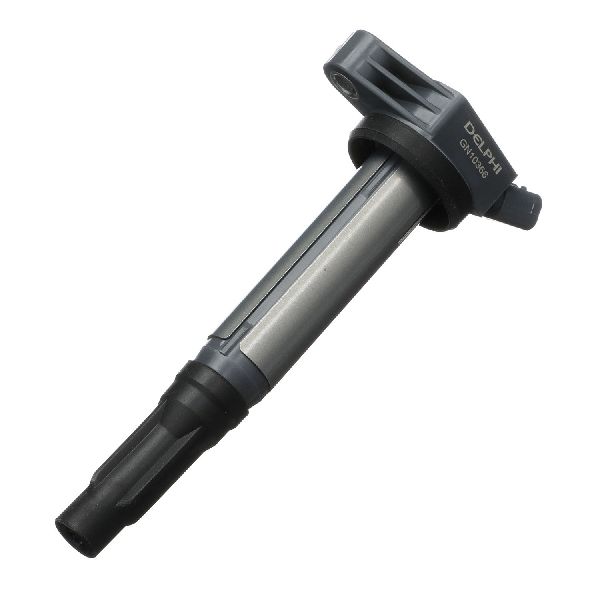
- Faulty Ignition Coil 🔴 High Probability → Shop Ignition Coil Ignition coils are a common wear item that can fail under high heat and load, especially on higher mileage vehicles. Aftermarket coils are known to have a higher failure rate on these engines; sticking with OEM (Denso) is highly recommended by owners.
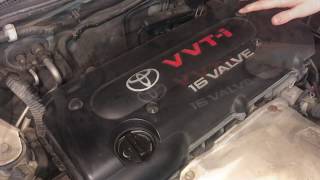
How to confirm: Swap the ignition coil from cylinder 1 with the coil from another cylinder (e.g., cylinder 3). Clear the codes and drive the vehicle. If the code changes to P0303 (Cylinder 3 Misfire), the ignition coil is faulty. This is the most common and effective first diagnostic step. 🎬 Watch: A mechanic's guide to diagnosing Camry misfire codes.
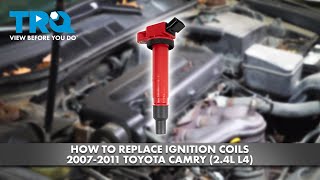
Typical fix: Replace the faulty ignition coil. It is held in by a single 10mm bolt. 🎬 Watch: How to quickly replace your faulty ignition coils.
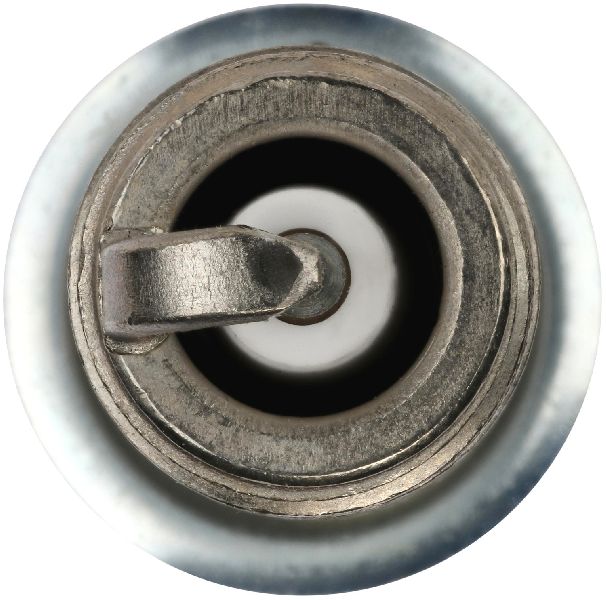
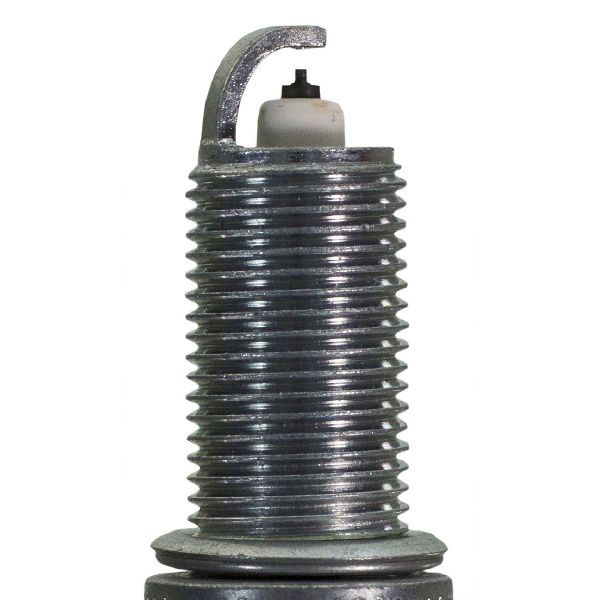
Est. part cost: $40 - $90 - Worn or Fouled Spark Plug 🔴 High Probability → Shop Spark Plug As a regular maintenance item, spark plugs wear out. More importantly, the 2AZ-FE's oil consumption issue can foul plugs prematurely, causing a weak or non-existent spark. The plug's electrode will be coated in a wet, black, oily substance.
How to confirm: Remove the spark plug from cylinder 1. Inspect it for heavy carbon buildup, oil fouling (a wet, black appearance), or a worn-out electrode. Compare it to a new plug. If it's oily, it strongly suggests the engine has the oil consumption problem.
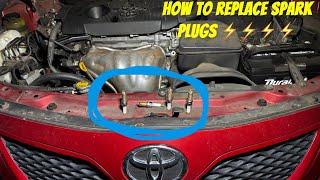
Typical fix: Replace the spark plug. It is recommended to replace all four spark plugs at the same time 🎬 See this step-by-step guide for replacing your spark plugs. with OEM-spec Iridium plugs (Denso or NGK) for consistent performance.
Est. part cost: $10 - $20 per plug - Clogged or Faulty Fuel Injector 🟡 Medium Probability → Shop Fuel Injector
How to confirm: This is more difficult to diagnose than a coil or plug. A professional can perform a fuel injector balance test. A DIY method is to listen to the injector with a mechanic's stethoscope to ensure it's clicking. Swapping injectors between cylinders is possible but requires removing the fuel rail and is more involved.
Typical fix: Replace the faulty fuel injector. Sometimes, a professional fuel system cleaning can resolve a minor clog.
Est. part cost: $50 - $150 - Vacuum Leak ⚪ Low Probability
How to confirm: Inspect all vacuum hoses connected to the intake manifold for cracks, brittleness, or loose connections. A common symptom is a rough idle that smooths out at higher RPM. A professional can use a smoke machine to find leaks that are not visible.
Typical fix: Replace the cracked or broken vacuum hose or gasket.
Est. part cost: $5 - $30
Rare But Worth Checking
- Low Engine Compression due to Stripped Head Bolts: A serious and well-documented failure on the 2AZ-FE is the stripping of cylinder head bolt threads in the aluminum engine block. This leads to a head gasket leak, causing low compression, coolant loss, and overheating, which can manifest as a persistent misfire in an affected cylinder. A compression test showing low readings in one or two adjacent cylinders is a key indicator.
- Low Engine Compression (Other Causes): This is a more serious mechanical issue, possibly related to worn piston rings (exacerbated by the oil consumption issue), a burnt valve, or a leaking head gasket from other causes. A compression test is needed to confirm.
- Faulty Wiring to Ignition Coil or Injector: → Shop Ignition Coil The wiring harness or connector for the cylinder 1 coil/injector could be damaged or have a poor connection. Visually inspect the wiring for any obvious damage, and check for a secure click when connecting it.
Diagnosis Steps
- Check the engine oil level. If it is significantly low, suspect the oil consumption issue is fouling the spark plug.
- Read the code with an OBD-II scanner to confirm P0301 is the primary code present.
- Identify cylinder 1. On the 2AZ-FE engine, the cylinders are numbered 1-2-3-4 from right to left as you face the engine from the front of the car. Cylinder 1 is on the passenger side, closest to the serpentine belt.
- Swap the ignition coil from cylinder 1 with the coil from another cylinder (e.g., cylinder 3). Use a 10mm socket to remove the single bolt holding each coil.
- Clear the diagnostic codes with your scanner.
- Drive the vehicle until the check engine light comes back on.
- Re-scan for codes. If the code is now P0303, the ignition coil is the faulty part. Purchase a new Denso coil. If the code remains P0301, the coil is likely good.
- If the coil is not the issue, remove and inspect the spark plug in cylinder 1. Look for wear, damage, or black, oily deposits. If it looks bad or is oil-fouled, replace it (preferably all four with Denso or NGK Iridium plugs).
- If the coil and plug are good, the next most likely cause is the fuel injector. This is a more complex diagnosis and may require professional assistance.
- If all else fails, check for vacuum leaks and perform an engine compression test to rule out serious mechanical engine problems like a failed head gasket.
Parts You'll Likely Need
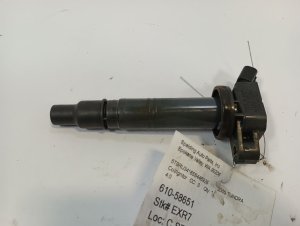
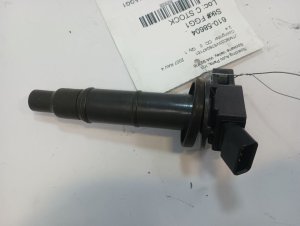
- Ignition Coil
(OEM #90919-02244 / 90919-A2002)— This is the most common failure point for a single-cylinder misfire. It's a relatively simple part to replace.
Trusted brands: Denso (OEM) 673-1301, NGK
OEM price range: $90-$120
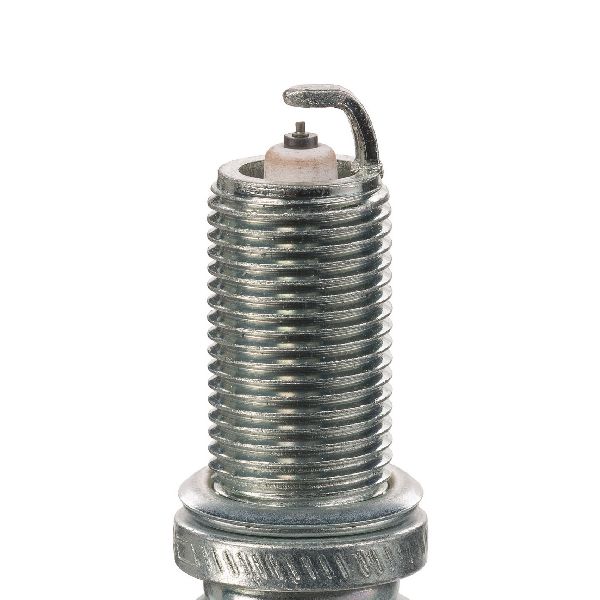
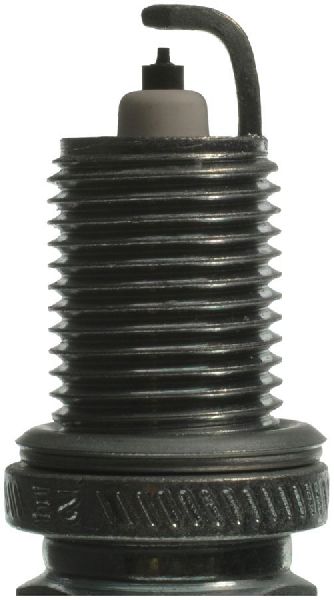
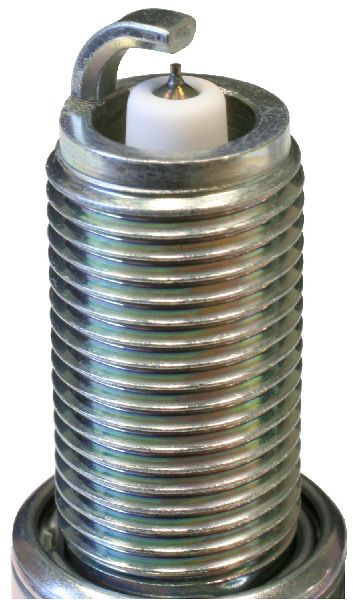
Aftermarket price range: $40-$80 - Iridium Spark Plug
(OEM #90919-01247 (Denso SK20R11))— Spark plugs are a maintenance item that wears out. An oil-fouled plug is also a very common cause of misfires on this specific engine due to the oil consumption issue.
Trusted brands: Denso SK20R11, NGK IFR6T11
OEM price range: $15-$25
Aftermarket price range: $10-$18
Related Codes That Often Appear With This One
- P0300 — If the misfire becomes more widespread, or if the underlying cause (like a vacuum leak or fuel pressure issue) affects multiple cylinders, a P0300 (Random/Multiple Cylinder Misfire) may appear alongside P0301.
- P0171 — A vacuum leak large enough to cause a misfire can also cause a P0171 (System Too Lean) code, as unmetered air is entering the engine.
Technical Service Bulletins (TSBs) & Recalls
- T-SB-0094-11 / T-SB-0158-14: Addresses the 2AZ-FE engine's excessive oil consumption issue, which can be an underlying cause of spark plug fouling and misfires. The repair involves replacing the pistons and rings.
- Warranty Enhancement Program ZE7: This was Toyota's official program to address the oil consumption issue, extending the warranty for affected vehicles to cover the costly piston replacement repair.
Platform-Specific Known Issues
- The 2AZ-FE engine was subject to a warranty enhancement program (ZE7) for excessive oil consumption due to faulty piston rings. This condition causes spark plugs to foul, leading to misfire codes like P0301. Check Toyota TSB T-SB-0094-11 for details.
- The aluminum engine block is known to have weak cylinder head bolt threads that can strip, especially after an overheating event. This causes head gasket failure, loss of compression, and misfires.
Mechanic-Grade Diagnostic Values
- Fuel Injector Resistance — expected: 11.6 to 12.4 Ω at 20°C (68°F). Failure: A reading outside this range indicates a faulty injector winding. If the resistance is good but the injector is suspected, it may be clogged.
- Ignition Coil Primary/Secondary Resistance — expected: This is not a standard test for these coil-on-plug units. Toyota's procedure involves a spark test rather than a resistance check. Some generic data suggests a primary resistance of ~0.5 ohms and secondary of ~10 kilohms, but this is not the official diagnostic method.. Failure: No spark during a spark test is the definitive failure indicator.
- Fuel Pressure at Idle — expected: 304 to 343 kPa (44 to 50 psi). Failure: Lower pressure suggests a weak fuel pump or clogged filter. Higher pressure may indicate a faulty fuel pressure regulator.
- Fuel Pressure Hold (5 mins after engine off) — expected: 147 kPa (21 psi) or more. Failure: A rapid drop in pressure indicates a leak in the system, which could be from a leaking fuel injector, fuel pump check valve, or pressure regulator.
Hidden / Shadow Codes Worth Checking
- Mode $06, Test ID $A2-$A5, Component ID $01-$04: This is not a shadow code, but rather raw data from the ECU's self-tests. A technician can view the misfire counts for each cylinder (Cylinder 1 through 4) for the last 10 driving cycles and the current driving cycle. This is extremely useful to see if other cylinders are misfiring occasionally, even if they haven't triggered a code yet. (see via A professional scan tool like Toyota Techstream or an advanced OBD-II scanner with Mode 6 capabilities. The specific data would be listed under names like 'Cylinder #1 Misfire Count'.)
Scan Tool Commands That Help
- Toyota Techstream: Active Test: Control the Fuel Injection — This function allows a technician to individually disable the fuel injector for each cylinder. To diagnose P0301, you would cut fuel to cylinder 1. If there is no change in the engine's idle, it confirms that cylinder 1 was not contributing power in the first place, pointing to a problem with that cylinder's ignition, fuel, or compression. If cutting fuel to another cylinder (e.g., cylinder 2) causes the engine to run rougher, it confirms that cylinder 2 was working correctly.
- Toyota Techstream: Data List > Misfire — This allows for real-time monitoring of the misfire count on each cylinder while the engine is running. A technician can rev the engine or put it under load to see the exact conditions that cause the misfire count for cylinder 1 to increase, which helps in diagnosis.
Wiring & Ground Locations
- EG / EH — EG is on the left side of the cylinder head; EH is on the intake side of the cylinder block. These are primary engine ground points.. A loose or corroded engine ground can cause a weak spark or erratic sensor readings, potentially leading to a misfire. While it would typically cause multiple/random misfires (P0300), a borderline connection could intermittently affect a single cylinder. Checking that these grounds are clean and tight is a valid, though less common, diagnostic step.
- Ignition Coil Connector (C14 for Cyl 1) — The 4-pin connector on top of the ignition coil for cylinder 1.. The pins supply power (Pin 1), ignition feedback (IGF, Pin 2), ignition trigger (IGT, Pin 3), and ground (Pin 4). A damaged wire or corroded pin in this specific connector can cause a P0301. A technician may use a multimeter to check for 12V at Pin 1 (with key on), continuity to ground at Pin 4, and use an oscilloscope to check for the IGT and IGF signals from the ECM on Pins 2 and 3.
Real Owner Repair Stories
- Mark Mitchell via white paper (2005 Toyota Camry 2.4L 2AZ-FE, 100,000 miles) — Rough idle, Check Engine Light with P0302 (Cylinder 2 Misfire), and coolant loss.
❌ Tried (didn't work) Replacing spark plugs, Swapping ignition coils between cylinders, Swapping fuel injectors between cylinders
✅ What actually fixed it The misfire remained on the same cylinder after swapping ignition and fuel parts. A compression test revealed low compression on cylinders 1 and 2 (140 and 130 psi, vs 180 psi on others). Upon disassembly, the cylinder head bolts were found to be loose, with stripped threads in the aluminum block. The final fix was repairing the block threads using an NS300L thread repair kit (similar to Time-Sert) and replacing the head gasket. - FixxNflipp on YouTube (2007 Toyota Camry with P0302, P0303, P0300) — Multiple misfire codes, rough idle, oil found on spark plug threads.
❌ Tried (didn't work) Initial check of coils and plugs pointed towards an oil leak issue.
✅ What actually fixed it The root cause was a combination of issues stemming from oil leaks. The PCV valve was clogged and the PCV hose was torn, creating a vacuum leak. The valve cover gasket and spark plug tube seals were leaking oil onto the spark plugs. The final fix was replacing the valve cover gasket set, the PCV valve, the torn PCV hose, and all four spark plugs and ignition coils. This resolved all leaks and misfires.
OEM Part Supersession History
90919-02243, 90919-02244→90919-02266— Standard part evolution, likely for improved reliability, manufacturing efficiency, or material changes.
Heads up: The parts are interchangeable. When ordering a replacement OEM coil, you will likely receive 90919-02266.
Model Year Variations Within This Range
- 2008+: In 2008, the 2AZ-FE engine was updated. The compression ratio was increased from 9.6:1 to 9.8:1, camshafts were revised, and oil squirters were added to cool the pistons. While this doesn't fundamentally change the P0301 diagnosis, it's a notable internal difference within the specified vehicle range.
- 2007-2009 vs 2010-2011: The 2.4L 2AZ-FE was the primary 4-cylinder engine from 2007-2009. In 2010, Toyota introduced the new 2.5L 2AR-FE as the base engine. While some 2010-2011 Camrys (especially Hybrid models) still used a version of the 2AZ-FE (2AZ-FXE), most non-hybrid 4-cylinder models from 2010 onwards will have the 2AR-FE, which has different characteristics and does not share the same oil consumption or head bolt issues. It is critical to confirm which engine the vehicle has.
Diagnostic Flowchart
Other Known Issues on This Vehicle
Issues unrelated to this code that are worth knowing about as an owner of this generation:
- Excessive Oil Consumption 🔴 High — Very common on 2007-2009 models. Caused by defective piston ring design. Can begin as early as 60,000 miles. (Ref: T-SB-0094-11 / T-SB-0158-14; Warranty Enhancement ZE7)
- Stripped Cylinder Head Bolts 🔴 High → Shop Engine Cylinder Head — A known design flaw in the aluminum block's threads, especially on pre-2007 models but still possible on later ones. Often triggered by an overheat event. Can lead to catastrophic head gasket failure.
- Melting / Sticky Dashboard 🟡 Low — Extremely common on 2007-2011 models, especially in hot climates. The dashboard material degrades under UV exposure, becoming shiny and sticky. (Ref: Expired Customer Support Program)
- Water Pump Failure 🟠 Medium — The water pump may develop a slow leak, identifiable by pink/crusty residue near the pump on the passenger side of the engine or a faint coolant smell after driving.
Used vs. New Parts: Buying Guide for This Vehicle
When a used part is the smart pick: For this repair, buying a used ignition coil or fuel injector from a reputable salvage yard can be a cost-effective diagnostic step or repair, especially if you can pull the part yourself and inspect the donor vehicle.
Donor-vehicle mileage cap: roughly under 80000 miles for the part to have meaningful remaining life.
What to inspect on the donor part:
- For ignition coils, look for a donor vehicle with lower mileage and no signs of front-end damage or engine fire.
- Check the plastic housing of the coil for cracks or melting.
- For fuel injectors, try to find a donor that was running prior to being salvaged to reduce the chance of getting a clogged or dead injector.
- Avoid parts from vehicles that show signs of poor maintenance (e.g., extremely dirty engine bay, sludged oil in the filler cap).
OEM-only on this vehicle (don't cheap out):
- Spark Plugs (Always buy new, Denso or NGK Iridium)
- Head Gasket (Always buy new, high-quality OEM or equivalent)
- PCV Valve (Inexpensive part, always buy new OEM)
Aftermarket brands forum-validated for this vehicle:
- Denso (OEM for ignition coils and spark plugs)
- NGK (Excellent alternative for ignition coils and spark plugs)
Brands owners have reported issues with on this vehicle:
- No-name, unbranded ignition coils sold in multi-packs on marketplaces are frequently cited on forums as having a very high failure rate, sometimes within weeks or months. While the initial cost is low, they are often a poor long-term value.
Real Owner Stories
Aggregated from forums and TSBs cited above. Mileages and costs reflect what owners reported in those sources.
2007 Toyota Camry 2.4L
Symptoms: The check engine light was flashing and then stayed solid; the car experienced a rough idle and shaking while stopped.
What fixed it: The owner was advised to avoid driving to prevent catalytic converter damage and to perform a coil swap to diagnose the failure.
Source hint: CamryForums - Driving with p0301
2007 Toyota Camry 2.4L
Symptoms: The vehicle was throwing multiple misfire codes, including P0301 and P0304.
What fixed it: After the owner performed diagnostic steps including swapping ignition coils and checking spark plugs, the issue was ultimately traced to faulty fuel injectors.
Source hint: ToyotaNation - P0301 and P0304 misfire on 07 Camry 4cyl
2007-2009 Toyota Camry 2.4L — ~60000 miles
Symptoms: Excessive oil consumption leading to spark plugs becoming coated in a wet, black, oily substance and causing misfires.
What fixed it: Replacement of pistons and rings as part of the TSB T-SB-0094-11 / Warranty Enhancement Program ZE7.
Source hint: T-SB-0094-11 / T-SB-0158-14
Related OBD-II Codes
Frequently Asked Questions
Which TSB covers the excessive oil consumption that causes my spark plugs to foul?
Is there a warranty extension for the 2007-2011 Camry regarding these misfire-related issues?
Where is Cylinder 1 located on my 2.4L engine?
Should I use aftermarket ignition coils to fix my P0301 code?
What kind of spark plugs should I buy for my 2007-2011 Camry?
Can I drive my Camry if the Check Engine Light is flashing?
Helpful Videos
Used OEM Parts in Stock
New Aftermarket Parts Available

The information in this article is provided for general reference and educational purposes only. Vehicle specifications, procedures, and part compatibility can vary by production date, trim level, and region. Always consult your vehicle's factory service manual and verify part numbers before purchasing or performing repairs. Safety-critical components such as airbags, seat belts, and braking systems should be installed by a qualified professional.
- Toyota Camry:
- 🧭 Diagnostic Flowchart
- 🎬 Helpful Videos
- 🛍️ Shop This Part
- What's Unique About the 2007-2011 Toyota Camry
- Symptoms You May Notice
- Most Likely Causes
- Rare But Worth Checking
- Diagnosis Steps
- Parts You'll Likely Need
- Related Codes That Often Appear With This One
- Technical Service Bulletins (TSBs) & Recalls
- Platform-Specific Known Issues
- Mechanic-Grade Diagnostic Values
- Hidden / Shadow Codes Worth Checking
- Scan Tool Commands That Help
- Wiring & Ground Locations
- Real Owner Repair Stories
- OEM Part Supersession History
- Model Year Variations Within This Range
- Other Known Issues on This Vehicle
- Used vs. New Parts: Buying Guide for This Vehicle
- Real Owner Stories
- 2007 Toyota Camry 2.4L
- 2007 Toyota Camry 2.4L
- 2007-2009 Toyota Camry 2.4L — ~60000 miles
- Related OBD-II Codes
- Frequently Asked Questions
- 🎟️ Get 5% Off