

P0301 on 2012-2016 Toyota Prius V: Cylinder 1 Misfire Causes and Fixes
P0301 on a Prius V most often points to a clogged EGR system (cooler, pipe, and intake manifold) or a simple ignition system fault like a bad coil or spark plug. A more severe, but known, cause is a failing head gasket, which often manifests as a cold-start misfire with coolant loss. Monitoring coolant levels is critical.
- For a P0301 code on a 2012-2016 Prius V, do not assume it's just a bad spark plug or coil.
- The most likely cause specific to this vehicle is a clogged EGR system (cooler, pipe, intake manifold). A full cleaning is often required.
- Always check your coolant level. A misfire on cold starts combined with coolant loss is a strong sign of a failing head gasket, a known and serious issue with this engine.
- The easiest first diagnostic step is to swap the ignition coil from cylinder 1 to another cylinder to see if the misfire code follows.
- Ignoring a persistent misfire can lead to very expensive damage to the catalytic converter.
What's Unique About the 2012-2016 Toyota PRIUS V
The 2012-2016 Prius V, using the 2ZR-FXE engine, is uniquely susceptible to P0301 due to its Exhaust Gas Recirculation (EGR) system design. The system is prone to clogging with carbon, which disrupts airflow to the cylinders and frequently causes a misfire specifically in cylinder 1. This is so common that Toyota issued a Technical Service Bulletin (T-SB-0116-15 Rev) about it. Additionally, this engine generation has a well-documented history of head gasket failures, which often first appear as a cold-start misfire with a P0301 code as coolant seeps into the cylinder overnight. This combination of EGR and head gasket issues makes P0301 a particularly significant code for this vehicle.
Diagnostic Flowchart
Tap your situation to follow the diagnostic path that matches what you're seeing on this vehicle.
Symptoms You May Notice
- Engine shaking or vibrating, especially at idle or on a cold start (often called the 'death rattle').
- Check Engine Light is on or flashing.
- Hesitation or stumbling during light acceleration.
- Noticeable decrease in fuel economy.
- Engine knocking or rattling sound at startup that may go away after a few seconds.
- Gurgling sound from behind the dashboard (indicates air in the cooling system, a classic sign of head gasket issues).
- Slowly but consistently decreasing coolant level in the reservoir with no visible external leaks.
- Replacing only the spark plugs and ignition coils without inspecting the EGR system. Many owners fix the ignition components only to have the P0301 code return because the root cause is a clogged intake manifold.
- Cleaning only the EGR valve and pipe, but not the intake manifold or EGR cooler. The entire circuit must be cleaned for a lasting repair, as clogs in the cooler or manifold are very common.
Most Likely Causes
- Clogged EGR System (Cooler, Pipe, and Intake Manifold) 🔴 High Probability The 2ZR-FXE engine's EGR system design is prone to heavy carbon buildup, which restricts flow and causes uneven air distribution to the cylinders. Cylinder 1 is often the first to be affected because its intake runner is closest to the EGR port. This is documented in Toyota TSB T-SB-0116-15 Rev.
How to confirm: Visually inspect the EGR pipe and the intake manifold ports for heavy carbon deposits. A P0401 (EGR Flow Insufficient) code is also a strong indicator. A diagnostic test is to unplug the EGR valve connector and drive the car; if the misfire disappears, the EGR system is the culprit.
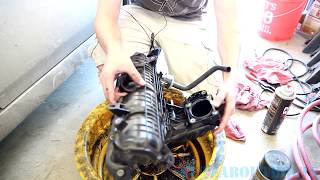
Typical fix: Thoroughly clean the EGR cooler, EGR valve, EGR pipe, and intake manifold passages. Due to the difficulty of cleaning, Toyota's TSB recommends replacing the intake manifold entirely with an updated part. Many owners on forums like PriusChat document DIY cleaning procedures. 🎬 Watch: Step-by-step guide to cleaning your intake manifold.
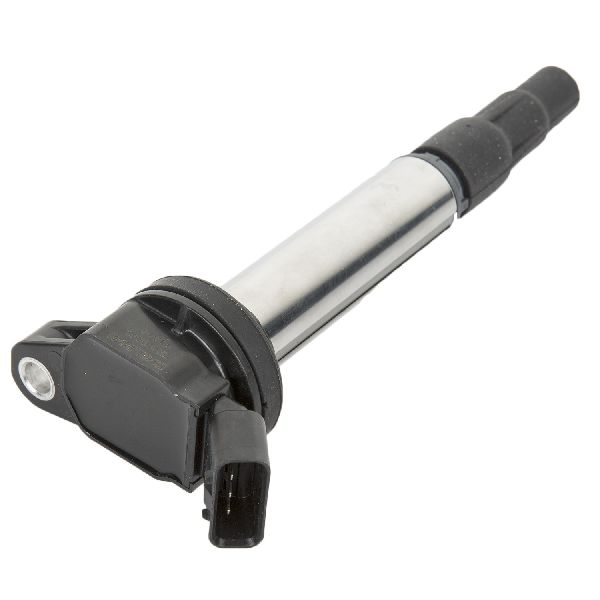
Est. part cost: $50-$300 - Failed Ignition Coil 🔴 High Probability → Shop Ignition Coil
How to confirm: Swap the ignition coil from cylinder 1 with another cylinder (e.g., cylinder 2). Clear the codes and drive the vehicle. If the code changes to P0302, the ignition coil is faulty. This is a standard and effective diagnostic step.
Typical fix: Replace the failed ignition coil. It is often recommended to replace all four if they are original and high-mileage.
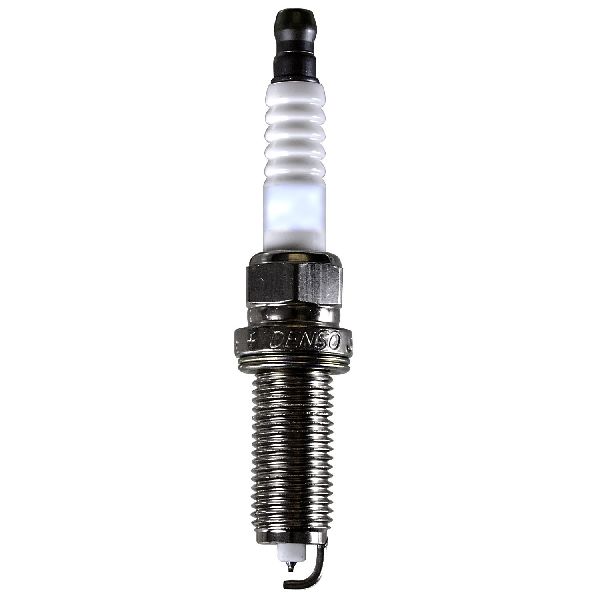
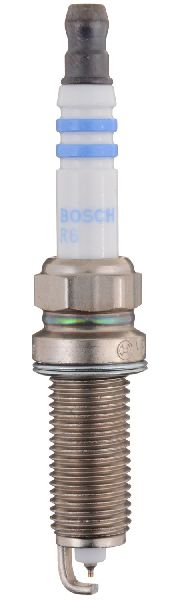
Est. part cost: $40-$100 - Worn or Fouled Spark Plug 🟡 Medium Probability → Shop Spark Plug
How to confirm: Remove the spark plug from cylinder 1 and inspect it. Look for wear, carbon buildup, or fouling from oil or coolant. A 'steam-cleaned' or unusually clean plug is a strong indicator of a coolant leak (head gasket failure) in that cylinder. Compare it to the other plugs.
Typical fix: Replace the spark plugs. It is recommended to replace all four at the same time. Use the specified Iridium-type plugs, such as Denso SC16HR11 or NGK LKAR6ARX-11P.
Est. part cost: $10-$25 per plug
Rare But Worth Checking
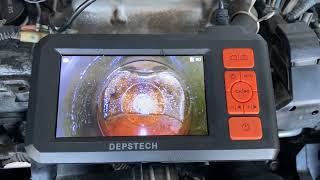
- Failing Head Gasket: This is a widely known and severe issue for this engine. A P0301 code, especially combined with a rough, shaky engine only on cold starts and any amount of coolant loss, is a classic symptom. An owner complaint to the NHTSA (ODI #11326440) specifically mentions P0301 and low coolant levels. A PriusChat forum user described getting a P0301, finding hydrocarbons in the coolant via a dealer test, and confirming a blown head gasket. Another user on Reddit noted that after cleaning the entire EGR system, the misfire returned along with coolant loss, and a borescope revealed a 'steam cleaned' piston in cylinder 1, confirming the head gasket leak.
- Faulty Fuel Injector: → Shop Fuel Injector Less common than ignition or EGR issues, but a clogged or failing injector can cause a misfire on a single cylinder. This can be diagnosed by swapping injectors between cylinders, but this is more labor-intensive as it requires removing the fuel rail.
- Engine Control Module (ECM) Logic: Toyota TSB T-SB-0147-16 mentions that an ECM software update may be needed to address rough idle and misfire codes (P0300-P0304) at cold start for some 2013-2016 models. This TSB addresses the symptom but may not fix an underlying mechanical cause like a clogged EGR.
Diagnosis Steps
- Read all stored fault codes with an OBD-II scanner.
- Check for signs of a head gasket leak: Is the coolant level in the reservoir low? Is there a gurgling sound on startup? Does the coolant reservoir have pressure after sitting overnight? A chemical block test (checks for exhaust gases in coolant) or a cylinder leak-down test provides definitive diagnosis. 🎬 See this reliable way to check for a blown head gasket.
- Perform an ignition coil swap. Move the coil from cylinder 1 to cylinder 2. Clear codes, drive, and see if the code changes to P0302. If it does, the coil is bad.
- If the misfire stays on cylinder 1, inspect the spark plug. Look for excessive wear or fouling. A coolant-cleaned, 'steam-cleaned' appearance points to a head gasket leak. A borescope can be used to inspect the top of the piston for the same clean appearance.
- If ignition components are good, inspect the EGR system. Unplug the EGR valve connector and test drive; if the misfire is gone, the system is clogged.
- Remove the intake manifold and check the ports for heavy carbon buildup. The passages for cylinder 1 are often the most clogged.
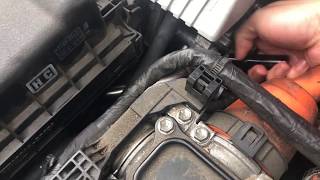
- While the intake is off, clean the EGR cooler, EGR valve, and EGR pipe. These components are almost certainly clogged if the intake is. Many DIY guides exist on forums like PriusChat and YouTube.
- If symptoms of head gasket failure are present, a professional diagnosis is recommended. Independent shops specializing in Prius repair often have more experience and lower costs than dealerships.
Parts You'll Likely Need
- Ignition Coil
(OEM #90919-02258)— A common failure point for any vehicle and one of the first things to check for a single-cylinder misfire.
Trusted brands: Denso, NGK
OEM price range: $95-$145
Aftermarket price range: $40-$80 - Iridium Spark Plug
(OEM #90919-01253 (Denso SC16HR11))— Spark plugs are a regular maintenance item and can cause misfires when worn. The OEM-specified part is Denso SC16HR11.
Trusted brands: Denso, NGK
OEM price range: $15-$25
Aftermarket price range: $10-$18 - Intake Manifold
(OEM #17120-37054)— Toyota's official fix for the common EGR clogging issue that causes P0301 is to replace the entire intake manifold, as documented in TSB T-SB-0116-15 Rev. This part number supersedes several previous versions.
Trusted brands: Toyota (OEM)
OEM price range: $240-$360
Aftermarket price range: $150-$250 - Intake Manifold Gasket
(OEM #17171-37020)— Must be replaced any time the intake manifold is removed for cleaning or replacement.
Trusted brands: Fel-Pro, Mahle, Toyota (OEM)
OEM price range: $20-$40
Aftermarket price range: $10-$20 - Head Gasket Set
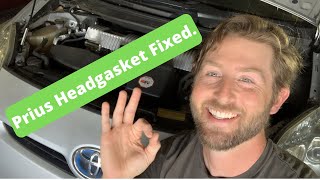
(OEM #04111-37312)— Required for the head gasket failure repair. The kit includes the head gasket, valve cover gaskets, seals, and other one-time-use items for the job. 🎬 Watch: Complete walkthrough of a Prius head gasket repair.
Related Codes That Often Appear With This One
- P0300 — Indicates a random/multiple cylinder misfire. It often appears with P0301 when the underlying issue (like a clogged EGR or failing head gasket) starts to affect other cylinders.
- P0302, P0303, P0304 — Misfire codes for the other cylinders. Seeing them together strongly points to a systemic problem like the intake manifold being clogged across all ports or a significant head gasket failure.
- P0401 — Indicates 'Insufficient EGR Flow.' This code is a major clue that a clogged EGR system is the root cause of the P0301 misfire.
Technical Service Bulletins (TSBs) & Recalls
- T-SB-0116-15 Rev: Recommends replacing the intake manifold for misfire codes P0300-P0304 caused by a clogged EGR system.
- T-SB-0147-16: Addresses a rough idle/misfire at cold start with an ECM software update.
- L-SB-0019-16: The Lexus equivalent of T-SB-0116-15 Rev for the CT200h, confirming the EGR clogging issue on the shared 2ZR-FXE engine.
Platform-Specific Known Issues
- Toyota Technical Service Bulletin T-SB-0116-15 Rev states that 2012-2016 Prius V vehicles may exhibit a rough run condition and misfire codes (P0300-P0304) during light acceleration. The bulletin identifies the cause as related to the EGR system and recommends replacing the intake manifold.
- Toyota TSB T-SB-0147-16 addresses a vibration or rough idle at cold start, which may be accompanied by misfire codes, and points to an update for the Engine Control Module logic for 2013-2016 models.
- A high frequency of head gasket failures is widely reported by owners in forums like PriusChat and Reddit. The failure often begins as a small coolant leak into a cylinder (frequently cylinder 1) when the engine is cold, causing a violent shaking ('death rattle') and misfire code on startup that subsides as the engine warms up.
Mechanic-Grade Diagnostic Values
- Fuel Injector Resistance — expected: 11.6 to 12.4 Ω at 20°C (68°F). Failure: A reading outside of this range indicates a faulty injector.
- Ignition Coil Secondary Resistance — expected: Approximately 6,000 to 10,000 Ω. Failure: A reading significantly outside this range can indicate a bad coil. However, due to the integrated igniter, swapping coils is the more reliable test.
- Ignition Coil Hold-Down Bolt Torque — expected: 7.5 Nm (66 in-lbs). Failure: Improper torque can lead to a poor connection or damage to the coil or valve cover.
Hidden / Shadow Codes Worth Checking
- Mode $06, Test ID $A2: Provides the raw misfire count for Cylinder 1 during the current and last 10 driving cycles. This allows a technician to see if intermittent misfires are occurring even if they aren't frequent enough to set a persistent P0301 code. (see via An advanced OBD-II scan tool that supports Mode $06 data, such as Toyota Techstream or compatible third-party scanners.)
Scan Tool Commands That Help
- Toyota Techstream: Active Test: Control the EGR Valve Step Position — This is used to functionally test the EGR valve and check for blockages in the passages. With the engine warm and at idle, a technician can command the EGR valve to open in steps (from 0 to 110). On a clean system, the idle should noticeably roughen at step 14-15 and nearly stall by step 20. If a much higher step number is required to affect the idle, it indicates a clogged EGR cooler or passages.
Wiring & Ground Locations
- Engine Ground Cluster 1 — A cluster of ground wires that bolt to the engine block, near the front (passenger side) of the engine.. A poor engine ground can cause erratic behavior in the ignition system and sensors, potentially leading to misfire codes. Ensuring this connection is clean and tight is a fundamental electrical diagnostic step.
- Chassis Ground Cluster — Located on the chassis itself, underneath the main fuse box/inverter assembly area.. This provides the main ground path for the engine control circuits. Corrosion or a loose connection here can cause a wide range of issues, including misfires.
- ECM (Engine Control Module) — Located on the left (driver's) side of the engine compartment.. This is the computer that controls the ignition coil for cylinder 1. All wiring for the coil and its sensors terminates here, making it a central point for advanced electrical testing.
Real Owner Repair Stories
- PriusChat forum user (2011 Toyota Prius, 245,000 miles) — Engine shaking/rattling mid-day as if it were a cold start, followed by a flashing check engine light and P0301 code.
❌ Tried (didn't work) The owner had previously cleaned the EGR circuit at 233k miles, so they initially thought that was not the cause.
✅ What actually fixed it A second, complete cleaning of the entire EGR system (cooler, pipe, valve) and the intake manifold. The EGR cooler was found to be 90% blocked and the EGR pipe was 80% blocked. After the thorough cleaning, the rattle and the P0301 code were resolved. - PriusChat forum user (2013 Prius V, ~180,000 miles (mileage inferred from context)) — P0301 code with serious knocking sounds on cold start-up.
❌ Tried (didn't work) Changed spark plugs., Performed a complete EGR system cleaning (cooler, pipe, valve, intake manifold passages)., Replaced PCV valve and installed an oil catch can., Replaced engine coolant.
✅ What actually fixed it The misfire returned after the EGR cleaning. A subsequent diagnostic at a Toyota dealership found hydrocarbons in the recently replaced coolant, confirming a blown head gasket. The final 'fix' was the diagnosis that the engine needed to be replaced. This story highlights that even a perfect EGR cleaning cannot fix a P0301 if the head gasket has already failed.
OEM Part Supersession History
17120-37050, 17120-37051, 17120-37052, 17120-37053→17120-37054— This is the updated intake manifold recommended by Toyota in TSB T-SB-0116-15 Rev to address EGR port clogging and related misfires.
Model Year Variations Within This Range
- Late 2014-2016: The 2ZR-FXE engine received updated piston rings starting in late-2014 models to address issues with excessive oil consumption. While this does not directly relate to the primary causes of P0301 (EGR clogging, head gasket failure), it is a notable internal engine change within this vehicle's production run.
Helpful Videos
We Have This Part in Stock


The information in this article is provided for general reference and educational purposes only. Vehicle specifications, procedures, and part compatibility can vary by production date, trim level, and region. Always consult your vehicle's factory service manual and verify part numbers before purchasing or performing repairs. Safety-critical components such as airbags, seat belts, and braking systems should be installed by a qualified professional.
- Toyota PRIUS V:
- 🧭 Diagnostic Flowchart
- 🎬 Helpful Videos
- 🛍️ Shop This Part
- What's Unique About the 2012-2016 Toyota PRIUS V
- Symptoms You May Notice
- Most Likely Causes
- Rare But Worth Checking
- Diagnosis Steps
- Parts You'll Likely Need
- Related Codes That Often Appear With This One
- Technical Service Bulletins (TSBs) & Recalls
- Platform-Specific Known Issues
- Mechanic-Grade Diagnostic Values
- Hidden / Shadow Codes Worth Checking
- Scan Tool Commands That Help
- Wiring & Ground Locations
- Real Owner Repair Stories
- OEM Part Supersession History
- Model Year Variations Within This Range
- 🎟️ Get 5% Off