

P0301 on 2022-2024 Toyota Tundra 3.4L V6: Cylinder 1 Misfire Causes and Fixes
P0301 on a 2022-2024 Tundra is a misfire on cylinder 1. The most common fix is replacing a faulty ignition coil or spark plug. However, be aware of a major engine recall for this vehicle that can cause similar symptoms, so a dealer diagnosis is recommended if a simple coil/plug swap doesn't work.
- P0301 is a misfire in cylinder 1, the front-most cylinder on the passenger side.
- Start your diagnosis by swapping the ignition coil, then the spark plug, to see if the misfire code moves to another cylinder.
- Be aware that this engine has a short 40,000-mile spark plug replacement interval.
- CRITICAL: Your vehicle may be under a major recall for engine failure due to internal debris. If a simple coil or plug fix doesn't solve the problem, see a Toyota dealer immediately.
What's Unique About the 2022-2024 Toyota Tundra
The 2022-2024 Tundra uses the V35A-FTS twin-turbo V6, a significant departure from the previous generation's V8. This engine has a much shorter spark plug service interval of just 40,000 miles, which can catch owners by surprise. Most importantly, these specific model years are subject to a major engine recall (NHTSA 24V-381, 25V-767) for machining debris left inside the engine during manufacturing, which can lead to catastrophic main bearing failure. While a P0301 code is often a simple ignition issue, it could be an early symptom of this more severe underlying problem.
Symptoms You May Notice
- Rough or shaking idle
- Hesitation or stumbling during acceleration
- Noticeable loss of engine power
- Flashing or solid Check Engine Light
- Decreased fuel economy
- Smell of unburnt fuel from the exhaust
- Replacing oxygen sensors or catalytic converters. These parts can be damaged by a persistent misfire, but they are almost never the root cause of a single-cylinder misfire code like P0301.
Most Likely Causes
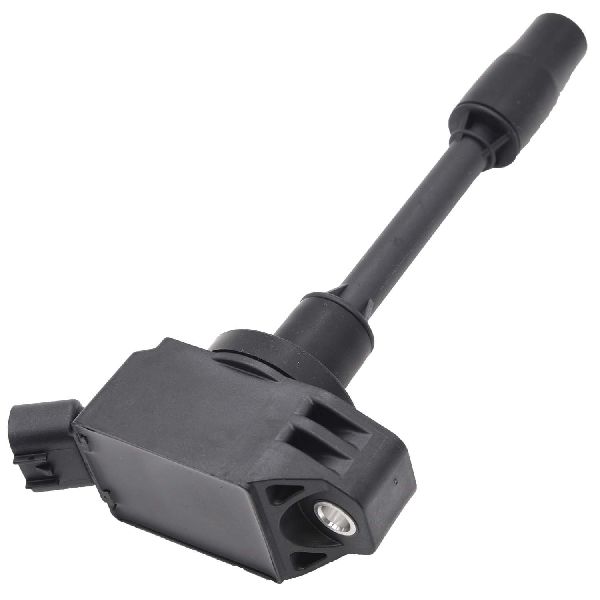
- Faulty Ignition Coil 🔴 High Probability → Shop Ignition Coil Coil-on-plug systems are a common failure point on most modern engines. The 'hot-V' design of the V35A-FTS places turbochargers within the V of the engine, creating significant heat that can shorten the life of nearby electronic components like ignition coils.
How to confirm: Swap the ignition coil from cylinder 1 with another cylinder (e.g., cylinder 3, also on the passenger side). Clear the codes and drive. If the code changes to P0303, the coil is the faulty part. This is a standard diagnostic step confirmed in owner forums.
Typical fix: Replace the failed ignition coil. It is often recommended to replace the corresponding spark plug at the same time.
Est. part cost: $80-$150 - Worn or Fouled Spark Plug 🟡 Medium Probability → Shop Spark Plug The V35A-FTS engine has a surprisingly short 40,000-mile spark plug replacement interval, compared to 100,000+ miles on older Toyota engines. Owners accustomed to longer intervals may unknowingly be driving with worn plugs.
How to confirm: After ruling out the ignition coil, remove the spark plug from cylinder 1. Inspect it for wear (worn electrode), carbon fouling, or oil contamination. Compare it to a new plug.
Typical fix: Replace the spark plug in cylinder 1. Given the short service interval, it is best practice to replace all six spark plugs if they are near or over 40,000 miles. 🎬 Watch: Step-by-step spark plug replacement for the new V6 engine.
Est. part cost: $20-$40 per plug - Faulty Fuel Injector ⚪ Low Probability → Shop Fuel Injector This engine uses both direct (GDI) and port fuel injectors (D-4ST system). While reliable, a failure or clog in either injector for cylinder 1 can cause a misfire. A Tundras.com forum member with a 2024 TRD Pro reported misfire codes at only 1,614 miles, which the dealer diagnosed as a leaking direct injector in cylinder 2 that required replacement. This indicates that premature injector failure can occur on these new engines.
How to confirm: This is more difficult for a DIYer. It requires specialized tools to test fuel pressure and injector flow rates. A professional mechanic can perform an injector balance test or use diagnostic software to monitor injector performance.
Typical fix: The faulty fuel injector needs to be replaced. This is a more involved job than a coil or plug, especially for the direct injectors located under the intake manifold.
Est. part cost: $100-$400+
Rare But Worth Checking
- Internal Engine Failure due to Machining Debris: This is the subject of major recalls (NHTSA 24V-381, 25V-767; Toyota 25TA14). Debris from manufacturing can contaminate and destroy the crankshaft main bearings, leading to rough running, knocking, and complete engine seizure. While it often presents with multiple misfires (P0300) or knocking, a single cylinder code could be an early warning sign. If simple fixes don't work, the vehicle must be taken to a Toyota dealer for recall inspection and potential engine replacement.
- Intake Valve Carbon Buildup: Like many direct-injection (GDI) engines, the V35A-FTS can be prone to carbon deposits on the intake valves over time, as they are not cleaned by fuel spray. Significant buildup can restrict airflow into the cylinder and cause misfires, though this is less likely on a newer vehicle.
Diagnosis Steps
- Read the code with an OBD-II scanner to confirm P0301 and check for any other codes.
- Note the freeze frame data, which shows engine conditions when the code was set.
- Identify cylinder 1 (front cylinder, passenger side).
- Swap the ignition coil from cylinder 1 with the coil from cylinder 3 (middle cylinder, passenger side).
- Clear the codes, start the engine, and let it run or drive it briefly.
- Re-scan for codes. If P0303 appears, the ignition coil is bad. Replace it.
- If P0301 returns, the coil is likely good. Proceed to swap the spark plug from cylinder 1 with cylinder 3.
- Clear the codes and test again. If P0303 appears, the spark plug was the issue. Replace it (and likely all others if near 40k miles).
- If P0301 persists after swapping the coil and plug, the issue is more complex. Inspect the wiring and connector to the coil and fuel injector for cylinder 1.
- If wiring is intact, the problem may be a fuel injector, compression issue, or related to the engine recall. At this point, professional diagnosis at a dealership is strongly recommended to check for recall eligibility and perform advanced diagnostics.
Parts You'll Likely Need
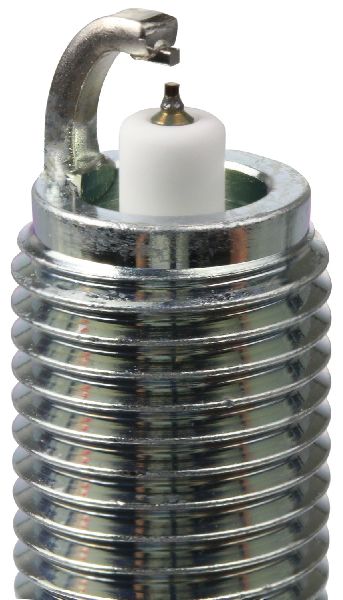
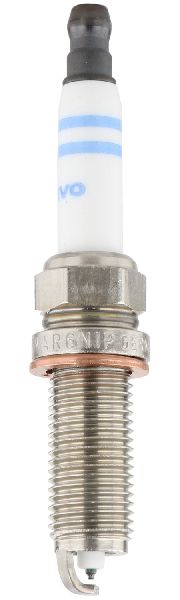
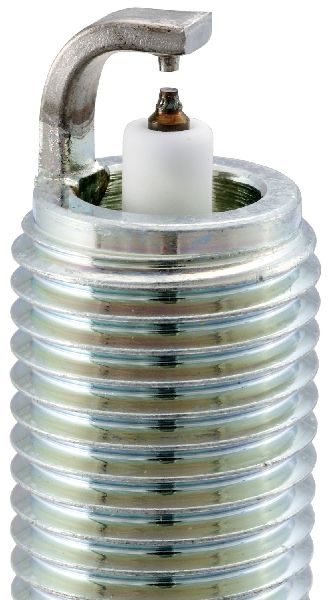
- Spark Plug
(OEM #90919-01295)— This engine requires spark plug replacement every 40,000 miles, a much shorter interval than many owners expect.
Trusted brands: Denso, NGK
OEM price range: $25-$40
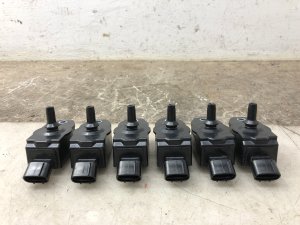
Aftermarket price range: $15-$30 - Ignition Coil
(OEM #90919-A2005 (Verify with VIN))— A failed ignition coil is the most common cause of a single-cylinder misfire. Heat from the twin-turbo 'hot-V' engine design can contribute to premature failure.
Trusted brands: Denso, NGK, Bosch
OEM price range: $120-$160
Aftermarket price range: $70-$120
Related Codes That Often Appear With This One
- P0300 — If the misfire is intermittent or affects multiple cylinders, a P0300 (Random/Multiple Cylinder Misfire) may be stored alongside P0301.
- P0302, P0303, P0304, P0305, P0306 — If other cylinders are also misfiring, their respective codes will appear. Multiple codes could point towards a systemic issue like a vacuum leak, low fuel pressure, or the serious internal engine recall issue.
Technical Service Bulletins (TSBs) & Recalls
- Recall 24V-381 / 25V-767 (Toyota 25TA14) - Engine Machining Debris: Covers potential for engine knocking, rough running, or stalling due to debris causing main bearing failure.
Platform-Specific Known Issues
- Engine Recall for Machining Debris (NHTSA 24V-381, 25V-767): A large number of 2022-2024 Tundras were recalled because metal debris may not have been cleared from the engine during manufacturing. This debris can cause the crankshaft main bearings to fail, leading to engine knock, rough running, stalling, or complete engine failure. This is a critical safety recall that must be addressed by a Toyota dealer, and the remedy is often a complete engine replacement. 🎬 Watch: How to navigate the Toyota engine recall and replacement.
- Short Spark Plug Interval: The V35A-FTS engine requires spark plug changes every 40,000 miles, a significant change from the 100k+ mile intervals of previous Toyota engines.
- Turbocharger Wastegate Failures: Primarily affecting early 2022 models, a faulty electronic wastegate actuator could cause the truck to enter a 'limp mode' with severely reduced power. This is a separate issue from the main engine recall and typically requires replacing the entire turbocharger assembly.
Mechanic-Grade Diagnostic Values
- High-Pressure Fuel System — expected: 2.4 to 20 MPa (348 to 2900 PSI), depending on engine load.. Failure: Pressure that is unstable or fails to reach the target pressure commanded by the ECM can indicate a failing high-pressure pump or a leak in a direct injector.
- Low-Pressure Fuel System (at idle) — expected: 196 to 833 kPa (28 to 121 psi).. Failure: Low or erratic pressure suggests a weak in-tank fuel pump or a clogged fuel filter, which can starve the high-pressure pumps.
- Ignition Coil Primary Winding Resistance — expected: While a specific value for the V35A-FTS is not published in general documentation, a typical modern Toyota coil has a primary resistance under 1.0 ohm (e.g., 0.49-0.57 ohms at 68°F).. Failure: A reading of infinity (open circuit) or significantly outside the typical low-ohm range indicates a failed primary winding.
Hidden / Shadow Codes Worth Checking
- Mode $06 Misfire Data: Toyota's ECU tracks misfire counts per cylinder even before they are high enough to set a P030x code. Using a capable scanner like Techstream, a technician can view the misfire counts for each cylinder during the current and last 10 driving cycles (often displayed as 'EWMA' - Exponentially Weighted Moving Average). This can reveal intermittent misfires on cylinder 1 that haven't yet triggered the CEL. (see via Toyota Techstream software, under the 'Monitor' screen, then 'Details' for the Misfire monitor.)
Scan Tool Commands That Help
- Toyota Techstream: Active Test: Cylinder Cut / Power Balance — This function allows the technician to sequentially disable the fuel injector to each cylinder while the engine is running. When cylinder 1 is disabled, if there is no change in engine RPM or sound, it confirms that cylinder 1 was not contributing, pinpointing the misfire location. If disabling another cylinder makes the engine run worse, it confirms that cylinder is functioning correctly.
- Toyota Techstream: Misfire Count Data List — To monitor real-time misfire counts on all cylinders while test-driving the vehicle under various loads. This is crucial for diagnosing intermittent misfires that only occur during acceleration or at highway speeds. However, the 'Monitor' screen is often more reliable as the live data list may not always update accurately under load.
Wiring & Ground Locations
- Main Engine Grounds — The main engine grounds are located at the rear of the cylinder heads, one on each side, near where the engine mates to the transmission.. A loose or corroded ground on the passenger side cylinder head (Bank 1) could potentially cause intermittent electrical issues for the ignition coils or fuel injectors on that bank, leading to a misfire code like P0301.
OEM Part Supersession History
90919-A2003, 90919-02255, 90919-02256→90919-A2005— Standard part consolidation and potential minor internal revisions over time.90919-A1006→90919-01295— Part number update for the V35A-FTS application.
Model Year Variations Within This Range
- 2023: For 2023, Toyota introduced an SX Package for SR5 grades, featuring dark gray metallic wheels and blacked-out trim. This is primarily an appearance package and does not affect the mechanical causes of P0301.
- 2024: For the 2024 model year, a factory 3" TRD lift kit became available. Additionally, a Nightshade package with blacked-out features was introduced for the Limited trim. These changes do not alter the diagnosis of a P0301 code but may affect vehicle access for repairs.
Diagnostic Flowchart
Other Known Issues on This Vehicle
Issues unrelated to this code that are worth knowing about as an owner of this generation:
- Turbocharger Electronic Wastegate Failure 🔴 High → Shop Turbocharger — Most common on early 2022 models. Failures trigger a 'Reduced Power' limp mode. While not as widespread as the engine recall, it was a significant early production issue. (Ref: No specific recall, handled as individual warranty repairs. Repair is complex, often requiring cab removal.)
- Engine Main Bearing Failure (Machining Debris) 🔴 High — Affects a large number of 2022-2024 models. Can lead to sudden, catastrophic engine failure. The defining reliability issue for this generation. (Ref: NHTSA Recalls 24V-381 and 25V-767 (Toyota codes 24TA07, 25TA14). Remedy is engine inspection and/or complete engine replacement.)
- Excessive Wind Noise from Doors/Mirrors 🟡 Low — Very common owner complaint across all model years, with multiple causes. Described as a whistling or 'window-cracked' sound at highway speeds. (Ref: TSB T-SB-0020-25 addresses mirror whistle with a foam kit. Some 2022 models were also missing a door seal (P/N 67866-0C040) that was added in 2023.)
- Poor Interior/Exterior Fit and Finish 🟡 Low — Widespread complaints of cracking plastic on the driver's seat side trim, interior rattles, and inconsistent exterior panel gaps.
- Throttle Hesitation / 'Dead Pedal' 🟠 Medium — Common complaint where there is a noticeable and sometimes dangerous delay between pressing the accelerator and the truck responding from a stop. (Ref: No official TSB, but widely discussed as a software/tuning issue.)
Used vs. New Parts: Buying Guide for This Vehicle
When a used part is the smart pick: For this specific vehicle and its known engine issues, purchasing used parts for the ignition or fuel system is NOT recommended. The only exception might be non-electronic, simple hardware like brackets or covers from a verified non-recalled donor vehicle.
Donor-vehicle mileage cap: roughly under 10000 miles for the part to have meaningful remaining life.
What to inspect on the donor part:
- Verify donor vehicle VIN is NOT part of the engine recall (NHTSA 24V-381, 25V-767).
- For any electronic part, assume it has no remaining life and is a high-risk purchase.
- Avoid any parts from a vehicle with signs of front-end or flood damage.
OEM-only on this vehicle (don't cheap out):
- Ignition Coils
- Fuel Injectors (Direct and Port)
- Engine Control Module (ECM/PCM)
- Any internal engine component (due to recall risk)
Aftermarket brands forum-validated for this vehicle:
- Denso (often the OEM supplier for Toyota for ignition and fuel parts)
- NGK (a reputable OEM equivalent for spark plugs and coils)
Brands owners have reported issues with on this vehicle:
- Unbranded, 'white-box' parts from online marketplaces. The complexity and sensitivity of the V35A-FTS ignition and fuel systems make it unwise to use parts without a proven track record and warranty.
Real Owner Stories
Aggregated from forums and TSBs cited above. Mileages and costs reflect what owners reported in those sources.
2024 Toyota Tundra TRD Pro 3.4L V6 — 1614 miles
Symptoms: Engine misfire codes (P0302, P0304) occurring at very low mileage.
What fixed it: The dealer diagnosed and replaced a leaking direct fuel injector.
Source hint: Tundras.com thread titled '2024 TRD Pro -- "Engine Misfire Codes" at 1,614 Miles'
2022 Toyota Tundra 3.4L V6
Symptoms: Truck entered a 'Reduced Power' limp mode with severely reduced power.
What fixed it: Replacement of the entire turbocharger assembly due to a faulty electronic wastegate actuator.
Source hint: vehicle_specific_issues: Turbocharger Wastegate Failures
Related OBD-II Codes
Frequently Asked Questions
Is my 2022-2024 Tundra part of the engine recall mentioned in TSB 24V-381?
How often should I change the spark plugs on my V35A-FTS engine to prevent misfires?
Could a P0301 code be related to the turbocharger wastegate issues on my 2022 Tundra?
I have a P0301; can I swap parts to test if the ignition coil is bad?
Does the V35A-FTS engine use direct or port injection?
What is the remedy if my P0301 is caused by the machining debris recall?
Helpful Videos
![How to Fix TOYOTA P0301 Engine Code in 3 Minutes [2 DIY Methods / Only $4.22]](https://img.youtube.com/vi/9jIwlJeQyjI/mqdefault.jpg)

Used OEM Parts in Stock
New Aftermarket Parts Available


The information in this article is provided for general reference and educational purposes only. Vehicle specifications, procedures, and part compatibility can vary by production date, trim level, and region. Always consult your vehicle's factory service manual and verify part numbers before purchasing or performing repairs. Safety-critical components such as airbags, seat belts, and braking systems should be installed by a qualified professional.
- Toyota Tundra:
- 🧭 Diagnostic Flowchart
- 🎬 Helpful Videos
- 🛍️ Shop This Part
- What's Unique About the 2022-2024 Toyota Tundra
- Symptoms You May Notice
- Most Likely Causes
- Rare But Worth Checking
- Diagnosis Steps
- Parts You'll Likely Need
- Related Codes That Often Appear With This One
- Technical Service Bulletins (TSBs) & Recalls
- Platform-Specific Known Issues
- Mechanic-Grade Diagnostic Values
- Hidden / Shadow Codes Worth Checking
- Scan Tool Commands That Help
- Wiring & Ground Locations
- OEM Part Supersession History
- Model Year Variations Within This Range
- Other Known Issues on This Vehicle
- Used vs. New Parts: Buying Guide for This Vehicle
- Real Owner Stories
- 2024 Toyota Tundra TRD Pro 3.4L V6 — 1614 miles
- 2022 Toyota Tundra 3.4L V6
- Related OBD-II Codes
- Frequently Asked Questions
- 🎟️ Get 5% Off