

P0301 on 2013-2014 Volkswagen Beetle Convertible: Cylinder 1 Misfire Causes and Fixes
P0301 indicates a misfire on cylinder 1. On both the 2.5L and 2.0T engines, the most common cause is a failed ignition coil, a simple DIY fix costing $30-$75. On 2.0T TSI engines, carbon buildup on the intake valves is another frequent cause of persistent misfires that ignition parts alone won't solve. Swapping the cylinder 1 coil with another is the definitive first diagnostic step.
- P0301 means cylinder 1 is misfiring. The first and easiest diagnostic step is to swap the ignition coil from cylinder 1 to another cylinder to see if the fault code moves.
- The most likely cause is a bad ignition coil, followed by a worn spark plug. These are affordable and straightforward DIY repairs.
- If your Beetle has the 2.0T TSI engine, be aware that carbon buildup on the intake valves is a very common cause of misfires that new plugs and coils will not fix.
- Do not ignore a flashing check engine light. It signals a severe misfire that can quickly damage your catalytic converter, turning a minor repair into a very expensive one.
What's Unique About the 2013-2014 Volkswagen BEETLE CONVERTIBLE
The 2013-2014 Beetle Convertible was offered with two main gasoline engines that have different weak points for this code. The 2.0L TSI engine (part of the EA888 family) uses direct injection, which makes it highly susceptible to carbon buildup on the intake valves, a notorious cause of misfires that ignition parts won't fix. This issue is especially noticeable during cold starts. The 2.5L 5-cylinder engine (engine codes CBUA/CBTA) uses port injection and does not suffer from this specific carbon issue, making its misfire diagnostics more straightforward and typically related to ignition or fuel components.
Diagnostic Flowchart
Tap your situation to follow the diagnostic path that matches what you're seeing on this vehicle.
Symptoms You May Notice
- Flashing or solid Check Engine Light
- Rough or shaking idle
- Engine hesitation or stumbling during acceleration
- Noticeable loss of power
- Reduced fuel economy
- Smell of unburnt gasoline from the exhaust
- Difficulty starting, especially on cold mornings
- Replacing only the spark plug when the ignition coil is the actual point of failure.
- On 2.0T TSI engines, repeatedly replacing spark plugs and coils when the root cause is carbon buildup on the intake valves.
- Replacing oxygen sensors. A misfire can cause an O2 sensor code, but the sensor is rarely the cause of the misfire itself.
Most Likely Causes
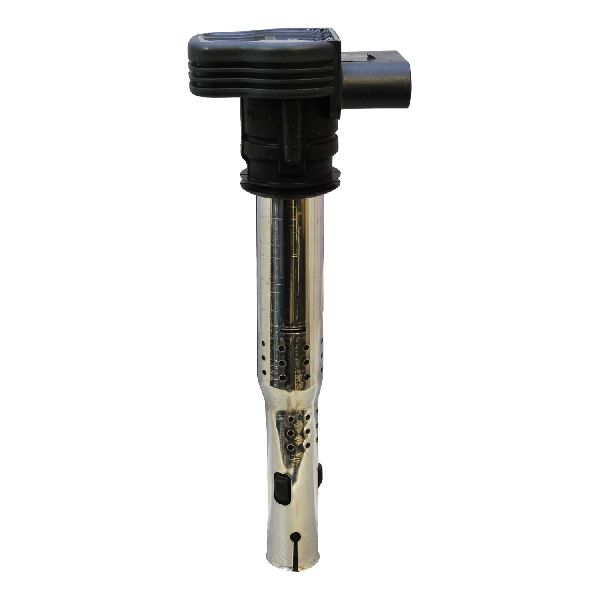
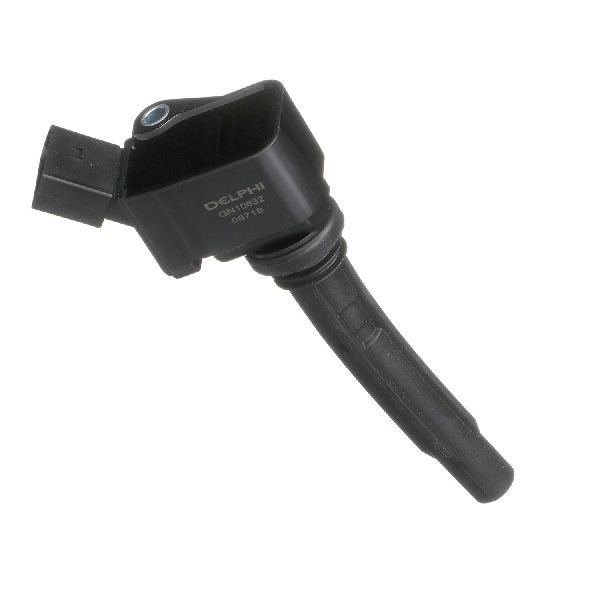
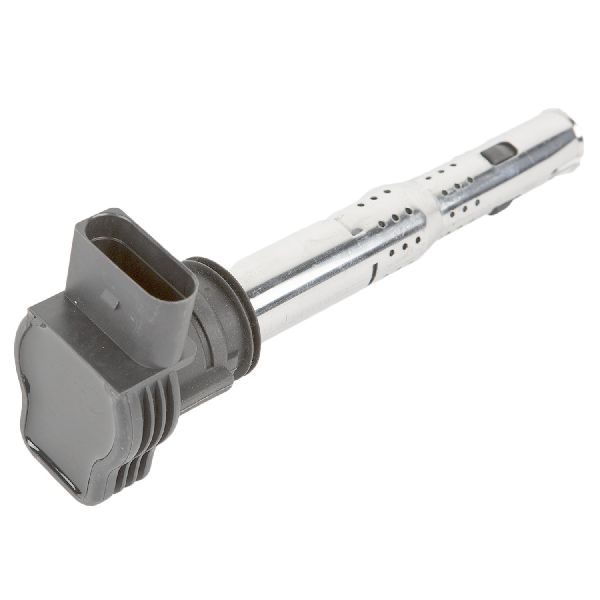
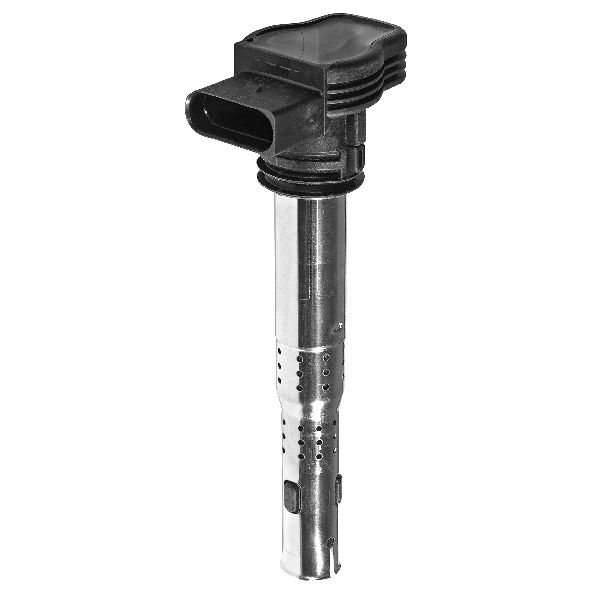
- Faulty Ignition Coil 🔴 High Probability → Shop Ignition Coil Ignition coils are a very common failure item on this era of Volkswagen engines (both 2.5L and 2.0T). Early revisions of the parts were known to be less durable, and many owners and shops recommend replacing all of them as a set if one fails.
How to confirm: Swap the ignition coil from cylinder 1 with another cylinder (e.g., cylinder 2). Clear the codes and run the engine. If the code changes to P0302, the coil is bad. This is the most common and effective DIY diagnostic step.
Typical fix: Replace the faulty ignition coil. Many owners choose to replace all coils at the same time for preventative maintenance.
Est. part cost: $30 - $75 - Worn or Fouled Spark Plug 🟡 Medium Probability → Shop Spark Plug
How to confirm: After confirming the coil is good, move the spark plug from cylinder 1 to a different cylinder. If the misfire code follows the plug, it is faulty. Visually inspect the plug for wear, oil, or carbon fouling. The 2.5L engine, for example, has a 40,000-mile service interval for spark plugs, which is often overlooked.
Typical fix: Replace the spark plug. It is best practice to replace all spark plugs as a set to ensure even performance.
Est. part cost: $15 - $30 per plug - Carbon Buildup on Intake Valves (2.0T TSI Engine Only) 🟡 Medium Probability The direct injection (TSI) engine injects fuel directly into the cylinder, so gasoline never washes over the intake valves to clean them. Oil vapor from the PCV system bakes onto the hot valves, restricting airflow and causing misfires, especially on cold starts. This is a well-documented issue across all VW/Audi vehicles with the EA888 engine.
How to confirm: This requires a visual inspection of the intake valves, typically using a borescope inserted through the intake manifold ports. This is often diagnosed after new plugs and coils fail to resolve the misfire. The issue can start causing misfires as early as 40,000 miles, but is more common around 80,000 miles.
Typical fix: The intake manifold must be removed and the valves must be manually cleaned, often through media blasting (walnut blasting) or chemical soaking and scraping. 🎬 Watch: How to walnut blast intake ports on a 2.0T. This is a labor-intensive job.
Est. part cost: $20 - $40 for gaskets - Failed Fuel Injector ⚪ Low Probability → Shop Fuel Injector
How to confirm: If ignition parts and carbon buildup (on TSI) are ruled out, the injector is a likely suspect. A mechanic can listen for the injector's 'clicking' sound with a stethoscope to check for activity. Swapping injectors between cylinders is another method, but it is labor-intensive. A fuel-fouled spark plug can also point to a leaky injector.
Typical fix: Replace the faulty fuel injector. It is often recommended to replace all injector seals at the same time.
Est. part cost: $50 - $150
Rare But Worth Checking
- Failed PCV Valve (2.0T TSI Engine): → Shop PCV Valve A failed PCV (Positive Crankcase Ventilation) valve, also called an oil separator, can create a significant vacuum leak, leading to lean conditions and misfires across multiple cylinders. Symptoms include a loud whistling noise from the engine bay, high oil consumption, and a strong vacuum felt when trying to remove the oil cap with the engine running. A failed PCV can also cause the rear main seal to fail, leading to oil leaks and misfire codes.
- Vacuum Leak: A cracked hose, a leaking intake manifold gasket, or a torn diaphragm in the 2.5L's valve cover (which contains the PCV system) can introduce unmetered air and cause a lean misfire. A smoke test is the most effective way to find the source of a vacuum leak.
- Low Cylinder Compression: A mechanical engine issue like a worn piston ring, a burnt valve, or a leaking head gasket can cause a loss of compression and a persistent misfire. This is the least likely cause and is confirmed with a compression test after all ignition and fuel-related causes have been ruled out.
Diagnosis Steps
- Read the code with an OBD-II scanner. Note if the Check Engine Light is flashing, which signals a severe misfire requiring immediate attention.
- Identify cylinder 1 (passenger side, closest to the belts).
- Swap the ignition coil from cylinder 1 to cylinder 2. Clear the codes and drive. If the code changes to P0302, the ignition coil is faulty.
- If the code remains P0301, swap the spark plug from cylinder 1 to cylinder 3. Clear codes and re-test. If the code moves to P0303, the spark plug is bad.
- If the code is still P0301, inspect the wiring and connector for the cylinder 1 ignition coil and fuel injector for damage or corrosion.
- For 2.0T TSI engines, if misfires are most common on cold starts and plugs/coils are good, suspect carbon buildup on the intake valves. A borescope inspection can confirm this.
- Check for vacuum leaks. On 2.0T TSI engines, check the PCV valve for failure (often causes a loud whistle and strong vacuum at the oil cap). For all engines, a smoke test can identify cracked hoses or leaking gaskets.
- If all else fails, perform a compression test on cylinder 1 to rule out mechanical engine damage like a bad valve or worn piston rings.
Parts You'll Likely Need
- Ignition Coil
(OEM #07K905715F / 07K905715G (2.5L), 06H905115B (2.0T, often superseded by 07K905715G))— This is the most common failure point for a single-cylinder misfire on these VW engines. Part numbers are frequently updated; 07K905715G is a common replacement for both engines.
Trusted brands: Bosch, NGK, Eldor, Genuine VW/Audi
Related Codes That Often Appear With This One
- P0300 — If the misfire is intermittent or affects multiple cylinders, a P0300 (Random/Multiple Misfire) may appear alongside P0301. This is common with systemic issues like a vacuum leak or carbon buildup.
- P0302, P0303, P0304 — These codes indicate misfires in other cylinders. When seen together, they can point to a systemic issue like a bad batch of fuel, a major vacuum leak (like a failed PCV valve), or severe carbon buildup (on TSI engines).
- P0351 — This code for 'Ignition Coil A (Cylinder 1) Primary/Secondary Circuit Malfunction' points directly at the ignition coil or its wiring. Seeing P0301 and P0351 together makes the ignition coil the primary suspect.
- P0087 — As cited in NHTSA TSB #VIN4APIN20211026, P0301 can appear with P0087 (Fuel Rail/System Pressure - Too Low), suggesting the misfire could be related to a fuel delivery problem affecting the entire engine.
Technical Service Bulletins (TSBs) & Recalls
- VIN4APIN20211026: Mentions that a customer may state the MIL is on with any combination of P0300, P0301, P0302, P0303, P0304, among other codes, potentially linked to fuel pressure issues.
- TPI 2040822 / 01-15-14: While for code P2440 on the 2.5L engine, it highlights that outdated ECM software can cause erroneous fault codes, a principle that can be relevant for persistent, hard-to-diagnose misfires.
Platform-Specific Known Issues
- The direct-injected 2.0T TSI engine is widely known for carbon accumulation on the intake valves, which disrupts airflow and is a primary cause of misfires that are not fixed by ignition components. This problem is especially prevalent on cold starts.
- A manufacturer Technical Service Bulletin (TSB #VIN4APIN20211026) lists P0301 in conjunction with other codes like P0300, P0302, P0303, P0304, and fuel pressure codes like P0087, indicating that misfires can be part of a broader diagnostic picture related to fuel delivery.
- On the 2.0T TSI engine, the PCV valve is a known weak point that can fail and cause a large vacuum leak, leading to multiple misfire codes and a distinct whistling sound from the engine.
Mechanic-Grade Diagnostic Values
- 2.0T TSI Fuel Injector Resistance — expected: 12.8 - 13.2 ohms. Failure: A reading outside of this range, such as 11.5 ohms, indicates internal wear and a faulty injector.
Hidden / Shadow Codes Worth Checking
- Mode $06, Test ID $A2-$A7: This function shows the raw misfire count for each cylinder (Cylinder 1 is $A2, Cylinder 2 is $A3, etc.) during the current and last ten driving cycles. A rapidly increasing count on cylinder 1 confirms an active misfire even if the Check Engine Light isn't on yet. (see via An advanced OBD-II scanner that supports Mode $06, such as VCDS, OBDeleven, BlueDriver, or other professional tools.)
- Measuring Block Groups 014, 015, 016 (VCDS): On many VW/Audi controllers, these groups display the live misfire counter for each cylinder. Group 015 will typically contain the counter for Cylinder 1. This allows a technician to watch for misfires in real-time under different engine loads and temperatures. (see via Using VW/Audi-specific diagnostic software like VCDS (VAG-COM) and navigating to the Engine (01) controller's Measuring Blocks.)
Scan Tool Commands That Help
- VCDS (VAG-COM) or OBDeleven: Engine -> Advanced Measuring Values -> Search for 'misfire' — On newer UDS-based controllers, this is the method to access live misfire counters for each cylinder. It helps confirm which cylinder is misfiring and under what conditions (idle, load, cold, hot) without relying solely on the stored fault code.
Wiring & Ground Locations
- GND 1 / Battery Ground — In the engine compartment on the left side, below the battery tray. This is the main battery-to-body ground.. A poor main ground can cause a host of phantom electrical issues, including weak spark and erratic sensor readings that could lead to misfires.
- GND 2 / Transmission Ground — On top of the transmission, near the engine block.. This provides a critical ground path for the engine and its sensors back to the chassis. A loose or corroded transmission ground strap is a known cause of intermittent electrical problems.
- Ignition Coil Connector (4-pin) — On top of the valve cover, connecting to the ignition coil for cylinder 1.. Knowing the pinout allows for testing of power, ground, and signal directly at the coil. For a typical 4-pin VW coil: Pin 1 is 12V+ (power from ignition), Pin 2 is signal ground, Pin 3 is the trigger signal from the ECU, and Pin 4 is a power ground.
Real Owner Repair Stories
- Synthesized from multiple forum discussions (Reddit, VWVortex) (2013 VW Beetle Turbo (2.0T TSI), ~75,000 miles) — Rough idle, especially on cold starts. Hesitation under acceleration and a solid Check Engine Light for P0301.
❌ Tried (didn't work) Swapped ignition coil from cylinder 1 to 2; code remained P0301., Replaced all four spark plugs with new OEM plugs; misfire continued., Ran two bottles of fuel injector cleaner through the system over several tanks of gas; no improvement.
✅ What actually fixed it The owner took the car to an independent VW specialist. A borescope inspection confirmed heavy carbon buildup on the intake valves of all cylinders, with cylinder 1 being particularly bad. A professional walnut blasting service was performed to clean the intake ports and valves. This completely resolved the misfire and restored smooth engine operation.
"I Checked Everything" — The Actual Cause
- On the 2.5L 5-cylinder engine, a hairline crack in the plastic valve cover can cause an intermittent, unmetered air leak that leads to a lean misfire on one or more cylinders. This type of crack may not show up during a standard smoke test if it only opens under specific temperature or vibration conditions. A visual inspection of the valve cover, especially around the PCV area and bolt holes, is necessary.
OEM Part Supersession History
06H905115A→06H905115B (and later revisions)— The original 'A' revision ignition coils for the 2.0T TSI engine had known quality and durability issues, leading to a high rate of premature failure and misfires. The 'B' revision is a more robust design.
Heads up: While physically interchangeable, it is highly recommended to replace any remaining 'A' revision coils with the newer 'B' revision (or equivalent like the popular red-topped 'R8' coils, e.g., 06E905115E) if a misfire occurs, preferably as a full set.06H103495A / 06H103495E→06H103495AC / 06H103495AH (and later)— The diaphragm inside early versions of the 2.0T TSI PCV valve assembly was prone to tearing, causing a massive vacuum leak, whistling noises, and multiple/random misfires. Later revisions are more durable.
Model Year Variations Within This Range
- 2014: Partway through the 2014 model year, Volkswagen began phasing out the base 2.5L 5-cylinder engine and replacing it with a new 1.8L TSI turbocharged four-cylinder (EA888 Gen 3). This new base engine shares the direct-injection design of the 2.0T and is also susceptible to carbon buildup, unlike the port-injected 2.5L it replaced.
- 2013 vs 2014: The 2.0L TSI engine in the Beetle Turbo (renamed R-Line for 2014) received a power increase from 200 hp in 2013 to 210 hp in 2014. This was part of the transition to the Gen 3 version of the EA888 engine.
Helpful Videos
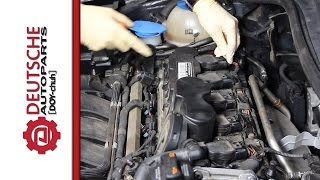
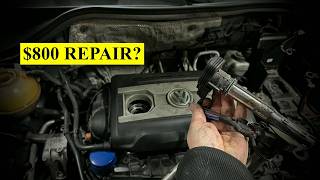


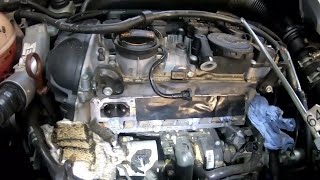
Used OEM Parts in Stock
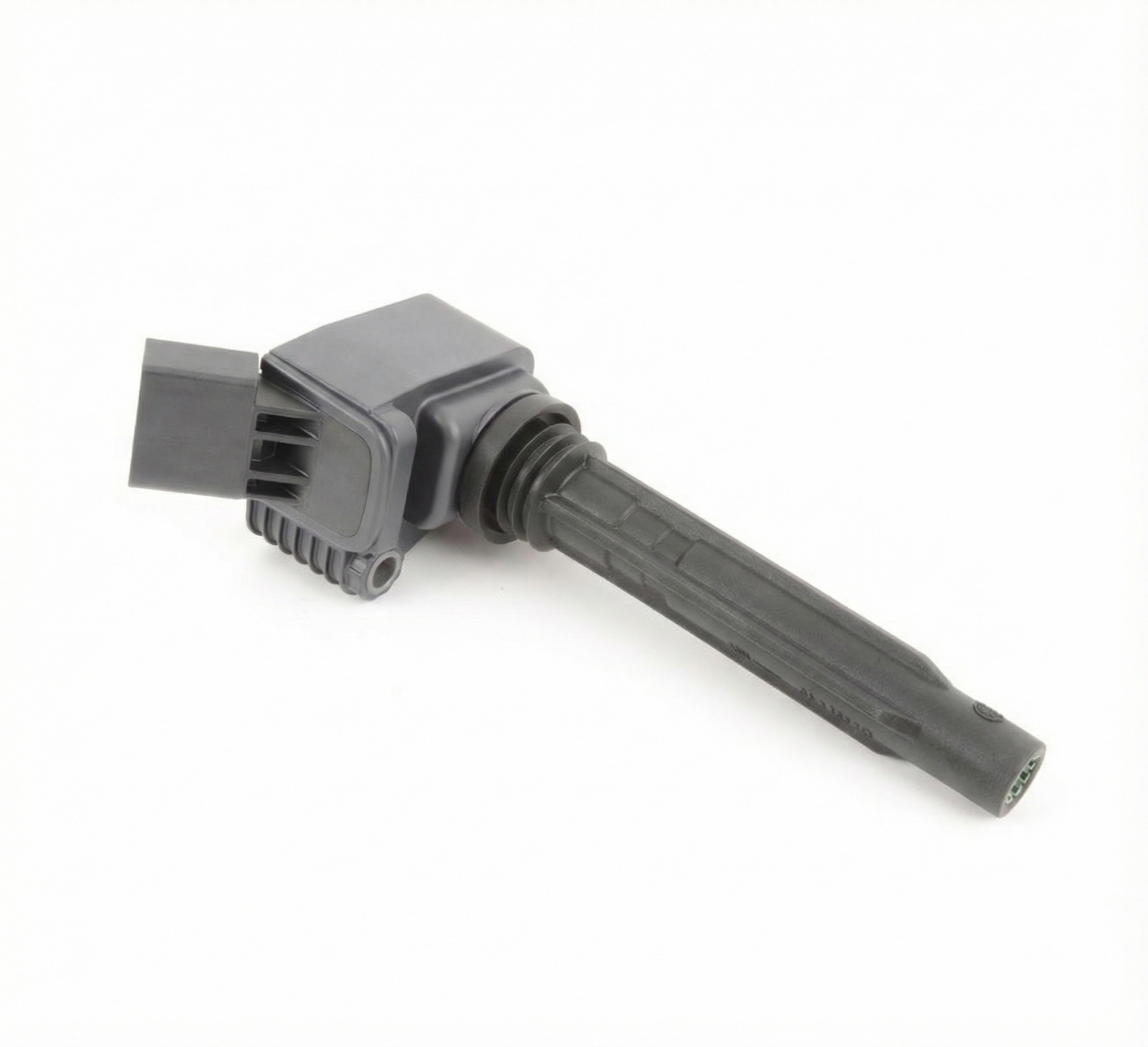
New Aftermarket Parts Available


The information in this article is provided for general reference and educational purposes only. Vehicle specifications, procedures, and part compatibility can vary by production date, trim level, and region. Always consult your vehicle's factory service manual and verify part numbers before purchasing or performing repairs. Safety-critical components such as airbags, seat belts, and braking systems should be installed by a qualified professional.
- Volkswagen BEETLE CONVERTIBLE:
- 🧭 Diagnostic Flowchart
- 🎬 Helpful Videos
- 🛍️ Shop This Part
- What's Unique About the 2013-2014 Volkswagen BEETLE CONVERTIBLE
- Symptoms You May Notice
- Most Likely Causes
- Rare But Worth Checking
- Diagnosis Steps
- Parts You'll Likely Need
- Related Codes That Often Appear With This One
- Technical Service Bulletins (TSBs) & Recalls
- Platform-Specific Known Issues
- Mechanic-Grade Diagnostic Values
- Hidden / Shadow Codes Worth Checking
- Scan Tool Commands That Help
- Wiring & Ground Locations
- Real Owner Repair Stories
- "I Checked Everything" — The Actual Cause
- OEM Part Supersession History
- Model Year Variations Within This Range
- 🎟️ Get 5% Off