

P0301 on 2003-2014 Volvo XC90 2.5T: Cylinder 1 Misfire Causes and Fixes
On a 2003-2014 Volvo XC90 2.5T, code P0301 is most often caused by a failed ignition coil or a worn spark plug on cylinder 1. A new OEM-quality ignition coil costs about $60-$90, and a set of five correct spark plugs is around $40-$80. This is a very common and straightforward DIY repair, often solvable in under an hour by swapping the coil from cylinder 1 to another cylinder to see if the fault follows.
- P0301 on this XC90 is almost always a bad ignition coil or spark plug in cylinder 1.
- The most effective and cheapest diagnostic step is to swap the coil from cylinder 1 to another cylinder to see if the misfire follows.
- Always use high-quality, OEM-spec ignition parts (Bosch, NGK) and replace spark plugs as a full set.
- If you find oil in the spark plug tubes, your PCV system is likely clogged and needs to be replaced soon.
- Do not ignore a flashing Check Engine Light, as it signals a severe misfire that can quickly damage your expensive catalytic converter.
What's Unique About the 2003-2014 Volvo XC90
The Volvo 2.5L T5 five-cylinder engine (B5254T2) is generally robust, but like many European engines of this era, it is sensitive to the quality of its ignition components. Owners across multiple forums emphasize that using OEM-spec spark plugs (Bosch or NGK) and coils (Bosch is the OEM supplier) is crucial for long-term reliability. While the misfire itself is a common issue on many cars, on this XC90 platform it is very frequently a simple fix related to a coil or plug, making it a great DIY-friendly diagnosis and repair. The diagnostic process is often as simple as swapping the coil from cylinder 1 to cylinder 2 and seeing if the code changes to P0302.
Symptoms You May Notice
- Rough or shaking engine idle
- Engine hesitation or stumbling during acceleration
- Flashing or solid Check Engine Light
- Reduced engine power and poor throttle response
- Decreased fuel economy
- A noticeable smell of gasoline from the exhaust
- Loud whistling sound from the engine bay (if related to PCV system failure).
- Replacing the Mass Airflow (MAF) sensor. While a faulty MAF can cause multiple/random misfires (P0300) or lean/rich codes, it is highly unlikely to cause a consistent misfire on only a single cylinder like P0301.
- Replacing the fuel pump. A failing fuel pump would typically affect all cylinders, leading to random misfires (P0300) or lean conditions, not an isolated P0301.
Most Likely Causes
- Failed Ignition Coil 🔴 High Probability → Shop Ignition Coil Ignition coils are a common wear item on many modern engines, including the Volvo 2.5T. Heat and vibration eventually cause the internal windings to fail. The OEM supplier is Bosch, and using these or equivalent quality parts is highly recommended for longevity.
How to confirm: Swap the ignition coil from cylinder 1 with the coil from another cylinder (e.g., cylinder 2). This requires only a 10mm socket. Clear the codes with a scanner and drive the vehicle. If the code changes to P0302, the ignition coil is faulty. This is the universally accepted first diagnostic step in owner forums.
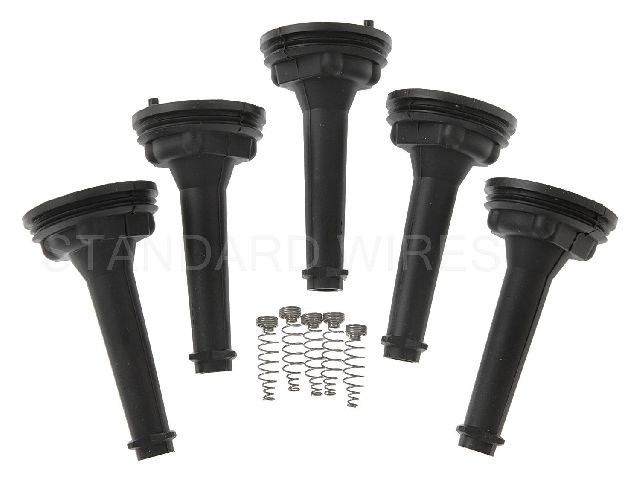
Typical fix: Replace the faulty ignition coil. Many owners choose to replace all five coils at the same time, especially if they are original and the vehicle has high mileage. Applying a small amount of dielectric grease to the spark plug contact inside the new coil boot is recommended.
Est. part cost: $60 - $90 per OEM Bosch coil - Worn or Fouled Spark Plug 🔴 High Probability → Shop Spark Plug Spark plugs have a finite service life, typically recommended for replacement every 30,000 to 60,000 miles. The 2.5T engine is sensitive to plug type and condition. Using non-OEM spec plugs or incorrect gapping can lead to premature failure and misfires.
How to confirm: After ruling out the ignition coil, remove the spark plug from cylinder 1. Inspect it for wear (worn electrode), oil fouling, or heavy carbon deposits. A wet, fuel-smelling plug indicates an ignition or compression issue, while a black, sooty plug points to a rich fuel mixture. Compare it to a new plug or a plug from a healthy cylinder.
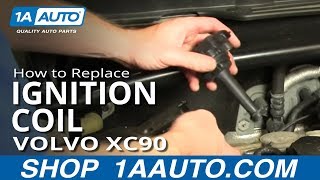
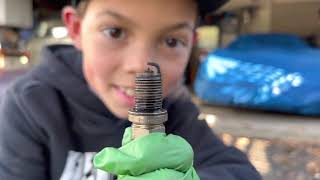
Typical fix: Replace the spark plug. It is best practice to replace all five spark plugs as a set to ensure even performance. Use OEM-spec plugs (Bosch or NGK are common) and torque them to 22 ft-lbs (30 Nm). 🎬 Watch: Step-by-step spark plug and coil replacement guide.
Est. part cost: $40 - $80 for a set of 5 - Clogged or Failing PCV System 🟡 Medium Probability The Positive Crankcase Ventilation (PCV) system, also known as the flame trap or oil separator, is a notorious weak point on these Volvo 5-cylinder engines. When it clogs, it creates excess pressure in the crankcase, which can force oil past seals, including into the spark plug wells, fouling the plugs and coils and causing misfires.
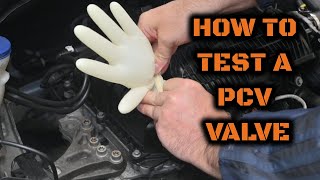
How to confirm: The definitive 'glove test' involves placing a latex glove over the oil filler opening with the engine running. If the glove inflates, the PCV system is clogged and creating positive pressure. If it gets lightly sucked in, the system is working. 🎬 See how to perform the PCV glove test yourself. Other signs include a whistling noise from the engine, difficulty removing the oil dipstick while running, or visible oil in the spark plug tubes when removing the ignition coils.
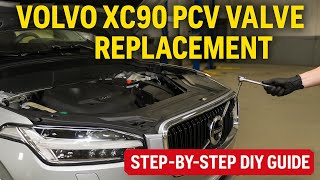
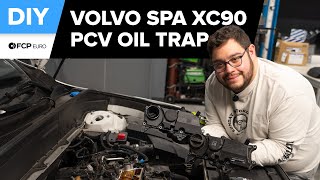
Typical fix: Replace the entire PCV system, which includes the oil separator box, and all associated hoses and banjo bolts. This is a more involved job as the intake manifold must be removed for access.
Est. part cost: $100 - $250 for a complete kit - Faulty Fuel Injector ⚪ Low Probability → Shop Fuel Injector
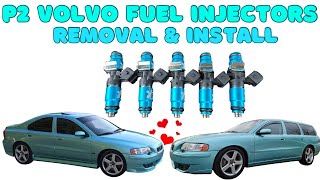
How to confirm: If swapping the coil and plug doesn't move the misfire, the injector is the next suspect. You can swap the cylinder 1 injector with another cylinder's injector. This is more involved than a coil swap as it requires depressurizing and removing the fuel rail. 🎬 Watch this walkthrough on removing and installing fuel injectors. If the misfire code follows the injector (e.g., to P0302), the injector is bad.
Typical fix: Replace the faulty fuel injector. It's wise to replace the small O-rings and seals for the other injectors on the fuel rail at the same time. Some owners opt to replace all injectors if the vehicle has very high mileage.
Est. part cost: $50 - $100 per injector
Rare But Worth Checking
- Low Engine Compression: This is a serious mechanical issue. If you've ruled out ignition and fuel causes, a compression test is necessary. A healthy 2.5T engine should have consistent readings across all cylinders. Low compression in one cylinder could indicate a burnt exhaust valve, a bad piston ring, or a head gasket failure. A user on a forum reported P0301 with zero compression in cylinder 1 due to a jumped timing belt and bent valves.
- Vacuum Leak: A leak in a vacuum hose or intake manifold gasket can cause a lean condition and misfires. This would typically be accompanied by other codes like P0171 (System Too Lean) and may cause misfires on multiple cylinders (P0300). A smoke test is the best way to find the source of a leak.
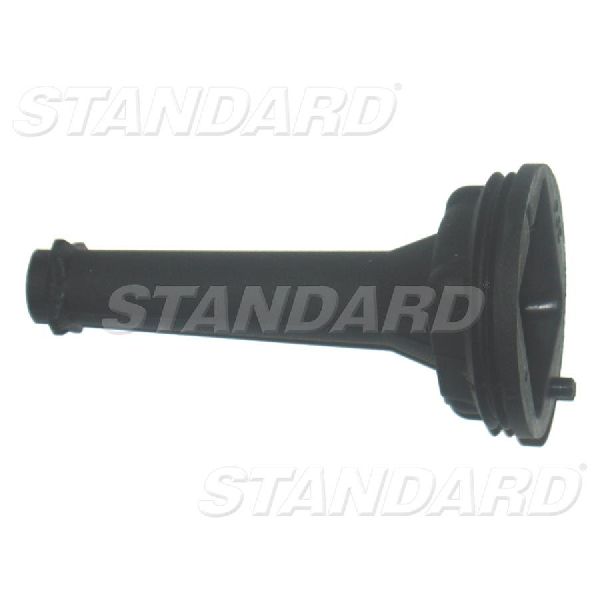
- Damaged Coil Connector or Wiring: The plastic connectors for the ignition coils can become brittle with age and heat cycles. Inspect the connector for cylinder 1 for cracks, and check the wiring for any signs of fraying or damage which could cause an intermittent connection and misfire.
Diagnosis Steps
- Read the trouble codes with an OBD-II scanner. Confirm the code is P0301 and note any other codes present.
- Perform the 'Coil Swap Test': Swap the ignition coil from cylinder 1 to cylinder 2. This requires a 10mm socket to remove the coil bolt. Clear the codes and run the engine. If the misfire moves to cylinder 2 (code P0302), the coil is bad. This is the most common fix.
- If the misfire stays on cylinder 1, perform the 'Spark Plug Swap Test': Swap the spark plug from cylinder 1 to cylinder 2. Clear codes and re-test. If the code changes to P0302, the spark plug is bad. Inspect the old plug for fouling.
- If the misfire remains on cylinder 1, inspect the ignition coil's electrical connector and wiring for damage or corrosion. The plastic clips can become brittle.
- Check for oil in the spark plug well. Oil presence strongly suggests a leaking valve cover gasket or, more commonly on this engine, a failed PCV system creating excess crankcase pressure. Perform the 'glove test' on the oil filler cap to confirm PCV status.
- If ignition components are good, consider a faulty fuel injector. Swap the injector from cylinder 1 to another cylinder and see if the misfire follows. This is a more advanced step.
- If the problem persists, perform a compression test on all cylinders to check for mechanical engine problems like a bad valve or head gasket issue. A cold compression test may be useful if the misfire only occurs on startup.
- Finally, if all else fails, a vacuum leak test (smoke test) can identify hidden leaks in hoses or gaskets.
Parts You'll Likely Need
- Ignition Coil
(OEM #30713416)— This is the most common failure point for a single-cylinder misfire on the 2.5T engine.
Trusted brands: Bosch (OEM), Genuine Volvo, Delphi
OEM price range: $60-$90
Aftermarket price range: $40-$75 - Spark Plugs (Set of 5)
(OEM #8692071 (Bosch FR7DPP+))— Spark plugs are a regular maintenance item and a frequent cause of misfires. They should always be replaced as a set.
Trusted brands: Bosch (OEM), NGK
OEM price range: $40-$80 for a set of 5
Aftermarket price range: $30-$60 - PCV Breather System Kit — A clogged PCV system is a very common cause of oil leaks into the spark plug wells, which fouls plugs and coils, leading to misfires.
Trusted brands: Genuine Volvo, IPD, FCP Euro Kit
OEM price range: $200-$250
Aftermarket price range: $100-$180
Related Codes That Often Appear With This One
- P0300 — If the misfire is intermittent or affects other cylinders, a P0300 (Random/Multiple Misfire) code may appear alongside P0301. This often points to a systemic issue like a vacuum leak or clogged PCV system.
- P0302, P0303, P0304, P0305 — If other cylinders are also misfiring, their respective codes will be stored. This often points to a more systemic issue like a vacuum leak, fuel delivery problem, or a failed PCV system affecting multiple cylinders.
- P0171 — If the misfire is caused by a vacuum leak, the engine will run lean, often triggering a P0171 (System Too Lean, Bank 1) code.
Technical Service Bulletins (TSBs) & Recalls
- Recall R26071: PCV Nipple (2003-2004 XC90)
- Recall R27041: Fuel Pressure Sensor (2003-2004 S60, but relevant to fuel system on similar-era vehicles)
Platform-Specific Known Issues
- A clogged PCV system (flame trap) is a very common issue that can cause high crankcase pressure, leading to oil being forced into the spark plug wells and causing misfires. The 'glove test' is the standard community-accepted diagnostic.
- While Pass 1 mentioned recalls, R26071 and R27041 are less directly related to this specific P0301 fault than the chronic PCV system issues. No specific TSBs for P0301 on this platform are widely cited, as the cause is almost always a basic ignition component.
Mechanic-Grade Diagnostic Values
- Fuel Injector Resistance — expected: 12 - 14.5 Ohms. Failure: A reading significantly outside this range, or an open circuit (infinite resistance), indicates a failed injector coil.
- Fuel Pressure, Key On Engine Off (KOEO) — expected: ~40 psi. Failure: Significantly lower pressure could indicate a weak fuel pump or leak, which would typically cause multiple misfires but is worth checking.
Wiring & Ground Locations
- Main Engine Ground Strap — A braided ground wire attached with a 10mm bolt to the top of the engine, near the timing belt cover on the passenger side. The other end attaches to the vehicle's chassis.. This ground strap is known to corrode and become brittle over time. A poor ground can cause insufficient or erratic voltage to the ignition coils, leading to a weak spark and intermittent misfires that are difficult to diagnose, as the coil and plug may test good. Technicians may overlook this as they focus on cylinder-specific components.
OEM Part Supersession History
9125601→30713416— Part number consolidation and potential minor design update by the manufacturer.
Heads up: Both part numbers, along with Bosch P/N 0221604008, are generally interchangeable for this application. 30713416 is the most commonly referenced and currently available OEM part number.
Model Year Variations Within This Range
- 2007-2014: In the North American market, the 2.5T engine was phased out after the 2006 model year and replaced by a 3.2L inline-6 as the base engine. However, the 2.5T engine continued to be used in other global markets and was featured in the 'XC90 Classic' model produced in China through 2014. Therefore, a P0301 on a 2007-2014 XC90 is only possible if it has the 2.5T engine, which is less common in the US for those years.
Diagnostic Flowchart
Other Known Issues on This Vehicle
Issues unrelated to this code that are worth knowing about as an owner of this generation:
- Angle Gear Collar Sleeve Failure (AWD Models) 🔴 High — Common on AWD models, especially over 100,000 miles. The splines on the collar sleeve connecting the transmission to the angle gear strip, resulting in loss of power to the rear wheels.
- Driver Information Module (DIM) Failure 🟠 Medium — Very common on 2002-2007 models. Symptoms include flickering gauges, random warning lights (especially 'SRS-Airbag Service Urgent'), a dead cluster, or a clock that resets. Caused by failing solder joints on the circuit board.
- Aisin AW55-50/51SN Transmission Issues 🟠 Medium — Common on 2.5T models, particularly earlier years. Issues include harsh shifting, flaring between gears, or a 'Transmission Service Required' message. Often caused by a failing valve body or neutral control software issues. Not as severe as the GM transmission failures in the T6 models. (Ref: Software updates were issued by Volvo to address some shift quality issues.)
- Upper Engine Mount / Torque Rod Failure 🟡 Low — The main upper engine mount bushing wears out frequently, often every 50,000-70,000 miles, causing a noticeable vibration at idle and a 'clunk' when shifting from Park to Drive or Reverse.
- Fuel Pump Failure 🟠 Medium — The in-tank fuel pump can fail, particularly on higher mileage vehicles, leading to a no-start condition or engine stalling. The fuel pressure sensor on the end of the fuel rail can also fail, causing similar symptoms. (Ref: Recall R27041 was issued for the fuel pressure sensor on some early models.)
Used vs. New Parts: Buying Guide for This Vehicle
When a used part is the smart pick: For a P0301 diagnosis, using used parts is not recommended for the common failure items (ignition coils, spark plugs, PCV system, fuel injectors) as these are all wear-and-tear components with a finite lifespan. A used part may fail quickly or be non-functional from the start. A used wiring harness pigtail for a damaged connector is a reasonable exception.
Donor-vehicle mileage cap: roughly under 100000 miles for the part to have meaningful remaining life.
What to inspect on the donor part:
- For a wiring connector, ensure the plastic is not brittle and the locking tab is intact.
- Avoid parts from vehicles with signs of front-end collision, fire, or flood damage.
- If considering a major component like a cylinder head, check for sludge under the oil cap of the donor vehicle as a sign of poor maintenance.
OEM-only on this vehicle (don't cheap out):
- PCV System / Oil Trap: The labor to replace this is extensive (intake manifold removal). Aftermarket kits are known for using inferior quality plastics and hoses that fail prematurely, forcing you to do the job twice. Using Genuine Volvo or an OEM-supplier kit is critical.
- Ignition Coils: While some aftermarket brands work, the Bosch OEM coils are proven to last. Cheap, no-name coil sets often cause intermittent misfires or fail within a year.
Aftermarket brands forum-validated for this vehicle:
- Bosch (Ignition Coils, Spark Plugs - OEM Supplier)
- NGK (Spark Plugs)
- IPD (Often sells high-quality kits, including for the PCV system)
- FCP Euro (Sells OEM parts and curated kits with a lifetime warranty)
Brands owners have reported issues with on this vehicle:
- Unbranded, generic ignition coil sets and PCV kits from online marketplaces. While no specific brand names were consistently cited as 'bad' in research, the community consensus strongly warns against opting for the cheapest available parts for these systems.
Real Owner Stories
Aggregated from forums and TSBs cited above. Mileages and costs reflect what owners reported in those sources.
2003-2014 Volvo XC90 2.5T
Symptoms: A loud whistling sound coming from the engine bay and a noticeable misfire.
What fixed it: Replacement of the entire PCV system, including the oil separator box and associated hoses, after a failed 'glove test' confirmed high crankcase pressure.
Source hint: vehicle_specific_issues and forum_citations: 'PCV system mythes and testing - volvoXC.com'
2003-2014 Volvo XC90 2.5T — ~120000 miles
Symptoms: Engine hesitation during acceleration and a flashing Check Engine Light.
What fixed it: Swapped the coil from cylinder 1 to cylinder 2, which moved the code to P0302. Replaced the faulty ignition coil with a new Bosch unit.
Source hint: common_causes: 'Failed Ignition Coil' diagnostic steps
2003-2014 Volvo XC90 2.5T
Symptoms: Rough engine idle and a smell of gasoline from the exhaust; swapping coils and plugs did not move the misfire from cylinder 1.
What fixed it: Replacement of the fuel injector on cylinder 1 and new O-rings for the remaining injectors.
Source hint: forum_citations: 'Fuel injectors replaced? - Volvo XC90 Forum'
Related OBD-II Codes
Frequently Asked Questions
Is there a recall for the PCV system on my 2003-2004 XC90 that might be causing this misfire?
Should I use any specific brand of ignition coil for my 2.5T engine?
What is the 'glove test' I see mentioned for the XC90?
Could a fuel pressure issue be causing my P0301 code on an early model XC90?
What are the torque specs for the spark plugs on the 2.5L T5 engine?
Is it necessary to replace all five ignition coils if only cylinder 1 is misfiring?
Helpful Videos
We Have This Part in Stock

The information in this article is provided for general reference and educational purposes only. Vehicle specifications, procedures, and part compatibility can vary by production date, trim level, and region. Always consult your vehicle's factory service manual and verify part numbers before purchasing or performing repairs. Safety-critical components such as airbags, seat belts, and braking systems should be installed by a qualified professional.
- Volvo XC90:
- 🧭 Diagnostic Flowchart
- 🎬 Helpful Videos
- 🛍️ Shop This Part
- What's Unique About the 2003-2014 Volvo XC90
- Symptoms You May Notice
- Most Likely Causes
- Rare But Worth Checking
- Diagnosis Steps
- Parts You'll Likely Need
- Related Codes That Often Appear With This One
- Technical Service Bulletins (TSBs) & Recalls
- Platform-Specific Known Issues
- Mechanic-Grade Diagnostic Values
- Wiring & Ground Locations
- OEM Part Supersession History
- Model Year Variations Within This Range
- Other Known Issues on This Vehicle
- Used vs. New Parts: Buying Guide for This Vehicle
- Real Owner Stories
- 2003-2014 Volvo XC90 2.5T
- 2003-2014 Volvo XC90 2.5T — ~120000 miles
- 2003-2014 Volvo XC90 2.5T
- Related OBD-II Codes
- Frequently Asked Questions
- 🎟️ Get 5% Off