

P0302 on 2016 Acura MDX: Cylinder 2 Misfire Causes and Fixes
P0302 on a 2016 Acura MDX means cylinder 2 is misfiring. The most common causes are a bad ignition coil or a worn spark plug. A faulty fuel injector is also a known issue for this engine, documented in Acura TSBs. Start diagnosis by swapping the cylinder 2 ignition coil with another cylinder (like cylinder 5) to see if the code follows.
- P0302 on your 2016 MDX is a misfire on cylinder 2, which is in the middle of the engine bank near the firewall.
- Start your diagnosis with the easiest and most likely culprits: the ignition coil and spark plug. A simple coil swap test can quickly identify a bad coil.
- Do not ignore a flashing check engine light, as it signals a severe misfire that can cause costly damage to your catalytic converter.
- Be aware that faulty fuel injectors are a known issue on this engine. If new plugs and coils don't fix the problem, the injector is the next most likely cause, especially if you also have lean codes (P0171/P0174).
What's Unique About the 2016-2016 Acura MDX
The 3.5L direct-injection V6 (J35Y6) in the 2016 MDX is generally reliable, but it is part of a family of engines for which Acura and Honda have issued multiple Technical Service Bulletins (TSBs) related to misfires (P030x). While ignition components are the usual suspects, these engines have a documented history of fuel injector problems that can also cause misfires. TSBs like #BTI&01212022902 were created for dealers to investigate and collect parts from vehicles with misfire codes, including P0302, often seen with lean codes (P0171/P0174), strongly suggesting a known issue with injectors.
Diagnostic Flowchart
Tap your situation to follow the diagnostic path that matches what you're seeing on this vehicle.
Symptoms You May Notice
- Check Engine Light is on or flashing
- Rough or shaky idle
- Engine hesitation or stumbling during acceleration
- Noticeable loss of engine power
- Reduced fuel economy
- Fuel smell from the exhaust
- VSA (Vehicle Stability Assist) light may also illuminate
- Replacing only the spark plug when the ignition coil is the actual cause (or vice-versa). The coil swap test is crucial to avoid this.
- Replacing oxygen sensors. While O2 sensors can be affected by a misfire, they are rarely the root cause of a single-cylinder misfire code.
- Overlooking a needed valve adjustment on a higher mileage (100k+) engine and instead focusing only on ignition or fuel parts.
Most Likely Causes
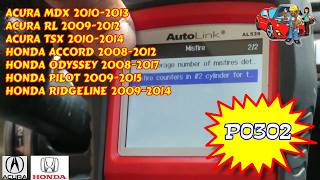
- Faulty Ignition Coil 🔴 High Probability → Shop Ignition Coil Ignition coils are a common wear-and-tear item that can fail after 100,000 miles. Heat and vibration lead to eventual failure. This is a primary suspect for any single-cylinder misfire. 🎬 Watch this video to see a P0302 diagnosis in action.
How to confirm: Swap the ignition coil from cylinder 2 with another cylinder (e.g., cylinder 5, which is the middle cylinder in the front bank and easier to access). Clear the codes and drive the vehicle. If the code changes to P0305, the ignition coil is faulty.
Typical fix: Replace the faulty ignition coil. It is often recommended to replace all six coils, especially if they are original and the vehicle has high mileage, to prevent future failures.
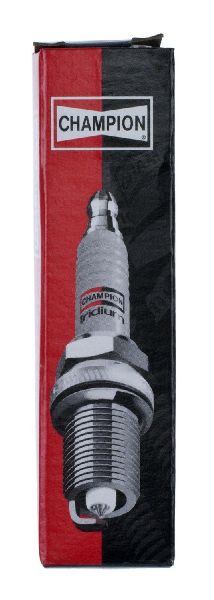
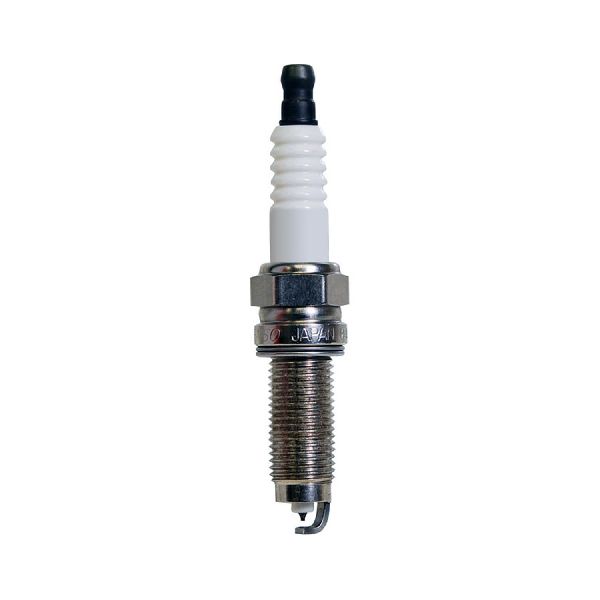
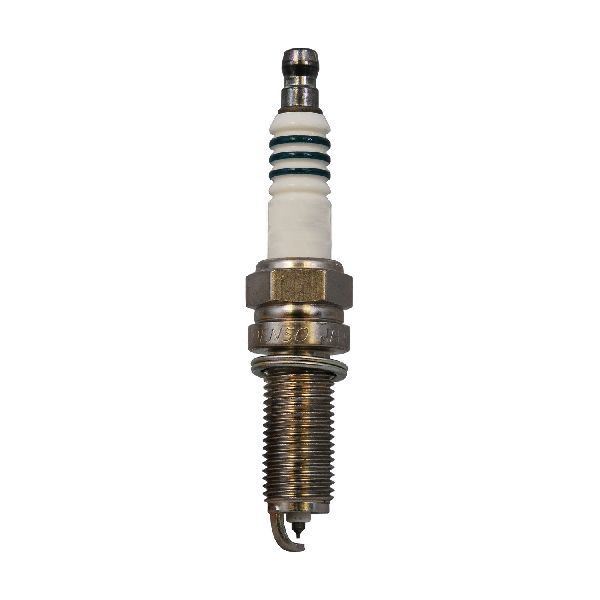
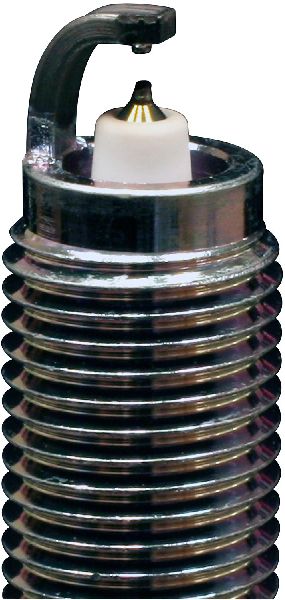
Est. part cost: $60-$90 - Worn or Fouled Spark Plug 🔴 High Probability → Shop Spark Plug Spark plugs are a maintenance item with a finite lifespan, typically around 100,000 miles for the OEM NGK or Denso iridium plugs. A worn plug can't create a strong enough spark to ignite the fuel mixture properly.
How to confirm: After ruling out the ignition coil, remove the spark plug from cylinder 2. Inspect it for signs of wear (worn electrode), carbon fouling, oil, or coolant. A healthy plug should have a light tan color.
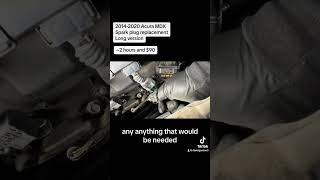
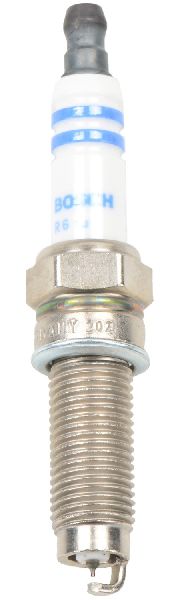
Typical fix: Replace the spark plug in cylinder 2. It is best practice to replace all six spark plugs at the same time to ensure even engine performance. The OEM recommended plugs are NGK DILZKR7B11G or DENSO DXU22HCR-D11S.
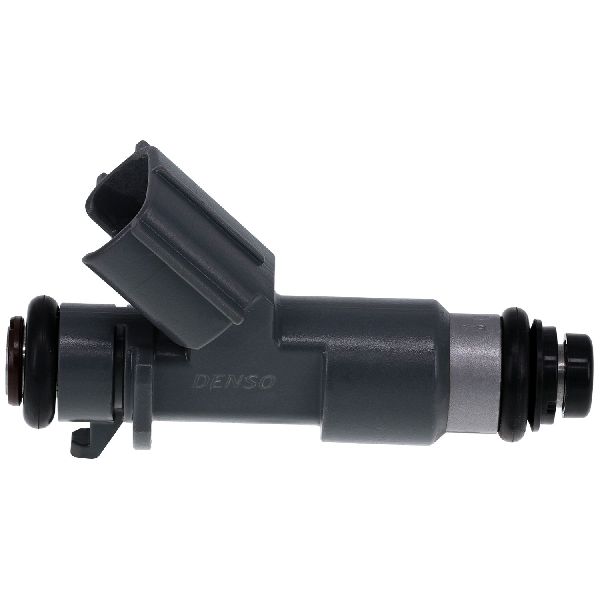
Est. part cost: $15-$25 per plug - Clogged or Faulty Fuel Injector 🟡 Medium Probability → Shop Fuel Injector Acura and Honda have issued multiple TSBs for the J35Y engine family acknowledging that fuel injectors can fail, leading to misfires and lean conditions. TSB #BTI&01212022902 specifically requests dealers to collect parts from 2016-2020 MDXs with these codes for analysis, indicating a known problem area.
How to confirm: This is more difficult for a DIYer. A professional can perform a fuel injector balance test. You can also listen to the injector with a mechanic's stethoscope; it should have a consistent, audible clicking sound. If misfire codes are accompanied by lean codes (P0171/P0174), the likelihood of a bad injector increases significantly.
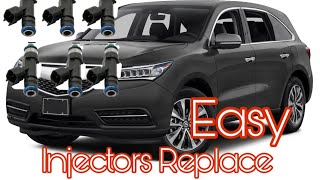
Typical fix: Replace the faulty fuel injector. Due to the labor involved in accessing the fuel rail (intake manifold removal), it is highly recommended to replace all six injectors as a set. Acura offers a fuel injector set for this purpose 🎬 See this walkthrough on how to replace the fuel injectors. (Part No. 16010-R9P-305).
Est. part cost: $100-$200 per injector, or over $1500 for an OEM set.
Rare But Worth Checking
- Incorrect Valve Clearance: Honda/Acura J-series engines require valve adjustments, typically around 100,000 miles. Exhaust valves, in particular, can tighten over time, causing a loss of compression and misfires that may worsen as the engine warms up. 🎬 Watch how to perform a valve adjustment on this engine. A user on Acurazine with a 2016 MDX experienced a lean code (P0171) after a 100k service that included a valve adjustment, highlighting the sensitivity of this procedure.
- Low Engine Compression: Internal engine issues like worn piston rings, a burnt exhaust valve, or a leaking head gasket can cause a loss of compression, leading to a persistent misfire. A compression test and a cylinder leak-down test are needed to diagnose this.
- Crankshaft Position (CKP) Sensor Relearn Needed: After a battery replacement or if the battery has died, the PCM can lose its learned crankshaft pattern, resulting in false misfire detection. A YouTube video for a 2012 MDX showed P0302 and P0306 codes being resolved by performing a CKP pattern relearn procedure with an advanced scan tool after the battery died.
Diagnosis Steps
- Read the trouble codes with an OBD-II scanner. Note any other codes present, especially P0300, P0171, or P0174.
- To confirm the ignition system, swap the ignition coil from cylinder 2 with cylinder 5 (an easier-to-access front cylinder). Cylinder layout is 1-2-3 in the rear, 4-5-6 in the front.
- Clear the codes and drive the vehicle until the check engine light returns.
- If the code changes to P0305, the ignition coil is bad and needs replacement.
- If the code remains P0302, the coil is likely good. Proceed to inspect the spark plug.
- Remove the spark plug from cylinder 2. Examine it for heavy carbon buildup, oil fouling, or electrode wear. Replace if necessary, preferably as a full set of six.
- If both the coil and plug are good, the issue may be with the fuel injector. Listen for a steady clicking from the injector using a mechanic's stethoscope.
- If the injector is silent or has an irregular tick, it may be faulty. This is a known issue on this platform.
- For higher mileage vehicles (100k+ miles), a valve clearance inspection and adjustment should be considered, as tight exhaust valves are a known cause of misfires on J-series engines.
- If basic components check out, consider more complex issues like a CKP relearn (if the battery was recently disconnected) or a compression test, which may require professional diagnosis.
Parts You'll Likely Need
- Ignition Coil
(OEM #30520-5G0-A01)— This is one of the most common causes for a single-cylinder misfire. It's a wear item that fails over time due to heat and electrical stress.
Trusted brands: Denso, NGK, Delphi
OEM price range: $70-$100
Aftermarket price range: $60-$87 - Spark Plug
(OEM #12290-R9P-A01 (NGK DILZKR7B11G))— Spark plugs are a routine maintenance item. A worn or fouled plug cannot create the spark needed for proper combustion.
Trusted brands: NGK, Denso
OEM price range: $20-$30
Aftermarket price range: $15-$25 - Fuel Injector Set
(OEM #16010-R9P-305)— A known issue on this engine platform, as documented in TSBs. Debris can cause injectors to clog or fail, leading to misfires. Replacing them as a set is recommended due to high labor costs.
Trusted brands: Acura OE (Original), GB Remanufacturing, TLF Performance Parts
OEM price range: $1600-$1800 for a set of 6
Aftermarket price range: $80-$150 per injector
Related Codes That Often Appear With This One
- P0300 — If the misfire is intermittent or affects other cylinders, a P0300 (Random Misfire) code may be stored alongside P0302.
- P0171 / P0174 — These 'System Too Lean' codes can appear with misfires. On this MDX, this combination strongly points towards the known issue with faulty fuel injectors, as referenced in Acura TSBs #BTI&01212022902 and #BTI&04132022901.
- P0420 / P0430 — These codes indicate 'Catalyst Efficiency Below Threshold.' They appear when a persistent misfire dumps unburnt fuel into the exhaust, overheating and damaging the catalytic converter. This is a consequence of the misfire, not the cause.
Technical Service Bulletins (TSBs) & Recalls
- BPAS04242017901: Acura investigation into 2016 MDX models with MIL on and DTCs P0300-P0306.
- BTI&01212022902: Dealer message to collect parts from 2016-2020 MDXs with misfire (P030x) and lean
Platform-Specific Known Issues
- Acura issued TSB #BPAS04242017901 which includes P0302 as part of a group of misfire codes under investigation for the 2016 MDX.
- Acura TSB #BTI&01212022902 requests dealers to collect parts from 2016-2020 MDXs with misfire codes (P030x) and lean codes (P0171/P0174), strongly indicating a known fuel injector issue.
- The J35Y6 engine was part of a major recall in late 2023 for a crankshaft manufacturing defect that could lead to premature engine failure, though this is a catastrophic failure, not typically a single cylinder misfire.
Mechanic-Grade Diagnostic Values
- Valve Clearance (Intake) — expected: 0.20 - 0.24 mm (0.008 - 0.009 in). Failure: Clearance is excessively loose (causes ticking noise).
- Valve Clearance (Exhaust) — expected: 0.28 - 0.32 mm (0.011 - 0.013 in). Failure: Clearance is too tight (less than 0.28mm) or has no clearance at all. This is a common cause of heat-related misfires.
- Ignition Coil Primary Resistance — expected: Approximately 0.4 to 2.0 ohms. Failure: A reading that is significantly higher (open circuit) or lower (short circuit) than the expected range.
- Mode $06 Misfire Count for Cylinder 2 — expected: 0. Failure: Any count above zero indicates the number of misfire events detected during the last monitoring cycle. A high count confirms a persistent misfire on that cylinder.
Hidden / Shadow Codes Worth Checking
- Mode $06, TID $A3: This is not a typical DTC, but a monitor ID within the OBD-II system's diagnostic data. Test ID (TID) $A3 corresponds to the misfire counter for cylinder #2. Reviewing this data can show if misfires are occurring even if they aren't frequent enough to set a P0302 code yet. (see via An advanced OBD-II scan tool that can display Mode $06 data.)
Scan Tool Commands That Help
- Acura HDS (Honda Diagnostic System) or equivalent advanced scanner: CKP Pattern Clear / CKP Pattern Learn — This procedure should be performed after replacing the PCM, crankshaft position sensor, or sometimes after the battery has been disconnected for an extended period. It forces the PCM to relearn the subtle variations of the crankshaft position sensor wheel, which can resolve false misfire codes.
- Acura HDS (Honda Diagnostic System) or equivalent advanced scanner: Injector Test (Power Balance Test) — This bidirectional function allows a technician to individually disable the fuel injector for cylinder 2 while the engine is running. If there is no change in engine RPM when cylinder 2's injector is disabled, it confirms that cylinder is not contributing, pointing to a problem with fuel, spark, or compression on that cylinder.
Wiring & Ground Locations
- Cylinder 2 Ignition Coil Connector — On top of the valve cover, connected to the ignition coil for the middle cylinder on the rear bank (closest to the firewall).. The connector and its wiring are the link between the PCM and the ignition coil. Check for a 12V power supply wire, a ground, and a signal wire from the PCM. Corrosion or damage to the pins or wires can cause an intermittent or total loss of spark.
- Cylinder 2 Fuel Injector Connector — Under the intake manifold, connected to the fuel injector for the middle cylinder on the rear bank. It is a 2-terminal oval connector.. Provides the signal from the PCM to fire the fuel injector. A poor connection here will prevent fuel from being delivered to cylinder 2. Access requires removing the upper intake manifold.
- G101 — Typically located on the vehicle body near the battery tray or on the front of the engine compartment.. This is a primary ground point for many engine management components. A loose or corroded G101 can cause a wide range of difficult-to-diagnose electrical issues, including erratic sensor readings and misfires.
Real Owner Repair Stories
- Multiple Acura/Honda forums (Acurazine, MDXers.org) and YouTube mechanic videos (2016 Acura MDX and similar J35Y engines, typically with 80,000+ miles) — Persistent P0302 (or other misfire codes), often accompanied by P0171/P0174 (System Too Lean) codes. Rough idle and hesitation on acceleration.
❌ Tried (didn't work) Replacing spark plugs, Swapping/replacing ignition coils
✅ What actually fixed it Replacement of all six fuel injectors. This is a well-documented issue, and Acura has extended the warranty on injectors for this reason on many models. The combination of misfire and lean codes is the strongest indicator for this being the root cause. - Multiple Honda/Acura service videos and forum posts (Higher mileage (typically 100,000+ miles) Honda/Acura vehicles with J-series V6 engines, including the MDX.) — Multiple cylinder misfires (P0300, P0301, P0302, etc.) that may get worse as the engine warms up. Rough idle and general lack of power.
❌ Tried (didn't work) Complete ignition system tune-up (plugs and coils), Fuel system cleaners
✅ What actually fixed it A valve clearance adjustment. The exhaust valves on these engines tend to tighten over time, reducing compression and causing misfires. This is a routine maintenance item that is often overlooked.
"I Checked Everything" — The Actual Cause
- A common scenario for the J35 engine family is a misfire code (like P0302) with no vacuum leaks found during a smoke test. The actual cause is often overly tight exhaust valve clearance. As the engine heats up, the valve stem expands, preventing the valve from fully seating. This creates a compression leak internal to the engine that a smoke test cannot detect, leading to a misfire that worsens with temperature.
When the Usual Fixes Don't Work
- In numerous documented cases for the 2016 MDX and related models, owners replaced both the ignition coil and spark plug for cylinder 2, only to have the P0302 code return. The eventual solution was often more complex, pointing to either a known fuel injector failure (especially if lean codes P0171/P0174 were present) or the need for a valve clearance adjustment on engines with over 100,000 miles. This highlights the importance of not stopping diagnosis at the most common ignition parts.
OEM Part Supersession History
16790-R9P-A01, 16790-5J6-A01→16790-5J6-305— Standard part evolution and revision by the manufacturer for the high-pressure fuel pump assembly.
Helpful Videos
We Have This Part in Stock

The information in this article is provided for general reference and educational purposes only. Vehicle specifications, procedures, and part compatibility can vary by production date, trim level, and region. Always consult your vehicle's factory service manual and verify part numbers before purchasing or performing repairs. Safety-critical components such as airbags, seat belts, and braking systems should be installed by a qualified professional.
- Acura MDX:
- 🧭 Diagnostic Flowchart
- 🎬 Helpful Videos
- 🛍️ Shop This Part
- What's Unique About the 2016-2016 Acura MDX
- Symptoms You May Notice
- Most Likely Causes
- Rare But Worth Checking
- Diagnosis Steps
- Parts You'll Likely Need
- Related Codes That Often Appear With This One
- Technical Service Bulletins (TSBs) & Recalls
- Platform-Specific Known Issues
- Mechanic-Grade Diagnostic Values
- Hidden / Shadow Codes Worth Checking
- Scan Tool Commands That Help
- Wiring & Ground Locations
- Real Owner Repair Stories
- "I Checked Everything" — The Actual Cause
- When the Usual Fixes Don't Work
- OEM Part Supersession History
- 🎟️ Get 5% Off