

P0302 on 2019-2021 Audi A7: Cylinder 2 Misfire Causes and Fixes
On a 2019-2021 Audi A7, a P0302 code is most often a faulty ignition coil or spark plug in cylinder 2. However, a known software issue can also trigger this code and requires a dealer update. Before replacing parts, check for applicable TSBs. A coil is ~$50-120, and a set of plugs is ~$100-180.
- P0302 on a 2019-2021 Audi A7 is a misfire on the middle cylinder on the passenger side.
- Before buying any parts, contact an Audi dealer with your VIN to check for a required software update, as this is a known fix per multiple TSBs.
- If no software update is needed, the most likely cause is a bad ignition coil, which can be easily diagnosed by swapping it with another cylinder's coil.
- If the check engine light is flashing, avoid driving to prevent costly damage to your catalytic converters.
- When replacing one ignition coil or spark plug, it is best practice to replace the full set of six to ensure reliability and performance.
What's Unique About the 2019-2021 Audi A7
For the C8 generation Audi A7 with the 3.0L V6 engine (engine code DLZA), a misfire code like P0302 doesn't always mean a bad part. Audi has issued multiple Technical Service Bulletins (TSBs), including TSB 2058038 and 2069038, acknowledging that a software calibration issue can cause the engine to falsely detect misfires. This is particularly noted with winter-blend fuels which have a higher vapor pressure. Before replacing any hardware, it is critical to determine if your vehicle needs a software update from an Audi dealership, as this may be the entire fix.
Diagnostic Flowchart
Tap your situation to follow the diagnostic path that matches what you're seeing on this vehicle.
Symptoms You May Notice
- Rough or vibrating idle
- Engine stumbling or hesitating during acceleration
- Noticeable loss of engine power
- Solid Check Engine Light
- Flashing Check Engine Light (indicates a severe misfire)
- Reduced fuel economy
- Engine may sound erratic or shaky
- Replacing ignition coils and spark plugs when the actual root cause is the ECM software issue that requires a dealer update. This leads to wasted money and the problem returning, especially in colder months with winter fuel blends.
Most Likely Causes
- Engine Control Module (ECM) Software Calibration 🔴 High Probability → Shop Engine Control Module (ECM) Audi has officially documented this issue in multiple TSBs for this specific engine and model year range. TSB 2058038 explicitly states that software calibration can cause misfires with winter blend fuel and advises against replacing parts. TSB 2069038 also points to a software update to correct misfires.
How to confirm: Contact an Audi dealership and provide your vehicle's VIN. They can check if TSBs like 2058038 or 2069038 (and its successors like A0124212069038_5) apply and if a software update is available.
Typical fix: An authorized Audi dealer must perform a software update on the Engine Control Module (ECM) using their ODIS system with a specific SVM action code.
Est. part cost: $0-$250 (Cost may be covered under warranty or be a standard labor charge for flashing the module) - Faulty Ignition Coil 🔴 High Probability → Shop Ignition Coil Ignition coils are a common failure item on modern direct-injection engines due to high heat and electrical stress. They are responsible for converting 12V power to the high voltage needed for spark.
How to confirm: Swap the ignition coil from cylinder 2 with another cylinder (e.g., cylinder 1). Clear the codes and drive the car. If the code changes to P0301, the ignition coil is confirmed to be faulty. This is a standard and effective diagnostic step.
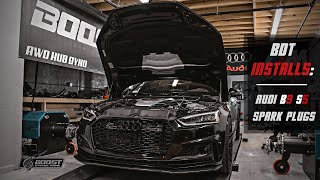
Typical fix: Replace the faulty ignition coil. It is highly recommended to replace all six coils at the same time 🎬 See this DIY walkthrough for replacing coils and plugs. to prevent future failures and ensure consistent performance.
Est. part cost: $50-$120 per coil - Worn or Fouled Spark Plug 🟡 Medium Probability → Shop Spark Plug Spark plugs are a regular maintenance item with a finite lifespan. A worn electrode, carbon fouling, or oil contamination can prevent a strong spark, leading to incomplete combustion.
How to confirm: After confirming the ignition coil is good, remove the spark plug from cylinder 2. Inspect it for wear (worn or rounded electrode), heavy carbon buildup, or oil/fuel fouling. Compare it to a new plug.
Typical fix: Replace the spark plug. It is best practice to replace all six spark plugs as a set, especially if they are near their service interval. Torque spec is typically 25 Nm (22 ft-lb).
Est. part cost: $100-$180 for a set of six OEM-quality plugs - Faulty Fuel Injector ⚪ Low Probability → Shop Fuel Injector Direct injection (TFSI) fuel injectors operate under very high pressure and can become clogged with carbon deposits or fail electronically over time, disrupting the fuel spray pattern.
How to confirm: This is more complex to diagnose. It involves swapping injectors between cylinders (a more involved job requiring fuel system depressurization) or using an advanced scan tool like VCDS to monitor injector balance rates and flow. A professional may be needed.
Typical fix: Replace the faulty fuel injector for cylinder 2. This is often more labor-intensive than coils or plugs.
Est. part cost: $150-$300 per injector
Rare But Worth Checking
- Carbon Buildup on Intake Valves: Direct injection engines like the 3.0T are prone to carbon buildup on the intake valves because fuel is no longer sprayed over them, eliminating the cleaning effect. This can restrict airflow to a specific cylinder, disrupt tumble and swirl, and cause a misfire. This issue typically appears at higher mileage (60k+ miles) and may require professional 'walnut blasting' to clean the valves.
- Vacuum Leak: A leak in a vacuum line or intake gasket can introduce unmetered air, leaning out the mixture and causing a misfire. This would often be accompanied by other codes (like lean codes or P0300) or misfires on adjacent cylinders.
- Low Engine Compression: This is a serious mechanical issue (e.g., bad piston rings, burnt valve, head gasket failure) and is unlikely on a newer vehicle unless there is significant mileage or other major symptoms like excessive oil consumption or coolant loss. Requires a compression and leak-down test to confirm.
- PCV Valve Failure: → Shop PCV Valve The PCV (Positive Crankcase Ventilation) valve can fail, causing incorrect crankcase pressure and leading to unmetered air entering the intake. This can cause lean conditions and misfires. Symptoms can include a whistling noise from the engine bay, increased oil consumption, and oil leaks.
Diagnosis Steps
- Read the trouble codes with an OBD-II scanner. Confirm P0302 is present and note any other codes (e.g., P0300, P0301, P0303).
- CRITICAL FIRST STEP: Contact an Audi dealership with your VIN. Ask if there are any open service campaigns or TSBs (specifically 2058038 or 2069038) related to misfires that require an ECM software update. This could be the entire fix and should be checked before buying any parts.
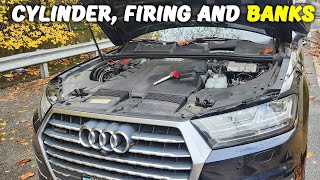
- If no software update is needed, proceed to test the ignition system. Locate cylinder 2 (middle cylinder, passenger side, Bank 1). 🎬 Watch: This video explains Audi's cylinder and bank layout.
- Swap the ignition coil from cylinder 2 with the coil from cylinder 1 (front cylinder, passenger side). This requires no special tools other than what is needed to remove any plastic engine covers.
- Clear the codes, start the engine, and let it run or drive it briefly to see if the Check Engine Light returns.
- Re-scan the codes. If the code is now P0301, the ignition coil is bad and needs to be replaced. It is best practice to replace all six.
- If the code remains P0302, the coil is likely good. Turn off the engine and remove the spark plug from cylinder 2. A standard spark plug socket is required.
- Inspect the spark plug for excessive wear, damage, or fouling. If it looks worn or is near its service interval (typically 30-40k miles), replace it. Again, it is best to replace all six. Torque new plugs to 25 Nm (22 ft-lb).
- If the coil and plug are good, the issue may be with the fuel injector. This step is more advanced and may require professional diagnosis.
- If all else fails, a professional mechanic should investigate rarer causes like carbon buildup (requiring a borescope inspection) or perform a compression and leak-down test to check for mechanical engine problems.
Parts You'll Likely Need
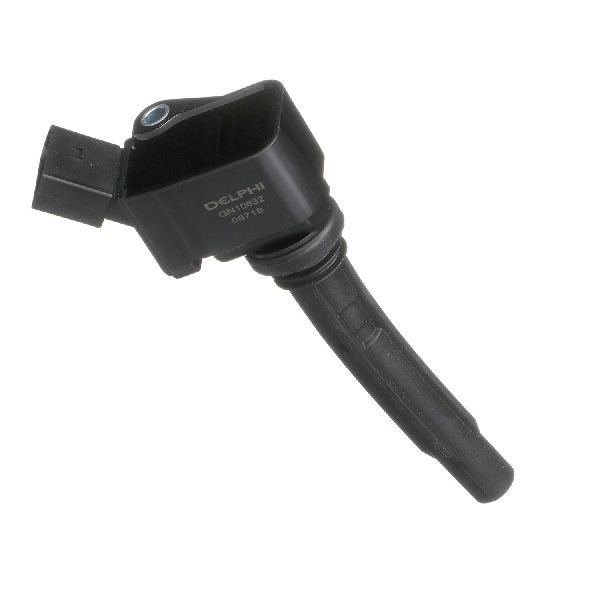
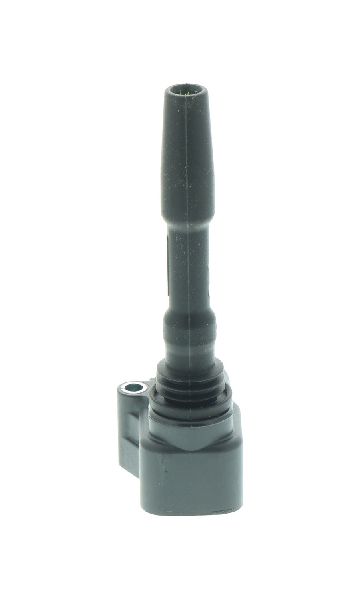
- Ignition Coil
(OEM #06L905110K (supersedes previous versions like 06E905115E/G))— This is the most common hardware failure causing a single-cylinder misfire on this engine.
Trusted brands: Eldor (often the OEM supplier), Bosch, NGK
OEM price range: $80-$120
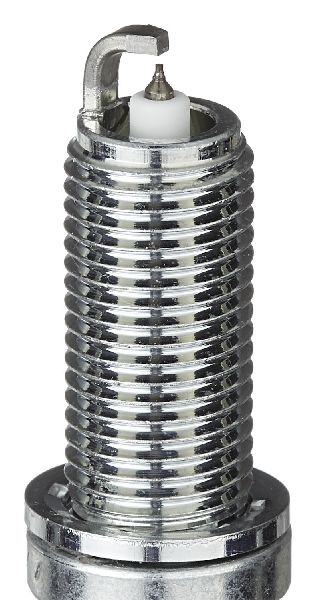
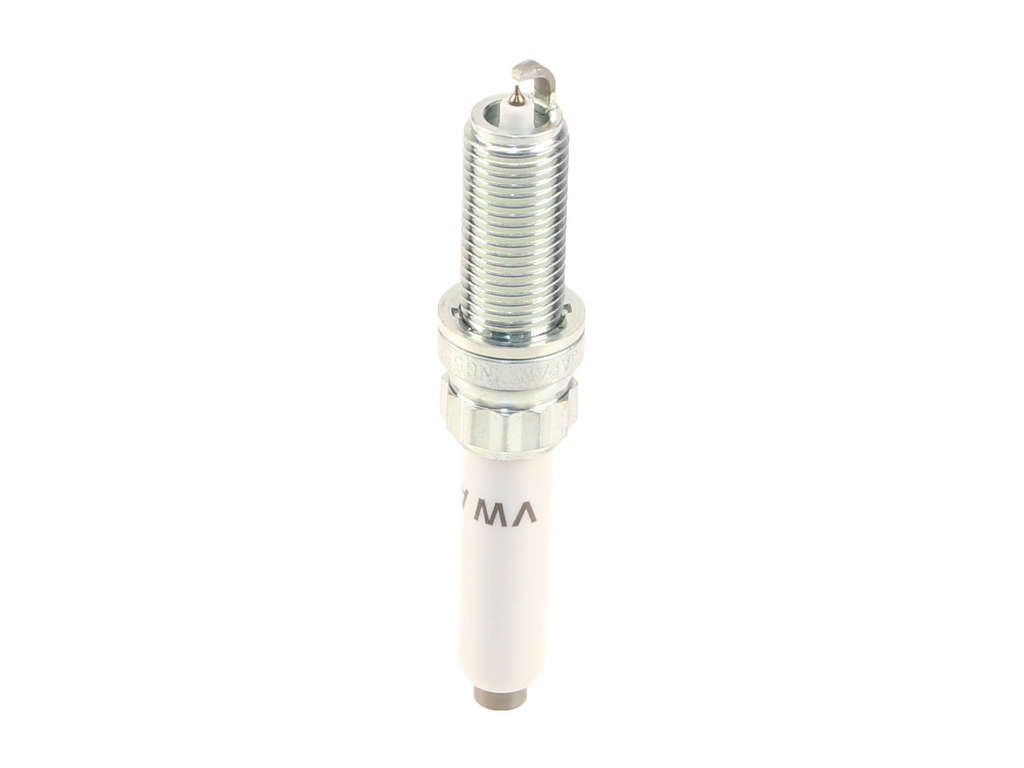
Aftermarket price range: $50-$90 - Spark Plug
(OEM #101905611G or 06M905606F (verify by VIN))— A worn spark plug is the second most common hardware failure. It's a routine maintenance item that should be replaced at regular intervals.
Trusted brands: NGK (PFR8S8EG or similar), Bosch
OEM price range: $25-$40 per plug
Aftermarket price range: $15-$25 per plug
Related Codes That Often Appear With This One
- P0300 — If the misfire is intermittent or the software issue is causing detection across multiple cylinders, a P0300 (Random/Multiple Cylinder Misfire) code may be stored alongside P0302.
- P0301, P0303 — Codes for adjacent cylinders on the same bank (Bank 1) may appear if the underlying issue, like a vacuum leak or fuel pressure problem, is affecting the entire bank.
- P0264, P0265 — In rarer cases, a fuel injector electrical fault might trigger a specific injector circuit code for cylinder 2 alongside the misfire code.
- P0087 — If the misfire is caused by a failing High-Pressure Fuel Pump (HPFP), a P0087 (Fuel Rail/System Pressure - Too Low) code is often present.
Technical Service Bulletins (TSBs) & Recalls
- A0124212069038_5 / A0123912069038_5 / A0123802069038_4 / A0123352069038_2 / A0122312069038_1: A series of related bulletins from Audi addressing MIL illumination and P030x misfire codes, with some specifically mentioning a software update as the solution.
- TSB 2069038: Mentions a software update for the control module, J623, to correct misfires on A6 and A7 models.
- TSB 2058038: Specifically mentions that software calibration can cause misfires with winter blend fuel and advises against replacing parts until a software update is performed. States a solution is in development.
Platform-Specific Known Issues
- A known software calibration issue can cause false misfire detection, especially with winter-blend fuels. TSB 2058038 specifically states 'Do not replace any components for this condition since this will not resolve the customer's concern' and points to a software solution.
- The 3.0L V6 engine (DLZA) numbers cylinders 1-2-3 on the passenger side (Bank 1) and 4-5-6 on the driver's side (Bank 2), from front to back. P0302 is always the middle cylinder on the passenger side.
- As a direct injection engine, the intake valves are prone to carbon buildup over time (60k+ miles), which can restrict airflow and cause misfires that are not related to the ignition or fuel system.
Mechanic-Grade Diagnostic Values
- High-Pressure Fuel System Pressure — expected: Exceeding 1500-2000 PSI under load.. Failure: Pressure significantly below specified levels, often triggering a P0087 code alongside the misfire code.
- Live Misfire Count per Cylinder — expected: 0 or very close to 0 at idle and under load after warm-up.. Failure: A continuously incrementing counter for cylinder 2 in the scan tool's live data indicates an active misfire.
Scan Tool Commands That Help
- VCDS (VAG-COM): Measuring Value Blocks (MVB) for Misfire Recognition — Use groups 014, 015, and 016 to view live misfire counters for each cylinder. This helps confirm if the misfire is active and isolated to cylinder 2 without relying solely on the stored DTC.
- ODIS (Official Dealer Software): Guided Fault Finding (GFF) — When a P0302 code is present, GFF provides a dealer-level, step-by-step diagnostic test plan. It prompts the technician to perform specific checks and component swaps, and is required by Audi for warranty claims related to misfires.
- OBDeleven: Live Data - Misfire Counters — Similar to VCDS, the OBDeleven app can access live data to search for 'misfire sum counter' and individual cylinder counters to watch for misfires in real-time as they happen.
Wiring & Ground Locations
- 306 — In the engine prewiring harness.. This is the shared earth (ground) connection for the ignition coils. A loose or corroded ground at this point could cause weak or intermittent spark on multiple cylinders, including cylinder 2.
- 846, 847, 848 — Earth point on ignition coils 1, 2, and 3 respectively.. A wiring diagram for the similar C7 platform with a DLZA engine shows specific earth points for each coil. A fault at or near earth point 847 could specifically affect cylinder 2's ignition coil.
Real Owner Repair Stories
- Carly Community Forum (2019 Audi A7, 42,272 km) — Rough idle, jerky throttle response, power loss, check engine light on.
❌ Tried (didn't work) Initial suspicion was a bad ignition coil.
✅ What actually fixed it A diagnostic test at a specialist confirmed two faulty fuel injectors. Replacing both injectors resolved all symptoms completely. The total repair cost was 890 Euro.
OEM Part Supersession History
06H905110G, 06H905110H, 06H905110L→06H905110P (Latest known revision for some EA839 applications)— Revisions are common for ignition coils to improve durability and resistance to heat and electrical stress.
Heads up: While the Pass 2 information lists 06L905110K, other sources for the EA839 engine family point to the 06H series. It is critical to verify the correct part number by VIN, as different engine codes and production dates may use different coil series. Using the wrong series could lead to fitment or performance issues.Unknown→06M905606F— Standard part evolution for performance and longevity.
Heads up: This spark plug (also cross-referenced to NGK SILKGR9A7ES and Porsche 9A790560150) is specified for the 3.0T DLZA engine in the A7. Using an incorrect heat range or plug design can cause poor performance or misfires.
Helpful Videos


We Have This Part in Stock


The information in this article is provided for general reference and educational purposes only. Vehicle specifications, procedures, and part compatibility can vary by production date, trim level, and region. Always consult your vehicle's factory service manual and verify part numbers before purchasing or performing repairs. Safety-critical components such as airbags, seat belts, and braking systems should be installed by a qualified professional.
- Audi A7:
- 🧭 Diagnostic Flowchart
- 🎬 Helpful Videos
- 🛍️ Shop This Part
- What's Unique About the 2019-2021 Audi A7
- Symptoms You May Notice
- Most Likely Causes
- Rare But Worth Checking
- Diagnosis Steps
- Parts You'll Likely Need
- Related Codes That Often Appear With This One
- Technical Service Bulletins (TSBs) & Recalls
- Platform-Specific Known Issues
- Mechanic-Grade Diagnostic Values
- Scan Tool Commands That Help
- Wiring & Ground Locations
- Real Owner Repair Stories
- OEM Part Supersession History
- 🎟️ Get 5% Off