

P0302 on 2016-2018 Cadillac ATS: Cylinder 2 Misfire Causes and Fixes
P0302 on a Cadillac ATS signals a misfire in cylinder 2, most often caused by a faulty ignition coil or a worn spark plug. On 3.6L V6 models, a known issue with a faulty Active Fuel Management (AFM) oil control solenoid is also a common cause. A single coil and plug fix is typically under $150 in parts.
- P0302 is a misfire on cylinder 2. Do not ignore a flashing check engine light, as it can lead to costly catalytic converter damage.
- The most likely cause is a bad ignition coil or spark plug. Start your diagnosis by swapping the coil from cylinder 2 to another cylinder to see if the problem follows.
- Repair difficulty varies by engine. The 2.0L Turbo is DIY-friendly, while the 3.6L V6 requires removing the intake manifold to access coils and plugs.
- If you have the 3.6L V6, be aware of the known issue with the AFM oil control valve (OCV) solenoid (TSB #21-NA-036) as a potential cause.
What's Unique About the 2016-2018 Cadillac ATS
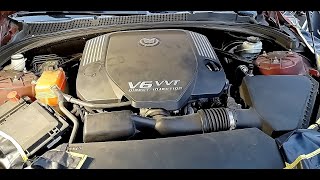
The 2016-2018 Cadillac ATS was primarily available with the 2.0L Turbo I4 (RPO: LTG) and the 3.6L V6 (RPO: LGX), and the approach to fixing a P0302 code differs. On the 2.0L LTG, accessing ignition components is relatively simple. However, on the 3.6L LGX V6, the job is more complex as the intake manifold must be removed to reach the spark plugs and coils for cylinders 2, 4, and 6. For the V6, cylinder 2 is the front-most cylinder on the driver's side (Bank 2). Furthermore, the 3.6L V6 has a specific documented issue where a faulty Active Fuel Management (AFM) oil control valve (OCV) solenoid can break and cause a misfire on cylinder 2, as detailed in GM Technical Service Bulletin #21-NA-036.
Diagnostic Flowchart
Tap your situation to follow the diagnostic path that matches what you're seeing on this vehicle.
Symptoms You May Notice
- Rough or shaky idle.
- Noticeable loss of power and acceleration.
- Engine hesitation or stumbling.
- Flashing or solid Check Engine Light.
- Increased fuel consumption.
- Engine may run rough on a cold start and then smooth out.
- Replacing oxygen sensors. O2 sensor codes can appear as a result of a misfire dumping unburned fuel, but they are rarely the root cause of a single-cylinder misfire.
- Assuming a major engine failure on the 2.0T (cracked piston) without first ruling out simple ignition and fuel issues.
Most Likely Causes
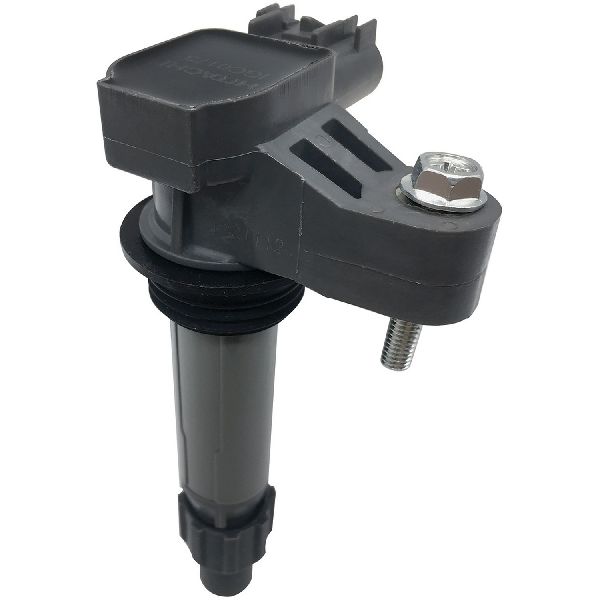
- Faulty Ignition Coil 🔴 High Probability → Shop Ignition Coil Coil-on-plug units are a common failure point due to constant heat and vibration in the engine bay.
How to confirm: The easiest way to confirm is to swap the ignition coil from cylinder 2 with another cylinder (e.g., cylinder 4 on the V6, cylinder 1 on the I4). Clear the codes and drive the vehicle. If the code changes to P0304 or P0301 respectively, the coil is the culprit.
Typical fix: Replace the faulty ignition coil. A YouTube DIYer with a 2.0T ATS confirmed this fixed his P0302 after new spark plugs did not. 🎬 Watch this DIYer fix a P0302 on his 2.0T ATS. Many mechanics recommend replacing all coils on the affected bank (or all coils on the V6) if they are original, due to the labor involved in accessing them.
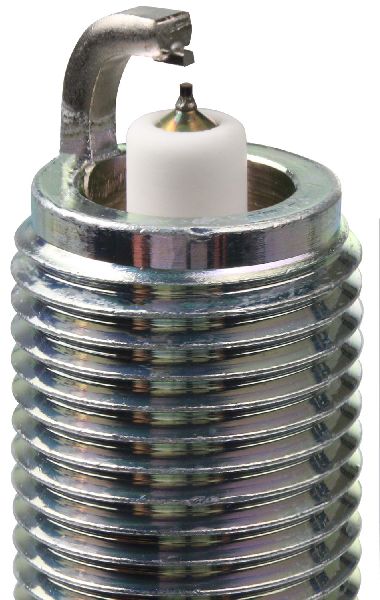
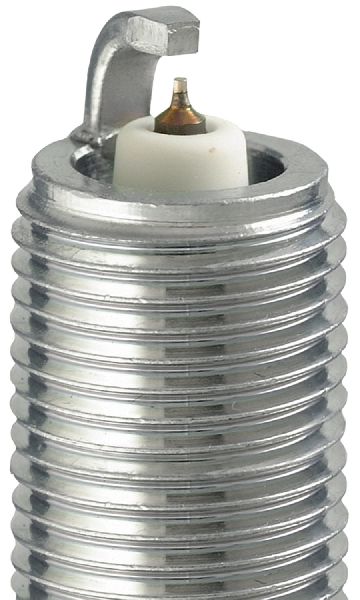
Est. part cost: $50-$150 - Worn or Fouled Spark Plug 🔴 High Probability → Shop Spark Plug Turbocharged direct-injection engines like the 2.0T LTG are harder on spark plugs, often requiring a shorter change interval (around 60,000 miles).
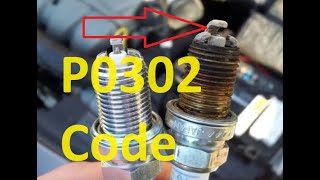
How to confirm: After ruling out the ignition coil, remove the spark plug from cylinder 2. Inspect it for signs of wear on the electrode, carbon fouling, oil contamination, or a cracked ceramic insulator.
Typical fix: Replace the spark plug. It is best practice to replace all spark plugs as a set to ensure even performance and avoid repeat labor, especially on the V6 where access is difficult.
Est. part cost: $10-$25 per plug - Faulty AFM Oil Control Valve (OCV) Solenoid (3.6L V6 Only) 🟡 Medium Probability → Shop Engine Variable Valve Timing (VVT) Oil Control Valve A known issue documented in GM Technical Service Bulletin #21-NA-036 affects the 3.6L LGX V6. The solenoid can become brittle, and its end can break off and get stuck in the camshaft cover bore. This causes an oil pressure leak within the valvetrain, leading to improper operation of the AFM lifters and a misfire on cylinder 2 and/or 5.
How to confirm: Visually inspect the OCV solenoid for damage or oil leaks. The TSB notes that when removing the solenoid, the end may remain lodged in the bore. The bore should be inspected to ensure it is clear. A pick tool can often be used to remove the broken piece.
Typical fix: Replace the damaged AFM OCV solenoid (Part #12679099) and ensure any broken pieces are removed from the camshaft cover.
Est. part cost: $40-$80 - Clogged or Faulty Fuel Injector ⚪ Low Probability → Shop Fuel Injector Direct injection (DI) systems operate at very high pressures and can be susceptible to carbon buildup on the injector tip, which disrupts the spray pattern.
How to confirm: If ignition components are good, the fuel injector is a suspect. A professional can perform a flow test. A DIY method involves listening for a consistent 'clicking' sound from the injector with a mechanic's stethoscope; a silent or different-sounding injector may be faulty. Swapping injectors between cylinders is also a valid diagnostic step, though more labor-intensive.
Typical fix: Replace the faulty fuel injector. It's also recommended to have the other injectors cleaned and tested.
Est. part cost: $70-$200
Rare But Worth Checking
- Low Engine Compression (Cracked Piston on 2.0T LTG): This is a more serious mechanical issue. On the 2.0T LTG engine, a cracked piston is a known, though uncommon, failure that can cause a persistent misfire. GM has issued several service bulletins regarding this, including #PIP5628G and #PI1178F. A compression test followed by a cylinder leak-down test is required to diagnose this.
- Intake Valve Carbon Buildup: As direct-injection engines, both the 2.0T and 3.6L do not spray fuel over the intake valves. Over time, oil vapor from the PCV system can bake onto the valves, restricting airflow into the cylinder and causing misfires, especially on cold starts. This typically requires professional 'walnut blasting' to clean.
Diagnosis Steps
- Read the code with an OBD-II scanner to confirm P0302 and check for any other codes.
- Swap the ignition coil from cylinder 2 with another cylinder (e.g., cylinder 1 on 2.0T, cylinder 4 on 3.6L). Clear the codes and see if the misfire moves to the new cylinder (e.g., P0301 or P0304). If it does, the coil is bad.
- If the misfire remains on cylinder 2, swap the spark plug from cylinder 2 with another. If the misfire moves, the spark plug is bad.
- If ignition parts are good, inspect the wiring and connector for the cylinder 2 ignition coil and fuel injector for any damage or corrosion.
- For 3.6L V6 models, inspect the AFM Oil Control Valve (OCV) solenoid for cylinder 2, following the guidance in TSB #21-NA-036. Check for visible damage and ensure the tip has not broken off inside the camshaft cover.
- Listen to the fuel injector on cylinder 2 with a mechanic's stethoscope to ensure it is clicking like the others. A silent or different-sounding injector may be faulty.
- If all else fails, perform an engine compression test and a cylinder leak-down test to check for mechanical issues like worn piston rings, bad valves, or a cracked piston (especially on the 2.0T LTG).
Parts You'll Likely Need
- Ignition Coil
(OEM #ACDelco 12658183 (3.6L LGX) / ACDelco 12651426 (2.0T LTG))— This is the most common failure point for a single-cylinder misfire on the ATS.
Trusted brands: ACDelco, Delphi, NGK
OEM price range: $60-$100
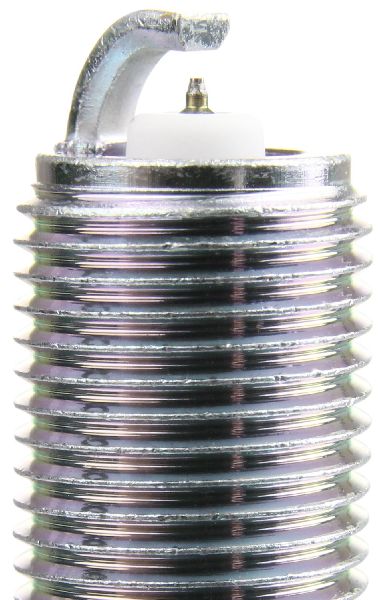
Aftermarket price range: $40-$70 - Iridium Spark Plug
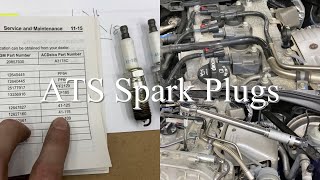
(OEM #ACDelco 41-162 (3.6L LGX) / ACDelco 41-123 (2.0T LTG))— Spark plugs are a common wear item and the second most likely cause of a P0302 code.
Trusted brands: ACDelco, NGK
OEM price range: $15-$25
Aftermarket price range: $10-$20 - AFM Oil Control Valve Solenoid (3.6L V6)
(OEM #ACDelco 12679099)— A specific, documented cause of P0302 on the 3.6L V6 engine per TSB #21-NA-036.
Trusted brands: ACDelco
OEM price range: $60-$90
Aftermarket price range: $40-$70
Related Codes That Often Appear With This One
- P0300 — If the misfire is intermittent or begins to affect other cylinders, a P0300 (Random/Multiple Cylinder Misfire) code may appear alongside P0302.
- P0305 — On the 3.6L V6, TSB #21-NA-036 specifically notes that P0302 and P0305 (Cylinder 5 Misfire) often appear together, as both are cylinders deactivated by the Active Fuel Management (AFM) system and can be affected by the same faulty OCV solenoid.
Technical Service Bulletins (TSBs) & Recalls
- Bulletin #21-NA-036: Information on Malfunction Indicator Lamp (MIL) Illuminated – DTCs P0300, P0302 and/or P0305 Set.
- Bulletin #PIP5628G / #PI1178F: Reference for cracked piston issues on the 2.0L LTG engine.
Platform-Specific Known Issues
- TSB #21-NA-036: Damaged AFM Oil Control Valve Solenoid (3.6L V6): → Shop Engine Variable Valve Timing (VVT) Oil Control Valve For 2016-2019 ATS models with the 3.6L V6 engine, a damaged Oil Control Valve (OCV) solenoid for the Active Fuel Management (AFM) system can cause an oil leak and a misfire on cylinder 2 and/or 5. The bulletin advises inspecting the solenoid for damage, as the end can break off and become lodged in the camshaft cover. This starves the AFM lifters of oil pressure, causing the cylinder to deactivate. If the solenoid is intact, the TSB suggests checking the rocker arms on the affected cylinder.
- Known Issue: Cracked Piston (2.0L LTG): On the 2.0L Turbo LTG engine, a known but uncommon issue is a cracked piston, typically between the compression ring lands. This leads to a loss of compression and a persistent misfire code like P0302 that won't be resolved by ignition or fuel system repairs. GM has issued bulletins like #PIP5628G and #PI1178F related to this problem. Diagnosis requires a compression and leak-down test.
Mechanic-Grade Diagnostic Values
- High-Pressure Fuel System (2.0L LTG) — expected: Up to 2,250 PSI (155 bar). Failure: Significantly lower pressure under load can cause lean misfires.
- High-Pressure Fuel System (3.6L LGX) — expected: Can exceed 2,000 PSI under load.. Failure: Low pressure, which may set other codes like P0087, can contribute to misfires.
- Low-Pressure Fuel System (Key On, Engine Off) — expected: 55-60 PSI. Failure: Pressure outside this range indicates a problem with the in-tank fuel pump.
- Fuel Injector Resistance (3.6L LGX) — expected: Approximately 1.5 - 2.2 Ohms. Failure: A significant deviation or an open/short circuit indicates a faulty injector coil.
- AFM/VVT Solenoid Resistance (3.6L LGX) — expected: 8 - 12 Ohms. Failure: Readings outside this range suggest a faulty solenoid.
Hidden / Shadow Codes Worth Checking
- Mode $06, TID $A2-$A7: Provides access to misfire counters for each cylinder, including an Exponentially Weighted Moving Average (EWMA) of misfire counts for the last 10 driving cycles. This can reveal intermittent misfires on cylinder 2 that haven't yet set a hard P0302 code. (see via An advanced OBD-II scanner capable of reading Mode $06 data.)
Scan Tool Commands That Help
- GDS2 (GM Dealer Software): Cylinder Power Balance Test — This function allows a technician to disable each cylinder's fuel injector one by one and monitor the RPM drop. If disabling cylinder 2 causes little or no RPM drop compared to other cylinders, it confirms that cylinder 2 is not contributing power, isolating the fault without swapping parts.
Real Owner Repair Stories
- YouTube user Ray S-222 (Cadillac ATS 2.0T (year not specified, but within generation)) — Sudden rough, shaky idle at a stoplight; significant loss of power; P0302 code triggered.
❌ Tried (didn't work) Replaced all four spark plugs.
✅ What actually fixed it Replacing the ignition coil on cylinder 2 resolved the hard idle and misfire. The problem was fixed with a new coil after the new spark plugs made no difference.
OEM Part Supersession History
GM 12654078→ACDelco 12651426— Standard part lifecycle update.
Heads up: Aftermarket performance brands like ACCEL offer direct replacements for PN 12654078, indicating it was a common original fitment on the 2.0T LTG engine.
Model Year Variations Within This Range
- 2016-2018: For the 2016 model year, the 3.6L V6 was updated to the LGX engine, which introduced Active Fuel Management (cylinder deactivation) and Stop/Start technology. This is significant because the AFM system and its components, like the OCV solenoid mentioned in TSB #21-NA-036, are a specific potential cause for P0302 on these later V6 models.
- 2016: For the 2016 model year, both the 2.0T and 3.6L engines were paired with a new 8-speed automatic transmission, replacing the previous 6-speed. While not a direct cause of a misfire, this change is a key differentiator from earlier ATS models.
Helpful Videos
We Have This Part in Stock


The information in this article is provided for general reference and educational purposes only. Vehicle specifications, procedures, and part compatibility can vary by production date, trim level, and region. Always consult your vehicle's factory service manual and verify part numbers before purchasing or performing repairs. Safety-critical components such as airbags, seat belts, and braking systems should be installed by a qualified professional.
- Cadillac ATS:
- 🧭 Diagnostic Flowchart
- 🎬 Helpful Videos
- 🛍️ Shop This Part
- What's Unique About the 2016-2018 Cadillac ATS
- Symptoms You May Notice
- Most Likely Causes
- Rare But Worth Checking
- Diagnosis Steps
- Parts You'll Likely Need
- Related Codes That Often Appear With This One
- Technical Service Bulletins (TSBs) & Recalls
- Platform-Specific Known Issues
- Mechanic-Grade Diagnostic Values
- Hidden / Shadow Codes Worth Checking
- Scan Tool Commands That Help
- Real Owner Repair Stories
- OEM Part Supersession History
- Model Year Variations Within This Range
- 🎟️ Get 5% Off