

P0302 on 2008-2015 Cadillac CTS: Cylinder 2 Misfire Causes and Fixes
P0302 on a Cadillac CTS most often means a failed ignition coil or a worn-out spark plug on cylinder 2. This is a common issue that is straightforward to diagnose and fix yourself for about $40-$100 in parts. On direct-injection V6 models, persistent misfires after an ignition component replacement are frequently caused by carbon buildup on the intake valves.
- P0302 on your CTS is a misfire on cylinder 2, which is the front cylinder on the driver's side for V6 models.
- The most likely cause is a bad ignition coil, which you can easily diagnose by swapping it with another cylinder's coil.
- Worn spark plugs are the next most likely cause. It's best to replace all of them at once.
- If the check engine light is flashing, stop driving to prevent costly catalytic converter damage.
- On higher-mileage V6 engines, significant carbon buildup on the intake valves is a known issue that can cause this code if new coils and plugs don't fix it.
What's Unique About the 2008-2015 Cadillac CTS
While ignition parts are a common failure on any car, the V6 engines in this era of Cadillac CTS (specifically the 3.0L LF1 and 3.6L LLT/LFX) use Gasoline Direct Injection (GDI). This technology is known to cause carbon buildup on the intake valves over time, which can prevent the valves from sealing properly and lead to misfires, especially on a cold start. This issue is so prevalent that GM has issued technical service bulletin PIP5029 to address misfires (P0300-P0306) specifically caused by carbon deposits on these engines. Another known, though less common, issue on the 3.6L V6 is premature timing chain stretch, which can also lead to misfire codes.
Diagnostic Flowchart
Tap your situation to follow the diagnostic path that matches what you're seeing on this vehicle.
Generation note: The 2008-2015 range covers two CTS generations. The second generation (2008-2013) primarily used 3.0L and 3.6L V6 engines (LF1, LLT, LFX) known for carbon buildup and timing chain issues. The third generation began in 2014 and introduced a 2.0L Turbo and updated V6s. The diagnostic process is similar, but the carbon and timing chain issues are most associated with the direct-injection V6s common in the second generation.
Symptoms You May Notice
- Rough or shaking idle
- Engine hesitation or stumbling during acceleration
- Noticeable loss of power
- Solid or flashing Check Engine Light
- "Service StabiliTrak" message may appear on the dash, often concurrently with the misfire.
- Engine may be harder to start, especially when cold
- A smell of raw fuel from the exhaust
- Replacing the oxygen sensor. O2 sensors report problems with the air/fuel mixture; they rarely cause a single-cylinder misfire.
- Replacing the mass airflow (MAF) sensor. A faulty MAF sensor would typically affect all cylinders and set a P0300 code or other air/fuel metering codes, not an isolated P0302.
Most Likely Causes
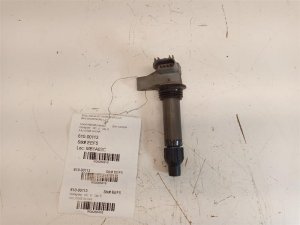
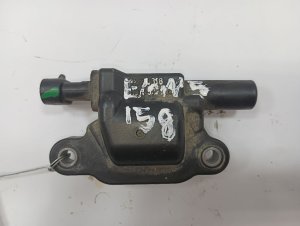
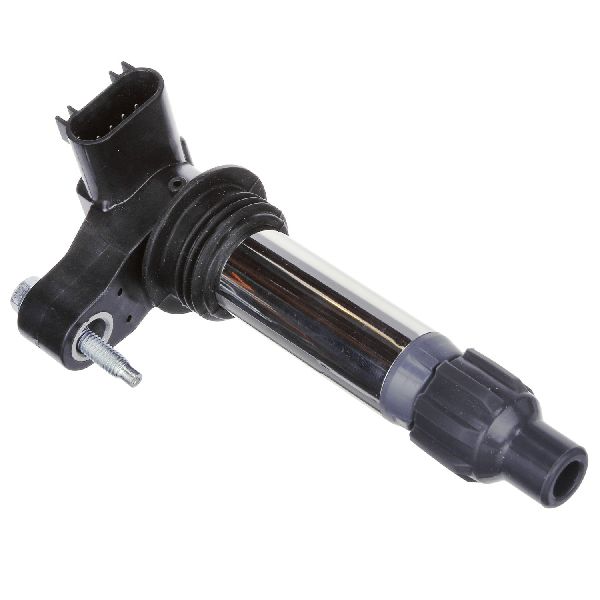
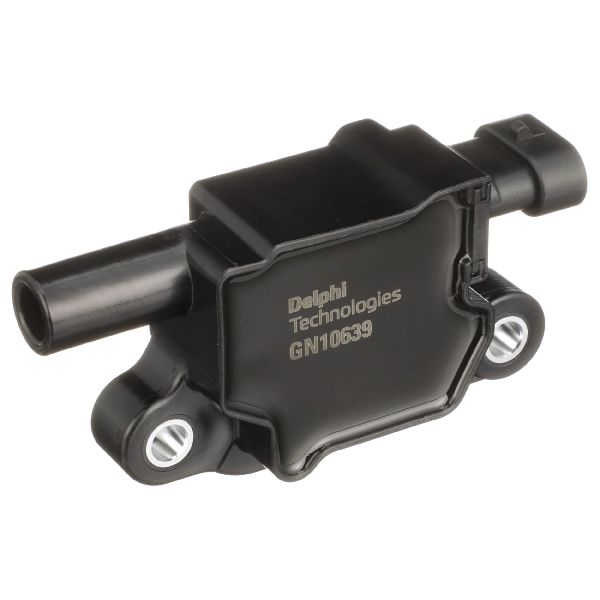
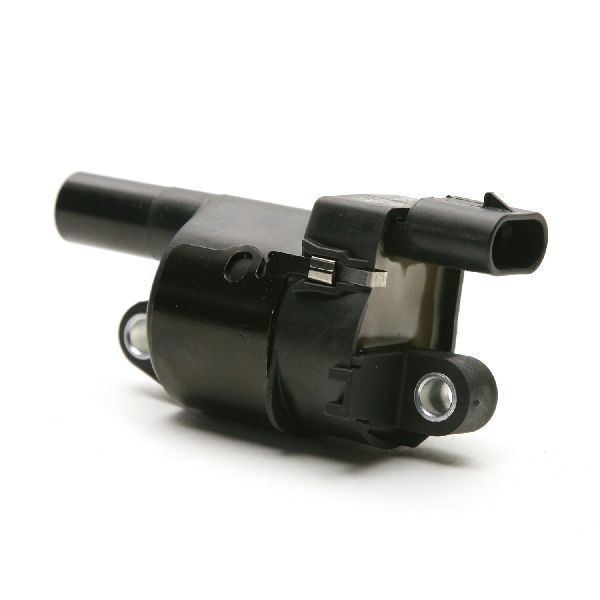
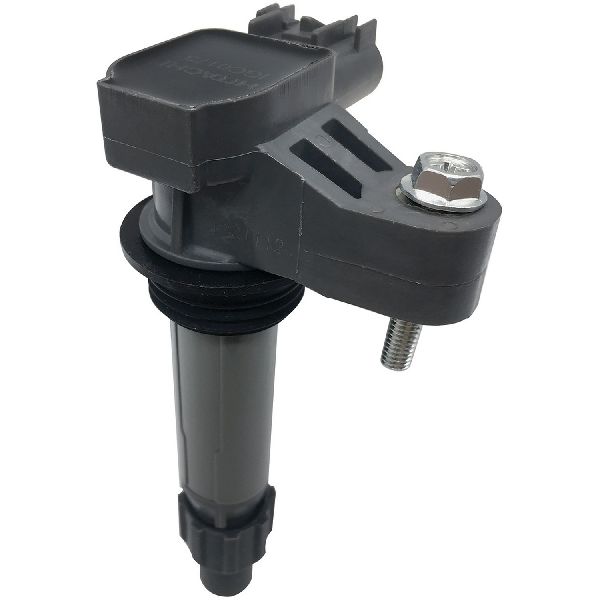
- Failing Ignition Coil 🔴 High Probability → Shop Ignition Coil Ignition coils are a common wear item that fail from heat cycles and age. TSB PIP5038B directly links misfire codes to ignition system diagnostics and provides procedures for identifying heat-stressed coils.
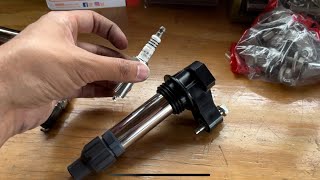
How to confirm: Swap the ignition coil from cylinder 2 with another cylinder (e.g., cylinder 4). Clear the codes and drive. If the code changes to P0304, the coil is faulty. On V6 models, cylinder 2 is the front-most cylinder on the driver's side bank.
Typical fix: Replace the faulty ignition coil. It is often recommended to replace all coils if they are original and high-mileage, especially if one has failed due to age.
Est. part cost: $30-$70 per coil - Worn or Fouled Spark Plug 🔴 High Probability → Shop Spark Plug Spark plugs are a routine maintenance item with a finite lifespan. A worn electrode, incorrect gap, or carbon/oil fouling can prevent a strong spark. TSB PIP4819A points to inspecting spark plug related components. A Reddit user noted that switching from aftermarket plugs back to OEM ACDelco plugs resulted in a smoother run, highlighting the importance of using correct parts.
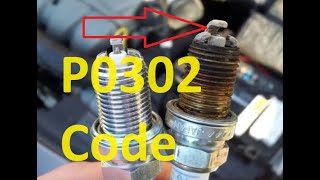
How to confirm: After ruling out the coil, remove the spark plug from cylinder 2. Inspect it for wear (rounded electrode), damage (cracked porcelain), or heavy deposits. A plug from a misfiring cylinder may be wet with fuel. Compare it to a plug from a working cylinder.
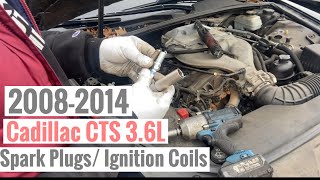
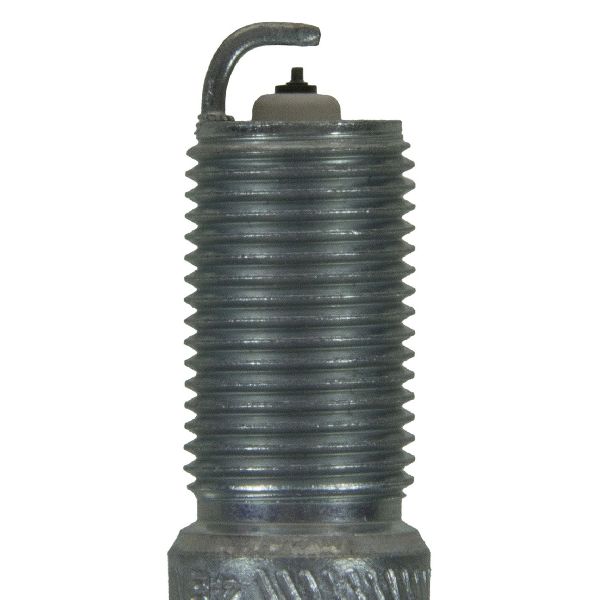
Typical fix: Replace the spark plug in cylinder 2. It is best practice to replace all spark plugs at the same time with high-quality Iridium plugs like the OEM-specified ACDelco 41-107 to ensure even performance and longevity.
Est. part cost: $10-$25 per plug - Carbon Buildup on Intake Valves 🟡 Medium Probability The direct-injection engines (3.0L LF1, 3.6L LLT/LFX) do not have fuel washing over the intake valves, leading to oil and combustion byproducts baking onto them. This is a well-documented issue for this platform, covered by GM TSB PIP5029, and can cause misfires that are more apparent on cold starts.
How to confirm: This is difficult to confirm without a borescope to visually inspect the intake valves. It is often diagnosed after ignition and fuel system faults are ruled out, especially on engines with over 60,000 miles.
Typical fix: The intake manifold must be removed and the valves cleaned. The most effective method is walnut shell blasting. Chemical cleaning methods (like Sea-Foam spray) can also be used as a less-invasive, but potentially less thorough, alternative.
Est. part cost: $20-$50 for cleaning chemicals, or $400-$800 for a professional walnut blasting service - Faulty Fuel Injector ⚪ Low Probability → Shop Fuel Injector A fuel injector can become clogged with deposits or fail electronically, failing to deliver the correct amount of fuel to cylinder 2.
How to confirm: This is more complex to diagnose. A professional may use an advanced scan tool with an Active Fuel Injector Tester (AFIT) to measure the output and balance of each injector. Swapping injectors between cylinders is also possible but is significantly more labor-intensive than swapping coils.
Typical fix: Replace the faulty fuel injector. This is more labor-intensive and expensive on GDI engines compared to port-injected engines.
Est. part cost: $50-$150
Rare But Worth Checking
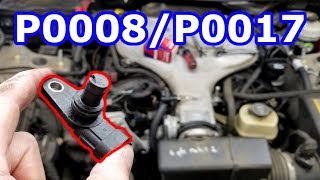
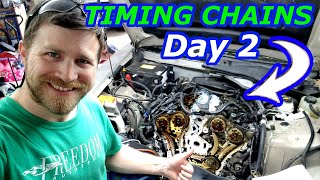
- Stretched Timing Chain: The 3.6L LLT V6, in particular, is known for premature timing chain stretch, often due to extended oil change intervals. This can cause camshaft/crankshaft correlation errors (like P0008 or P0017) and lead to misfires on one or both banks. Diagnosis often requires checking cam/crank correlation with a scan tool or lab scope.
- Low Cylinder Compression: A mechanical engine problem like a worn piston ring, leaking head gasket, or a valve sealing issue (potentially from carbon buildup or a bent valve) can cause a persistent misfire. A compression test is needed to diagnose this.
- Vacuum Leak: A vacuum leak from a cracked hose or a failed intake manifold gasket near the runner for cylinder 2 could lean out the mixture and cause a misfire. However, this more commonly causes a random misfire code (P0300).
Diagnosis Steps
- Connect an OBD-II scanner to confirm the P0302 code and check for any other codes, especially P0300 or P0352.
- Check freeze frame data to see the engine conditions (speed, load, temperature) when the misfire occurred.
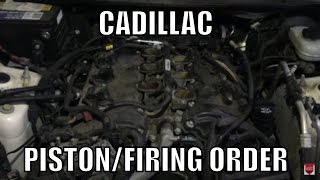
- Locate cylinder 2. On the V6 engines, this is the front-most cylinder on the driver's side bank (Bank 2).
- Swap the ignition coil from cylinder 2 with the coil from cylinder 4 (the middle cylinder on the same bank).
- Clear the codes with the scanner and start the engine. Let it run and/or drive under the conditions noted in the freeze frame data.
- Re-scan for codes. If the code is now P0304, the ignition coil you moved is bad and needs to be replaced.
- If the code remains P0302, the coil is likely good. Move the coil back to its original position.
- Remove the spark plug from cylinder 2. Inspect it for wear, cracks, or heavy deposits (it may be wet with fuel). If it looks worn or fouled, replace it. It is best practice to replace all six plugs with the correct OEM-spec Iridium plugs.
- Inspect the wiring connector for the ignition coil and fuel injector on cylinder 2 for damage, corrosion, or loose pins.
- If the problem persists, especially on a high-mileage GDI engine, the cause is likely a clogged fuel injector or carbon buildup on the valves. A borescope inspection can confirm carbon buildup. A professional may be needed for fuel injector balance testing or walnut blasting services.
Parts You'll Likely Need
- Ignition Coil
(OEM #12632479)— This is the most frequent cause of a single-cylinder misfire on the Cadillac CTS. It's a common failure point due to heat and age. This part number supersedes previous versions like 12618542, 12610626, and 12590990.
Trusted brands: ACDelco, Delphi, NGK
OEM price range: $50-$80
Aftermarket price range: $30-$60 - Spark Plug
(OEM #41-107)— As a standard maintenance item, a worn or fouled spark plug is the second most likely cause of a P0302 misfire. Using the correct Iridium plug is crucial for the GDI engines.
Trusted brands: ACDelco Iridium, NGK Laser Iridium
Related Codes That Often Appear With This One
- P0300 — If the misfire is intermittent or starting to affect other cylinders, a P0300 (Random Misfire) may be stored alongside P0302.
- P0352 — This code means 'Ignition Coil B (Cylinder 2) Primary/Secondary Circuit Malfunction'. If you see this with P0302, it strongly points to a bad ignition coil or a wiring/connector issue to the coil. TSB PIP5038B notes this relationship.
- P0017 — This code indicates a 'Crankshaft Position - Camshaft Position Correlation Bank 1 Sensor B' error. On the 3.6L V6, seeing this with misfire codes can be a strong indicator of a stretched timing chain.
Technical Service Bulletins (TSBs) & Recalls
- PIP4819A: Notes that misfire codes (P0300-P0308) can be caused by loose spark plug wires/connections, pointing towards the ignition system.
- PIP5038B: Advises technicians on diagnosing misfire codes (P0300-P0306) that appear with ignition control circuit codes (P0351-P0356), reinforcing the link between misfires and coil issues. It provides specific guidance on inspecting coils for heat stress.
- PIP5029: Addresses engine misfires (P0300-P0306) on direct-injected engines (including the 3.0L LF1 and 3.6L LLT/LFX) caused by significant carbon deposits on intake valves.
Platform-Specific Known Issues
- A GM Preliminary Information bulletin (PIP5029) was issued for multiple vehicles including the 2008-2013 CTS with 3.0L and 3.6L direct-injection engines. It states that engine misfires (P0300-P0306) can be the result of major carbon buildup on the intake and/or exhaust valves, which may be more apparent on a cold start and may not appear until the engine has over 5,000 miles.
- A Reddit user with a 2011 CTS 3.0L chased an intermittent misfire with a "Service StabiliTrak" message for months. After replacing plugs and coils, cleaning the MAF, and using fuel system cleaner, the P0302 code eventually became persistent. This highlights the diagnostic challenge when multiple issues (or temporary fixes) are at play, with carbon buildup being a likely underlying cause.
Mechanic-Grade Diagnostic Values
- High-Pressure Fuel Rail Pressure (GDI Engines) — expected: 350-550 PSI at idle; 1,500-2,200+ PSI under heavy load/WOT.. Failure: Pressure that is significantly below idle spec or does not increase substantially with engine RPM and load can indicate a failing high-pressure fuel pump (HPFP).
- Low-Pressure Fuel System Pressure — expected: 50-65 PSI (key on, engine off).. Failure: Low pressure suggests a weak in-tank fuel pump or clogged filter, which can starve the HPFP.
- Fuel Injector Resistance (GDI) — expected: Approximately 1.5 - 2.2 Ohms.. Failure: A reading far outside this range, or an open/short circuit, indicates a failed injector coil. This test is less common than a balance test.
- Mode $06 Misfire Counts — expected: 0 counts for Test ID $A3 (Cylinder 2) in the last 10 driving cycles.. Failure: Any significant number of counts confirms an intermittent or consistent misfire on cylinder 2, even if the Check Engine Light is not currently on.
Scan Tool Commands That Help
- GM GDS2 / Tech2Win: Misfire Graphic / Current Misfire Counters — This is the most accurate way to view live misfire data for each cylinder. It allows a technician to see misfires as they happen under specific load or temperature conditions, which is crucial for diagnosing intermittent issues that don't set a hard code immediately.
- GM GDS2: Cylinder Power Balance — This bidirectional test allows the user to sequentially disable the fuel injector for each cylinder. When cylinder 2 is disabled, if there is little to no change in engine RPM, it confirms that cylinder 2 was not contributing power, pointing to a fault within that cylinder (spark, fuel, or compression).
- GM GDS2: Fuel Injector Balance Test — Used after spark issues are ruled out. This test fires each injector for a precise duration and measures the corresponding drop in fuel rail pressure. A smaller or larger pressure drop for cylinder 2 compared to others indicates a clogged or leaking injector.
Wiring & Ground Locations
- G103 — On the rear of the driver's side (Bank 2) cylinder head.. This is a primary ground for the ignition coils on Bank 2 (cylinders 2, 4, 6). A loose or corroded connection at G103 can cause a weak or inconsistent ground path for the cylinder 2 ignition coil, leading to intermittent misfires that are difficult to diagnose as they are not caused by a failed part.
- Cylinder 2 Ignition Coil Connector — The 4-pin connector on the ignition coil for cylinder 2 (front-most cylinder, driver's side).. Allows for testing of power, ground, and signal. A typical pinout is: Pin A (Pink wire) = 12V+ Ignition Supply, Pin B (e.g., Dark Blue/White) = Control Signal from ECM, Pin C (e.g., Black/White) = Low Reference/Ground from ECM, Pin D (Black) = Chassis Ground. Verifying 12V at Pin A and checking the signal wire with a scope can rule out wiring issues.
Real Owner Repair Stories
- CadillacForums user post (2011 Cadillac CTS 3.6L) — P0302 misfire code, rough idle.
❌ Tried (didn't work) Replaced spark plug on cylinder 2, Replaced ignition coil on cylinder 2
✅ What actually fixed it The fuel injector for cylinder 2 was faulty. This was confirmed by swapping the fuel injector from cylinder 2 with the one from cylinder 4; the code then changed to P0304, proving the injector was the cause. The faulty injector was replaced. - CadillacForums user post (2012 Cadillac CTS 3.6L (LFX) with 95,000 miles) — P0302, especially on cold starts. Engine would stumble and run rough until warmed up.
❌ Tried (didn't work) Replaced all spark plugs, Swapped ignition coils with no change
✅ What actually fixed it Severe carbon buildup on the intake valves. A professional walnut blasting service was performed to clean the valves, which completely resolved the cold start misfire. - YouTube mechanic video comment section (2009 Cadillac CTS 3.6L (LLT)) — Persistent P0300, P0302, P0304, P0306 (misfires on all of Bank 2). Also had P0017.
❌ Tried (didn't work) Replacing all spark plugs and ignition coils on Bank 2
✅ What actually fixed it The timing chains were stretched beyond spec. Replacing all three timing chains and related tensioners and guides resolved all misfire and correlation codes.
OEM Part Supersession History
12618542, 12610626→12632479 (Ignition Coil)— Improved design for durability and heat resistance.
Model Year Variations Within This Range
- 2008-2011 (3.6L LLT) vs 2012-2015 (3.6L LFX): The 3.6L V6 was updated from the LLT to the LFX engine in 2012. While both are GDI and prone to carbon buildup, the LFX features a revised cylinder head with an integrated exhaust manifold and reportedly improved timing chain components. Therefore, while still possible, premature timing chain stretch is a more common cause for misfires on the 2008-2011 LLT engine than on the 2012+ LFX.
Helpful Videos
Used OEM Parts in Stock
New Aftermarket Parts Available

The information in this article is provided for general reference and educational purposes only. Vehicle specifications, procedures, and part compatibility can vary by production date, trim level, and region. Always consult your vehicle's factory service manual and verify part numbers before purchasing or performing repairs. Safety-critical components such as airbags, seat belts, and braking systems should be installed by a qualified professional.
- Cadillac CTS:
- 🧭 Diagnostic Flowchart
- 🎬 Helpful Videos
- 🛍️ Shop This Part
- What's Unique About the 2008-2015 Cadillac CTS
- Symptoms You May Notice
- Most Likely Causes
- Rare But Worth Checking
- Diagnosis Steps
- Parts You'll Likely Need
- Related Codes That Often Appear With This One
- Technical Service Bulletins (TSBs) & Recalls
- Platform-Specific Known Issues
- Mechanic-Grade Diagnostic Values
- Scan Tool Commands That Help
- Wiring & Ground Locations
- Real Owner Repair Stories
- OEM Part Supersession History
- Model Year Variations Within This Range
- 🎟️ Get 5% Off