

P0302 on 2016-2018 Cadillac CTS-V: Cylinder 2 Misfire Causes and Fixes
P0302 indicates a misfire in cylinder #2. On the CTS-V's LT4 engine, this is most often caused by a failed ignition coil or a worn spark plug. A less common but documented cause is a damaged Oil Control Valve (OCV) solenoid, as noted in GM Technical Service Bulletin #21-NA-036, which specifically affects cylinders 2 and 5 due to their role in the Active Fuel Management (AFM) system.
- P0302 on a 2016-2018 CTS-V is a misfire on the front-most cylinder on the passenger side.
- The most likely cause is a bad ignition coil or spark plug, which can be easily diagnosed by swapping parts with an adjacent cylinder.
- Do not ignore a flashing check engine light, as it signals a severe misfire that can quickly destroy your catalytic converters.
- Be aware of GM Technical Service Bulletin #21-NA-036, which points to a faulty Oil Control Valve (OCV) as a specific cause for this code on your engine.
What's Unique About the 2016-2018 Cadillac CTS-V
The 2016-2018 CTS-V uses the high-performance 6.2L supercharged LT4 V8, which features both Active Fuel Management (AFM) and Variable Valve Timing (VVT). While standard ignition component failures are common, this platform has a specific issue documented by GM. Technical Service Bulletin #21-NA-036 identifies a potentially damaged Oil Control Valve (OCV) solenoid that can cause oil leaks and trigger misfires specifically in cylinders 2 and/or 5. This is because cylinders 2 and 5 are among the AFM cylinders, and a fault in the OCV can lead to improper cylinder deactivation.
Diagnostic Flowchart
Tap your situation to follow the diagnostic path that matches what you're seeing on this vehicle.
Symptoms You May Notice
- Rough or shaky idle
- Hesitation or stumbling during acceleration
- Noticeable loss of engine power
- Flashing or solid Check Engine Light
- Increased fuel consumption
- Engine stalling
- Unusual odor from the exhaust
- Replacing only the spark plug without testing the ignition coil first. The coil is a more common failure point and easy to test by swapping its position.
- Replacing multiple parts without a clear diagnosis. Owners on forums sometimes replace plugs, coils, and injectors before discovering a mechanical issue like a broken valve spring.
Most Likely Causes
- Failed Ignition Coil 🔴 High Probability → Shop Ignition Coil Coil-on-plug ignition systems are subjected to significant heat and vibration, leading to eventual electronic failure. This is a common wear item on most modern engines, including the LT4, and is frequently cited in forums as the primary culprit for a single-cylinder misfire.
How to confirm: Swap the ignition coil from cylinder #2 with another cylinder (e.g., cylinder #4, which is on the same bank). Clear the codes and run the engine. If the code changes to P0304, the ignition coil is faulty. This is the most common DIY diagnostic step.
Typical fix: Replace the failed ignition coil. It is often recommended to replace the corresponding spark plug at the same time, as a worn plug can overwork a new coil.
Est. part cost: $40-$75 - Worn or Fouled Spark Plug 🔴 High Probability → Shop Spark Plug Supercharged engines like the LT4 place high demands on spark plugs, leading to faster wear of the electrode. The recommended service interval should be followed closely. A worn plug is a very common cause of misfires.
How to confirm: After ruling out the coil, remove the spark plug from cylinder #2. Inspect it for wear (eroded electrode), carbon fouling, oil, or coolant contamination. Compare it to a new plug. A worn plug is a definitive sign it needs replacement.
Typical fix: Replace the spark plug. It is best practice to replace all 8 spark plugs at once 🎬 Watch: See a step-by-step LT4 spark plug replacement guide. to ensure even performance and prevent future misfires.
Est. part cost: $10-$20 per plug - Damaged Oil Control Valve (OCV) Solenoid 🟡 Medium Probability → Shop Engine Variable Valve Timing (VVT) Oil Control Valve Per TSB #21-NA-036, the OCV solenoid, which is part of the Active Fuel Management (AFM) system, can be damaged. This causes an oil pressure leak that can lead to improper deactivation of AFM cylinders, specifically #2 and #5, triggering a misfire.
How to confirm: Visually inspect the OCV solenoid for signs of oil leakage. The TSB notes that the solenoid may break during removal, leaving the end stuck in the camshaft cover bore. A diagnostic test involves swapping the solenoids from one cylinder bank to the other to see if the misfire code follows.
Typical fix: Replace the faulty OCV solenoid. If the solenoid breaks during removal, the remaining piece can usually be extracted with a pick tool or snap-ring pliers.
Est. part cost: $50-$90 - Clogged or Faulty Fuel Injector ⚪ Low Probability → Shop Fuel Injector The LT4 uses a direct injection (DI) fuel system. While precise, DI injectors can be susceptible to carbon buildup over time, which can disrupt the fuel spray pattern and cause a misfire. A Corvette Z06 owner with an LT4 reported a P0302 that was ultimately traced to a faulty injector.
How to confirm: This is more complex to diagnose. A professional may need to perform a fuel injector balance test. An advanced DIYer can swap the injector from cylinder #2 with another cylinder to see if the misfire code follows, similar to an ignition coil swap.
Typical fix: Replace the faulty fuel injector. Note that LT4 engines have different flow rate injectors, so it's critical to replace it with the correct part number.
Est. part cost: $100-$200
Rare But Worth Checking
- Internal Engine Mechanical Issues: Though less common, issues like a collapsed lifter, broken valve spring, or worn camshaft lobe can cause a persistent misfire. A Corvette Z06 owner on CorvetteForum discovered a broken exhaust valve spring was the cause of their P0302 code. A compression test and leak-down test are necessary to diagnose these more serious problems.
- Coolant Intrusion: A GM TechLink article mentions that some LT4 engines can experience coolant entering a cylinder due to casting porosity in the cylinder head or block. This often presents as a misfire on a cold start with white smoke from the exhaust. A borescope inspection after a cooling system pressure test can help confirm this.
- Faulty ECM/PCM: In very rare cases, the Engine Control Module itself can fail, causing a false misfire code. One YouTube video documents a case on a Cadillac CTS where a P0302 was caused by a bad injector driver within the ECM, requiring replacement and programming of the module.
Diagnosis Steps
- Read the code with an OBD-II scanner and confirm P0302 is present. 🎬 Watch: A mechanic explains the common causes of P0302 misfires. Note any other codes.
- Locate cylinder #2. On a GM V8 like the LT4, cylinders are numbered 1-3-5-7 on the driver's side (Bank 1) and 2-4-6-8 on the passenger's side (Bank 2), starting from the front of the engine. Cylinder #2 is the front-most cylinder on the passenger side.
- Swap the ignition coil from cylinder #2 with the coil from cylinder #4 (the next one back on the same side).
- Clear the codes, start the engine, and let it run. If the code returns as P0304, the ignition coil is bad.
- If the code remains P0302, swap the spark plug from cylinder #2 with the one from cylinder #4.
- Clear the codes and run the engine again. If the code changes to P0304, the spark plug was the issue.
- If the code is still P0302, inspect the wiring and connector for the cylinder #2 ignition coil and fuel injector for any visible damage or looseness.
- Investigate the possibility of a faulty OCV solenoid as per TSB #21-NA-036. Inspect for oil leaks in that area and check if the solenoid is damaged or broken upon removal.
- If the above steps do not resolve the issue, a more in-depth diagnosis is needed. This may include a fuel injector balance test, an engine compression test, and a leak-down test to rule out mechanical problems like a bad injector or broken valve spring.
Parts You'll Likely Need
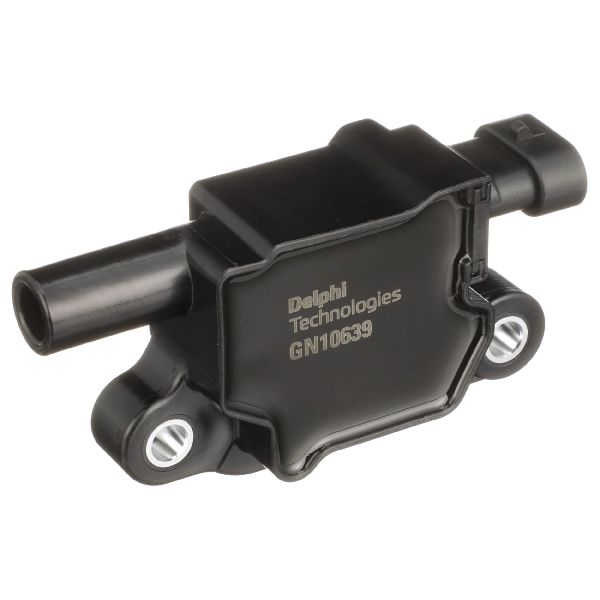
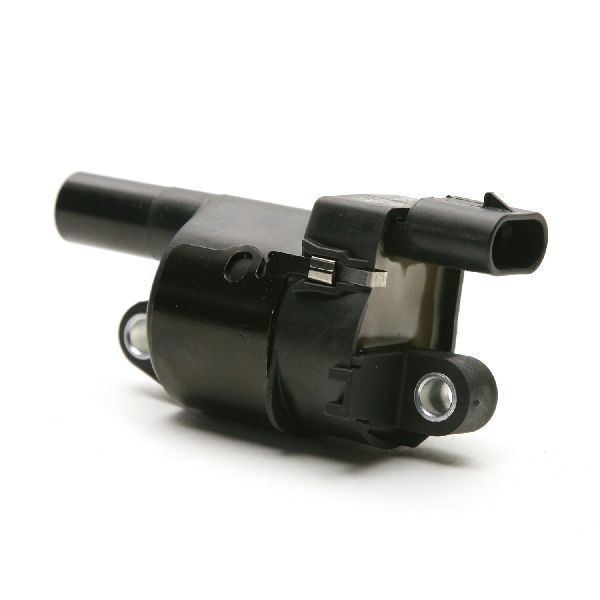
- Ignition Coil
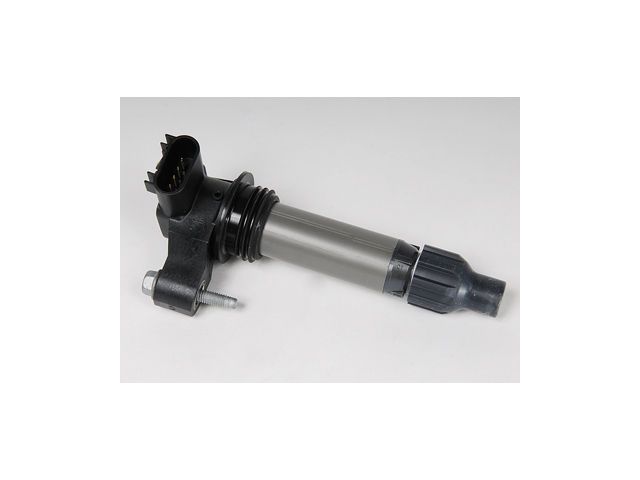
(OEM #12658183 (ACDelco D521C))— This is one of the most frequent causes of a single-cylinder misfire due to wear from heat and vibration.
Trusted brands: ACDelco
OEM price range: $40-$75
Aftermarket price range: $25-$50 - Iridium Spark Plug
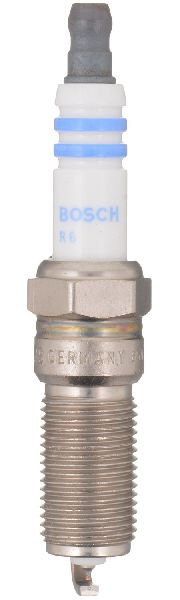
(OEM #12681655 (ACDelco 41-162))— Spark plugs are a routine maintenance item and a primary cause of misfires as they wear out. The original part number 41-122 may be superseded by 41-162.
Trusted brands: ACDelco, NGK
OEM price range: $12-$20
Aftermarket price range: $8-$15 - Engine Variable Valve Timing (VVT) Solenoid / Oil Control Valve (OCV)
(OEM #12636175)— A specific TSB (#21-NA-036) identifies this part as a potential cause for a P0302 code on this platform due to its role in the AFM system.
Trusted brands: ACDelco (GM Genuine Parts)
OEM price range: $55-$90
Aftermarket price range: $30-$60
Related Codes That Often Appear With This One
- P0300 — If the misfire is intermittent or affects other cylinders, a P0300 (Random/Multiple Cylinder Misfire Detected) may be stored alongside P0302.
- P0305 — TSB #21-NA-036 specifically links P0302 and P0305 as they can both be caused by a faulty OCV solenoid, since these are the two AFM cylinders on that bank.
Technical Service Bulletins (TSBs) & Recalls
- 21-NA-036: Notes a possible issue with a damaged OCV solenoid that may cause an oil leak and misfire, illuminating the MIL and setting DTCs P0300, P0302 and/or P0305.
Platform-Specific Known Issues
- TSB #21-NA-036: A damaged Oil Control Valve (OCV) solenoid may cause an oil leak and misfires, setting DTCs P0300, P0302 and/or P0305. This is a key document for diagnosing this code on the CTS-V. The bulletin explains that this is due to an oil pressure issue affecting the Active Fuel Management (AFM) lifters on cylinders 2 and 5.
- Broken Valve Springs: While rare, owners of high-performance GM V8s, including the LT4's predecessors, have reported broken valve springs causing a misfire on a single cylinder. A Corvette Z06 owner with a P0302 found a broken exhaust valve spring upon inspection.
Mechanic-Grade Diagnostic Values
- Ignition Coil Primary Resistance — expected: 0.4 to 2.0 Ohms. Failure: A reading of 0 (short) or OL (open), or a value significantly outside the expected range.
- Ignition Coil Secondary Resistance — expected: 6,000 to 10,000 Ohms. Failure: A reading significantly outside this range suggests a faulty coil winding.
- Fuel Injector Resistance — expected: ~12 to 14 Ohms. Failure: A reading below 10 Ohms, or one that deviates from the other injectors by more than 0.5 Ohms, indicates a likely failure.
- Low-Side Fuel Pressure (Key On, Engine Off) — expected: 55-60 psi. Failure: Pressure significantly below this range indicates a problem with the in-tank fuel pump or fuel filter.
Hidden / Shadow Codes Worth Checking
- Misfire Counter (Live Data): This is not a DTC, but a live data parameter showing the number of misfire events for each specific cylinder. It provides more immediate feedback than a stored code. (see via A professional scan tool like the GM GDS2 or a high-end consumer scanner can display live misfire data. A technician would watch the counter for cylinder #2 increment to confirm the misfire in real-time.)
Scan Tool Commands That Help
- GDS2 (GM Tech Tool): Injector Balance Test — Used to confirm a faulty fuel injector after spark and compression have been ruled out. The tool commands each injector to fire and measures the corresponding fuel pressure drop, which should be consistent across all cylinders.
- GDS2 (GM Tech Tool): Cylinder Power Balance — This test deactivates one cylinder at a time and measures the drop in engine RPM. A cylinder that causes little or no RPM drop when deactivated is not contributing power, confirming the misfire location.
- GDS2 (GM Tech Tool): Crankshaft Position Variation Learn (Crank Relearn) — This procedure must be performed after replacing the crankshaft position sensor, ECM, or certain engine components. It allows the ECM to learn the precise signature of the crankshaft reluctor wheel to accurately detect misfires.
Wiring & Ground Locations
- Cylinder #2 Coil/Injector Connectors — Cylinder #2 is the front-most cylinder on the passenger side of the engine. The ignition coil is directly on top of the valve cover for that cylinder, and the fuel injector is located nearby on the fuel rail.. The primary point of failure for wiring is the connector itself. Check for broken locking tabs, pushed-out pins, or corrosion. The wiring harness in this area is exposed to extreme heat and vibration, which can cause wires to become brittle or chafe over time.
- Main Engine Ground Strap — Typically a thick, braided wire connecting the engine block to the vehicle's chassis/frame. Exact location may require a service manual, but look for a primary ground connection near the engine mount or cylinder head.. A poor engine ground can cause a host of intermittent and difficult-to-diagnose electrical issues, including weak spark or erratic sensor readings that could lead to a misfire code.
Real Owner Repair Stories
- CorvetteForum user 'Tinkertech' (2017 Corvette Z06 (same 6.2L LT4 engine), less than 4,000 miles) — Rough running on startup, StabiliTrak light, and a pending P0302 code.
❌ Tried (didn't work) The user went straight to the most likely cause.
✅ What actually fixed it Replacing the spark plug on cylinder #2 resolved the issue, demonstrating that even on a very low-mileage engine, a faulty spark plug can be the simple cause.
OEM Part Supersession History
ACDelco 41-122→ACDelco 41-162— The 41-162 is the recommended spark plug for later generation GM V8 engines, including the Gen V LT4. It features a slightly different design with a small 'collar'.12586722, 12588943, 12615613, 12626012→12636175— The Oil Control Valve (OCV) solenoid has undergone multiple revisions by GM. The latest part number, 12636175, replaces all previous versions.
Heads up: Using an older, superseded part number may lead to a repeat failure.
Model Year Variations Within This Range
- 2016-2018: No significant variations in the engine, fuel, or ignition systems related to a P0302 diagnosis have been documented between these model years. The core 6.2L LT4 powertrain and its related components remained consistent.
Helpful Videos
We Have This Part in Stock


The information in this article is provided for general reference and educational purposes only. Vehicle specifications, procedures, and part compatibility can vary by production date, trim level, and region. Always consult your vehicle's factory service manual and verify part numbers before purchasing or performing repairs. Safety-critical components such as airbags, seat belts, and braking systems should be installed by a qualified professional.
- Cadillac CTS-V:
- 🧭 Diagnostic Flowchart
- 🎬 Helpful Videos
- 🛍️ Shop This Part
- What's Unique About the 2016-2018 Cadillac CTS-V
- Symptoms You May Notice
- Most Likely Causes
- Rare But Worth Checking
- Diagnosis Steps
- Parts You'll Likely Need
- Related Codes That Often Appear With This One
- Technical Service Bulletins (TSBs) & Recalls
- Platform-Specific Known Issues
- Mechanic-Grade Diagnostic Values
- Hidden / Shadow Codes Worth Checking
- Scan Tool Commands That Help
- Wiring & Ground Locations
- Real Owner Repair Stories
- OEM Part Supersession History
- Model Year Variations Within This Range
- 🎟️ Get 5% Off