

P0302 on 2008-2009 Cadillac STS: Cylinder 2 Misfire Causes and Fixes
P0302 indicates a misfire on cylinder #2. On the 2008-2009 STS, this is most frequently caused by a faulty ignition coil or a worn-out spark plug. Cylinder #2 is the front-most cylinder on the driver's side for both the 3.6L V6 and 4.6L V8 engines. Swapping the ignition coil from cylinder 2 to another cylinder (like #4) is a quick and effective way to diagnose the problem.
- P0302 specifically points to a misfire in cylinder #2.
- The most likely cause is a bad ignition coil, which can be easily diagnosed by swapping it with another cylinder's coil.
- A worn spark plug is the second most likely cause.
- If the check engine light is flashing, stop driving immediately to prevent catalytic converter damage.
- On the 3.6L V6 engine, be aware of potential for carbon buildup or stretched timing chains as less common but notable causes.
What's Unique About the 2008-2009 Cadillac STS
For the 2008-2009 Cadillac STS, a critical piece of information is the location of cylinder #2. For both the 3.6L V6 (LLT) and 4.6L Northstar V8 (LH2) engines, which are mounted longitudinally (front-to-back), cylinder #2 is the front-most cylinder on the driver's side (Bank 2). For the 3.6L V6 direct-injection (LLT) engine, ignition system components are a primary focus, with GM TSB PIP5038B specifically linking P030x codes to heat-stressed ignition coils. Furthermore, direct-injection engines like the LLT are highly susceptible to carbon buildup on intake valves, which can cause misfires, especially on cold starts, an issue addressed by TSB PIP5029C. The 4.6L Northstar V8 can also experience these issues, but its history is more associated with other mechanical concerns.
Diagnostic Flowchart
Tap your situation to follow the diagnostic path that matches what you're seeing on this vehicle.
Symptoms You May Notice
- Rough idle or shaking
- Engine hesitation or stumbling during acceleration
- Reduced engine power
- Flashing or solid Check Engine Light
- Decreased fuel economy
- Engine stalling
- Smell of unburned gasoline from the exhaust.
- Replacing the oxygen sensor. An O2 sensor will report a problem like a misfire but is rarely the cause of a single-cylinder misfire code.
- Replacing the fuel pump. A weak fuel pump would typically cause random misfires on multiple cylinders (P0300) rather than an isolated P0302.
Most Likely Causes
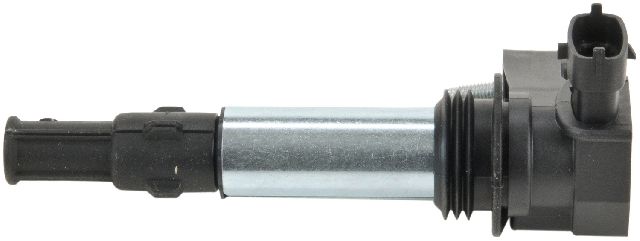
- Faulty Ignition Coil 🔴 High Probability → Shop Ignition Coil The 3.6L V6 engine is noted in TSB PIP5038B for having issues with heat-stressed ignition coils, making this a very common failure point. Forum and Reddit users with 2008 STS models confirm that replacing the coil for cylinder 2 resolved their P0302 code.
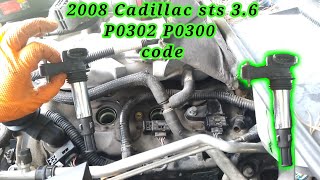
How to confirm: Swap the ignition coil from cylinder 2 (front, driver's side) with another cylinder (e.g., cylinder 4, middle on driver's side). Clear the codes and drive the vehicle. If the code changes to P0304, the ignition coil is faulty. 🎬 Watch: How to test for a bad ignition coil
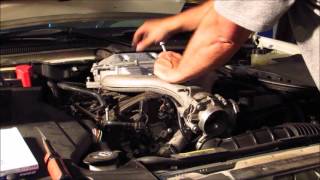
Typical fix: Replace the failed ignition coil. It is often recommended to replace all coils if they are original and have high mileage, using reputable brands like ACDelco or Delphi. 🎬 See this walkthrough for replacing coils and spark plugs
Est. part cost: $40-$100 - Worn or Fouled Spark Plug 🔴 High Probability → Shop Spark Plug
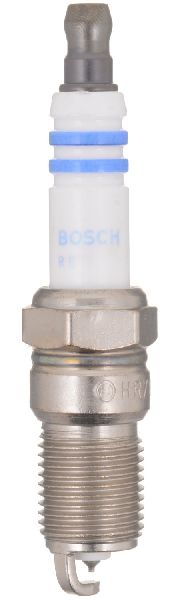
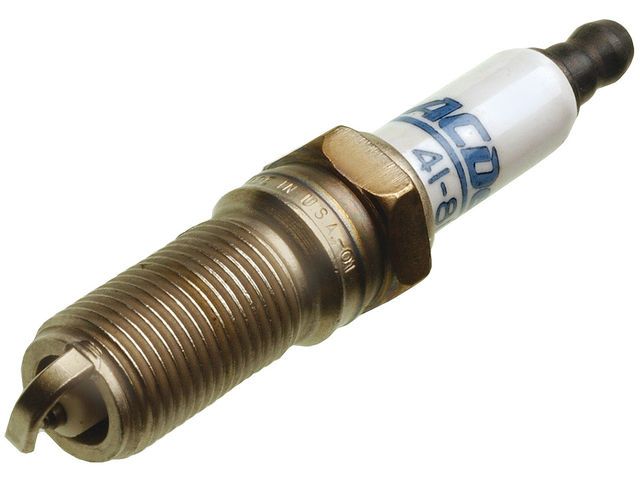
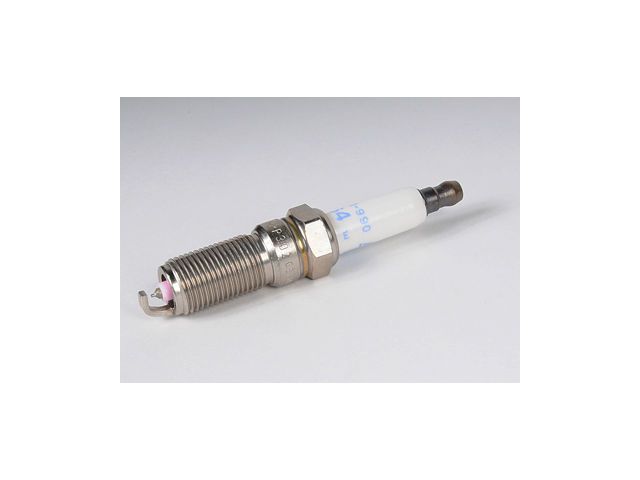
How to confirm: After swapping the coil and the problem remains on cylinder 2, inspect the spark plug. Look for wear on the electrode, carbon fouling, or oil/fuel deposits. The correct gap for the OEM ACDelco 41-109 Iridium plug is 0.043 inches, though they typically come pre-gapped and should not be adjusted.
Typical fix: Replace the spark plug in cylinder 2. It is best practice to replace all spark plugs at the same time if they are near the end of their service life (typically around 100,000 miles for iridium plugs).
Est. part cost: $15-$25 per plug - Clogged or Faulty Fuel Injector 🟡 Medium Probability → Shop Fuel Injector Direct-injection systems can be sensitive. A GM Technical Service Bulletin (PIP4964F) points to leaking injectors as a known issue that can cause misfires and other fuel trim codes. Another TSB, PIP4924C, notes that the injector wiring harness can chafe against engine components, causing an electrical fault.
How to confirm: A professional can perform a fuel injector balance test. A DIY method is to listen to the injector with a mechanic's stethoscope to ensure it's clicking. Swapping injectors is also possible but is significantly more labor-intensive than swapping coils as it requires removing the intake manifold.
Typical fix: Replace the faulty fuel injector. For the 3.6L LLT direct injection engine, this is an involved job best left to experienced DIYers or a professional.
Est. part cost: $70-$180
Rare But Worth Checking
- Intake Valve Carbon Buildup: Common on the 3.6L direct-injection (LLT) engine. The lack of fuel washing over the intake valves allows carbon to accumulate, restricting airflow and causing misfires, especially when the engine is cold. TSB PIP5029C addresses this, and the most effective cleaning method is professional walnut shell blasting.
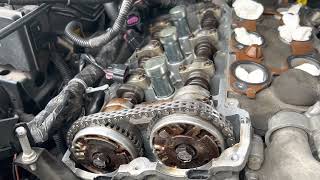
- Stretched Timing Chain: The 3.6L LLT engine has a well-documented issue with premature timing chain wear. This can cause camshaft correlation codes (like P0008, P0017) to appear alongside misfire codes as the valve timing becomes erratic. 🎬 Watch: Solving P0302 misfire codes on the 3.6L engine
- Low Engine Compression: A mechanical issue such as a worn piston ring, a leaking valve, or a compromised head gasket can cause a loss of compression in cylinder 2, leading to a persistent misfire. This requires a compression test to diagnose and is a serious engine problem.
- Vacuum Leak: A leak in the intake manifold gasket near the runner for cylinder 2 can lean out the air/fuel mixture for that specific cylinder, causing a misfire. A hissing sound near the intake manifold can be an indicator.
Diagnosis Steps
- Read the code with an OBD-II scanner and check for any other pending or stored codes.
- Identify Cylinder #2. On both the 3.6L V6 and 4.6L V8 in the RWD STS, this is the front-most cylinder on the driver's side. The V6 driver's side bank is 2-4-6 (front to back); the V8 driver's side bank is 2-4-6-8 (front to back).
- To quickly test the ignition system, swap the ignition coil from cylinder 2 with an adjacent cylinder on the same bank (e.g., cylinder 4).
- Clear the codes and start the engine. Let it run and re-scan for codes.
- If the code has moved to the other cylinder (e.g., P0304), the ignition coil is the faulty part and needs to be replaced.
- If the P0302 code returns, the problem is not the coil. Remove the spark plug from cylinder 2 and inspect it for wear, fouling, or damage. Check the gap (should be ~0.043"). Replace if necessary.
- If the spark plug and coil are good, the issue may be with the fuel injector. Listen for a steady clicking sound from the injector using a mechanic's stethoscope.
- If the injector is silent or has an irregular sound, it may be clogged or failed. Also inspect the wiring harness leading to the injector for any signs of chafing or damage, per TSB PIP4924C.
- If ignition and fuel seem okay, check for a vacuum leak near cylinder 2's intake runner by carefully spraying brake cleaner in the area and listening for a change in engine idle speed.
- If no cause is found, a mechanical issue is possible. Perform a compression test on cylinder 2 to check for issues with rings, valves, or the head gasket.
Parts You'll Likely Need
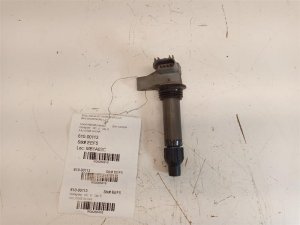
- Ignition Coil
(OEM #12632479 (ACDelco D515C))— This is the most common cause of a single-cylinder misfire on this platform, as noted by owner experiences and related TSBs.
Trusted brands: ACDelco, Delphi (GN10494), NGK
OEM price range: $50-$100
Aftermarket price range: $30-$70 - Spark Plug
(OEM #41-109 (ACDelco Iridium for 3.6L))— Spark plugs are a routine maintenance item and a frequent cause of misfires as they wear out. The gap should be verified at 0.043 inches.
Trusted brands: ACDelco, NGK
OEM price range: $15-$25
Aftermarket price range: $10-$20 - Fuel Injector
(OEM #12638530 (for 3.6L LLT))— A known issue on this platform, a clogged or leaking injector can directly cause a misfire in one cylinder.
Trusted brands: ACDelco, Bosch
OEM price range: $100-$180
Aftermarket price range: $70-$150
Related Codes That Often Appear With This One
- P0300 — If the misfire becomes more frequent or starts affecting other cylinders, a P0300 (Random/Multiple Cylinder Misfire) code may be triggered. This can happen if the root cause, like a timing chain issue, affects the whole engine.
- P0352 — This code indicates a fault in the ignition coil's primary or secondary circuit for cylinder 2. TSB PIP5038B specifically groups P0302 with P035x codes, suggesting a direct electrical issue with the coil or its wiring.
- P0017 — This code indicates a crankshaft/camshaft correlation issue on Bank 1. On the 3.6L V6, seeing this with a misfire code can be a strong indicator of a stretched timing chain, which is a known issue for this engine.
Technical Service Bulletins (TSBs) & Recalls
- PIP5038B: SES Light Engine Misfire And/Or Shudder - Inspect Ignition Coils.
- PIP5029C: Engine Misfires Due To Major Carbon Deposits on Intake Valves.
- PIP4964F: Diagnostic Tips For SIDI Engine Misfire And Fuel Trim DTCs.
- PIP4924C: SIDI Engine Misfire or Rich/Lean DTCs - Check for Chafed Fuel Injector Wires.
Platform-Specific Known Issues
- TSB PIP5038B: Addresses misfire codes (P0300-P0306) on the 3.6L V6, pointing towards diagnosis of heat-stressed ignition coils and their related circuits.
- TSB PIP5029C: Describes misfires on direct-injected engines due to heavy carbon deposits on the intake valves, recommending a decarboning procedure like GM Upper Engine and Fuel Injection Cleaner or, more effectively, walnut shell blasting.
- TSB PIP4964F: Discusses issues with leaking fuel injectors on SIDI engines which can lead to misfires, fuel trim codes, and extended crank times.
Mechanic-Grade Diagnostic Values
- Ignition Coil Primary Resistance — expected: 0.4 to 2.0 Ohms. Failure: A reading outside this range, or an open (OL) or shorted (near 0) reading.
- Ignition Coil Secondary Resistance — expected: 6,000 to 10,000 Ohms. Failure: A reading significantly outside this range indicates a faulty coil winding.
- Fuel Injector Resistance (3.6L V6 LLT) — expected: 1.5 to 2.5 Ohms. Failure: A reading near zero indicates a short, while an infinite (OL) reading indicates an open circuit.
- Fuel Injector Resistance (4.6L V8 LH2) — expected: ~12 Ohms. Failure: A reading significantly different from other injectors on the same engine.
- Low-Side Fuel Pressure (3.6L V6 LLT) — expected: 40-87 PSI (Key On, Pump On) / 43-58 PSI (Idling). Failure: Pressure below the specified range suggests a weak in-tank pump or filter issue. Note: Some sources state a higher range of 87-130 PSI, indicating potential variations.
- High-Pressure Fuel Rail Pressure (3.6L V6 LLT) — expected: 276-725 PSI (1.9-5.0 MPa) at idle. Failure: Pressure significantly below this range under load will cause misfires and hesitation.
Hidden / Shadow Codes Worth Checking
- Misfire Cylinder History Counters: Dealer-level scan tools like the GM Tech2 or GDS2 can display historical misfire counts for each cylinder, even if they weren't severe enough to set a code. This can help identify an intermittent issue on cylinder 2 before it becomes a constant fault. (see via GM Tech2 or GDS2 scan tool)
- Fuel Injector Disable: → Shop Fuel Injector In the event of a persistent, damaging misfire, the ECM will disable the fuel injector for that cylinder to protect the catalytic converter. A standard scanner only shows the P0302 code, but a dealer tool may explicitly state that the injector has been disabled by the ECM. (see via GM Tech2 or GDS2 scan tool)
Scan Tool Commands That Help
- GM Tech2 / GDS2: Cylinder Power Balance Test — This function allows the technician to sequentially disable the fuel injector for each cylinder. When cylinder 2 is disabled, if there is no change in engine RPM or smoothness, it confirms that cylinder 2 was not contributing power, pinpointing the location of the misfire.
- GM Tech2 / GDS2: Fuel Trim Reset — After replacing a component that affects the air/fuel mixture, such as a fuel injector or cleaning carbon buildup, resetting the fuel trims will force the ECM to relearn the new baseline values more quickly.
Wiring & Ground Locations
- G102 — Located at the left rear of the engine.. This specific ground point is responsible for grounding all of the ignition coils for the engine. A loose or corroded connection at G102 can cause intermittent or weak spark on one or more cylinders, leading to misfire codes like P0302.
- ECM (Engine Control Module) — On the left front frame rail, below the left headlamp assembly.. This is the location of the computer that controls the ignition and fuel systems. Knowing its location is critical for advanced diagnostics, such as testing for voltage/ground signals at the ECM pins for the cylinder 2 coil and injector circuits.
Real Owner Repair Stories
- Reddit user TheMilkObtainer (2008 Cadillac STS) — Blinking check engine light immediately after purchasing the vehicle.
❌ Tried (didn't work) Initial diagnosis only.
✅ What actually fixed it The dealership replaced the ignition coil and spark plug for cylinder 2, which resolved the P0302 code and the misfire. - YouTube channel 'o ORGANIC o' (2008 Cadillac 3.6L (STS mentioned in audio)) — Engine shaking, P0302 and P0300 codes present.
❌ Tried (didn't work) Inspected spark plugs, noted the plug in cylinder 2 was wet with unburned fuel.
✅ What actually fixed it Swapped the ignition coil from cylinder 2 to another cylinder. The misfire code followed the coil, confirming the coil was faulty. The owner replaced the bad coil and also installed a new set of spark plugs as a preventative measure.
OEM Part Supersession History
12632479→ACDelco D515C— Standard OEM part number update and branding.12611545, 12632255→12638530, 12669384— Part number consolidation and potential design updates for the 3.6L LLT fuel injector.
Heads up: While these parts are listed as interchangeable, it is always best practice to replace injectors in a complete set to ensure matched flow rates.
Model Year Variations Within This Range
- 2008-2009: The 2008 model year marked a significant refresh for the STS, introducing the 3.6L direct-injection V6 (LLT), which produces 302 hp. This engine is fundamentally different from the port-injected V6 in earlier models. However, between 2008 and 2009, there were no major changes to the V6 or V8 powertrains relevant to this code.
Helpful Videos
Used OEM Parts in Stock
New Aftermarket Parts Available



The information in this article is provided for general reference and educational purposes only. Vehicle specifications, procedures, and part compatibility can vary by production date, trim level, and region. Always consult your vehicle's factory service manual and verify part numbers before purchasing or performing repairs. Safety-critical components such as airbags, seat belts, and braking systems should be installed by a qualified professional.
- Cadillac STS:
- 🧭 Diagnostic Flowchart
- 🎬 Helpful Videos
- 🛍️ Shop This Part
- What's Unique About the 2008-2009 Cadillac STS
- Symptoms You May Notice
- Most Likely Causes
- Rare But Worth Checking
- Diagnosis Steps
- Parts You'll Likely Need
- Related Codes That Often Appear With This One
- Technical Service Bulletins (TSBs) & Recalls
- Platform-Specific Known Issues
- Mechanic-Grade Diagnostic Values
- Hidden / Shadow Codes Worth Checking
- Scan Tool Commands That Help
- Wiring & Ground Locations
- Real Owner Repair Stories
- OEM Part Supersession History
- Model Year Variations Within This Range
- 🎟️ Get 5% Off