

P0302 on 2010-2013 Chevrolet Corvette: Cylinder 2 Misfire Causes and Fixes
For a 2010-2013 Corvette, a P0302 code is most often caused by a loose spark plug wire on cylinder #2. Before buying parts, check that the wire is securely snapped onto the ignition coil and spark plug, as this is a common issue noted in a GM Technical Service Bulletin (TSB). If the wire is secure, a bad spark plug or ignition coil is the next likely cause. A flashing check engine light indicates a severe misfire that requires immediate attention to prevent catalytic converter damage.
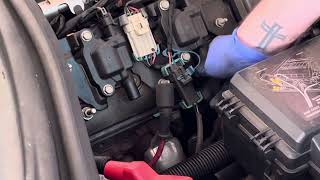
- First, check the spark plug wire on the front passenger-side cylinder (#2). Make sure it's clicked securely onto the coil and the spark plug.
- If the wire is tight, the most effective diagnostic step is to swap the ignition coil and then the spark plug with a neighboring cylinder to see if the misfire code follows the part.
- Do not drive the car if the Check Engine Light is flashing to avoid costly damage to the catalytic converter.
- The most common parts needed are a spark plug (ACDelco 41-104) or an ignition coil (ACDelco D510C).
What's Unique About the 2010-2013 Chevrolet CORVETTE
On the C6 Corvette platform, the combination of high engine temperatures and engine vibration makes spark plug wires prone to becoming loose. General Motors issued a Technical Service Bulletin (TSB #PIP4819A) specifically advising technicians to inspect for loose spark plug wires when diagnosing misfire codes like P0302. Owner forums for the C6 Corvette frequently confirm that simply re-seating a loose wire at the coil or the plug is a common and free fix for this exact code. One owner noted their issue was a plug wire that wasn't completely clipped on, which was resolved for free.
Diagnostic Flowchart
Tap your situation to follow the diagnostic path that matches what you're seeing on this vehicle.
Symptoms You May Notice
- Rough or shaky idle
- Hesitation or stumbling during acceleration
- Noticeable loss of engine power
- Flashing or solid Check Engine Light
- A smell of raw fuel from the exhaust
- Service Traction Control or Active Handling messages may appear on the driver information center
- Replacing the ignition coil or spark plug before checking if the spark plug wire is simply loose. This can lead to unnecessary spending when the fix is free and is a known TSB issue.
Most Likely Causes
- Loose Spark Plug Wire 🔴 High Probability → Shop Spark Plug A known issue documented by GM in TSB #PIP4819A. Engine heat and vibration can cause the wire boot to work itself loose from either the spark plug or the ignition coil pack. Forum members report this happening repeatedly until the wire is replaced.
How to confirm: Visually inspect and physically check the spark plug wire for cylinder #2 (front passenger side). Firmly push on both ends of the boot to ensure they are securely 'clicked' into place. A loose wire was the confirmed fix for one owner after getting a P0302 code immediately after a state inspection.
Typical fix: Reseat the spark plug wire. If the boot is damaged, the terminal clip is missing, or the wire comes loose again, replace the spark plug wire set.
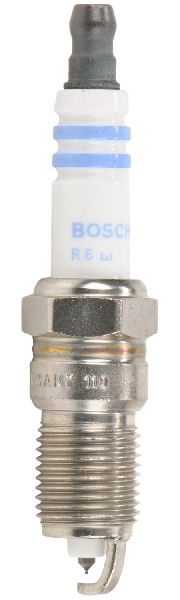
Est. part cost: $0 - $90 - Worn or Fouled Spark Plug 🟡 Medium Probability → Shop Spark Plug Spark plugs are a regular maintenance item. High-performance engines like the Corvette's can wear them out, and issues like a leaking injector can cause them to foul.
How to confirm: After confirming the wire is secure, swap the spark plug from cylinder #2 with another cylinder (e.g., cylinder #4). Clear the codes and drive. If the code changes to P0304, the spark plug is faulty.
Typical fix: Replace the faulty spark plug. It is best practice to replace all 8 spark plugs at the same time. The original ACDelco 41-104 has been superseded by part number 41-162.
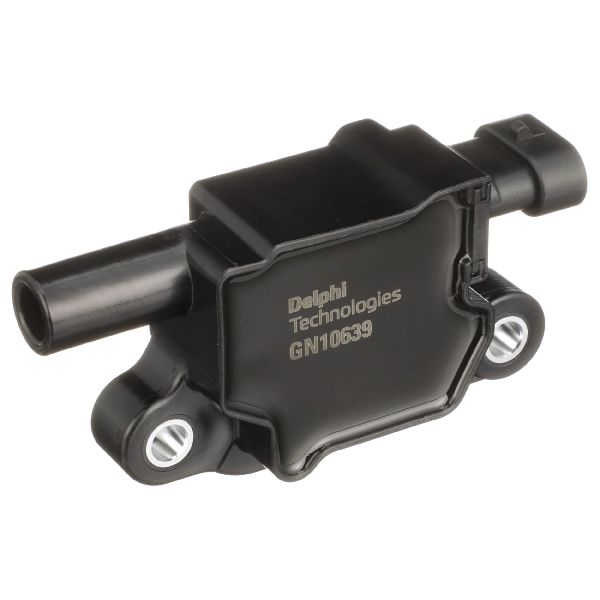
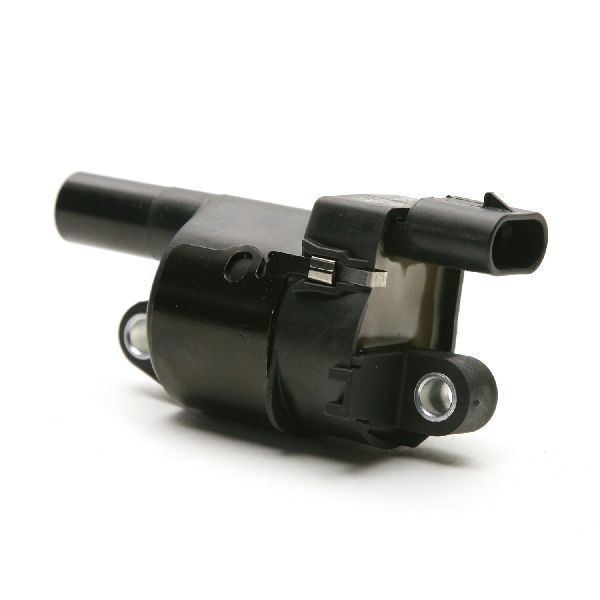
Est. part cost: $10 - $20 per plug - Faulty Ignition Coil 🟡 Medium Probability → Shop Ignition Coil While generally reliable, ignition coils can fail from heat and age. Each cylinder has its own coil, making diagnosis straightforward.
How to confirm: Swap the ignition coil from cylinder #2 with another cylinder (e.g., cylinder #4). Clear the codes and drive. If the misfire code changes to P0304, the ignition coil is the problem.
Typical fix: Replace the faulty ignition coil.
Est. part cost: $45 - $75 - Clogged or Faulty Fuel Injector ⚪ Low Probability → Shop Fuel Injector
How to confirm: If swapping the plug and coil does not resolve the issue, the injector is a likely suspect. A professional can perform a fuel injector balance test. A DIY method is to listen to the injector with a mechanic's stethoscope to ensure it is clicking like the others. A P0202 code (Injector Circuit Malfunction) alongside P0302 strongly points to the injector or its wiring.
Typical fix: Replace the faulty fuel injector. It's recommended to replace the injector seals at the same time.
Est. part cost: $70 - $150
Rare But Worth Checking
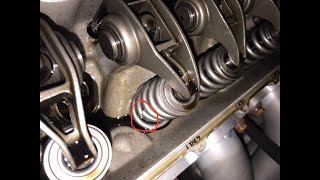
- Broken Valve Spring: While less common, LS engines, particularly the LS7 in the Z06, have had documented cases of valve spring failure. This would cause a persistent misfire and may be accompanied by a ticking or clicking noise. A compression test is the first step in diagnosis, but a visual inspection under the valve cover is often required for confirmation. One owner found a broken exhaust valve spring on cylinder #2 after experiencing a P0302 code. 🎬 Watch: What a broken valve spring sounds and looks like.
- Damaged Coil or Injector Wiring Harness: The wiring connector to the ignition coil or fuel injector can become brittle from heat, or the wire itself can break internally near the connector. One owner with a P0302 found a broken wire leading to the #2 ignition coil. Wiggling the connector and harness with the engine running may affect the idle and help pinpoint the break.
- Loose or Corroded Engine Ground Strap: A poor engine ground can cause a variety of electrical issues, including random misfires. The main grounds on a C6 Corvette are located on the frame on each side of the engine bay, with one notoriously located under the battery tray that is prone to corrosion. Cleaning these contact points can sometimes resolve mysterious electrical gremlins.
- Loose Intake Valve Seat: In very rare cases on high-mileage or tracked LS engines, an intake valve seat can become loose in the cylinder head, causing inconsistent compression and a misfire code. One technician diagnosed a P0302 on a 6.2L engine that had bouncing compression readings (150-165 PSI) and discovered a loose intake valve seat upon disassembly.
Diagnosis Steps
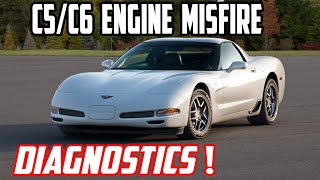
- Read the code with an OBD-II scanner to confirm P0302 is the primary code. Note if a flashing check engine light is present. 🎬 Watch: A complete DIY guide to diagnosing Corvette engine misfires.
- Locate cylinder #2 (front-most cylinder on the passenger side).
- Allow the engine to cool completely. Check that the spark plug wire is firmly seated on both the ignition coil and the spark plug. A distinct 'click' should be felt or heard. Give the wire a gentle twist-and-push to ensure a good connection.
- If the wire was loose, clear the codes and test drive the vehicle. If the code does not return, the problem is solved.
- If the code returns, swap the ignition coil from cylinder #2 with the coil from cylinder #4 (the next one back on the same side). This is a simple and effective diagnostic step.
- Clear the codes and drive. If the scanner now shows a P0304 code, the ignition coil is bad and needs replacement.
- If the code remains P0302, swap the spark plug from cylinder #2 with the plug from cylinder #4.
- Clear the codes and drive. If the scanner now shows a P0304 code, the spark plug is bad and needs replacement.
- If the misfire still remains on cylinder #2, inspect the wiring and connector for the ignition coil and fuel injector for any signs of damage, brittleness, or loose pins.
- If all ignition and wiring components appear sound, the issue may be fuel-related (injector) or a mechanical engine problem (valve spring, compression). Further professional diagnosis, like a fuel pressure test or engine compression test, is recommended.
Parts You'll Likely Need
- Spark Plug Wire Set — Often the fix is just reseating the wire, but if the boot is torn, corroded, or the internal clip is weak, it will not stay seated. Replacing the set is wise. Wires are a common failure point per TSB #PIP4819A and owner experiences.
Trusted brands: ACDelco, MSD, NGK, Firecore50
OEM price range: $60-$90
Aftermarket price range: $40-$80 - Iridium Spark Plug
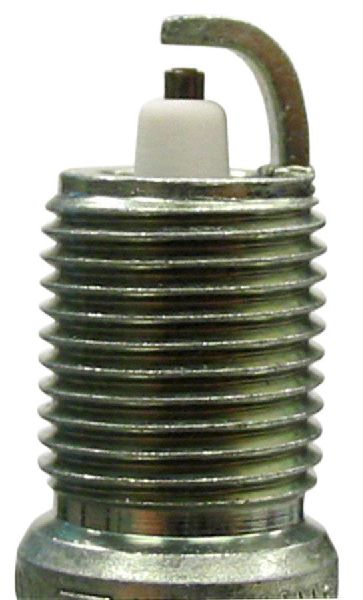
(OEM #ACDelco 41-162 (supersedes 41-104 and 12571165))— This is the current OEM-spec spark plug and a common wear item that causes misfires when its electrode is worn or it becomes fouled. The original 41-104 part has been updated. 🎬 See this walkthrough on how to change your plugs and wires.
Trusted brands: ACDelco (41-162), NGK (Laser Iridium 1465)
OEM price range: $12-$18
Aftermarket price range: $8-$15 - Ignition Coil
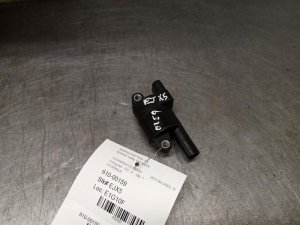
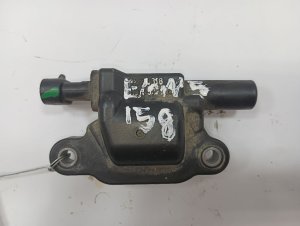
(OEM #12611424)— The ignition coil provides the high voltage spark. Failure can occur due to age and constant exposure to high engine temperatures.
Trusted brands: ACDelco, Delphi, MSD
OEM price range: $45-$75
Aftermarket price range: $30-$60
Related Codes That Often Appear With This One
- P0300 — If the misfire on cylinder 2 is intermittent or severe enough to affect engine stability, the ECM may also log a P0300 for 'Random/Multiple Cylinder Misfire'.
- P0352 — This code means 'Ignition Coil B (Cylinder 2) Primary/Secondary Circuit Malfunction'. It specifically points to an electrical problem with the coil or its circuit, and will often appear alongside P0302 if the coil or its wiring is the root cause.
- P0202 — This code indicates a fault in the fuel injector circuit for cylinder 2. If you see this code with P0302, the problem is almost certainly the fuel injector itself or its wiring harness.
Technical Service Bulletins (TSBs) & Recalls
- PIP4819A: Notes that engine misfires may be caused by loose spark plug wires and to inspect them as a first step. This applies to a wide range of GM vehicles from the era, including the Corvette.
Platform-Specific Known Issues
- A Technical Service Bulletin (TSB #PIP4819A) was issued by GM for misfire codes (P0300-P0308) on 2010-2013 models, specifically instructing technicians to inspect for loose spark plug wires as a primary diagnostic step.
- The LS7 engine in the Z06 model has a known history of valve train issues, including valve spring failures that can lead to a P030x code. While not the most common cause, it's a significant consideration for Z06 owners if ignition and fuel components check out.
Mechanic-Grade Diagnostic Values
- Ignition Coil Primary Resistance — expected: 0.4 - 2.0 ohms; a more precise source indicates 0.49 - 0.57 ohms.. Failure: A reading of 0 (short) or OL/infinite (open) indicates a failed coil.
- Ignition Coil Secondary Resistance — expected: 6,000 - 10,000 ohms (6-10 kOhms); a more precise source indicates 9,500 - 11,100 ohms (9.5-11.1 kOhms).. Failure: A reading significantly outside this range suggests the coil is faulty.
- Fuel Injector Resistance (LS3) — expected: Approximately 12.0 ohms. High-impedance injectors generally fall between 11-16 ohms.. Failure: A reading of OL (open), 0 (shorted), or a value that deviates more than 0.5-1.0 ohm from the other injectors indicates a problem.
- Fuel Pressure (Key On, Engine Off) — expected: 58 psi (4 bar).. Failure: Significantly lower pressure indicates a weak fuel pump, clogged filter, or faulty regulator.
Hidden / Shadow Codes Worth Checking
- Mode 6, Test ID $A2-$AB: These Test IDs store misfire count data for each cylinder. While not a 'shadow code,' this data is inaccessible with basic code readers but can be viewed with advanced scan tools. It shows the raw number of misfire events the ECM has detected for each specific cylinder, which is crucial for confirming the fault is isolated to cylinder 2. (see via An advanced OBD-II scan tool with Mode 6 functionality or dealer-level software like GM GDS2/Tech2.)
Scan Tool Commands That Help
- GM GDS2 / Tech2 or equivalent professional scanner: Injector Balance Test (or Automated Injector Balance) — Use this bidirectional command when you suspect a fuel injector issue after ruling out spark. The tool commands each injector to fire for a set duration while monitoring the drop in fuel rail pressure. An injector that causes a significantly different pressure drop than the others is likely clogged or failing.
- GM GDS2 / Tech2 or equivalent professional scanner: Cylinder Power Balance — This active test deactivates one cylinder at a time (by cutting fuel or spark) and measures the corresponding drop in engine RPM. If disabling cylinder #2 results in little or no RPM drop compared to other cylinders, it confirms that cylinder #2 was not contributing power to begin with.
Wiring & Ground Locations
- G105 / G106 — On the outside of each frame rail in the engine compartment, forward of the suspension upper control arms.. These are primary engine and chassis grounds. Corrosion or looseness here can cause a host of electrical problems, including weak spark or erratic sensor readings that can lead to misfires.
- Engine Ground Under Battery — On the frame rail directly underneath the battery tray. Requires removal of the battery and its plastic tray to access.. This ground is notoriously prone to corrosion from battery fumes or leaks. A poor connection here is a well-documented cause of seemingly random electrical issues, including 'Service Active Handling' messages that can accompany misfire codes.
- Cylinder Head Grounds — There are ground straps connecting the rear of the cylinder heads to the firewall.. These grounds are critical for the ignition system, as the ignition coils are mounted on the valve covers. A poor ground connection here can directly impact spark energy and cause misfires.
Real Owner Repair Stories
- Reddit user in r/Corvette (C6 Corvette (model year not specified)) — Engine vibrating 'like a lunatic', multiple cylinder misfire code.
❌ Tried (didn't work) Replaced spark plugs, Replaced ignition coils, Replaced fuel injectors
✅ What actually fixed it After removing the valve cover, a broken valve spring was discovered. The owner replaced the springs and valve seals to resolve the issue. - CorvetteForum user (2006 C6 Corvette, 1600 miles) — Sounded like it blew a spark plug out, rough running at low speed.
✅ What actually fixed it The dealership diagnosed and replaced a broken valve spring on cylinder #5. While not cylinder #2, this story from early in the C6 lifecycle shows that spring failure can happen even at very low mileage on a stock engine. - YouTube video by 'Fix It Angel' (C6 Corvette with 120,000 miles) — Loss of power, nasty sounds, low/rough idle, would only start if the throttle was pressed.
✅ What actually fixed it After removing the passenger side valve cover, a broken and freely spinning valve spring was immediately visible. The fix was to replace the valve springs.
"I Checked Everything" — The Actual Cause
- A common scenario for a persistent P0302 after passing initial tests involves a broken or weak valve spring. A technician may confirm there are no vacuum leaks (via smoke test), that the coil and injector are firing (via noid light or scanner), and that the spark plug is good. The engine may even show acceptable numbers on a static compression test. However, the true cause is a mechanical failure inside the engine that only manifests under dynamic conditions (i.e., when the engine is running), where the broken spring fails to control valve motion, leading to a misfire.
OEM Part Supersession History
ACDelco 41-104→ACDelco 41-162— The 41-162 is the updated OEM recommendation for Gen IV LS engines like the LS3. It features a slightly different design with a small 'collar'.
Heads up: While the 41-162 is the standard replacement, the 41-104 is a colder plug (stock on the supercharged LS9) and is sometimes used by tuners on modified, higher-horsepower engines to reduce the risk of detonation. Using a colder plug than necessary on a stock engine can lead to fouling over time.LS2/LS7 style fuel injector→LS3 style fuel injector— The LS3 uses a physically shorter injector body design.
Heads up: The lower O-ring on an LS3 injector has a larger diameter (approx. 0.565-inch) than earlier LS injectors (approx. 0.540-inch). If installing LS3 injectors into an older intake manifold, the lower O-rings must be swapped to the smaller size to ensure a proper seal and prevent fuel leaks or vacuum leaks.
Model Year Variations Within This Range
- 2010-2013: Within this specific range, there were no significant changes to the LS3/LS7/LS9 engines or their management systems that would alter the diagnosis of a P0302 code. The primary change from LS2 to LS3 engines occurred in the 2008 model year. Minor updates from 2010-2013 were focused on interior features like seat design, steering wheels, and infotainment (e.g., USB port added with NAV radios in 2011).
Helpful Videos
Used OEM Parts in Stock
New Aftermarket Parts Available

The information in this article is provided for general reference and educational purposes only. Vehicle specifications, procedures, and part compatibility can vary by production date, trim level, and region. Always consult your vehicle's factory service manual and verify part numbers before purchasing or performing repairs. Safety-critical components such as airbags, seat belts, and braking systems should be installed by a qualified professional.
- Chevrolet CORVETTE:
- 🧭 Diagnostic Flowchart
- 🎬 Helpful Videos
- 🛍️ Shop This Part
- What's Unique About the 2010-2013 Chevrolet CORVETTE
- Symptoms You May Notice
- Most Likely Causes
- Rare But Worth Checking
- Diagnosis Steps
- Parts You'll Likely Need
- Related Codes That Often Appear With This One
- Technical Service Bulletins (TSBs) & Recalls
- Platform-Specific Known Issues
- Mechanic-Grade Diagnostic Values
- Hidden / Shadow Codes Worth Checking
- Scan Tool Commands That Help
- Wiring & Ground Locations
- Real Owner Repair Stories
- "I Checked Everything" — The Actual Cause
- OEM Part Supersession History
- Model Year Variations Within This Range
- 🎟️ Get 5% Off