

P0302 on 2019-2025 Dodge Durango: Cylinder 2 Misfire Causes and Fixes
P0302 indicates a misfire in cylinder 2. On the Dodge Durango, this is most often caused by a bad ignition coil or a worn spark plug. Swapping the coil from cylinder 2 with another cylinder is a quick way to diagnose the problem. For 3.6L engines, VVT solenoids are also a known cause, while 5.7L HEMI engines can suffer from lifter failure.
- P0302 on a Dodge Durango means cylinder 2 is misfiring.
- The most likely culprits are a bad ignition coil or a worn spark plug.
- A simple DIY diagnostic is to swap the ignition coil from cylinder 2 to another cylinder and see if the misfire code follows.
- If ignition parts don't solve the issue, the fuel injector is the next part to check.
- Do not ignore a flashing check engine light, as it signals a severe misfire that can damage your catalytic converter.
What's Unique About the 2019-2025 Dodge DURANGO

For the 2019-2025 Dodge Durango, a P0302 code is typically a straightforward ignition or fuel issue. However, the specific engine makes a difference. On the 3.6L Pentastar V6, while less common than in earlier model years, valvetrain issues like faulty rocker arms or VVT solenoids can cause persistent misfires that aren't fixed by new plugs and coils. For the 5.7L and 6.4L HEMI V8 engines, owners should be aware of potential issues with the Multi-Displacement System (MDS) lifters, which can fail, often starting as a light 'Hemi tick' and progressing to a full misfire under load, potentially damaging the camshaft.
Diagnostic Flowchart

Tap your situation to follow the diagnostic path that matches what you're seeing on this vehicle.
Symptoms You May Notice
- Rough or shaky idle
- Hesitation or stumbling during acceleration
- Noticeable loss of engine power
- Flashing or solid Check Engine Light
- Difficulty starting the engine
- Increased fuel consumption
- Audible ticking or tapping noise from the engine, especially on HEMI models
- Replacing only the spark plugs when the ignition coil is the actual cause.
- Replacing fuel pumps or other system-wide components when the code indicates a single-cylinder issue.
- For the 3.6L engine, repeatedly replacing ignition parts when the underlying cause is a faulty VVT solenoid or rocker arm.
Most Likely Causes

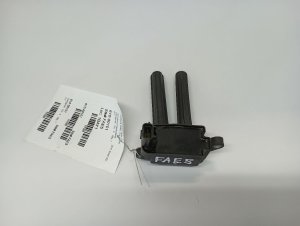
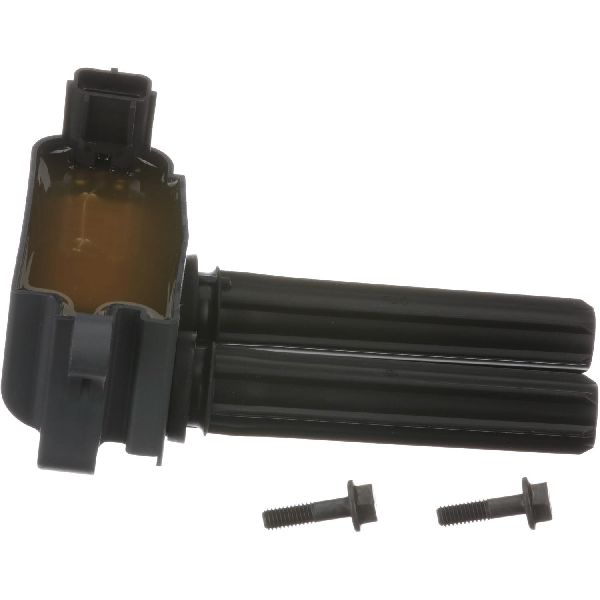
- Faulty Ignition Coil 🔴 High Probability → Shop Ignition Coil Coil-on-plug ignition systems are common points of failure on most modern vehicles due to constant exposure to heat and vibration. This is a primary suspect for any single-cylinder misfire code.
How to confirm: Swap the ignition coil from cylinder 2 with another cylinder (e.g., cylinder 4). Clear the codes and drive the vehicle. If the code changes to P0304, the ignition coil is the faulty part.
Typical fix: Replace the faulty ignition coil. It is often recommended to replace the spark plug at the same time.
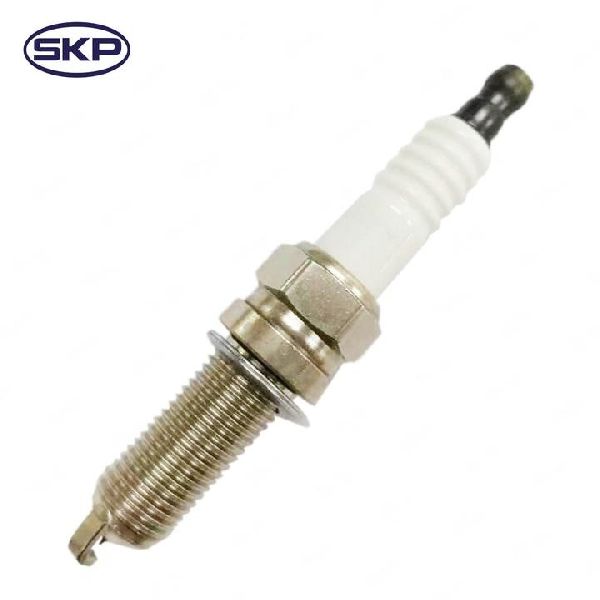
Est. part cost: $40-$90 - Worn or Fouled Spark Plug 🔴 High Probability → Shop Spark Plug
How to confirm: After swapping the ignition coil and the problem remains on cylinder 2, remove the spark plug. Inspect it for wear, carbon buildup, or oil fouling. You can also swap the spark plug with another cylinder to see if the misfire follows.
Typical fix: Replace the spark plug. It is best practice to replace all spark plugs at the same time to maintain consistent performance. HEMI engines have 16 spark plugs (two per cylinder).
Est. part cost: $10-$25 per plug - Faulty Fuel Injector 🟡 Medium Probability → Shop Fuel Injector
How to confirm: If ignition components are good, the fuel injector is the next likely cause. You can listen to the injector with a mechanic's stethoscope to ensure it's clicking. For a more definitive test, you can swap the injector with another cylinder, but this is more labor-intensive as it may require removing the intake manifold.
Typical fix: Replace the faulty fuel injector. It's also wise to replace the injector seals.
Est. part cost: $70-$150 - Faulty VVT Solenoid (3.6L Pentastar) ⚪ Low Probability On the 3.6L V6, the Variable Valve Timing (VVT) solenoids can become clogged or fail electronically, causing intermittent misfires that don't respond to ignition part replacement.
How to confirm: A user on DodgeForum.com confirmed this was their issue. After replacing plugs, coil, and injector with no success, they swapped the front VVT solenoids between cylinders 1 and 2, which caused the misfire to move from P0302 to P0301.
Typical fix: Replace the faulty VVT solenoid. 🎬 See how to replace the VVT solenoid on a Durango. An oil change is recommended at the same time.
Est. part cost: $50-$160
Rare But Worth Checking
- Internal Engine Mechanical Failure (Lifters/Camshaft/Rocker Arms): This includes a failed lifter (especially on HEMI engines with MDS), worn camshaft lobes, or a failed rocker arm bearing on the 3.6L Pentastar. Symptoms often start with a ticking noise that progresses to a misfire, particularly under load. 🎬 Watch how a bad lifter causes a Hemi engine misfire. Diagnosis requires a compression test, cylinder leak-down test, or visual inspection by removing the valve cover.
- Intake Manifold Gasket Leak: → Shop Engine Intake Manifold A vacuum leak specifically affecting cylinder 2 can lean out the air/fuel mixture and cause a misfire. This can be diagnosed with a smoke test. A leak near cylinder 2 could be the cause if fuel trims are slightly elevated but still within a reasonable range.
- Cylinder Head Failure (Early 3.6L Pentastar): → Shop Engine Cylinder Head While more prevalent on 2011-2013 models, the 3.6L Pentastar has a known history of left-bank cylinder head issues that can cause persistent misfires, sometimes requiring cylinder head replacement under warranty. A user on DodgeForum with a 2011 model had their P0302 resolved by a dealer replacing the left cylinder head under the powertrain warranty.
Diagnosis Steps
- Read the code with an OBD-II scanner and check for any other pending or stored codes.
- Note the freeze-frame data to see the engine conditions (speed, load, temperature) when the misfire occurred. TSBs #18-032-26 and #18-039-26 indicate that software updates may be needed if misfires are falsely detected during cold starts or warm-up.
- Locate cylinder 2. On the 3.6L V6, it's the front cylinder on the driver's side (left bank). On V8s (5.7L, 6.4L), it's the front cylinder on the passenger side (right bank).
- Swap the ignition coil from cylinder 2 with an adjacent, easily accessible cylinder (like cylinder 4). Clear the codes and run the engine to see if the misfire code moves to the other cylinder (e.g., P0304). If it does, the coil is bad.
- If the misfire stays on cylinder 2, perform the same swap test with the spark plug. If the code moves, the spark plug is bad.
- If the misfire still remains on cylinder 2, inspect the fuel injector wiring for damage. Listen to the injector with a stethoscope; it should have a steady clicking sound comparable to other injectors. Consider running a fuel injector cleaner like Sea Foam or Techron through the system.
- For 3.6L V6 engines, if ignition and fuel are ruled out, consider swapping the front VVT solenoids between the left and right banks to see if the misfire moves to cylinder 1 (P0301).
- If the above steps do not identify the issue, proceed to more advanced diagnostics like a compression test and a cylinder leak-down test to check for mechanical engine problems like failed lifters, rocker arms, or head gasket issues.
Parts You'll Likely Need
- Ignition Coil
(OEM #68238603AA (For 5.7L/6.2L/6.4L HEMI V8), 68223569AC (For 3.6L V6))— This is the most common failure point for a single-cylinder misfire on modern engines.
Trusted brands: Mopar, NGK, Denso, Delphi
OEM price range: $60-$110
Aftermarket price range: $40-$90 - Spark Plug
(OEM #SP149212AC (For 5.7L HEMI V8), 68303918AA (For 3.6L V6))— Spark plugs are a routine maintenance item and a frequent cause of misfires as they wear out.
Trusted brands: NGK, Champion, Denso
OEM price range: $15-$30
Aftermarket price range: $10-$25 - Fuel Injector — A clogged or failed fuel injector is a common cause of misfires after ignition components have been ruled out.
Trusted brands: Mopar, Bosch, Standard Motor Products
OEM price range: $100-$180
Aftermarket price range: $70-$150
Related Codes That Often Appear With This One
- P0300 — If the misfire is intermittent, severe, or beginning to affect other cylinders, the PCM may also log a P0300 (Random/Multiple Cylinder Misfire) code alongside the specific cylinder code.
- P0202 — This code for 'Injector Circuit/Open - Cylinder 2' points directly to an electrical problem with the fuel injector or its wiring, which would cause a P0302 misfire.
- P2305 — This code, 'Ignition Coil 'B' Secondary Circuit', can accompany a P0302 on HEMI engines, pointing to an issue with the secondary ignition circuit for cylinder 2.
Technical Service Bulletins (TSBs) & Recalls
- Bulletin #18-032-26
- Bulletin #18-039-26
- Bulletin #09-011-25
- Bulletin #1400322REVA
- Bulletin #09-013-20 REV. A
Platform-Specific Known Issues

- Several Technical Service Bulletins (TSBs) have been issued for various model years that include P0302. These bulletins often address software updates to correct misfire detection during cold starts or warm-up periods.
- For the 3.6L Pentastar engine, some owners in forums have traced a persistent P0302 to a failed VVT solenoid, even after replacing plugs and coils.
- On 3.6L engines, a P0302 that isn't resolved by plugs/coils/injectors can be a sign of a failed rocker arm bearing, which requires removing the valve cover for inspection.
- On 5.7L and 6.4L HEMI engines, a P0302 can be the first sign of the infamous 'Hemi tick' progressing into a lifter/camshaft failure. This often manifests as a misfire under load.
Mechanic-Grade Diagnostic Values
- Fuel Injector Resistance (3.6L V6) — expected: Approximately 12.0 - 12.5 Ohms. Failure: A reading significantly higher (open circuit) or lower (shorted) than the expected range indicates a faulty injector coil.
- Fuel Pressure (3.6L V6, at fuel rail) — expected: 58.01 PSI (Minimum) to 63.81 PSI (Maximum). Failure: Pressure below the minimum can cause a lean condition and misfires across multiple cylinders, but a localized restriction could affect just one. Pressure that is too high is less common but can also cause issues.
- Ignition Coil Primary Resistance (HEMI V8) — expected: 0.8 to 1.5 Ohms (example value). Failure: A reading outside the specified range indicates a faulty coil. One user reported a failed coil reading 0.5 Ohms, which was below the minimum spec.
Hidden / Shadow Codes Worth Checking
- Mode 6, Test ID $A2-$AF, Component ID $02: This refers to the onboard diagnostic monitor for misfire counts for cylinder 2. Advanced scan tools can access Mode 6 data to see raw misfire counts per cylinder for the current and last ten driving cycles, even before the count is high enough to trigger a P0302 code. This can help confirm which cylinder is the problem if the Check Engine Light is not yet on. (see via Requires an OBD-II scanner with Mode 6 functionality. The specific Test ID can vary slightly by model year and ECU calibration, but will be labeled as 'Misfire Cylinder 2 Data'.)
Scan Tool Commands That Help
- wiTECH (Chrysler/Dodge/Jeep Dealer Tool) or advanced aftermarket scanners (e.g., Autel, AlfaOBD): Cylinder Kill / Injector Kill Test — This bidirectional command allows the technician to manually disable the fuel injector for cylinder 2 while the engine is running. If the engine's idle quality does not change when cylinder 2 is 'killed', it confirms that cylinder is not contributing, verifying the misfire. If the idle worsens, it suggests the misfire is intermittent or not present at idle.
- wiTECH or advanced aftermarket scanners: VVT Solenoid Test — For the 3.6L engine, this function can be used to command the VVT solenoids to actuate. Monitoring engine performance or timing angles while activating the solenoid for the bank containing cylinder 2 can help diagnose a slow or non-responsive solenoid that could be causing the misfire.
Wiring & Ground Locations
- G901A / G903A / G909A — These are primary engine compartment ground points. G901A is typically on the left rear of the engine compartment, G903A on the right front, and G909A on the right rear.. The ignition coils and fuel injectors rely on a solid ground connection to function correctly. A loose or corroded ground at one of these locations can cause intermittent and hard-to-diagnose electrical issues, including misfires. Verifying these grounds are clean and tight is a crucial step in advanced diagnosis.
- Cylinder 2 Ignition Coil Connector — On the 3.6L V6, it's the front-most coil on the driver's side. On V8s, it's the front-most coil on the passenger side.. The PCM sends a trigger signal to this connector. Technicians can use a multimeter or oscilloscope here to check for the presence of the control signal from the PCM, helping to differentiate between a bad coil, a wiring problem, or a faulty PCM driver.
- Braided Ground Strap — There is typically a braided ground strap from the chassis to the engine block or near the exhaust manifold on the passenger side.. This is a main engine ground. If it becomes disconnected or corroded, it can cause a host of electrical problems, including erratic sensor readings and misfires.
Real Owner Repair Stories
- DodgeForum.com user (2017 Durango GT 3.6L with ~148,000 km) — Rough running, Check Engine Light with code P0302.
❌ Tried (didn't work) Replaced spark plugs, Replaced cylinder 2 ignition coil, Replaced cylinder 2 fuel injector, Visually inspected camshafts for scoring/wear
✅ What actually fixed it The user swapped the front VVT solenoids between the left and right banks (cylinders 1 and 2). The misfire code moved to P0301 (Cylinder 1 Misfire). Replacing the faulty VVT solenoid resolved the P0302 code. - Reddit user r/DodgeDurango (2015 Durango 3.6L) — P0302 misfire after the car was sitting for a year. Ticking sound from engine.
❌ Tried (didn't work) Fuel injector cleaner, Replaced spark plugs, Replaced cylinder 2 ignition coil, Swapped fuel injector from cylinder 2 to cylinder 6 (code did not move)
✅ What actually fixed it The owner eventually opened the valve cover and replaced all rocker arms and lifters for that bank. While the user's final update was slightly inconclusive, another user in the same thread with a 2014 model confirmed their identical symptoms (ticking noise leading to misfire) were fixed under warranty by a dealer who replaced all lifters and one or two camshafts after finding metal shavings in the oil.
When the Usual Fixes Don't Work
- In multiple owner forums, a common theme for the 3.6L Pentastar engine is the failure to resolve a P0302 code after replacing the usual suspects (spark plug and ignition coil). In one documented case, after also replacing the fuel injector to no avail, the owner swapped the VVT solenoids between the two front cylinders, which caused the misfire to move. This confirmed the VVT solenoid was the root cause, a diagnosis often missed by those focused only on ignition and fuel delivery.
OEM Part Supersession History
68223569AC→68223569AD— Standard part revision by the manufacturer for improvements in reliability or manufacturing process.
Heads up: The parts are interchangeable. 68223569AD is the current replacement for ...AC and ...AB versions for the 3.6L V6 engine.
Model Year Variations Within This Range
- 2021-2025: The 2021 model year introduced a significant refresh for the Durango, including updated exterior styling and a new Uconnect 5 infotainment system. While the core 3.6L V6 and 5.7L V8 engines remained, the SRT Hellcat with a supercharged 6.2L V8 was offered for 2021 and then again in 2023 after a brief hiatus. These changes do not fundamentally alter the causes of a P0302 but mean that wiring diagrams and some electronic modules may differ from pre-2021 models.
Helpful Videos

![How to Fix DODGE P0302 Engine Code in 3 Minutes [2 DIY Methods / Only $4.22]](https://img.youtube.com/vi/mjpaN2lVRaQ/mqdefault.jpg)
Used OEM Parts in Stock
New Aftermarket Parts Available


The information in this article is provided for general reference and educational purposes only. Vehicle specifications, procedures, and part compatibility can vary by production date, trim level, and region. Always consult your vehicle's factory service manual and verify part numbers before purchasing or performing repairs. Safety-critical components such as airbags, seat belts, and braking systems should be installed by a qualified professional.
- Dodge DURANGO:
- 🧭 Diagnostic Flowchart
- 🎬 Helpful Videos
- 🛍️ Shop This Part
- What's Unique About the 2019-2025 Dodge DURANGO
- Symptoms You May Notice
- Most Likely Causes
- Rare But Worth Checking
- Diagnosis Steps
- Parts You'll Likely Need
- Related Codes That Often Appear With This One
- Technical Service Bulletins (TSBs) & Recalls
- Platform-Specific Known Issues
- Mechanic-Grade Diagnostic Values
- Hidden / Shadow Codes Worth Checking
- Scan Tool Commands That Help
- Wiring & Ground Locations
- Real Owner Repair Stories
- When the Usual Fixes Don't Work
- OEM Part Supersession History
- Model Year Variations Within This Range
- 🎟️ Get 5% Off