

P0302 on 2011-2019 Ford Explorer 3.5L EcoBoost: Cylinder 2 Misfire Causes and Fixes
On a 2011-2019 Ford Explorer with the 3.5L EcoBoost, a P0302 code is most often caused by a worn spark plug or a failed ignition coil on cylinder 2. Expect to pay $15-$25 for a single OEM spark plug and $40-$60 for an OEM ignition coil. This is a very common DIY fix with a difficulty of 3/5 due to the location of cylinder 2 on the rear bank of the engine, which has tight access.
- P0302 on your Explorer almost always points to a bad spark plug or ignition coil on cylinder 2.
- Cylinder 2 is the middle cylinder on the engine bank closest to the firewall.
- Use the 'swap test' to diagnose between a bad coil and a bad plug before buying parts.
- Always check and correct the spark plug gap before installing new plugs; aim for 0.028"-0.031".
- If the Check Engine Light is flashing, stop driving to prevent expensive catalytic converter damage.
What's Unique About the 2011-2019 Ford Explorer
The 3.5L EcoBoost is a twin-turbocharged, direct-injection engine. This technology makes it more sensitive to ignition component health than a naturally-aspirated engine. Spark plugs wear faster, and an incorrect spark plug gap is a frequent cause of misfires under boost. Additionally, cylinder 2 is located on the rear bank of the engine against the firewall, making access more difficult than the front cylinders (4, 5, and 6).
Symptoms You May Notice
- Rough or shaking idle
- Hesitation or stumbling during acceleration
- Noticeable loss of engine power
- Flashing or solid Check Engine Light
- Reduced fuel economy
- A raw fuel or sulfur smell from the exhaust
- Vibration felt in the gas pedal
- A buck or jerk sensation while driving at speeds between 35-55 mph, as noted in manufacturer communications regarding similar EcoBoost platforms (SSM 53869)
- Replacing only the spark plug when the ignition coil boot was the actual point of failure.
- Assuming a major mechanical failure before performing simple ignition system swap tests.
- Replacing a fuel injector when the root cause was heavy carbon buildup on the intake valves.
Most Likely Causes
- Worn or Fouled Spark Plug 🔴 High Probability → Shop Spark Plug Turbocharged engines like the EcoBoost are harder on spark plugs due to higher cylinder pressures, leading to a shorter service life. Incorrect spark plug gap is a very common issue that causes misfires under load or boost. Manufacturer Bulletin #TSB 23-2011 notes that misfire codes including P0302 can also be caused by water build up in the spark plug wells.
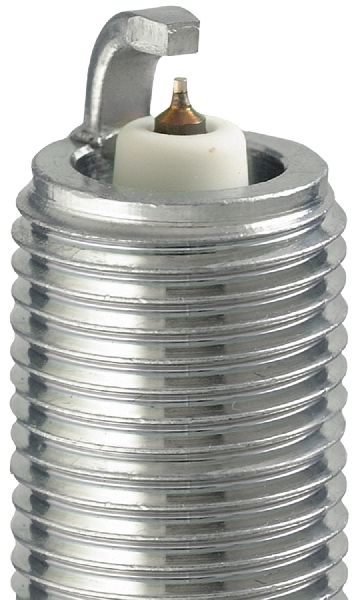
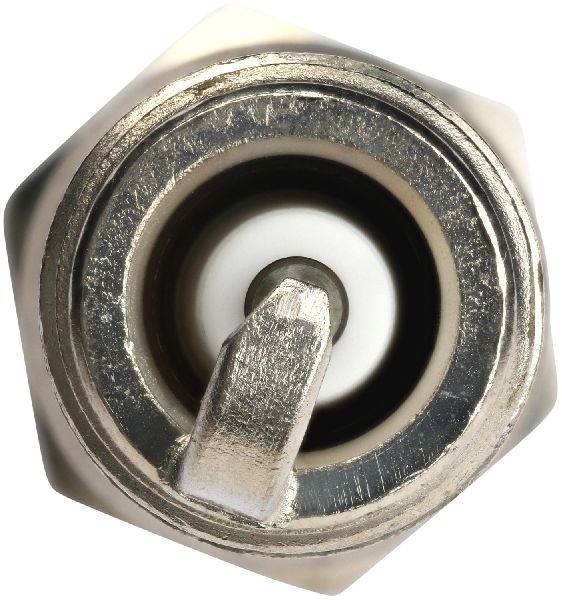
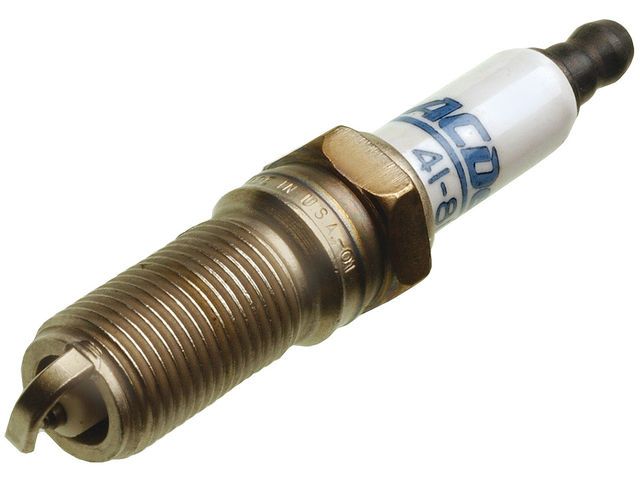
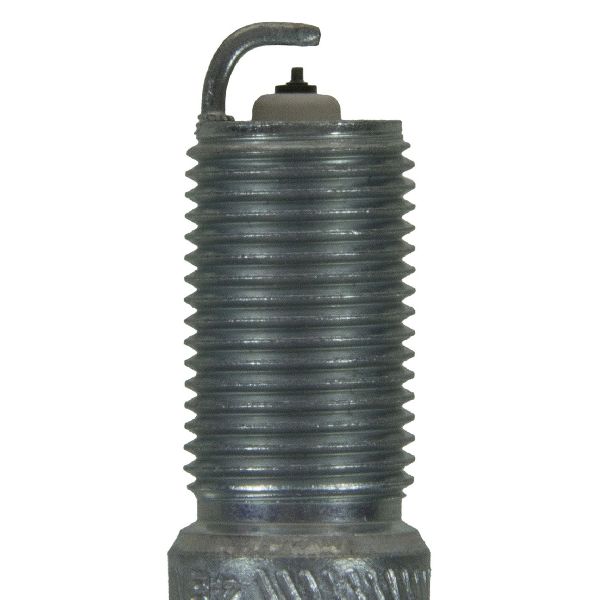
How to confirm: After removing the ignition coil, remove the spark plug from cylinder 2 using a 5/8" socket. Inspect it for wear (rounded electrode), carbon fouling, oil, or cracks in the porcelain. A thin black line on the porcelain insulator is a sign of a crack where spark is escaping. Check the gap with a feeler gauge; it should be between 0.028" and 0.031" for this engine. A wider gap from wear is a common finding.
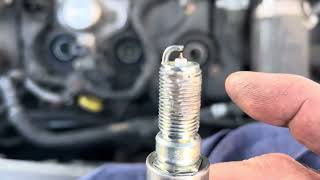
Typical fix: Replace the spark plug in cylinder 2. It is highly recommended to replace all six spark plugs at the same time to ensure even performance. Ensure new plugs are gapped correctly before installation and torqued to approximately 11-13 ft-lbs. 🎬 See this step-by-step guide for replacing EcoBoost spark plugs.
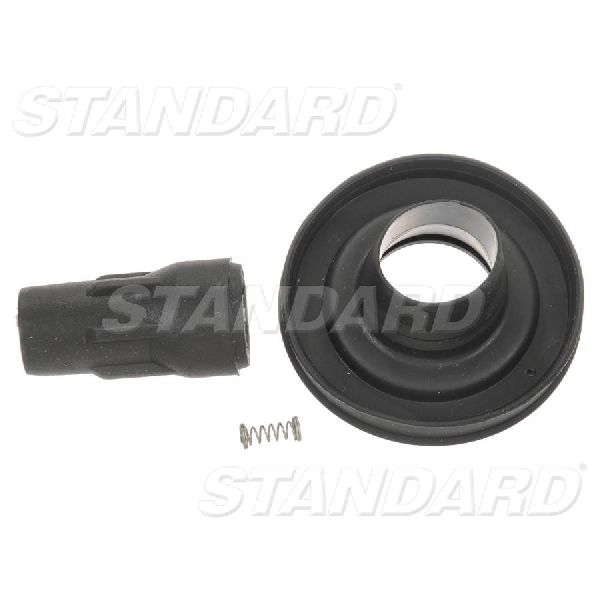
Est. part cost: $15-$25 per plug - Failed Ignition Coil-on-Plug (COP) 🔴 High Probability → Shop Ignition Coil Heat and vibration lead to eventual failure of the ignition coil. Sometimes the rubber boot that seals against the spark plug can also fail, allowing spark to escape to the cylinder head instead of the plug. This is known as carbon tracking.
How to confirm: Perform a 'swap test'. Move the ignition coil from cylinder 2 to an adjacent, easily accessible cylinder on the front bank (like cylinder 4). Clear the codes and drive the vehicle. If the code changes to P0304, the ignition coil is faulty. This is a more definitive test than swapping with cylinder 1 or 3, which are also on the difficult-to-access rear bank.
Typical fix: Replace the faulty ignition coil. It is not strictly necessary to replace them all at once, but some owners choose to do so as preventative maintenance, especially on higher mileage vehicles.
Est. part cost: $40-$60 per coil - Clogged or Failed Fuel Injector 🟡 Medium Probability → Shop Fuel Injector As a direct-injection engine, the injectors are in the combustion chamber and can be susceptible to carbon buildup over time. They can also fail electronically or become stuck open, which disrupts the spray pattern and causes a misfire. A stuck-open injector can flood the cylinder with fuel.
How to confirm: This is more difficult to diagnose. A professional would use a scan tool to perform an injector balance test. A DIY method could involve swapping injectors between cylinders, but this is a much more involved job. A stuck-open injector may be accompanied by code P0087 (Fuel Rail Pressure Too Low) and a strong smell of raw fuel from the exhaust.
Typical fix: Replace the fuel injector for cylinder 2. 🎬 Watch: A real-world walkthrough of a Cylinder 2 misfire repair. This requires removal of the intake manifold and is a more advanced repair.
Est. part cost: $70-$120 per injector
Rare But Worth Checking
- Intake Valve Carbon Buildup: Direct-injection engines can suffer from carbon deposits on the intake valves, which are not cleaned by fuel spray as in port-injected engines. This can disrupt airflow into the cylinder and cause a misfire. This usually triggers multiple misfire codes but can start with one. The fix is typically professional walnut-shell blasting of the valves. Later model year (2017+) 3.5L EcoBoost engines added port injection to mitigate this issue.
- Low Compression / Internal Coolant Leaks: A mechanical issue like a burnt valve, worn piston rings, or a leaking head gasket can cause low compression in cylinder 2. On Ford EcoBoost engines, owners have reported P0302 codes alongside dropping coolant levels without external leaks (NHTSA ODI #11727587) or "milky oil" indicating coolant mixing with oil (NHTSA ODI #11641097). This is a serious engine problem that requires a compression test to confirm and often leads to major engine repair.
- Vacuum Leak: A leak in a vacuum hose or intake manifold gasket near cylinder 2 can lean out the air/fuel mixture and cause a misfire. This is less common for a single-cylinder misfire but is possible.
Diagnosis Steps
- Connect an OBD-II scanner to confirm the P0302 code. Note if the Check Engine Light is solid or flashing. Check for any other stored codes.
- Identify cylinder 2. On the transversely mounted 3.5L EcoBoost in the Explorer, the cylinders against the firewall (rear bank) are 1, 2, and 3, from passenger to driver side. Cylinder 2 is the middle cylinder on the rear bank.
- Perform an ignition coil swap. Switch the ignition coil from cylinder 2 with the coil from an easier-to-access cylinder, like cylinder 4 (front bank, passenger side). This requires an 8mm socket. 🎬 Watch: How to quickly swap and replace ignition coils. Clear the codes, run the engine, and re-scan. If the code is now P0304, the ignition coil is the problem.
- If the code remains P0302, perform a spark plug swap. Put the original coils back in their places. Swap the spark plug from cylinder 2 with the plug from cylinder 4. Clear codes and re-test. If the code is now P0304, the spark plug is the problem.
- While the spark plug is out, inspect it for damage, wear, or incorrect gap. A gap of 0.028"-0.031" is recommended. The original plugs may have a much wider gap due to wear.
- If the misfire remains on cylinder 2 after swapping the coil and plug, the issue is likely a fuel injector, wiring, or a mechanical compression problem.
- Inspect the wiring harness and connector for the cylinder 2 coil and injector for any signs of damage, corrosion, or looseness.
- At this stage, testing the fuel injector signal with a 'noid' light or performing a compression test is recommended. These steps may be best left to a professional if you are not comfortable with them.
Parts You'll Likely Need
- Spark Plug
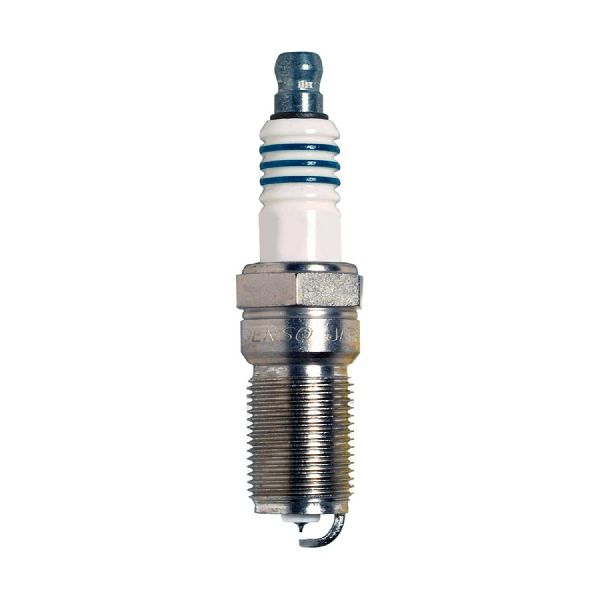
(OEM #SP-580 (replaces SP-534))— Spark plugs are a routine maintenance item and the most frequent cause of misfires on the 3.5L EcoBoost engine due to wear and gap erosion. The original SP-534 part has been superseded by SP-580.
Trusted brands: Motorcraft, NGK
OEM price range: $15-$25
Aftermarket price range: $10-$20 - Ignition Coil
(OEM #DG-520 (Motorcraft P/N 7T4Z-12029-E))— The ignition coil provides the high voltage needed to fire the spark plug. It is the second most common failure point for a single-cylinder misfire.
Trusted brands: Motorcraft, Denso, NGK, Standard Motor Products (UF553T)
OEM price range: $40-$60
Aftermarket price range: $25-$50
Related Codes That Often Appear With This One
- P0300 — If the misfire is intermittent or affects other cylinders, a P0300 (Random/Multiple Cylinder Misfire) code may appear alongside P0302.
- P0301, P0303 — If the cause is something that affects the entire rear bank of cylinders (like a vacuum leak near that side of the intake manifold), you may see misfire codes for the other rear cylinders as well.
- P0316 — Indicates a misfire was detected within the first 1,000 engine revolutions on startup. This often appears with other misfire codes.
- P0087 — This code for 'Fuel Rail Pressure Too Low' can appear if the cylinder 2 fuel injector is stuck open, causing a loss of pressure in the fuel rail and flooding the cylinder.
Technical Service Bulletins (TSBs) & Recalls
- TSB 13-3-3: Addresses intermittent stumble/misfire during acceleration in humid conditions on 2011-2012 models due to intercooler condensation. Recommends replacing the Charge Air Cooler (CAC) and reprogramming the PCM.
- Bulletin #TSB 23-2011: Notes that EcoBoost engines may exhibit MIL illumination with DTCs P0300, P0301, P0302, P0303, P0304 and/or P0316 due to water build up in the spark plug wells.
- Bulletin #SSM 53869: Describes a condition where EcoBoost engines may exhibit misfire codes P0300-P0304 accompanied by a buck/jerk sensation while driving between 35-55 mph in higher gears.
Platform-Specific Known Issues
- Cylinder 2 is on the rear bank, which requires more effort to access than the front cylinders (4, 5, 6). While it does not require removing the intake manifold like some other V6 engines, space is tight.
- Early (2011-2012) 3.5L EcoBoost engines were susceptible to moisture buildup in the intercooler (CAC), which could be ingested by the engine and cause misfires, especially under hard acceleration in humid conditions. This typically resulted in multiple cylinder misfires (P0304, P0305, P0306) but is a known platform issue. Ford addressed this with TSB 13-3-3, which involved installing a new CAC and reprogramming the PCM.
Mechanic-Grade Diagnostic Values
- High-Pressure Fuel Rail Pressure (Direct Injection) — expected: 500 PSI while cranking, up to 2,000-2,900 PSI under load/WOT.. Failure: Pressure that lags the PCM's requested pressure by more than 200 PSI can indicate a failing high-pressure fuel pump or a leaking injector.
- Low-Pressure Fuel System Pressure — expected: 40-60 PSI at idle.. Failure: Pressure below this range indicates a problem with the in-tank fuel pump or fuel pressure sensor, which would typically cause multiple misfires, not just P0302.
- Fuel Injector Resistance (Direct Injector) — expected: 1-2 Ohms.. Failure: An open circuit (infinite resistance) or a reading significantly outside this range indicates an electrical failure in the injector coil.
- Ignition Coil Primary Resistance — expected: Typically 0.5 to 1.5 Ohms.. Failure: A reading outside of the specified range indicates a faulty coil. However, this test is less reliable than a swap test, as coils can fail under heat and load in ways a static resistance test won't catch.
Hidden / Shadow Codes Worth Checking
- Mode 6, Test ID $80-$85, Component ID $01-$0C: Mode 6 data tracks misfire counts per cylinder before they are high enough to set a P030x code. A technician can view these raw counts to see if cylinder 2 is accumulating misfires even when the CEL is not on. For example, Test ID $82 would correspond to misfire data for a specific cylinder. (see via A professional scan tool or advanced DIY tool like FORScan can access Mode 6 data.)
Scan Tool Commands That Help
- Ford IDS / FORScan: Power Balance Test — This is a key diagnostic function that allows a technician to disable one cylinder at a time (either by cutting fuel or spark) and observe the corresponding drop in RPM. If disabling cylinder 2 causes little or no change in RPM, it confirms that cylinder is not contributing power, verifying the misfire. This is the first step a dealer tech would take after reading the code.
- Ford IDS / FORScan: Crank Relearn (Misfire Monitor Neutral Profile Correction) — This procedure should be performed after major engine work or if the PCM has been replaced. It allows the PCM to learn the minor variations in the crankshaft reluctor wheel, creating a baseline profile. Without this, the PCM might misinterpret normal crankshaft speed fluctuations as misfires.
Wiring & Ground Locations
- G104 — Typically located on the passenger side of the engine compartment, near the shock tower or on the fender apron.. This is a primary engine and PCM ground point. A loose or corroded G104 can cause erratic behavior in the ignition system and other sensors, potentially leading to misfire codes. While it would likely cause multiple issues, it's a known trouble spot to check for difficult-to-diagnose electrical problems.
- Cylinder 2 Ignition Coil Connector — On the middle cylinder of the rear bank (against the firewall).. The connector itself or the wiring leading to it can become brittle from heat and vibration. Check for a secure connection, pushed-out pins, or chafed wires. The power wire (typically one color) should have 12V with key-on, and the signal wire (another color) is pulsed to ground by the PCM.
- Cylinder 2 Fuel Injector Connector — Under the intake manifold, connected to the fuel injector for the middle cylinder on the rear bank.. Access is difficult. The wiring harness runs under the manifold and can be damaged during other repairs if not handled carefully. A fault here would typically throw a P0202 (Injector Circuit Malfunction) code, but it could potentially cause a misfire before the circuit code sets.
Real Owner Repair Stories
- Ford F-150 Forum user report (Ford F-150 3.5L EcoBoost (similar engine architecture)) — Persistent single-cylinder misfire (e.g., P0301) that did not resolve after swapping coils.
❌ Tried (didn't work) Swapping ignition coils
✅ What actually fixed it The spark plug's porcelain insulator had a hairline crack, causing the spark to arc to the cylinder head instead of the electrode tip. This is often visible as a very thin, black, pencil-like line on the white insulator. Replacing the spark plug resolved the issue. - NHTSA ODI #11659373 — An owner reported that after a P0302 error code appeared, replacing the spark plugs temporarily cleared the light, but the vehicle later developed a high engine temperature warning.
OEM Part Supersession History
SP-534→SP-580— The SP-580 is an updated design for the Motorcraft Iridium spark plug. It is a direct replacement for the SP-534.
Model Year Variations Within This Range
- 2017-2019: The 3.5L EcoBoost was updated around 2016/2017 with a dual-fuel system, adding port fuel injection (PFI) alongside the existing gasoline direct injection (GDI). This helps clean the intake valves, making carbon buildup less of a likely cause for misfires on these later models compared to the 2011-2016 GDI-only engines.
- 2011-2012: Early models were more prone to the intercooler (CAC) condensation issue (TSB 13-3-3), which could cause a sudden stumble or misfire on multiple cylinders under acceleration in humid weather. While this typically sets multiple codes, it's a key issue for early EcoBoost platforms.
Diagnostic Flowchart
Other Known Issues on This Vehicle
Issues unrelated to this code that are worth knowing about as an owner of this generation:
- Timing Chain Rattle on Cold Start 🔴 High — Common on first-generation (pre-2016) engines, typically appearing after 70,000 miles. Caused by a stretched primary timing chain and/or failing VCT phasers. (Ref: TSB 15-0131, TSB 18-2305)
- Internal Water Pump Failure 🔴 High — The water pump is located inside the engine and is driven by the timing chain. When it fails (often around 120,000-140,000 miles), it leaks coolant directly into the engine oil, which can lead to catastrophic engine failure if not caught immediately.
- Power Transfer Unit (PTU) Overheating/Failure 🔴 High — The PTU (transfer case for AWD models) is prone to overheating because it holds very little fluid and has no drain plug, making service difficult. Fluid breaks down, leading to leaks from the vent tube and eventual bearing failure, which can damage the transmission.
- Electronic Throttle Body Malfunction 🟠 Medium — Common on 2011-2019 models, causing the vehicle to suddenly lose power and enter 'limp mode'. Often logs codes P2111 or P2112. Ford extended the warranty on this part for many vehicles. (Ref: Customer Satisfaction Program 13N03)
- Exhaust Odor in Cabin 🟠 Medium — A widely reported issue where exhaust fumes can enter the cabin, particularly during hard acceleration or with the HVAC system in recirculation mode. It led to a police vehicle recall and a Ford complimentary service program for civilian vehicles to seal the chassis and reprogram the climate control. (Ref: NHTSA Investigation EA16019, Ford Customer Service Program 17N03)
- Cracked Rear Suspension Toe Links 🔴 High — Affects 2011-2017 models, where a rear toe link could fracture, causing a sudden loss of steering control. This prompted a major safety recall. (Ref: Recall 19S17)
Used vs. New Parts: Buying Guide for This Vehicle
When a used part is the smart pick: For this repair, using a used part is generally not recommended for the primary failure items. However, if a larger component like a wiring harness or a specific bracket is needed, a used part from a reputable salvage yard is a viable option.
Donor-vehicle mileage cap: roughly under 80000 miles for the part to have meaningful remaining life.
What to inspect on the donor part:
- For an ignition coil, check the plastic housing for cracks or heat damage.
- Ensure the connector pins are clean and not corroded.
- Verify the part number matches the OEM part for your vehicle year.
- Ask for the donor vehicle's mileage if possible; lower is always better.
OEM-only on this vehicle (don't cheap out):
- Ignition Coils: The consensus among Ford specialists and enthusiasts is to use only Motorcraft-branded ignition coils. Aftermarket coils are a well-documented source of new, hard-to-diagnose misfires on the EcoBoost platform.
- Spark Plugs: While NGK is a reputable alternative, Motorcraft plugs are guaranteed to be correct for the application. Avoid no-name brands.
Aftermarket brands forum-validated for this vehicle:
- NGK (For spark plugs, as they are often the OEM manufacturer)
- Denso (For ignition coils, another potential OEM supplier)
Brands owners have reported issues with on this vehicle:
- MSD (Ignition Coils): Despite being a popular performance brand, they are frequently cited as causing issues on this specific engine.
- Accel (Ignition Coils): Similar to MSD, often reported to fail prematurely or cause misfires.
- Generic/unbranded 'performance' coils sold on marketplaces.
Real Owner Stories
Aggregated from forums and TSBs cited above. Mileages and costs reflect what owners reported in those sources.
2016 Ford Explorer Sport 3.5L EcoBoost
Symptoms: P0302 misfire code.
What fixed it: Replaced the spark plug and ignition coil after discovering the old spark plug gap had worn out to 0.045".
Source hint: explorerforum.com thread discussing P030x codes
2016 Ford F-150 3.5L EcoBoost
Symptoms: Experiencing P0302 along with P0300, P0306, and P0316 codes.
What fixed it: The owner documented how a single cylinder misfire escalated into multiple cylinder codes.
Source hint: f150forum.com thread titled '2016 F150 3.5 ecoboost misfire codes'
2011 Ford Explorer 3.5L EcoBoost
Symptoms: Intermittent stumble or misfire during acceleration in humid conditions.
What fixed it: Installation of a new Charge Air Cooler (CAC) and PCM reprogramming per TSB 13-3-3.
Source hint: TSB 13-3-3
NHTSA Reported Case (ODI #11727587)
Symptoms: Engine misfires, powertrain malfunction warning, and a P0302 code for cylinder 2.
What fixed it: The owner noted the coolant reservoir level began dropping without visible external leaks, suggesting internal engine issues.
Source hint: NHTSA ODI #11727587
Related OBD-II Codes
Frequently Asked Questions
Where is cylinder 2 located on my 2011-2019 Ford Explorer 3.5L EcoBoost?
My 2012 Explorer stumbles during hard acceleration in the rain; is this related to P0302?
What is the correct spark plug gap for the 3.5L EcoBoost engine?
Which replacement spark plugs should I use for my Explorer Sport?
Can I test if my P0302 code is a bad coil without buying new parts?
Is it necessary to remove the intake manifold to fix a P0302 misfire?
Helpful Videos

Used OEM Parts in Stock
New Aftermarket Parts Available

The information in this article is provided for general reference and educational purposes only. Vehicle specifications, procedures, and part compatibility can vary by production date, trim level, and region. Always consult your vehicle's factory service manual and verify part numbers before purchasing or performing repairs. Safety-critical components such as airbags, seat belts, and braking systems should be installed by a qualified professional.
- Ford Explorer:
- 🧭 Diagnostic Flowchart
- 🎬 Helpful Videos
- 🛍️ Shop This Part
- What's Unique About the 2011-2019 Ford Explorer
- Symptoms You May Notice
- Most Likely Causes
- Rare But Worth Checking
- Diagnosis Steps
- Parts You'll Likely Need
- Related Codes That Often Appear With This One
- Technical Service Bulletins (TSBs) & Recalls
- Platform-Specific Known Issues
- Mechanic-Grade Diagnostic Values
- Hidden / Shadow Codes Worth Checking
- Scan Tool Commands That Help
- Wiring & Ground Locations
- Real Owner Repair Stories
- OEM Part Supersession History
- Model Year Variations Within This Range
- Other Known Issues on This Vehicle
- Used vs. New Parts: Buying Guide for This Vehicle
- Real Owner Stories
- 2016 Ford Explorer Sport 3.5L EcoBoost
- 2016 Ford F-150 3.5L EcoBoost
- 2011 Ford Explorer 3.5L EcoBoost
- NHTSA Reported Case (ODI #11727587)
- Related OBD-II Codes
- Frequently Asked Questions
- 🎟️ Get 5% Off