

P0302 on 2017-2021 Ford GT: Cylinder 2 Misfire Causes and Fixes
On a 2017-2021 Ford GT, code P0302 almost always indicates a faulty ignition coil or a worn-out spark plug on cylinder #2. Cylinder #2 is the middle cylinder on the passenger side bank. Due to the vehicle's mid-engine layout and the need to remove body panels for access, professional service is strongly recommended for this repair.
- P0302 on a Ford GT signifies a misfire in cylinder #2, the middle cylinder on the passenger side.
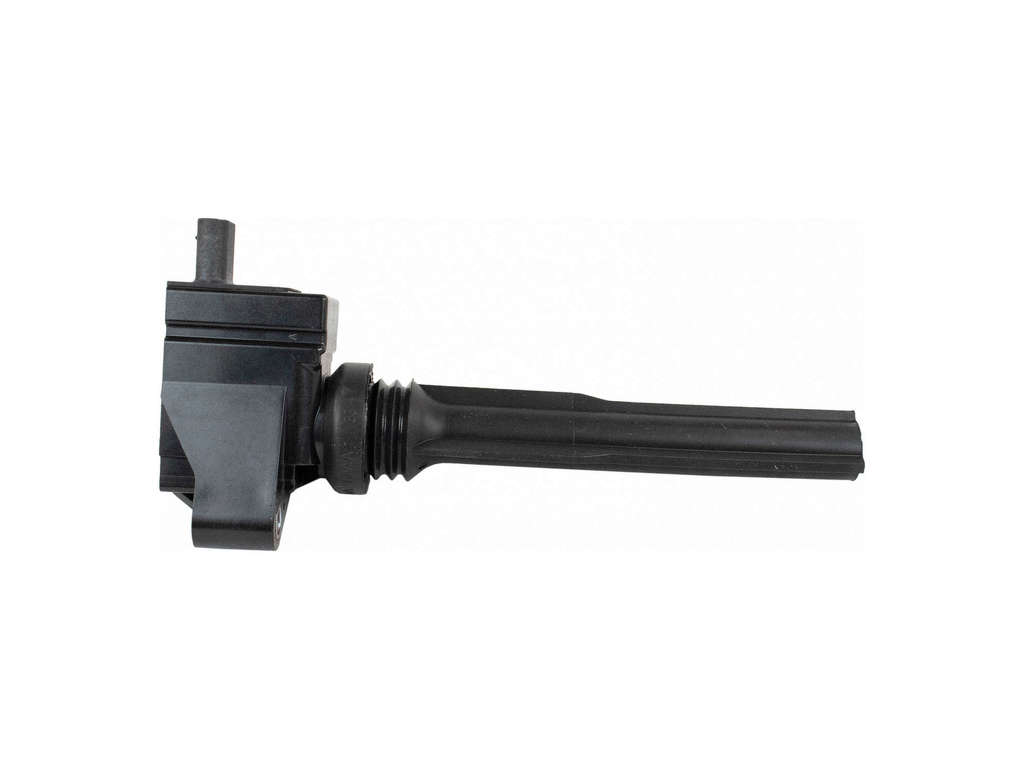
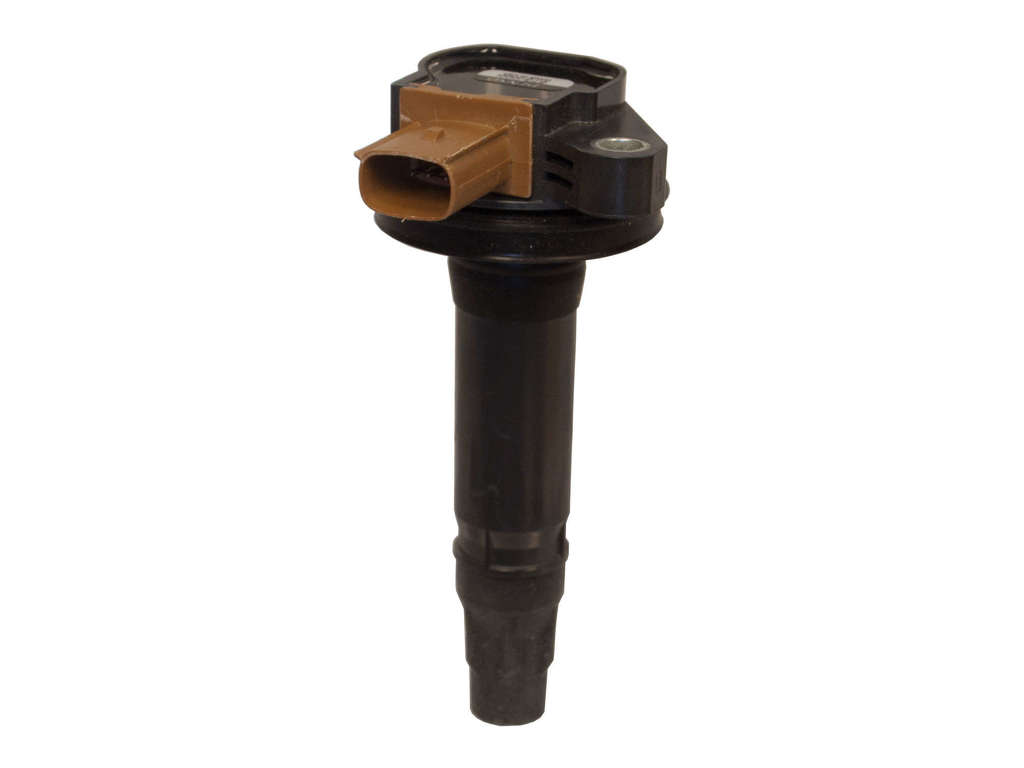
- The most probable causes are a bad ignition coil (Motorcraft DG549) or a worn spark plug (Motorcraft SP-580).
- Do not continue to drive with a flashing Check Engine Light, as this can cause expensive damage to the catalytic converters.
- Due to the extreme difficulty of accessing the engine in the mid-engine GT, this repair should be left to a professional technician experienced with exotic vehicles.
- Ford has acknowledged rough running and misfire issues on this platform through multiple Technical Service Bulletins.
What's Unique About the 2017-2021 Ford GT
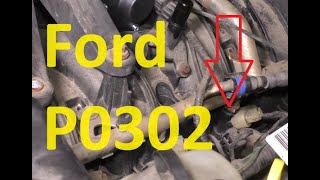
The Ford GT uses a high-output version of the 3.5L EcoBoost V6, producing up to 660 horsepower. This extreme performance places significant stress on ignition components like spark plugs and coils, potentially leading to a shorter service life compared to standard applications. For the 2020 model year, Ford specifically upgraded the GT with higher-energy ignition coils and gallery-cooled pistons to support a power increase to 660 hp. Ford has issued several Technical Service Bulletins (TSBs) for these vehicles noting that they may exhibit a rough run or hard start accompanied by misfire codes, including P0302. 🎬 Watch: A breakdown of causes and fixes for the P0302 code. The TSBs suggest investigating 'vehicle operating conditions,' which can refer to issues arising from short trips, high-humidity environments causing condensation in the charge air cooler, or fuel quality issues that are more pronounced in high-performance engines.
Diagnostic Flowchart
Tap your situation to follow the diagnostic path that matches what you're seeing on this vehicle.
Symptoms You May Notice
- Rough or vibrating idle
- Hesitation or stumbling during acceleration
- Noticeable loss of engine power
- Flashing Check Engine Light (indicates a severe, catalyst-damaging misfire)
- Changes in engine and exhaust sound, including popping from the exhaust
- Smell of unburnt gasoline from the exhaust
- Replacing only the spark plug when the ignition coil is the actual cause.
- Assuming a major engine failure before performing basic ignition and fuel system diagnostics.
- Replacing fuel injectors before confirming they are faulty through proper testing.
Most Likely Causes
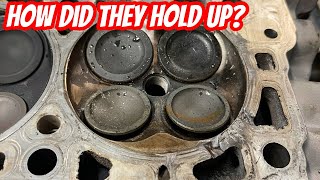
- Faulty Ignition Coil 🔴 High Probability → Shop Ignition Coil The high-cylinder pressures and heat from the twin-turbo engine can cause ignition coils to fail prematurely. For the 2020 model year, Ford introduced higher-energy ignition coils to improve performance and durability. This is a well-documented issue across the 3.5L EcoBoost engine family. 🎬 See how a technician diagnoses a cylinder 2 misfire on this engine.
How to confirm: A technician will swap the ignition coil from cylinder 2 with another cylinder (e.g., cylinder 1). If the misfire code changes to P0301, the coil is confirmed to be faulty.
Typical fix: Replace the failed ignition coil. It is often recommended to replace all six coils at the same time as a preventative measure, especially if they are original and have high mileage.
Est. part cost: $70-$150 per coil - Worn or Fouled Spark Plug 🔴 High Probability → Shop Spark Plug Turbocharged engines are very sensitive to spark plug condition and gap. High performance driving accelerates wear. The intense heat and pressure can also lead to cracked ceramic insulators, a known issue on EcoBoost engines.
How to confirm: After confirming the coil is good, a technician will inspect the spark plug from cylinder 2 for wear, carbon fouling, oil contamination, or damage to the ceramic insulator. The gap should also be checked against OEM specifications.
Typical fix: Replace the spark plug. It is standard practice to replace all six spark plugs at the same time 🎬 Watch: This easy walkthrough shows how to replace EcoBoost spark plugs. to ensure consistent performance and prevent future misfires.
Est. part cost: $20-$50 per plug - Faulty Fuel Injector 🟡 Medium Probability → Shop Fuel Injector The second-generation EcoBoost uses both port and direct injection. A failure or clog in the direct or port injector for cylinder 2 can cause a lean misfire. Carbon buildup on direct injectors can also disrupt the spray pattern.
How to confirm: A technician can perform a fuel injector balance test using a diagnostic scan tool to see if the injector is delivering the correct amount of fuel. They may also swap injectors between cylinders to see if the fault moves.
Typical fix: Replace the faulty fuel injector. This is a more labor-intensive repair. Sometimes, a professional fuel system cleaning can resolve issues with clogged injectors.
Est. part cost: $100-$300
Rare But Worth Checking
- Low Cylinder Compression: This indicates a serious internal engine problem, such as a worn piston ring, a damaged piston, or a valve sealing issue. A compression test followed by a cylinder leak-down test is needed to confirm.
- Vacuum Leak: A leak in the intake manifold or a vacuum hose near cylinder 2 can introduce unmetered air, leading to a lean misfire.
- Carbon Buildup on Intake Valves: While the 2nd-gen 3.5L EcoBoost added port injection to mitigate this, heavy carbon buildup can still occur, especially on vehicles with frequent short trips. This can restrict airflow to cylinder 2 and cause a misfire. The fix is typically physical cleaning, such as walnut blasting.
Diagnosis Steps
- Verify the presence of P0302 with an OBD-II scanner. Note if the Check Engine Light is steady or flashing.
- Due to the vehicle's value and complexity, it is highly recommended to have a qualified technician perform further diagnostics.
- A technician will likely start by swapping the ignition coil from cylinder #2 with an adjacent cylinder (e.g., #1) to see if the misfire follows the coil (changing the code to P0301).
- If the misfire remains on cylinder #2, the spark plug will be removed, inspected for damage/wear, and likely swapped with another cylinder's plug to rule it out.
- If ignition components are confirmed to be good, the technician will then investigate the fuel system, focusing on the fuel injector for cylinder #2. This can involve using a scan tool to perform an injector balance test.
- If fuel and ignition systems are functioning correctly, a cylinder compression test and a cylinder leak-down test will be performed to check for mechanical engine problems like poor valve sealing or piston ring issues.
- A borescope may be used to inspect for excessive carbon buildup on the intake valves.
Parts You'll Likely Need
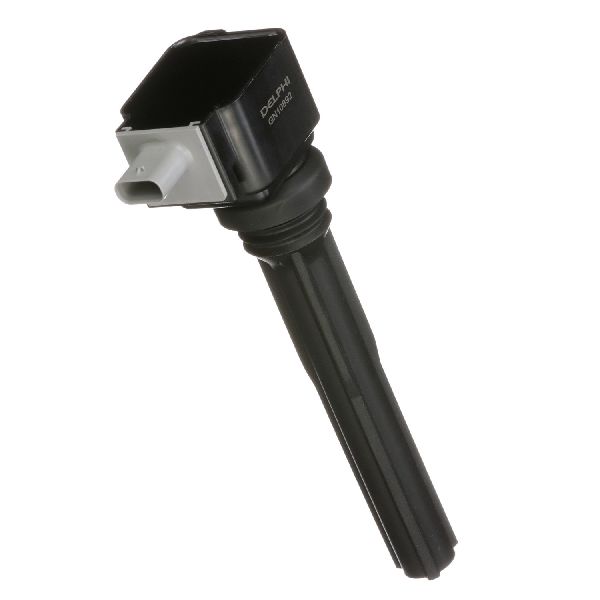
- Ignition Coil
(OEM #DG549)— This is the most common failure point for a single-cylinder misfire on a modern engine, especially a high-output turbocharged one.
Trusted brands: Motorcraft, Bosch, NGK
OEM price range: $100-$180
Aftermarket price range: $70-$120 - Iridium Spark Plug
(OEM #SP-580 (or cross-reference CYFS12YT4))— Spark plugs are a routine maintenance item and are a frequent cause of misfires as they wear out. High-performance engines require high-quality iridium plugs for longevity and performance.
Trusted brands: Motorcraft, NGK
OEM price range: $30-$50
Aftermarket price range: $20-$40
Related Codes That Often Appear With This One
- P0300 — If the misfire is intermittent or affects multiple cylinders, a P0300 (Random/Multiple Cylinder Misfire Detected) may be stored alongside P0302.
- P0316 — This code indicates a misfire was detected within the first 1,000 engine revolutions on startup. It is often seen with other P030x codes and is mentioned in the TSBs for the Ford GT.
Technical Service Bulletins (TSBs) & Recalls
- SSM 50616: Notes that 2017-2022 Ford GTs may exhibit a runs rough/hard start with DTCs including P0302.
- SSM 49536: An earlier version of the bulletin covering 2017-2021 models with the same issue.
- SSM 49028: An even earlier bulletin for 2017-2020 models with the same rough run/misfire condition.
Platform-Specific Known Issues
- Ford has issued multiple Technical Service Bulletins (TSBs) for the 2017-2022 Ford GT related to misfires. Bulletins SSM 50616, SSM 49536, and SSM 49028 all note that the vehicle may exhibit a 'runs rough or hard start' condition with various misfire codes, including P0302 and P0316. This indicates a known pattern of behavior for this platform. The bulletins advise technicians to first investigate the vehicle's operating conditions before diving into diagnostics, suggesting that issues like fuel quality or short-trip driving patterns could be contributing factors. A separate TSB for the related 3.5L EcoBoost F-150 (TSB 13-3-3) details how misfires can occur on acceleration in humid conditions due to condensation in the charge air cooler, a relevant diagnostic path for the GT as well.
Mechanic-Grade Diagnostic Values
- Ignition Coil Primary Resistance — expected: 0.5 Ohms. Failure: Significant deviation from 0.5 Ohms indicates a faulty coil.
- Ignition Coil Secondary Resistance — expected: 6.0 - 6.2 K Ohms. Failure: Readings outside this range suggest an internal coil failure.
- Low-Pressure Fuel System — expected: 40-60 PSI at idle. Failure: Pressure below this range indicates a weak in-tank fuel pump or fuel pump driver module issue.
- High-Pressure Fuel System (Direct Injection) — expected: 500 PSI during cranking, up to 2,900+ PSI under load.. Failure: Actual pressure failing to meet the PCM's desired pressure by more than 200 PSI can indicate a failing high-pressure fuel pump (HPFP).
Hidden / Shadow Codes Worth Checking
- Mode $06, Test ID $53: Provides raw misfire counts per cylinder for the current and last 10 driving cycles, even for misfires not severe enough to set a P030x code. Component ID (CID) $02 corresponds to Cylinder 2. (see via A professional scan tool with Global OBD-II capabilities. The data is presented as a raw count which can be monitored to see if a cylinder is misfiring intermittently.)
Scan Tool Commands That Help
- Ford IDS (Integrated Diagnostic System): Power Balance Test — This is a critical diagnostic function that graphically displays the power contribution of each cylinder in real-time. A technician can use this to instantly see that cylinder 2 is underperforming. The test can be run at idle or while holding RPMs to identify the misfire under specific conditions without a test drive.
- Ford IDS (Integrated Diagnostic System): Fuel System Control — For the dual-injection (Port and Direct) 2nd Gen EcoBoost, IDS allows a technician to command the engine to run on only the port injection system or only the direct injection system. This can help isolate whether the misfire is related to a specific fuel injector.
Wiring & Ground Locations
- Main Engine-to-Chassis Ground — While specific Ford GT diagrams are proprietary, a common critical ground point for similar platforms is a strap from the engine block or cylinder head to the chassis/firewall. On the first-gen GT, a key ground was easily traced from the negative battery cable to a 10mm bolt on the frame.. A weak or corroded ground connection can cause intermittent and hard-to-diagnose electrical issues, including weak spark from the ignition coils, leading to misfires. Checking and cleaning main ground points is a crucial step if direct component replacement doesn't solve the issue.
Real Owner Repair Stories
- F-150 Forum user with 3.5L EcoBoost (2018 Ford F-150 3.5L EcoBoost, 68,000 miles) — Rough idle and P0302 code.
❌ Tried (didn't work) Initial diagnosis pointed towards common causes.
✅ What actually fixed it The ignition coil on cylinder 2 had failed due to heat. The issue was resolved by replacing the original DG549 coil with an updated DG586 coil, which is noted to have better heat resistance. - F-150 Forum user with 3.5L EcoBoost (2019 Ford F-150 Lariat 3.5L EcoBoost) — Intermittent P0302 during acceleration.
❌ Tried (didn't work) Ignition components were likely checked first.
✅ What actually fixed it A compression test showed 15% lower pressure in cylinder 2. A borescope inspection revealed heavy carbon deposits on the intake valves, a known issue with direct injection engines. A professional walnut blasting service to clean the valves restored proper engine operation.
OEM Part Supersession History
BL3Z12029C→DG549— Standard part evolution and potential minor revisions for reliability or manufacturing efficiency.DG549→DG586 (per forum reports)— Reports from owners of other 3.5L EcoBoost vehicles suggest the DG586 is a more robust coil with better heat resistance, often used as an upgrade to solve recurring misfires.
Heads up: This is not an official Ford supersession for the GT but a known upgrade path in the EcoBoost community.
Model Year Variations Within This Range
- 2020-2021: For the 2020 model year, Ford upgraded the GT's engine, increasing horsepower from 647 to 660. This update included gallery-cooled pistons and 'higher-energy ignition coils'. This suggests that 2020-2021 models may have different, more robust ignition coils from the factory compared to 2017-2019 models, potentially affecting diagnosis and part selection.
Helpful Videos


We Have This Part in Stock


The information in this article is provided for general reference and educational purposes only. Vehicle specifications, procedures, and part compatibility can vary by production date, trim level, and region. Always consult your vehicle's factory service manual and verify part numbers before purchasing or performing repairs. Safety-critical components such as airbags, seat belts, and braking systems should be installed by a qualified professional.
- Ford GT:
- 🧭 Diagnostic Flowchart
- 🎬 Helpful Videos
- 🛍️ Shop This Part
- What's Unique About the 2017-2021 Ford GT
- Symptoms You May Notice
- Most Likely Causes
- Rare But Worth Checking
- Diagnosis Steps
- Parts You'll Likely Need
- Related Codes That Often Appear With This One
- Technical Service Bulletins (TSBs) & Recalls
- Platform-Specific Known Issues
- Mechanic-Grade Diagnostic Values
- Hidden / Shadow Codes Worth Checking
- Scan Tool Commands That Help
- Wiring & Ground Locations
- Real Owner Repair Stories
- OEM Part Supersession History
- Model Year Variations Within This Range
- 🎟️ Get 5% Off