

P0302 on 2005-2010 Ford Mustang GT: Cylinder 2 Misfire Causes and Fixes
For a 2005-2010 Mustang GT, code P0302 is almost always a bad ignition coil or a worn spark plug on cylinder #2. A new Motorcraft coil costs about $40-$60. This is a simple DIY fix, but be aware that engines built before late 2007 used a 2-piece spark plug design notorious for breaking during removal, requiring a special extraction tool.
- P0302 on your Mustang GT means cylinder #2 (second from front, passenger side) is misfiring.
- The most likely cause is a bad ignition coil. Diagnose this for free by swapping the coil with another cylinder's coil to see if the misfire code follows.
- The second most likely cause is a worn spark plug. Be extremely careful if you have a 2005-2008 model, as the original spark plugs are known to break during removal.
- Do not drive with a flashing check engine light, as you can quickly cause expensive damage to your catalytic converter.
- Always use quality replacement parts from brands like Motorcraft, Denso, or NGK for ignition components.
What's Unique About the 2005-2010 Ford Mustang GT
The 4.6L 3V V8 in the S197 Mustang GT is known for two key issues related to this code. First, the Coil-On-Plug (COP) ignition coils are a very common failure item, making them a top suspect for any misfire. Second, and more importantly, engines built before November 30, 2007, used a two-piece spark plug design (Motorcraft SP-515, formerly SP-514) that is infamous for breaking off in the cylinder head during removal due to carbon buildup. This can turn a simple spark plug change into a much more difficult job requiring a special extraction tool like the Lisle 65600. Ford later released a one-piece plug design (Motorcraft SP-547) and a detailed Technical Service Bulletin (TSB 08-7-6) outlining the careful removal procedure for the old plugs.
Symptoms You May Notice
- Rough or erratic idle
- Engine hesitation or stumbling during acceleration
- Noticeable loss of power
- Flashing Check Engine Light (indicates a severe misfire)
- Smell of raw fuel from the exhaust
- Increased fuel consumption
- Engine shaking or vibrating excessively at a stop, which may smooth out at higher RPMs.
- Replacing the catalytic converter. A misfire can damage the converter, but it is the cause, not the effect. A P0420 or P0430 code might appear alongside the misfire code if damage has already occurred.
- Replacing the crankshaft or camshaft position sensors. While these can cause misfires, they typically result in random misfire codes (P0300) or affect multiple cylinders, not just a single cylinder like P0302.
Most Likely Causes
- Faulty Ignition Coil (Coil-On-Plug) 🔴 High Probability → Shop Ignition Coil The Coil-On-Plug units on the 4.6L 3V engine are a common failure point due to heat and vibration. Water intrusion into the #2 spark plug well from a leaking cowl or after engine washing is also a known issue that can short out the coil.
How to confirm: Swap the ignition coil from cylinder #2 with another cylinder (e.g., cylinder #1). Clear the codes and drive. If the code returns as P0301, the coil is the faulty part.
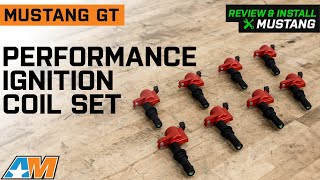
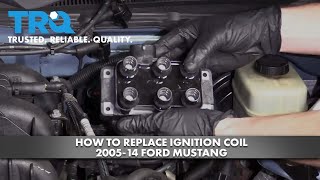
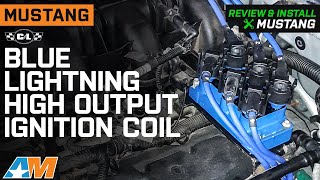
Typical fix: Replace the faulty ignition coil. It is held on by a single 7mm or 8mm bolt. 🎬 Watch: How to replace an ignition coil on your Mustang. Apply a small amount of dielectric grease to the inside of the new coil boot.
Est. part cost: $40-$60 for a single OEM Motorcraft DG-511 coil. - Worn or Fouled Spark Plug 🔴 High Probability → Shop Spark Plug Spark plugs are a standard wear item. The original-equipment two-piece plugs (pre-2008) can also have issues with carbon buildup on the ground electrode shield that leads to misfires and breakage on removal.
How to confirm: After confirming the coil is good, inspect the spark plug. Look for wear, carbon tracking, or oil/fuel fouling. If the plug is old, it's best to replace it.
Typical fix: Replace the spark plug in cylinder #2. It is highly recommended to replace all 8 plugs if they are near the end of their 100,000-mile service life. CAUTION: Special procedures outlined in TSB 08-7-6 are required for removing the original two-piece plugs to prevent breakage.
Est. part cost: $15-$25 for a single OEM-spec plug. - Clogged or Faulty Fuel Injector ⚪ Low Probability → Shop Fuel Injector
How to confirm: If the coil and plug are good, the injector is the next suspect. A mechanic can perform a balance test. A DIY method is to listen for a consistent clicking sound from the injector with a mechanic's stethoscope. Swapping injectors between cylinders is possible but more labor-intensive.
Typical fix: Replace the faulty fuel injector. It's often recommended to replace all injectors on a high-mileage engine.
Est. part cost: $50-$90 for a single injector.
Rare But Worth Checking
- Vacuum Leak: A vacuum leak from a cracked hose or a bad intake manifold gasket near cylinder #2 could cause a lean misfire. This would typically be accompanied by other codes like P0171 or P0174.
- Wiring or Connector Issue: Check the electrical connector and wiring to the ignition coil and fuel injector for cylinder #2. A loose pin, corrosion, or damaged wire can interrupt the signal and cause a misfire.
- Mechanical Engine Failure: In rare cases, a misfire can be caused by internal engine problems like a burnt valve, worn piston rings, a damaged camshaft lobe, or failing valve lifters, resulting in low compression. A compression test is needed to diagnose this.
- Sticking VCT Solenoid: A faulty Variable Camshaft Timing (VCT) solenoid can cause rough idling and misfire codes, though it often affects multiple cylinders or throws VCT-specific codes like P0011 or P0012. These solenoids control oil flow to the cam phasers and can get stuck due to sludge or wear.
- Coolant Intrusion: While less common on the 4.6L 3V than on newer Ford engines, internal leaks can cause misfires. NHTSA ODI #11702554 describes a case where a borescope in cylinder 2 revealed coolant, leading to a P0302 code. Similarly, NHTSA ODI #11637537 notes that a failed cylinder head to block gasket or cracked head can result in a P0302 misfire.
Diagnosis Steps
- Read the code with an OBD-II scanner and confirm P0302 is present. Note any other codes, especially P0300 or P0316.
- Identify cylinder #2: It is the second cylinder from the front on the passenger side of the engine.
- Perform an ignition coil swap. Switch the coil from cylinder #2 with the coil from cylinder #1. Clear the codes, start the engine, and see if the misfire moves. If you now have a P0301 code, the ignition coil is bad and needs to be replaced.
- If the misfire remains on cylinder #2, inspect the spark plug. Check for fouling, wear, or damage. If the plug is suspect, swap it with another cylinder to confirm before replacing.
- CAUTION - SPARK PLUG REMOVAL: → Shop Spark Plug If your Mustang was built before 11/30/2007, it has the two-piece plugs. Follow TSB 08-7-6: The engine MUST be cold (room temperature). Blow out plug wells with compressed air. Loosen the plug 1/8 to 1/4 turn, then soak the plug threads with a penetrating fluid like Motorcraft Carburetor Tune-Up Cleaner for at least 15 minutes. Slowly work the plug back and forth with a hand tool until it comes out. Do NOT use power tools. 🎬 See the best method for removing these stuck spark plugs.
- If the coil and plug are good, inspect the wiring and connector for the ignition coil and fuel injector on cylinder #2. Look for damage, corrosion, or loose pins. Water intrusion is a possibility here. Manufacturer TSB #TSB 23-2011 notes that water build up in the spark plug wells can lead to DTCs P0300, P0302, and P0316.
- Check the fuel injector. Listen for a steady clicking with a stethoscope. If you are comfortable with the procedure, you can swap the injector with another cylinder to see if the misfire follows, though this is more involved.
- If all else fails, a mechanical issue is possible. Perform a compression test on cylinder #2 to check for problems with valves, pistons, or head gaskets. Low compression indicates a serious internal engine problem. NHTSA ODI #11685553 reports symptoms like white smoke on cold start and low coolant accompanying a P0302 code, which may trigger "Cylinder Head Protection Active" (P1299).
Parts You'll Likely Need
- Ignition Coil (Coil-On-Plug)
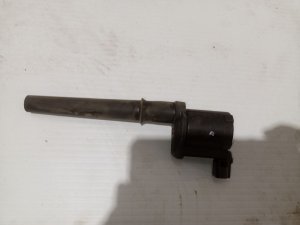
(OEM #DG-511 (Motorcraft 3L3Z-12029-BA))— This is the most common failure part for a P0302 code on this engine.
Trusted brands: Motorcraft, Denso, NGK
OEM price range: $40-$60
Aftermarket price range: $25-$50 - Spark Plug (Updated One-Piece Design)
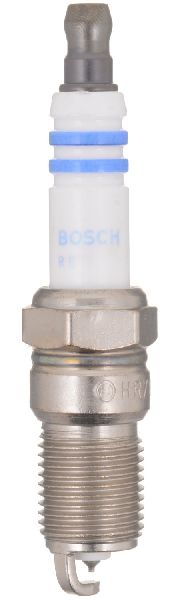
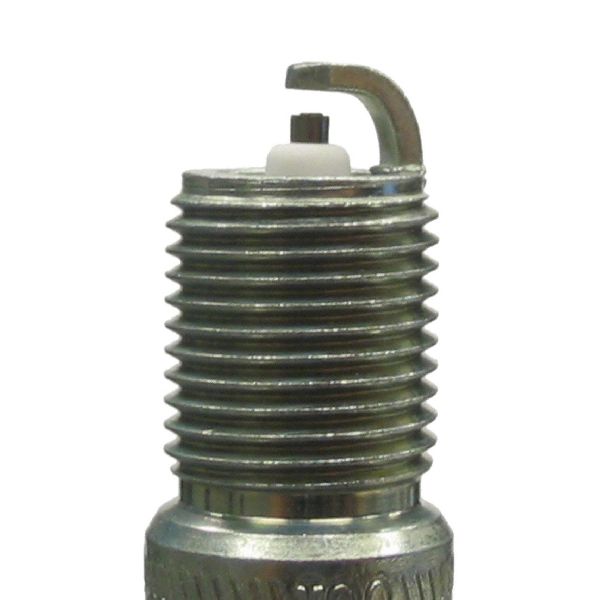
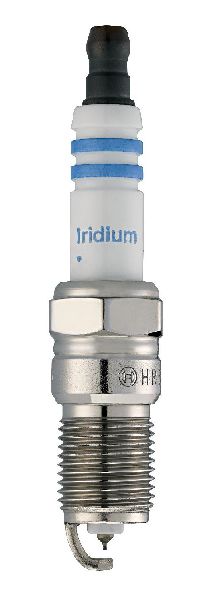
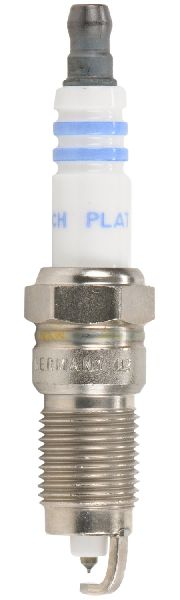
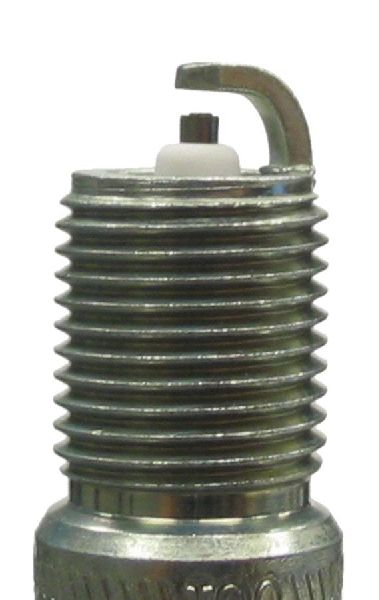
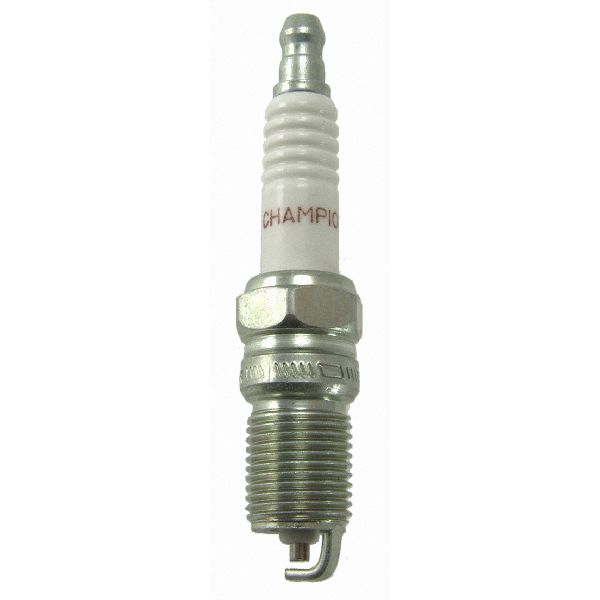
(OEM #SP-547 (Motorcraft PZK1FF4))— A worn spark plug is the second most likely cause. The SP-547 is the updated one-piece design that replaces the problematic two-piece plugs (SP-515) used in 2005-early 2008 models.
Trusted brands: Motorcraft, NGK, Autolite
OEM price range: $15-$25
Aftermarket price range: $8-$15 - Spark Plug Extractor Tool
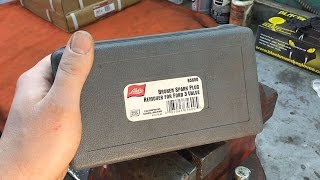
(OEM #Lisle 65600)— Required if the original two-piece spark plug breaks, leaving the lower shield stuck in the cylinder head. 🎬 Watch: Detailed tutorial on using the Lisle spark plug extractor. This is a common occurrence on pre-2008 engines.
Trusted brands: Lisle, OEMTOOLS
OEM price range: $60-$100
Aftermarket price range: $40-$70
Related Codes That Often Appear With This One
- P0300 — If the misfire is intermittent or starting to affect other cylinders, a 'Random/Multiple Cylinder Misfire' code may appear.
- P0316 — 'Misfire Detected on Startup (First 1000 Revolutions)'. This code often accompanies a specific cylinder misfire code, helping to pinpoint when the issue occurs.
- P0301, P0303, P0304 — If you see other misfire codes for cylinders on the same bank (Bank 1, passenger side), it could point to a shared issue like a vacuum leak affecting that side of the intake manifold or a failing VCT solenoid on that bank.
- P0011, P0012, P0021, P0022 — These codes relate to camshaft position timing. A faulty VCT solenoid or cam phaser can cause timing issues that lead to misfires.
- P1299 — Cylinder Head Protection Active. This may appear if a mechanical failure or coolant loss causes the engine to enter "limp mode" to prevent overheating damage.
Technical Service Bulletins (TSBs) & Recalls
- TSB 08-7-6 - Spark Plug Removal Instructions: → Shop Spark Plug This crucial TSB provides the official Ford procedure for removing the original two-piece spark plugs from 4.6L/5.4L/6.8L 3V engines to minimize the risk of breakage. It specifies using a cold engine, soaking with Motorcraft Carburetor Cleaner, and using only hand tools. It also details the procedure for extracting a broken plug.
- TSB 23-2011 - Water Intrusion in Spark Plug Wells: → Shop Spark Plug A manufacturer service bulletin notes that some vehicles may exhibit an illuminated MIL with DTCs P0300, P0302, and P0316 due to water build up in the spark plug wells.
Platform-Specific Known Issues
- Two-Piece Spark Plug Breakage (TSB 08-7-6): → Shop Spark Plug Engines in 2005-early 2008 models (built before 11/30/07) came with Motorcraft SP-515 plugs. These have a two-piece shell where carbon builds up, causing the lower portion to seize in the cylinder head. Attempting to remove them without following the specific procedure in Ford's TSB can cause them to break, requiring a special extraction tool. The updated plug is a one-piece design.
Mechanic-Grade Diagnostic Values
- Ignition Coil Primary Resistance (Motorcraft OEM) — expected: ~0.55 ohms. Failure: Significant deviation or an open/short circuit.
- Ignition Coil Secondary Resistance (Motorcraft OEM) — expected: 5,500 ohms (5.5 kOhms). Failure: A reading significantly higher or lower, or an open circuit, indicates a faulty coil.
- Fuel Injector Resistance — expected: 11 - 18 ohms. Failure: A reading outside this range suggests a faulty injector coil.
- Fuel Pressure (at idle) — expected: ~39-40 PSI. Failure: Significantly lower pressure indicates a fuel delivery problem (pump, filter, driver module).
- Variable Camshaft Timing (VCT) Solenoid Resistance — expected: 5.0 - 14.0 ohms. Failure: A reading outside this range, especially an open circuit (infinite resistance), indicates a failed solenoid.
- Engine Ground Path Resistance — expected: < 0.1 ohms. Failure: Higher resistance from the battery negative post to a chassis or engine ground point indicates a poor ground connection, which can cause erratic sensor readings and misfires.
Hidden / Shadow Codes Worth Checking
- Mode 6, Test ID $80, Component ID $A2-$A9: Mode 6 data allows access to raw misfire counts per cylinder before they are high enough to trigger a P030x code. Test ID $80 tracks misfire data. Component IDs $A2 through $A9 correspond to cylinders 1 through 8. By viewing the value for Component ID $A3 (Cylinder 2), a technician can see if intermittent misfires are occurring even without a Check Engine Light. (see via A professional scan tool with Mode 6 capability (e.g., Ford IDS, high-end Autel/Snap-on scanners).)
Scan Tool Commands That Help
- Ford IDS (or equivalent high-end scanner): Power Balance Test — This is a critical diagnostic step. The test graphically displays the power contribution of each cylinder by sequentially disabling the fuel injector for each one and measuring the corresponding drop in RPM. If disabling cylinder #2 causes little or no change in RPM, it confirms that cylinder is not contributing, pinpointing the misfire.
- Ford IDS (or equivalent high-end scanner): Cylinder Contribution Test — This is the older name for the Power Balance Test and functions similarly. It's used to identify which cylinder is misfiring when the cause isn't immediately obvious.
Wiring & Ground Locations
- Cylinder #2 Ignition Coil Connector — Passenger side of the engine, second coil from the front. The connector has two wires.. The signal wire (varies by year, but often a unique color like Tan/Orange) carries the trigger pulse from the PCM. The power wire (often Red/Light Green) provides 12V+ with the key on. Checking for 12V power and a pulsing signal with a noid light or scope can diagnose wiring/PCM issues.
- Engine to Firewall Ground Strap — Connects from a stud on the back of the driver's side cylinder head to the firewall, near the cowl.. A loose or corroded main engine ground can cause a host of electrical gremlins, including weak spark and erratic sensor readings that can lead to misfires. This ground is crucial for providing a stable return path for the ignition system.
- Passenger Cylinder Head to Firewall Ground — On some models, a ground strap is located near the PCM on the passenger side, connecting from the back of the passenger cylinder head to the firewall.. This ground is physically close to the PCM and cylinder #2. Corrosion or a loose connection here can directly impact the signals for the Bank 1 (passenger side) cylinders.
- PCM Ground (G201) — Located in the passenger side kick panel area, near the PCM itself.. A faulty PCM ground can cause the PCM to malfunction, potentially leading to it not sending the correct signal to fire the ignition coil or fuel injector for cylinder #2.
Real Owner Repair Stories
- Go-Parts review of a similar P0302 case (Unspecified vehicle, but common P0302 diagnosis pattern) — Cylinder 2 misfire (P0302)
❌ Tried (didn't work) Replaced spark plugs, Replaced ignition coils
✅ What actually fixed it The Engine Control Module (ECM/PCM) was faulty and was not sending the ground pulse to fire the injector for cylinder #2. Replacing the ECM resolved the misfire. - Ford F-150 Forum user (2006 Ford F-150 5.4L 3V (engine shares architecture and many parts with the 4.6L 3V)) — Rough idle, stalling, misfire codes
❌ Tried (didn't work) Extensive diagnosis, considering major engine work.
✅ What actually fixed it Unplugging the VCT solenoids made the truck run smoothly (albeit with less power), confirming they were the issue. Replacing both VCT solenoids permanently fixed the problem. - NHTSA ODI #11625507 — An owner reported a P0302 misfire where changing spark plugs multiple times and changing out the ignition coil failed to resolve the issue, suggesting a deeper mechanical or electrical fault.
"I Checked Everything" — The Actual Cause
- A known issue on the 4.6L/5.4L 3V intake manifold is a leak in the plastic housing itself, particularly around the seams or integrated gaskets for the intake runners. A smoke test might not reveal this leak if it only opens up under specific temperature or vibration conditions. In some cases, owners have found a fine mist of coolant or water around the cylinder #2 intake runner, indicating a hairline crack in the manifold or a failing gasket that is causing a lean misfire.
OEM Part Supersession History
DG-511 (with black boot)→DG-521 (with brown boot)— The DG-521 coil is designed for the updated cylinder heads (post-11/30/07) that use the one-piece SP-547 spark plugs. The brown boot is slightly shorter to accommodate the revised spark plug well depth.
Heads up: While the coils are electrically identical and will physically fit, using the wrong boot length can lead to a poor seal at the top of the spark plug well. This can allow moisture and debris to enter, potentially causing a future misfire. It is best practice to use the coil with the boot color that matches the original equipment for that specific engine build date.
Model Year Variations Within This Range
- 2005 - early 2008 (build date before 11/30/2007): These engines used the two-piece SP-515 spark plugs and the corresponding DG-511 (black boot) ignition coils. Diagnosis and repair must account for the high probability of spark plug breakage during removal.
- Late 2008 - 2010: These engines used the one-piece SP-547 spark plugs and DG-521 (brown boot) ignition coils. Spark plug replacement is straightforward and does not carry the risk of breakage.
- 2008-2009 Bullitt: The Bullitt edition featured a factory cold air intake and a more aggressive tune, resulting in slightly higher horsepower. However, the fundamental ignition and fuel systems are the same as the standard GT of the same years, and the causes for P0302 are identical.
Diagnostic Flowchart
Other Known Issues on This Vehicle
Issues unrelated to this code that are worth knowing about as an owner of this generation:
- Two-Piece Spark Plug Breakage 🔴 High → Shop Spark Plug — Very common on 2005-early 2008 engines when changing original plugs. (Ref: TSB 08-7-6)
- Timing Chain Tensioner & Guide Wear 🟠 Medium — Can occur after 100,000-150,000 miles, causing rattling noises on startup.
- Variable Camshaft Timing (VCT) Solenoid Failure 🟠 Medium → Shop Engine Camshaft — Common at higher mileage, causing rough idle, stalling, and ticking noises.
- Cracked Plastic Thermostat Housing 🟠 Medium — The OEM plastic housing becomes brittle and can crack, causing coolant leaks. Common across all S197 models.
- Alternator Failure / Whine 🟡 Low — The factory alternator is a known weak point and can fail prematurely, often preceded by a whining noise.
Used vs. New Parts: Buying Guide for This Vehicle
When a used part is the smart pick: For this repair, using used parts is generally not recommended. The primary failure items (ignition coils, spark plugs) are wear-and-tear components with a finite lifespan. A used ignition coil from a junkyard has an unknown history and could fail shortly after installation.
Donor-vehicle mileage cap: roughly under 50000 miles for the part to have meaningful remaining life.
What to inspect on the donor part:
- If considering a used coil, look for one from a low-mileage, front-end collision vehicle to minimize heat cycle exposure.
- Avoid parts from vehicles that show signs of neglect, such as heavy oil leaks or coolant residue in the engine bay.
- Check the coil housing for cracks and the boot for tears or brittleness.
OEM-only on this vehicle (don't cheap out):
- VCT Solenoids: Aftermarket VCT solenoids have a high failure rate on this platform. It is strongly recommended to use only Motorcraft VCT solenoids to ensure proper operation and longevity.
- PCM/ECM: If the computer is diagnosed as the fault, a used OEM unit is a viable option but will require programming (PATS key relearn) by a dealer or a well-equipped independent shop.
Aftermarket brands forum-validated for this vehicle:
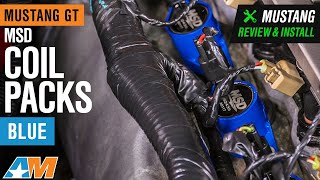
- Ignition Coils: Motorcraft (OEM), Denso, NGK. Some higher-performance brands like MSD are also popular but may not be necessary for a stock engine.
- Spark Plugs: Motorcraft (OEM), NGK, Autolite are all well-regarded choices for this engine.
- Fuel Injectors: Bosch (often the OEM supplier), DeatschWerks, and Fuel Injector Clinic (FIC) are trusted names if upgrading or replacing injectors.
Brands owners have reported issues with on this vehicle:
- Avoid unbranded, 'no-name' ignition coil sets often sold cheaply online. These frequently have high premature failure rates and can cause more diagnostic headaches than they solve.
Real Owner Stories
Aggregated from forums and TSBs cited above. Mileages and costs reflect what owners reported in those sources.
2014 Mustang GT (Supercharged)
Symptoms: P0302 Check Engine Light.
What fixed it: Replaced a carbon-fouled spark plug in cylinder #2.
Source hint: S197Forum.com - P0302 CEL Thread
2005-2010 Ford Mustang GT 4.6L 3V
Symptoms: Misfire code P0302 after washing the engine.
What fixed it: Dried out or replaced the coil-on-plug after water entered the #2 spark plug well.
Source hint: MustangForums.com - P0302 Misfiring 2nd Cylinder
2006 Mustang GT 4.6L 3V
Symptoms: Throwing misfire codes P0300 and P0302.
What fixed it: Changed the spark plugs as a first step for a tune-up related misfire.
Source hint: S197Forum.com - Misfire Codes P0300, P0302
Related OBD-II Codes
Frequently Asked Questions
Does TSB 08-7-6 apply to my 2008 Mustang GT?
I just washed my engine and now I have a P0302 code. What happened?
What specific ignition coil should I use for my 4.6L 3V V8?
Can I use an impact wrench to change the spark plugs on my 2006 Mustang GT?
Is there a specific cylinder I should check for P0302?
My Mustang has a rough idle and a ticking noise at high mileage; could this be related to the misfire?
Helpful Videos
![How to Fix P0302 Engine Code in 3 Minutes [2 DIY Methods / Only $4.22]](https://img.youtube.com/vi/GG0XtnX35RY/mqdefault.jpg)
Used OEM Parts in Stock
New Aftermarket Parts Available

The information in this article is provided for general reference and educational purposes only. Vehicle specifications, procedures, and part compatibility can vary by production date, trim level, and region. Always consult your vehicle's factory service manual and verify part numbers before purchasing or performing repairs. Safety-critical components such as airbags, seat belts, and braking systems should be installed by a qualified professional.
- Ford Mustang GT:
- 🧭 Diagnostic Flowchart
- 🎬 Helpful Videos
- 🛍️ Shop This Part
- What's Unique About the 2005-2010 Ford Mustang GT
- Symptoms You May Notice
- Most Likely Causes
- Rare But Worth Checking
- Diagnosis Steps
- Parts You'll Likely Need
- Related Codes That Often Appear With This One
- Technical Service Bulletins (TSBs) & Recalls
- Platform-Specific Known Issues
- Mechanic-Grade Diagnostic Values
- Hidden / Shadow Codes Worth Checking
- Scan Tool Commands That Help
- Wiring & Ground Locations
- Real Owner Repair Stories
- "I Checked Everything" — The Actual Cause
- OEM Part Supersession History
- Model Year Variations Within This Range
- Other Known Issues on This Vehicle
- Used vs. New Parts: Buying Guide for This Vehicle
- Real Owner Stories
- 2014 Mustang GT (Supercharged)
- 2005-2010 Ford Mustang GT 4.6L 3V
- 2006 Mustang GT 4.6L 3V
- Related OBD-II Codes
- Frequently Asked Questions
- 🎟️ Get 5% Off