

P0302 on 2017-2022 Genesis G90: Cylinder 2 Misfire Causes and Fixes
P0302 on a Genesis G90 indicates a misfire in cylinder 2. This is almost always caused by a bad ignition coil or a worn-out spark plug. Since cylinder 2 is on the easily accessible driver's side of both the V6 and V8 engines, this is a straightforward DIY diagnosis and repair, typically costing $70-$200 for parts.
- P0302 on a G90 is a misfire in cylinder 2, the front-most cylinder on the driver's side, which is easy to access.
- The most likely fix is replacing the ignition coil. A simple swap with another cylinder's coil can confirm the diagnosis in minutes.
- If the coil isn't the problem, the next most likely cause is a worn spark plug.
- If the check engine light is flashing, stop driving immediately to prevent expensive damage to the catalytic converters.
- Owners of 2022 G90 5.0L models should check with a dealer about a potential fuel pump recall (NHTSA 24V282000) that can cause misfires.
What's Unique About the 2017-2022 Genesis G90
On both the 3.3T V6 and 5.0L V8 engines in the Genesis G90, cylinder 2 is located at the front of the engine on the driver's side. This makes it one of the easiest cylinders to access for diagnosis and repair, unlike misfires on the rear bank (cylinders 1, 3, 5 on the V6) which require removing the intake manifold. While other Genesis models with a 2.5T engine have a known software issue causing false misfire codes, that problem does not apply to the G90's V6 and V8 engines; a P0302 here indicates a genuine hardware or mechanical fault.
Symptoms You May Notice
- Rough or shaky engine idle
- Engine hesitation or stumbling during acceleration
- Noticeable loss of power
- Flashing or solid Check Engine Light
- Potential fuel smell from the exhaust
- Difficulty starting the engine
- Replacing the oxygen sensor. An O2 sensor will not cause a misfire in a single, specific cylinder.
- Assuming a software issue. Unlike the 2.5T engine in other Genesis models, the G90's V6 and V8 engines do not have a known TSB for false misfire codes. The problem is almost certainly mechanical or electrical.
Most Likely Causes
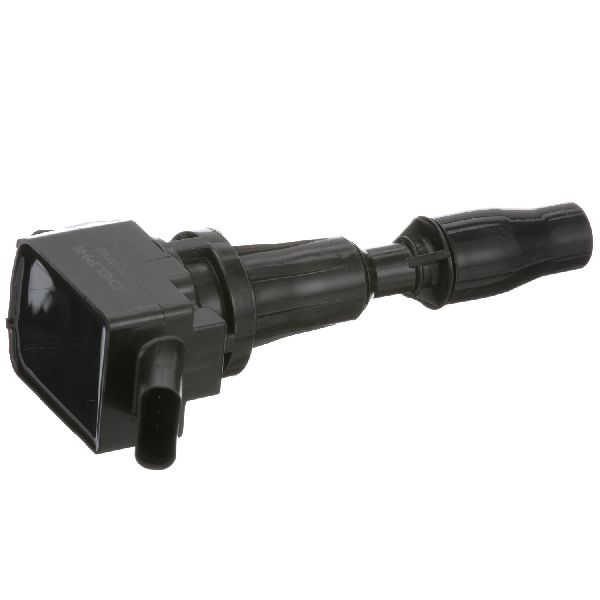
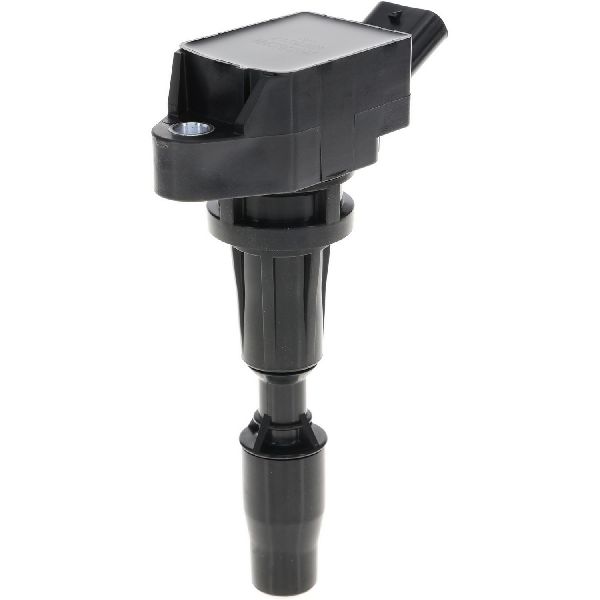
- Faulty Ignition Coil 🔴 High Probability → Shop Ignition Coil Ignition coils are a common wear item on modern engines that are subjected to high heat and voltage. The 3.3T V6 in particular has recalls for a turbo oil pipe that can leak and increase under-hood temperatures, potentially accelerating coil failure.
How to confirm: Swap the ignition coil from cylinder 2 with the coil from another cylinder (e.g., cylinder 4). Clear the codes and drive the vehicle. If the code changes to P0304, the ignition coil is confirmed to be faulty.
Typical fix: Replace the faulty ignition coil. Since cylinder 2 is on the front bank, this is a simple unbolt-and-replace procedure.
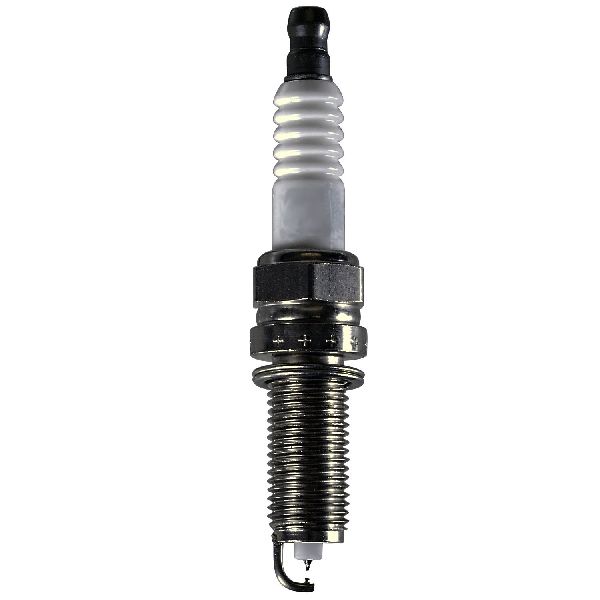
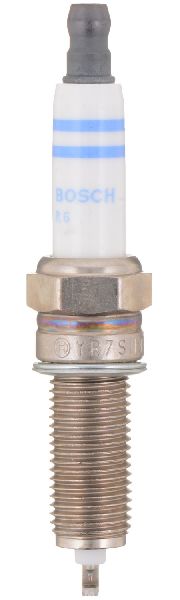
Est. part cost: $70-$150 - Worn or Fouled Spark Plug 🟡 Medium Probability → Shop Spark Plug Spark plugs are a routine maintenance item with a finite lifespan. The recommended interval for the 3.3T is 42,000 miles. A failing ignition coil can also quickly foul a new spark plug, so they are often replaced together.
How to confirm: After ruling out the ignition coil, remove the spark plug from cylinder 2. Inspect it for wear (worn electrode), carbon fouling (black and sooty), or oil fouling (wet and black). Compare it to a new plug.
Typical fix: Replace the spark plug in cylinder 2. It is best practice to replace all spark plugs at the same time 🎬 Watch: How to replace 3.3T spark plugs without removing the intake. to ensure even performance.
Est. part cost: $25-$40 per plug - Clogged or Faulty Fuel Injector ⚪ Low Probability → Shop Fuel Injector Both the 3.3T and 5.0L are Gasoline Direct Injection (GDI) engines. GDI injectors operate under very high pressure and are more susceptible to clogging from fuel deposits or electronic failure than traditional port injectors.
How to confirm: This is more difficult to confirm for a DIYer. A professional can perform a fuel injector balance test to measure the flow rate of each injector. An open/short circuit can also be checked with a multimeter.
Typical fix: Replace the faulty fuel injector for cylinder 2. This is a more involved repair than a coil or plug.
Est. part cost: $100-$250
Rare But Worth Checking
- Carbon Buildup on Intake Valves: As GDI engines, the intake valves are not cleaned by fuel spray. Over 60,000+ miles, carbon can build up and restrict airflow, causing misfires. This usually triggers random misfires (P0300) but can affect a single cylinder. Owners on forums report success using aerosol intake valve cleaners like CRC GDI Cleaner as a maintenance item. 🎬 See this guide on cleaning and maintaining your GDI engine.
- Low Engine Compression: A mechanical issue like a burnt exhaust valve, worn piston rings, or a head gasket leak can cause a persistent misfire that won't be fixed by ignition or fuel parts. A compression test is needed to diagnose this.
- Failing Low-Pressure Fuel Pump: → Shop Fuel Pump For 2022 models in particular, a recall (NHTSA 24V282000 / 022G) was issued for a faulty low-pressure fuel pump that can fail, leading to fuel starvation. This would typically cause multiple misfire codes but could begin with a single cylinder.
Diagnosis Steps
- Connect an OBD-II scanner to verify the P0302 code and check for any other pending or stored codes.
- Note the freeze frame data to understand the engine conditions (speed, load, temperature) when the misfire occurred. A misfire under high load might point to fuel delivery, while an idle misfire could be ignition-related.
- Locate cylinder 2. On both the 3.3T V6 and 5.0L V8, it is the front-most cylinder on the driver's side.
- Swap the ignition coil from cylinder 2 with the coil from cylinder 4 (the next one back on the same side). Clear the codes and test drive.
- If the code returns as P0304, the ignition coil is faulty and needs replacement.
- If the code returns as P0302, the coil is good. Proceed to swap the spark plug from cylinder 2 with the plug from cylinder 4. Clear codes and test drive.
- If the code returns as P0304, the spark plug is faulty. Replace all spark plugs.
- If the code still returns as P0302, the problem is likely the fuel injector or a mechanical engine issue. For 2022 models, check if your VIN is part of recall 022G for the low-pressure fuel pump. Otherwise, professional diagnosis is recommended, which would include a fuel injector balance test and a compression test of cylinder 2.
Parts You'll Likely Need
- Ignition Coil (Front Bank)
(OEM #27310-3L030)— This is the most common failure part for a single-cylinder misfire on this platform. This part number is for the front bank (cylinders 2, 4, 6) on the 3.3T V6. It is different from the rear bank coil.
Trusted brands: Hyundai/Genesis Genuine, NGK, Delphi, BREMI
OEM price range: $95-$140
Aftermarket price range: $60-$100 - Iridium Spark Plug (3.3T V6)
(OEM #18852-09070)— Spark plugs are a primary ignition component and a common cause of misfires as they wear out. The service interval is 42,000 miles. 🎬 Watch: How to change and gap your spark plugs correctly.
Trusted brands: Hyundai/Genesis Genuine, NGK
OEM price range: $30-$40
Aftermarket price range: $20-$30 - Iridium Spark Plug (5.0L V8)
(OEM #18870-11071)— Spark plugs are a primary ignition component and a common cause of misfires as they wear out. This OEM part number is confirmed by multiple dealer part sites.
Trusted brands: Hyundai/Genesis Genuine, NGK (96972), Denso
OEM price range: $30-$40
Aftermarket price range: $17-$30
Related Codes That Often Appear With This One
- P0300 — If the misfire is intermittent or begins to affect other cylinders, a P0300 (Random/Multiple Cylinder Misfire) code may appear.
- P0304, P0306, P0308 — If the cause is systemic (e.g., a failing fuel pump or major vacuum leak), you may see misfire codes for other cylinders on the same bank (Bank 2, driver's side).
Platform-Specific Known Issues
- NHTSA
- NHTSA
Mechanic-Grade Diagnostic Values
- Low-Pressure Fuel Pump Pressure (5.0L V8) — expected: 40 - 75 PSI at idle. Failure: Pressure consistently below 40 PSI indicates a failing low-pressure fuel pump or clogged filter.
- Ignition Coil & Fuel Injector Resistance (Ohms) — expected: Specific resistance values are not widely published in aftermarket repair literature. The factory-approved method is to measure the resistance of the suspect component and compare it to an identical known-good component from another cylinder.. Failure: A significant deviation in resistance from the known-good part, or an open circuit (infinite resistance), indicates a faulty component.
Hidden / Shadow Codes Worth Checking
- Cylinder-Specific Misfire Counts: The Genesis GDS can display a live data list of misfire counts for each individual cylinder. This is more granular than a generic P0302 code and can help identify intermittent misfires that haven't yet met the threshold to set a hard fault code. (see via Genesis GDS (Global Diagnostic System) or equivalent high-end professional scan tool with manufacturer-specific software.)
Scan Tool Commands That Help
- Genesis GDS (Global Diagnostic System): Actuation Test (e.g., Fuel Injector Kill) — After ruling out ignition components, this test can be used to command the cylinder 2 fuel injector to stop firing. If the engine's idle does not change, it confirms the injector was not contributing, pointing to a clog or failure.
- Genesis GDS (Global Diagnostic System): Reset Adaptive Values — This is a critical step after replacing a fuel injector or performing any major engine repair. It forces the ECM to immediately relearn fuel trims and other parameters based on the new parts, preventing old, incorrect learned values from causing persistent running issues.
- Oscilloscope (Advanced): Crankshaft Position Sensor Waveform Analysis — In rare cases of intermittent misfires where coils and plugs are good, an oscilloscope can be used to analyze the crankshaft sensor's signal. A glitch or dropout in the waveform that corresponds with the cylinder 2 firing event can indicate a faulty sensor, which might not set its own specific code.
Wiring & Ground Locations
- Engine Bay Jump Start Negative Terminal — Under a small plastic cover in the engine bay, separate from the main fuse box. This post serves as a dedicated chassis ground point for jump-starting.. A poor main chassis ground can cause a host of electrical issues, including weak spark. Ensuring this and other main ground connections are clean and tight is a fundamental step in diagnosing any electrical fault.
- Main Engine-to-Chassis Ground Strap — Typically a thick, braided wire running from the engine block or transmission bellhousing to the vehicle's frame rail. Exact location can be confirmed in the factory ETM.. This is the primary ground path for the ignition coils. Corrosion or a loose connection here can cause a weak spark across all cylinders, potentially leading to misfires that may initially manifest on a single cylinder.
- ECM/PCM Connector & Pinout — The Engine Control Module's specific connector and the pin for the cylinder 2 ignition coil control signal can be found in the factory Electrical Troubleshooting Manual (ETM).. For advanced diagnosis, a technician can use this to test for a control signal directly at the ECM, ruling out a faulty computer driver or a break in the wiring harness between the ECM and the coil.
Real Owner Repair Stories
- Reddit user on r/GenesisG70 (2021 CPO Genesis G70 (3.3T Engine)) — Popping noise, exhaust leak sound, and multiple misfire codes, with P0302 being the primary code.
❌ Tried (didn't work) Initial diagnosis by the dealership focused on a wheel bearing and a missing exhaust manifold bolt.
✅ What actually fixed it The dealership discovered that aftermarket spark plugs with an incorrect gap had been installed prior to the CPO sale. Replacing them with correctly gapped OEM-spec plugs resolved the misfire.
"I Checked Everything" — The Actual Cause
- In a similar Hyundai/Genesis GDI engine, an intermittent misfire (P0301) persisted after the ignition coil and spark plug were swapped. The root cause was not a vacuum leak or a component failure on the cylinder itself. Using an oscilloscope, a technician found a glitch in the crankshaft position sensor's signal waveform. Replacing the crankshaft position sensor, a part external to the cylinder, finally fixed the misfire.
OEM Part Supersession History
35320-3L000→35326-3L000— This is the part number for the high-pressure fuel pump on the 3.3T V6 engine. Part numbers are often superseded due to design revisions for improved reliability or manufacturing efficiency.
Model Year Variations Within This Range
- 2017-2022: The 2020 model year received a significant cosmetic and infotainment facelift, but the Lambda II 3.3T and Tau 5.0L V8 powertrains remained mechanically unchanged. Diagnostic procedures for a P0302 code are identical across the entire year range.
- 2017-2022: The 5.0L V8 engine is equipped with two high-pressure fuel pumps (one for each cylinder bank), while the 3.3T V6 has only one. This adds complexity to fuel-related misfire diagnosis on the V8.
- 2017-2022 (3.3T V6): The ignition coils for the front bank (Bank 2: cylinders 2, 4, 6) and rear bank (Bank 1: cylinders 1, 3, 5) have different part numbers. P0302 is on the easily accessible front bank, which uses part number 27310-3L030.
Diagnostic Flowchart
Other Known Issues on This Vehicle
Issues unrelated to this code that are worth knowing about as an owner of this generation:
- Cracked Turbocharger Oil Feed Pipe (3.3T V6) 🔴 High — Common enough to trigger multiple recalls. The material was prone to cracking after repeated heat cycles, especially in colder climates. (Ref: Recall 019G / NHTSA 24V191000 (expands and replaces 19V538).)
- Intake Valve Carbon Buildup (Both Engines) 🟠 Medium — A common characteristic of all GDI engines. Becomes a potential issue after 60,000+ miles, can cause rough idle, hesitation, and eventually misfires.
- Failing Low-Pressure Fuel Pump (2022+ Models) 🔴 High → Shop Fuel Pump — The fuel pump impeller can deform in high temperatures, causing fuel starvation and engine stalling. Affects multiple 2022-2023 Genesis models. (Ref: Recall 022G / NHTSA 24V282000.)
- Oil Consumption (Both Engines) 🟠 Medium — Some owners of both the Lambda V6 and Tau V8 report increased oil consumption between changes, which can be caused by piston ring wear or other internal issues. (Ref: While class actions and investigations exist for some Hyundai engines, there is no specific recall for oil consumption on the G90 itself.)
Used vs. New Parts: Buying Guide for This Vehicle
When a used part is the smart pick: For a P0302, a used ignition coil from a reputable recycler is a reasonable cost-saving measure, especially since it's an easily accessible part. Verify the donor vehicle's mileage if possible.
Donor-vehicle mileage cap: roughly under 60000 miles for the part to have meaningful remaining life.
What to inspect on the donor part:
- For an ignition coil, check for cracks in the plastic housing or corrosion on the electrical connector pins.
- Ensure the rubber boot is not torn, brittle, or swollen.
- Ask the seller for the VIN of the donor car to check its service history if possible.
OEM-only on this vehicle (don't cheap out):
- Fuel Injectors: Due to the high pressures and precise nature of GDI injectors, new OEM parts are strongly recommended. Used injectors are a gamble unless they have been professionally cleaned, flow-tested, and balanced as a set.
- Low-Pressure Fuel Pump (2022 models): Given the specific recall (022G) for this part, only a new OEM replacement from a dealer should be used to ensure the manufacturing defect is corrected.
Aftermarket brands forum-validated for this vehicle:
- NGK and Denso are widely trusted OEM-equivalent brands for spark plugs. [Pass 2]
- For performance applications, brands like Burger Motorsports (BMS) and Worms Racing offer high-output ignition coils for the 3.3T engine.
Brands owners have reported issues with on this vehicle:
- Avoid unbranded, 'white-box' ignition coils and spark plugs. A documented case on a related 3.3T engine showed that improperly gapped, non-OEM spark plugs were the direct cause of a persistent misfire code.
Real Owner Stories
Aggregated from forums and TSBs cited above. Mileages and costs reflect what owners reported in those sources.
2018 Kia Stinger GT 3.3T V6 — 34000 miles
Symptoms: The owner described a stutter or misfire specifically occurring under boost conditions.
What fixed it: The issue was identified as a P0302 code, typically resolved by replacing the ignition coil or spark plug on the affected cylinder.
Source hint: Reddit /r/MechanicAdvice: 2018 Kia Stinger GT misfiring under boost?
Genesis G90 3.3T
Symptoms: Rough idle and decreased throttle response associated with GDI carbon buildup.
What fixed it: Performed a DIY intake valve cleaning using CRC GDI IVD Intake Valve & Turbo Cleaner to restore engine smoothness.
Source hint: BobIsTheOilGuy.com: Genesis G90 3.3T - CRC GDI IVD Intake Valve & Turbo Cleaner
Related OBD-II Codes
Frequently Asked Questions
Is there a recall for my 2022 Genesis G90 that could cause a P0302 misfire?
How does the turbo oil pipe recall on the 3.3T engine relate to my ignition coil failure?
What is the recommended spark plug replacement interval for the 3.3T GDI V6 to prevent misfires?
Where is cylinder 2 located on the Genesis G90 3.3T and 5.0L engines?
Can I clean the intake valves on my GDI engine to fix a rough idle and P0302?
If I have a P0302, should I replace just one spark plug or all of them?
Helpful Videos
Used OEM Parts in Stock
New Aftermarket Parts Available


The information in this article is provided for general reference and educational purposes only. Vehicle specifications, procedures, and part compatibility can vary by production date, trim level, and region. Always consult your vehicle's factory service manual and verify part numbers before purchasing or performing repairs. Safety-critical components such as airbags, seat belts, and braking systems should be installed by a qualified professional.
- Genesis G90:
- 🧭 Diagnostic Flowchart
- 🎬 Helpful Videos
- 🛍️ Shop This Part
- What's Unique About the 2017-2022 Genesis G90
- Symptoms You May Notice
- Most Likely Causes
- Rare But Worth Checking
- Diagnosis Steps
- Parts You'll Likely Need
- Related Codes That Often Appear With This One
- Platform-Specific Known Issues
- Mechanic-Grade Diagnostic Values
- Hidden / Shadow Codes Worth Checking
- Scan Tool Commands That Help
- Wiring & Ground Locations
- Real Owner Repair Stories
- "I Checked Everything" — The Actual Cause
- OEM Part Supersession History
- Model Year Variations Within This Range
- Other Known Issues on This Vehicle
- Used vs. New Parts: Buying Guide for This Vehicle
- Real Owner Stories
- 2018 Kia Stinger GT 3.3T V6 — 34000 miles
- Genesis G90 3.3T
- Related OBD-II Codes
- Frequently Asked Questions
- 🎟️ Get 5% Off