

P0302 on 2009-2016 GMC Acadia 3.6L: Cylinder 2 Misfire Causes and Fixes
P0302 on a 2009-2016 Acadia indicates a misfire in cylinder 2. The most common cause is a failed ignition coil or a worn spark plug. Cylinder 2 is on the front bank (near the radiator), on the passenger side, making it one of the easier cylinders to access. A DIY fix for a coil and plug is around $50-$100. Less common but platform-specific issues include heavy carbon buildup on intake valves and loose ignition coil ground bolts.
- P0302 on a 2009-2016 Acadia is a misfire on cylinder 2, which is located on the front bank (near the radiator) on the passenger side.
- The most likely cause is a bad ignition coil or a worn spark plug. The easiest diagnostic step is to swap the coil with a neighboring cylinder to see if the misfire code follows it.
- If the check engine light is flashing, stop driving immediately to prevent catastrophic damage to the catalytic converter.
- Due to the direct-injection engine design, carbon buildup on the intake valves is a common cause of misfires that won't be fixed by a new coil or plug and requires professional cleaning.
- Before replacing parts, check for simple electrical issues like the ignition coil ground bolt (G114 on the front cylinder head) being loose.
What's Unique About the 2009-2016 GMC Acadia
The first-generation GMC Acadia and its platform-mates (Chevy Traverse, Buick Enclave, Saturn Outlook) with the 3.6L V6 engine are known for a few specific issues that cause misfires. While ignition coils and spark plugs are the most common culprits, this direct-injection engine is highly prone to carbon buildup on the intake valves, which can cause misfires that a simple tune-up won't fix, especially on cold starts. Additionally, electrical issues like a loose ground bolt (G114) for the front bank of ignition coils are a known, though less common, cause of misfires on this platform, as noted in TSB PIP5038B.
Symptoms You May Notice
- Check Engine Light is on or flashing
- Rough or shaky idle
- Loss of engine power and acceleration
- Engine hesitation or stumbling
- Reduced fuel economy
- Engine stalling
- Smell of raw fuel from the exhaust
- Replacing only the spark plug when the ignition coil is the actual cause.
- Replacing ignition components multiple times when the underlying issue is severe carbon buildup on the intake valves.
- Replacing a catalytic converter that was damaged by a misfire, without first fixing the misfire itself.
- Performing a vacuum leak test (smoke test) and finding no issues, then ruling out all other causes, when the problem is an electrical ground issue like the G114 bolt which a smoke test cannot find.
Most Likely Causes
- Faulty Ignition Coil 🔴 High Probability → Shop Ignition Coil Ignition coils are a common failure item on most modern engines due to constant exposure to high heat cycles. Oil leaking from the valve cover gasket can also pool in the spark plug tube and cause the coil to fail prematurely, a known issue on the 3.6L V6.
How to confirm: Swap the ignition coil from cylinder 2 with another cylinder (e.g., cylinder 4, which is also on the front bank). Clear the codes and drive. If the code changes to P0304, the coil is bad. This is the most common diagnostic step found in owner forums.
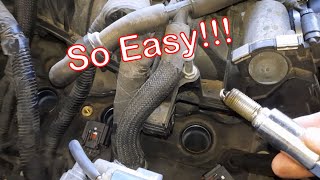
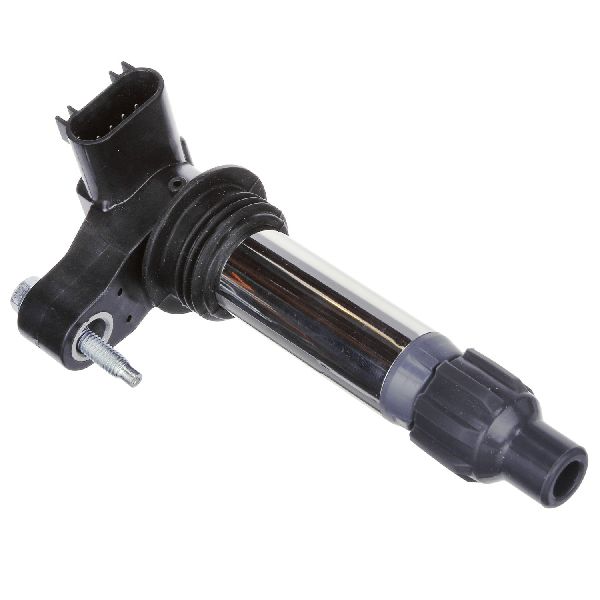
Typical fix: Replace the faulty ignition coil. It is good practice to replace the spark plug at the same time. 🎬 Watch: This walkthrough shows how to replace your plugs and coils. Accessing the front bank coils (2, 4, 6) requires only removing the plastic engine cover.
Est. part cost: $30-$60 - Worn or Fouled Spark Plug 🔴 High Probability → Shop Spark Plug Spark plugs are a routine maintenance item with a finite lifespan, typically around 100,000 miles. However, on direct-injection engines, they can foul earlier due to carbon and oil byproducts.
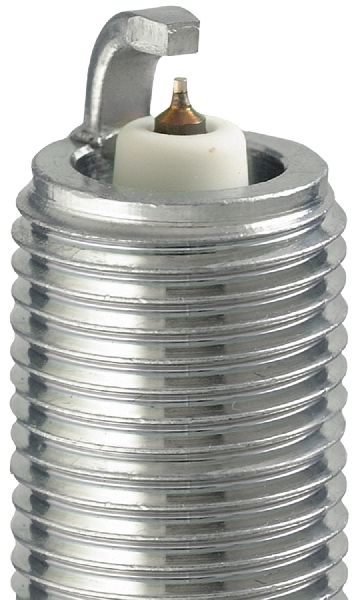
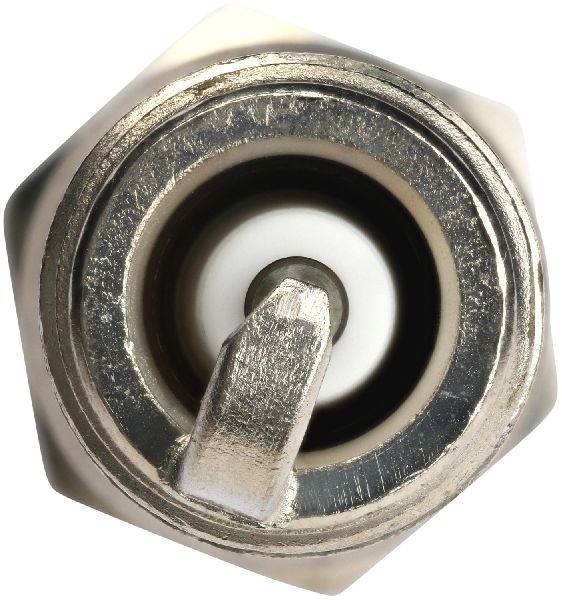
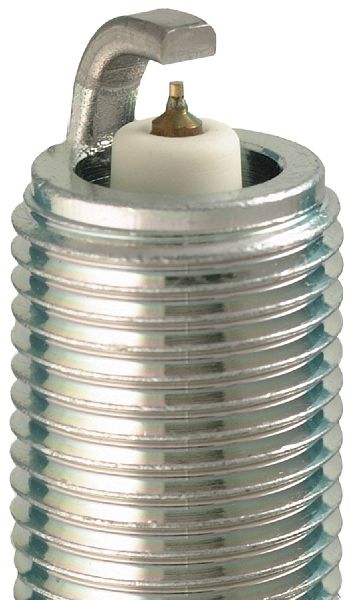
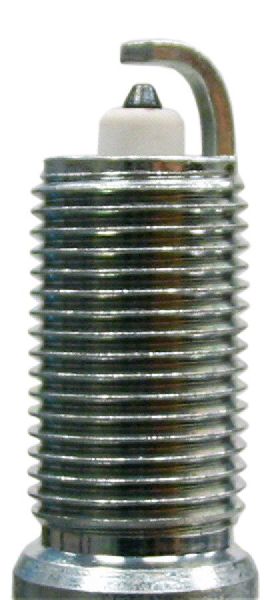
How to confirm: After ruling out the ignition coil, remove the spark plug from cylinder 2. Inspect it for wear (worn electrode), fouling (black, oily, or white deposits), or a cracked porcelain insulator. The correct ACDelco Iridium plug (41-109) is pre-gapped to 0.043" and should not be re-gapped.
Typical fix: Replace the spark plug. It is highly recommended to replace all six spark plugs at once to ensure even performance, especially if their age is unknown.
Est. part cost: $10-$25 per plug - Carbon Buildup on Intake Valves 🟡 Medium Probability The 3.6L LLT V6 is a direct-injection (DI) engine. In DI engines, fuel is sprayed directly into the cylinder, so it never washes over the intake valves. This allows oil and combustion byproducts from the PCV system to bake onto the valves, forming hard carbon deposits that disrupt airflow and cause misfires, especially on cold starts. This is a very well-documented issue across the entire GM 3.6L DI family.
How to confirm: This requires removing the upper intake manifold and visually inspecting the intake ports and valves with a borescope. Misfires that are worse on a cold start and do not resolve with new plugs/coils strongly suggest carbon buildup.
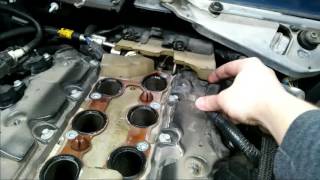
Typical fix: The valves must be physically cleaned. 🎬 See how a professional cleans carbon buildup from the intake valves. The most effective method is media blasting (often called 'walnut blasting') performed by a professional shop, with costs typically ranging from $500-$900. Chemical induction cleaning services are less effective on heavy deposits.
Est. part cost: $0 (service cost is all labor) - Clogged or Faulty Fuel Injector ⚪ Low Probability → Shop Fuel Injector Direct injectors operate under extremely high pressure and can become clogged or fail electrically over time. While less common than ignition parts, a failed injector can cause a persistent P0302 that doesn't respond to a tune-up.
How to confirm: This is more difficult to diagnose. A professional can perform a fuel injector balance test with a scan tool. An owner can test the injector's resistance, which should be between 11-14 ohms for the 2009-2011 LLT engine or 1.2-1.8 ohms for the 2012-2016 LFX engine. Swapping it with another injector is a definitive test but requires removing the intake manifold.
Typical fix: Replace the faulty fuel injector. The intake manifold must be removed for access. It is often recommended to replace all injectors on the same bank at the same time.
Est. part cost: $70-$150
Rare But Worth Checking
- Loose Ignition Coil Ground Bolt: → Shop Ignition Coil TSB #PIP5038B specifically mentions that a loose or corroded ground bolt for the front bank of cylinders (G114) can cause intermittent misfires on cylinders 2, 4, and 6. The G114 ground is an 8mm bolt located on the front cylinder head between cylinders 4 and 6. This is a quick check that can save a lot of money on parts, and there are multiple forum and video accounts of this being the sole cause of the issue.
- Stretched Timing Chains: The 3.6L V6 family, particularly the earlier LLT version, is notorious for premature timing chain wear due to oil life monitor issues and oil consumption. While this usually sets timing-specific codes like P0008 or P0017, it can sometimes manifest as misfires on one or more cylinders before those codes appear.
- Low Engine Compression: Internal engine issues like a bad valve, worn piston rings, or a leaking head gasket can cause a loss of compression, leading to a misfire. This is a serious mechanical failure and is diagnosed with a compression test after all other causes are ruled out.
- Damaged Oil Control Valve (OCV) Solenoid: → Shop Engine Variable Valve Timing (VVT) Oil Control Valve TSB #21-NA-036 notes that a damaged OCV solenoid can break apart, causing oil pressure issues and misfires on specific cylinders, including cylinder 2. The end of the solenoid can break off and get stuck in the camshaft cover.
- Cylinder Head Porosity: → Shop Engine Cylinder Head A rarer issue documented in TSB #21-NA-278 involves porosity in the cylinder head casting, which can allow coolant to leak into the spark plug tube. This will foul the plug and destroy the ignition coil. If you find coolant in the spark plug well, this may be the cause, requiring cylinder head replacement.
Diagnosis Steps
- Read the trouble codes with an OBD-II scanner. Note any other codes present besides P0302 and check freeze frame data for clues like engine temperature on first misfire.
- Identify cylinder 2. On the transverse 3.6L V6, the front bank (closest to the radiator) contains cylinders 2, 4, and 6, from passenger side to driver side. Cylinder 2 is on the passenger side.
- Perform the 'coil swap test'. Swap the ignition coil from cylinder 2 with the coil from cylinder 4. Clear the codes.
- Drive the vehicle until the check engine light comes back on. Re-scan the codes.
- If the code is now P0304, the ignition coil you moved is faulty. Replace it.
- If the code is still P0302, the coil is likely good. Move the coil back to its original position.
- Remove the spark plug from cylinder 2. Inspect it for wear, damage, or fouling (oil, carbon, or coolant). Replace if necessary. It is recommended to replace all six plugs if their service history is unknown.
- While the coil is out, inspect the G114 ground bolt on the front cylinder head between cylinders 4 and 6. Ensure it is clean and torqued to 15 lb-ft (20 NM) per TSB PIP5038B.
- If the plug, coil, and ground are good, the issue may be with the fuel injector, carbon buildup, or a mechanical engine problem. Further diagnosis with a scan tool or compression test is needed.
Parts You'll Likely Need
- Ignition Coil
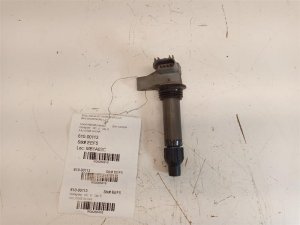
(OEM #12632479)— This is the most common cause of a single-cylinder misfire on the 3.6L V6. The ACDelco part number is D515C.
Trusted brands: ACDelco, Delphi, NGK
OEM price range: $50-$75
Aftermarket price range: $30-$60 - Spark Plug
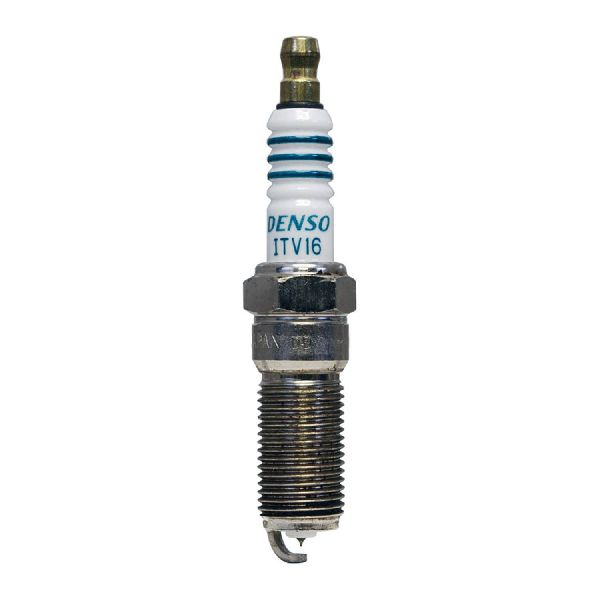
(OEM #41-109)— This is a standard maintenance item and the second most likely cause of a misfire. The correct plug is an ACDelco Iridium plug.
Trusted brands: ACDelco, NGK
OEM price range: $15-$25
Aftermarket price range: $10-$20
Related Codes That Often Appear With This One
- P0300 — If the misfire becomes intermittent or affects other cylinders, a P0300 (Random/Multiple Cylinder Misfire) code may be set. This is common if the cause is carbon buildup or a failing timing chain.
- P0304, P0306 — If the cause is systemic to the front bank of cylinders (like a loose G114 ground bolt or a clogged catalytic converter for that bank), you may see misfire codes for the other cylinders on that bank.
- P0264, P0265, P0202 — These codes indicate an electrical fault (low, high, or open circuit) with the cylinder 2 fuel injector. If one of these is present with P0302, the problem is almost certainly with the injector or its wiring.
- P0017, P0008 — These codes indicate a crankshaft/camshaft position correlation error, which on the 3.6L V6 is a strong indicator of stretched timing chains. If seen with a P0302, the timing chain is the likely root cause of the misfire.
Technical Service Bulletins (TSBs) & Recalls
- PIP5038B: Addresses engine misfires caused by loose or corroded ignition coil ground bolts.
- 21-NA-036: Details how a damaged OCV solenoid can break and cause misfires on specific cylinders.
Platform-Specific Known Issues
- The 3.6L direct-injection (LLT) engine is known for carbon buildup on intake valves, which is a common cause of misfires that are not fixed by replacing coils or plugs.
- GM issued TSB #PIP5038B regarding misfires caused by loose ignition coil ground bolts (G114 for the front bank) on the cylinder heads.
- GM issued TSB #21-NA-036 which identifies a damaged Oil Control Valve (OCV) solenoid as a potential cause for misfires on cylinders 2 and/or 5.
Mechanic-Grade Diagnostic Values
- Fuel Injector Coil Resistance (2009-2011 LLT Engine) — expected: 11 - 14 Ohms. Failure: A reading of 0 ohms (short), infinity/OL (open), or significant deviation from this range.
- Fuel Injector Coil Resistance (2012-2016 LFX Engine) — expected: 1.2 - 1.8 Ohms. Failure: A reading outside this narrow range indicates an internal injector fault. Using the LLT spec will lead to misdiagnosis.
- High Pressure Fuel Pump Actuator Resistance — expected: 0.35 - 0.6 Ohms at 68°F (20°C). Failure: Resistance outside this range indicates a faulty pump actuator.
- Camshaft Actuator (VVT) Solenoid Resistance — expected: 7 - 12 Ohms (LFX) or 8 - 13 Ohms (LLT). Failure: A reading outside the specified range indicates a faulty solenoid.
- Low-Side Fuel Pressure (In-Tank Pump) — expected: ~50-65 PSI (regulated by FPCM); some replacement pumps are rated up to 110-120 PSI. Failure: Low pressure can starve the high-pressure pump, causing misfires under load.
- High-Side Fuel Rail Pressure (at idle) — expected: 1.9 - 5.0 MPa (276 - 725 PSI). Failure: Pressure that is unstable or significantly out of range indicates a problem with the high-pressure pump or rail sensor.
- Injector Pulse Width (at warm idle) — expected: 2 - 4 milliseconds (ms). Failure: A value of 0 ms or one that is dramatically different from other cylinders points to a wiring or ECM driver issue.
Hidden / Shadow Codes Worth Checking
- Mode $06, TID $A2-$A7, CID $01-$0C: Mode $06 data contains misfire counters for each cylinder for the current and last 10 driving cycles. A technician can view these raw counts to identify intermittent misfires on cylinder 2 that haven't yet reached the threshold to set a P0302 code. (see via A professional scan tool capable of reading Mode $06 data.)
Scan Tool Commands That Help
- GDS2 / Tech2: Fuel Injector Balance Test (AFIT) — After ruling out ignition issues, this test commands each injector to fire and measures the fuel pressure drop. A significantly different drop for cylinder 2 confirms a clogged or failing injector without needing to physically swap it.
- GDS2 / High-End Bidirectional Scanner: Cylinder Power Balance / Injector Kill — While the engine is idling rough, this function deactivates one injector at a time. If disabling cylinder 2 causes little or no change in idle quality, it confirms that cylinder is not contributing power.
- GDS2 / High-End Bidirectional Scanner: Crankshaft Position Variation Learn — This procedure should be performed after major engine work (like timing chain replacement) or replacing the crankshaft position sensor. It resets the baseline data the ECM uses to detect misfires. An incorrect learned profile can cause false misfire codes.
Wiring & Ground Locations
- G114 — On the front (Bank 2) cylinder head, between cylinders 4 and 6. It is an 8mm bolt.. This is the primary ground for the Bank 2 ignition coils (cylinders 2, 4, 6). If loose or corroded, it can cause intermittent misfires on any or all of these cylinders, including a P0302. This is a known issue documented in TSB PIP5038B.
- Injector/Coil Harness Chafe Point — The engine wiring harness section that routes over the valve covers and near the intake plenum.. TSB #PIP4924D notes that this harness can rub through on sharp edges of the intake or valve cover bolts, causing shorts or open circuits for the fuel injectors or ignition coils, leading to misfire and circuit codes.
- ECM Connector X1/X2 — At the Engine Control Module (ECM), typically located in the engine bay near the fuse box.. If all component and wiring tests pass, the final check is for a damaged pin or poor connection at the ECM itself. The cylinder 2 injector and coil control circuits can be tested for continuity directly from these connectors.
Real Owner Repair Stories
- YouTube Commenter (Unknown year, P0302) — Cylinder 2 misfire.
❌ Tried (didn't work) Replacing ignition coils, Replacing spark plugs
✅ What actually fixed it Used Redline fuel injection cleaner in the fuel tank, which cleared the clogged fuel injector and resolved the misfire code. - CarGurus Forum User (2010 GMC Acadia) — P0300, P0302, P0304, P0306 (all of Bank 2) with RPM fluctuations on cold start.
❌ Tried (didn't work) Replacing spark plugs, Replacing ignition coils, Replacing fuel injectors, Replacing spark plug tube seals
✅ What actually fixed it The user's diagnostic journey pointed towards a fuel delivery problem specific to Bank 2. A technician noted the long-term fuel trims for Bank 2 were excessively high, indicating the computer was removing fuel to compensate for a rich condition, likely caused by a leaking injector or fuel pressure issue on that bank. The final fix was not posted, but the diagnosis moved from simple ignition parts to a complex fuel trim issue.
"I Checked Everything" — The Actual Cause
- A common scenario is having a persistent P0302 (or multiple misfires on Bank 2 like P0304, P0306) with no vacuum leaks found during a smoke test. The actual cause is often electrical, such as the loose G114 ground bolt for the ignition coils, which a smoke test cannot detect.
- Another case is when a smoke test is clean, but the engine lacks power and misfires under load. The root cause can be a clogged catalytic converter for Bank 2, creating excessive exhaust backpressure. This is an exhaust-side problem that intake-side diagnostics will miss.
When the Usual Fixes Don't Work
- While the most common advice is to immediately suspect a bad ignition coil or spark plug, there are numerous documented cases where these parts were replaced without fixing the P0302 code. In a significant number of these instances on direct-injection engines, the root cause was either heavy carbon buildup on the intake valves (which requires mechanical cleaning) or a less-common electrical fault, like the loose G114 ground bolt. One owner reported fixing a persistent misfire that survived a tune-up by simply using a high-quality fuel injector cleaner, suggesting a partially clogged injector was the true culprit. These cases highlight the need to look beyond the ignition system if the first, most obvious fixes do not work.
OEM Part Supersession History
GM 12622561→ACDelco 41-109— Standard part number update and branding change.ACDelco D515C (Ignition Coil)→ACDelco D521C— Updated design for improved durability and heat resistance.
Heads up: Both are generally compatible, but using the latest revision (D521C) is recommended for longevity.GM 12638530 (LLT Injector)→GM 12669384 (LFX Injector)— Different engine design (LLT vs LFX).
Heads up: These parts are NOT interchangeable. The LLT injector has ~11-14 Ohm resistance, while the LFX injector has ~1.5-2.5 Ohm resistance. Using the wrong injector will cause immediate circuit fault codes and potential ECM damage.
Model Year Variations Within This Range
- 2009-2011 (LLT Engine): Uses fuel injectors with a resistance of 11-14 Ohms (e.g., GM Part #12638530). Often equipped with a Bosch ECM. More prone to timing chain stretch setting P0008/P0017 codes.
- 2012-2016 (LFX Engine): Uses different fuel injectors with a much lower resistance of 1.2-1.8 Ohms (e.g., GM Part #12669384). Often equipped with a Delphi ECM. Has improved timing chain components but can still have issues. The cylinder heads and intake manifold are also a different design.
Diagnostic Flowchart
Real Owner Stories
Aggregated from forums and TSBs cited above. Mileages and costs reflect what owners reported in those sources.
2010 GMC Acadia 3.6L V6
Symptoms: Misfiring and RPM fluctuations specifically on cold starts, triggering codes P0300 and P0302.
What fixed it: Owner replaced spark plugs, ignition coils, and fuel injectors; further diagnostic discussion pointed toward valve cover leaks affecting fuel trims.
Source hint: https://www.2carpros.com/questions/gmc-acadia-2010-gmc-acadia-codes-p0300-and-p0302-misfiring-rpm-s-fluctuations-on-cold-start
2015 GMC Acadia 3.6L V6
Symptoms: P0300 random misfire code affecting cylinders 2, 4, and 6 on the front bank.
What fixed it: Tightening a loose G114 ignition coil ground bolt on the cylinder head.
Source hint: https://www.youtube.com/watch?v=r44GS7I32A4 - Video from 'The ASE Mechanic'
GMC Acadia 3.6L V6
Symptoms: Check engine light with P0300 and P0302 misfire codes.
What fixed it: Diagnostic discussion pointed towards replacing coils and plugs, and addressing carbon buildup on the intake valves.
Source hint: https://www.acadiaforum.net/threads/p0302-and-p0300-misfire-codes.10193/
Related OBD-II Codes
Frequently Asked Questions
Does TSB PIP5038B apply to my 2009-2016 GMC Acadia for code P0302?
What spark plugs should I use to fix a P0302 on my 3.6L V6 Acadia?
Can a damaged Oil Control Valve (OCV) cause a cylinder 2 misfire on this engine?
Why does my Acadia have a P0302 misfire that is much worse on cold starts?
How do I test the fuel injector on my 2009-2011 Acadia LLT?
Where exactly is cylinder 2 located on the 3.6L V6 Acadia?
Helpful Videos
Used OEM Parts in Stock
New Aftermarket Parts Available

The information in this article is provided for general reference and educational purposes only. Vehicle specifications, procedures, and part compatibility can vary by production date, trim level, and region. Always consult your vehicle's factory service manual and verify part numbers before purchasing or performing repairs. Safety-critical components such as airbags, seat belts, and braking systems should be installed by a qualified professional.
- GMC Acadia:
- 🧭 Diagnostic Flowchart
- 🎬 Helpful Videos
- 🛍️ Shop This Part
- What's Unique About the 2009-2016 GMC Acadia
- Symptoms You May Notice
- Most Likely Causes
- Rare But Worth Checking
- Diagnosis Steps
- Parts You'll Likely Need
- Related Codes That Often Appear With This One
- Technical Service Bulletins (TSBs) & Recalls
- Platform-Specific Known Issues
- Mechanic-Grade Diagnostic Values
- Hidden / Shadow Codes Worth Checking
- Scan Tool Commands That Help
- Wiring & Ground Locations
- Real Owner Repair Stories
- "I Checked Everything" — The Actual Cause
- When the Usual Fixes Don't Work
- OEM Part Supersession History
- Model Year Variations Within This Range
- Real Owner Stories
- 2010 GMC Acadia 3.6L V6
- 2015 GMC Acadia 3.6L V6
- GMC Acadia 3.6L V6
- Related OBD-II Codes
- Frequently Asked Questions
- 🎟️ Get 5% Off