

P0302 on 2018-2021 GMC Yukon: Cylinder 2 Misfire Causes and Fixes
P0302 indicates a misfire on cylinder #2. The most likely causes are a bad spark plug or ignition coil. However, these GM V8 engines are known for AFM/DFM lifter failures, which is a more serious and expensive mechanical cause for this code, often requiring lifter and camshaft replacement.
- P0302 is a misfire on the front passenger-side cylinder.
- Always start diagnosis with the cheapest and easiest parts: swap the ignition coil and inspect the spark plug before buying any parts.
- Be aware that a persistent ticking noise accompanying the misfire is a strong indicator of a failed AFM/DFM lifter, a known and serious issue with these engines.
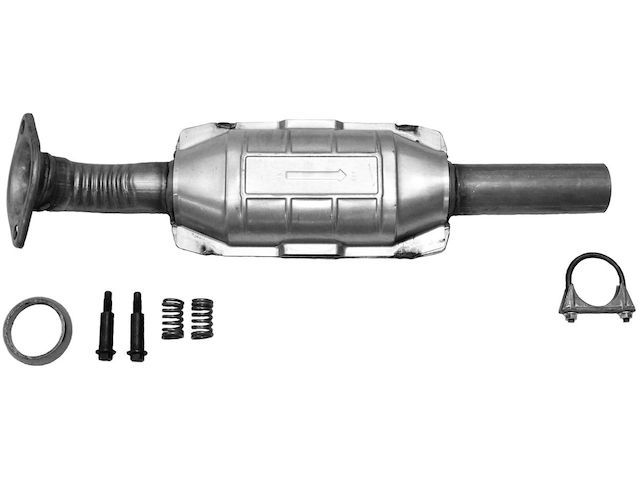
- A flashing check engine light is a critical warning to stop driving to prevent expensive damage to the catalytic converter.
What's Unique About the 2018-2021 Gmc YUKON
The 2018-2021 Yukon uses GM's EcoTec3 V8 engines with either Active Fuel Management (AFM) for 2018-2020 models or Dynamic Fuel Management (DFM) for 2021 models. While ignition issues are common, these engines have a well-documented history of valve lifter failures related to these cylinder-deactivation systems. A collapsed or stuck lifter is a frequent cause of a single-cylinder misfire like P0302, making it a higher-than-usual probability on this specific vehicle compared to other makes. This issue is so prevalent it has resulted in class-action lawsuits and numerous Technical Service Bulletins (TSBs).
Diagnostic Flowchart
Tap your situation to follow the diagnostic path that matches what you're seeing on this vehicle.
Generation note: This range covers the end of the 4th generation (2018-2020) and the start of the 5th generation (2021). The 4th gen uses Active Fuel Management (AFM), while the 5th gen introduced Dynamic Fuel Management (DFM). Both systems are linked to potential valve lifter failures that can cause this code, with some sources indicating the DFM-equipped L84/L87 engines in 2021+ models are particularly prone to early-life failures.
Symptoms You May Notice
- Rough or shaking idle
- Hesitation or stumbling during acceleration
- Reduced engine power and 'Service Engine' message
- Flashing or solid Check Engine Light
- A distinct ticking or tapping noise from the engine, often associated with lifter failure.
- Squeaking sound on cold starts that may precede a more pronounced knock.
- Replacing only the spark plug when the ignition coil is the actual problem. The 'coil swap' diagnostic step is crucial to avoid this.
- Assuming a simple ignition problem when a ticking noise is present, which strongly points towards a more serious mechanical lifter issue.
- Replacing an ignition coil or plug when the underlying cause is a wiring issue due to harness chafing.
Most Likely Causes
- Worn or Fouled Spark Plug 🔴 High Probability → Shop Spark Plug Spark plugs are a standard maintenance item. Oil fouling can occur due to issues with the PCV system or internal engine wear, which can be exacerbated by the AFM/DFM systems.
How to confirm: Remove the spark plug from cylinder #2 (front passenger side) and inspect it for wear, carbon buildup, or oil fouling. Compare it to a new plug. A healthy plug should have a light tan color on the insulator.
Typical fix: Replace the spark plug. It's often recommended to replace all 8 plugs at the same time for even performance. Use a torque wrench for proper installation.
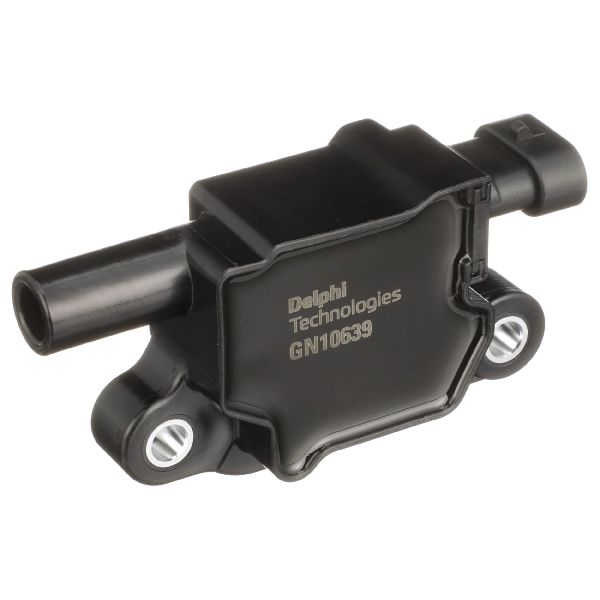
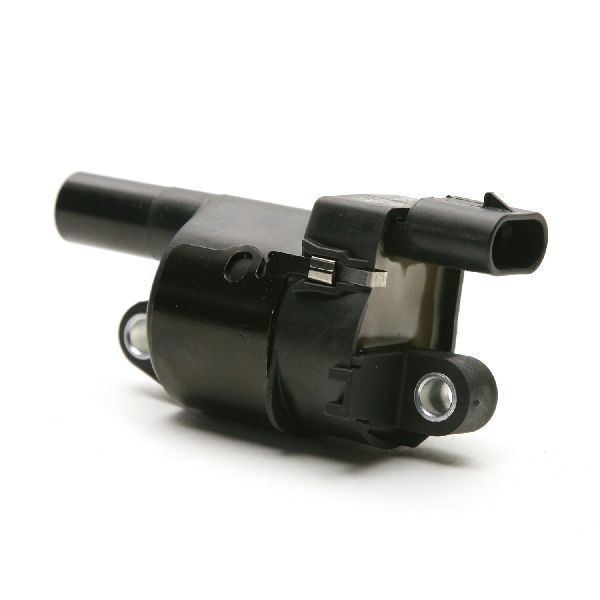
Est. part cost: $5-$20 per plug - Failed Ignition Coil 🔴 High Probability → Shop Ignition Coil Ignition coils are a common failure item on most modern vehicles due to heat cycles. ACDelco coils use pure copper windings to improve durability.
How to confirm: Swap the ignition coil from cylinder #2 with another cylinder (e.g., cylinder #4, the next one back on the same side). Clear the codes and drive. If the code changes to P0304, the coil is faulty.
Typical fix: Replace the faulty ignition coil. It is a simple bolt-on part. 🎬 See this step-by-step guide for replacing your ignition coils.
Est. part cost: $40-$100 - Failed AFM/DFM Lifter 🟡 Medium Probability → Shop Engine Valve Lifter The AFM/DFM systems in the 5.3L and 6.2L V8 engines use special lifters that are a known, widespread failure point. They can become stuck, collapse, or have their internal locking pin fail, preventing the valve from opening and causing a misfire. This issue is particularly noted in 2021 models.
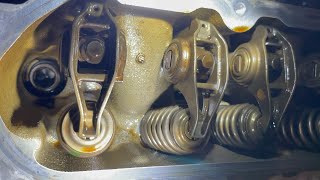
How to confirm: This is an advanced diagnosis. A persistent ticking noise is a key symptom. 🎬 Watch: How to diagnose AFM lifter noise yourself. A mechanic will perform a compression test; a reading near zero on cylinder #2 points to a collapsed lifter. The next step is to remove the valve cover to visually inspect for a rocker arm that isn't moving or a bent pushrod.
Typical fix: Requires replacing all lifters and guides on the affected cylinder bank (GM recommends replacing both banks). Often, the camshaft is also damaged by the failed lifter and requires replacement. This is a significant and costly repair, with dealer quotes ranging from $4,000 to $10,000 depending on camshaft damage. Many independent shops recommend an 'AFM/DFM delete' which replaces the specialized lifters with standard ones and reprograms the ECU to prevent future failure. 🎬 Watch: The permanent fix for GM lifter failure explained.
Est. part cost: $400-$1200 for lifters, guides, gaskets, and potentially a camshaft. - Faulty Fuel Injector ⚪ Low Probability → Shop Fuel Injector Direct injection injectors operate at high pressure and can be susceptible to clogging from fuel deposits, though this is less common than ignition or lifter issues.
How to confirm: Listen to the injector with a mechanic's stethoscope to ensure it's clicking. A more definitive test is to swap the injector with another cylinder, but this is more labor-intensive than swapping a coil. A professional can test injector balance rates with a high-end scan tool.
Typical fix: Replace the faulty fuel injector.
Est. part cost: $50-$150
Rare But Worth Checking
- Broken Valve Spring: Some 2021 models with 5.3L and 6.2L engines were subject to a known issue with a bad batch of valve springs. This can cause a misfire similar to a lifter failure. TSBs like #PIP5752G and #PIP5423B address this, often seen with codes P0300, P0106, and P0506.
- Intake Manifold Gasket Leak: → Shop Engine Intake Manifold A vacuum leak near the intake port for cylinder #2 can lean out the air/fuel mixture and cause a misfire. This would typically be accompanied by other codes like a P0300 (random misfire) or lean condition codes.
- Engine Harness Chafing: TSB #21-NA-149 describes a condition where the engine wiring harness can chafe against engine or chassis components, potentially causing a short in the ignition coil or injector circuit for cylinder #2. This can lead to a variety of codes and rough running conditions.
Diagnosis Steps
- Read the DTCs with an OBD-II scanner. Note if P0302 is the only code or if others like P0300 or P050D are present.
- If the Check Engine Light is flashing, stop driving as soon as safely possible to prevent catalytic converter damage.
- Listen for a distinct ticking or squeaking noise from the engine bay. A mechanical tick strongly suggests a valvetrain issue (lifter/pushrod/spring).
- Identify cylinder #2: It is the first cylinder on the passenger side, closest to the front of the vehicle.
- Perform a 'coil swap'. Switch the ignition coil from cylinder #2 with the coil from cylinder #4 (the one behind it). Clear the codes and run the engine. If the code returns as P0304, the ignition coil is bad and needs replacement.
- If the code remains P0302, swap the spark plugs between cylinders #2 and #4. If the code moves to P0304, the spark plug was the issue.
- If the misfire is still on cylinder #2, inspect the ignition coil connector and wiring for damage or chafing, as noted in TSB 21-NA-149.
- Listen to the fuel injector on cylinder #2 with a stethoscope; it should have a regular, audible clicking sound. Compare it to the sound of an adjacent injector.
- If a persistent ticking noise is heard, perform a compression test on cylinder #2. A reading below 100 PSI, especially near zero, is a strong indicator of a collapsed lifter or broken valve spring.
- If low compression is confirmed, professional diagnosis is required. This will involve removing the valve cover for visual inspection of the valvetrain components (rocker arms, pushrods, valve springs).
Parts You'll Likely Need
- Spark Plug
(OEM #ACDelco 41-162 (Iridium))— Spark plugs are a routine maintenance item and the most common failure point for a single-cylinder misfire.
Trusted brands: ACDelco, NGK
OEM price range: $10-$20
Aftermarket price range: $5-$15 - Ignition Coil
(OEM #ACDelco 12699383 (replaces 12690388))— The coil provides the high voltage for the spark. It is the second most common failure point for a P0302 code.
Trusted brands: ACDelco, Delphi
OEM price range: $60-$100
Aftermarket price range: $40-$75 - AFM/DFM Valve Lifter Kit
(OEM #12698946)— This is the most common major mechanical failure on this platform that causes a single-cylinder misfire. A collapsed lifter will stop valve operation.
Trusted brands: ACDelco, Elgin
OEM price range: $500-$800
Aftermarket price range: $300-$500
Related Codes That Often Appear With This One
- P0300 — If the misfire is intermittent or affects other cylinders, a P0300 (Random/Multiple Cylinder Misfire) may be stored alongside P0302. This is very common with lifter failures.
- P050D — This code for 'Cold Start Rough Idle' is often seen with lifter-related misfires, as the problem can be more pronounced before the engine warms up and oil pressure stabilizes.
- P0106 — Often seen with a broken valve spring, as the unseated valve causes erratic pressure pulses in the intake manifold, confusing the MAP sensor.
Technical Service Bulletins (TSBs) & Recalls
- 23-NA-043: Guides to correct customer concerns of Poor Engine Performance, Engine Misfires, Malfunction Indicator Lamp (MIL) Illuminated - DTC P0300-P0308 Set.
- 21-NA-149: Addresses engine wire harness chafing that can cause various electrical issues, including misfires.
- PIP5752G: Preliminary information for a service engine light, misfire, and engine noise with possible DTCs P0300, P0106, P0506, pointing to a possible valve spring concern.
- 15-06-01-002F: Details engine misfire/tick noise from a mechanically collapsed or stuck AFM lifter.
Platform-Specific Known Issues
- AFM/DFM Lifter Failure: The most prominent issue for the 2018-2021 Yukon V8s is the failure of the Active or Dynamic Fuel Management lifters. These components can collapse or become stuck, leading to a persistent misfire, often accompanied by a ticking noise and potential camshaft damage. Multiple TSBs, including #23-NA-043, address misfire conditions on these engines. Failures can occur at very low mileage, particularly on 2021 models.
- Broken Valve Springs (2021 models): A batch of defective valve springs was installed on some 2021 model year 5.3L and 6.2L engines, which can lead to misfires. TSB #PIP5752G specifically mentions investigating for a possible valve spring concern when DTCs P0300, P0106, and P0506 are present.
Mechanic-Grade Diagnostic Values
- Low-Side Fuel Pressure (at Schrader valve) — expected: 55-62 PSI (Key On, Engine Off). Failure: Pressure below 50 PSI may indicate a weak in-tank fuel pump.
- High-Side Fuel Pressure (Direct Injection - Scan Tool) — expected: 500-1500 PSI at idle, increases with engine load.. Failure: Readings that are erratic or significantly lower than commanded pressure can indicate a failing high-pressure fuel pump (HPFP).
- Ignition Coil Primary Resistance — expected: 0.6 - 0.7 ohms. Failure: A reading of OL (over-limit) or significantly outside this narrow range indicates a faulty coil.
- Ignition Coil Secondary Resistance — expected: 7.5 - 11.1 kOhms. Failure: A reading of OL or significantly outside this range indicates a faulty coil winding.
Scan Tool Commands That Help
- GM GDS2 / High-End Scan Tool: Misfire History / Misfire Counters — Use this to view the number of misfire events per cylinder over the current and previous drive cycles. This confirms if the misfire is exclusively on cylinder 2 or if other cylinders are also misfiring intermittently, which might not be enough to set their own codes but points towards a systemic issue.
- GM GDS2: Cylinder Power Balance — This bidirectional test deactivates one cylinder at a time and measures the drop in engine RPM. If deactivating cylinder 2 results in a much smaller RPM drop than other cylinders, it confirms cylinder 2 is not contributing its full share of power.
- GM GDS2: Fuel Injector Balance Test — This test fires each injector for a set duration and measures the corresponding drop in fuel rail pressure. It can identify a clogged or weak injector on cylinder 2 if the pressure drop is less than other cylinders.
Wiring & Ground Locations
- G103 — Front of the passenger-side cylinder head.. This is a primary engine ground. A loose or corroded connection here can cause insufficient ground for the ignition coils or injectors on the passenger bank (including cylinder 2), leading to a weak spark or erratic operation that mimics a component failure.
- G114 — Engine harness ground, location can vary but typically on the engine block or chassis near the firewall.. GM issued a Preliminary Information Bulletin (PIE0548) for 2019-2020 models regarding loose connections at G110 and G114. A loose engine harness ground can cause a multitude of issues, including misfires.
- Cylinder 2 Ignition Coil Connector — The 4-pin connector on the ignition coil for the front-most cylinder on the passenger side.. Pinout for testing: Pin A (Pink wire) = 12V+ Ignition Supply; Pin B (Black/White wire) = Ground; Pin C (Dark Blue wire) = ECM Trigger Signal. Checking for voltage, ground, and a signal with a test light or scope can rule out wiring issues between the ECM and the coil.
Real Owner Repair Stories
- Reddit user on r/MechanicAdvice (2007 Sierra 4.8L V8 (similar engine architecture)) — Persistent P0302 misfire code.
❌ Tried (didn't work) Initial diagnostics were not specified but the user proceeded to engine disassembly.
✅ What actually fixed it The user found a collapsed lifter on cylinder #2. The community advised that the correct repair is to replace all lifters on the affected bank (or both banks) and inspect the camshaft for damage, as a damaged cam lobe is a common consequence that will cause the new lifter to fail again.
"I Checked Everything" — The Actual Cause
- A common scenario for P0302 on these engines is that standard diagnostics for ignition (swapping coils/plugs) and fuel (checking injector pulse) show no faults. A smoke test for vacuum leaks also comes back clean. The persistent misfire, especially if accompanied by a ticking noise, is ultimately traced to a purely mechanical failure inside the engine: a collapsed AFM/DFM lifter. This is missed by initial electronic and vacuum tests because it's a failure of a mechanical valvetrain component, not an electronic sensor or air leak.
OEM Part Supersession History
GM AFM Lifter (e.g., Elgin HL-7011)→GM DFM Lifter (e.g., Elgin HL-7025, GM 12698946)— The newer DFM lifter was redesigned and is more robust. GM has specified it as the replacement for older AFM applications.
Heads up: The new DFM lifter (HL-7025) IS backward-compatible and can be used in older AFM engines. However, the old AFM lifter (HL-7011) is NOT forward-compatible and CANNOT be used in newer DFM engines.ACDelco Ignition Coil 12690388→ACDelco 12699383— Standard part evolution and potential design improvements.
Model Year Variations Within This Range
- 2018-2020: These models primarily use the 5.3L L83 and 6.2L L86 engines with Active Fuel Management (AFM), which deactivates a fixed bank of 4 cylinders. Lifter failures are common.
- 2021: The 2021 model introduced the 5.3L L84 and 6.2L L87 engines with Dynamic Fuel Management (DFM). This system is more complex, capable of deactivating any combination of cylinders. These DFM lifters are a distinct part and have a high reported rate of early failure, making a P0302 on a 2021 model highly suspicious for a lifter issue.
- 2019-2020: A GM Preliminary Bulletin (PIE0548) specifically highlights these model years for potential loose ground connections at G110 and G114, which can cause various electrical issues including misfires.
Helpful Videos
We Have This Part in Stock


The information in this article is provided for general reference and educational purposes only. Vehicle specifications, procedures, and part compatibility can vary by production date, trim level, and region. Always consult your vehicle's factory service manual and verify part numbers before purchasing or performing repairs. Safety-critical components such as airbags, seat belts, and braking systems should be installed by a qualified professional.
- Gmc YUKON:
- 🧭 Diagnostic Flowchart
- 🎬 Helpful Videos
- 🛍️ Shop This Part
- What's Unique About the 2018-2021 Gmc YUKON
- Symptoms You May Notice
- Most Likely Causes
- Rare But Worth Checking
- Diagnosis Steps
- Parts You'll Likely Need
- Related Codes That Often Appear With This One
- Technical Service Bulletins (TSBs) & Recalls
- Platform-Specific Known Issues
- Mechanic-Grade Diagnostic Values
- Scan Tool Commands That Help
- Wiring & Ground Locations
- Real Owner Repair Stories
- "I Checked Everything" — The Actual Cause
- OEM Part Supersession History
- Model Year Variations Within This Range
- 🎟️ Get 5% Off