

P0302 on 2016-2018 Honda Civic 1.5L: Cylinder 2 Misfire Causes and Fixes
On a 2016-2018 Civic with the 1.5L Turbo, P0302 is often more than a simple tune-up issue. The most likely causes are a faulty fuel injector on cylinder 2 or a systemic issue addressed by Honda's TSB A19-033, which involves a software update to correct fuel and engine control logic. A bad ignition coil or a spark plug fouled by fuel from a leaking injector are also common culprits.
- P0302 on a 2016-2018 Civic 1.5T is not always a simple spark plug or coil problem.
- Check if your vehicle is covered by Honda's TSB A19-033, which provides a software-based fix for this exact issue.
- If the TSB doesn't apply, a faulty fuel injector is a highly probable cause, as reported by other owners.
- Standard diagnostic steps like swapping ignition coils are still valuable to rule out simpler causes before moving to injectors.
- This engine has a known oil dilution issue which creates an environment prone to misfires; using high-quality oil and adhering to change intervals is critical.
What's Unique About the 2016-2018 Honda CIVIC

The 10th generation Civic with the L15B7 1.5L direct-injection turbo engine has unique, widely-documented issues that can cause a P0302 code. This engine is known for a problem with fuel diluting the engine oil, particularly in colder climates or with frequent short trips. This excess fuel can foul spark plugs and, more critically, points to failing fuel injectors that leak raw fuel into the cylinder. Honda acknowledged these drivability issues by issuing Technical Service Bulletin A19-033, which provides a fix involving software updates for the PGM-FI (engine computer) and sometimes hardware replacement, indicating the problem is often not just a single failed part but a broader system calibration issue.
Diagnostic Flowchart

Tap your situation to follow the diagnostic path that matches what you're seeing on this vehicle.
Symptoms You May Notice

- Rough or vibrating idle
- Engine hesitation or stumbling during acceleration
- Noticeable loss of power
- Flashing or solid Check Engine Light
- Reduced fuel economy
- A smell of gasoline from the exhaust
- Strong smell of gasoline in the engine oil (on the dipstick)
- Immediately replacing the catalytic converter. A misfire will cause the converter to fail, but it is the symptom, not the root cause.
- Replacing only spark plugs when the underlying issue is a faulty fuel injector or a software problem, leading to the new plugs fouling quickly.
- Replacing ignition coils when the true culprit is a leaking fuel injector that has fouled the spark plug.
Most Likely Causes

- Faulty Fuel Injector 🔴 High Probability → Shop Fuel Injector Leaking fuel injectors are a very common failure on the 1.5L Turbo engine, leading to fuel-rich conditions and misfires. An NHTSA owner complaint directly cites a failed fuel injector as the cause for P0302. Multiple forum threads and even class-action lawsuit documents detail owners replacing injectors to solve persistent misfires.
How to confirm: A mechanic can perform a fuel injector balance test. A DIY method is to swap the injector from cylinder 2 with another cylinder and see if the misfire code follows. A strong smell of fuel on the oil dipstick is also a strong indicator of a leaking injector.
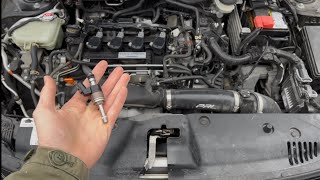
Typical fix: Replace the faulty fuel injector. Due to the high failure rate, it is strongly recommended to replace all four injectors at the same time with the updated part number. The fuel joint pipe 🎬 Watch: Step-by-step guide to replacing your fuel injectors. should also be replaced.
Est. part cost: $50-$150 per injector (aftermarket), OEM sets can be $400+ - Software/Control System Issue (per TSB A19-033) 🔴 High Probability Honda released TSB A19-033 specifically to address P030x misfire codes and P0172 (System Too Rich) on these vehicles. The fix involves updating the PGM-FI (engine) and TCM (transmission) software, and sometimes replacing the A/C control unit, indicating a complex logic issue related to engine management.
How to confirm: A Honda dealership can check your vehicle's VIN to see if it is eligible for the fixes outlined in TSB A19-033. This is the most direct way to confirm if the software update has been performed.
Typical fix: Perform the corrective actions in TSB A19-033, which includes updating PGM-FI and TCM software, changing the oil, and potentially replacing the A/C control unit. This is often the first step before replacing hardware.
Est. part cost: $0 if covered under the warranty extension, otherwise dealer diagnostic and labor fees apply. - Bad Ignition Coil 🟡 Medium Probability → Shop Ignition Coil Ignition coils are a common failure point on all modern engines, responsible for providing spark. While less specific to this platform than injectors, they are a frequent cause of single-cylinder misfires.
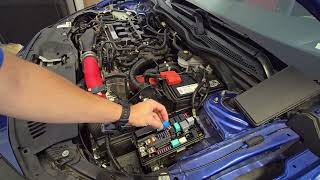
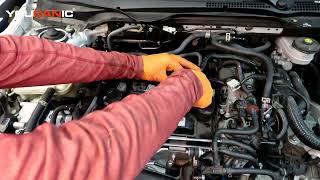
How to confirm: Swap the ignition coil from cylinder 2 with the coil from another cylinder (e.g., cylinder 3). Clear the codes and drive the vehicle. If the code changes to P0303, the ignition 🎬 See how to quickly swap and replace ignition coils. coil is faulty.
Typical fix: Replace the failed ignition coil. Many owners choose to replace all four at once as a preventative measure.
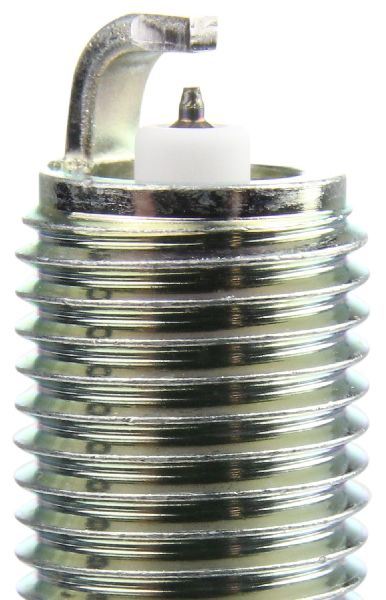
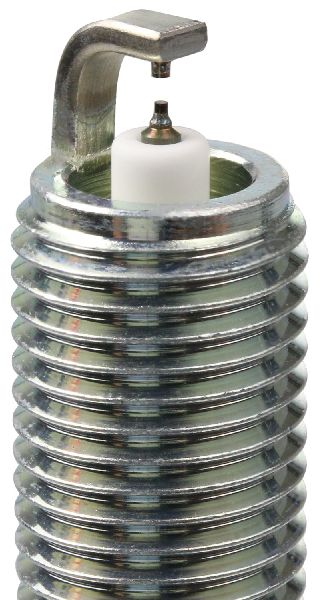
Est. part cost: $50-$90 per coil (aftermarket), $100-$160 (OEM) - Fouled or Worn Spark Plug 🟡 Medium Probability → Shop Spark Plug The oil and fuel dilution issues common to this engine can cause spark plugs to foul prematurely. A leaking fuel injector will quickly ruin a new spark plug with fuel or carbon. TSB A19-033 includes spark plug inspection as a key diagnostic step.
How to confirm: Remove the spark plug from cylinder 2 and inspect it. Look for heavy black carbon deposits (running rich), wetness from fuel, oil fouling, or a worn electrode. Compare it to the plug from a working cylinder.
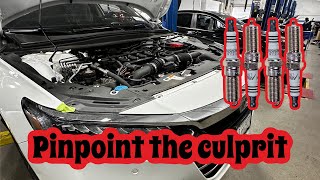
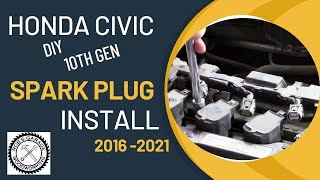
Typical fix: Replace the spark plug. It is best practice to replace all four 🎬 Watch: Save money by replacing your own spark plugs. spark plugs at the same time using OEM-spec plugs (NGK or Denso). If the plug is fuel-fouled, the root cause (likely the injector) must be addressed.
Est. part cost: $15-$30 per plug
Rare But Worth Checking
- Leaking Head Gasket: While less common, some class action lawsuits for this engine platform mention coolant leaking into the cylinders due to head gasket failure, which can cause misfires. This is a major repair and should be considered only after all other common causes are ruled out. Symptoms include coolant loss and white smoke from the exhaust.
- Poor Compression / Carbon Buildup: As a direct-injection engine, the 1.5L Turbo is susceptible to carbon buildup on the intake valves, which can prevent the valve from sealing properly, causing a loss of compression and misfires. This is a known issue on GDI engines and can be confirmed with a compression test after ruling out ignition and fuel issues.
Diagnosis Steps
- Read the trouble codes with an OBD-II scanner. Note all present codes, especially P0172 or other P030x codes.
- Check the engine oil level and smell the dipstick. An overfull oil level and a strong smell of gasoline is a classic sign of fuel dilution from a leaking injector on this engine.
- Check your vehicle's VIN against Honda's TSB A19-033. If it's eligible and the update hasn't been done, follow the dealer's guidance as this is a known issue with a specific software fix.
- If the TSB does not apply or has been performed, start with the easiest ignition checks. Swap the ignition coil from cylinder 2 with cylinder 3. Clear codes and drive. If code P0303 appears, you have a bad coil.
- If the code remains P0302, remove and inspect the spark plug from cylinder 2. Look for damage, heavy carbon, or fuel fouling. Replace if necessary, but be aware that a fouled plug is often a symptom of another issue.
- If coils and plugs are good, the fuel injector is the next and most likely suspect. This can be confirmed with a balance test or by swapping injectors between cylinders (a more involved job).
- If all else fails, perform a compression test on cylinder 2 to check for mechanical engine problems like poor valve sealing due to carbon buildup or a head gasket leak.
Parts You'll Likely Need

- Fuel Injector Set (Set of 4)
(OEM #16010-59B-315 (replaces 16010-59B-305) or 06160-5PA-305 (kit for Si/CR-V/Accord))— Cited in an NHTSA owner complaint and widely reported in forums as the primary cause of P030x codes on this engine due to leaking. Replacing as a set is recommended.
Trusted brands: Honda Genuine
OEM price range: $420-$550 for a set.
Aftermarket price range: $200-$400 for a set - Ignition Coil
(OEM #30520-59B-013)— A standard ignition system component that fails over time, leading to a lack of spark. Easy to diagnose by swapping with another cylinder.
Trusted brands: Honda Genuine, Denso, NGK/Hitachi
OEM price range: $100-$160
Aftermarket price range: $50-$90 - Spark Plug
(OEM #NGK ILZKAR8H8S (Honda P/N: 12290-59B-003))— A routine maintenance item that can foul prematurely on this engine due to the prevalent oil and fuel dilution issues.
Trusted brands: NGK, Denso
OEM price range: $20-$35
Aftermarket price range: $15-$25
Related Codes That Often Appear With This One
- P0172 — This code for 'Fuel System Too Rich' is explicitly mentioned alongside P030x codes in Honda's TSB A19-033. The underlying oil dilution and leaking injector issues often cause both codes to appear together.
- P0300 — A 'Random Misfire' code may appear with P0302 if the underlying issue (like oil dilution or a software problem) is intermittent or starting to affect other cylinders.
- P0301, P0303, P0304 — Misfire codes for other cylinders may appear if the underlying cause affects the entire engine, or if multiple fuel injectors are beginning to fail.
Technical Service Bulletins (TSBs) & Recalls
- A19-033: Warranty Extension: 2016-18 Civic 1.5L: Software Update with A/C Control Unit Replacement; DTC P0300, P0301, P0302, P0303, P0304, or P0172; Whirling Noise from Engine.
- A19-012: Predecessor to A19-033, now superseded.
- A18-137: Addresses similar drivability issues and misfire DTCs.
- 19-037: A similar TSB for the 2017-18 Honda CR-V, indicating a platform-wide issue.
Platform-Specific Known Issues
- Oil Dilution & Fuel Injector Failure: → Shop Fuel Injector The 1.5L turbo engine is known to allow unburned gasoline to mix with engine oil, especially in cold weather or short trips. This is primarily caused by faulty fuel injectors that leak fuel. This issue was prevalent enough for Honda to issue TSBs and warranty extensions.
Mechanic-Grade Diagnostic Values
- High-Pressure Fuel System Pressure — expected: The L15B7 uses a high-pressure direct-injection system; while specific idle/load values are not published in general literature, the system pressure is varied by the PCM for optimization. Boost pressure is 16.5 psi for the standard 1.5T.. Failure: Low fuel pressure under load can cause lean misfires, while pressure that is too high could indicate a faulty regulator. A scan tool is required to monitor this.
- Spark Plug Torque — expected: 16 ft-lb. Failure: Incorrect torque can lead to compression loss (too loose) or thread damage (too tight).
- Ignition Coil Bolt Torque — expected: 8.7 ft-lb. Failure: A loose coil may not seat properly on the spark plug, causing a weak or inconsistent spark.
Hidden / Shadow Codes Worth Checking
- Mode $06, TID $53, CID $02: This is not a DTC, but a specific monitor within the OBD-II system that tracks the misfire count for cylinder 2. A technician can view this data with an advanced scan tool. The count will increase with each misfire event, even if the threshold to trigger the P0302 code has not been met. (see via An advanced scan tool with Mode $06 capability is required. The data is typically listed under Test ID (TID) $53 for misfires, with Component ID (CID) $02 representing cylinder 2.)
Scan Tool Commands That Help
- Honda HDS (or advanced aftermarket): Power Balance Test — This function allows a technician to disable one cylinder at a time and observe the corresponding drop in engine RPM. If disabling cylinder 2 results in little or no change in RPM, it confirms that cylinder is not contributing power, pinpointing the misfire.
- Honda HDS (or advanced aftermarket): Injector Test — This allows for activating individual fuel injectors to listen for a 'click' or to perform a flow/balance test with appropriate equipment. It can help determine if the injector is electrically sound or mechanically stuck.
Wiring & Ground Locations
- G101 — This is a primary engine ground, typically located on or near the engine block/cylinder head, connected to the chassis.. A poor ground at G101 can cause erratic behavior in multiple engine sensors, including the ignition coils and injectors, potentially leading to misfires. The PCM and other critical components rely on this ground.
- PCM Connector C, Pin C06 — At the Powertrain Control Module (PCM).. This is the specific pin for the control signal to the fuel injector for cylinder 2. A technician can back-probe this pin to check for the correct voltage pulse from the PCM, verifying the control circuit is intact.
- PCM Connector A, Pin INJ2 — At the Powertrain Control Module (PCM) on some OBD2B wiring schemes.. On certain ECU pinouts, this is the pin for the cylinder 2 injector. Checking for a signal here can diagnose a wiring or PCM driver issue.
Real Owner Repair Stories
- Pico Technology Automotive Forum (Honda Civic (model year not specified, but similar symptoms)) — Constant misfire on one cylinder (P0303 in this case), no change when coil or injector is unplugged.
❌ Tried (didn't work) Replaced spark plugs, Replaced ignition coil, Compression test (passed), Visually checked injector spray pattern (appeared normal)
✅ What actually fixed it The forum discussion pointed towards a failing Engine Control Unit (ECU) as the likely cause after all mechanical, fuel, and ignition components tested good. The ECU was not providing the correct signal duration under load.
OEM Part Supersession History
16010-59B-305→16010-59B-315— This is the updated part number for the set of four fuel injectors, likely revised to address the leaking and fuel dilution issues prevalent in the 2016-2018 models.
Model Year Variations Within This Range
- 2016-2018: The standard L15B7 in the 2016-2018 Civic has a 10.6:1 compression ratio and produces 174 hp at 16.5 psi of boost. Later versions and those in the Si, Accord, and CR-V have a lower 10.3:1 compression ratio, different pistons, and run higher boost (up to 20.3 psi in the Si) to achieve more power, indicating internal component differences. The oil dilution issue was most prominent in the 2016-2018 models, leading to specific TSBs for this range.
Helpful Videos
We Have This Part in Stock


The information in this article is provided for general reference and educational purposes only. Vehicle specifications, procedures, and part compatibility can vary by production date, trim level, and region. Always consult your vehicle's factory service manual and verify part numbers before purchasing or performing repairs. Safety-critical components such as airbags, seat belts, and braking systems should be installed by a qualified professional.
- Honda CIVIC:
- 🧭 Diagnostic Flowchart
- 🎬 Helpful Videos
- 🛍️ Shop This Part
- What's Unique About the 2016-2018 Honda CIVIC
- Symptoms You May Notice
- Most Likely Causes
- Rare But Worth Checking
- Diagnosis Steps
- Parts You'll Likely Need
- Related Codes That Often Appear With This One
- Technical Service Bulletins (TSBs) & Recalls
- Platform-Specific Known Issues
- Mechanic-Grade Diagnostic Values
- Hidden / Shadow Codes Worth Checking
- Scan Tool Commands That Help
- Wiring & Ground Locations
- Real Owner Repair Stories
- OEM Part Supersession History
- Model Year Variations Within This Range
- 🎟️ Get 5% Off