

P0302 on 2020-2025 Hyundai Palisade: Cylinder 2 Misfire Causes and Fixes
P0302 on a Hyundai Palisade means cylinder 2 is misfiring. The most common causes are a bad ignition coil or a worn spark plug. Swapping the coil and plug from cylinder 2 to another cylinder is the fastest way to diagnose. If the problem moves, you've found the bad part. This issue is also common on its platform-mate, the Kia Telluride.
- P0302 means cylinder 2 is misfiring.
- The most likely culprits are a bad ignition coil or spark plug, which are easy to diagnose by swapping parts with a neighboring cylinder.
- Do not ignore a flashing check engine light, as it signals a severe misfire that can quickly damage your catalytic converter.
- This specific engine (3.8L GDI) is known for carbon buildup on intake valves, which can cause misfires if simple ignition fixes don't work.
- Check if your 2024 Palisade is affected by Safety Recall 255 for faulty valve springs.
What's Unique About the 2020-2025 Hyundai Palisade
The Palisade's 3.8L V6 is a Gasoline Direct Injection (GDI) engine. While reliable, this design is known to be susceptible to carbon buildup on the intake valves, which can disrupt airflow and cause misfires. While standard ignition issues are still the most common cause, this platform-specific tendency for carbon buildup should be considered if simple ignition or fuel system fixes don't resolve the issue. Additionally, a recall for faulty engine valve springs on some 2024 models can directly cause this code. Kia, a sister company, also issued a TSB (ENG228) for the same engine in the Telluride to improve the misfire detection logic for cold starts, indicating a sensitivity to this issue across the platform.
Symptoms You May Notice
- Check Engine Light is on or flashing
- Rough or choppy engine idle
- Noticeable loss of engine power and acceleration
- Engine hesitation or stumbling
- Increased fuel consumption
- Unusual smell from the exhaust (like gasoline)
- Engine shaking or vibrating more than usual
- Replacing oxygen (O2) sensors. While an O2 sensor can be affected by a misfire, it is almost never the root cause of a single-cylinder misfire code like P0302. 🎬 Watch: A quick guide to diagnosing the P0302 code
Most Likely Causes
- Faulty Ignition Coil 🔴 High Probability → Shop Ignition Coil
How to confirm: Swap the ignition coil from cylinder 2 with another cylinder (e.g., cylinder 4). Clear the codes and drive. If the code changes to P0304, the coil is bad. This is the most common DIY diagnostic step.
Typical fix: Replace the faulty ignition coil. It is often recommended to replace all spark plugs at the same time if they are near the end of their service life.
Est. part cost: $40-$80 - Worn or Fouled Spark Plug 🔴 High Probability → Shop Spark Plug Spark plugs are a regular maintenance item. While rated for long life, a faulty plug can cause a misfire at any time.
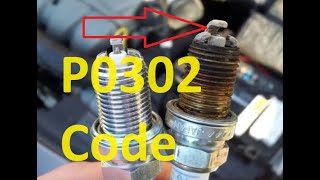
How to confirm: Remove the spark plug from cylinder 2 and inspect it. Look for wear on the electrode, heavy carbon deposits, or oil fouling. You can also swap the plug to another cylinder to see if the misfire follows, though this is more labor-intensive than a coil swap.
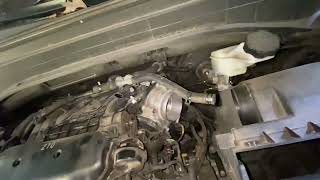
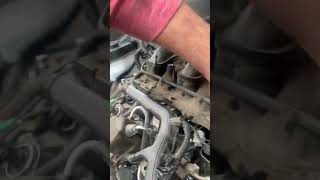
Typical fix: Replace the spark plug. It is best practice to replace all six spark plugs as a set 🎬 See this walkthrough for removing the intake to reach all plugs to maintain consistent performance. A Reddit user with a P0304 on a 2020 Palisade changed all plugs as a first step.
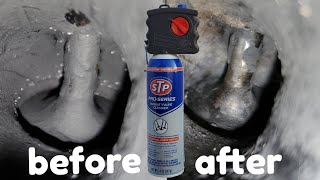
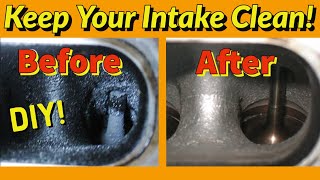
Est. part cost: $15-$30 per plug - Carbon Buildup on Intake Valves 🟡 Medium Probability The 3.8L is a GDI engine, which lacks fuel washing over the intake valves. This allows oil vapor and combustion byproducts to bake onto the valves, restricting airflow and causing misfires, especially at idle or during cold starts. Hyundai has a general TSB (23-EM-007H) regarding procedures for combustion chamber cleaning related to oil consumption, which acknowledges carbon deposit issues.
How to confirm: This requires a visual inspection using a borescope inserted into the intake ports, which is typically done by a professional mechanic.
Typical fix: The intake valves need to be cleaned, usually through a process called walnut shell blasting. This is not a DIY job for most owners 🎬 Watch: How GDI intake valves are cleaned in under an hour and can cost several hundred dollars.
Est. part cost: $0 (service cost) - Faulty Fuel Injector ⚪ Low Probability → Shop Fuel Injector Fuel injector issues are a known, though less common, problem on this engine platform. A user on a Hyundai Santa Cruz forum with a P0302 code required a fuel injector replacement under warranty. Additionally, NHTSA ODI #11602908 regarding a different Hyundai model notes a P0302 where the #2 injector was found to be bad.
How to confirm: A professional can perform a fuel injector balance test. A DIY method is to listen to the injector with a mechanic's stethoscope to ensure it's clicking; however, this doesn't confirm proper flow. Some owners have had success using a quality fuel system cleaner as a first step.
Typical fix: Replace the faulty fuel injector. The GDI injectors are located in the cylinder head and are more complex to replace than port injectors.
Est. part cost: $100-$200
Rare But Worth Checking
- Fractured Engine Valve Spring: This is a known issue covered by Hyundai Safety Recall 255 (NHTSA ID: 24V-106) for certain 2024 Palisade models. A fractured spring will cause a severe misfire and potential engine damage.
- Low Engine Compression: This indicates a more serious internal engine problem, such as worn piston rings, a damaged valve, or a leaking head gasket. A compression test is needed to confirm. NHTSA ODI #11221514 describes a P0302 where the dealer found cylinder 2 had little to no compression and required repair.
- Vacuum Leak: A leak in a vacuum hose, intake manifold gasket, or the PCV system can introduce unmetered air and cause a lean condition, leading to misfires. While this often triggers a P0300 (random misfire), a leak localized near cylinder 2's intake runner could cause a specific P0302.
Diagnosis Steps
- Verify the code with an OBD-II scanner. Note any other codes present and check freeze frame data.
- Locate cylinder 2 on the 3.8L V6 engine. The cylinders are numbered 1-3-5 on the rear bank (near the firewall) and 2-4-6 on the front bank (near the radiator), from left to right (passenger to driver side). Cylinder 2 is the front-most cylinder on the passenger side.
- Swap the ignition coil from cylinder 2 with the coil from cylinder 4 (the middle cylinder on the same front bank). This is the easiest component to access.
- Clear the codes and test drive the vehicle. If the code changes to P0304, the ignition coil is faulty and needs replacement.
- If the code remains P0302, the coil is likely good. The next most probable cause is the spark plug. Proceed to swap the spark plug from cylinder 2 with the plug from cylinder 4.
- Clear the codes and test drive again. If the code changes to P0304, the spark plug is the issue. It is highly recommended to replace all six plugs as a set.
- If the misfire is still on cylinder 2 after swapping the coil and plug, the issue is likely with the fuel injector, wiring, or a mechanical engine problem.
- Carefully inspect the wiring and connector for the cylinder 2 ignition coil and fuel injector for any signs of damage, corrosion, or looseness.
- If the above steps do not identify the cause, the vehicle should be taken to a professional for further diagnosis, including a fuel injector test, compression test, leak-down test, and borescope inspection for carbon buildup.
Parts You'll Likely Need
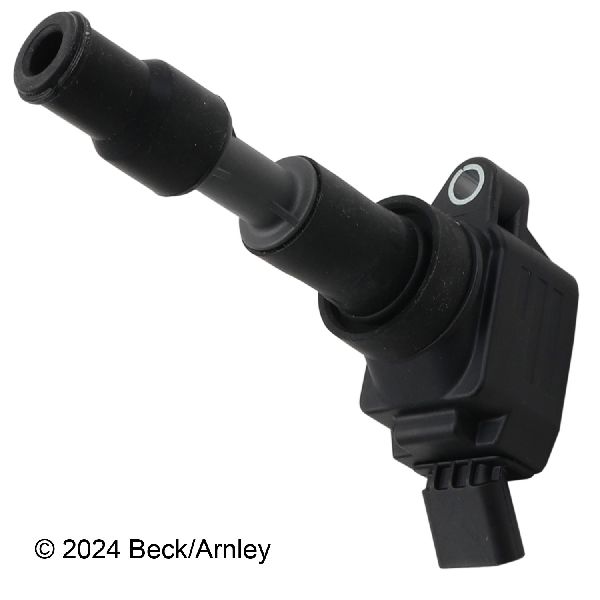
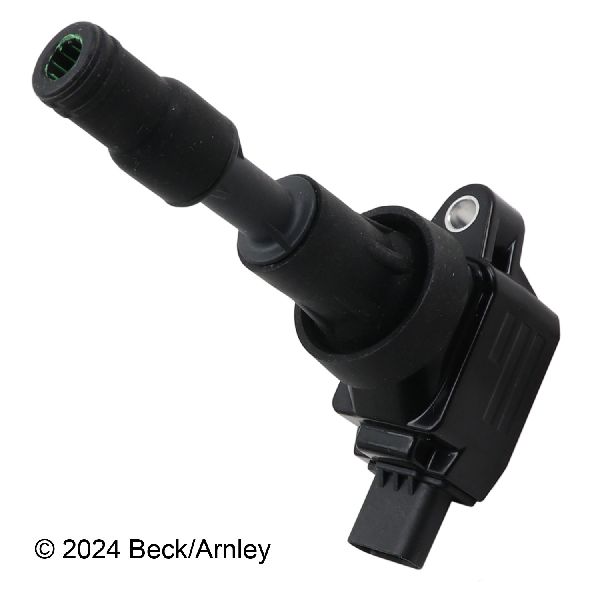
- Ignition Coil
(OEM #27301-3L100)— Ignition coils are a common wear item and a primary cause of single-cylinder misfires. The part number 27301-3L100 appears to be a newer replacement for the original part.
Trusted brands: Hyundai OE, Denso, NGK
OEM price range: $60-$90
Aftermarket price range: $40-$70 - Spark Plug
(OEM #18867-09095)— Spark plugs have a finite service life and are often the simplest fix for a misfire.
Trusted brands: Hyundai OE (NGK SILKR8A-S), NGK, Denso
OEM price range: $20-$30
Aftermarket price range: $15-$25
Related Codes That Often Appear With This One
- P0300 — If the misfire is severe or intermittent, or if the underlying cause (like a vacuum leak or fuel pressure issue) affects multiple cylinders, the PCM may also log a P0300 (Random/Multiple Cylinder Misfire Detected) code in addition to the specific cylinder code.
- P0301, P0303, P0304, P0305, P0306 — If other cylinder-specific misfire codes are present, it points towards a systemic issue rather than a component failure on just cylinder 2. A user on Reddit reported their P0304 evolved into P0300, P0305, and P0306, indicating a wider problem. NHTSA ODI #11607997 reports a similar pattern where a P0303 was followed by a P0302 misfire less than four months later.
Technical Service Bulletins (TSBs) & Recalls
- 24-01-039H-1 (Recall 255): Describes the procedure for replacing the engine sub-assembly on affected 2024 Palisade vehicles due to faulty valve springs.
- Kia TSB ENG228: While for the Kia Telluride, this TSB addresses cold start misfire detection logic (P0300-P0306) on the same 3.8L GDI engine, indicating a known sensitivity.
- 23-EM-007H: General Hyundai TSB for combustion chamber cleaning procedures related to oil consumption, which acknowledges carbon deposit issues on GDI engines.
Platform-Specific Known Issues
- Recall 255 (NHTSA 24V-106): Certain 2024 Palisade models were recalled for engine valve springs that could fracture, causing a misfire and potential engine failure. The remedy is an engine sub-assembly replacement performed by a dealer.
- Carbon Buildup: The GDI design of the 3.8L V6 makes it prone to carbon deposits on the intake valves over time, which is a well-documented cause of misfires on these engines.
- Cold Start Misfire Logic: Kia released a TSB (ENG228) for the identical engine in the Telluride to update the ECM logic for detecting misfires during cold starts, suggesting the platform may be sensitive to setting these codes under specific conditions.
Mechanic-Grade Diagnostic Values
- GDI Fuel Injector Resistance — expected: 12.5 - 13.5 Ohms. Failure: A reading outside this range, or infinite (open) / zero (short) resistance, indicates a faulty injector.
- Ignition Coil Primary Resistance — expected: Approximately 0.67 Ohms (±10%). Failure: A significant deviation from this value suggests a faulty coil.
- High-Pressure Fuel System (GDI) — expected: Varies significantly with engine load, but can reach over 2,000 PSI.. Failure: A professional scan tool is needed to monitor this. Low pressure under load can cause lean misfires, but this would likely affect multiple cylinders.
- Low-Pressure Fuel System (In-tank pump) — expected: Typically 60-85 PSI feeding the high-pressure pump.. Failure: Low pressure can starve the high-pressure pump, leading to misfires under load.
Hidden / Shadow Codes Worth Checking
- Mode $06, TID $A2-$A7: The onboard diagnostic system monitors misfire counts for each cylinder. TID $A3 corresponds to Cylinder 2. A technician can view the raw misfire count data for the current and last ten driving cycles, even if the count isn't high enough to set a P0302 code. This is invaluable for diagnosing intermittent misfires. (see via A professional scan tool like the Hyundai GDS or a high-end generic scanner capable of accessing Mode $06 data.)
Scan Tool Commands That Help
- Hyundai GDS (Global Diagnostic System): Misfire Counter — Use this function on the live data stream ('Current Data') to watch for misfire events on cylinder 2 in real-time while driving under various load conditions. This helps confirm if the misfire is constant or only occurs at specific RPMs or temperatures.
- Hyundai GDS (Global Diagnostic System): Actuation Test -> Fuel Injector Cut-off — This bidirectional command allows a technician to manually disable the fuel injector for cylinder 2 while the engine is idling. If the engine's idle quality does *not* change when the injector is cut, it confirms that the cylinder was already dead (not contributing), pointing strongly to a fuel, spark, or compression issue on that specific cylinder.
Wiring & Ground Locations
- Engine Bay Ground Points — There are several key ground points on the engine and chassis. One is located on the driver's side strut tower, another near the battery on the chassis frame rail, and a critical one from the engine block to the chassis.. The ignition coils are grounded through the engine block and wiring harness. A corroded or loose engine ground strap can cause a weak spark across all cylinders, potentially leading to intermittent misfires that may register on a single cylinder first.
- Cylinder 2 Ignition Coil Connector — The front-most connector on the passenger side of the engine, on top of the valve cover.. This connector provides power and the trigger signal to the ignition coil. Inspect the pins for corrosion, spread terminals, or wire damage. A voltage check can be performed here (with proper procedure) to confirm the coil is receiving a signal from the PCM.
OEM Part Supersession History
27310-3L000→27301-3L100— Part number consolidation and potential design update for reliability or manufacturing efficiency.
Model Year Variations Within This Range
- 2023-2025: The Hyundai Palisade received a significant facelift for the 2023 model year, including new exterior styling and interior technology. However, the core powertrain, the 3.8L Lambda II GDI V6 engine and 8-speed automatic transmission, remained unchanged from the 2020-2022 models. Therefore, the mechanical causes and diagnostic procedures for a P0302 code are identical across the entire 2020-2025 range, excluding the 2024-specific valve spring recall.
Diagnostic Flowchart
Other Known Issues on This Vehicle
Issues unrelated to this code that are worth knowing about as an owner of this generation:
- Excessive Wind/Whistling Noise 🟡 Low — Common on 2020-2021 models. Less frequent on later years after production changes. (Ref: Hyundai TSB 21-BD-003H (supersedes 19-BD-010H) provides a procedure to add foam pads and replace door moldings to fix the noise.)
- Foul Interior Odor 🟡 Low — Primarily reported on 2020-2021 Limited and Calligraphy trims with Nappa leather headrests. (Ref: Hyundai identified the cause as a manufacturing flaw in the headrest material and issued dealer procedures to neutralize the odor or replace the headrests.)
- Tow Hitch Wiring Harness Fire Risk 🔴 High — Affects 2020-2022 models equipped with a specific genuine Hyundai accessory tow hitch wiring harness. (Ref: NHTSA Recall 22V-633 (Hyundai Recall 235). Debris and moisture can short the module, creating a fire risk even when parked. Owners were advised to park outside until a fix was performed.)
- Excessive Oil Consumption 🟠 Medium — Reported by some owners of 2020 models, potentially leading to rough idling and, in severe cases, engine seizure. (Ref: Hyundai TSB 24-EM-001H provides guidelines for dealers to inspect and diagnose oil consumption concerns.)
- Transmission Range Sensor/Inhibitor Switch Faults 🟠 Medium — Can affect 2020+ models, causing no-start conditions, incorrect gear display, or fail-safe mode. (Ref: Hyundai TSB 21-AT-007H provides diagnostic procedures for a range of DTCs related to the transmission position switch (P0705, P0706).)
Used vs. New Parts: Buying Guide for This Vehicle
When a used part is the smart pick: For this repair, using a used part is generally not recommended. The most common failures are wear items (spark plugs, ignition coils). The cost savings of a used ignition coil or fuel injector are minimal compared to the risk of receiving a part that is near the end of its own service life. Labor to re-do the job would negate any savings.
Donor-vehicle mileage cap: roughly under 20000 miles for the part to have meaningful remaining life.
What to inspect on the donor part:
- If forced to buy used (e.g., for a connector pigtail), source from a vehicle with the lowest possible mileage.
- Visually inspect plastic components for brittleness or heat damage.
- For ignition coils, ensure the boot is soft and pliable with no cracks.
OEM-only on this vehicle (don't cheap out):
- GDI Fuel Injectors: Due to the high pressures and precise flow rates required, OEM or direct OEM-supplier injectors are strongly recommended. Generic aftermarket injectors may have inconsistent resistance or flow rates, leading to persistent issues.
Aftermarket brands forum-validated for this vehicle:
- Ignition Coils: Denso and NGK are original equipment suppliers to Hyundai and many other manufacturers. Their aftermarket coils are widely considered to be of equivalent quality to the genuine Hyundai part.
- Spark Plugs: NGK and Denso are the primary OEM suppliers. Using the exact part number specified in the owner's manual is critical for performance.
Brands owners have reported issues with on this vehicle:
- Unbranded or 'white box' ignition coils and fuel injectors from online marketplaces should be avoided. They often use lower-quality windings and materials, leading to a high rate of premature failure.
Documented NHTSA Reports
Persistent Misfire and Component Replacement
An owner reported experiencing a P0302 code and attempted to resolve it by replacing the battery, all ignition coils, and spark plugs. Despite these efforts, the P0302 code continued, particularly when climbing hills (NHTSA ODI #11701387).
Sudden Loss of Power
NHTSA ODI #11681280 describes a situation where a vehicle experienced a sudden loss of power and rough running during acceleration to pass. An independent shop identified the issue as a P0302 cylinder 2 misfire, rendering the vehicle unsafe to drive.
Real Owner Stories
Aggregated from forums and TSBs cited above. Mileages and costs reflect what owners reported in those sources.
2020 Hyundai Palisade 3.8L V6
Symptoms: The vehicle was misfiring; initially threw a P0304 code which later escalated to include P0300, P0305, and P0306.
What fixed it: The owner changed all spark plugs as a first step in the diagnostic process.
Source hint: Reddit r/AskMechanics - '2020 Hyundai Palisade misfiring'
2023 Kia Telluride 3.8L V6 — 8900 miles
Symptoms: Cylinder 4 misfire occurring on a very new vehicle.
What fixed it: The owner sought advice for a misfire on the Palisade's platform-mate which shares the same engine and chassis.
Source hint: Reddit r/KiaTelluride - 'Advice Needed: 2023 Telluride Cylinder 4 Misfire'
2024 Hyundai Palisade 3.8L V6
Symptoms: Misfire caused by fractured engine valve springs.
What fixed it: Engine sub-assembly replacement performed by a dealer under Recall 255.
Source hint: Recall 255 (NHTSA 24V-106) / TSB 24-01-039H-1
Related OBD-II Codes
Frequently Asked Questions
Is there a recall for engine misfires on the 2024 Hyundai Palisade?
Where is cylinder 2 located on the Palisade 3.8L V6 engine?
My Palisade misfires specifically during cold starts; is there a software fix?
Does the GDI engine in the Palisade require special maintenance to prevent P0302?
Can I swap parts to diagnose a P0302 code on this vehicle?
How much do spark plugs cost for the 3.8L Palisade?
Helpful Videos
Used OEM Parts in Stock
New Aftermarket Parts Available


The information in this article is provided for general reference and educational purposes only. Vehicle specifications, procedures, and part compatibility can vary by production date, trim level, and region. Always consult your vehicle's factory service manual and verify part numbers before purchasing or performing repairs. Safety-critical components such as airbags, seat belts, and braking systems should be installed by a qualified professional.
- Hyundai Palisade:
- 🧭 Diagnostic Flowchart
- 🎬 Helpful Videos
- 🛍️ Shop This Part
- What's Unique About the 2020-2025 Hyundai Palisade
- Symptoms You May Notice
- Most Likely Causes
- Rare But Worth Checking
- Diagnosis Steps
- Parts You'll Likely Need
- Related Codes That Often Appear With This One
- Technical Service Bulletins (TSBs) & Recalls
- Platform-Specific Known Issues
- Mechanic-Grade Diagnostic Values
- Hidden / Shadow Codes Worth Checking
- Scan Tool Commands That Help
- Wiring & Ground Locations
- OEM Part Supersession History
- Model Year Variations Within This Range
- Other Known Issues on This Vehicle
- Used vs. New Parts: Buying Guide for This Vehicle
- Documented NHTSA Reports
- Persistent Misfire and Component Replacement
- Sudden Loss of Power
- Real Owner Stories
- 2020 Hyundai Palisade 3.8L V6
- 2023 Kia Telluride 3.8L V6 — 8900 miles
- 2024 Hyundai Palisade 3.8L V6
- Related OBD-II Codes
- Frequently Asked Questions
- 🎟️ Get 5% Off