

P0302 on 2007-2009 Hyundai Santa Fe: Cylinder 2 Misfire Causes and Fixes
On a 2007-2009 Santa Fe, code P0302 is most often caused by a failed ignition coil or a worn-out spark plug for cylinder 2. Since cylinder 2 is on the front bank of the engine for both the 2.7L and 3.3L V6, this is a relatively easy DIY fix. Expect to pay $30-$70 for a new ignition coil (OEM P/N for 2.7L is 27301-3E400) and around $15 for an OEM-spec spark plug.
- P0302 on a 2007-2009 Santa Fe means cylinder #2 is misfiring.
- The most likely cause is a bad ignition coil or a worn spark plug.
- Cylinder 2 is on the front bank of the engine (near the radiator), making it easy to access for DIY diagnosis and repair.
- Start by swapping the cylinder 2 ignition coil with another one on the front bank (like cylinder 4) to see if the code follows the coil.
- Avoid driving if the check engine light is flashing to prevent expensive damage to your catalytic converter.
What's Unique About the 2007-2009 Hyundai Santa Fe
The 2007-2009 Santa Fe (CM generation) was available with either a 2.7L 'Mu' V6 or a 3.3L 'Lambda' V6 engine. For both engines, the cylinder banks are transverse (sideways), and cylinder 2 is located in the front bank (closest to the radiator), making it one of the easiest cylinders to access for diagnosis and repair. This is a significant advantage, as the rear cylinders (1, 3, 5) on these V6 engines require removing the upper intake manifold 🎬 See this walkthrough for accessing and replacing the rear spark plugs. for access, a much more labor-intensive job.
Symptoms You May Notice
- Rough or shaking idle
- Hesitation or stumbling during acceleration
- Noticeable loss of engine power
- Solid or flashing Check Engine Light
- Decreased fuel economy
- Engine may be harder to start
- Replacing the oxygen sensor. An O2 sensor will not cause a single-cylinder misfire code like P0302.
- Replacing the catalytic converter. A misfire can damage a catalytic converter, but a bad converter will not cause the misfire itself.
Most Likely Causes
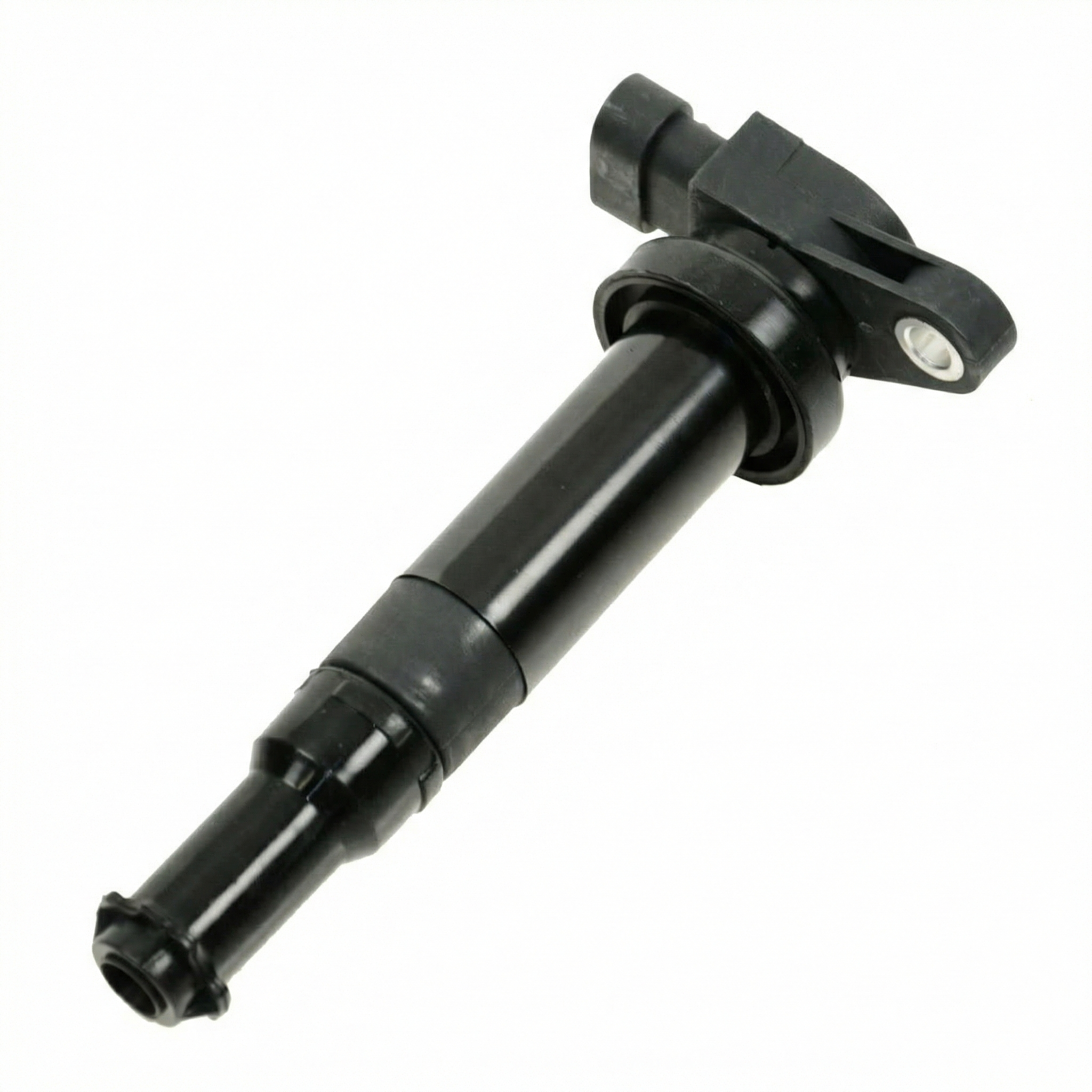
- Failed Ignition Coil 🔴 High Probability → Shop Ignition Coil Ignition coils are a common wear item on many vehicles, including the Santa Fe. Heat and vibration eventually cause the internal windings to fail, leading to a weak or no-spark condition.
How to confirm: Swap the ignition coil from cylinder 2 with the coil from another cylinder on the front bank (e.g., cylinder 4). Clear the codes and drive. If the misfire code changes to the cylinder you moved the coil to (e.g., P0304), the coil is faulty. This is the standard diagnostic procedure confirmed by many owners.
Typical fix: Replace the faulty ignition coil. It's a simple, single-bolt installation on the front bank.
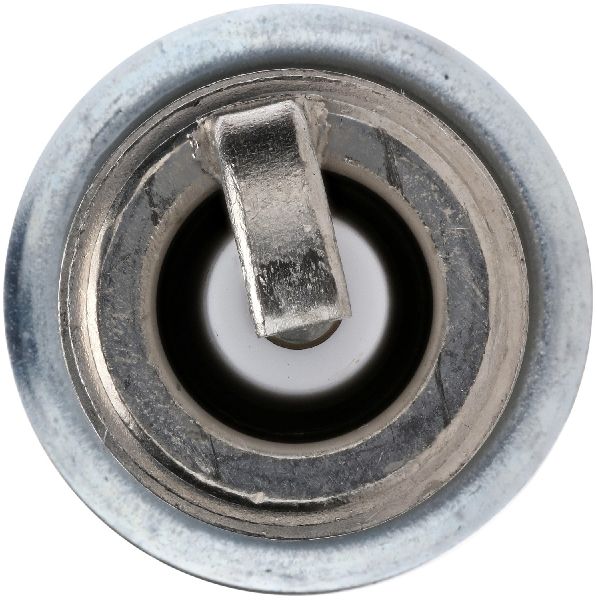
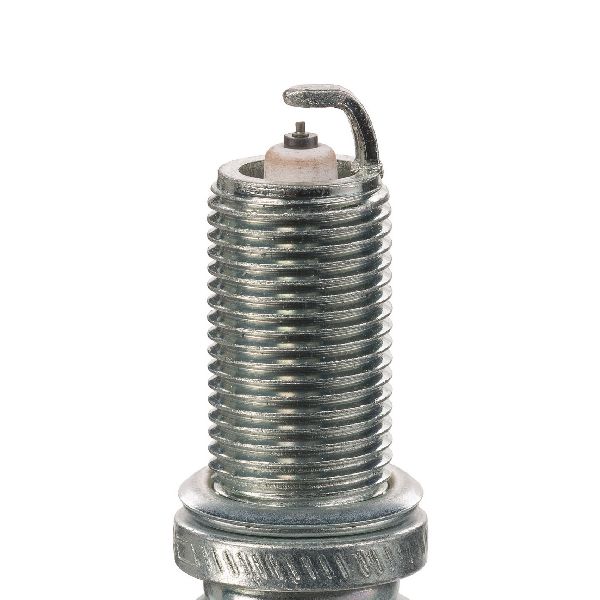
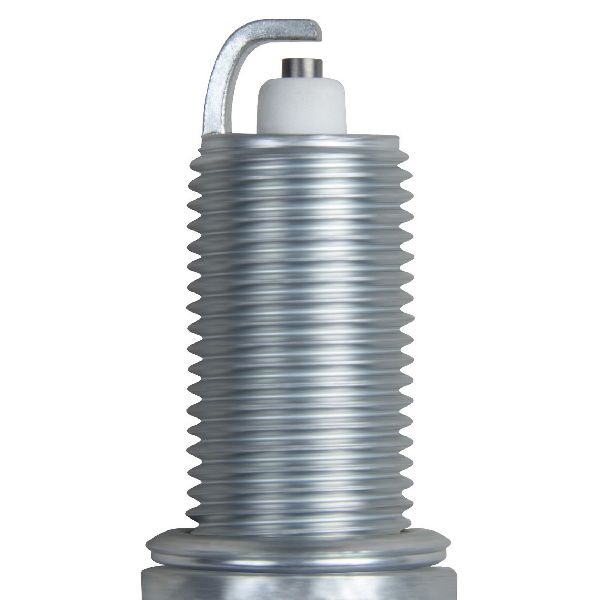
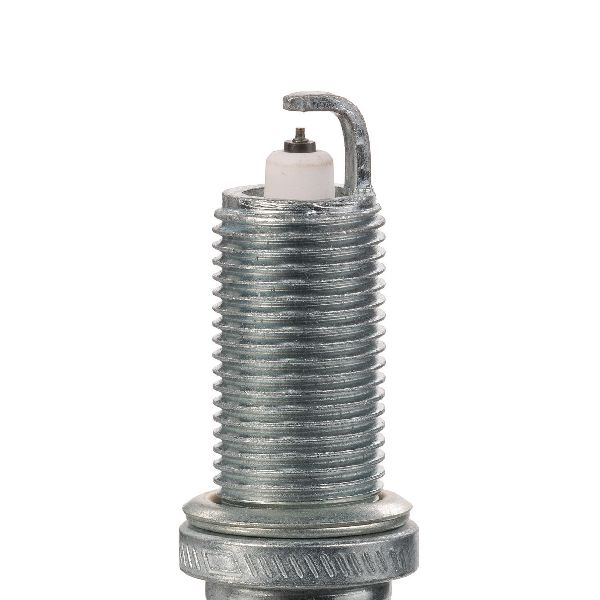
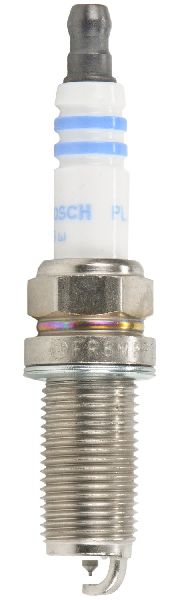
Est. part cost: $30-$70 - Worn or Fouled Spark Plug 🔴 High Probability → Shop Spark Plug Spark plugs have a finite service life. Plugs that are past their replacement interval or have been contaminated by oil or carbon can fail to produce a strong spark. Oil fouling is a particular concern if the valve cover gasket is leaking.
How to confirm: After ruling out the coil, remove the spark plug from cylinder 2. Inspect it for wear (worn electrode), carbon fouling (black, sooty), or oil fouling (wet, black). Oil in the spark plug tube is a clear sign of a leaking valve cover tube seal. Compare it to a new plug. You can also swap the plug with another cylinder to see if the misfire follows.
Typical fix: Replace the spark plug. It is best practice to replace all spark plugs at the same time to ensure even performance, but replacing just the faulty one will resolve the immediate misfire. If oil was present, the valve cover gasket and tube seals should be replaced.
Est. part cost: $10-$20 per plug - Faulty Fuel Injector 🟡 Medium Probability → Shop Fuel Injector Fuel injectors can become clogged with deposits over time, or fail electrically, preventing them from delivering the proper amount of fuel to the cylinder. In some severe cases, an injector may fail in the open position; NHTSA ODI #11606012 describes an instance where an injector failed open, flooding the cylinder with fuel and causing gas to mix with the engine oil.
How to confirm: This is more difficult to diagnose. A professional may use a stethoscope to listen for the injector's clicking sound or use a scan tool to perform a fuel injector balance test. A DIY method is to swap the injector with another cylinder, but this is more labor-intensive as it may require removing the fuel rail.
Typical fix: Replace the faulty fuel injector. It's recommended to also replace the O-rings and seals.
Est. part cost: $50-$120 - Vacuum Leak ⚪ Low Probability While less common for a single-cylinder misfire, a leak in the intake manifold gasket very close to the cylinder 2 runner could cause a lean condition and misfire. Other sources could be a cracked PCV hose or a bad gasket on the throttle body.
How to confirm: With the engine running, spray a small amount of brake cleaner or starter fluid around the intake manifold near cylinder 2. If the engine RPM changes, you have found a leak.
Typical fix: Replace the intake manifold gaskets or tighten the manifold bolts to the correct torque specification.
Est. part cost: $20-$50 for gaskets
Rare But Worth Checking
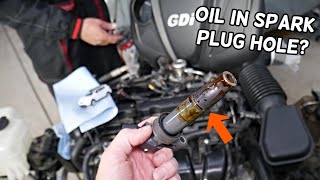
- Leaking Valve Cover Gasket (Spark Plug Tube Seal): → Shop Engine Valve Cover A very common issue on these Hyundai V6 engines is for the valve cover gasket, specifically the integrated spark plug tube seals, to fail. This allows engine oil to fill the spark plug well, shorting out the ignition coil and fouling the spark plug, causing a misfire. If you find oil on the ignition coil boot or spark plug, this is your root cause. 🎬 Watch: How to fix oil leaks in your spark plug tubes.
- Low Cylinder Compression: This indicates a more serious mechanical engine problem, such as a worn piston ring, a bad valve, or a leaking head gasket. A compression test is needed to confirm this. If compression is low, a leak-down test can pinpoint the source of the pressure loss. NHTSA ODI #11632465 notes a case where a dealership diagnosed a P0302 as a "dead cylinder," suggesting a total loss of compression requiring engine replacement.
- Timing and Internal Engine Components: In complex cases involving multiple codes, internal components may be at fault. NHTSA ODI #11606626 reports a P0302 occurring alongside P0018, P0300, P0304, and P0306, which ultimately required replacing the intake camshaft, CVVT, and timing chain tensioner.
Diagnosis Steps
- Confirm the code is P0302 using an OBD-II scanner.
- Identify cylinder 2. On the 2.7L and 3.3L V6 engines, the front bank (by the radiator) contains cylinders 2, 4, and 6, arranged from passenger side to driver side. Cylinder 2 is the first one on the passenger side of the front bank.
- Swap the ignition coil from cylinder 2 with the coil from cylinder 4.
- Clear the codes with the scanner and start the engine. Let it idle and rev it slightly to see if the Check Engine Light returns.
- Re-scan for codes. If the code is now P0304, the ignition coil is bad and needs to be replaced.
- If the code remains P0302, the coil is likely good. The next step is to inspect the spark plug.
- Move the ignition coil back to its original position. Remove the coil and inspect the spark plug tube for any oil. Oil presence indicates a leaking valve cover gasket which must be replaced.
- Remove the spark plug from cylinder 2. Check for signs of excessive wear, oil, or carbon fouling.
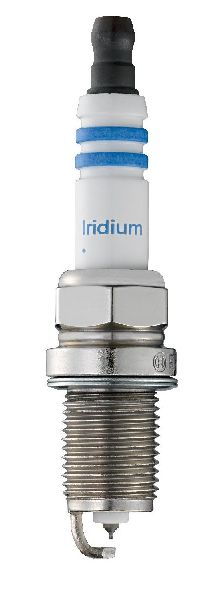
- Replace the spark plug. It is highly recommended to use OEM-spec Iridium plugs for longevity. While you are only required to replace the one, it's good practice to replace all six if they are due.
- If the coil and plug are good (and the plug well is dry) and the misfire persists, the issue may be with the fuel injector or a vacuum leak. These are more complex to diagnose and may require professional assistance.
Parts You'll Likely Need
- Ignition Coil
(OEM #27301-3E400 (For 2.7L V6))— This is the most common failure point for a single-cylinder misfire. It's responsible for generating the high voltage needed to create a spark.
Trusted brands: Denso, NGK, Delphi, Hyundai (OEM)
OEM price range: $60-$90
Aftermarket price range: $30-$70 - Spark Plug
(OEM #NGK: IFR5G11, Denso: SK16PR-A11 (Check specific application))— As a routine maintenance item, a worn-out spark plug is a very common cause of a misfire.
Trusted brands: NGK, Denso
OEM price range: $15-$25
Aftermarket price range: $8-$15
Related Codes That Often Appear With This One
- P0300 — If the misfire becomes more frequent or other cylinders begin to misfire, the more general P0300 (Random/Multiple Cylinder Misfire) code may appear alongside P0302. NHTSA ODI #11551681 describes a scenario where P0300, P0301, and P0302 were all present simultaneously.
Platform-Specific Known Issues
- Repair Story: Coil and Plugs Fix P0302: A user on a YouTube video for a 2008 Santa Fe with P0300 and P0302 confirmed that replacing the ignition coil and spark plugs on cylinder 2 completely resolved the misfire. Live data on a scan tool showed the misfire count for cylinder 2 dropping to zero after the repair. 🎬 Watch this real-world repair of a P0302 code on a 2008 Santa Fe.
- Valve Cover Gasket Leaks Causing Misfires: → Shop Engine Valve Cover Multiple forums and repair videos highlight that a common cause for misfires on this platform is a leaking valve cover gasket that allows oil to pool in the spark plug wells. This shorts out the coil and fouls the plug. An owner on a Reddit forum was advised to replace the valve cover and gasket after finding oil had contaminated all spark plugs, which started as a P0302 code.
Mechanic-Grade Diagnostic Values
- Ignition Coil Primary Winding Resistance (2.7L V6) — expected: 0.62 Ω ± 10%. Failure: A reading of 0 Ω (short) or infinite/OL (open circuit).
- Ignition Coil Secondary Winding Resistance (2.7L V6) — expected: 7.0 kΩ ± 15%. Failure: A reading significantly outside this range or OL (open circuit).
- Ignition Coil Resistance (Alternate Spec) — expected: Primary: 0.78 Ω, Secondary: 11.7 kΩ. Failure: Readings significantly different from these values.
- Fuel System Pressure (Both Engines) — expected: 105-115 PSI. Failure: Pressure significantly below this range indicates a weak fuel pump or clogged filter.
Hidden / Shadow Codes Worth Checking
- Mode $06, TID $Ax, CID $0y: Using a scan tool's Mode $06 function allows viewing of raw, non-continuous monitor data. Misfire counts for each cylinder are tracked here before they reach the threshold to set a P030x code. For example, TID $A2, CID $02 would typically represent the misfire counter for cylinder 2. This is invaluable for catching intermittent misfires that don't immediately trigger a Check Engine Light. (see via An advanced OBD-II scan tool with Mode $06 capability. The specific Test ID (TID) and Component ID (CID) for misfires may vary by manufacturer and scan tool.)
Scan Tool Commands That Help
- Hyundai GDS / Advanced Scan Tool: Injector Fuel-Cut — The PCM is designed to automatically cut fuel to a cylinder if a severe misfire is detected for an extended period (e.g., >46 seconds with a disconnected injector) to protect the catalytic converter. A technician can manually disconnect the cylinder 2 injector connector to confirm the PCM is responding correctly and to isolate the issue. If the misfire stops when the injector is disconnected, it points away from an ignition problem.
Real Owner Repair Stories
- YouTube channel 'John Richie Quillopo' (2008 Hyundai Santa Fe) — Check Engine Light with codes P0300 and P0302. Live scan tool data showed a high misfire count specifically on cylinder 2.
❌ Tried (didn't work) The video proceeds directly to the successful repair.
✅ What actually fixed it The owner replaced the ignition coil and the spark plugs for cylinder 2. After the repair, live scan tool data showed the misfire count for cylinder 2 dropped to zero, confirming the fix. - YouTube channel 'GQ Auto Diagnostics' (2009 Hyundai Santa Fe 3.3L V6) — Misfire code (P0306 in this case, but the information is relevant).
✅ What actually fixed it The video's primary value is confirming the cylinder layout for diagnosis. The technician states the front bank, closest to the radiator, is cylinders 2, 4, and 6 (from passenger to driver side). The rear bank is 1, 3, and 5. This is critical information for correctly locating cylinder 2. - NHTSA ODI #11681280 — An owner reported a sudden loss of power and rough running during acceleration to pass. An independent shop pulled code P0302, and the vehicle became unsafe to drive, requiring it to be left at a dealership for further inspection.
OEM Part Supersession History
27301-3E100→27301-3E400— Part update/revision by the manufacturer.
Heads up: For the 2.7L V6 engine, models produced before October 30, 2006, use the original part number (27301-3E100). Models produced after this date use the updated 27301-3E400 part. Using the wrong coil may result in fitment or performance issues.
Model Year Variations Within This Range
- 2007 (early production): For the 2.7L V6 engine, Santa Fe models built before 10/30/2006 require ignition coil part number 27301-3E100. Later 2007-2009 models use part number 27301-3E400. It is crucial to verify the vehicle's production date before ordering this part.
Diagnostic Flowchart
Other Known Issues on This Vehicle
Issues unrelated to this code that are worth knowing about as an owner of this generation:
- Faulty Fuel Level Sensor 🟠 Medium — Very common on 2007-2009 models. The fuel gauge becomes erratic or reads empty, often triggering a check engine light.
- Leaking Valve Cover Gaskets 🟠 Medium → Shop Engine Valve Cover — Common issue, particularly on the 3.3L engine. The rear gasket can leak oil onto the alternator, causing it to fail prematurely. The front gasket can leak oil into the spark plug tubes, causing misfires.
- Premature Suspension Component Wear 🟡 Low — Ball joints, tie rods, and control arm bushings can wear out faster than expected, leading to suspension noise and alignment problems.
- Crankshaft Position Sensor Failure 🔴 High — A known failure point that can cause stalling while driving or a no-start condition.
- Air Bag Light Illumination / Recall 🟠 Medium — A recall was issued for 2007-2009 models to update airbag computer software to prevent improper deployment. (Ref: NHTSA Recall #08V161000)
Used vs. New Parts: Buying Guide for This Vehicle
When a used part is the smart pick: For this repair, which typically involves ignition components, buying used parts is not recommended. Ignition coils and spark plugs are wear-and-tear items with a finite lifespan. A used coil from a junkyard has an unknown history and may fail shortly after installation, causing you to do the job twice. Structural components like a used intake manifold or fuel rail would be acceptable if needed for a more complex diagnosis.
Donor-vehicle mileage cap: roughly under 80000 miles for the part to have meaningful remaining life.
What to inspect on the donor part:
- For an ignition coil, there are no reliable visual cues. It's an electronic component that fails internally.
- Avoid parts from vehicles with obvious signs of front-end collision or engine fire.
- Check for excessive corrosion on electrical connectors.
OEM-only on this vehicle (don't cheap out):
- While not strictly 'OEM-only', using OEM or OEM-equivalent ignition coils is highly recommended. Low-quality aftermarket coils are a frequent source of premature failure and repeat misfires.
Aftermarket brands forum-validated for this vehicle:
- NGK
- Denso
- Delphi
Brands owners have reported issues with on this vehicle:
- Unbranded, low-cost ignition coils from online marketplaces are frequently reported to fail quickly.
- Some technicians have reported high failure rates with store brands or certain aftermarket manufacturers like SMP/BWD in recent years, though experiences vary.
Real Owner Stories
Aggregated from forums and TSBs cited above. Mileages and costs reflect what owners reported in those sources.
2008 Hyundai Santa Fe
Symptoms: Check engine light showing P0300 and P0302; live data confirmed active misfires on cylinder 2.
What fixed it: Replacing the ignition coil and spark plugs on cylinder 2.
Source hint: YouTube - '2008 HYUNDAI SANTA FE P0300 P0302'
2007-2009 Hyundai Santa Fe
Symptoms: Misfire code P0302; upon inspection, oil was found contaminating the spark plugs.
What fixed it: Replacing the valve cover and gasket to stop oil from pooling in the spark plug wells and shorting the coil.
Source hint: Reddit forum mentioned in 'Valve Cover Gasket Leaks Causing Misfires'
2001 Hyundai Santa Fe 2.7L V6
Symptoms: P0302 code occurring specifically on cold starts.
What fixed it: The owner replaced plugs, wires, coils, and injectors, though the issue remained complex to resolve.
Source hint: Hyundai Forums - 'Code p0302'
Related OBD-II Codes
Frequently Asked Questions
Where is cylinder 2 located on the 2007-2009 Santa Fe V6 engine?
Can I just swap parts to see if the ignition coil is the problem?
I found oil in my spark plug tube while checking P0302; what does this mean?
What specific spark plugs should I use for my Santa Fe to prevent misfires?
Is the P0302 code related to the fuel level sensor issues common in 2007-2009 models?
Helpful Videos

Used OEM Parts in Stock
New Aftermarket Parts Available

The information in this article is provided for general reference and educational purposes only. Vehicle specifications, procedures, and part compatibility can vary by production date, trim level, and region. Always consult your vehicle's factory service manual and verify part numbers before purchasing or performing repairs. Safety-critical components such as airbags, seat belts, and braking systems should be installed by a qualified professional.
- Hyundai Santa Fe:
- 🧭 Diagnostic Flowchart
- 🎬 Helpful Videos
- 🛍️ Shop This Part
- What's Unique About the 2007-2009 Hyundai Santa Fe
- Symptoms You May Notice
- Most Likely Causes
- Rare But Worth Checking
- Diagnosis Steps
- Parts You'll Likely Need
- Related Codes That Often Appear With This One
- Platform-Specific Known Issues
- Mechanic-Grade Diagnostic Values
- Hidden / Shadow Codes Worth Checking
- Scan Tool Commands That Help
- Real Owner Repair Stories
- OEM Part Supersession History
- Model Year Variations Within This Range
- Other Known Issues on This Vehicle
- Used vs. New Parts: Buying Guide for This Vehicle
- Real Owner Stories
- 2008 Hyundai Santa Fe
- 2007-2009 Hyundai Santa Fe
- 2001 Hyundai Santa Fe 2.7L V6
- Related OBD-II Codes
- Frequently Asked Questions
- 🎟️ Get 5% Off