

P0302 on 2017-2019 Jaguar F-PACE: Cylinder 2 Misfire Causes and Fixes
P0302 indicates a misfire on cylinder 2. On the 2017-2019 F-PACE, this is most often caused by a faulty ignition coil or a worn spark plug. A simple DIY diagnosis is to swap the coil from cylinder 2 to another cylinder to see if the code follows. Parts are relatively inexpensive, around $50-$150. On these JLR engines, a faulty or seized fuel injector is also a notable possibility if ignition parts check out.
- P0302 means cylinder 2 is misfiring. Do not drive if the Check Engine Light is flashing.
- The most likely cause is a bad ignition coil or spark plug, which can be diagnosed at home by swapping parts between cylinders.
- Always check for other codes. If you see timing-related codes, the problem may be the VVT system, not the coil or plug (TSB SSM74160).
- On Ingenium engines, check for a loose ignition coil ground strap as a possible simple fix (TSB SSM75510).
- While less common, faulty fuel injectors are a known issue on this platform and can be a more expensive repair.
What's Unique About the 2017-2019 Jaguar F-PACE
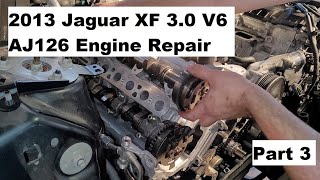
While the primary causes for P0302 on the F-PACE are common ignition parts, this platform has specific nuances. Some direct-injection engines, like the AJ126 V6 and Ingenium I4 🎬 Watch: A detailed teardown of the AJ126 V6 engine, have noted issues with fuel injectors failing or becoming seized in the cylinder head. This can sometimes be exacerbated by water ingress from hood vents dripping onto the engine, leading to corrosion around the injectors. Furthermore, Jaguar has issued Technical Service Bulletins (TSBs) that point to less common causes. One TSB suggests a misfire code can be triggered by a loose ignition coil ground strap, while another indicates it can appear alongside timing-related codes due to a VVT solenoid issue, sometimes with no noticeable driving problems.
Diagnostic Flowchart
Tap your situation to follow the diagnostic path that matches what you're seeing on this vehicle.
Symptoms You May Notice
- Rough or vibrating idle.
- Engine hesitation or stumbling during acceleration.
- Noticeable loss of engine power.
- Solid Check Engine Light on the dashboard
- Flashing Check Engine Light (indicating a severe, catalyst-damaging misfire).
- Reduced fuel economy.
- In some cases, no noticeable driveability issues, as noted in TSB SSM74160.
- Replacing only the spark plug when the ignition coil was the actual failure, or when the coil was damaged by a leaking valve cover gasket.
- Replacing ignition or fuel parts when the actual cause is a loose ground strap as described in TSB SSM75510.
- Guessing at fuel injectors without ruling out simpler ignition problems first. A Reddit user reported a mechanic quoted $2,100 for an injector replacement as a gamble without being certain it was the cause.
Most Likely Causes
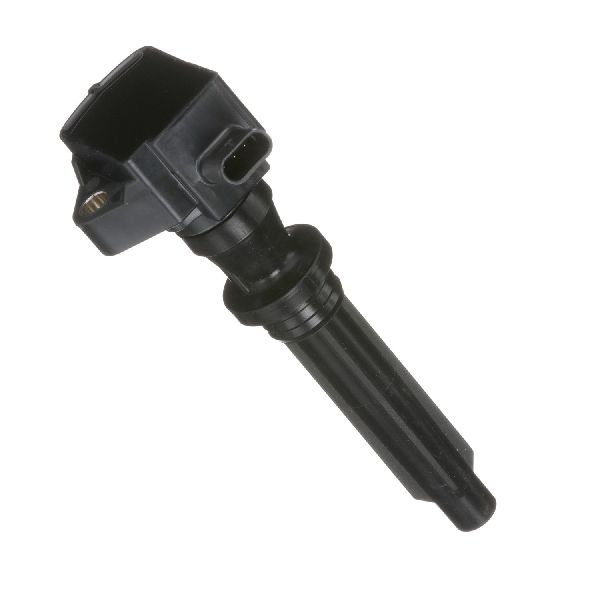
- Faulty Ignition Coil 🔴 High Probability → Shop Ignition Coil Coil-on-plug ignition coils are a common failure item on many modern engines, including the JLR family, due to constant high heat and electrical stress. Oil leaks from the valve cover gasket can also saturate the coil boot and cause it to fail.
How to confirm: Swap the ignition coil from cylinder 2 with another cylinder (e.g., cylinder 4 on the V6). Clear the codes and drive the vehicle. If the code changes to P0304, the ignition coil is confirmed to be the fault.
Typical fix: Replace the faulty ignition coil. It is often recommended to replace the corresponding spark plug at the same time.
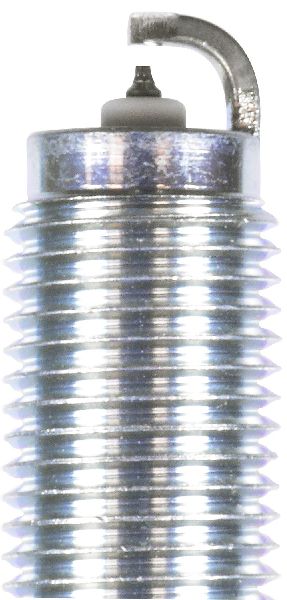
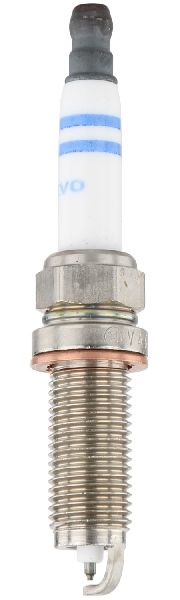
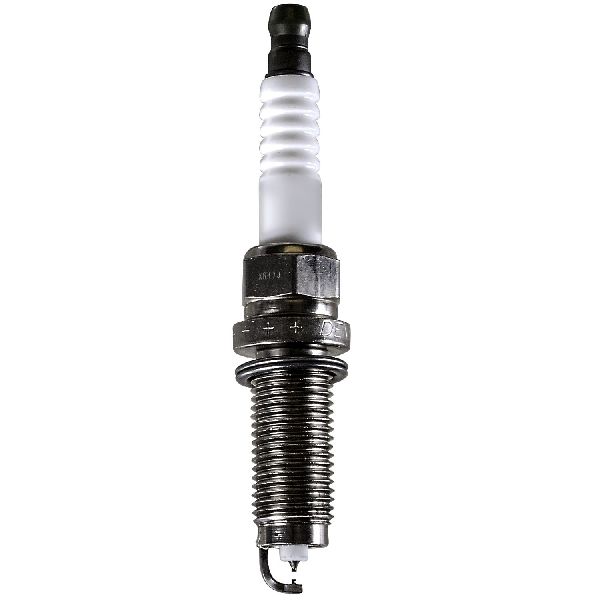
Est. part cost: $80-$150 - Worn or Fouled Spark Plug 🔴 High Probability → Shop Spark Plug Spark plugs are a regular maintenance item. A worn electrode or carbon/oil fouling can prevent a strong spark, leading to a misfire. Plugs on these engines have a long service interval, but can fail prematurely.
How to confirm: After confirming the ignition coil is good, remove the spark plug from cylinder 2. Inspect it for wear, damage, or fouling (black, wet, or white deposits). Compare it to a plug from a known good cylinder.
Typical fix: Replace the spark plug in cylinder 2. It is best practice to replace all spark plugs as a set to ensure even performance and avoid future misfires.
Est. part cost: $15-$35 per plug - Clogged or Faulty Fuel Injector 🟡 Medium Probability → Shop Fuel Injector Jaguar's direct injection engines can be susceptible to fuel injector issues. They can become clogged with deposits or fail electronically, preventing the correct amount of fuel from being delivered to cylinder 2. Some owners on forums report this as the cause after ignition components were replaced without success.
How to confirm: This is more difficult to diagnose. A professional may need to perform a fuel injector balance test. A DIY method involves swapping injectors between cylinders, but this is a much more involved job than swapping coils. Listening to the injector with a mechanic's stethoscope can sometimes reveal an issue.
Typical fix: Replace the faulty fuel injector. This often requires removing the fuel rail. 🎬 See this walkthrough for accessing injectors and the fuel rail Sometimes, using a high-quality fuel system cleaner can resolve minor clogging.
Est. part cost: $100-$250 - Leaking Valve Cover Gasket ⚪ Low Probability → Shop Engine Valve Cover Gaskets can become brittle over time, allowing oil to leak into the spark plug tubes. This oil soaks the ignition coil boot, causing it to swell and fail, leading to a misfire.
How to confirm: When removing the ignition coil from cylinder 2, inspect the coil boot and the spark plug tube for the presence of engine oil.
Typical fix: Replace the valve cover gasket and the oil-fouled ignition coil and spark plug.
Est. part cost: $50-$150 for the gasket set
Rare But Worth Checking
- Loose Ignition Coil Ground Strap: → Shop Ignition Coil Per TSB SSM75510, a loose ground fastener for the ignition coil harness can cause intermittent high resistance, leading to random misfires, including P0302. Checking that specific ground points are secure can be a simple fix for a frustrating issue.
- Faulty Variable Valve Timing (VVT) Solenoid: Per TSB SSM74160, P0302 can appear with a group of timing-related codes (P054A-00, P0014-71, P000B-00, P0341-00). In this specific case, the root cause may be a faulty VVT solenoid, not a component on cylinder 2.
- Low Cylinder Compression: Internal engine mechanical issues like a leaking valve, worn piston rings, or a bad head gasket can cause a loss of compression, resulting in a persistent misfire. A compression test is needed to confirm this.
- Vacuum Leak: A leak in a vacuum hose or intake manifold gasket near cylinder 2 can lean out the air/fuel mixture for that cylinder, causing a misfire. A hissing sound near the engine can be an indicator.
Diagnosis Steps
- Read all stored fault codes with an OBD-II scanner. Note any codes that appear alongside P0302, as they are critical clues, especially timing codes or other misfire codes.
- Locate cylinder 2. For the 3.0L V6, it's the front-most cylinder on the driver's side bank. For the 2.0L I4, it's the second cylinder from the front.
- Swap the ignition coil from cylinder 2 with the coil from another cylinder (e.g., cylinder 4 on the V6 or cylinder 3 on the I4).
- Clear the codes and perform a test drive. If the code returns for the cylinder you moved the coil to (e.g., P0304 or P0303), the ignition coil is faulty and must be replaced.
- If the code remains P0302, swap the spark plug from cylinder 2 with the one from the other cylinder.
- Clear codes and test drive again. If the code moves, the spark plug was the issue. Replace the spark plugs (preferably as a full set).
- If the misfire persists on cylinder 2, inspect the spark plug tube for oil, which would indicate a leaking valve cover gasket.
- Inspect for vacuum leaks, particularly around the intake manifold gasket near cylinder 2. Listen for hissing sounds after shutting the engine off.
- If other timing codes are present, investigate the VVT system as suggested by TSB SSM74160.
- If the engine is an Ingenium, locate and check the ignition coil ground straps for tightness as per TSB SSM75510.
- If all else fails, suspect a faulty fuel injector or a mechanical engine problem. A professional diagnosis, including a fuel injector balance test or a cylinder compression test, may be required.
Parts You'll Likely Need
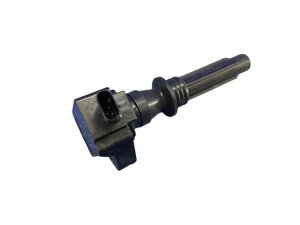
- Ignition Coil
(OEM #C2Z18619)— This is the most common cause of a single-cylinder misfire. Heat and vibration cause the internal windings to fail over time.
Trusted brands: Bosch, NGK, Delphi
OEM price range: $90-$150
Aftermarket price range: $50-$100 - Spark Plug (3.0L V6)
(OEM #C2Z28434)— Spark plugs are a routine maintenance item and a worn or fouled plug is a very common cause of a misfire.
Trusted brands: NGK (p/n 93476 or SILZKAR7E8S), Bosch
Related Codes That Often Appear With This One
- P0300 — If the misfire is intermittent or begins to affect other cylinders, a P0300 (Random/Multiple Cylinder Misfire) may be stored.
- P0301, P0303, P0304, etc. — Misfire codes for other cylinders suggest a systemic problem like a vacuum leak, low fuel pressure, or a timing issue affecting multiple cylinders.
- P1315 / P1316 — These are Jaguar-specific codes indicating a 'Persistent Misfire' that is severe enough to cause catalyst damage or excessive emissions. They often accompany a specific cylinder code like P0302 to highlight the severity.
- P054A-00, P0014-71, P000B-00, P0341-00 — According to TSB SSM74160, the presence of these timing-related codes alongside P0302 strongly suggests the issue may be with the VVT system, not a simple ignition fault.
Technical Service Bulletins (TSBs) & Recalls
- SSM74160
- SSM75510
Platform-Specific Known Issues
- Fuel injector failure can be exacerbated by water dripping from hood vents into the engine valley, causing corrosion around the injectors.
- TSB SSM75510 specifically calls out checking for a loose ignition coil ground strap, which can cause intermittent misfires on this engine family.
Mechanic-Grade Diagnostic Values
- High-Pressure Fuel System (3.0L V6 & 5.0L V8) — expected: Up to 2,900 PSI (200 bar) under load.. Failure: Pressure significantly below spec, often accompanied by code P0087. Should be monitored with a scan tool during various load conditions.
- Low-Pressure Fuel System (3.0L V6) at Idle — expected: 70 - 80 PSI. Failure: Pressure well below this range suggests a weak in-tank fuel pump or a problem with the fuel pump driver module.
- Fuel Injector Resistance (High-Impedance Type) — expected: ~11 - 16 Ohms. Failure: A reading significantly outside this range (open circuit or short) indicates a failed injector coil. Note: This is a general specification for Jaguar high-impedance injectors; values can vary slightly.
- Ignition Coil Resistance — expected: Not specified; swap test is recommended.. Failure: Direct resistance measurement with a multimeter is not considered a reliable test for these modern coil-on-plug units due to internal electronics.
Hidden / Shadow Codes Worth Checking
- Mode $06, Test ID $A2-$AB: This is not a Jaguar-specific shadow code, but a generic OBD-II function that provides misfire count data for each cylinder during the current and previous driving cycles. It can reveal which cylinder is misfiring, even if the misfire count is not yet high enough to set a specific P030x trouble code. (see via Requires an advanced OBD-II scan tool that can access Mode $06 data. The specific Test ID for misfire counts varies by manufacturer (Ford uses $53, GM uses $C1-C8), but they are typically labeled clearly in the scan tool menu.)
Scan Tool Commands That Help
- Jaguar SDD (Symptom Driven Diagnostics): Power Balance / Relative Injector Flow Test — Use this function after ruling out ignition components (plugs, coils). It can help identify an underperforming cylinder due to a fuel injector or compression issue without requiring disassembly.
- Jaguar SDD (Symptom Driven Diagnostics): Misfire Identification — To confirm the cylinder numbering layout within the software and verify which cylinder the system identifies as misfiring before physically working on the engine.
Real Owner Repair Stories
- Jaguar Forums user 'jcat009' (Jaguar F-Type (similar 3.0L V6 engine and electronics)) — Car ran terribly after spirited driving, throwing multiple codes: P0300, P0305, P1315, and P0302.
❌ Tried (didn't work) Replaced spark plug in cylinder 2., Swapped ignition coils.
✅ What actually fixed it The primary fault was a failed fuel injector on cylinder 5. Replacing only the cylinder 5 injector resolved all misfire codes, including the P0302 for cylinder 2. - Jaguar Forums user 'BuckleSpring' (2006 Jaguar X-Type (different model, but demonstrates diagnostic logic)) — Persistent P0302 and P1316 misfire codes. Hissing sound heard for ~10 seconds after engine shutoff.
❌ Tried (didn't work) Previous owner replaced spark plugs and moved the coil with no change., Previous owner replaced the fuel injector with a used part.
✅ What actually fixed it The user diagnosed a likely vacuum leak. The previous owner had worked on a rear bank coil and did not replace the plenum gasket or IMRC O-rings, which is the suspected cause of the leak affecting cylinder 2. The story highlights the importance of replacing all associated gaskets when the intake plenum is removed.
When the Usual Fixes Don't Work
- While P0302 points specifically to cylinder 2, it is not always caused by a fault with a component on that cylinder. In one documented case involving a similar JLR V6 engine, multiple misfire codes including P0302 were present, but the root cause was a single failed fuel injector on cylinder 5. Replacing the injector on cylinder 5 cleared all misfire codes. This demonstrates that the PCM's misfire detection, which relies on crankshaft speed fluctuations, can sometimes attribute a misfire to the wrong cylinder, especially when the fault is intermittent or affects multiple cylinders.
OEM Part Supersession History
C2Z18619→N/A— This ignition coil part number appears to be the standard and current part for the 2017-2019 F-PACE and related JLR models.
Heads up: No supersession or incompatibility issues were found during research.
Model Year Variations Within This Range
- 2017-2018 (Pre-2019 models): Early 2.0L Ingenium engines used plastic timing chain guides that were prone to premature wear. This could cause the timing chain to stretch or snap, leading to catastrophic engine failure. While this typically presents with rattling noises or timing-specific codes, it's a known weakness of early engines in this range that could potentially manifest as a misfire in its initial stages. Engines built from 2019-onward reportedly use an improved design.
Helpful Videos
Used OEM Parts in Stock
New Aftermarket Parts Available


The information in this article is provided for general reference and educational purposes only. Vehicle specifications, procedures, and part compatibility can vary by production date, trim level, and region. Always consult your vehicle's factory service manual and verify part numbers before purchasing or performing repairs. Safety-critical components such as airbags, seat belts, and braking systems should be installed by a qualified professional.
- Jaguar F-PACE:
- 🧭 Diagnostic Flowchart
- 🎬 Helpful Videos
- 🛍️ Shop This Part
- What's Unique About the 2017-2019 Jaguar F-PACE
- Symptoms You May Notice
- Most Likely Causes
- Rare But Worth Checking
- Diagnosis Steps
- Parts You'll Likely Need
- Related Codes That Often Appear With This One
- Technical Service Bulletins (TSBs) & Recalls
- Platform-Specific Known Issues
- Mechanic-Grade Diagnostic Values
- Hidden / Shadow Codes Worth Checking
- Scan Tool Commands That Help
- Real Owner Repair Stories
- When the Usual Fixes Don't Work
- OEM Part Supersession History
- Model Year Variations Within This Range
- 🎟️ Get 5% Off