

P0302 on 2017-2019 Jaguar XE: Cylinder 2 Misfire Causes and Fixes
For a 2017-2019 Jaguar XE, code P0302 almost always means a failed ignition coil or a worn spark plug in cylinder 2. A simple ignition coil swap between cylinders is the fastest way to confirm the problem before buying parts. On these specific engines, also be aware of potential VVT solenoid issues or carbon buildup on intake valves.
- P0302 on a Jaguar XE is a misfire in cylinder 2, most often caused by a bad ignition coil or spark plug.
- The easiest and quickest diagnostic step is to swap the ignition coil from cylinder 2 to another cylinder to see if the fault code follows.
- Always check for other trouble codes. If you see timing-related codes like P054A-00 or P0014-71, the problem could be a faulty VVT solenoid per TSB SSM74160.
- Do not drive with a flashing check engine light, as this can quickly destroy your catalytic converter, leading to a much more expensive repair.
What's Unique About the 2017-2019 Jaguar XE
While the causes for P0302 on the Jaguar XE are typical for most modern engines, this platform has specific nuances. Ignition coils are a very common failure point on these engines. More uniquely, Jaguar issued a Technical Service Bulletin (SSM74160) indicating that P0302 can appear alongside timing-related codes, pointing not to a typical ignition fault, but to a faulty Variable Valve Timing (VVT) solenoid. This TSB specifically notes the issue may occur with no noticeable driveability concern. Additionally, as these are direct injection (GDI) engines, they are prone to carbon buildup on the intake valves, which can restrict airflow and cause cold-start misfires.
Diagnostic Flowchart
Tap your situation to follow the diagnostic path that matches what you're seeing on this vehicle.
Symptoms You May Notice
- Rough or vibrating idle
- Hesitation or stumbling during acceleration
- Noticeable loss of engine power
- Solid or flashing Check Engine Light
- Smell of unburnt fuel from the exhaust
- Decrease in fuel economy
- Engine may be difficult to start
- Replacing only the spark plug when the ignition coil was the actual point of failure.
- Replacing ignition or fuel parts when the true cause is a VVT solenoid issue as described in TSB SSM74160.
- Assuming an ignition fault when the issue is carbon buildup on the intake valves, especially if the misfire is worst on cold starts.
Most Likely Causes
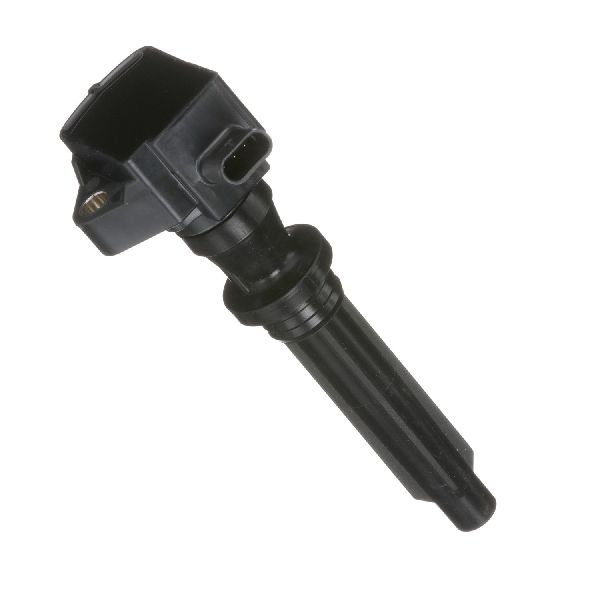
- Faulty Ignition Coil 🔴 High Probability → Shop Ignition Coil Ignition coils on modern Jaguar Land Rover (JLR) engines are a common failure item due to high heat and electrical stress in the engine bay. Oil leaks from aging valve cover gaskets can also saturate the coil boots, causing them to fail.
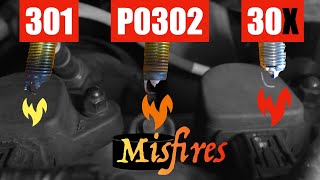
How to confirm: Swap the ignition coil from cylinder 2 with another cylinder (e.g., cylinder 4). Clear the codes and drive the vehicle. If the code changes to P0304, the ignition coil is faulty. 🎬 See how to diagnose if your misfire is a coil or plug.
Typical fix: Replace the faulty ignition coil. It is best practice to replace the spark plug at the same time. Many technicians recommend replacing all coils if they are original and have high mileage.
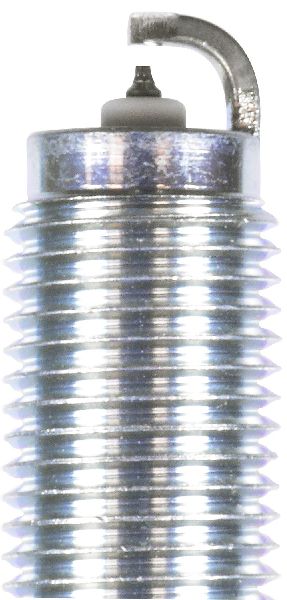
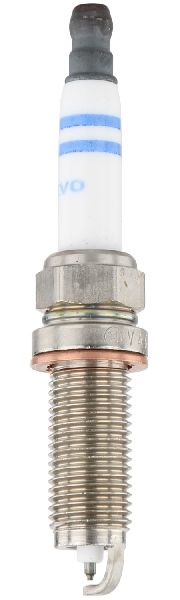
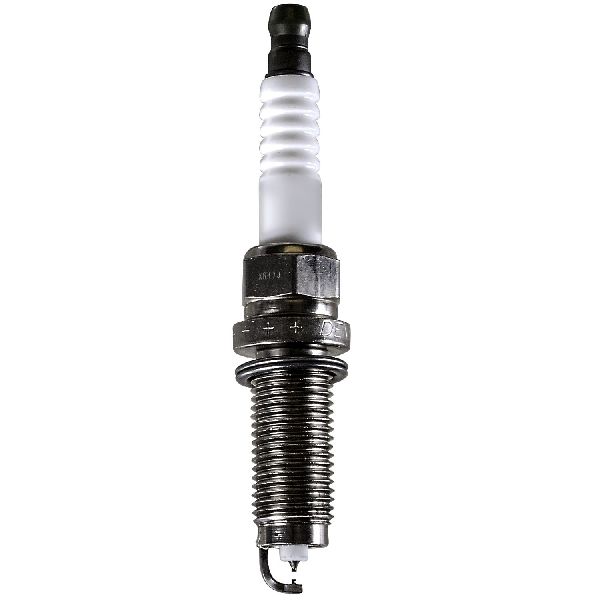
Est. part cost: $40-$100 - Worn or Fouled Spark Plug 🔴 High Probability → Shop Spark Plug Spark plugs are a standard maintenance item. A failing coil or other issue like carbon buildup can also foul a spark plug, causing it to fail. Water intrusion into the spark plug wells after an engine wash has also been reported by owners to cause misfires.
How to confirm: After confirming the ignition coil is good, remove the spark plug from cylinder 2. Inspect it for wear, carbon buildup, oil fouling, or cracks in the porcelain. A cracked spark plug was the cause for one owner.
Typical fix: Replace the spark plug in cylinder 2. It is highly recommended to replace all spark plugs as a set if they are near the end of their service life (Jaguar recommends 100,000 miles, but many owners do it sooner). 🎬 Watch this walkthrough for replacing plugs on the Jaguar 3.0L engine.
Est. part cost: $15-$30 per plug - Clogged or Faulty Fuel Injector 🟡 Medium Probability → Shop Fuel Injector The direct injection (GDI) systems on these engines operate under very high pressure. Injectors can become clogged with carbon deposits or fail electronically, which is a known issue on some JLR platforms. Using lower-quality fuel can accelerate clogging.
How to confirm: This is more difficult to diagnose. A professional can perform a fuel injector balance test. Sometimes, swapping injectors between cylinders (if accessible) can pinpoint the issue, but this is more labor-intensive than a coil swap. Listening to the injector with a mechanic's stethoscope for a consistent clicking sound is a good first check.
Typical fix: Replace the faulty fuel injector. This often a job for a professional due to the high-pressure fuel system and the need for injector calibration with JLR-specific software.
Est. part cost: $100-$300 - Carbon Buildup on Intake Valves 🟡 Medium Probability Like many GDI engines, the 2.0L Ingenium and 3.0L V6 do not spray fuel over the intake valves, which allows oil vapors from the PCV system to bake onto them. This restricts airflow, especially on cold starts, leading to misfire codes like P0302.
How to confirm: Diagnosis typically requires a borescope inspection of the intake ports and valves. Symptoms often include rough running on a cold start that improves as the engine warms up.
Typical fix: The most effective fix is physical cleaning, such as walnut shell blasting, which requires removing the intake manifold. Some owners use fuel additives as a preventative measure, though this is less effective for existing heavy buildup.
Est. part cost: $0 (for additives) - $800+ (for professional cleaning)
Rare But Worth Checking
- Faulty Variable Valve Timing (VVT) Solenoid: Per TSB #SSM74160, if P0302 is present with codes like P054A-00, P0014-71, or P0341-00, the cause may be a faulty VVT solenoid (Part No. AJ813329), not an ignition part. The TSB notes this may occur with no driveability concern and applies to solenoids manufactured before August 23, 2018.
- Vacuum Leak: A leak in the intake manifold gaskets, PCV hoses, or other vacuum lines can lean out the air-fuel mixture and cause a misfire. A faint hissing sound after engine shutdown can be a clue. A smoke test is the best way to confirm a leak.
- Low Cylinder Compression: This indicates a serious internal engine issue, such as worn piston rings, a leaking valve, or a damaged head gasket. A compression test followed by a cylinder leak-down test is required to diagnose this.
Diagnosis Steps
- Read all stored fault codes with an OBD-II scanner. Pay close attention to any codes accompanying P0302, especially timing-related ones (P054A, etc.) or the Jaguar-specific P1316 or P1314.
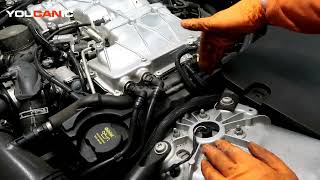
- Locate cylinder 2. On the 3.0L V6 (AJ126 engine), it is the front-most cylinder on the driver's side (left-hand, Bank 2). On the 2.0L I4 (Ingenium engine), it is the second cylinder from the front of the engine. 🎬 Watch: Step-by-step coil and spark plug replacement for the 3.0L V6.
- Swap the ignition coil from cylinder 2 with one from another cylinder (e.g., cylinder 1 on the I4, or cylinder 4 on the V6).
- Clear the codes and start the engine. If the code returns as P0301 or P0304, the ignition coil is bad and needs replacement.
- If the code remains P0302, the coil is likely good. Proceed to inspect and/or replace the spark plug in cylinder 2. Check for oil in the spark plug well, which indicates a leaking valve cover gasket.
- If the spark plug and coil are confirmed good, the issue may be with the fuel injector. Listen for a steady clicking with a stethoscope. Further diagnosis may require professional tools.
- If other codes were present (especially timing codes), investigate the specific cause related to those codes, such as the VVT solenoid issue mentioned in TSB SSM74160.
- If the misfire is most prominent on cold starts, suspect carbon buildup and consider a borescope inspection of the intake valves.
- If no other cause is found, consider checking for vacuum leaks with a smoke test or performing an engine compression test to rule out mechanical issues.
Parts You'll Likely Need
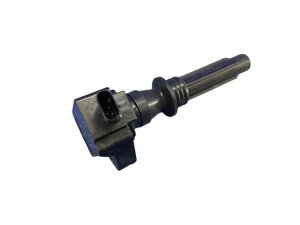
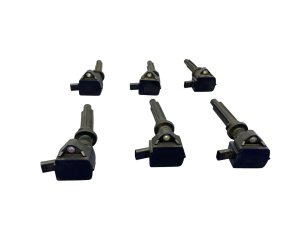
- Ignition Coil
(OEM #C2Z18619 (For 3.0L V6, check specific VIN))— This is the most common failure point for a single-cylinder misfire on this platform.
Trusted brands: Bosch, Delphi, NGK, Standard Motor Products
OEM price range: $70-$120
Aftermarket price range: $40-$80 - Spark Plug
(OEM #ILKAR7C10 (NGK Laser Iridium, for 3.0L V6, check specific VIN))— A worn, fouled, or cracked spark plug is the second most common cause and is a routine maintenance item.
Trusted brands: NGK, Bosch
OEM price range: $20-$35
Aftermarket price range: $15-$25 - VVT Solenoid
(OEM #AJ813329)— A known issue documented in TSB SSM74160 for causing misfire codes when accompanied by specific timing DTCs.
Trusted brands: Jaguar (OEM)
OEM price range: $120-$180
Aftermarket price range: $70-$110
Related Codes That Often Appear With This One
- P0300 — Indicates random or multiple cylinder misfires. If you see this with P0302, it suggests the problem may affect more than just cylinder 2, pointing to a systemic issue like a vacuum leak or fuel delivery problem.
- P030X (e.g., P0301, P0303, P0304) — Indicates misfires in other specific cylinders, pointing towards a more widespread issue like a vacuum leak, fuel delivery problem, or a failing catalyst.
- P054A-00, P0014-71, P000B-00, P0341-00 — According to TSB #SSM74160, these timing-related codes appearing with P0302 strongly suggest a faulty VVT solenoid is the root cause.
- P1316 — A Jaguar-specific code that often accompanies misfire codes, indicating 'Excessive Misfire'. This confirms the misfire is severe enough to potentially damage the catalytic converter.
- P1314 — A Jaguar-specific code for 'Misfire Rate Catalyst Damage Fault - Bank 2'. It often appears with a specific cylinder misfire code on that bank, like P0302.
Technical Service Bulletins (TSBs) & Recalls
- SSM74160: Describes P0302 being caused by a faulty VVT solenoid (Part No. AJ813329) when stored with other specific timing codes. Affects solenoids made before 08/23/2018.
Platform-Specific Known Issues
- TSB SSM74160: A known issue where misfire codes P0302 and P0303 can be stored due to a faulty VVT solenoid, often accompanied by timing-related DTCs and potentially no noticeable driveability problems.
- Recall 18V702000: Some 2018 XE models with the 2.0L gasoline engine were recalled for fuel rail end caps that could leak. A fuel leak in the engine bay could potentially cause a variety of issues, including misfires.
- Carbon Buildup: The GDI (Gasoline Direct Injection) nature of both the Ingenium I4 and AJ126 V6 engines makes them susceptible to carbon deposits on the intake valves, which is a common cause of cold-start misfires.
Mechanic-Grade Diagnostic Values
- High-Pressure Fuel Rail at Idle (GDI Engines) — expected: Approx. 40 bar (580 PSI).. Failure: Significantly lower or fluctuating pressure suggests a fault with the high-pressure fuel pump, regulator, or sensor.
- Low-Pressure Fuel System (In-Tank Pump) — expected: 55-60 PSI.. Failure: Pressure that is low or drops off quickly can indicate a failing in-tank fuel pump, causing fuel starvation under load.
- Engine Oil Pressure at Idle (3.0L V6, fully warm) — expected: Should not drop below the room-temperature minimum of 29 PSI.. Failure: Low oil pressure can affect the operation of the VVT system, which is a known cause of misfire-related codes on this platform per TSB SSM74160.
- Engine Ground Strap Voltage Drop (During Cranking) — expected: Well under 0.5V (500mV).. Failure: A reading higher than 0.5V indicates a poor ground connection between the engine and chassis, which can cause a wide range of electrical issues, including misfires.
Hidden / Shadow Codes Worth Checking
- P1314: Misfire Rate Catalyst Damage Fault - Bank 2. This is a Jaguar-specific code that pinpoints which engine bank is experiencing a misfire severe enough to damage the catalytic converter. (see via Most comprehensive OBD-II scanners, and the dealer-level Jaguar SDD tool.)
Scan Tool Commands That Help
- Jaguar SDD (Symptom Driven Diagnostics): Power Balance / Relative Injector Flow Test — Use this after confirming the ignition system (coil, plug) is functional. This test can identify an underperforming cylinder due to a faulty fuel injector or low compression without requiring major disassembly.
- Jaguar SDD (Symptom Driven Diagnostics): Module Reprogramming (PCM Reflash) — Required to perform the fix for certain Technical Service Bulletins, such as JTB00533NAS1 (found on sister platforms), which addresses cold-start misfires caused by incorrect fuel injection calibration.
Wiring & Ground Locations
- Main Engine Ground Strap — Typically located on the lower right side (passenger side in US) of the vehicle, connecting the engine block or transmission bell housing to the chassis frame rail.. A corroded or loose main ground strap can cause insufficient voltage for the ignition coils to fire properly, leading to weak spark and misfires. A voltage drop test across this strap is a key diagnostic step for persistent, unexplained misfires.
"I Checked Everything" — The Actual Cause
- A cracked flexplate (the plate connecting the engine to the automatic transmission's torque converter). If the crankshaft position sensor's tone ring is part of the flexplate, a crack can cause it to wobble, sending erratic signals to the PCM. The PCM misinterprets these signals as a crankshaft speed fluctuation and incorrectly flags a misfire code like P0302. This will not be found with a smoke test and is often misdiagnosed as a more severe internal engine noise.
OEM Part Supersession History
AJ813329→T4N32636— Part has been updated by the manufacturer. This is the VVT solenoid mentioned in TSB SSM74160.C2Z18619→C2Z18619-A— Minor revision or alternative part number for the ignition coil.
Model Year Variations Within This Range
- 2018-2019: For the 2018 model year, Jaguar introduced its new all-aluminum 2.0L four-cylinder 'Ingenium' petrol engines, replacing the previous Ford-derived 2.0L engine. These came in 197hp ('20t') and 247hp ('25t') versions. A higher-output 296hp version was added later. The 3.0L V6 in the XE S model also received a power increase to 375hp. These engine changes can affect diagnostics and part selection.
Helpful Videos

Used OEM Parts in Stock
New Aftermarket Parts Available


The information in this article is provided for general reference and educational purposes only. Vehicle specifications, procedures, and part compatibility can vary by production date, trim level, and region. Always consult your vehicle's factory service manual and verify part numbers before purchasing or performing repairs. Safety-critical components such as airbags, seat belts, and braking systems should be installed by a qualified professional.
- Jaguar XE:
- 🧭 Diagnostic Flowchart
- 🎬 Helpful Videos
- 🛍️ Shop This Part
- What's Unique About the 2017-2019 Jaguar XE
- Symptoms You May Notice
- Most Likely Causes
- Rare But Worth Checking
- Diagnosis Steps
- Parts You'll Likely Need
- Related Codes That Often Appear With This One
- Technical Service Bulletins (TSBs) & Recalls
- Platform-Specific Known Issues
- Mechanic-Grade Diagnostic Values
- Hidden / Shadow Codes Worth Checking
- Scan Tool Commands That Help
- Wiring & Ground Locations
- "I Checked Everything" — The Actual Cause
- OEM Part Supersession History
- Model Year Variations Within This Range
- 🎟️ Get 5% Off